
This lesson details the legal obligations and professional standards required of heavy goods vehicle drivers in Austria. It serves as the foundational unit for understanding your role as a licensed professional, bridging the gap between basic driving rules and the specific responsibilities of managing C, C1, and CE vehicles.

Lesson content overview
Operating a heavy goods vehicle (HGV) on Austrian roads demands a profound understanding of legal responsibilities and a steadfast commitment to professional conduct. This lesson is tailored for the Austrian Driving License Theory Course for Heavy Goods Vehicles (C, C1, C1E, CE) and provides an in-depth exploration of the regulations and expectations that govern your role as a professional driver. It emphasizes the elevated duty of care you undertake due to the substantial size, weight, and potential impact of commercial vehicles.
Navigating the complexities of heavy vehicle operation involves more than just driving; it requires meticulous attention to vehicle condition, cargo management, and interactions with other road users. This commitment to safety, adherence to legal frameworks, and exemplary professional behavior is paramount not only for passing your heavy goods vehicle theory exam but, more importantly, for ensuring safe, lawful, and efficient transport operations across Austria.
The concept of a "duty of care" forms the bedrock of legal responsibilities for all drivers. However, for those operating heavy goods vehicles, this duty is significantly enhanced. The sheer mass and momentum of an HGV mean that even minor errors can have catastrophic consequences, far exceeding those of a passenger car.
In Austrian traffic law, particularly under § 57 of the Road Traffic Act (Straßenverkehrsordnung, StrVG), drivers are legally obliged to operate their vehicles safely. This means exercising a level of caution, diligence, and prudence that a reasonable person would demonstrate under similar circumstances. It’s about actively anticipating potential hazards and taking preventative measures to avoid harm to oneself, passengers, and other road users.
This general duty applies to everyone behind the wheel. It requires drivers to be constantly aware of their surroundings, adapt to changing road conditions, and maintain control of their vehicle at all times. Failure to uphold this duty can lead to legal penalties and civil liability in the event of an accident.
For commercial drivers, the duty of care is amplified. This enhanced duty recognizes the increased risks associated with larger, heavier vehicles, which have longer stopping distances, larger blind spots, and greater potential for damage in a collision. As a professional, you are expected to possess specialized knowledge and skills, and to apply them consistently.
Practically, this means maintaining safe following distances, adjusting speed to account for the vehicle’s load and current road conditions, and exercising extreme caution in situations involving vulnerable road users like pedestrians and cyclists. It also involves a commitment to ongoing learning and staying updated with regulations. Your professional role demands anticipatory driving – always thinking several steps ahead and planning for contingencies.
Beyond mere legal compliance, professional conduct defines the expected behavior, attitudes, and actions of a commercial driver. It reflects the industry's standards and ethical expectations, promoting a culture of safety, reliability, and public trust in commercial transport services.
Ethical conduct is a cornerstone of professionalism. This includes honesty and transparency in all aspects of your work. For example, accurate record-keeping of driving hours, rest periods, and vehicle maintenance is not just a regulatory requirement but an ethical imperative. Falsifying logbooks or weight declarations undermines the integrity of the profession and compromises safety.
A professional driver takes personal responsibility for their actions and decisions, understanding the wider implications these have for public safety and the reputation of the transport industry. This also extends to promptly reporting any issues, such as vehicle defects or illegal loads, rather than attempting to conceal them.
Operational conduct focuses on adherence to best practices and regulations during the course of your duties. This means ensuring that you meet delivery schedules without ever compromising safety standards. It involves meticulous adherence to speed limits, traffic rules, and specific heavy vehicle regulations, even when under pressure.
Proper use and maintenance of equipment are also critical. This includes operating advanced braking systems, retarders, and load securing devices correctly. A commitment to operational excellence contributes directly to the prevention of accidents and the efficient flow of goods.
Professional conduct also encompasses how you interact with others. Respectful communication with traffic police, customs officials, and customers is essential. This includes presenting relevant documentation clearly and cooperating fully with inspections or inquiries.
Maintaining a polite and respectful demeanor, even in challenging situations, reflects positively on you and your employer. Your interactions often represent the public face of the commercial transport sector, making positive interpersonal conduct a vital aspect of your professional role.
One of the most critical responsibilities for a heavy goods vehicle driver is the pre-trip inspection. This systematic verification of vehicle components, load distribution, and legal documents before departure is mandated by Austrian law and serves as a primary defense against accidents and breakdowns.
A thorough pre-trip inspection is not a formality; it is an indispensable safety measure. It allows drivers to detect potential defects, confirm the vehicle’s overall roadworthiness, and verify compliance with all load and weight regulations before the journey even begins. Identifying and rectifying issues at this stage can prevent costly delays, fines, and, most importantly, serious accidents on the road.
Ignoring this vital step due to time pressure or oversight significantly increases the risk of mechanical failure, loss of control, and legal liability. Each inspection should be treated as a critical safety procedure.
A comprehensive pre-trip inspection covers several crucial areas:
External Inspection: Check tyres for proper inflation, tread depth, and damage; verify all lights (headlights, tail lights, indicators, brake lights, hazard lights) are functional and clean; inspect mirrors for damage and correct adjustment; examine the chassis and coupling devices for integrity and secure connections.
Internal Inspection: Verify brake system functionality (air pressure, pedal feel); check fluid levels (engine oil, coolant, windscreen washer fluid); test steering responsiveness and horn; ensure all gauges and warning lights are working correctly.
Load Inspection: Confirm that the load is within permissible weight limits (Gross Vehicle Weight, axle loads); verify the centre of gravity is stable and secure; ensure all cargo securing devices (straps, chains, blocking materials) are correctly applied and tensioned according to regulations.
Documentation Verification: Check that all necessary legal documents are present and valid, including driving license, vehicle registration, inspection certificates, and cargo manifests.
Under § 9 of the Austrian Road Traffic Act (StrVG), it is mandatory for drivers to verify the proper functioning of all vehicle controls, lighting, brakes, tyre condition, and load securing before every journey. This rule applies regardless of the journey's distance or duration.
Failure to conduct these mandatory checks can lead to significant penalties, including fines and potential legal action if a defect contributes to an accident. The law places the onus squarely on the driver to ensure their vehicle is safe and compliant before setting off.
The safe transport of goods is fundamentally dependent on strict adherence to load securing and weight regulations. These rules are in place to prevent vehicle instability, reduce road wear, and protect all road users from the dangers of shifting or falling cargo.
Austrian law, specifically § 42 of the StrVG, sets strict limits on the maximum permissible total weight (Gross Vehicle Weight - GVW) and individual axle loads for heavy goods vehicles. These limits vary depending on the vehicle class, configuration (e.g., rigid truck, articulated lorry, truck with trailer), and number of axles. Exceeding these limits can severely compromise vehicle handling, braking efficiency, and structural integrity.
The maximum permissible total weight of the vehicle, including its load, passengers, and fuel. This is a critical limit that must never be exceeded.
The maximum weight allowed to be supported by a single axle or an axle group. Uneven load distribution can easily lead to axle overloading, even if the total GVW is within limits.
Drivers must be able to calculate payload accurately and distribute cargo evenly to ensure that no single axle or axle group exceeds its legal limit. Overloaded axles can lead to tyre blowouts, suspension damage, and loss of control, especially during braking or cornering.
In addition to weight, strict regulations govern the maximum permissible dimensions of heavy vehicles and their loads (height, width, length). Any load extending beyond the vehicle's standard dimensions (overhangs) must be properly marked with warning signs and lights, especially at night or in poor visibility. Certain oversized loads may require special permits and escort vehicles.
The Austrian Load Securing Regulation (Ladungssicherungsverordnung, LFG), particularly Annex B, outlines the detailed requirements for securing cargo. This regulation specifies that cargo must be secured using certified devices and methods to prevent movement in all directions (forward, backward, sideways, and upward).
Common securing methods include:
Drivers must use appropriate securing gear that meets certified standards (e.g., straps with a specified minimum breaking load, often expressed in kilonewtons, kN). Relying on inadequate or damaged securing devices is a common and dangerous violation. Regular checks of the load and its securing during the journey, especially after sharp turns or heavy braking, are crucial.
Roadworthiness refers to the condition in which a vehicle meets all technical and safety standards set by law. Ensuring your heavy goods vehicle is roadworthy is a continuous obligation, not just a periodic check.
Heavy goods vehicles in Austria are subject to mandatory periodic technical inspections, known as "Pickerl" or PUV (Prüfungsunterlagen Verkehrssicherheit). These inspections ensure that essential safety systems like brakes, steering, suspension, lights, and tyres function correctly and meet regulatory standards. The frequency of these inspections typically depends on the vehicle's age and type, often requiring annual checks.
A valid inspection sticker (Pickerl) must be prominently displayed on the vehicle, indicating that it has passed its required inspection. Operating a vehicle with an expired or invalid inspection sticker is illegal and can result in significant fines.
While periodic inspections are vital, daily checks by the driver are equally important for ongoing operational safety. These checks, often integrated into the pre-trip inspection, focus on immediately observable issues that could affect safety, such as worn brake pads, cracked tyres, fluid leaks, or malfunctioning lights.
Always address any detected defect, no matter how minor it may seem. Even small issues can escalate into major problems, compromising vehicle safety and potentially leading to an accident.
Operating a vehicle that is not roadworthy carries severe consequences. This can include:
Professional drivers have a clear legal obligation to report certain events and conditions to the authorities. This reporting is crucial for enabling timely interventions, improving safety statistics, and enforcing accountability.
Under § 46 of the StrVG, drivers are required to report accidents involving injury or significant property damage to the police immediately. Even minor incidents that don't involve other vehicles but cause damage to public property (e.g., hitting a road sign) must be reported.
Secure the Scene: Ensure safety for all involved by activating hazard warning lights, placing a warning triangle, and moving vehicles if safe to do so.
Provide Aid: Offer first aid to injured persons if qualified.
Exchange Information: Collect details from other parties involved (name, contact, insurance, vehicle registration).
Notify Police: Contact the police immediately, especially if there are injuries, significant damage, or disputes.
Inform Employer: Notify your fleet manager or employer about the incident.
Failing to report an accident, especially one involving injury, can lead to severe legal consequences, including criminal charges for hit-and-run.
If a significant vehicle defect is discovered that could compromise safety (e.g., brake failure, steering malfunction, major tyre damage), the driver has an obligation to report this to their fleet manager and, if the vehicle cannot be safely operated, potentially to the authorities. Continuing to drive with a known safety-critical defect is a serious offense.
If, during loading or inspection, a driver identifies that a load is illegal (e.g., exceeding weight limits, improperly secured, dangerous goods without proper documentation), they have an obligation to refuse to transport it or to report it to their employer and, if necessary, to the authorities. Transporting an illegal or unsafe load makes the driver directly liable for any resulting incidents. This ties back into the concept of professional conduct and ethical responsibility.
Professional HGV drivers in Austria must be intimately familiar with the specific legal framework governing their operations. These regulations ensure safety, protect infrastructure, and maintain order on the roads.
The Austrian Road Traffic Act (Straßenverkehrsordnung, StrVG) contains numerous provisions directly applicable to heavy goods vehicles:
Understanding these sections is crucial for daily operations and for the heavy vehicle theory exam.
The Load Securing Regulation (Ladungssicherungsverordnung, LFG) provides detailed technical standards and guidelines for securing cargo in heavy vehicles. Its annexes specify the types of securing devices, their minimum strength requirements, and approved securing methods. For instance, Annex B details calculations for securing forces and the proper application of lashing straps and blocking materials. Compliance with LFG is non-negotiable for safe cargo transport.
Beyond the main traffic laws, other standards and decrees also influence HGV operations. For example, specific ÖNORM standards (Austrian Standards Institute) may cover aspects such as vehicle equipment, maintenance procedures, or professional conduct. The Federal Drivers’ License Regulation (Fahrerlaubnisverordnung, FAV) outlines requirements for professional driving licenses and associated training. Professional drivers are expected to be aware of all relevant legal instruments affecting their work.
Understanding common violations helps in proactive prevention. These infractions often lead to significant penalties, emphasizing the importance of diligence and compliance.
Overloading Axles: Uneven distribution of cargo can cause an individual axle to exceed its legal limit, even if the total vehicle weight is compliant.
Skipping Pre-Trip Inspection: Drivers, under time pressure, may neglect a thorough inspection, potentially missing critical defects like a cracked tyre or faulty brakes.
Improper Load Securing: Using damaged straps, insufficient lashing points, or inadequate securing methods that do not meet LFG standards.
Driving Under Influence (DUI): Operating a commercial vehicle with a blood alcohol concentration above the legal limit (even stricter for professional drivers) or under the influence of drugs.
Failure to Report Defect: A driver notices a significant brake issue but decides to continue the journey without reporting or seeking repair.
The legal responsibilities and practical aspects of HGV driving are not static; they vary significantly with external conditions and internal factors. A professional driver must constantly adapt their behavior.
The legal responsibilities and professional conduct expected of heavy goods vehicle drivers in Austria are extensive but fundamentally rooted in the principle of safety. From the moment you begin your pre-trip inspection until your vehicle is safely parked, every decision and action contributes to the safety of all road users and the integrity of commercial transport.
Embracing the enhanced duty of care, adhering to ethical and operational professional conduct, and diligently following all regulations concerning load, weight, and roadworthiness are not merely compliance requirements. They are the essential pillars upon which a successful, safe, and respected career as a professional HGV driver is built. Your comprehensive understanding and consistent application of these principles are paramount for both passing your heavy-goods vehicle theory exam and for ensuring safe, lawful operation on Austria's roads.
This lesson establishes the legal framework for professional HGV drivers in Austria, emphasizing that the enhanced duty of care for heavy vehicle operators goes far beyond basic driving rules. Key legal requirements include mandatory pre-trip inspections (§ 9 StrVG), strict adherence to weight and axle load limits (§ 42 StrVG), and proper load securing according to LFG regulations. Professional conduct encompasses ethical behavior, operational compliance, and respectful interaction with authorities. Drivers must understand their continuous obligation to maintain roadworthiness and report accidents, defects, or illegal loads. The content also addresses contextual variations including adverse weather, different road types, and interaction with vulnerable road users—all requiring adaptive driving behavior.
A short set of high-value points that capture the most important learning from this lesson.
Professional HGV drivers operate under an enhanced duty of care due to the increased mass, momentum, and potential impact of heavy vehicles on road safety.
Pre-trip inspections are a mandatory legal requirement under Austrian law (§ 9 StrVG) and must cover tyres, brakes, lights, load securing, and documentation before every journey.
Load securing must prevent cargo movement in all directions using certified devices meeting LFG standards, with regular checks during the journey.
Drivers must immediately report accidents involving injury or significant damage, vehicle defects affecting safety, and any illegal or unsafe loads to authorities and employers.
Operating a non-roadworthy vehicle can result in fines, vehicle impoundment, license revocation, insurance invalidation, and potential criminal liability.
Explore all units and lessons included in this driving theory course.
The Austrian Road Traffic Act (StrVG) sections 9, 42, 46, and 57 contain the primary legal obligations for HGV drivers regarding inspections, load limits, reporting, and duty of care.
Gross Vehicle Weight (GVW) is the total permissible weight including load, passengers, and fuel; axle load limits must also be respected as uneven distribution can exceed limits even when GVW is compliant.
The Load Securing Regulation (LFG) Annex B specifies detailed requirements for securing forces, lashing methods, and certified equipment standards for cargo transport.
Drivers are legally obligated to report accidents, safety-critical defects, and illegal loads—and continuing to drive with a known defect is a serious criminal offense.
Adverse weather, road type, vehicle load state, and vulnerable road users all require constant adaptation of driving behavior and heightened awareness.
Overloading individual axles by uneven cargo distribution even when total vehicle weight appears compliant, leading to tyre failures and handling problems.
Skipping or rushing pre-trip inspections due to time pressure, missing critical defects like cracked tyres or brake issues that cause accidents.
Using damaged, inadequate, or uncertified load securing equipment that does not meet LFG requirements for the specific cargo weight and type.
Continuing to drive after discovering a significant safety defect because the driver believes they can reach the destination or a repair facility.
Failing to report accidents involving injury, or assuming minor incidents do not require notification, which can result in criminal hit-and-run charges.
Lesson content overview
A short set of high-value points that capture the most important learning from this lesson.
Professional HGV drivers operate under an enhanced duty of care due to the increased mass, momentum, and potential impact of heavy vehicles on road safety.
Pre-trip inspections are a mandatory legal requirement under Austrian law (§ 9 StrVG) and must cover tyres, brakes, lights, load securing, and documentation before every journey.
Load securing must prevent cargo movement in all directions using certified devices meeting LFG standards, with regular checks during the journey.
Drivers must immediately report accidents involving injury or significant damage, vehicle defects affecting safety, and any illegal or unsafe loads to authorities and employers.
Operating a non-roadworthy vehicle can result in fines, vehicle impoundment, license revocation, insurance invalidation, and potential criminal liability.
Explore all units and lessons included in this driving theory course.
The Austrian Road Traffic Act (StrVG) sections 9, 42, 46, and 57 contain the primary legal obligations for HGV drivers regarding inspections, load limits, reporting, and duty of care.
Gross Vehicle Weight (GVW) is the total permissible weight including load, passengers, and fuel; axle load limits must also be respected as uneven distribution can exceed limits even when GVW is compliant.
The Load Securing Regulation (LFG) Annex B specifies detailed requirements for securing forces, lashing methods, and certified equipment standards for cargo transport.
Drivers are legally obligated to report accidents, safety-critical defects, and illegal loads—and continuing to drive with a known defect is a serious criminal offense.
Adverse weather, road type, vehicle load state, and vulnerable road users all require constant adaptation of driving behavior and heightened awareness.
Overloading individual axles by uneven cargo distribution even when total vehicle weight appears compliant, leading to tyre failures and handling problems.
Skipping or rushing pre-trip inspections due to time pressure, missing critical defects like cracked tyres or brake issues that cause accidents.
Using damaged, inadequate, or uncertified load securing equipment that does not meet LFG requirements for the specific cargo weight and type.
Continuing to drive after discovering a significant safety defect because the driver believes they can reach the destination or a repair facility.
Failing to report accidents involving injury, or assuming minor incidents do not require notification, which can result in criminal hit-and-run charges.
Explore search topics learners often look for when studying Legal Responsibilities and Professional Conduct. These topics reflect common questions about road rules, driving situations, safety guidance, and lesson level theory preparation for learners in Austria.
Browse additional driving theory lessons that cover connected traffic rules, road signs, and common driving situations related to this topic. Improve your understanding of how different rules interact across everyday traffic scenarios.
Understand the enhanced duty of care, ethical standards, and operational requirements for professional heavy goods vehicle drivers in Austria. Covers compliance with traffic law, pre-trip inspections, and load securing.

This lesson provides an overview of the legal framework governing heavy vehicle drivers in Austria. It details the potential penalties for violations, including fines, penalty points, and the risk of licence suspension. A clear understanding of these consequences reinforces the importance of compliant and responsible driving.

This lesson delves into the specific Austrian laws and regulations that professional passenger drivers must adhere to. It provides an overview of rules concerning driving and rest times, the use of the digital tachograph, and the essential documents that must be carried at all times. Understanding these legal obligations is crucial for compliance and avoiding penalties during roadside checks.

This lesson explains the system of penalties and enforcement for heavy vehicle operations in Austria. It covers the fines and penalty points associated with common traffic violations, such as overloading or insecure loads. Learners will understand the role of authorities in conducting roadside checks and inspections to ensure regulatory compliance.

This lesson defines the role of a professional driver beyond simply operating a vehicle. It covers the expectations of public trust, professional image, and the responsibilities inherent in transporting people. Key topics include ethical conduct, communication with the public, and understanding your position as a representative of a transport service within the Austrian legal framework.

This lesson details the legal ramifications of operating an overloaded heavy vehicle in Austria, which include significant fines and penalty points. It also emphasizes the severe safety risks, such as compromised braking performance and increased mechanical stress on the vehicle. Understanding these consequences reinforces the importance of strict adherence to weight limits.

This lesson details the general traffic rules applicable to heavy goods vehicles on Austrian roads, highlighting differences from passenger car regulations. It covers key topics such as right-of-way at intersections, specific rules for overtaking, maintaining proper lane discipline, and adhering to designated speed limits. Understanding these rules is critical for safe integration into mixed traffic.

This lesson covers the legal requirements for regular maintenance and periodic roadworthiness certification (known as the 'Pickerl' or TÜV inspection) in Austria. It explains the importance of adhering to manufacturer-recommended service intervals. Maintaining a certified, roadworthy vehicle is a core legal responsibility for any operator or driver.
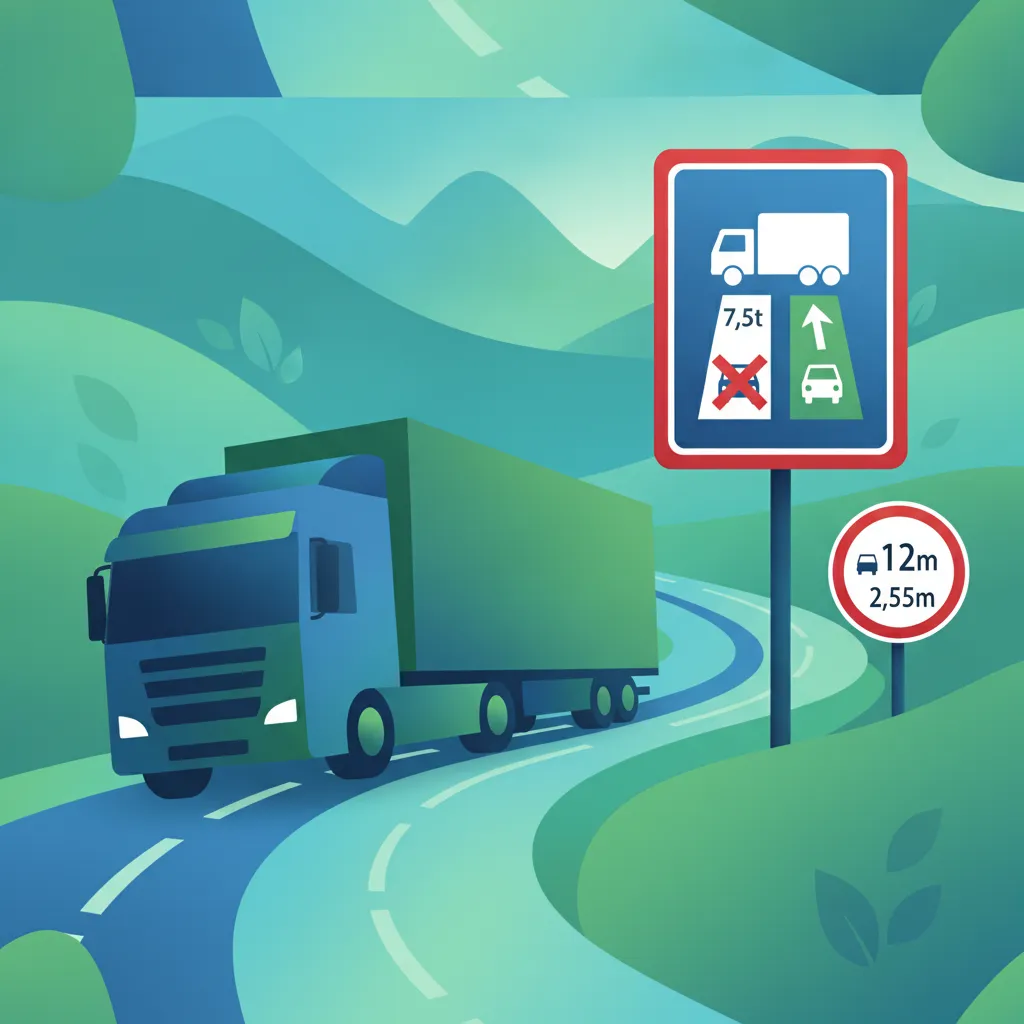
This lesson focuses on the specific Austrian road signs and supplemental plates that apply to heavy goods vehicles. It explains how to interpret signage indicating weight limits, height and width restrictions, lane usage rules, and other critical regulatory information. Correctly understanding these signs is essential for legal compliance and safe navigation on Austria's roads.

This lesson outlines the standardized procedure for handling a vehicle breakdown safely. It covers pulling over to a safe location, activating hazard lights, deploying the warning triangle, and wearing a high-visibility vest. It also explains when and how to contact roadside assistance or emergency services.

This lesson highlights the serious risks of driving while fatigued. It teaches drivers to recognize the physical and mental symptoms of fatigue and explains the legal regulations regarding driving hours and mandatory rest breaks. The lesson also offers practical strategies for managing alertness and ensuring fitness to drive.
Learn about the legal requirements for maintaining heavy goods vehicle roadworthiness in Austria, including periodic inspections, daily checks, and the critical obligation to report accidents, defects, and illegal activities.
This lesson covers the legal requirements for regular maintenance and periodic roadworthiness certification (known as the 'Pickerl' or TÜV inspection) in Austria. It explains the importance of adhering to manufacturer-recommended service intervals. Maintaining a certified, roadworthy vehicle is a core legal responsibility for any operator or driver.
This lesson explains the system of penalties and enforcement for heavy vehicle operations in Austria. It covers the fines and penalty points associated with common traffic violations, such as overloading or insecure loads. Learners will understand the role of authorities in conducting roadside checks and inspections to ensure regulatory compliance.
This lesson focuses on the specific Austrian road signs and supplemental plates that apply to heavy goods vehicles. It explains how to interpret signage indicating weight limits, height and width restrictions, lane usage rules, and other critical regulatory information. Correctly understanding these signs is essential for legal compliance and safe navigation on Austria's roads.
This lesson details the general traffic rules applicable to heavy goods vehicles on Austrian roads, highlighting differences from passenger car regulations. It covers key topics such as right-of-way at intersections, specific rules for overtaking, maintaining proper lane discipline, and adhering to designated speed limits. Understanding these rules is critical for safe integration into mixed traffic.
This lesson provides an overview of the legal framework governing heavy vehicle drivers in Austria. It details the potential penalties for violations, including fines, penalty points, and the risk of licence suspension. A clear understanding of these consequences reinforces the importance of compliant and responsible driving.

This lesson covers the various lighting and reflector systems required on heavy goods vehicles in Austria. It explains the function and legal requirements for headlights, taillights, brake lights, indicators, and reflective markings. Ensuring all lighting systems are operational is essential for visibility and communicating intentions to other road users.

This lesson focuses on the legal restrictions concerning a heavy vehicle's dimensions, including maximum height, width, and length. It teaches drivers how to interpret road signs and supplemental plates that indicate these limits. This knowledge is crucial for route planning, especially when navigating under bridges, through tunnels, and on restricted roads.
This lesson outlines the standardized procedure for handling a vehicle breakdown safely. It covers pulling over to a safe location, activating hazard lights, deploying the warning triangle, and wearing a high-visibility vest. It also explains when and how to contact roadside assistance or emergency services.

This lesson teaches the systematic procedure for conducting a thorough pre-trip walk-around inspection. It provides a checklist of critical components to examine, including tyres, lights, braking systems, and load security. Performing this daily check is a legal requirement and a fundamental practice for preventing mechanical failures and ensuring safety.

This lesson details the regulations for heavy goods vehicles on Austria's high-speed road network. It covers the specific speed limits, rules on lane usage (e.g., when overtaking is permitted), and procedures for entering and exiting the motorway. Adherence to these rules is crucial for safety in a fast-paced environment.
Find clear answers to common questions learners have about Legal Responsibilities and Professional Conduct. Learn how the lesson is structured, which driving theory objectives it supports, and how it fits into the overall learning path of units and curriculum progression in Austria. These explanations help you understand key concepts, lesson flow, and exam focused study goals.
Due to the size, mass, and potential kinetic energy of heavy vehicles, the legal standard for care is significantly elevated. Any failure to conduct proper checks can lead to catastrophic consequences, making the driver legally and professionally responsible for the vehicle's roadworthiness.
In the context of the Austrian theory exam, failing to recognize the necessity of pre-trip inspections is considered a critical oversight. You will be expected to identify these as non-negotiable legal responsibilities that protect both the driver and the public.
Yes, professional conduct encompasses your entire role, including proper logbook maintenance, adherence to rest periods, and ensuring the load is secured according to law. It is a holistic standard of behavior expected of a professional operator.
Refine your study plan by searching for specific Austrian driving theory practice sets. Pinpoint questions related to particular road rules, signs, or challenge levels, and begin practicing immediately to reinforce your knowledge and excel in your official exam with confidence. Get started with focused revision today.