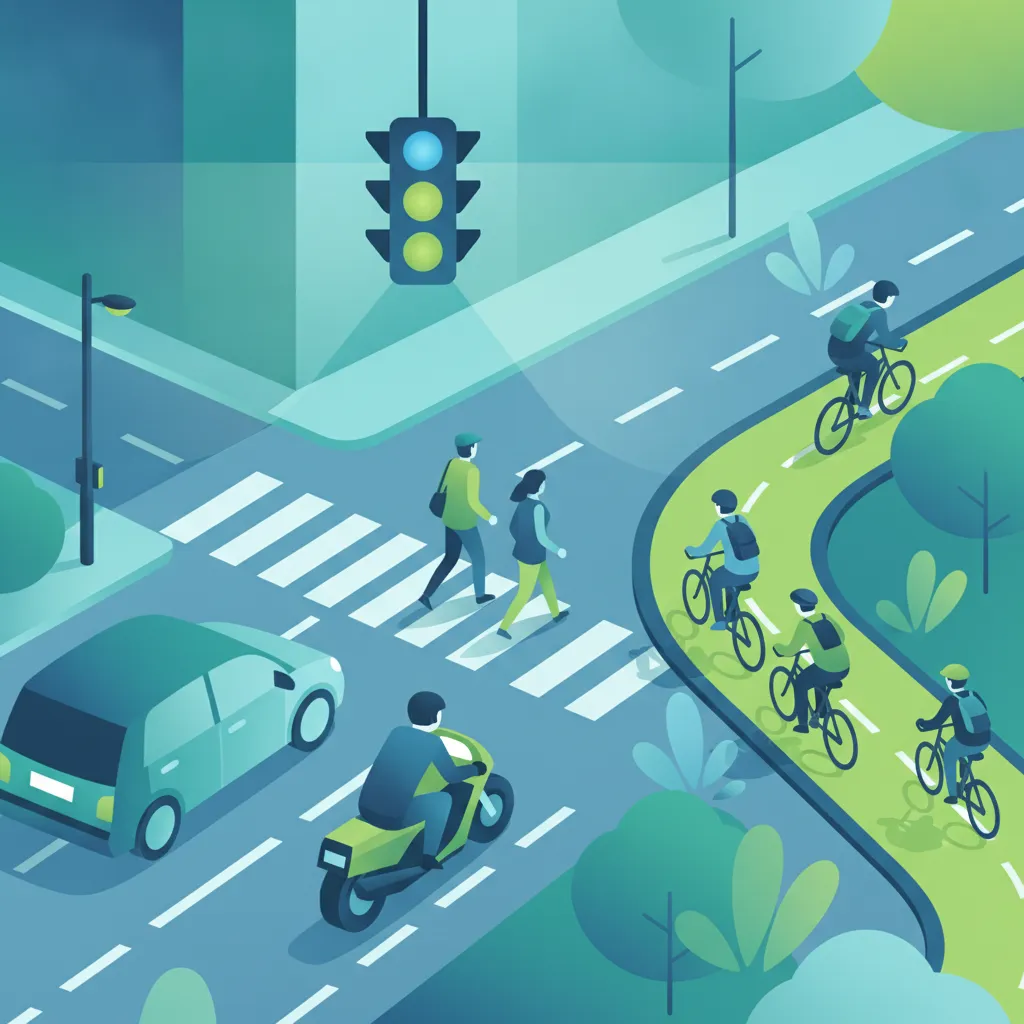
Navigate the complexities of busy Danish city streets with this unit. We cover essential rules for intersections and roundabouts, focusing on safe interactions with cyclists and pedestrians. Mastering these urban riding skills is crucial for both your theory exam success and confident, safe motorcycling.
Browse all lessons that make up Intersections, Roundabouts, Cycle Traffic and Urban Riding. Each lesson focuses on specific topics, learning objectives, and core concepts, helping you build essential knowledge and follow a clear, structured progression toward your study goals in Denmark.
This lesson provides a systematic approach to safely navigating intersections. It covers how to interpret priority signs and traffic signals, establish right-of-way, and scan for potential conflicts from all directions. The importance of clear sightlines and anticipating the movements of other vehicles is a key focus.
This lesson details the specific skills needed to navigate roundabouts on a motorcycle. It explains how to approach at a safe speed, select the correct lane based on your intended exit, and yield to circulating traffic. Proper use of signals to indicate intentions when entering and exiting is also covered.
This lesson focuses on safe interactions with Denmark's large population of cyclists and other vulnerable road users. It covers the rules for passing cyclists, yielding at pedestrian crossings, and the specific hazard of turning across a bike lane. Developing heightened awareness for these interactions is critical for urban riding.
This lesson addresses the unique challenges of streets with dedicated cycle lanes and numerous bus stops. It teaches riders how to anticipate pedestrians moving to and from buses and how to position themselves to avoid conflict with cyclists. The goal is to navigate these complex environments smoothly and safely.
This lesson explains the procedures for safely riding through construction zones. It covers how to respond to temporary signage, lane closures, and flaggers directing traffic. Riders will learn to reduce speed and be vigilant for uneven pavement, loose gravel, and the movement of workers and equipment.
Explore high-intent keywords and long-tail search topics learners use when researching Intersections, Roundabouts, Cycle Traffic and Urban Riding. These terms reflect how people search for reliable study materials, structured explanations, and unit-level theory preparation support in Denmark.
Find clear answers to the most common questions learners ask about Intersections, Roundabouts, Cycle Traffic and Urban Riding. Understand how the unit is organized, what learning goals it supports, and how it contributes to your study progression with structured explanations and practical guidance tailored for learners in Denmark.
In Danish intersections, priority rules are paramount. You must always be aware of which road users have priority, indicated by traffic lights, signs, or general right-of-way rules (like the 'højre-reglen' - right-hand rule in unmarked junctions). As a motorcyclist, maintain a visible lane position and scan thoroughly before proceeding.
When approaching a Danish roundabout, slow down and assess traffic. Signal your intention to enter if necessary. Yield to traffic already in the roundabout, especially from your left. Choose an appropriate lane position and signal your exit clearly. Always be aware of cyclists who may be using cycle lanes within the roundabout.
Danish cities have extensive cycling infrastructure and many pedestrians. Cyclists may filter between lanes or appear unexpectedly. Pedestrians might cross at designated or undesignated points. As a motorcyclist, maintain a safe distance, avoid their blind spots, anticipate their movements, and never assume they see you.
Urban riding involves frequent stops, lower speeds, more complex intersections, and a higher density of road users, including cyclists and pedestrians. The risk of unexpected events is much greater. You need to constantly scan, anticipate, and be prepared to react quickly, unlike the more predictable environment of open rural roads or motorways.
Yes, road works require extra caution. Expect temporary signage, diversions, altered road surfaces (gravel, uneven patches), and potentially workers present. Reduce speed, increase following distance, and be prepared for sudden stops or changes in traffic flow. Always follow temporary traffic management instructions.
A common mistake is misunderstanding or failing to correctly apply priority rules, especially in complex intersections or multi-lane roundabouts. Another is not adequately scanning for all potential hazards, including cyclists and pedestrians, or failing to signal intentions clearly. Candidates must demonstrate a thorough understanding of Denmark's specific traffic regulations.
All included lessons
Lessons in Intersections, Roundabouts, Cycle Traffic and Urban Riding
See who benefits most from studying Intersections, Roundabouts, Cycle Traffic and Urban Riding. This overview explains how the unit supports different learning needs, what level of knowledge is helpful before starting, and how it fits into the overall study path in Denmark.
This unit is designed for all motorcycle learners preparing for their Danish theory test (A1, A2, A licenses). It's particularly beneficial for those who find urban traffic challenging or are unsure about how to safely share the road with cyclists and pedestrians in Denmark.

Begin your official Danish driving licence preparation today by exploring our comprehensive curriculum. Choose a structured course that suits your learning style and progress confidently through all traffic rules, road signs, and practical scenarios required for your exam.
Browse Driving Theory CoursesExplore all units and lessons included in this driving theory course.
Begin your official Danish driving licence preparation today by exploring our comprehensive curriculum. Choose a structured course that suits your learning style and progress confidently through all traffic rules, road signs, and practical scenarios required for your exam.
Browse Driving Theory Courses