
This lesson explores the vital skills required to share the road safely with vulnerable road users, such as cyclists and pedestrians, in the context of Danish urban environments. It builds on your foundation of motorcycle awareness and prepares you for the critical hazard-perception scenarios found in your A1, A2, and A theory exams.

Lesson content overview
Motorcyclists in Denmark operate within a unique and often dense urban environment where sharing the road with vulnerable users like cyclists, e-bike riders, and pedestrians is a daily reality. This lesson provides essential knowledge and practical strategies for safely interacting with these road users, focusing on legal obligations and best practices. Developing a heightened awareness for these interactions is crucial for preventing collisions, respecting the safety of others, and complying with Danish traffic law.
Understanding the principles discussed here builds upon foundational knowledge of basic road signs, right-of-way rules, and fundamental vehicle positioning, preparing you for the complexities of urban riding detailed in later sections of your Danish Motorcycle Theory course.
In Denmark, a country renowned for its cycling culture, cyclists and pedestrians constitute a significant portion of daily traffic. Unlike motor vehicles, these vulnerable road users lack the protective shell of a car or the robust frame of a motorcycle. This inherent vulnerability means that in any collision, they are at a far greater risk of severe injury or fatality. As a motorcyclist, you also belong to a category of vulnerable road users compared to cars, making empathy and caution towards even less protected users paramount.
The central theme is the coexistence of motorized two-wheeled vehicles with non-motorized vulnerable road users on Danish roads. This often involves sharing spaces, navigating dedicated lanes, and crossing traffic paths. Safety considerations arise from the differing speeds, maneuverability, and visibility of each group. Danish legal frameworks are specifically designed to protect these users, particularly in dense urban areas where interactions are frequent.
Successful and safe interaction with cyclists and pedestrians hinges on adhering to several core principles:
Overtaking, or passing, a cyclist involves moving ahead of them while they are traveling in the same direction. This maneuver requires careful judgment and adherence to specific rules to ensure the safety of both the motorcyclist and the cyclist.
When overtaking a cyclist or an e-bike rider, maintaining an adequate overtaking distance is not just a recommendation but a legal requirement in Denmark. You must leave a minimum lateral clearance of 1.5 metres between your motorcycle and the cyclist. This distance allows for unexpected wobbles from the cyclist, gusts of wind, or small obstacles they might encounter, preventing a collision.
On narrow roads or in adverse weather conditions, always increase your overtaking distance beyond the minimum 1.5 metres. Prioritize safety over speed.
Danish traffic law (specifically RVV § 46) places clear restrictions on when and where you can overtake cyclists:
Many accidents involving motorcyclists and cyclists during overtaking arise from common errors:
Pedestrian crossings are designated areas on the road where pedestrians have priority to cross. As a motorcyclist, understanding and strictly adhering to the rules for yielding at these crossings is paramount for pedestrian safety.
Danish traffic regulations (RVV § 21.7) are clear: motorcyclists must stop at pedestrian crossings if pedestrians are either on the crossing or clearly intending to cross. This rule applies universally, regardless of whether the crossing is signal-controlled or an unmarked zebra crossing.
One of the greatest challenges at pedestrian crossings is assessing the intent of pedestrians. It's not always obvious if someone waiting by the curb is about to cross or simply waiting for a bus. Always adopt a defensive mindset:
While rare, there can be exceptions. If a specific traffic sign explicitly indicates that motor vehicles have priority over pedestrians at a particular crossing, then you would proceed. However, such signs are uncommon, and the default assumption is always to yield to pedestrians at marked crossings.
Never assume a pedestrian has seen you or will wait. Always be prepared to stop. The responsibility for avoiding a collision rests heavily on the motorcyclist.
Denmark's extensive network of dedicated bike lanes (cykelsti) means that motorcyclists frequently encounter situations where they must turn across these lanes. This maneuver requires extreme vigilance and precise execution to prevent collisions with cyclists and e-bike riders.
The fundamental rule, outlined in RVV § 22, is that motorcyclists must yield to cyclists and e-bike riders already in the bike lane when turning across it, unless signs indicate otherwise. Cyclists often have continuous right-of-way when traveling straight in their designated lane.
Executing a turn across a bike lane safely involves a clear sequence of actions:
Check for Cyclists: Before initiating your turn, thoroughly check your mirrors and blind spots for cyclists and e-bike riders in the bike lane you intend to cross. This includes looking over your shoulder to ensure no one is approaching rapidly.
Signal Intentions Early: Activate your turn signal well in advance of the turn. This gives cyclists and other road users ample time to recognize your planned maneuver and react accordingly.
Position Correctly: Position your motorcycle appropriately for the turn, but avoid encroaching on the bike lane until it is safe to do so. This helps maintain clarity about your intentions and avoids creating confusion.
Ensure a Safe Gap: Wait until there is a completely safe gap in the bike lane, free of oncoming or approaching cyclists, before you begin your turn. Never rush or assume a cyclist will stop for you.
Execute Smoothly: Once clear, execute the turn smoothly and at a speed that allows you to react to any unforeseen movements.
A solid understanding of the relevant sections of the Danish Road Traffic Act (Færdselsloven), often referred to as RVV, is fundamental for all motorcyclists.
Even experienced motorcyclists can make mistakes when interacting with vulnerable road users. Awareness of these common pitfalls can help you avoid them.
Safe interaction is not static; it must adapt to changing conditions.
The rules and recommendations for interacting with vulnerable road users are not arbitrary; they are rooted in fundamental safety principles and the physics of collisions.
Always scan the road ahead, not just for other motor vehicles, but specifically for cyclists, e-bike riders, and pedestrians. Look for movement at the edges of the road, shadows, or reflections that might indicate their presence.
Successfully navigating Danish roads as a motorcyclist requires constant vigilance and respect for vulnerable road users. Remember these key takeaways:
By internalizing these rules and principles, you will contribute to safer roads for everyone and ensure your compliance with Danish traffic laws as you enjoy your motorcycle riding experience.
This lesson covers essential rules and practices for safely sharing Danish roads with cyclists, e-bike riders, and pedestrians. Danish traffic law mandates a minimum 1.5-meter overtaking distance from cyclists and prohibits overtaking within 30 meters of pedestrian crossings. Motorcyclists must stop for pedestrians at all marked crossings when they are on or clearly intending to cross. When turning across dedicated bike lanes, cyclists already in the lane have priority and must be yielded to. Key regulations from the Danish Road Traffic Act (RVV) establish these obligations, and riders must adapt their speed, positioning, and signaling to account for weather, visibility, and traffic density while always anticipating unpredictable movements from vulnerable road users.
A short set of high-value points that capture the most important learning from this lesson.
Always maintain a minimum 1.5-meter lateral clearance when overtaking cyclists and never overtake within 30 meters of a pedestrian crossing.
Stop for pedestrians at all marked crossings (zebra and signal-controlled) when they are on the crossing or clearly intending to cross.
When turning across a bike lane, yield to cyclists and e-bike riders already traveling in the lane and wait for a safe gap before proceeding.
Use turn signals well in advance and position your motorcycle predictably to communicate intentions to vulnerable road users.
Cyclists and pedestrians can make sudden unpredictable movements; constantly scan for their presence, especially in blind spots.
Explore all units and lessons included in this driving theory course.
RVV § 46: Minimum 1.5-meter overtaking distance from cyclists; overtaking prohibited within 30 meters of pedestrian crossings.
RVV § 21.7: Mandatory stop at pedestrian crossings when pedestrians are present or approaching, regardless of signals.
RVV § 22: Cyclists and e-bike riders have priority in bike lanes; motorcyclists must yield when turning across them.
RVV § 31: When turning right at unsignalized intersections, yield to pedestrians crossing the road you are entering.
Adjust safety margins for low visibility, adverse weather, and heavy traffic conditions when sharing space with vulnerable users.
Passing cyclists too closely, underestimating the required 1.5-meter lateral clearance especially on narrower roads.
Overtaking cyclists within the 30-meter restriction zone near pedestrian crossings, increasing collision risk.
Failing to thoroughly check mirrors and blind spots for cyclists before turning across a bike lane.
Proceeding through zebra crossings when pedestrians are clearly about to cross or are already on it.
Not using turn signals early enough or at all before overtaking or turning, depriving cyclists and pedestrians of crucial information.
Lesson content overview
A short set of high-value points that capture the most important learning from this lesson.
Always maintain a minimum 1.5-meter lateral clearance when overtaking cyclists and never overtake within 30 meters of a pedestrian crossing.
Stop for pedestrians at all marked crossings (zebra and signal-controlled) when they are on the crossing or clearly intending to cross.
When turning across a bike lane, yield to cyclists and e-bike riders already traveling in the lane and wait for a safe gap before proceeding.
Use turn signals well in advance and position your motorcycle predictably to communicate intentions to vulnerable road users.
Cyclists and pedestrians can make sudden unpredictable movements; constantly scan for their presence, especially in blind spots.
Explore all units and lessons included in this driving theory course.
RVV § 46: Minimum 1.5-meter overtaking distance from cyclists; overtaking prohibited within 30 meters of pedestrian crossings.
RVV § 21.7: Mandatory stop at pedestrian crossings when pedestrians are present or approaching, regardless of signals.
RVV § 22: Cyclists and e-bike riders have priority in bike lanes; motorcyclists must yield when turning across them.
RVV § 31: When turning right at unsignalized intersections, yield to pedestrians crossing the road you are entering.
Adjust safety margins for low visibility, adverse weather, and heavy traffic conditions when sharing space with vulnerable users.
Passing cyclists too closely, underestimating the required 1.5-meter lateral clearance especially on narrower roads.
Overtaking cyclists within the 30-meter restriction zone near pedestrian crossings, increasing collision risk.
Failing to thoroughly check mirrors and blind spots for cyclists before turning across a bike lane.
Proceeding through zebra crossings when pedestrians are clearly about to cross or are already on it.
Not using turn signals early enough or at all before overtaking or turning, depriving cyclists and pedestrians of crucial information.
Explore search topics learners often look for when studying Interacting with Cyclists, E-Bikes, and Pedestrians. These topics reflect common questions about road rules, driving situations, safety guidance, and lesson level theory preparation for learners in Denmark.
Browse additional driving theory lessons that cover connected traffic rules, road signs, and common driving situations related to this topic. Improve your understanding of how different rules interact across everyday traffic scenarios.
Understand Danish traffic laws and safety principles for motorcyclists interacting with cyclists, e-bike riders, and pedestrians. Covers yielding, overtaking distances, and navigating bike lanes in urban environments.

This lesson provides in-depth guidance on safely interacting with cyclists and e-bike riders, a daily reality in Danish cities. It explains how to provide adequate space when overtaking, how to anticipate their movements at intersections, and how to respect their right-of-way in designated lanes. Understanding these dynamics is essential for preventing common accidents and ensuring a safe urban driving experience for everyone.
This lesson provides critical guidance for driving in environments with heavy cycle traffic, typical of Danish cities. It focuses on identifying and yielding to cyclists in dedicated bike lanes, especially when turning right across their path. The content emphasizes advanced observation skills to detect cyclists in blind spots and the importance of giving adequate space.
This lesson addresses the unique challenges of streets with dedicated cycle lanes and numerous bus stops. It teaches riders how to anticipate pedestrians moving to and from buses and how to position themselves to avoid conflict with cyclists. The goal is to navigate these complex environments smoothly and safely.

This lesson focuses on the safe integration of cyclists and pedestrians within the traffic system, a key feature of Danish roads. It covers the specific rights and common behaviors of cyclists, including those on e-bikes and cargo bikes, and explains procedures for yielding to pedestrians. The content emphasizes maintaining safe distances and heightened awareness to prevent accidents and promote harmonious road sharing.

This lesson addresses the critical skill of safely coexisting with cyclists and cargo bikes, which are prevalent in Denmark. It explains how to maintain a safe distance, overtake properly, and be vigilant for cyclists, especially when turning right. Understanding the infrastructure of cycle lanes and predicting cyclist behavior is a key focus.

This lesson addresses the unique challenges of driving in tourist-heavy urban centers alongside cyclists. It teaches drivers to anticipate the behavior of individuals who may be distracted or unfamiliar with local traffic rules. The content provides strategies for communicating intentions clearly and navigating safely around large groups, luggage, and cyclists.
This lesson provides detailed guidance on navigating pedestrian crossings (fodgængerfelter) and areas with high cyclist traffic. It clarifies your legal obligation to stop for pedestrians at zebra crossings and the proper speed to approach these zones. A central theme is understanding the rights of vulnerable road users and how to yield safely to them in accordance with Danish traffic law.

This lesson provides critical instruction on executing right turns safely, a high-risk maneuver for heavy vehicles in urban settings. It places strong emphasis on Danish traffic laws concerning cyclist priority and teaches drivers how to position their vehicle to account for off-tracking. The content focuses on defensive driving techniques, such as scanning for cyclists and making intentions clear, to prevent right-turn collisions.

This lesson emphasizes the professional driver's heightened responsibility to protect vulnerable road users. It revisits Danish regulations concerning cyclist priority, particularly during right turns, and details the correct procedures for maintaining safe overtaking distances. The content focuses on developing advanced situational awareness, using mirrors and cameras effectively, and anticipating the behavior of pedestrians and cyclists in urban environments.
This lesson reinforces the driver's responsibility to protect pedestrians, particularly in busy urban areas and near schools. It details the procedures for approaching pedestrian crossings, the legal requirement to reduce speed significantly in marked school zones, and how to anticipate the unpredictable actions of pedestrians. The content covers traffic calming measures and the legal rights of pedestrians in various settings.
Learn specific strategies and legal requirements for motorcyclists turning across bike lanes and yielding at pedestrian crossings in Denmark. Essential knowledge for urban riding and theory exam preparation.
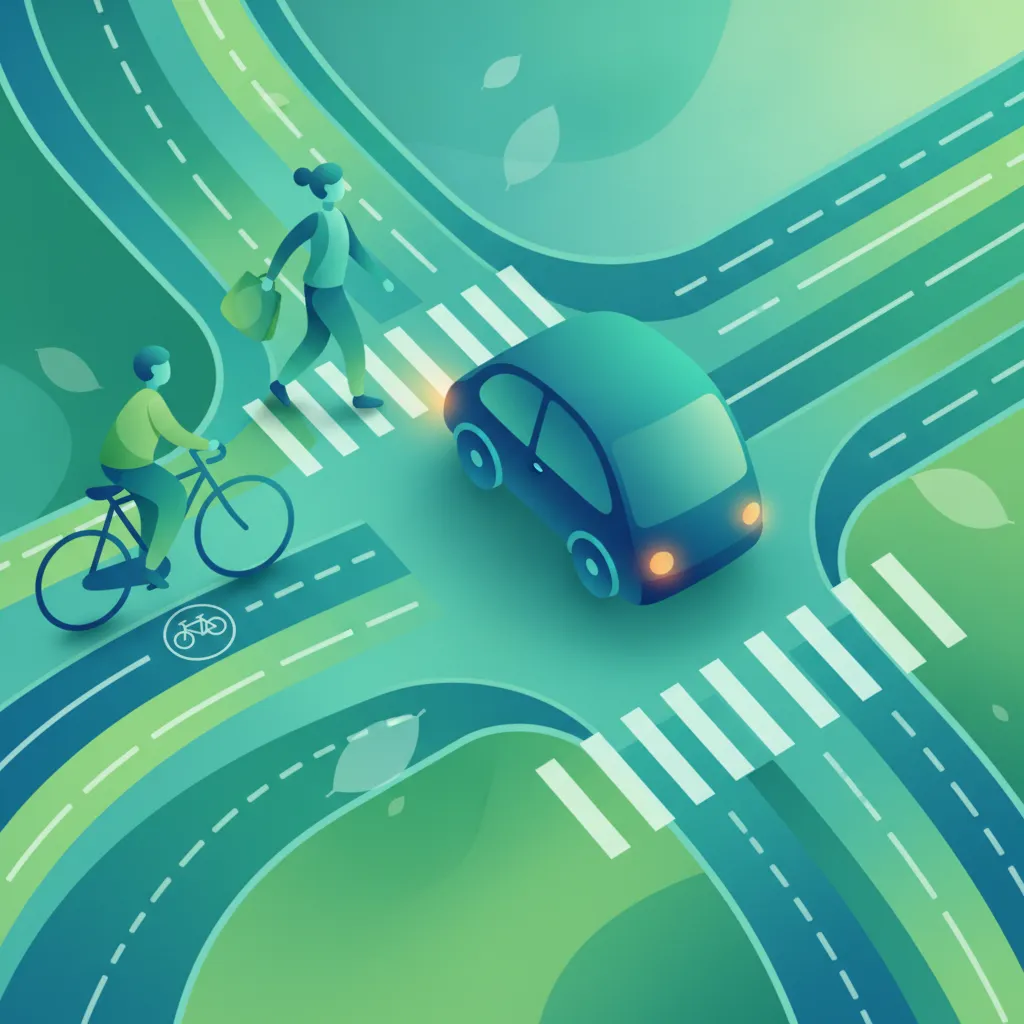
This lesson provides a systematic approach to safely navigating intersections. It covers how to interpret priority signs and traffic signals, establish right-of-way, and scan for potential conflicts from all directions. The importance of clear sightlines and anticipating the movements of other vehicles is a key focus.
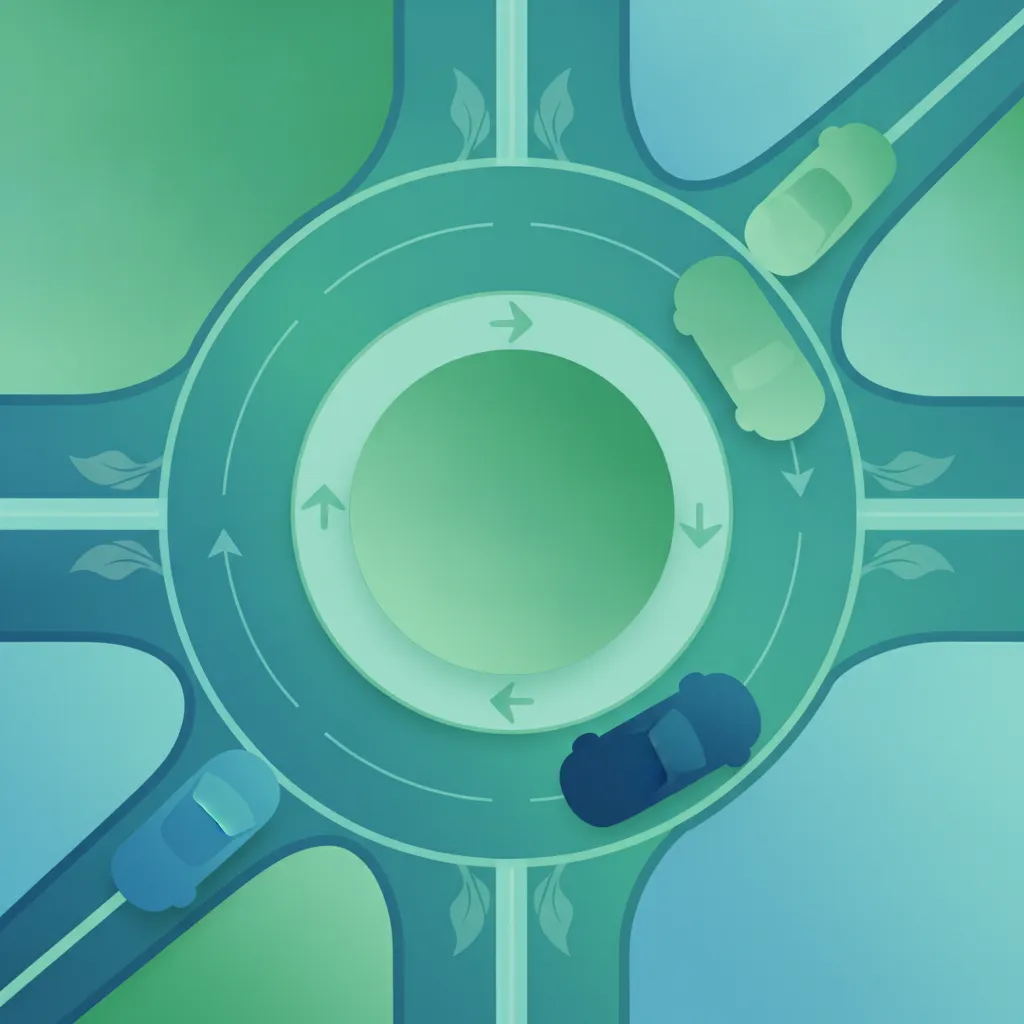
This lesson provides detailed instructions for navigating Danish roundabouts. It covers the rules for yielding upon entry, selecting the correct lane based on the intended exit, and signalling intentions clearly. The lesson also highlights the specific rules regarding priority for cyclists crossing entry and exit lanes.
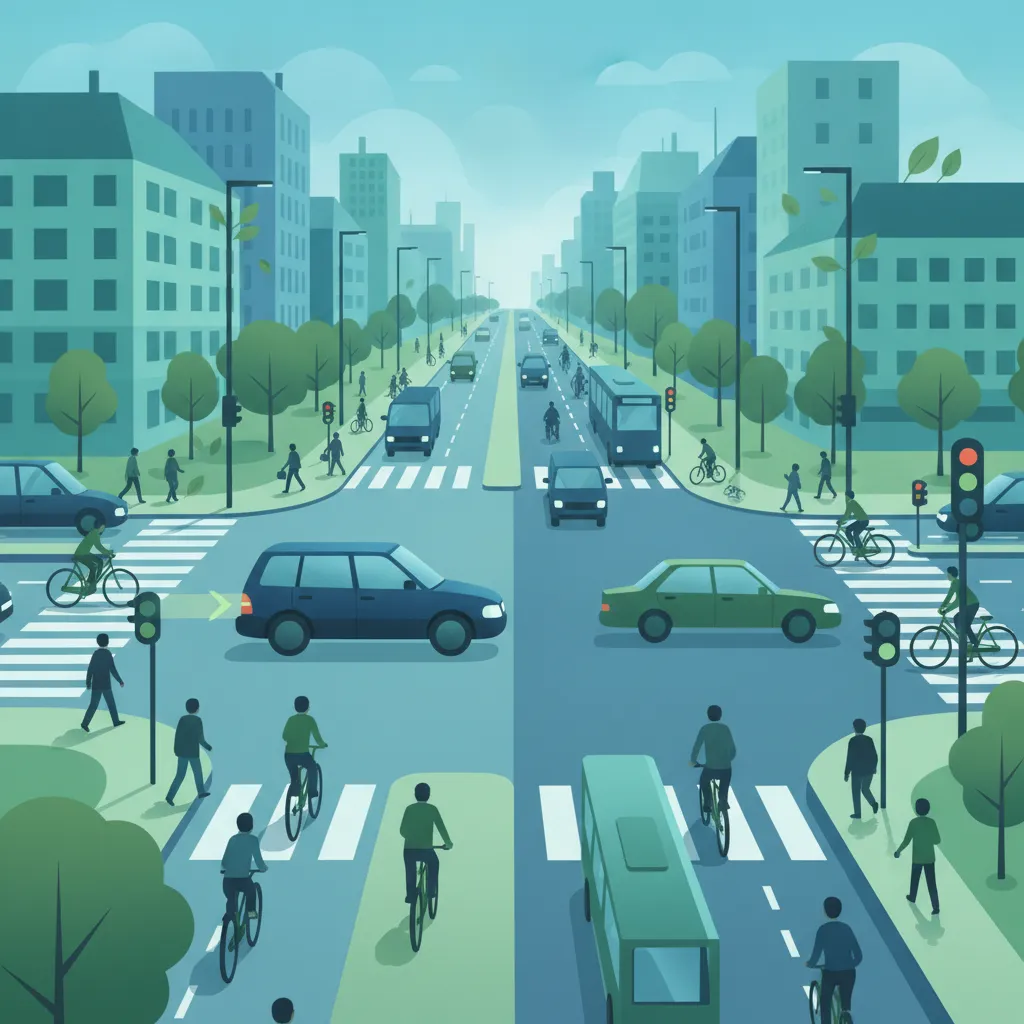
This lesson provides a structured method for approaching and crossing intersections safely. It reinforces the application of priority rules, the interpretation of signs and signals, and the importance of thorough observation. Specific attention is given to looking for cyclists and pedestrians who may be crossing the rider's path.
This lesson addresses the unique challenges of streets with dedicated cycle lanes and numerous bus stops. It teaches riders how to anticipate pedestrians moving to and from buses and how to position themselves to avoid conflict with cyclists. The goal is to navigate these complex environments smoothly and safely.
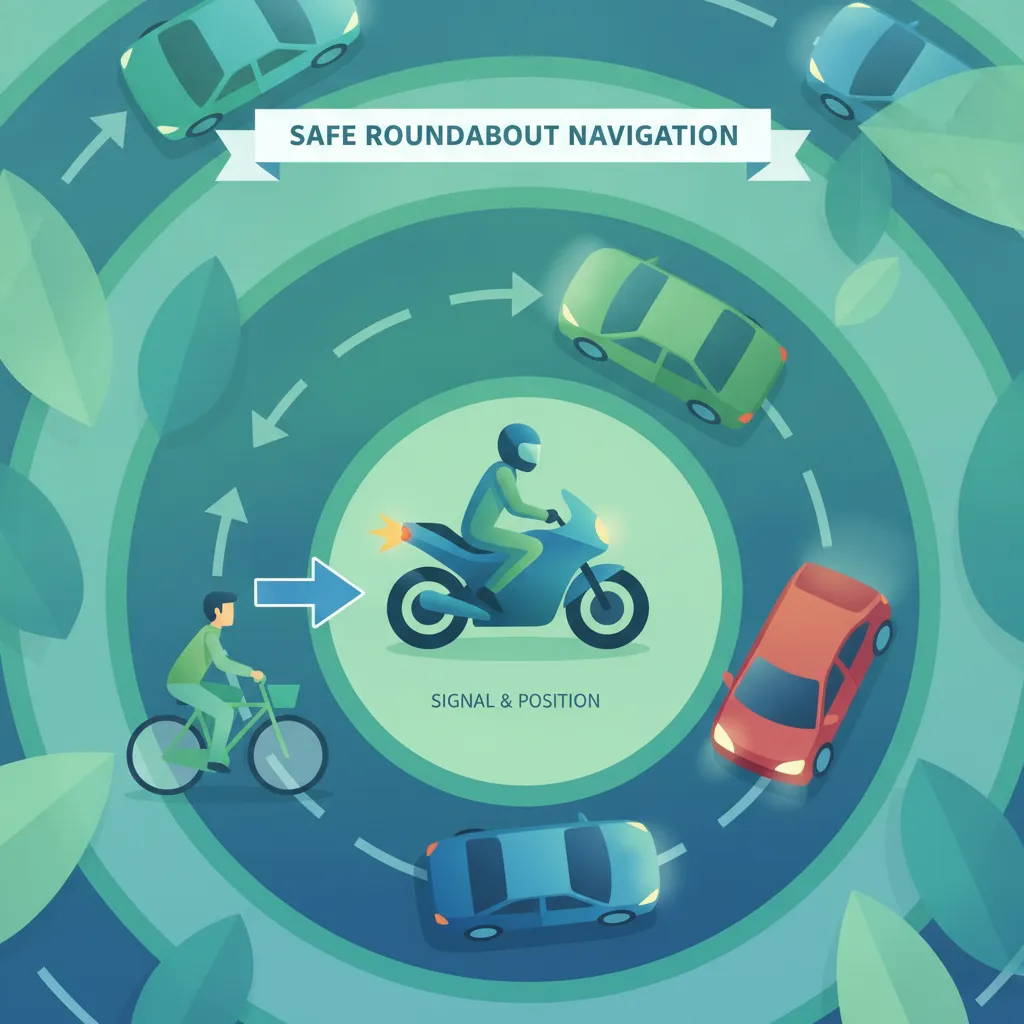
This lesson details the specific skills needed to navigate roundabouts on a motorcycle. It explains how to approach at a safe speed, select the correct lane based on your intended exit, and yield to circulating traffic. Proper use of signals to indicate intentions when entering and exiting is also covered.
This lesson provides detailed guidance on navigating pedestrian crossings (fodgængerfelter) and areas with high cyclist traffic. It clarifies your legal obligation to stop for pedestrians at zebra crossings and the proper speed to approach these zones. A central theme is understanding the rights of vulnerable road users and how to yield safely to them in accordance with Danish traffic law.
This lesson provides in-depth guidance on safely interacting with cyclists and e-bike riders, a daily reality in Danish cities. It explains how to provide adequate space when overtaking, how to anticipate their movements at intersections, and how to respect their right-of-way in designated lanes. Understanding these dynamics is essential for preventing common accidents and ensuring a safe urban driving experience for everyone.
This lesson provides critical guidance for driving in environments with heavy cycle traffic, typical of Danish cities. It focuses on identifying and yielding to cyclists in dedicated bike lanes, especially when turning right across their path. The content emphasizes advanced observation skills to detect cyclists in blind spots and the importance of giving adequate space.
This lesson addresses the critical skill of safely coexisting with cyclists and cargo bikes, which are prevalent in Denmark. It explains how to maintain a safe distance, overtake properly, and be vigilant for cyclists, especially when turning right. Understanding the infrastructure of cycle lanes and predicting cyclist behavior is a key focus.
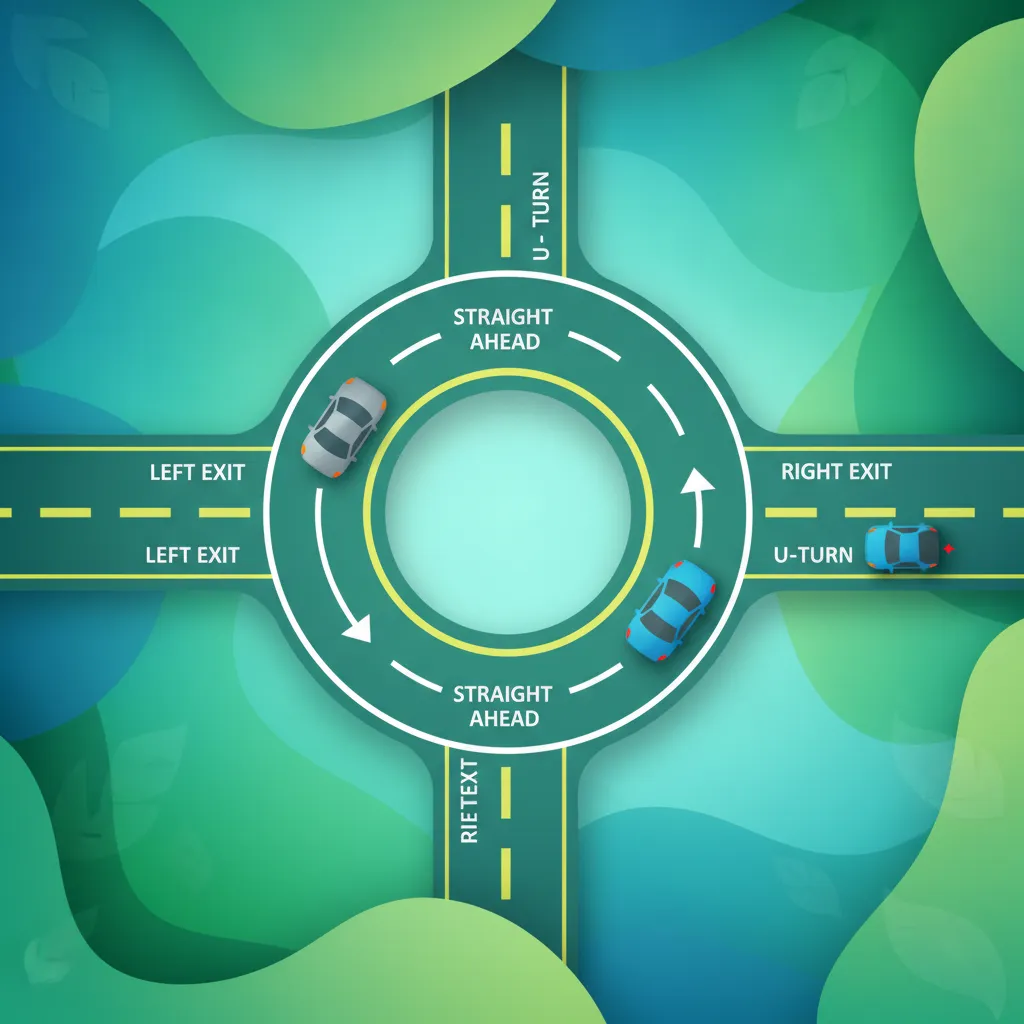
This lesson offers a step-by-step guide to navigating roundabouts in Denmark. You will learn how to approach and enter a roundabout, the requirement to yield to circulating traffic, and how to select the appropriate lane for your intended exit. Special attention is given to safely managing interactions with cyclists and pedestrians who may be present at roundabout entrances and exits.
Find clear answers to common questions learners have about Interacting with Cyclists, E-Bikes, and Pedestrians. Learn how the lesson is structured, which driving theory objectives it supports, and how it fits into the overall learning path of units and curriculum progression in Denmark. These explanations help you understand key concepts, lesson flow, and exam focused study goals.
Always check your mirrors and perform a thorough shoulder check to your right to ensure no cyclist is in your blind spot before you begin your turn. You must yield to cyclists who are continuing straight on the road.
Yes, if a pedestrian has stepped onto or is clearly waiting to cross at a pedestrian crossing, you must yield. In your theory test, always assume you should prioritize pedestrian safety.
Treat e-bikes with the same caution as conventional bicycles. Remember that e-bikes often travel at higher speeds, meaning they will reach junctions or intersections much faster than you might anticipate.
Correct lane positioning makes you more visible to cyclists and helps you maintain a safe lateral distance when passing. Never squeeze past a cyclist in a narrow lane; wait until you have enough room to pass safely.
Use our powerful search tool to pinpoint specific Danish driving theory topics, road signs, or traffic situations you need to review. Start exploring relevant practice sets now to reinforce your knowledge and build confidence for your upcoming driving licence exam.