
This lesson guides you through the complexities of navigating roundabouts on your motorcycle within the Danish road environment. Building on your understanding of intersections, we focus on the specific lane discipline, signaling, and priority rules required to maneuver roundabouts safely. Mastering these techniques is essential for both your theory exam success and your safety as a rider.
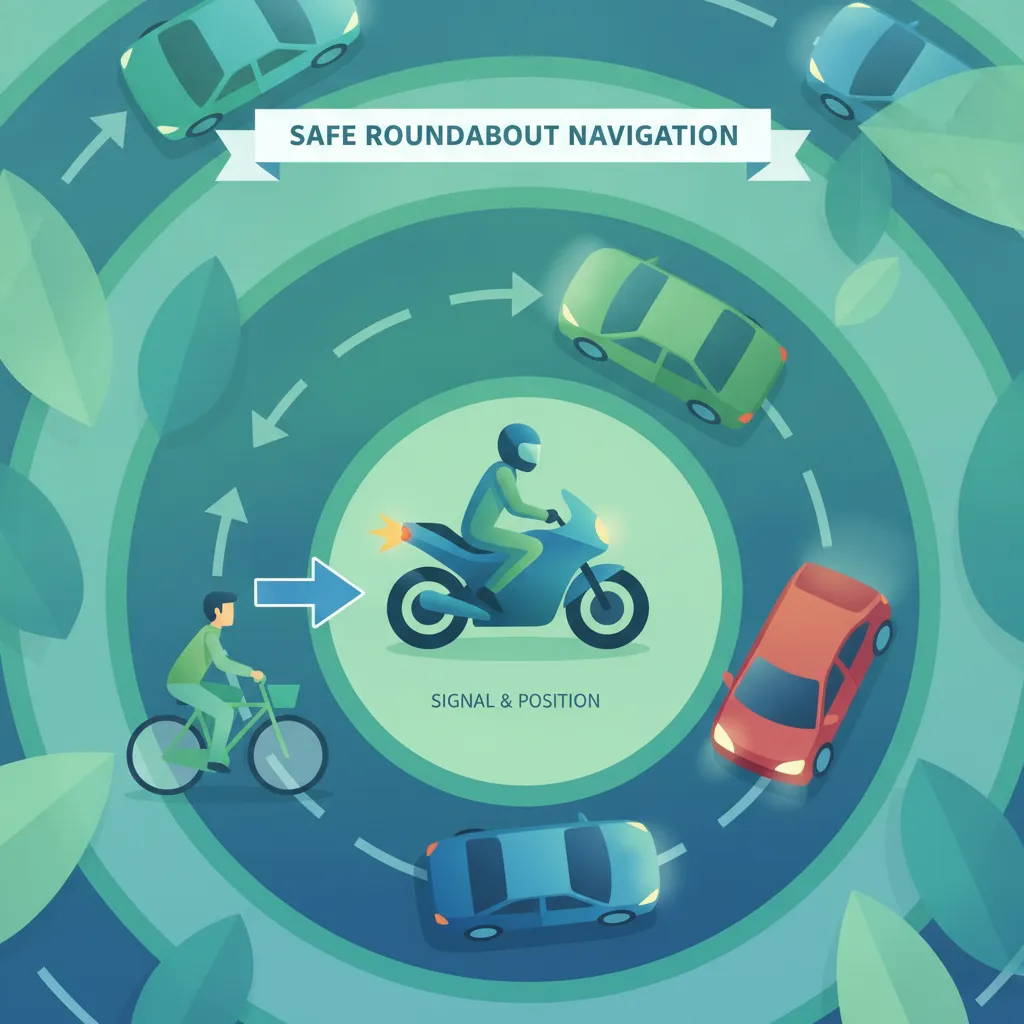
Lesson content overview
Roundabouts are an integral part of the road network in Denmark, designed to improve traffic flow and enhance safety compared to traditional intersections. However, for motorcyclists, navigating these circular junctions requires specific skills, heightened awareness, and precise execution due to the inherent vulnerability of two-wheeled vehicles. This lesson, part of your Danish Motorcycle Theory training, will detail the essential strategies and rules necessary to navigate roundabouts safely and confidently.
A roundabout is a circular intersection where traffic flows in one direction around a central island. In Denmark, as in most European countries, traffic circulates counterclockwise. This design aims to reduce collision points, lower vehicle speeds, and minimize delays, but it also introduces specific challenges for motorcyclists. Due to a motorcycle's smaller profile and often reduced stability at very low speeds, precise control, clear communication, and an acute understanding of priority rules are paramount. This chapter builds upon your foundational knowledge of general traffic rules, lane positioning, and signaling practices, applying them specifically to the dynamic environment of a roundabout.
A circular intersection designed for traffic to flow in one direction around a central island, typically counterclockwise in Denmark.
Motorcyclists are less visible than cars, which can lead to other road users failing to see them when entering or exiting a roundabout. Additionally, the need to lean through turns, combined with potential road surface hazards (like oil spills, gravel, or drain covers), requires a high degree of skill and vigilance. The constant observation, speed adjustment, and decision-making process in a roundabout can be more demanding for a motorcyclist.
To ensure safe passage through any roundabout, motorcyclists must master several core principles:
These principles work in concert to create a predictable and safe environment for all road users, especially for vulnerable motorcyclists.
The approach phase is critical for setting yourself up for a safe entry and navigation. Effective preparation involves a systematic process of observation, speed adjustment, and positioning.
As you near a roundabout, you should begin to reduce your speed well in advance. This is not merely about slowing down, but about establishing a speed that allows you to:
Aim for a speed that feels comfortable for a smooth, progressive turn, rather than a sharp brake-and-turn maneuver.
Pay close attention to road signs indicating a roundabout is ahead, as well as any yield signs at the entry point. The presence of a yield sign means you must give way to traffic already in the roundabout. Road markings will guide you toward the correct lane for your intended exit.
As you approach, position your motorcycle strategically within your chosen lane. This often means taking a central or slightly right-of-centre position, which helps make you more visible to drivers approaching from other entries or circulating traffic. Avoid riding too close to the curb, as this can make you less noticeable and leave you vulnerable to other vehicles cutting in.
Selecting the correct lane is fundamental to navigating a roundabout efficiently and safely. Incorrect lane choice can lead to confusion, sudden maneuvers, and increased risk of collision. In Danish roundabouts, the general rule for multi-lane entries is straightforward:
Proper lane discipline is critical for motorcyclists because it:
Never attempt to cut across multiple lanes within a roundabout. If you find yourself in the wrong lane, it is safer to go around again or take an unintended exit and reroute, rather than making a dangerous maneuver.
The yielding principle is non-negotiable. At all roundabouts in Denmark, unless otherwise specified by signs, you must yield to traffic already circulating within the roundabout.
As you approach the yield line, shift your gaze predominantly to the left to observe oncoming circulating traffic. Look for a sufficient "entry gap" – a safe distance to the next vehicle in the roundabout – that allows you to enter without forcing other drivers to slow down or swerve.
The safe distance to the next circulating vehicle that allows a motorcyclist to enter the roundabout without causing other drivers to brake or alter their speed.
When assessing the gap, consider:
While you must be prepared to stop, try to maintain a slow, rolling speed if a safe gap is immediately available. This helps with the motorcycle's stability and allows for a smoother, more fluid entry into the roundabout. Coming to a complete stop unnecessarily can disrupt the flow and make it harder to regain momentum, especially on an incline.
Clear and timely signaling is vital for motorcyclists in roundabouts to communicate their intentions to other road users, especially due to their smaller profile. Danish traffic rules require specific signaling practices:
Upon entering a roundabout, if you intend to take an exit beyond the immediate next one (i.e., going straight, turning left, or performing a U-turn), you should activate your left turn signal. This communicates to drivers waiting to enter from other approaches that you will be circulating for a while and will not be taking the first exit.
This rule (signaling left on entry) is characteristic of Danish and some other European traffic laws, differing from practices in some other countries where no signal is given until exiting.
Regardless of your initial entry signal, you must activate your right turn signal just before the exit you intend to take. This signal tells other road users (including those waiting to enter, or cyclists/pedestrians at the exit) that you are leaving the roundabout.
Approach: Observe, slow down, and select your lane.
Entry (for exits past the first): Signal left as you prepare to enter, after checking for a safe gap.
Circulation: Maintain your lane and continue observing other traffic.
Before Exit: Activate your right turn signal just after passing the exit before your intended exit.
Exit: Look out for pedestrians and cyclists, then exit smoothly.
After Exit: Cancel your signal.
Once you have successfully entered the roundabout, maintaining your awareness and position is key to a smooth exit.
Continue to hold your chosen lane position. On a motorcycle, it is especially important to be aware of vehicles to your sides, particularly larger vehicles that might not see you. Constantly scan your mirrors and blind spots. Be prepared for other drivers to change lanes or exit unexpectedly.
Adjust your speed smoothly to match the flow of traffic. Avoid sudden acceleration or braking, which can upset the balance of your motorcycle and be unexpected by other drivers. As you approach your exit, gradually reduce your speed if necessary, but maintain sufficient momentum to keep the motorcycle stable.
Before you commit to your exit:
Roundabout navigation can become more complex under certain conditions or in specific situations.
Rain, snow, ice, or strong winds significantly reduce traction and visibility.
In dense traffic, roundabouts can become congested.
Trucks and buses may require more space to maneuver within a roundabout and have larger blind spots.
While most Danish roundabouts follow standard designs, some may have spiral markings, multiple lanes, or unconventional exits.
Being aware of typical errors can help you prevent them.
Successfully navigating roundabouts on a motorcycle in Denmark involves a structured approach:
By mastering these strategies, you will enhance your safety and confidence when encountering roundabouts, contributing to a smoother and safer riding experience on Danish roads.
This lesson covers the essential strategies for motorcyclists navigating Danish roundabouts, which operate with counterclockwise traffic flow. The core principles are yielding to circulating traffic, maintaining proper lane discipline based on your intended exit, managing approach speed for observation and maneuverability, and using correct signaling (left on entry for exits beyond the first, right before your actual exit). Special attention is given to the unique vulnerabilities of motorcyclists regarding visibility and stability, as well as conditional variations including poor weather, heavy traffic, and interactions with larger vehicles. Understanding and applying these strategies is critical for both safe real-world riding and success in the Danish motorcycle theory exam.
A short set of high-value points that capture the most important learning from this lesson.
Always yield to all traffic already circulating within the roundabout before entering, regardless of the roundabout size.
Select your lane before entering based on your intended exit: right lane for the first exit, left lane for all subsequent exits.
On Danish roundabouts, signal left upon entry if taking an exit beyond the first, then always signal right before your intended exit.
Maintain your lane throughout the roundabout; never attempt to cut across multiple lanes within the circulating area.
Reduce speed on approach to allow sufficient observation time, reaction capability, and smooth maneuverability without losing momentum entirely.
Explore all units and lessons included in this driving theory course.
Danish roundabouts follow counterclockwise traffic flow, meaning you observe and yield to traffic approaching from your left.
If you enter the wrong lane, continue around the roundabout or take an unintended exit rather than making dangerous lane-change maneuvers.
When assessing an entry gap, consider the speed of circulating traffic, the size of vehicles (which may obscure your view), and your own acceleration capability.
Larger vehicles like trucks and buses have larger blind spots and may need to swing wider on turns; maintain generous distance from them.
In poor weather conditions, reduce speed further, increase following distance, and make all control inputs extra smooth to maintain traction.
Failing to yield to circulating traffic, which is the most common and dangerous mistake at roundabouts.
Using the wrong lane for your intended exit, leading to dangerous last-minute lane changes or incorrect maneuvers.
Signaling incorrectly: either forgetting to signal at all, signaling right too early which misleads previous exit drivers, or signaling too late to give others adequate reaction time.
Approaching at excessive speed, which reduces observation time, reaction capability, and smooth cornering control.
Cutting across multiple lanes within the roundabout instead of maintaining lane discipline throughout circulation.
Lesson content overview
A short set of high-value points that capture the most important learning from this lesson.
Always yield to all traffic already circulating within the roundabout before entering, regardless of the roundabout size.
Select your lane before entering based on your intended exit: right lane for the first exit, left lane for all subsequent exits.
On Danish roundabouts, signal left upon entry if taking an exit beyond the first, then always signal right before your intended exit.
Maintain your lane throughout the roundabout; never attempt to cut across multiple lanes within the circulating area.
Reduce speed on approach to allow sufficient observation time, reaction capability, and smooth maneuverability without losing momentum entirely.
Explore all units and lessons included in this driving theory course.
Danish roundabouts follow counterclockwise traffic flow, meaning you observe and yield to traffic approaching from your left.
If you enter the wrong lane, continue around the roundabout or take an unintended exit rather than making dangerous lane-change maneuvers.
When assessing an entry gap, consider the speed of circulating traffic, the size of vehicles (which may obscure your view), and your own acceleration capability.
Larger vehicles like trucks and buses have larger blind spots and may need to swing wider on turns; maintain generous distance from them.
In poor weather conditions, reduce speed further, increase following distance, and make all control inputs extra smooth to maintain traction.
Failing to yield to circulating traffic, which is the most common and dangerous mistake at roundabouts.
Using the wrong lane for your intended exit, leading to dangerous last-minute lane changes or incorrect maneuvers.
Signaling incorrectly: either forgetting to signal at all, signaling right too early which misleads previous exit drivers, or signaling too late to give others adequate reaction time.
Approaching at excessive speed, which reduces observation time, reaction capability, and smooth cornering control.
Cutting across multiple lanes within the roundabout instead of maintaining lane discipline throughout circulation.
Explore search topics learners often look for when studying Roundabout Strategies for Motorcyclists. These topics reflect common questions about road rules, driving situations, safety guidance, and lesson level theory preparation for learners in Denmark.
Browse additional driving theory lessons that cover connected traffic rules, road signs, and common driving situations related to this topic. Improve your understanding of how different rules interact across everyday traffic scenarios.
Learn to identify and avoid common mistakes motorcyclists make in Danish roundabouts. This lesson focuses on critical hazard perception, understanding other road users' behavior, and ensuring safe entry, circulation, and exit.
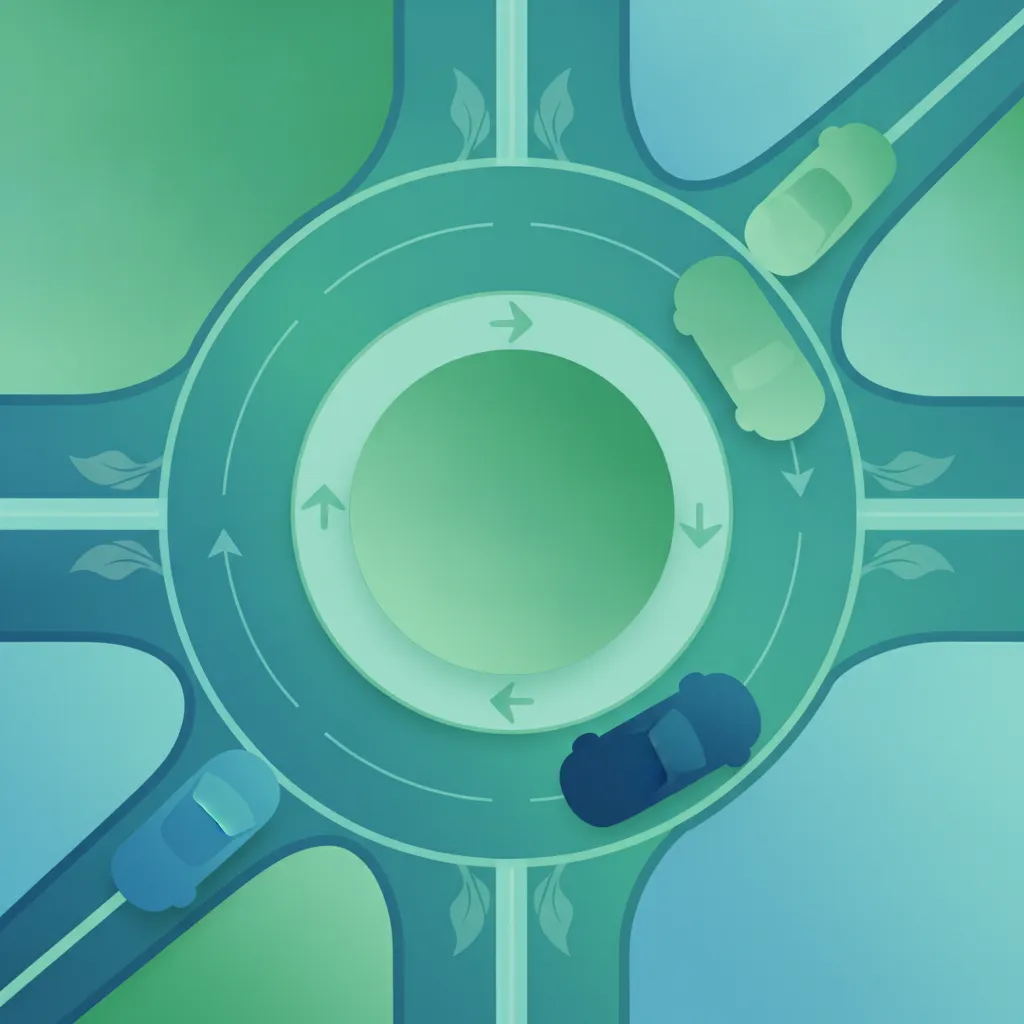
This lesson provides detailed instructions for navigating Danish roundabouts. It covers the rules for yielding upon entry, selecting the correct lane based on the intended exit, and signalling intentions clearly. The lesson also highlights the specific rules regarding priority for cyclists crossing entry and exit lanes.
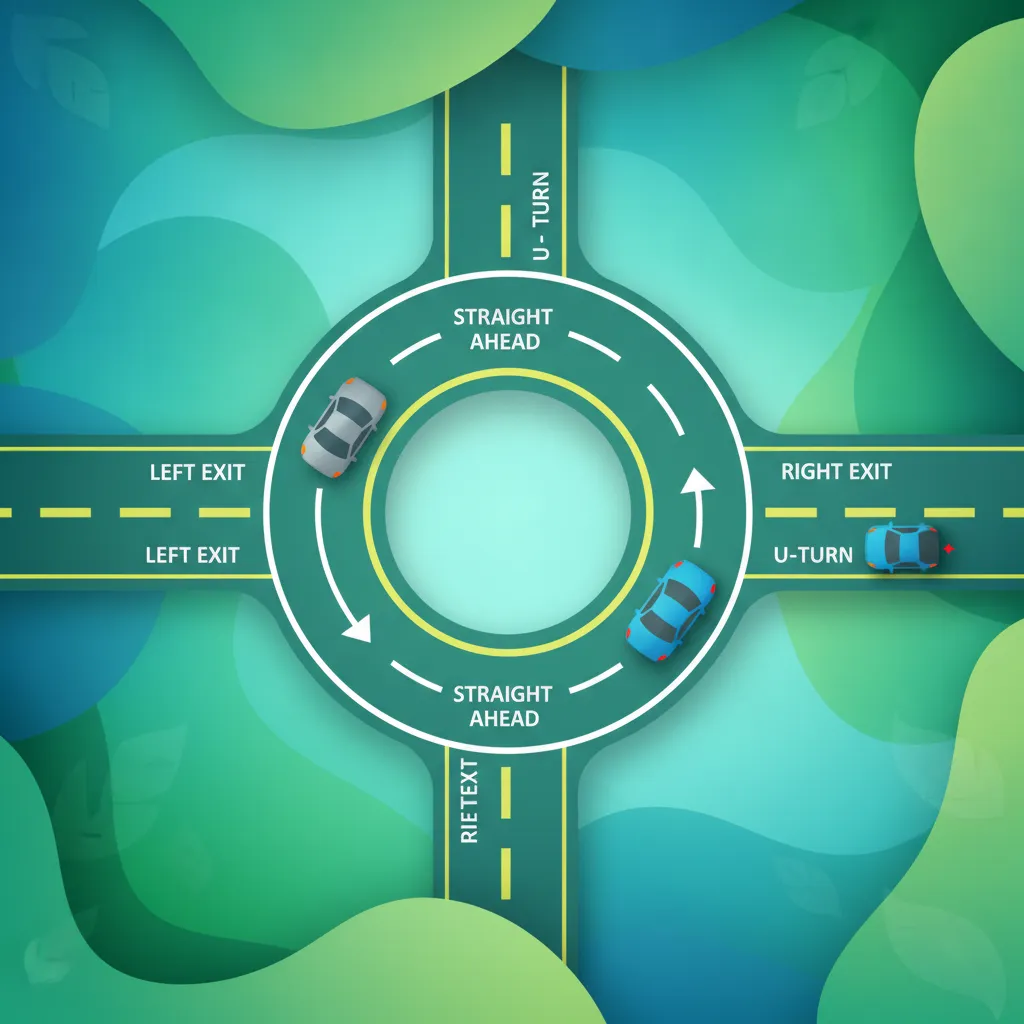
This lesson offers a step-by-step guide to navigating roundabouts in Denmark. You will learn how to approach and enter a roundabout, the requirement to yield to circulating traffic, and how to select the appropriate lane for your intended exit. Special attention is given to safely managing interactions with cyclists and pedestrians who may be present at roundabout entrances and exits.

This lesson provides a systematic approach to safely navigating intersections. It covers how to interpret priority signs and traffic signals, establish right-of-way, and scan for potential conflicts from all directions. The importance of clear sightlines and anticipating the movements of other vehicles is a key focus.

This lesson prepares riders for the specific hazards of rural roads, which often have less visibility and more unpredictable surfaces. It covers strategies for approaching blind curves, safely passing agricultural machinery, and being vigilant for animals on the road. Adjusting speed to match visibility is a core principle.

This lesson examines the specific risks inherent to motorcycling, emphasizing a rider's vulnerability due to reduced physical protection compared to other vehicles. It covers the heightened severity of injuries in accidents and the critical role of protective gear in mitigating harm. Learners will understand how to adopt defensive strategies, such as proper road positioning, to counteract these risks.

This lesson outlines a step-by-step procedure for managing a mechanical breakdown on the road. It covers moving the motorcycle to a safe location, using hazard lights, and wearing high-visibility clothing. The goal is to ensure personal safety while minimizing disruption and danger to other traffic.

This lesson explains the procedures for safely riding through construction zones. It covers how to respond to temporary signage, lane closures, and flaggers directing traffic. Riders will learn to reduce speed and be vigilant for uneven pavement, loose gravel, and the movement of workers and equipment.

This lesson provides an in-depth look at the blind spots of other vehicles and how to manage them. It teaches riders to recognize the large 'no-zones' around trucks and buses where they cannot be seen. Strategies include avoiding lingering in these areas and positioning the motorcycle for maximum visibility.

This lesson breaks down the critical skill of overtaking into a safe, repeatable process. It covers how to judge the time and space needed, check for oncoming traffic, and execute the maneuver decisively. The importance of signaling and returning to the lane safely is also emphasized.

This lesson addresses the unique challenges of streets with dedicated cycle lanes and numerous bus stops. It teaches riders how to anticipate pedestrians moving to and from buses and how to position themselves to avoid conflict with cyclists. The goal is to navigate these complex environments smoothly and safely.
Explore advanced techniques for navigating complex multi-lane roundabouts in Denmark. This lesson covers strategic lane selection, yielding to circulating traffic, and signaling for multiple exits to ensure safe passage on your motorcycle.
This lesson provides detailed instructions for navigating Danish roundabouts. It covers the rules for yielding upon entry, selecting the correct lane based on the intended exit, and signalling intentions clearly. The lesson also highlights the specific rules regarding priority for cyclists crossing entry and exit lanes.
This lesson offers a step-by-step guide to navigating roundabouts in Denmark. You will learn how to approach and enter a roundabout, the requirement to yield to circulating traffic, and how to select the appropriate lane for your intended exit. Special attention is given to safely managing interactions with cyclists and pedestrians who may be present at roundabout entrances and exits.
This lesson provides a systematic approach to safely navigating intersections. It covers how to interpret priority signs and traffic signals, establish right-of-way, and scan for potential conflicts from all directions. The importance of clear sightlines and anticipating the movements of other vehicles is a key focus.

This lesson provides a guide to motorway riding, a high-speed and demanding environment. It details the process for using acceleration lanes to merge smoothly, maintaining proper lane discipline, and preparing for exits well in advance. Key safety principles like the two-second rule are reinforced for this context.
This lesson explains the procedures for safely riding through construction zones. It covers how to respond to temporary signage, lane closures, and flaggers directing traffic. Riders will learn to reduce speed and be vigilant for uneven pavement, loose gravel, and the movement of workers and equipment.

This lesson explains the strategic importance of lane positioning for a motorcyclist. It teaches how to select a position within the lane that makes you most visible to other road users and provides an escape route from potential hazards. The content covers how to adjust your position based on traffic, road conditions, and to avoid being in another vehicle's blind spot.
This lesson focuses on interpreting the various markings painted on Danish road surfaces. It explains the rules associated with solid and broken lane lines, directional arrows, and special-purpose lanes for buses and cyclists. Understanding these markings is crucial for maintaining correct lane discipline and safely navigating complex road layouts.
This lesson addresses the unique challenges of streets with dedicated cycle lanes and numerous bus stops. It teaches riders how to anticipate pedestrians moving to and from buses and how to position themselves to avoid conflict with cyclists. The goal is to navigate these complex environments smoothly and safely.
This lesson provides a structured method for approaching and crossing intersections safely. It reinforces the application of priority rules, the interpretation of signs and signals, and the importance of thorough observation. Specific attention is given to looking for cyclists and pedestrians who may be crossing the rider's path.

This lesson covers the correct techniques for various turning manoeuvres, including how to signal, position your vehicle, and judge gaps in traffic. It also details the legal and safety protocols for overtaking, emphasizing the importance of assessing speed, distance, and oncoming traffic. A thorough understanding of these procedures is crucial for navigating intersections and two-lane roads safely.
Find clear answers to common questions learners have about Roundabout Strategies for Motorcyclists. Learn how the lesson is structured, which driving theory objectives it supports, and how it fits into the overall learning path of units and curriculum progression in Denmark. These explanations help you understand key concepts, lesson flow, and exam focused study goals.
In Denmark, you do not signal when entering a roundabout unless you are taking the first exit immediately. You must, however, always signal when exiting the roundabout to inform other road users of your intention.
You should choose the lane that corresponds to your intended exit. Generally, use the right lane for the first exit or going straight, and the left lane for exits to the left or full turns. Always check your blind spot before changing lanes.
The primary risk is being overlooked by other drivers or failing to spot cyclists who may be in your blind spot. Always scan thoroughly and maintain a safe gap to avoid sudden braking on potentially slippery road surfaces.
Yes, cyclists often have dedicated lanes in or around roundabouts in Denmark. You must always yield to cyclists who are already on the roundabout or crossing at the exits, as they are vulnerable road users with specific priority.
Use our powerful search tool to pinpoint specific Danish driving theory topics, road signs, or traffic situations you need to review. Start exploring relevant practice sets now to reinforce your knowledge and build confidence for your upcoming driving licence exam.