
This lesson details the mandatory paperwork and payment requirements for driving in Austria with a Category B license. Understanding these regulations is vital for legal compliance on motorways and expressways throughout the country.
Lesson content overview
Driving a vehicle legally and safely in Austria requires a thorough understanding of essential documentation, the Vignette system for motorways, and specific toll road regulations. This lesson provides a comprehensive guide to these critical aspects, ensuring you are fully prepared for legal compliance and smooth travel across Austria's diverse road network. Adhering to these rules is not just about avoiding fines; it's fundamental to road safety, liability coverage, and supporting the maintenance of vital infrastructure.
Operating a motor vehicle in Austria legally requires you to carry specific documents at all times. These documents verify your identity, your qualification to drive, and the legal status of your vehicle. Being able to present these swiftly to authorities upon request is mandatory and ensures a smooth interaction during traffic stops or after an incident.
The vehicle registration certificate, known as the Zulassungsbescheinigung in Austria, is an official document confirming your vehicle's registration. It serves as proof of ownership and contains crucial information about the vehicle and its registered holder. This document is divided into two parts:
You must present Part I of your Zulassungsbescheinigung during any police checks. It's crucial to keep the information on this certificate up to date, especially after changes in ownership or significant vehicle modifications, to avoid fines.
Always keep Part I of your Zulassungsbescheinigung easily accessible within your vehicle, but store Part II securely at home to prevent loss or theft of critical vehicle data.
In Austria, it is legally mandatory for every motor vehicle to have valid third-party liability insurance. This insurance, proven by a Versicherungsnachweis (proof of insurance), covers damages you might cause to other vehicles, property, or individuals in an accident. Without this mandatory coverage, you are not permitted to operate a vehicle on public roads.
Your proof of insurance can be an electronic document or a paper certificate. For international travel, a "Green Card" (International Motor Insurance Card) is often used to demonstrate valid insurance coverage in other European countries. Within Austria, an Austrian e-insurance certificate is sufficient.
This document must be carried in your vehicle at all times and presented to authorities upon request, particularly in the event of an accident. It is essential to ensure your insurance policy is renewed annually and remains active. Driving without valid insurance has severe legal and financial consequences, including substantial fines and potential vehicle impoundment.
Your driver's license, or Führerschein in Austria, is the official document confirming that you are qualified and legally authorized to operate a motor vehicle of a specific category. For most new drivers, this will be the Category B license, allowing you to drive passenger cars.
Your Führerschein must be carried with you whenever you are driving. It contains your personal details, a photograph, and the categories of vehicles you are licensed to drive. The EU driving license format is widely recognized across Europe.
It is your responsibility to present your driver's license to law enforcement officers upon request during a traffic stop. Holding a foreign license may require validation or conversion if you become a resident in Austria; always ensure your license is valid for use in Austria to avoid legal issues.
Attempting to drive without your valid Führerschein can result in significant fines. Always double-check you have it before starting your journey.
The legal requirement to carry these documents stems from the need for immediate verification by authorities. During a police check or after an accident, these documents provide essential information about the vehicle's legal status, the driver's authorization, and liability coverage. Failure to produce the mandatory documents when requested can lead to administrative fines. It can also complicate procedures, such as accident reporting or vehicle registration updates.
Austria employs a time-based road tax system known as the Vignette for using its motorways (Autobahnen) and expressways (Schnellstraßen). This system funds the construction, maintenance, and operation of Austria's high-speed road network. Understanding and complying with the Vignette system is crucial to avoid substantial fines.
A Vignette is essentially a user charge for a specific period of time, granting access to Austria's Autobahnen and Schnellstraßen. It does not charge based on distance traveled but rather for a set duration. Vignettes are available for different validity periods:
The Vignette is mandatory for nearly all Austrian motorways and expressways. These roads are clearly indicated by signs at their entry points.
Drivers have two options for purchasing a Vignette:
For physical Vignettes, proper placement is critical for validity. The sticker must be affixed to the inside of the front windshield, clearly visible from the outside. Common acceptable positions are in the upper left corner or behind the rearview mirror, ensuring it does not obstruct the driver's view. Placing it on the rear windshield, covering it with sun shades, or simply carrying it loose in the vehicle makes it invalid and can lead to fines.
Digital Vignettes, once activated and linked to your license plate, are automatically valid. There's no physical item to place, but you must ensure your license plate details are entered correctly during purchase.
Driving on an Austrian motorway or expressway without a valid and correctly affixed (or activated digital) Vignette is a violation of traffic law. Enforcement is carried out by both police patrols and automated camera systems.
The standard fine for driving without a valid Vignette or with an improperly placed physical Vignette is €120 for passenger cars. Higher fines apply for larger vehicles.
Repeated offenses or attempts to manipulate a Vignette can lead to even more severe penalties. It's crucial to purchase and activate your Vignette before entering any Vignette-mandatory road sections.
Beyond the general Vignette system, Austria also has specific road sections, known as Mautstraßen (toll roads), where additional fees are charged. These are typically expensive infrastructure projects like long tunnels, alpine passes, or specific bridge crossings. It is vital to understand that the Vignette does not cover these special toll sections; separate payment is required.
Toll roads in Austria are typically found on certain sections of Autobahnen or Schnellstraßen, or sometimes on scenic private roads (e.g., Grossglockner High Alpine Road, which is not part of the motorway system but also charges a fee).
Payment for these tolls can generally be made in a few ways:
Failure to pay the required toll fee before or upon entering a designated toll section can result in significant penalties. Toll roads are monitored by cameras and enforcement personnel. Non-payment can lead to:
Always ensure you have sufficient means to pay tolls or that your electronic payment system is active and correctly linked to your vehicle before approaching a toll road.
Law enforcement in Austria conducts routine checks to ensure drivers and vehicles comply with all necessary regulations. These checks are a crucial part of maintaining road safety and legal order.
During a roadside check, a police officer will typically ask to see your:
It is your responsibility to have these documents readily available and present them immediately upon request. Being organized and prepared can significantly streamline these interactions.
Enforcement of Vignette and toll requirements is also stringent. Cameras automatically scan license plates on motorways and toll sections to verify digital Vignette validity or toll payment. Physical Vignettes are checked by mobile patrols. Any non-compliance is recorded, and fines are issued.
Consider keeping a small folder in your glove compartment dedicated to these essential documents. This ensures they are organized and easily accessible for any checks.
Being aware of common pitfalls can save you from unnecessary fines and complications.
The rules for documentation, Vignette, and tolls generally remain consistent across various conditions, but certain contextual variations are important to consider.
This lesson covers the essential documentation, Vignette system, and toll road requirements for legal driving in Austria with a Category B license. Learners must understand that three specific documents—the Führerschein, Zulassungsbescheinigung Teil I, and Versicherungsnachweis—must always be carried when driving. The Austrian Vignette is a time-based road tax required for Autobahnen and Schnellstraßen, available as a physical sticker (placed on the front windshield) or digital version (linked to license plate), with a standard fine of €120 for non-compliance. Importantly, the Vignette does not cover special toll roads like tunnels and alpine passes, which require separate Maut payment through toll plazas or electronic systems. Understanding these distinctions and keeping documents organized ensures compliance and prevents costly fines during police checks or camera enforcement.
A short set of high-value points that capture the most important learning from this lesson.
Three documents are mandatory in the vehicle at all times: driver's license (Führerschein), registration certificate Part I (Zulassungsbescheinigung Teil I), and proof of insurance (Versicherungsnachweis).
Physical Vignettes must be affixed to the inside of the front windshield in clearly visible positions; digital Vignettes must be activated and correctly linked to the vehicle's license plate.
The Vignette covers general Autobahnen and Schnellstraßen use but does NOT cover specific toll sections like tunnels, alpine passes, and certain bridges which require separate Maut payment.
Vignettes are available in 10-day, 2-month, and 1-year validity periods, with the 1-year Vignette valid from December of the previous year through January of the following year.
Toll roads in Austria offer multiple payment methods including stationary toll plazas, electronic toll collection via license plate recognition, video toll systems, and GO-Box transponders for heavy vehicles.
Explore all units and lessons included in this driving theory course.
Zulassungsbescheinigung Part I must stay in the vehicle; Part II should be stored securely at home.
The Vignette is mandatory for nearly all Austrian motorways and expressways, clearly indicated by signs at entry points.
Without valid insurance, you cannot legally operate a vehicle on Austrian public roads; this must be renewed annually.
Toll roads (Mautstraßen) are separate from the Vignette system and require additional payment for specific high-cost infrastructure sections.
For digital Vignettes purchased online, there is an 18-day consumer protection period before activation unless bought at a physical sales point.
Driving without carrying the mandatory documents or forgetting to renew insurance before the expiry date.
Placing the physical Vignette on the rear windshield, covering it with sun shades, or carrying it loose in the vehicle, making it invalid.
Assuming the Vignette covers toll road sections like tunnels or alpine passes; these require separate payment.
Forgetting to pay for tolls at designated plazas or failing to register for electronic toll systems before entering Mautstraßen sections.
Not verifying that foreign insurance coverage is valid in Austria, particularly for non-EU policies that may require a Green Card.
Lesson content overview
A short set of high-value points that capture the most important learning from this lesson.
Three documents are mandatory in the vehicle at all times: driver's license (Führerschein), registration certificate Part I (Zulassungsbescheinigung Teil I), and proof of insurance (Versicherungsnachweis).
Physical Vignettes must be affixed to the inside of the front windshield in clearly visible positions; digital Vignettes must be activated and correctly linked to the vehicle's license plate.
The Vignette covers general Autobahnen and Schnellstraßen use but does NOT cover specific toll sections like tunnels, alpine passes, and certain bridges which require separate Maut payment.
Vignettes are available in 10-day, 2-month, and 1-year validity periods, with the 1-year Vignette valid from December of the previous year through January of the following year.
Toll roads in Austria offer multiple payment methods including stationary toll plazas, electronic toll collection via license plate recognition, video toll systems, and GO-Box transponders for heavy vehicles.
Explore all units and lessons included in this driving theory course.
Zulassungsbescheinigung Part I must stay in the vehicle; Part II should be stored securely at home.
The Vignette is mandatory for nearly all Austrian motorways and expressways, clearly indicated by signs at entry points.
Without valid insurance, you cannot legally operate a vehicle on Austrian public roads; this must be renewed annually.
Toll roads (Mautstraßen) are separate from the Vignette system and require additional payment for specific high-cost infrastructure sections.
For digital Vignettes purchased online, there is an 18-day consumer protection period before activation unless bought at a physical sales point.
Driving without carrying the mandatory documents or forgetting to renew insurance before the expiry date.
Placing the physical Vignette on the rear windshield, covering it with sun shades, or carrying it loose in the vehicle, making it invalid.
Assuming the Vignette covers toll road sections like tunnels or alpine passes; these require separate payment.
Forgetting to pay for tolls at designated plazas or failing to register for electronic toll systems before entering Mautstraßen sections.
Not verifying that foreign insurance coverage is valid in Austria, particularly for non-EU policies that may require a Green Card.
Explore search topics learners often look for when studying Documentation, Vignette, and Toll Road Awareness. These topics reflect common questions about road rules, driving situations, safety guidance, and lesson level theory preparation for learners in Austria.
Browse additional driving theory lessons that cover connected traffic rules, road signs, and common driving situations related to this topic. Improve your understanding of how different rules interact across everyday traffic scenarios.
Understand the essential vehicle documents required in Austria, including registration, insurance, and driver's licenses. Learn about compliance for legal driving and avoid common pitfalls.
This lesson details the essential legal and administrative requirements for operating an AM vehicle in Austria. It covers the processes for vehicle registration, the obligation for licence plates, and the necessity of third-party liability insurance. Furthermore, it explains the importance of regular technical inspections to ensure the vehicle remains roadworthy and compliant with national standards.

This lesson details the mandatory personal and vehicle documentation required for motorcyclists in Austria. It covers the necessity of carrying a valid licence card, vehicle registration papers, and proof of insurance at all times. Understanding these legal requirements ensures full compliance with Austrian traffic law and facilitates smooth interactions with law enforcement.

This lesson delves into the specific Austrian laws and regulations that professional passenger drivers must adhere to. It provides an overview of rules concerning driving and rest times, the use of the digital tachograph, and the essential documents that must be carried at all times. Understanding these legal obligations is crucial for compliance and avoiding penalties during roadside checks.

This lesson focuses on the legal restrictions concerning a heavy vehicle's dimensions, including maximum height, width, and length. It teaches drivers how to interpret road signs and supplemental plates that indicate these limits. This knowledge is crucial for route planning, especially when navigating under bridges, through tunnels, and on restricted roads.
This lesson introduces the fundamentals of regular vehicle inspection and preventive maintenance. Learners will understand how to perform essential pre-drive checks, including verifying fluid levels (oil, coolant, washer fluid), testing brakes, and checking the responsiveness of the steering. Adhering to a basic maintenance schedule is presented as a critical habit for ensuring long-term vehicle safety and roadworthiness, helping to prevent mechanical failures.

This lesson introduces the L17 program for accompanied driving, detailing the legal requirements for both the learner and the supervising driver (Begleitperson). It outlines the structured learning stages, mandatory driving hours, and the importance of gaining practical experience in diverse traffic scenarios. Emphasis is placed on risk management protocols, correct documentation, and the necessary insurance coverage during the supervised practice period.

This lesson focuses on the driver's legal and ethical responsibility for the safety of all passengers. It details the mandatory use of seatbelts for all occupants and provides a thorough explanation of Austrian regulations concerning child restraints. Learners will understand how to choose and correctly install the appropriate child seat based on a child's age, weight, and height, ensuring maximum protection in the event of a collision.

This lesson details the mandatory lighting and reflector requirements for Category AM vehicles in Austria. It explains the functions of different light settings, including daytime running lights, and their importance for being seen. Additionally, it covers the legal standards for protective helmets, a critical component of rider safety.
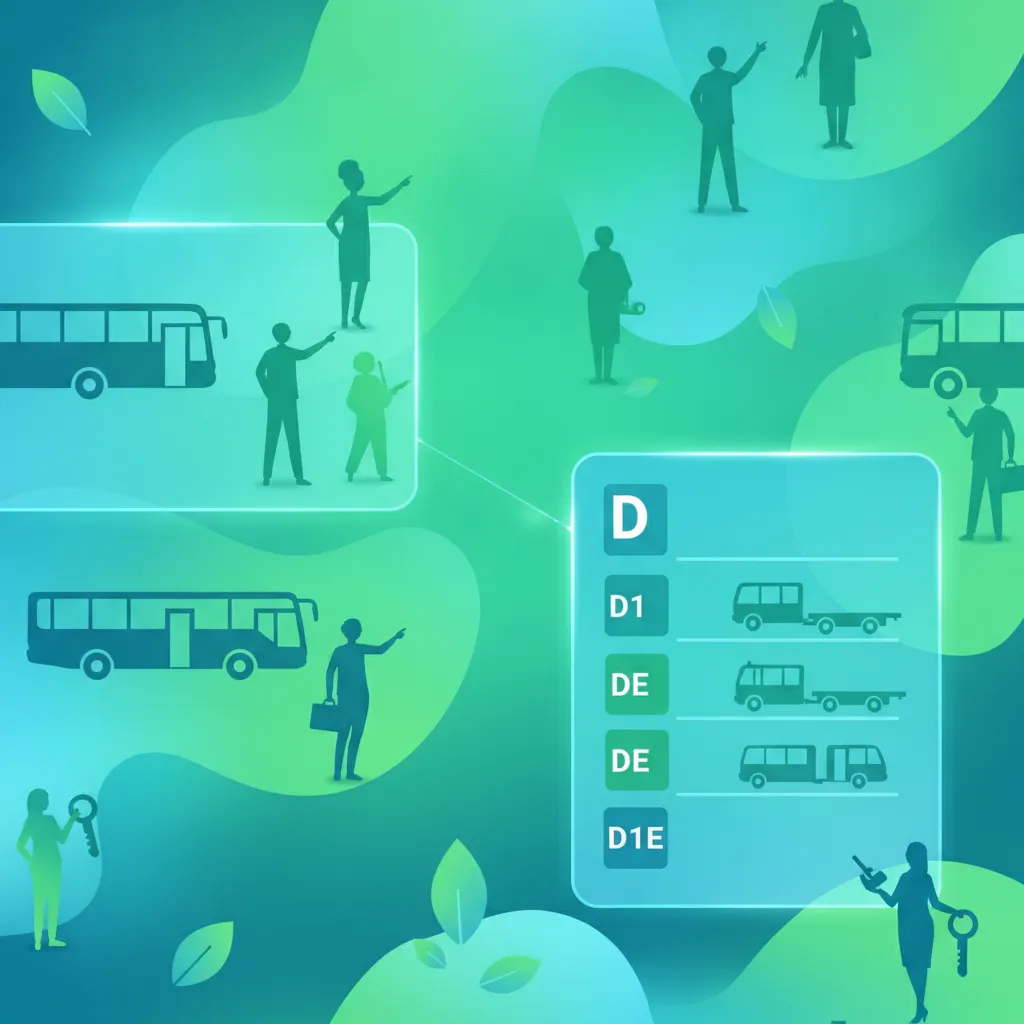
This lesson provides a clear breakdown of the different Category D licences in Austria. It explains the specific rights and limitations associated with each, including the maximum number of passengers for D1 (minibus) and D (bus/coach). Furthermore, it details the rules for combination vehicles, covering trailers (D1E, DE) and their specific operational requirements.

This lesson covers the various lighting and reflector systems required on heavy goods vehicles in Austria. It explains the function and legal requirements for headlights, taillights, brake lights, indicators, and reflective markings. Ensuring all lighting systems are operational is essential for visibility and communicating intentions to other road users.
Navigate Austria's motorway and expressway system with a guide to the Vignette, its purchase, placement, and digital options. Clarify differences between Vignette and special toll roads.

This lesson provides essential knowledge for using Austria's high-speed road network. It covers the correct procedure for entering via acceleration lanes, maintaining strict lane discipline (keeping right, passing left), and understanding the digital or physical Vignette (toll sticker) requirement. The formation of the 'Rettungsgasse' (emergency corridor) during traffic jams is also a key topic.
Find clear answers to common questions learners have about Documentation, Vignette, and Toll Road Awareness. Learn how the lesson is structured, which driving theory objectives it supports, and how it fits into the overall learning path of units and curriculum progression in Austria. These explanations help you understand key concepts, lesson flow, and exam focused study goals.
Operating a vehicle on an Autobahn or Schnellstraße without a valid, properly affixed, or digital Vignette results in a significant financial penalty known as an Ersatzmaut. It is mandatory to ensure your Vignette is valid and clearly visible before entering these roads.
Yes, some sections of motorways, alpine roads, and tunnels, such as the Brenner Pass, charge a separate 'Streckenmaut' or route toll. These are handled independently of the standard Vignette system.
You must always carry your valid driver's license (Führerschein), the vehicle's registration certificate (Zulassungsschein), and proof of liability insurance. Digital versions are increasingly common, but knowing the physical requirements for the exam is crucial.
The standard Vignette covers passenger vehicles up to 3.5 tonnes. Heavier vehicles or those towing specific loads may be subject to different toll systems like the GO-Box, which is an important distinction for the theory exam.
Refine your study plan by searching for specific Austrian driving theory practice sets. Pinpoint questions related to particular road rules, signs, or challenge levels, and begin practicing immediately to reinforce your knowledge and excel in your official exam with confidence. Get started with focused revision today.