
This lesson details the critical legal framework for professional bus and coach drivers in Austria, ensuring you meet all compliance standards. Building on your understanding of professional identity, you will explore mandatory documentation and the technical requirements for vehicle operation.

Lesson content overview
For individuals pursuing an Austrian Driving Theory Course for Bus & Coach Licence (Category D), a deep understanding of specific legal obligations is paramount. This lesson outlines the mandatory regulations that professional passenger drivers in Austria, holding Category D, D1, DE, or D1E licences, must adhere to. It covers crucial aspects such as driving and rest times, the correct operation of the digital tachograph, and the essential documents that must be carried during transport operations.
Compliance with these laws is not merely a formality; it is a fundamental aspect of ensuring road safety, preventing driver fatigue, and upholding the highest standards of passenger duty of care. Adhering to these regulations also prevents severe penalties during roadside checks and maintains the professionalism expected of all bus and coach operators throughout Austria.
Professional passenger driving involves significant responsibility, making strict adherence to legal obligations a cornerstone of the profession. These regulations are designed to safeguard drivers, passengers, and other road users by mitigating risks associated with fatigue, ensuring vehicle roadworthiness, and maintaining transparent operational records. The legal framework provides a clear set of guidelines that underpin safe and responsible passenger transport across Austria, from busy city routes to challenging alpine roads.
Failure to comply with these regulations can lead to substantial fines, licence suspension, or even criminal charges, in addition to compromising public trust. Therefore, understanding and meticulously following these rules is essential for every aspiring and current professional bus and coach driver.
Driving and rest time limits are among the most critical regulations for professional drivers. These rules are primarily designed to combat driver fatigue, a leading cause of accidents in the transport sector. By stipulating maximum driving periods and mandatory rest intervals, the law ensures that drivers are adequately rested and alert behind the wheel, thereby significantly enhancing road safety.
Drivers must meticulously plan their routes and schedules to incorporate these breaks, which directly impacts timetables and operational efficiency. The digital tachograph plays a vital role in accurately recording these times, providing verifiable data for compliance checks by authorities and employers.
The law imposes clear boundaries on how long a professional driver can operate a passenger vehicle. This ensures that fatigue does not compromise their ability to safely transport passengers.
The standard maximum daily driving time is 9 hours. However, this can be extended to 10 hours twice per week. This extension offers some flexibility but must be used judiciously and not as a regular practice. It's crucial for drivers to understand that these limits apply to actual driving time, excluding breaks and other work activities.
Beyond daily limits, regulations also control cumulative driving over longer periods to prevent chronic fatigue. The maximum weekly driving time for a professional driver is 56 hours. This means that even if a driver consistently uses the 9-hour daily limit, they must ensure their total for the week does not exceed 56 hours.
Furthermore, there is a fortnightly driving limit of 90 hours over any two consecutive weeks. This bi-weekly limit prevents drivers from "catching up" on lost driving time in one week by excessively driving in the subsequent week, reinforcing the goal of sustainable fatigue prevention. Drivers must keep a careful eye on their cumulative driving hours to remain compliant.
Just as driving times are regulated, so are the necessary breaks from driving. These rest periods are essential for a driver's physical and mental recovery.
After 4.5 hours of continuous driving, a driver must take a minimum regular rest of 45 minutes. This break can be taken as a single 45-minute period, or it can be split into two parts within the same 4.5-hour driving period: an initial break of at least 15 minutes followed by a second break of at least 30 minutes. Both parts must be taken within the 4.5-hour driving window. It's important to note that short pauses, such as a 5-minute stop for fuel or a quick check, do not count as official rest periods.
The division of a regular rest period (minimum 45 minutes after 4.5 hours of driving) into two shorter, distinct breaks, specifically a 15-minute break followed by a 30-minute break. Both parts must occur within the same 4.5-hour driving period.
In addition to regular breaks, professional drivers must take weekly rest periods. A regular weekly rest must be at least 45 hours long and must be taken within any period of six 24-hour periods from the end of the previous weekly rest.
A reduced weekly rest of at least 24 hours is permitted, but with strict conditions. It can only be used up to three consecutive weeks, and any reduction from the 45-hour regular rest must be compensated by an equivalent period of rest taken en bloc before the end of the third week following the reduced rest. This compensatory rest must be attached to another rest period of at least nine hours. For example, if a driver takes a 24-hour reduced rest (a reduction of 21 hours from 45), they must add 21 hours to another rest period within the stipulated timeframe.
The digital tachograph is an indispensable tool for ensuring compliance with driving and rest time regulations. Its accurate recording capabilities provide a transparent and undeniable record of a driver's activities.
A digital tachograph is an electronic device installed in most commercial vehicles, including passenger buses and coaches over 3.5 tonnes, to automatically record data related to vehicle speed, distance travelled, and driver activities (driving, rest, other work, and availability). Its primary purpose is to provide verifiable data for authorities and employers to monitor compliance with driver's hours regulations and prevent fatigue-related accidents. It acts as an objective witness to a driver's working patterns.
Every professional driver is issued a personal driver card (Fahrerkarte), which is an electronic smart card. This card must be inserted into the digital tachograph before a driver begins their shift and removed only after the shift concludes. The driver card stores all relevant data pertaining to that specific driver's activities, including their driving times, rest periods, and other work. It functions as a personal, tamper-proof logbook, ensuring that each driver's individual compliance can be tracked and verified.
The integrity of tachograph data is paramount. Drivers are legally obligated to ensure the correct operation of the tachograph and the integrity of the data it records. This means:
Tampering with a digital tachograph or falsifying data on a driver card is a severe offense that can result in heavy fines, licence suspension, and even imprisonment. Always ensure the tachograph operates correctly and record all activities accurately.
During any journey, professional passenger drivers must carry a specific set of documents that confirm their qualifications, the legality of their vehicle, and their authorization to transport passengers. These documents are vital for swift verification during roadside inspections.
The most fundamental document is a valid driver's licence corresponding to the vehicle being operated. For bus and coach drivers in Austria, this means holding a Category D, D1, DE, or D1E licence, depending on the type and size of the vehicle and whether a trailer is attached. The licence must be current and not expired or suspended. This document serves as proof of the driver's legal qualification to operate the passenger vehicle.
The vehicle itself must also meet legal requirements, demonstrated through its documentation. Drivers must carry:
To ensure comprehensive legal compliance and protection, additional documents are required:
It is generally a requirement for these documents to be physical copies and readily accessible for inspection. Digital copies, while convenient, are typically not sufficient on their own for official roadside checks.
Understanding common pitfalls can help drivers avoid infractions and maintain a clean record. Many violations stem from misunderstandings or pressures related to scheduling.
While the rules provide a framework, certain conditions can influence how a driver approaches their legal obligations, especially concerning safety.
Adverse weather, such as heavy snow, ice, or dense fog, can significantly increase driver workload and fatigue. While the legal driving time limits remain constant, it is prudent for drivers to:
Similarly, challenging road types, like winding alpine routes, demand higher concentration and physical exertion. Drivers should mentally account for this increased workload when planning their day, potentially taking breaks earlier than legally mandated minimums.
The specific characteristics of the vehicle and the nature of the passengers can also add to the driver's psychological load.
In the rare event of a tachograph malfunction, drivers have specific obligations under EU Regulation No 165/2014:
The penalties for violating Austrian driving and rest time regulations, tachograph rules, or documentation requirements can be substantial. These penalties are designed to deter non-compliance and reinforce the importance of safety.
Consequences can range from significant fines for minor infringements (e.g., slight overruns of driving time, incorrect mode selection on the tachograph) to licence suspension for repeated or more severe violations. In cases of serious tachograph tampering or operating without a valid licence, drivers may face criminal charges and even imprisonment. Furthermore, vehicles found to be unroadworthy or operating without required documents may be prohibited from further road use or even impounded, causing significant operational disruption and financial loss for the transport company.
Compliance with specific legal obligations is non-negotiable for professional passenger drivers in Austria. The regulations are meticulously designed to ensure safety, combat driver fatigue, and maintain professionalism within the industry.
This lesson covers the mandatory legal framework for Austrian Category D professional bus and coach drivers, focusing on driving time limits (9 hours daily extendable to 10 hours twice weekly, 56 hours weekly, 90 hours fortnightly), mandatory rest periods (45 minutes after 4.5 hours driving, weekly rests of 45 hours regular or 24 hours reduced with compensation), digital tachograph operation with personal driver cards, and required documentation including licence, registration, inspection certificates, and passenger transport licence. The content emphasizes that compliance is essential for road safety, prevents fatigue-related accidents, and protects drivers from substantial fines, licence suspension, or criminal charges during roadside checks.
A short set of high-value points that capture the most important learning from this lesson.
Professional bus drivers in Austria must not exceed 9 hours of daily driving time (extendable to 10 hours twice weekly), 56 hours weekly, or 90 hours over any two consecutive weeks.
A minimum 45-minute rest break is mandatory after 4.5 hours of continuous driving, which can be split into 15 minutes followed by 30 minutes within the same driving window.
The digital tachograph must have your personal driver card inserted before starting work; it automatically records driving time, speed, rest periods, and other work activities.
All required documents must be physical copies readily accessible: valid Category D licence, vehicle registration, current inspection certificate (TÜV/ASU), insurance certificate, and passenger transport licence where applicable.
Reduced weekly rest of 24 hours is permitted for up to three consecutive weeks only, and any reduction must be compensated by an equivalent rest period attached to another rest of at least 9 hours.
Explore all units and lessons included in this driving theory course.
Short stops under 15 minutes (fuel, quick checks) do not count as official rest periods; only full breaks of at least 15 minutes satisfy the split rest requirement.
If three reduced weekly rests are taken, a full 45-hour weekly rest must be taken in the fourth week to remain compliant.
Weekly rest periods must be completely uninterrupted; any work activity during declared rest invalidates the entire rest period.
During a tachograph malfunction, drivers must immediately report to their employer and keep a manual record of all activities until repairs are completed within seven days.
Tampering with tachograph data or falsifying driver card records can result in criminal charges, heavy fines, and imprisonment, not just administrative penalties.
Assuming short pauses at fuel stops or traffic lights count toward the 45-minute rest requirement, when only breaks of at least 15 minutes officially register on the tachograph.
Failing to track cumulative weekly hours while focusing only on daily limits, potentially exceeding the 56-hour weekly cap.
Not compensating for reduced weekly rests within the required timeframe, leading to a compliance gap before the end of the third week.
Forgetting to insert the driver card immediately upon entering the vehicle and beginning work without proper recording.
Performing operational tasks like vehicle cleaning or minor maintenance during weekly rest, which invalidates the rest period and restarts the rest requirement.
Lesson content overview
A short set of high-value points that capture the most important learning from this lesson.
Professional bus drivers in Austria must not exceed 9 hours of daily driving time (extendable to 10 hours twice weekly), 56 hours weekly, or 90 hours over any two consecutive weeks.
A minimum 45-minute rest break is mandatory after 4.5 hours of continuous driving, which can be split into 15 minutes followed by 30 minutes within the same driving window.
The digital tachograph must have your personal driver card inserted before starting work; it automatically records driving time, speed, rest periods, and other work activities.
All required documents must be physical copies readily accessible: valid Category D licence, vehicle registration, current inspection certificate (TÜV/ASU), insurance certificate, and passenger transport licence where applicable.
Reduced weekly rest of 24 hours is permitted for up to three consecutive weeks only, and any reduction must be compensated by an equivalent rest period attached to another rest of at least 9 hours.
Explore all units and lessons included in this driving theory course.
Short stops under 15 minutes (fuel, quick checks) do not count as official rest periods; only full breaks of at least 15 minutes satisfy the split rest requirement.
If three reduced weekly rests are taken, a full 45-hour weekly rest must be taken in the fourth week to remain compliant.
Weekly rest periods must be completely uninterrupted; any work activity during declared rest invalidates the entire rest period.
During a tachograph malfunction, drivers must immediately report to their employer and keep a manual record of all activities until repairs are completed within seven days.
Tampering with tachograph data or falsifying driver card records can result in criminal charges, heavy fines, and imprisonment, not just administrative penalties.
Assuming short pauses at fuel stops or traffic lights count toward the 45-minute rest requirement, when only breaks of at least 15 minutes officially register on the tachograph.
Failing to track cumulative weekly hours while focusing only on daily limits, potentially exceeding the 56-hour weekly cap.
Not compensating for reduced weekly rests within the required timeframe, leading to a compliance gap before the end of the third week.
Forgetting to insert the driver card immediately upon entering the vehicle and beginning work without proper recording.
Performing operational tasks like vehicle cleaning or minor maintenance during weekly rest, which invalidates the rest period and restarts the rest requirement.
Explore search topics learners often look for when studying Specific Legal Obligations for Austrian Drivers. These topics reflect common questions about road rules, driving situations, safety guidance, and lesson level theory preparation for learners in Austria.
Browse additional driving theory lessons that cover connected traffic rules, road signs, and common driving situations related to this topic. Improve your understanding of how different rules interact across everyday traffic scenarios.
Understand the specific Austrian laws on daily, weekly, and fortnightly driving limits for Category D drivers. Learn about mandatory regular and weekly rest periods, and how they ensure driver safety and compliance with legal requirements.

This lesson highlights the serious risks of driving while fatigued. It teaches drivers to recognize the physical and mental symptoms of fatigue and explains the legal regulations regarding driving hours and mandatory rest breaks. The lesson also offers practical strategies for managing alertness and ensuring fitness to drive.

Fatigue is a major cause of serious accidents. This lesson teaches you to identify the subtle signs of tiredness, such as frequent yawning, slow reactions, and difficulty concentrating. It stresses that the only effective cure for fatigue is sleep and reinforces the importance of planning journeys to include regular, legally-mandated breaks and ensuring adequate rest before a shift.

Long-distance coach operation involves more than just driving; it requires careful planning and passenger management. This lesson covers the importance of scheduling mandatory rest stops, planning routes, and ensuring passenger comfort over extended periods. It reinforces the critical need for strict adherence to driving hours regulations to manage fatigue on multi-day trips.

This lesson provides a clear breakdown of the different Category D licences in Austria. It explains the specific rights and limitations associated with each, including the maximum number of passengers for D1 (minibus) and D (bus/coach). Furthermore, it details the rules for combination vehicles, covering trailers (D1E, DE) and their specific operational requirements.

This lesson defines the role of a professional driver beyond simply operating a vehicle. It covers the expectations of public trust, professional image, and the responsibilities inherent in transporting people. Key topics include ethical conduct, communication with the public, and understanding your position as a representative of a transport service within the Austrian legal framework.
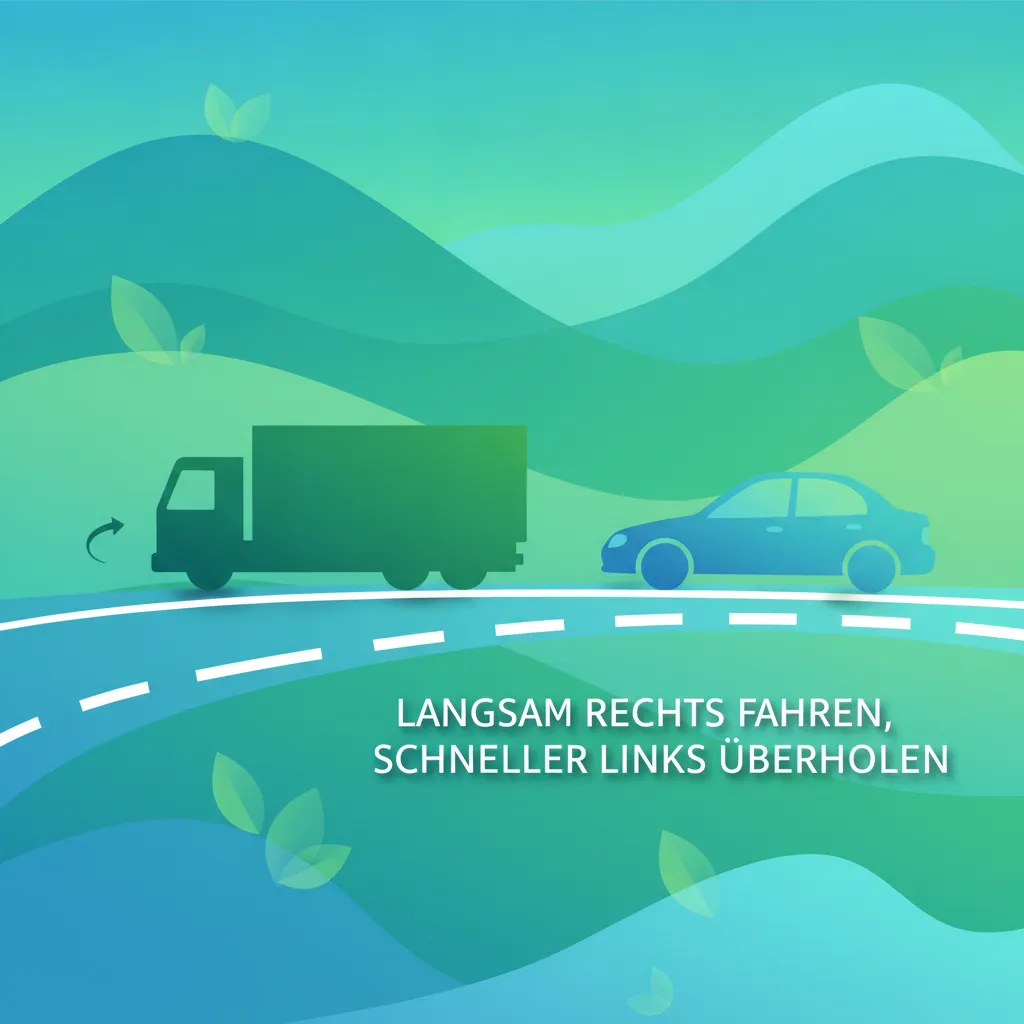
High-speed driving in a large vehicle requires excellent lane discipline and forward planning. This lesson covers Austrian speed limits for buses, rules for joining and leaving the motorway, safe overtaking procedures, and maintaining appropriate following distances. The critical importance of forming an emergency corridor ('Rettungsgasse') in traffic jams is also a key topic.

This lesson details the general traffic rules applicable to heavy goods vehicles on Austrian roads, highlighting differences from passenger car regulations. It covers key topics such as right-of-way at intersections, specific rules for overtaking, maintaining proper lane discipline, and adhering to designated speed limits. Understanding these rules is critical for safe integration into mixed traffic.

Austria's mountainous terrain means drivers will frequently encounter long tunnels. This lesson details the specific regulations, such as turning on lights and maintaining distance, as well as how to react to tunnel-specific warning signs and signals. Crucially, it covers the correct emergency procedures to follow in the event of a fire, accident, or breakdown inside a tunnel.

Pressure to stay on schedule is a daily reality, but it must never lead to unsafe driving. This lesson provides mental strategies for staying calm and focused when running late. It emphasizes that the driver's professional judgement to operate safely always overrides the timetable and covers the importance of communicating delays according to company procedure.

Transporting children carries the highest level of responsibility. This lesson covers the specific Austrian rules for school buses, including the use of warning signs and lights. It focuses on developing a mindset of extreme caution, anticipating that children may run into the road unexpectedly, and managing the chaotic traffic environment often found around schools during drop-off and pick-up times.
Master the essential documents required for professional passenger transport in Austria, including driver's licenses, vehicle registration, insurance, and passenger transport permits. Learn the legal requirements and proper operation of the digital tachograph and driver card.

This lesson guides learners through the essential documentation required for legally operating a vehicle in Austria, including the registration certificate, proof of insurance, and the driver's license (Führerschein). It explains the Austrian Vignette system for using motorways (Autobahnen) and expressways (Schnellstraßen), covering how to purchase, affix, and comply with the regulations. The content also provides awareness of specific toll roads and their payment systems to ensure full legal conformity.

This lesson details the mandatory personal and vehicle documentation required for motorcyclists in Austria. It covers the necessity of carrying a valid licence card, vehicle registration papers, and proof of insurance at all times. Understanding these legal requirements ensures full compliance with Austrian traffic law and facilitates smooth interactions with law enforcement.
Austria's mountainous terrain means drivers will frequently encounter long tunnels. This lesson details the specific regulations, such as turning on lights and maintaining distance, as well as how to react to tunnel-specific warning signs and signals. Crucially, it covers the correct emergency procedures to follow in the event of a fire, accident, or breakdown inside a tunnel.

This lesson covers the legal requirements for regular maintenance and periodic roadworthiness certification (known as the 'Pickerl' or TÜV inspection) in Austria. It explains the importance of adhering to manufacturer-recommended service intervals. Maintaining a certified, roadworthy vehicle is a core legal responsibility for any operator or driver.
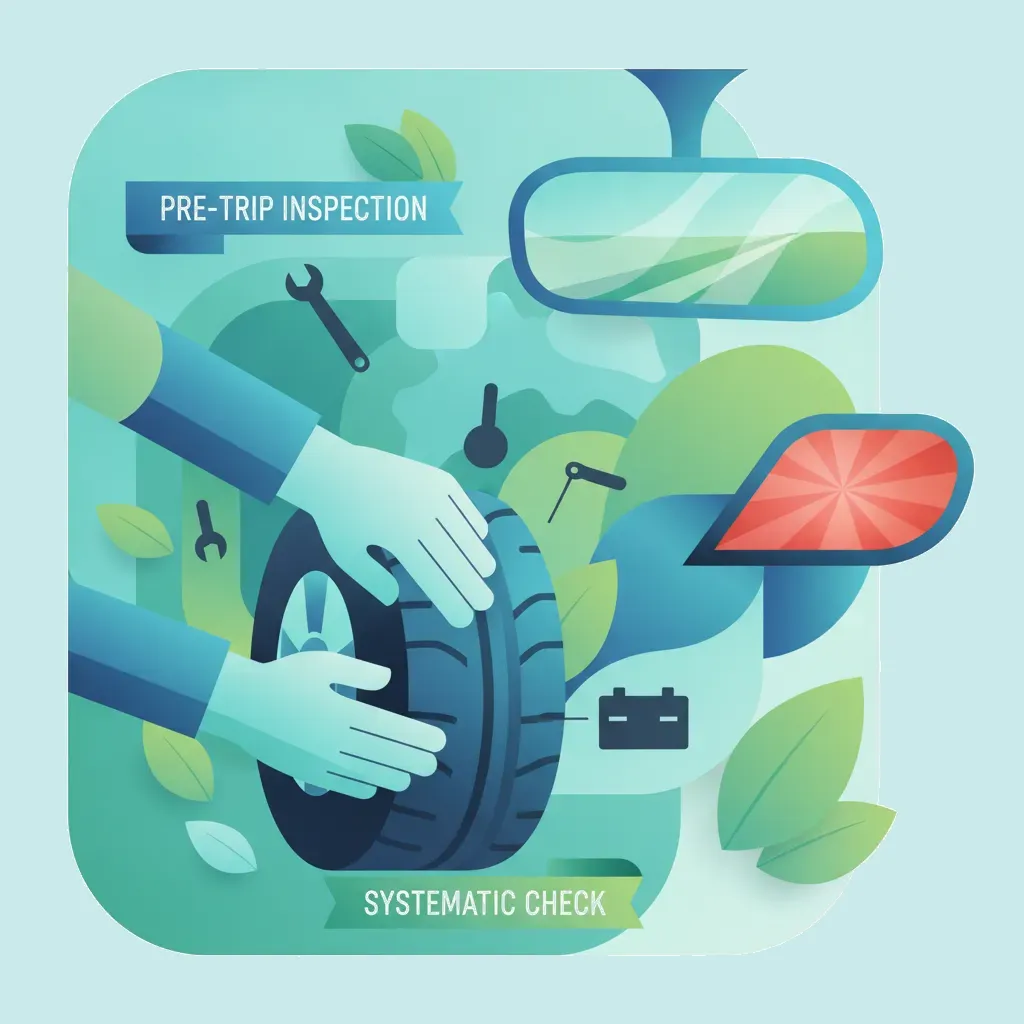
This lesson outlines the essential daily checks that form the foundation of safe passenger transport. It provides a step-by-step guide to inspecting key components such as tyres, brakes, lights, steering, and emergency equipment. You will learn how to identify potential defects and understand the procedures for reporting issues to ensure the vehicle is roadworthy.

In an emergency, knowing the location and status of safety equipment is critical. This lesson details how to locate and inspect fire extinguishers, first aid kits, emergency hammers, and all designated emergency exits, including doors and roof hatches. It emphasizes the importance of ensuring these items are unobstructed and included in the daily pre-trip inspection.

The driver is responsible for supervising the entire boarding process. This lesson covers techniques for encouraging orderly queues and ensuring passengers use handrails. It also details the driver's role in assisting passengers with mobility aids, prams, or heavy luggage, ensuring they are able to board without rushing and find a seat or safe standing position.
This lesson defines the role of a professional driver beyond simply operating a vehicle. It covers the expectations of public trust, professional image, and the responsibilities inherent in transporting people. Key topics include ethical conduct, communication with the public, and understanding your position as a representative of a transport service within the Austrian legal framework.
Find clear answers to common questions learners have about Specific Legal Obligations for Austrian Drivers. Learn how the lesson is structured, which driving theory objectives it supports, and how it fits into the overall learning path of units and curriculum progression in Austria. These explanations help you understand key concepts, lesson flow, and exam focused study goals.
You must carry your valid driving licence, your driver card for the digital tachograph, proof of professional driver qualification (C95), and vehicle-specific papers, including the registration and insurance documents.
The digital tachograph records driving times, rest periods, and speed data to ensure compliance with EU and Austrian working time directives, preventing driver fatigue and enhancing passenger safety.
Yes, failing to produce required documents or tampering with tachograph data can lead to significant fines, points on your licence, and potential suspension of your professional driving privileges.
Bus drivers must follow stricter EU-wide regulations regarding daily and weekly rest periods and breaks, which are continuously monitored by the tachograph, unlike the more flexible rules for private car drivers.
Refine your study plan by searching for specific Austrian driving theory practice sets. Pinpoint questions related to particular road rules, signs, or challenge levels, and begin practicing immediately to reinforce your knowledge and excel in your official exam with confidence. Get started with focused revision today.