
This lesson details the legal obligations and responsibilities that come with your Austrian Category B license. Understanding these rules is crucial to navigating the Austrian traffic penalty system and avoiding legal pitfalls as a new driver.

Lesson content overview
Driving a vehicle is a privilege that comes with significant legal responsibilities. In Austria, understanding these obligations and the potential consequences of failing to adhere to traffic laws is crucial for every driver. This lesson provides a comprehensive overview of a driver's legal duties, liability in the event of an accident, and the structure of the official penalty catalogue, ensuring you are well-prepared for safe and compliant driving.
Legal liability refers to the legal obligation to repair damages caused by a traffic violation or negligent act. Its primary purpose is to encourage compliance with traffic laws and provide compensation for victims who suffer losses due to another driver's actions. Failure to comply with traffic regulations can lead to various repercussions, including civil claims, criminal charges, and heightened insurance premiums.
Civil liability primarily concerns financial compensation for damages caused in a traffic incident. If a driver is found civilly liable, they are obligated to cover the costs incurred by the victim. These costs can include vehicle repair expenses, medical bills for injuries, lost wages, and other financial losses. The goal of civil liability is to restore the victim to their financial position prior to the accident.
The legal obligation to financially compensate individuals for damages or losses caused by one's actions or negligence, typically involving monetary settlements.
A common misunderstanding is assuming that insurance will always fully cover all accident costs, thereby absolving the driver of personal liability. While insurance plays a vital role in covering these expenses, the underlying legal liability still rests with the driver. Furthermore, certain actions, such as driving under the influence or reckless driving, may allow insurance companies to refuse full coverage, leaving the liable driver directly responsible for costs.
Beyond civil claims, severe traffic offences can also lead to criminal liability, resulting in potential prosecution by the state. Criminal charges are typically reserved for actions that pose a serious threat to public safety or involve intent to cause harm. Examples include driving under the influence of alcohol or drugs, dangerous driving leading to serious injury or death, or intentionally fleeing the scene of an accident.
Unlike civil liability, which focuses on compensation, criminal liability aims to punish offenders and deter future misconduct. Penalties can range from substantial fines and demerit points to licence suspension or even imprisonment, depending on the severity of the offence.
One of the most fundamental legal responsibilities for drivers in Austria is the duty to stop and render assistance after an accident. According to Section 84 of the Austrian Road Traffic Act (StVO), any person involved in a traffic accident that causes damage or injury must immediately stop, secure the accident scene, and provide assistance to any injured parties.
This rule is mandatory and applies regardless of who caused the accident. Failing to stop, provide personal details, or offer reasonable assistance (such as calling emergency services) is a serious offence. It can lead to severe criminal charges, a substantial fine, and a driving licence suspension (Fahrverbot), significantly impacting the driver's record and insurance.
The Strafkatalog (official penalty catalogue) is a structured list of fines, demerit points, and driving licence bans for various traffic offences in Austria. Its purpose is to standardize enforcement and ensure consistent penalties across the country. Understanding the Strafkatalog is essential for every driver, as it directly determines the severity of consequences for violations and affects insurance rates.
The official Austrian catalogue detailing standard fines, demerit points, and driving licence suspensions for specific traffic offences.
The Strafkatalog provides clear guidelines for authorities, ensuring that similar offences receive comparable penalties. It categorizes violations based on their danger level and impact on road safety, leading to a system of escalating consequences for more serious infractions.
Monetary fines are the most common consequence for minor to moderate traffic offences. These can be fixed amounts for specific violations (e.g., parking tickets) or variable, depending on the severity and context of the offence (e.g., speeding). Fines are issued by the police or administrative authorities.
Section 115 of the StVO outlines the general framework for penalties, including monetary fines. It's crucial to pay these fines promptly, as failing to do so can lead to increased penalties, administrative fees, and potentially more severe enforcement measures.
Always verify the exact fine amounts in the current Strafkatalog, as these figures can be updated periodically.
Austria operates a points-based system to track driver behaviour and escalate consequences for repeat offences. This is known as the Demerit Points System. Instead of deducting points, points are added to a driver's record for each offence.
Points added to a driver's official record in Austria for specific traffic violations, accumulating towards a potential licence suspension.
Each offence incurs a specific number of demerit points, typically ranging from 1 to 10 points. These points are recorded in the official driver's record, the Führerscheinregister. Accumulating a certain threshold of points leads to increasingly severe consequences, with the ultimate outcome being a licence suspension. For instance, common minor offences like using a mobile phone while driving or not wearing a seatbelt might incur 1 point each.
It's a common misunderstanding to believe that points disappear quickly. While points do expire after a specific period (typically three years for most offences), their cumulative effect can lead to serious consequences before they expire. Drivers with a history of violations are considered higher risk, and the system aims to encourage more responsible driving.
A Fahrverbot, or driving licence suspension, is the temporary revocation of driving privileges. This is one of the most severe administrative consequences for traffic violations. A Fahrverbot can be imposed for two primary reasons:
A temporary suspension or withdrawal of a driving licence in Austria, meaning the driver is legally prohibited from operating a vehicle for a specified period.
During a Fahrverbot, the driver must surrender their licence for the specified duration. Attempting to drive with a suspended licence is a serious criminal offence and can lead to further prosecution, higher fines, and an extended ban. Section 22 of the StVG (Driving Licence Act) governs the revocation of licences after such offences, emphasizing public safety by removing high-risk drivers from the roadways.
Traffic violations have a direct and often significant impact on a driver's car insurance premiums. Insurance companies assess risk based on a driver's history, and a record of fines, demerit points, or accidents increases their perceived risk profile.
Every traffic violation, from a minor speeding ticket to a more serious offence, is recorded on a driver's record. Insurance companies access this information to evaluate the likelihood of a future claim. Drivers with a history of violations are statistically more likely to be involved in accidents, leading insurers to categorize them as higher risk.
This increased risk profile translates directly into higher insurance premiums. The cost of your insurance policy will likely rise after an offence, sometimes significantly, as the insurer adjusts their pricing to cover the perceived higher risk. This impact can last for several years, even after the demerit points might have expired from your official driving record.
In severe cases, or for drivers with a long history of multiple serious violations, insurance companies may choose to terminate a policy altogether. This typically happens when the insurer deems the driver too high-risk to insure profitably. Finding new insurance after a policy termination can be challenging and usually involves much higher premiums.
Section 24 of the StVG (Driving Licence Act) mandates that all drivers on public roads must have valid insurance coverage. Driving without insurance is a direct violation of this law and carries severe penalties, including potential licence suspension, substantial fines, and personal liability for all damages in case of an accident. It's a critical legal requirement that protects both the driver and other road users.
Understanding the core legal framework in Austria helps clarify the basis for driver responsibilities and consequences. The primary laws are the Straßenverkehrsordnung (StVO - Road Traffic Act) and the Führerscheingesetz (StVG - Driving Licence Act).
This crucial section of the StVO mandates that every driver involved in a traffic accident causing damage or injury must:
Rationale: This rule ensures immediate help for victims and promotes accountability among drivers. Failure to comply can lead to criminal charges (hit-and-run) with severe penalties, including potential imprisonment and a long Fahrverbot.
This section establishes the legal basis for imposing penalties for traffic offences. It states that violations of the StVO are punishable with fines, demerit points, or licence suspension (Fahrverbot).
Rationale: Provides a standardized and structured system for the enforcement of traffic laws, ensuring consistency and fairness in applying penalties. It also empowers authorities to take appropriate action based on the severity of the offence.
This section of the StVG outlines the conditions under which a driving licence may be revoked. This can occur due to:
Rationale: Protects public safety by ensuring that individuals who repeatedly violate traffic laws or pose a significant risk are temporarily or permanently removed from the roads. A revoked licence requires the driver to surrender it for a mandated duration.
This rule makes it mandatory for all vehicles operating on public roads to have valid liability insurance. It also affirms the driver's ultimate liability for damages they cause.
Rationale: Guarantees that victims of traffic accidents receive compensation for damages and injuries. Driving without valid insurance is a serious offence that can lead to high fines, licence suspension, and the driver being personally responsible for all financial damages in an accident.
Many traffic violations are common, but their consequences can vary based on context. Understanding how different actions can lead to penalties is key to responsible driving.
Penalties for speeding can be doubled during adverse weather conditions like heavy rain or snow, as these conditions significantly increase the risk of an accident.
As per StVG § 24, driving a vehicle on public roads without valid liability insurance is strictly prohibited. Consequences: This offence can lead to substantial fines, immediate licence suspension, and the driver being personally responsible for all damages and injuries caused in an accident, which could amount to hundreds of thousands of Euros. It's a critical safety net for all road users.
Also known as a "hit-and-run," failing to stop and render assistance after an accident (StVO § 84) is a criminal offence. Consequences: This can result in severe criminal charges, significant fines, a lengthy Fahrverbot, and even imprisonment, particularly if injuries occurred. The legal system views this as a profound breach of driver responsibility.
The severity of penalties for traffic violations is not always static; it can be influenced by several conditional factors:
Understanding driver responsibility and legal consequences is fundamental to safe and compliant driving. The Austrian driving licence B theory course emphasizes that adherence to the StVO and StVG is not just about avoiding penalties but about ensuring road safety for everyone.
Key Takeaways:
By internalizing these principles, you not only protect your driving privileges and financial well-being but also contribute significantly to the safety and order of Austrian roads.
This lesson covers the legal responsibilities of Austrian Category B drivers and the consequences of traffic violations. It distinguishes between civil liability (financial compensation to victims) and criminal liability (state prosecution for serious offences). The Austrian Strafkatalog provides standardized penalties including monetary fines, demerit points (accumulating toward 18 points = Fahrverbot), and driving bans. Key legislation including StVO §84 (accident duty to stop), StVO §115 (penalty framework), and StVG §22 and §24 (licence revocation and insurance requirements) form the legal backbone. Traffic violations increase insurance risk profiles, and conditional factors like adverse weather or presence of vulnerable road users can escalate penalties.
A short set of high-value points that capture the most important learning from this lesson.
Civil liability obligates drivers to financially compensate victims for damages regardless of insurance coverage.
Criminal liability applies to serious traffic offences like drunk driving, dangerous driving, or hit-and-run, potentially leading to prosecution.
The Austrian Strafkatalog standardizes penalties across fines, demerit points, and Fahrverbot for consistent enforcement.
Accumulating 18 demerit points within the specified timeframe automatically triggers a Fahrverbot (driving licence suspension).
Traffic violations directly increase insurance risk profiles, leading to higher premiums or potential policy termination.
Explore all units and lessons included in this driving theory course.
StVO §84 mandates stopping, securing the scene, and rendering assistance after any accident involving damage or injury.
Demerit points in Austria accumulate (1-10 per offence) rather than deduct; reaching 18 points triggers mandatory Fahrverbot.
Fahrverbot can also result from specific serious offences regardless of point total (e.g., DUI, extreme speeding).
Driving without valid insurance violates StVG §24 and makes the driver personally liable for all accident damages.
Weather conditions and presence of vulnerable road users can escalate penalty severity for the same violation.
Assuming insurance fully covers all accident costs, when in fact drivers retain personal liability for certain damages.
Believing demerit points expire quickly; points remain on record for three years and can accumulate before expiring.
Thinking that reaching exactly 18 points is the only way to receive a Fahrverbot, overlooking that serious offences trigger immediate bans.
Underestimating the duty to stop after accidents, not realizing it applies regardless of who caused the collision.
Confusing civil liability (financial compensation) with criminal liability (state prosecution and punishment).
Lesson content overview
A short set of high-value points that capture the most important learning from this lesson.
Civil liability obligates drivers to financially compensate victims for damages regardless of insurance coverage.
Criminal liability applies to serious traffic offences like drunk driving, dangerous driving, or hit-and-run, potentially leading to prosecution.
The Austrian Strafkatalog standardizes penalties across fines, demerit points, and Fahrverbot for consistent enforcement.
Accumulating 18 demerit points within the specified timeframe automatically triggers a Fahrverbot (driving licence suspension).
Traffic violations directly increase insurance risk profiles, leading to higher premiums or potential policy termination.
Explore all units and lessons included in this driving theory course.
StVO §84 mandates stopping, securing the scene, and rendering assistance after any accident involving damage or injury.
Demerit points in Austria accumulate (1-10 per offence) rather than deduct; reaching 18 points triggers mandatory Fahrverbot.
Fahrverbot can also result from specific serious offences regardless of point total (e.g., DUI, extreme speeding).
Driving without valid insurance violates StVG §24 and makes the driver personally liable for all accident damages.
Weather conditions and presence of vulnerable road users can escalate penalty severity for the same violation.
Assuming insurance fully covers all accident costs, when in fact drivers retain personal liability for certain damages.
Believing demerit points expire quickly; points remain on record for three years and can accumulate before expiring.
Thinking that reaching exactly 18 points is the only way to receive a Fahrverbot, overlooking that serious offences trigger immediate bans.
Underestimating the duty to stop after accidents, not realizing it applies regardless of who caused the collision.
Confusing civil liability (financial compensation) with criminal liability (state prosecution and punishment).
Explore search topics learners often look for when studying Driver Responsibility and Legal Consequences. These topics reflect common questions about road rules, driving situations, safety guidance, and lesson level theory preparation for learners in Austria.
Browse additional driving theory lessons that cover connected traffic rules, road signs, and common driving situations related to this topic. Improve your understanding of how different rules interact across everyday traffic scenarios.
Understand your legal obligations as an Austrian driver. Learn about the official penalty catalogue (Strafkatalog), fines, demerit points, licence suspension (Fahrverbot), and insurance implications for traffic offenses.
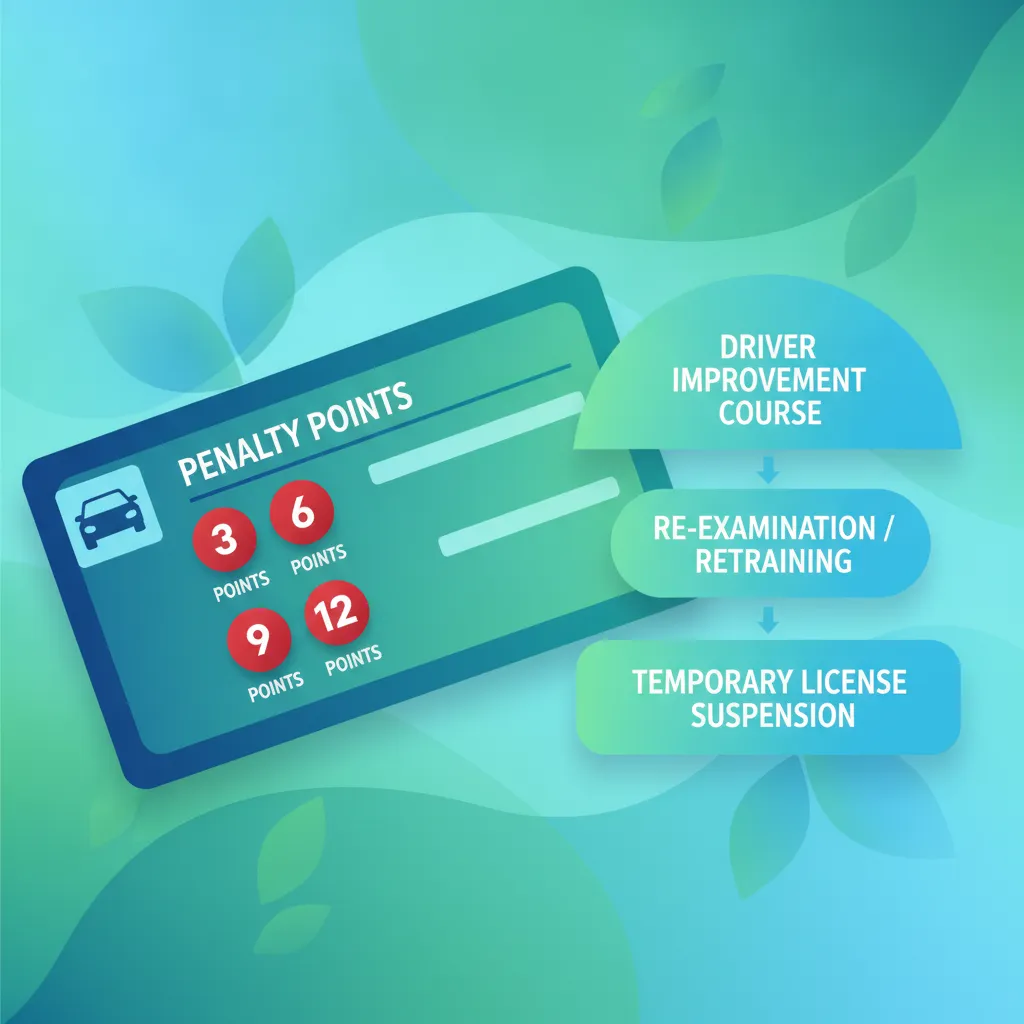
This lesson offers a clear explanation of the Austrian system of penalties for traffic offenses, including the demerit points system (Vormerksystem). It details which violations lead to points, the accumulation process, and the consequences at each stage, such as mandatory driver improvement courses and potential license suspension (Fahrverbot). Understanding this system provides a strong incentive for consistent compliance with all traffic regulations.
This lesson provides a clear overview of the legal penalties for traffic violations in Austria. It details the system of fines, demerit points, and the conditions that can lead to license suspension or revocation. Understanding these consequences reinforces the importance of lawful and responsible riding.

This lesson provides an overview of the legal framework for traffic enforcement in Austria. It explains the structure of fines for common offenses, the demerit point system that can lead to licence suspension, and the more severe consequences for major violations. Understanding these penalties reinforces the importance of consistent adherence to all traffic laws.
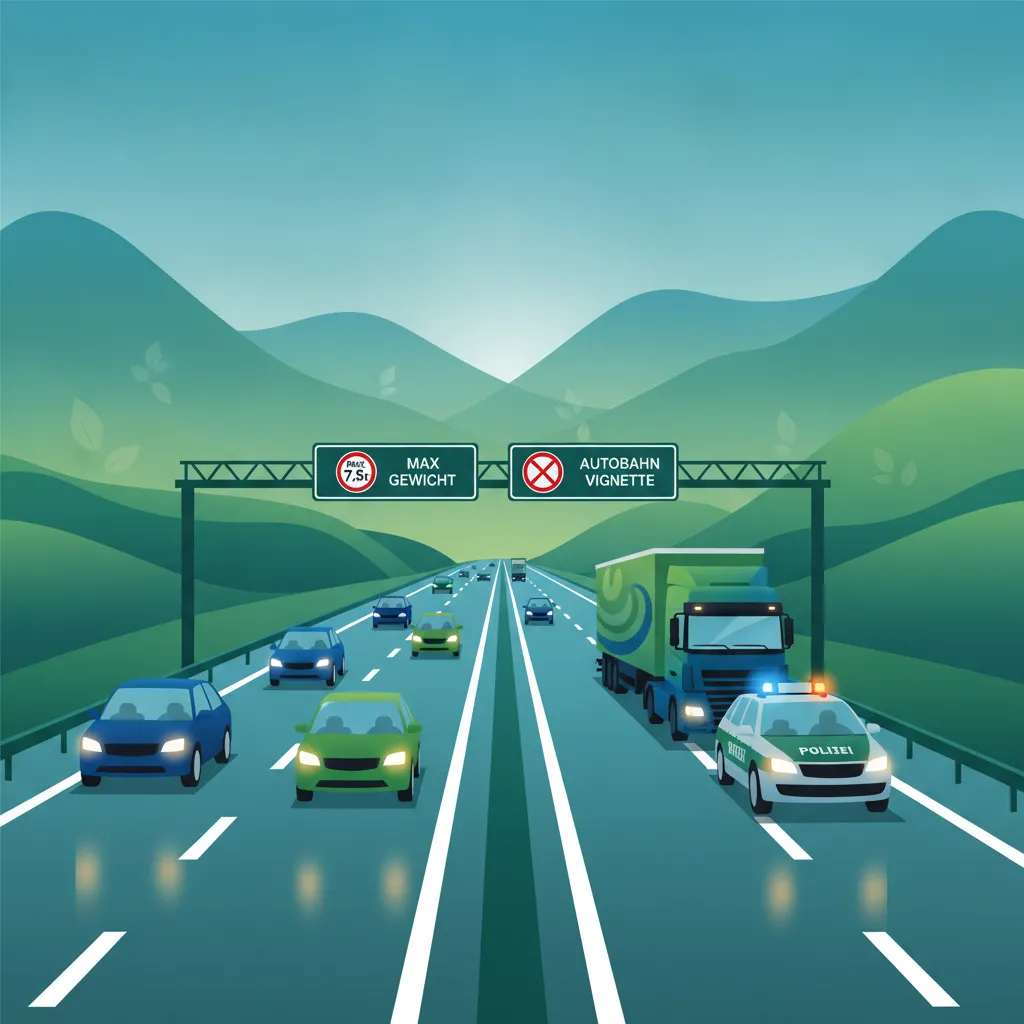
This lesson explains the system of penalties and enforcement for heavy vehicle operations in Austria. It covers the fines and penalty points associated with common traffic violations, such as overloading or insecure loads. Learners will understand the role of authorities in conducting roadside checks and inspections to ensure regulatory compliance.
This lesson provides an overview of the legal framework governing heavy vehicle drivers in Austria. It details the potential penalties for violations, including fines, penalty points, and the risk of licence suspension. A clear understanding of these consequences reinforces the importance of compliant and responsible driving.

This lesson explains the critical Mehrphasenausbildung (multi-phase training) process that all new drivers in Austria must complete after obtaining their license. It focuses on the obligations during the probationary period, including the demerit points system and the consequences of traffic violations like a Fahrverbot (driving ban). The content details the mandatory driver improvement courses designed to enhance risk awareness and promote responsible driving habits.
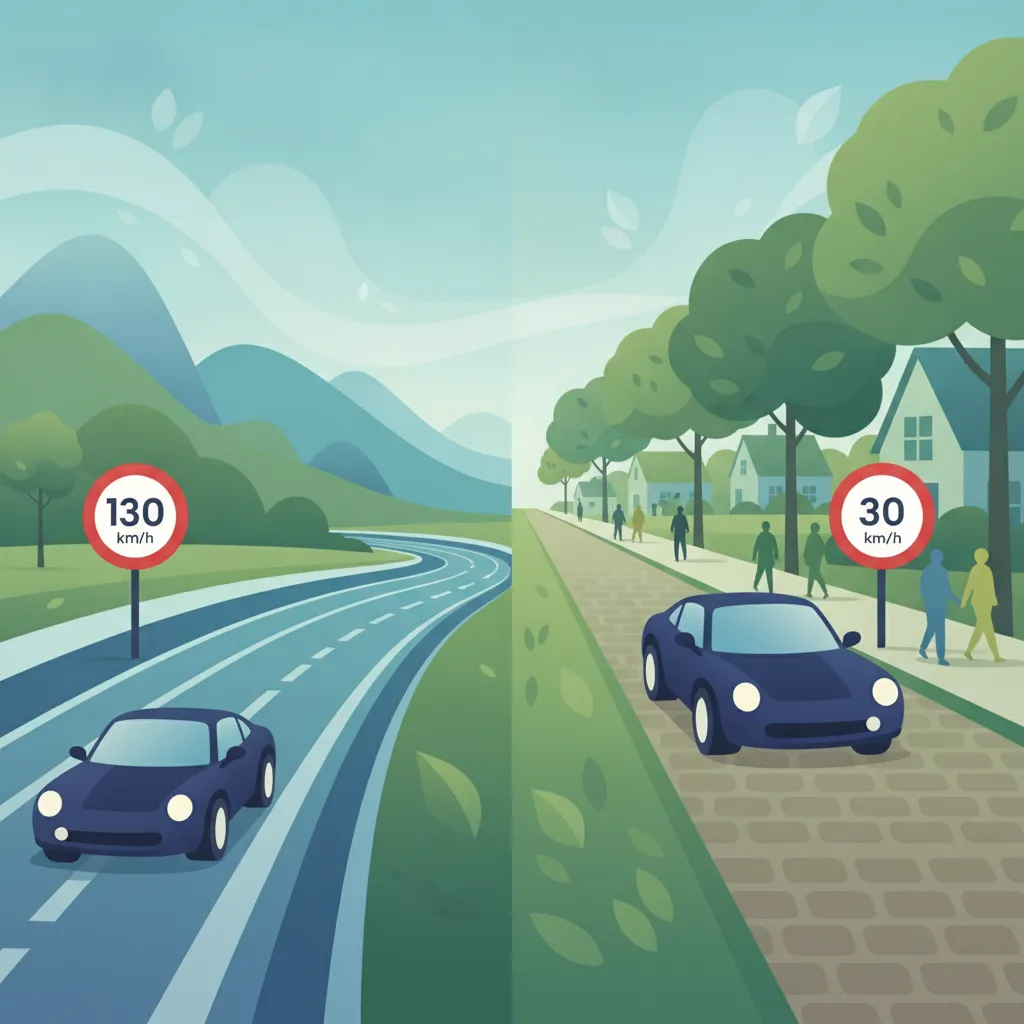
This lesson details the legally prescribed speed limits across Austria's road network, including the specific limits for urban areas (Ortsgebiet), rural roads (Landstraßen), motorways (Autobahnen), and expressways (Schnellstraßen). Learners will understand how to interpret speed limit signs, including those with supplementary conditions. Adherence to these legal requirements is a fundamental aspect of road safety and compliance with the Austrian road traffic act (StVO).
Explore driver liability in Austria, including civil and criminal responsibilities. Learn the critical duty to stop and render assistance after an accident according to StVO § 84.
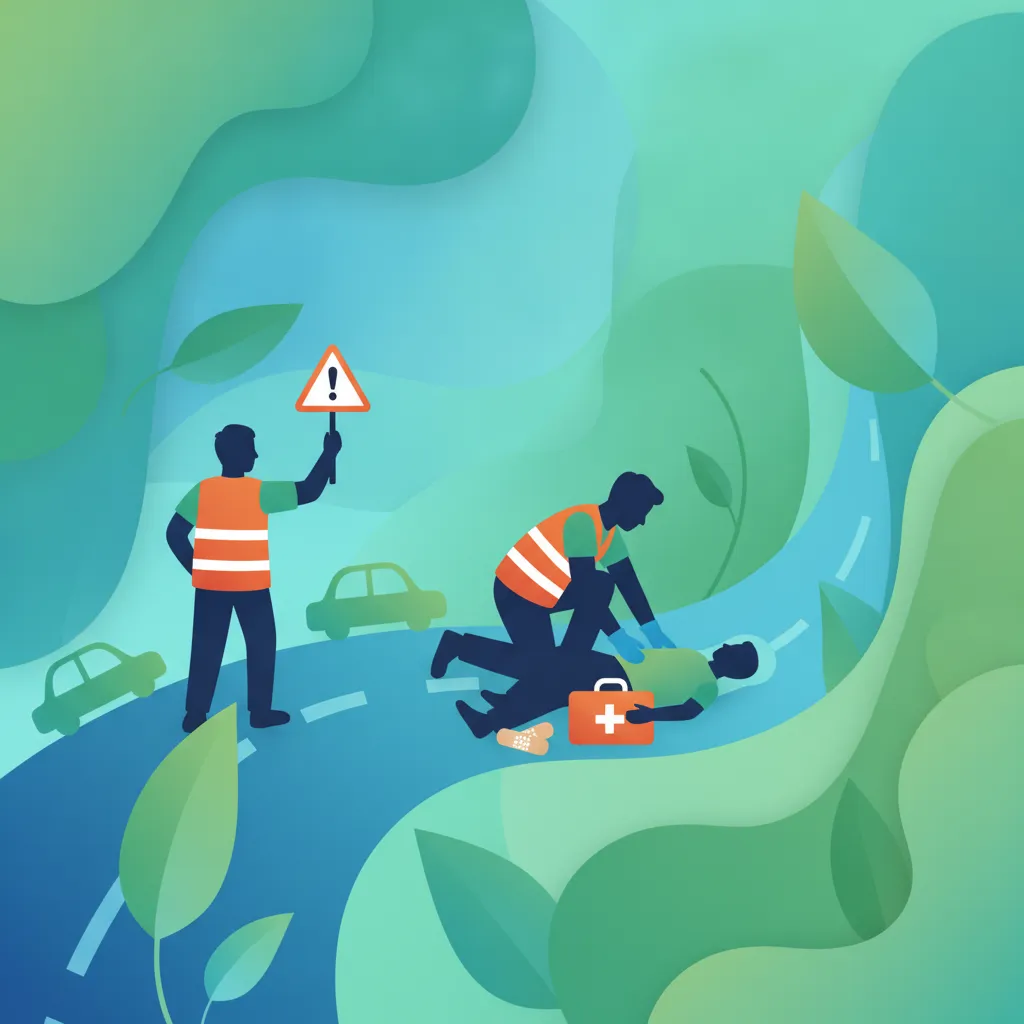
This lesson equips drivers with the essential knowledge for responding to a traffic accident. It outlines the critical first steps: securing the scene to prevent further incidents, assessing the situation, and contacting the correct emergency services (112). The content provides an overview of basic first aid principles applicable at an accident scene and explains the driver's legal obligations regarding incident reporting and cooperation with authorities.

As the driver involved or first on the scene, you have specific duties. This lesson covers the initial steps: securing your own vehicle, warning approaching traffic, and making the emergency call. It reinforces the legal requirement in Austria for all drivers to form an emergency corridor ('Rettungsgasse') in standing traffic to allow clear access for emergency vehicles.

This lesson focuses on the driver's legal and ethical responsibility for the safety of all passengers. It details the mandatory use of seatbelts for all occupants and provides a thorough explanation of Austrian regulations concerning child restraints. Learners will understand how to choose and correctly install the appropriate child seat based on a child's age, weight, and height, ensuring maximum protection in the event of a collision.
This lesson provides an overview of the legal framework governing heavy vehicle drivers in Austria. It details the potential penalties for violations, including fines, penalty points, and the risk of licence suspension. A clear understanding of these consequences reinforces the importance of compliant and responsible driving.

This lesson outlines the significant legal responsibilities placed on heavy-vehicle drivers under Austrian law, emphasizing a strong duty of care and professional conduct. It covers the obligation to perform thorough pre-trip inspections, comply with all load and weight regulations, and uphold safety standards to protect all road users. Adherence to these principles is crucial for professional and safe operation.

This lesson provides critical knowledge for being the first responder at an accident. It covers securing the scene to prevent further incidents, making an effective emergency call, and forming the 'Rettungsgasse' for approaching rescue vehicles. Basic but potentially life-saving first aid steps are reviewed, with a strong emphasis on not endangering oneself while providing assistance.
This lesson provides a clear overview of the legal penalties for traffic violations in Austria. It details the system of fines, demerit points, and the conditions that can lead to license suspension or revocation. Understanding these consequences reinforces the importance of lawful and responsible riding.

Pedestrians have absolute priority on marked crossings in Austria, and a bus driver must always be ready to give way. This lesson covers the rules for approaching and stopping for pedestrians, and highlights the risk of pedestrians being hidden by the vehicle's structure. It also stresses the danger of passengers crossing the road after alighting from your bus.
Find clear answers to common questions learners have about Driver Responsibility and Legal Consequences. Learn how the lesson is structured, which driving theory objectives it supports, and how it fits into the overall learning path of units and curriculum progression in Austria. These explanations help you understand key concepts, lesson flow, and exam focused study goals.
In Austria, if you commit a serious traffic violation during your probationary period, it can lead to mandatory remedial training or an extension of your probation. Accumulating too many points can result in a driving ban.
A Fahrverbot is a temporary driving ban. It is imposed for severe traffic violations, such as excessive speeding, driving under the influence, or repeat offenses, meaning you are legally prohibited from operating a vehicle for a specified duration.
Serious traffic offenses often lead to a 'malus' rating in your insurance premium, significantly increasing your monthly costs. Insurance providers view traffic violations as an increased risk indicator.
Yes, new drivers in their probationary phase face stricter consequences for traffic violations. The Mehrphasenausbildung includes specific measures for novice drivers to ensure they learn from mistakes early.
Refine your study plan by searching for specific Austrian driving theory practice sets. Pinpoint questions related to particular road rules, signs, or challenge levels, and begin practicing immediately to reinforce your knowledge and excel in your official exam with confidence. Get started with focused revision today.