
Logo
Austrian Driving Theory Courses

Lesson 2 of the Austrian D Categories, Passenger Duty of Care and Professional Identity unit

Austrian Driving Theory D: Overview of D, D1, DE, and D1E Licence Categories

This lesson clarifies the specific legal definitions and operational rights for all bus and coach licence categories in Austria. By understanding these distinctions, you will be prepared for exam questions regarding vehicle types and trailer regulations required for professional passenger transport.
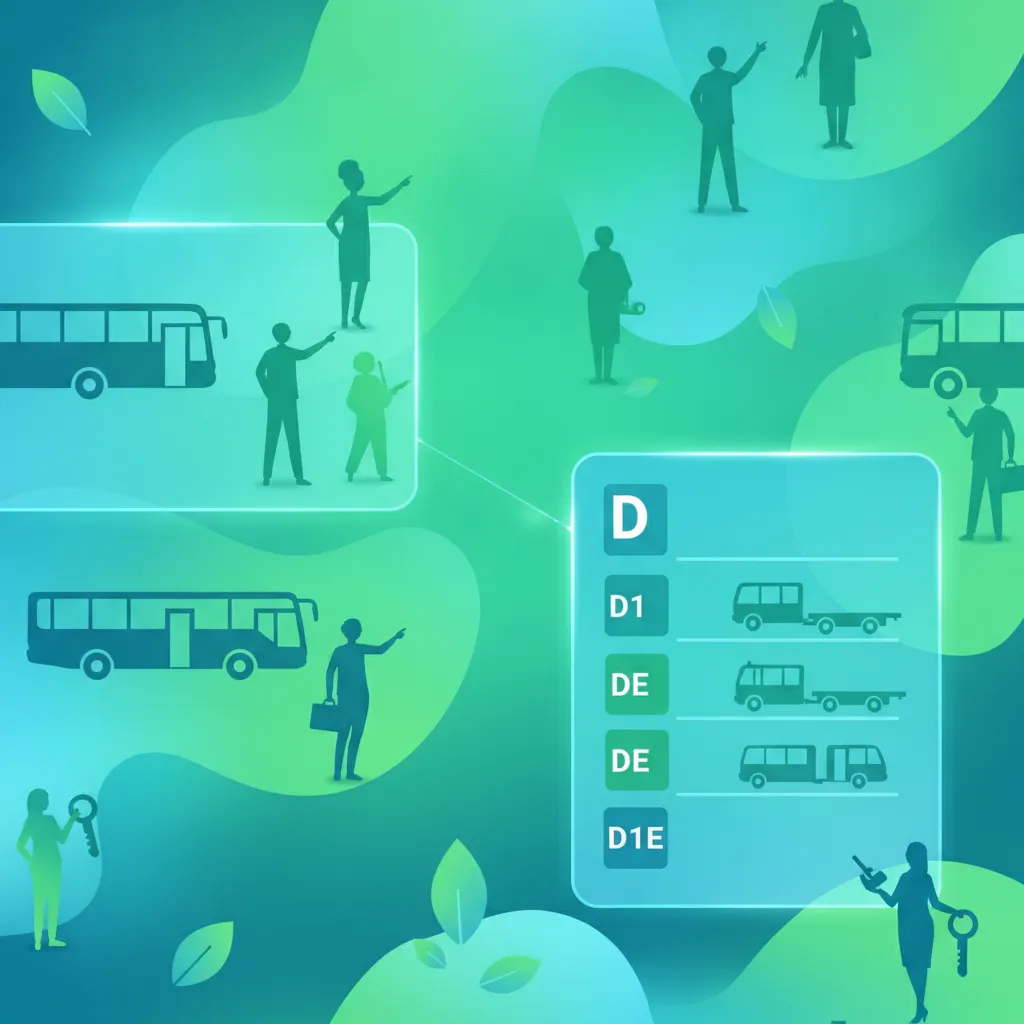
Category DAustrian theory testbus licencelicence classestheory exam
Austrian Driving Theory D: Overview of D, D1, DE, and D1E Licence Categories

Lesson content overview

Austrian Driving Theory D

Overview of D, D1, DE, and D1E Licence Categories in Austria

Welcome to the Austrian Driving Theory Course for Bus & Coach Licence (Category D). This lesson provides a thorough understanding of the specific licence categories required for professional passenger transport in Austria. Driving a bus or coach is a significant responsibility, demanding not only excellent driving skills but also a comprehensive knowledge of the legal framework governing these specialized vehicles. Understanding the nuances of D, D1, DE, and D1E licences is fundamental for ensuring legal compliance, passenger safety, and your professionalism as a driver.

This chapter details the permissions, restrictions, and legal obligations associated with each category. It clarifies the types of vehicles you are authorized to operate, the maximum number of passengers you can carry, and the specific regulations for operating combination vehicles (a vehicle with a trailer). Mastery of these categories forms the bedrock for safe and responsible passenger transportation, preparing you for the practical challenges and legal requirements of professional driving in Austria.

Understanding the Foundations of Austrian Driving Licences for Passenger Transport

The Austrian licensing system for passenger transport vehicles, particularly buses and coaches, is meticulously structured to align vehicle capabilities with safety standards, road infrastructure, and public transport regulations. This system is designed to ensure that drivers possess the appropriate training and qualifications to handle larger vehicles, manage passengers effectively, and navigate various operational scenarios, such as specific length restrictions or complex braking performance requirements.

At its core, a licence category is a set of legal permissions tied to a driver’s licence type. It explicitly designates which vehicle classes a driver may operate. The primary purpose of this classification is to guarantee that drivers possess the requisite knowledge and skill set to safely operate specific vehicle types, which inherently determines permissible vehicle dimensions, passenger capacity, and trailer coupling capabilities.

A key aspect of passenger transport is passenger capacity limits. This refers to the maximum number of passengers allowed within a vehicle for a given licence category. These limits are crucial for preventing vehicle overloading, which can severely compromise handling characteristics, increase braking distances, and reduce overall safety margins. For instance, the D1 category specifically limits passengers to 16, while the D category allows for more than 16 passengers, reflecting the differing operational profiles and vehicle designs.

Finally, combination vehicle rules, indicated by the 'E' suffix (e.g., DE, D1E), govern the attachment of trailers or semi-trailers to a primary vehicle. These rules are put in place to address the increased complexities associated with longer vehicle lengths, greater overall mass, and the resulting impact on braking distances and handling. Drivers seeking 'E' endorsements must undergo additional training and testing, and strict limits are imposed on trailer mass and length to ensure safety.

Exploring Category D: The Austrian Bus and Coach Licence

The Category D licence is the primary authorization for operating vehicles designed for the transport of more than eight passengers, in addition to the driver. This typically includes a wide range of buses and coaches, but specifically without a trailer.

  • Definition and Scope: A Category D licence permits the operation of vehicles such as large city buses, intercity coaches, and school buses. These vehicles are characterized by having a permanent passenger capacity exceeding 16 seats, making them suitable for mass transit and long-distance travel.
  • Practical Applications: With a D licence, you can drive a 40-seat city bus on a regular urban route, or operate a 50-seat intercity coach on a motorway for tourism or scheduled services. It empowers drivers to engage in professional passenger transport on a larger scale.
  • Associated Rules and Conditions: Vehicles operated under a D licence must adhere to specific dimensions. Generally, the vehicle length should not exceed 12 metres, although articulated buses may be permitted up to 13.5 metres. The total permissible mass for the vehicle is typically limited to 20 tonnes. While the D licence itself does not permit towing a significant trailer, it forms the basis for the DE category, which allows for trailer coupling within specified limits.
  • Common Misunderstandings: A frequent misconception is that a D licence covers "any bus." However, it is crucial to understand that the D category is specifically for larger vehicles with higher passenger capacities (more than 16 seats), distinguishing it from the smaller D1 minibus category.

Delving into Category D1: The Austrian Minibus Licence

The Category D1 licence caters to smaller passenger transport vehicles, specifically minibuses. This category is distinct from Category D due to its vehicle size and passenger capacity limitations.

  • Definition and Scope: A D1 licence authorizes the operation of minibuses with more than eight but not more than 16 passenger seats, in addition to the driver. This licence does not include the permission to tow a trailer by default.
  • Practical Applications: This licence is ideal for drivers operating vehicles such as sightseeing minibuses for tourist groups, community transport vehicles for local services, or shuttle buses. For instance, a D1 licence holder could drive an 11-passenger sightseeing minibus through a historic city centre or operate a 15-passenger community transport vehicle on a rural route.
  • Associated Rules and Conditions: Vehicles driven under a D1 licence have stricter size constraints. Their length must not exceed 8 metres, and their maximum permissible mass is typically limited to 5 tonnes. Similar to the D licence, while D1 itself doesn't allow trailers, it serves as the foundation for the D1E category, which permits towing small trailers within very strict weight limits.
  • Common Misunderstandings: Drivers sometimes assume that a D1 licence allows them to drive any type of bus. It is critical to remember that D1 is specifically restricted to minibuses with a maximum of 16 passenger seats. Exceeding this capacity without the appropriate D licence is a serious violation.

For professional bus and coach drivers who need to transport additional luggage or equipment, the Category DE licence is an essential extension of the standard D licence. It permits the towing of a trailer with a bus or coach.

  • Definition and Scope: The DE licence is not a standalone category but an augmentation of the D licence. It specifically grants permission to attach a trailer to a bus or coach that is already authorized under Category D.
  • Practical Applications: This extension is invaluable for tour operators who need to tow a luggage trailer for a group, or for service buses that might occasionally tow a small maintenance trailer during off-peak hours. It allows for increased operational flexibility while maintaining a high standard of safety.
  • Associated Rules and Conditions: The regulations for DE combinations are strict to ensure stability and safety. The combined mass of the bus and its trailer generally must not exceed 12 tonnes. If the primary bus itself exceeds 12 tonnes, the trailer's permissible mass is typically limited to 750 kg. Larger trailers or specialized combinations may fall under specific "articulated bus" guidelines, which have their own complex rules. It is crucial to understand that this category does not permit any trailer size; both the trailer's weight and dimensions are rigorously regulated.
  • Common Misunderstandings: A common mistake is assuming that a DE licence allows for towing any trailer. The permissible mass and dimensions of the trailer are precisely defined to prevent overloading and ensure the combined vehicle's safe handling and braking capabilities.

Understanding D1E: Minibus with Trailer in Austria

The Category D1E licence is the corresponding extension for D1 licence holders, enabling them to tow a trailer with a minibus. Like DE, this is an augmentation, not a standalone licence.

  • Definition and Scope: D1E specifically permits a D1 licence holder to attach a trailer to their minibus. This allows for increased cargo capacity without needing to upgrade to a full D licence or larger vehicle.
  • Practical Applications: This licence is particularly useful for minibuses used by sports teams to tow a small equipment trailer, or for tourist minibuses that require a luggage trailer for day trips. It provides practical utility for smaller group transportation needs.
  • Associated Rules and Conditions: The rules for D1E combinations are designed for stability given the smaller size of the primary vehicle. The combined mass of the minibus and trailer must not exceed 7.5 tonnes. If the minibus itself exceeds 6 tonnes, the trailer's permissible mass is typically limited to 750 kg. For lighter combinations, a trailer of up to 1.75 tonnes might be permitted, depending on the specific vehicle's manufacturer limits and registration. Drivers must be aware that D1E significantly limits trailer size to ensure safe handling, especially during turning and braking.
  • Common Misunderstandings: It is a common error to believe D1E permits towing a large, full-sized trailer. The category is specifically for smaller trailers, and exceeding the strict mass and length limits compromises safety and legality.

Operating any passenger transport vehicle in Austria necessitates strict adherence to a range of rules and regulations. These are primarily outlined in the Austrian Straßenverkehrsordnung (StVO) and Führerscheingesetz 1994.

  • Licence Specificity for Vehicle Operation:

    • Drivers holding a D licence are authorized to operate buses and coaches without a trailer. If they possess a DE suffix, they may tow a trailer, but only within specified mass and length limits. This applies universally to all vehicle classes D with or without a trailer as defined by Austrian law.
    • Similarly, a D1 licence permits minibus operation without a trailer, while D1E allows for towing a trailer, subject to strict mass and length constraints. These rules are mandatory, and operating outside these limits can result in significant legal penalties, including fines, points on your licence, and potential invalidation of driving privileges.
    • Rationale: These rules ensure that a driver's qualification precisely matches the complexity of handling the vehicle and its potential combination, thereby safeguarding passengers and other road users.
    • Example Correct Application: A D licence holder drives a 12-metre coach, and when equipped with a DE endorsement, tows a 700 kg luggage trailer, meticulously adhering to the total permissible mass limits for the combination.
    • Example Incorrect Application: The same driver, without a DE endorsement, or with a DE endorsement but exceeding the limits, couples a 2-tonne trailer to their bus. This constitutes a severe violation, as it exceeds the permitted trailer mass and/or licence scope.
  • Passenger Capacity Enforcement:

    • For all D and D1 vehicles, the number of passengers must strictly not exceed the vehicle's designated seating capacity. Overcrowding is expressly prohibited.
    • Legal Status: This is a mandatory regulation, rigorously enforced by traffic police and transport authorities throughout Austria.
    • Rationale: Overloading profoundly impacts a vehicle's braking distance, overall handling characteristics, and structural integrity, posing a direct threat to passenger safety.
    • Example Correct Application: A 16-seat minibus operates with exactly 16 passengers, with each passenger occupying a designated seat.
    • Example Incorrect Application: A 16-seat minibus attempts to transport 18 passengers, with two individuals standing or squeezed onto seats, directly violating capacity regulations.
  • Safety Systems for Combination Vehicles (DE and D1E):

    • All combination vehicles are legally required to be equipped with appropriate safety systems. This includes functional brake lights, rear fog lights, effective anti-sway devices (where applicable), and supplementary mirrors to ensure adequate rearward visibility.
    • Legal Status: This is a mandatory requirement under Austrian law; failure to comply results in non-compliance penalties and can deem the vehicle unroadworthy.
    • Rationale: These systems are vital for providing visibility to other road users, enhancing the stability of the combination, reducing the risk of rollover, and improving overall braking response, especially crucial given the increased mass and length.
    • Example Correct Application: A coach towing a trailer is equipped with an independently functional supplemental brake system and appropriately adjusted rearview mirrors that provide a clear view along the entire length of the trailer.
    • Example Incorrect Application: A coach attempts to tow a trailer that lacks functioning rear fog lights, significantly reducing its visibility to following traffic in adverse conditions.

Common Violations and Best Practices for Professional Austrian Bus Drivers

Even experienced drivers can sometimes make errors, or encounter situations that push the boundaries of regulations. Awareness of common violations and edge cases is crucial for maintaining legal compliance and ensuring safety.

  1. Exceeding Trailer Mass Limits:
    • Violation: A driver attaches a trailer that is heavier than legally permitted for their DE or D1E licence category.
    • Why it's wrong: This overloads the vehicle's braking system, severely reduces overall stability, and is unequivocally illegal.
    • Correct behavior: Always verify that the trailer's permissible mass, including its load, does not exceed 750 kg if the bus is over 12 tonnes, or up to 1.75 tonnes for lighter combinations (for D1E), as specified in the vehicle's registration documents and licence category.
  2. Operating a D1 Vehicle with More Than 16 Passengers:
    • Violation: A driver miscounts seats or deliberately allows more than 16 passengers onto a D1 minibus (e.g., 18 passengers).
    • Why it's wrong: This directly violates passenger capacity regulations, creates an overload risk, and compromises the vehicle's handling and safety.
    • Correct behavior: Strictly adhere to the designated seat count. Standing passengers are generally not permitted in D1 vehicles, and the total number must never exceed 16, plus the driver.
  3. Driving a D Vehicle on Restricted Roads:
    • Violation: Driving a larger D category vehicle on roads explicitly restricted to smaller vehicles (e.g., certain rural roads or city zones) without proper authorization or exemption.
    • Why it's wrong: Some roads have physical or legal restrictions due to width, weight limits, or environmental concerns.
    • Correct behavior: Always observe local road signs that indicate vehicle restrictions (e.g., maximum width, maximum length, or "no entry for buses"). Plan routes carefully and be prepared to use alternative routes if necessary.
  4. Missing or Incorrect Supplemental Mirrors on Combination Vehicles:
    • Violation: Operating a bus or minibus with a trailer (DE/D1E) without installing or correctly adjusting the legally required supplemental mirrors.
    • Why it's wrong: This significantly reduces the driver’s rear and side visibility, creating dangerous blind spots, especially when a trailer is attached.
    • Correct behavior: Install and properly adjust all required side mirrors and interior rearview mirrors according to statutory specifications to ensure comprehensive visibility of the trailer and its surroundings.
  5. Neglecting to Secure Trailer Loads:
    • Violation: Cargo within the trailer is not properly restrained or secured.
    • Why it's wrong: An unsecured load can shift during transit, causing the trailer to sway dangerously, detach from the towing vehicle, or even spill onto the roadway, leading to severe accidents.
    • Correct behavior: Always use appropriate tie-down straps, cargo nets, or internal partitions to secure all items within the trailer. Ensure even weight distribution to maintain balance.
  6. Operating with an Expired Licence:
    • Violation: Driving a D, D1, DE, or D1E vehicle with a professional driver’s licence that has passed its expiry date.
    • Why it's wrong: This constitutes legal non-compliance, invalidates insurance, and carries the risk of severe penalties, including heavy fines and potential suspension of driving privileges.
    • Correct behavior: Regularly check the validity period of your licence and any professional driver endorsements. Initiate the renewal process well in advance of the expiry date.
  7. Failing to Perform Pre-operation Checks on Combination Stability:
    • Violation: Neglecting essential pre-trip inspections, especially for combination vehicles, focusing on the hitch coupling, brake system connections, and electrical integrity.
    • Why it's wrong: This compromises the overall safety of the combination, increasing the risk of mechanical failure or a dangerous detachment during operation.
    • Correct behavior: Conduct comprehensive pre-trip checks for combination vehicles, including verifying the securement of the coupling mechanism, checking the integrity of all brake lines and electrical connections, and testing the emergency braking system.
  8. Driving a D1E Vehicle on Steep Alpine Roads Without Confirming Trailer Rating:
    • Violation: Operating a D1E minibus with a trailer on challenging alpine routes with steep inclines, without first verifying that the trailer is rated for such conditions.
    • Why it's wrong: Trailers not designed for steep inclines may not withstand the forces, leading to a loss of control, brake failure, or instability.
    • Correct behavior: Always consult the trailer's specifications and the vehicle manufacturer's guidelines for operating on steep grades. Utilize engine braking and lower gears appropriately to manage speed and avoid overheating brakes.
  9. Incorrect Use of Additional Braking Systems (e.g., not engaging trailer brakes):
    • Violation: Failing to properly engage or utilize the independent braking system of a trailer, or misaligning it with the bus’s braking.
    • Why it's wrong: This drastically reduces the overall braking efficiency of the combination vehicle, significantly extending stopping distances and increasing wear on the primary vehicle's brakes.
    • Correct behavior: Ensure that the trailer's braking system is fully operational and correctly synchronized with the bus’s braking system. Test the effectiveness of the trailer brakes during pre-trip checks and monitor their performance during operation.
  10. Overlooking the Professional Driver Endorsement Requirement:
    • Violation: Operating a D or D1 category vehicle for professional passenger transport without holding the required additional driver’s licence endorsement (often known as "Fahrerlaubnis zur Fahrgastbeförderung" in Austria).
    • Why it's wrong: This is a fundamental legal requirement for all professional passenger transport drivers in Austria. Without it, the driver is not legally qualified to transport passengers for remuneration, leading to severe penalties.
    • Correct behavior: Ensure that, in addition to the basic D or D1 licence, you obtain and maintain the appropriate professional driver endorsement that specifically authorizes passenger transport for hire or reward.

Contextual Driving Considerations for Austrian Bus & Coach Operations

Operating D, D1, DE, or D1E vehicles in Austria requires adapting to various environmental and situational factors. These contextual variations can significantly impact driving dynamics and necessitate adjustments to ensure safety.

  • Weather Conditions:
    • In adverse weather conditions, such as ice, snow, or heavy rain, the braking distance for all vehicles, especially heavier combination vehicles, increases substantially.
    • Drivers must proactively adjust their speed downwards, maintain significantly greater following distances, and exercise extreme caution, particularly when towing a trailer (DE/D1E), as trailer sway can become much more pronounced on slippery surfaces.
  • Road Type:
    • Urban Environments: In dense city traffic, larger D category buses may face restrictions on narrow streets or in specific low-emission zones. D1 minibuses are often preferred for their greater flexibility and manoeuvrability in such environments. Drivers must be highly vigilant for pedestrians and cyclists.
    • Motorways: Both D and D1 vehicles are permitted on motorways, but specific speed limits apply to buses and coaches, which are often lower than those for private cars. Trailer coupling on DE and D1E combinations must meet stringent highway stability criteria, and drivers must be mindful of increased vehicle length when changing lanes or overtaking.
    • Rural and Alpine Routes: On winding rural roads or steep alpine routes, the increased length and mass of D and DE vehicles require precise steering, careful speed management, and effective use of engine braking. D1E vehicles on such routes must have their trailer rating confirmed for inclines, as a trailer unsuited for steep gradients can compromise control.
  • Vehicle State:
    • Any detected malfunction, such as an overloaded trailer, compromised brake system, or faulty lighting, requires immediate attention. Operation of the vehicle is strictly prohibited if any safety feature is malfunctioning or if the vehicle's load exceeds its legal limits.
  • Visibility:
    • During periods of low visibility (e.g., heavy rain, fog, dusk, or dawn), it is mandatory to ensure proper use of all vehicle lighting, including rear fog lights on trailers. Failure to use appropriate lighting significantly reduces visibility for following traffic and increases accident risk.
  • Interactions with Vulnerable Road Users:
    • In city traffic, buses must strictly respect designated bus lanes and yield priority to tramways where applicable. Drivers of combination vehicles must be acutely aware of the larger blind spots created by trailers, especially when turning or merging, to protect pedestrians and cyclists.
  • Vehicle Length:
    • The combined length of a D vehicle and trailer (DE) or a D1 vehicle and trailer (D1E) must not exceed permissible limits. On winding roads, this extra length significantly increases the difficulty of turning manoeuvres and lane changes, requiring heightened awareness and skill.

Safety Principles and Professional Responsibility for Passenger Transport

Operating a professional passenger vehicle is not just about driving; it's about a profound commitment to safety and a deep understanding of the underlying principles that govern vehicle dynamics and human behaviour.

  • Mass and Braking: The fundamental principle of kinetic energy dictates that adding a trailer significantly increases the total vehicle mass, thereby extending the braking distance required to come to a complete stop. This is why mandatory trailer brakes and anti-sway devices are crucial. They work to mitigate the increased risk by ensuring synchronized braking and maintaining stability.
  • Stability and Length: Longer combination vehicles inherently possess larger turning radii. Moreover, improper trailer coupling or incorrect load distribution can induce dangerous trailer sway, particularly during emergency braking or sudden manoeuvres. Regulations stipulate that a trailer's weight should ideally not exceed 10% of the tow vehicle's weight (for safe handling), reinforcing stability.
  • Passenger Capacity: The legal definition of passenger capacity is strictly tied to the number of designated, safety-approved seats. This ensures predictable load distribution, which is vital for maintaining the vehicle's certified handling characteristics, steering response, and braking performance within safe parameters.
  • Visibility: For combination vehicles, supplementary mirrors and functional rear fog lights on trailers are not merely accessories but critical safety features. They provide essential reaction time for following traffic, especially on high-speed motorways or in low-visibility conditions, preventing rear-end collisions.
  • Professional Duty-of-Care: As an operator of a passenger transport vehicle, you carry a heightened responsibility for the safety and well-being of every individual on board. This "duty of care" is legally enshrined and forms the rationale for the stricter licensing requirements, continuous professional development, and rigorous safety protocols applicable to Category D and D1 drivers. It demands vigilance, adherence to regulations, and a proactive approach to potential hazards.

Key Terminology for Austrian Bus and Coach Drivers

Learn more with these articles

Check out these practice sets

Lesson recap

Quick summary before you move on

Fast revision

Austrian licence categories D and D1 govern bus and coach operations with D covering vehicles over 16 passenger seats and D1 restricted to minibuses with 9-16 seats. The E suffix extensions (DE, D1E) permit trailer towing but impose strict combined mass limits (12t for DE, 7.5t for D1E) and conditional trailer restrictions based on the primary vehicle's weight. Passenger capacity is defined solely by designated seats, with overloading prohibited. Beyond basic licence categories, professional passenger transport drivers must hold the additional Fahrerlaubnis zur Fahrgastbeförderung endorsement. Combination vehicles require mandatory safety equipment including synchronized braking systems, anti-sway devices, and supplementary mirrors, with drivers responsible for pre-trip verification of all coupling and brake systems.


Core takeaways

Main ideas from this lesson

A short set of high-value points that capture the most important learning from this lesson.

Category D licences cover vehicles for more than 8 passengers (excluding driver) with capacity exceeding 16 seats, while Category D1 is restricted to minibuses with exactly 9-16 passenger seats

The E suffix (DE, D1E) is not a standalone licence but an extension permitting trailer towing with strict mass and length limits that differ from D and D1 respectively

Passenger capacity limits are legally defined by designated seats only; standing passengers in D1 vehicles and exceeding stated capacity are prohibited violations

DE combinations allow towing trailers with combined mass up to 12 tonnes total, but if the bus exceeds 12 tonnes the trailer is limited to 750 kg; D1E combinations have a 7.5 tonne combined limit with similar conditional restrictions

Beyond the basic licence, professional passenger transport in Austria requires an additional endorsement (Fahrerlaubnis zur Fahrgastbeförderung) for driving for remuneration

Remember this

Details worth keeping in mind

Point 1

D1 max 16 passengers plus driver, vehicle max 8m length and 5t permissible mass; D covers >16 passengers with up to 12m length (13.5m for articulated) and 20t mass

Point 2

DE trailer: combined mass max 12t, or if bus >12t then trailer limited to 750kg; D1E trailer: combined mass max 7.5t, or if minibus >6t then trailer limited to 750kg

Point 3

All combination vehicles must have functional brake lights, rear fog lights, anti-sway devices where applicable, and supplementary mirrors for adequate rear visibility

Point 4

Combination vehicles require synchronized braking between towing vehicle and trailer; improper brake engagement drastically increases stopping distance

Point 5

Professional driver endorsement is mandatory for all paid passenger transport, in addition to holding the appropriate D or D1 category licence

Watch for this

Frequent learner mistakes

Assuming a D licence covers any bus; D1 minibuses (max 16 seats) require a separate D1 licence and operating one with more passengers violates the category scope

Exceeding trailer mass limits for DE or D1E combinations, particularly assuming any trailer size is permissible once the E endorsement is held

Neglecting supplemental mirror installation or adjustment on combination vehicles, creating dangerous blind spots that obscure trailer movement and surrounding traffic

Failing to perform pre-trip checks on hitch coupling, brake connections, and electrical integrity before operating combination vehicles

Operating D or D1 vehicles professionally without obtaining the required passenger transport driver endorsement (Fahrerlaubnis zur Fahrgastbeförderung)

Search topics related to Overview of D, D1, DE, and D1E Licence Categories

Explore search topics learners often look for when studying Overview of D, D1, DE, and D1E Licence Categories. These topics reflect common questions about road rules, driving situations, safety guidance, and lesson level theory preparation for learners in Austria.

Austrian driving theory category D licence differenceswhat is the difference between D1 and D licence Austriarules for DE and D1E trailers AustriaCategory D bus licence theory exam prepAustrian passenger transport licence requirementshow many passengers for category D1 bus

Related driving theory lessons for Overview of D, D1, DE, and D1E Licence Categories

Browse additional driving theory lessons that cover connected traffic rules, road signs, and common driving situations related to this topic. Improve your understanding of how different rules interact across everyday traffic scenarios.

Austrian Bus and Coach Licence Categories D, D1, DE, D1E Explained

Understand the differences between Austrian Category D, D1, DE, and D1E driving licences. Learn the specific vehicle types, passenger limits, and trailer regulations for professional passenger transport theory.

licence categoriesCategory DCategory D1DE licenceD1E licenceAustrian driving theoryprofessional driver
Introduction to Driving Combination Vehicles (DE/D1E) lesson image

Introduction to Driving Combination Vehicles (DE/D1E)

Adding a trailer (Category DE/D1E) changes a vehicle's handling characteristics significantly. This lesson introduces key concepts, such as the increased turning circle, the effect of trailer swing, and the complexities of braking with the extra weight and length. It provides a theoretical foundation for understanding how to safely manage a combination vehicle, particularly during low-speed manoeuvres.
Austrian Driving Theory DTurning, Blind Spots, Reversing, Terminals and Combination Vehicles
View lesson
Motorway and Schnellstraßen Driving Rules lesson image

Motorway and Schnellstraßen Driving Rules

High-speed driving in a large vehicle requires excellent lane discipline and forward planning. This lesson covers Austrian speed limits for buses, rules for joining and leaving the motorway, safe overtaking procedures, and maintaining appropriate following distances. The critical importance of forming an emergency corridor ('Rettungsgasse') in traffic jams is also a key topic.

Austrian Driving Theory DRural Services, Alpine Routes, Motorways, Tunnels and Long-Distance Coaches
View lesson
Specific Legal Obligations for Austrian Drivers lesson image

Specific Legal Obligations for Austrian Drivers

This lesson delves into the specific Austrian laws and regulations that professional passenger drivers must adhere to. It provides an overview of rules concerning driving and rest times, the use of the digital tachograph, and the essential documents that must be carried at all times. Understanding these legal obligations is crucial for compliance and avoiding penalties during roadside checks.

Austrian Driving Theory DAustrian D Categories, Passenger Duty of Care and Professional Identity
View lesson
Driving on Rural and Narrow Austrian Roads lesson image

Driving on Rural and Narrow Austrian Roads

Rural Austrian roads present unique challenges, including lack of markings, tight spaces, and slow-moving agricultural vehicles. This lesson teaches how to read the road ahead, anticipate hazards around blind bends, and use passing places effectively when meeting other large vehicles. It emphasizes adjusting speed to suit the limited visibility and variable road conditions.

Austrian Driving Theory DRural Services, Alpine Routes, Motorways, Tunnels and Long-Distance Coaches
View lesson
Specific Rules and Hazards for School Transport lesson image

Specific Rules and Hazards for School Transport

Transporting children carries the highest level of responsibility. This lesson covers the specific Austrian rules for school buses, including the use of warning signs and lights. It focuses on developing a mindset of extreme caution, anticipating that children may run into the road unexpectedly, and managing the chaotic traffic environment often found around schools during drop-off and pick-up times.
Austrian Driving Theory DSchools, Pedestrians, Cyclists, Tourists and High-Risk Stop Areas
View lesson
Correct Use of Bus Lanes in Austria lesson image

Correct Use of Bus Lanes in Austria

Bus lanes are a key tool for public transport efficiency, but they have specific rules. This lesson explains how to identify Austrian bus lanes through road markings and signs, including their hours of operation. It clarifies the regulations for entering or leaving a lane to make turns and identifies other authorized users, such as taxis or cyclists, where permitted.

Austrian Driving Theory DCity Traffic, Bus Lanes, Tram Interaction and Public Transport Priority
View lesson
Supervising Safe Boarding Procedures lesson image

Supervising Safe Boarding Procedures

The driver is responsible for supervising the entire boarding process. This lesson covers techniques for encouraging orderly queues and ensuring passengers use handrails. It also details the driver's role in assisting passengers with mobility aids, prams, or heavy luggage, ensuring they are able to board without rushing and find a seat or safe standing position.

Austrian Driving Theory DStops, Boarding, Alighting, Door Safety and Passenger Movement
View lesson
The Professional Driver's Role and Responsibilities lesson image

The Professional Driver's Role and Responsibilities

This lesson defines the role of a professional driver beyond simply operating a vehicle. It covers the expectations of public trust, professional image, and the responsibilities inherent in transporting people. Key topics include ethical conduct, communication with the public, and understanding your position as a representative of a transport service within the Austrian legal framework.
Austrian Driving Theory DAustrian D Categories, Passenger Duty of Care and Professional Identity
View lesson
Approaching and Positioning at Bus Stops lesson image

Approaching and Positioning at Bus Stops

A safe stop begins with a planned approach. This lesson covers how to signal your intentions early, manage your speed, and scan for hazards like pedestrians and cyclists near the stop. It emphasizes the importance of aligning the bus parallel and close to the kerb to minimize the step for passengers, creating a safe platform for boarding and alighting.

Austrian Driving Theory DStops, Boarding, Alighting, Door Safety and Passenger Movement
View lesson
Considerations for Long-Distance Coach Journeys lesson image

Considerations for Long-Distance Coach Journeys

Long-distance coach operation involves more than just driving; it requires careful planning and passenger management. This lesson covers the importance of scheduling mandatory rest stops, planning routes, and ensuring passenger comfort over extended periods. It reinforces the critical need for strict adherence to driving hours regulations to manage fatigue on multi-day trips.

Austrian Driving Theory DRural Services, Alpine Routes, Motorways, Tunnels and Long-Distance Coaches
View lesson

Professional Driver Licence Requirements and Operation in Austria

Explore the essential legal obligations and operational rules for professional bus and coach drivers in Austria, covering licence validity, passenger capacity, and vehicle combination regulations for safe transport.

professional driverlegal requirementsduty of carevehicle operationAustrian driving lawlicence endorsements
Specific Legal Obligations for Austrian Drivers lesson image

Specific Legal Obligations for Austrian Drivers

This lesson delves into the specific Austrian laws and regulations that professional passenger drivers must adhere to. It provides an overview of rules concerning driving and rest times, the use of the digital tachograph, and the essential documents that must be carried at all times. Understanding these legal obligations is crucial for compliance and avoiding penalties during roadside checks.

Austrian Driving Theory DAustrian D Categories, Passenger Duty of Care and Professional Identity
View lesson
The Professional Driver's Role and Responsibilities lesson image

The Professional Driver's Role and Responsibilities

This lesson defines the role of a professional driver beyond simply operating a vehicle. It covers the expectations of public trust, professional image, and the responsibilities inherent in transporting people. Key topics include ethical conduct, communication with the public, and understanding your position as a representative of a transport service within the Austrian legal framework.

Austrian Driving Theory DAustrian D Categories, Passenger Duty of Care and Professional Identity
View lesson
Considerations for Long-Distance Coach Journeys lesson image

Considerations for Long-Distance Coach Journeys

Long-distance coach operation involves more than just driving; it requires careful planning and passenger management. This lesson covers the importance of scheduling mandatory rest stops, planning routes, and ensuring passenger comfort over extended periods. It reinforces the critical need for strict adherence to driving hours regulations to manage fatigue on multi-day trips.

Austrian Driving Theory DRural Services, Alpine Routes, Motorways, Tunnels and Long-Distance Coaches
View lesson
Motorway and Schnellstraßen Driving Rules lesson image

Motorway and Schnellstraßen Driving Rules

High-speed driving in a large vehicle requires excellent lane discipline and forward planning. This lesson covers Austrian speed limits for buses, rules for joining and leaving the motorway, safe overtaking procedures, and maintaining appropriate following distances. The critical importance of forming an emergency corridor ('Rettungsgasse') in traffic jams is also a key topic.

Austrian Driving Theory DRural Services, Alpine Routes, Motorways, Tunnels and Long-Distance Coaches
View lesson
Specific Rules and Hazards for School Transport lesson image

Specific Rules and Hazards for School Transport

Transporting children carries the highest level of responsibility. This lesson covers the specific Austrian rules for school buses, including the use of warning signs and lights. It focuses on developing a mindset of extreme caution, anticipating that children may run into the road unexpectedly, and managing the chaotic traffic environment often found around schools during drop-off and pick-up times.

Austrian Driving Theory DSchools, Pedestrians, Cyclists, Tourists and High-Risk Stop Areas
View lesson
Driving on Rural and Narrow Austrian Roads lesson image

Driving on Rural and Narrow Austrian Roads

Rural Austrian roads present unique challenges, including lack of markings, tight spaces, and slow-moving agricultural vehicles. This lesson teaches how to read the road ahead, anticipate hazards around blind bends, and use passing places effectively when meeting other large vehicles. It emphasizes adjusting speed to suit the limited visibility and variable road conditions.

Austrian Driving Theory DRural Services, Alpine Routes, Motorways, Tunnels and Long-Distance Coaches
View lesson
Legal Responsibilities and Professional Conduct lesson image

Legal Responsibilities and Professional Conduct

This lesson outlines the significant legal responsibilities placed on heavy-vehicle drivers under Austrian law, emphasizing a strong duty of care and professional conduct. It covers the obligation to perform thorough pre-trip inspections, comply with all load and weight regulations, and uphold safety standards to protect all road users. Adherence to these principles is crucial for professional and safe operation.
Austrian HGV Theory CAustrian C Categories, Heavy-Vehicle Responsibility and Professional Mindset
View lesson
Austrian Tunnel Regulations and Safety Procedures lesson image

Austrian Tunnel Regulations and Safety Procedures

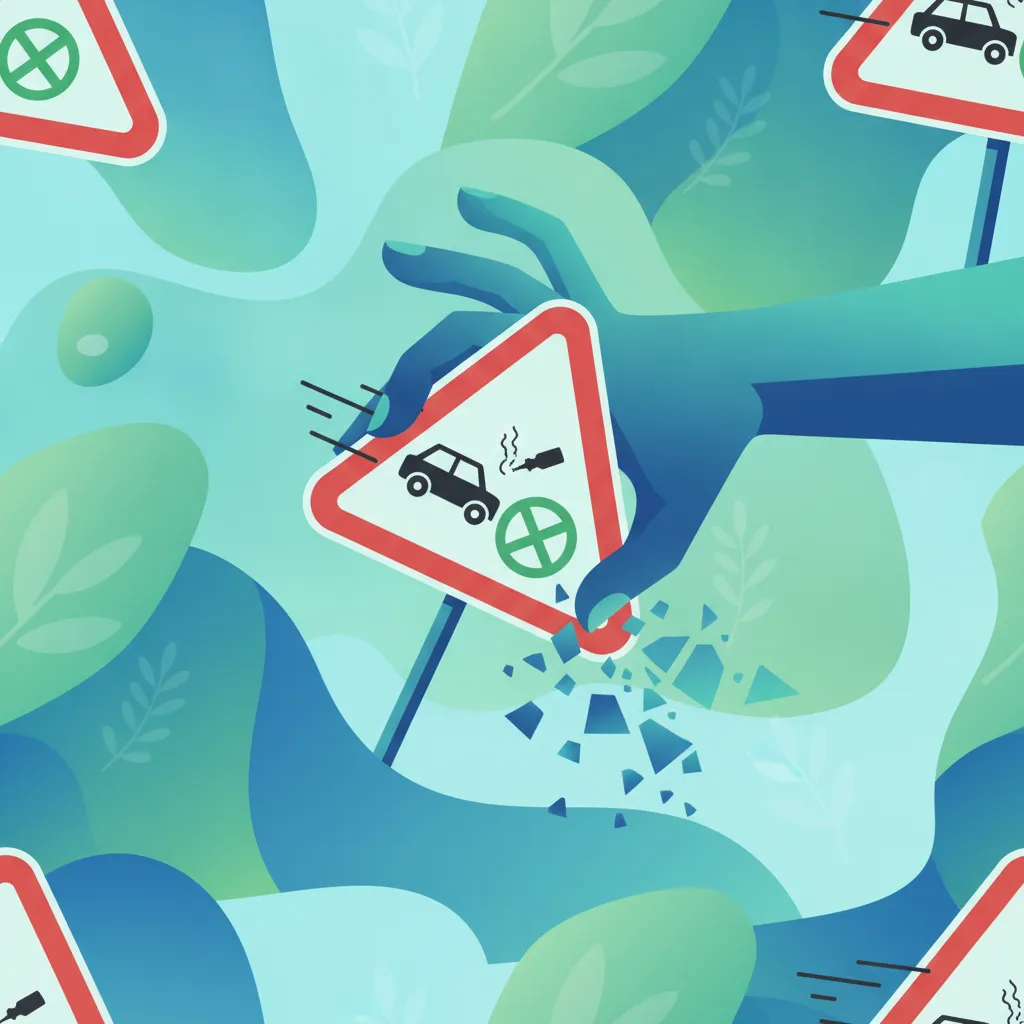
Austria's mountainous terrain means drivers will frequently encounter long tunnels. This lesson details the specific regulations, such as turning on lights and maintaining distance, as well as how to react to tunnel-specific warning signs and signals. Crucially, it covers the correct emergency procedures to follow in the event of a fire, accident, or breakdown inside a tunnel.
Austrian Driving Theory DRural Services, Alpine Routes, Motorways, Tunnels and Long-Distance Coaches
View lesson
Legal Responsibilities and Penalties for Violations lesson image

Legal Responsibilities and Penalties for Violations

This lesson provides an overview of the legal framework governing heavy vehicle drivers in Austria. It details the potential penalties for violations, including fines, penalty points, and the risk of licence suspension. A clear understanding of these consequences reinforces the importance of compliant and responsible driving.

Austrian HGV Theory CFatigue, Legal Consequences, Breakdowns, Fire, Load Loss and Emergencies
View lesson
Ensuring Accessibility for All Passengers lesson image

Ensuring Accessibility for All Passengers

Providing safe and respectful access for all passengers is a legal and professional duty. This lesson details the correct operation of accessibility features like ramps, lifts, and kneeling systems. It covers how to secure wheelchairs and mobility aids, and how to communicate effectively and respectfully with passengers who may require assistance with boarding or alighting.

Austrian Driving Theory DSmooth Driving, Passenger Comfort, Accessibility and Communication
View lesson

Frequently asked questions about Overview of D, D1, DE, and D1E Licence Categories

Find clear answers to common questions learners have about Overview of D, D1, DE, and D1E Licence Categories. Learn how the lesson is structured, which driving theory objectives it supports, and how it fits into the overall learning path of units and curriculum progression in Austria. These explanations help you understand key concepts, lesson flow, and exam focused study goals.

What is the main difference between a D1 and a D licence in Austria?

A D1 licence allows you to drive motor vehicles for passenger transport with more than 8 but no more than 16 passengers (plus the driver), with a length limit of up to 8 metres. A full D licence removes these specific passenger and length restrictions.

When do I need a DE or D1E licence?

You need a DE or D1E licence whenever you are operating a category D or D1 vehicle combined with a trailer that exceeds a certain weight threshold, usually 750 kg. These categories authorize you to drive buses or minibuses with heavy trailers.

Does the D licence automatically include D1 privileges?

Yes, holding a Category D licence in Austria grants you the entitlement to drive vehicles categorized under D1, provided you meet all other legal requirements for professional passenger transport.

Are there specific trailer weight rules for D1E and DE?

Yes, these categories define the legal entitlement to haul trailers behind your bus. Always refer to the specific Austrian vehicle registration and your licence class to ensure your total combination weight remains within the permitted limits for your specific licence.

Start Your Targeted Austrian Driving Theory Practice Search Now

Refine your study plan by searching for specific Austrian driving theory practice sets. Pinpoint questions related to particular road rules, signs, or challenge levels, and begin practicing immediately to reinforce your knowledge and excel in your official exam with confidence. Get started with focused revision today.

Search Practice Questions

Continue your Austrian driving theory learning journey

Austrian road signsAustrian article topicsSearch Austrian road signsAustrian HGV Theory C courseAustrian driving theory homeAustrian road sign categoriesAustrian driving theory topicsSearch Austrian theory articlesAustrian driving theory coursesAustrian Driving Theory B courseAustrian Driving Theory D courseAustrian driving theory articlesAustrian driving theory practiceAustrian practice set categoriesAustrian AM Driving Theory courseAustrian driving licence proceduresAustrian Motorcycle Theory (A) courseSearch Austrian driving theory practiceAustrian driving theory terminology A–ZAustrian driving theory terms and glossarySigns, Signals, Priority and Austrian Road Basics unit in Austrian AM Driving TheoryMass, Dimensions, Axle Loads, Payload and Operating Limits unit in Austrian HGV Theory CCategory AM in Austria and the First Responsibility of a Rider unit in Austrian AM Driving TheoryAustrian Traffic Culture, Core Behaviour Rules and Road Sharing unit in Austrian Driving Theory BMotorcycle Controls, Safety Checks and Protective Equipment unit in Austrian Motorcycle Theory (A)Category B in Austria, L17, Learner Practice and Driver Responsibility unit in Austrian Driving Theory BAustrian D Categories, Passenger Duty of Care and Professional Identity unit in Austrian Driving Theory DPassenger Vehicle Checks, Dimensions, Doors, Mirrors and Safety Systems unit in Austrian Driving Theory DAustrian A1, A2 and A Categories, Rider Identity and Responsibility unit in Austrian Motorcycle Theory (A)Austrian C Categories, Heavy-Vehicle Responsibility and Professional Mindset unit in Austrian HGV Theory CUnderstanding Passenger Duty of Care lesson in Austrian D Categories, Passenger Duty of Care and Professional IdentitySpecific Legal Obligations for Austrian Drivers lesson in Austrian D Categories, Passenger Duty of Care and Professional IdentityOverview of D, D1, DE, and D1E Licence Categories lesson in Austrian D Categories, Passenger Duty of Care and Professional IdentityEffective and Professional Passenger Communication lesson in Austrian D Categories, Passenger Duty of Care and Professional IdentityThe Professional Driver's Role and Responsibilities lesson in Austrian D Categories, Passenger Duty of Care and Professional Identity