
This lesson introduces the legal framework and practical requirements of the L17 accompanied driving program. You will learn the specific roles of the learner and the supervising driver, ensuring you comply with all Austrian regulations while gaining valuable experience.

Lesson content overview
Welcome to the Austrian Driving License B Theory Course! This lesson delves into the fundamentals of L17 accompanied driving, a crucial program for obtaining your Category B driver's license in Austria. The L17 program allows learner drivers to gain invaluable practical experience on public roads under the direct supervision of an experienced driver. This structured approach is designed to foster safe driving habits, enhance practical skills, and ensure compliance with Austrian traffic law (Straßenverkehrsordnung, StVO) before you obtain your full, independent driving license.
The journey to becoming a confident and safe driver in Austria is supported by various learning pathways, with L17 accompanied driving offering a unique advantage. This system bridges the gap between theoretical knowledge and real-world application, providing a transitional learning environment where learners can develop competence with immediate feedback and guidance. The L17 program is not merely about accumulating hours behind the wheel; it's about structured learning, risk mitigation, and cultivating responsible driving habits under expert supervision.
Accompanied driving, commonly known by its Austrian designation L17, is a legal framework that permits individuals to practice driving a Category B vehicle on public roads after successfully passing their theory examination and obtaining a specific learner's permit. The core idea is to provide extensive, real-world driving experience under the watchful eye of a qualified supervising driver, known as a Begleitperson. This hands-on experience is critical for developing the necessary skills, judgment, and situational awareness required for safe, independent driving.
The L17 program is legally based on specific articles within the Austrian Road Traffic Act (StVO) and its accompanying regulations for supervising drivers. It is an integral part of the overall driver training curriculum, particularly connecting with the initial understanding of Category B permission scope and the subsequent stages of the Mehrphasenausbildung (multi-stage training).
The L17 program is highly important because it allows learner drivers to transition from the controlled environment of a driving school to diverse, real-life traffic scenarios. This supervised practice period is essential for several reasons:
For the L17 program to be effective and legally compliant, both the learner driver and the supervising driver (Begleitperson) must meet specific qualifications and adhere to a set of rules. These requirements are in place to ensure a safe and productive learning environment.
The L17 permit is an interim authorization that legally allows you, as a learner driver (Führerscheinanwärter), to practice driving on public roads. You obtain this permit after successfully passing the theoretical driving examination. It is not a full driver's license but rather a conditional permit for supervised practice.
With an L17 permit, you may only drive when an authorized Begleitperson is seated in the front passenger seat. It is strictly prohibited to drive alone or with an unqualified companion. During every supervised drive, the L17 permit must be prominently displayed, typically on the driver’s seat or dashboard, to clearly indicate your learner status to other road users and law enforcement. A common misunderstanding is that after a certain period, an L17 learner can drive alone; this is false, accompaniment is required until you receive your full driver's license.
The Begleitperson is the cornerstone of the L17 program. This experienced driver supervises the learner, provides instruction, and is ready to intervene in critical situations. To ensure their competence, Begleitpersonen must fulfill strict legal criteria:
The Begleitperson must always be seated in the front passenger seat, ready to take control of the vehicle if necessary. Their role extends beyond mere presence; they are expected to actively guide the learner, offer constructive feedback, and identify potential hazards. It is a common misconception that any licensed driver can act as a supervisor; only those with the specific Begleitperson certification and meeting all other criteria are legally permitted to do so.
The Begleitperson certificate is an official document verifying that a driver meets all the statutory requirements to supervise an L17 learner. This is not automatically granted with a standard driver's license. Instead, individuals wishing to become Begleitpersonen must undergo a specific certification process.
Typically, this process involves attending a short theoretical course or passing a knowledge examination that covers the responsibilities of a Begleitperson, the L17 regulations, and effective teaching techniques. This ensures the Begleitperson is not only an experienced driver but also understands how to properly instruct and supervise a novice. The certificate has a limited validity period, usually five years, and must be renewed to continue supervising L17 learners.
Meet the core eligibility criteria (age, driving experience, valid Category B license).
Attend a specialized training course or pass a specific examination.
Obtain the official Begleitperson certificate.
Ensure the certificate is current and renew it before its expiration date.
The L17 program employs a structured learning approach, often referred to as the "Phase Model," to ensure learners gain comprehensive experience across a variety of traffic environments. This model divides the supervised driving period into distinct stages, each with specific learning objectives and minimum driving hours. The progression through these phases is crucial for developing a well-rounded set of driving skills. The total minimum required driving hours for L17 practice is 40 hours.
The initial phase focuses on developing fundamental driving skills within urban environments. This typically involves practicing in city centers, residential areas, and other built-up zones.
Minimum Requirement: At least 12 hours of supervised urban driving.
During this phase, learners concentrate on:
The goal is to build confidence and competence in slower-speed, high-interaction environments before moving to more complex scenarios.
Once comfortable with urban driving, learners progress to rural roads, which present different challenges and demand a broader range of skills.
Minimum Requirement: At least 10 hours of supervised rural driving.
Key learning objectives for this phase include:
This phase introduces higher speeds and more dynamic situations compared to urban environments, preparing the learner for varied road conditions.
This phase introduces learners to high-speed environments, including motorways (Autobahnen) and other high-speed roads. It is a critical step for developing skills necessary for fast-paced, multi-lane driving.
Minimum Requirement: At least 8 hours of supervised highway and high-speed road driving.
Learners will focus on:
This phase is essential for building the confidence and proficiency needed to handle Austria's motorway network. It is crucial that learners have completed the previous phases before attempting high-speed driving to ensure they have the foundational skills.
The final structured phase is dedicated to consolidating all learned skills and exposing the learner to more complex and challenging driving scenarios.
Minimum Requirement: At least 10 hours of supervised driving, covering advanced situations.
This phase often includes:
This final stage ensures a comprehensive and well-rounded preparation for the practical driving exam and, ultimately, for safe independent driving. The total accumulated minimum driving hours across all phases must be 40.
Proper documentation is not just a formality; it is a legal requirement that proves compliance with the L17 program's structured learning stages and minimum hour requirements. Failure to maintain accurate records can lead to delays in obtaining your license or even legal penalties.
The Fahrbuch, or driving logbook, is an official document where every single supervised driving session must be meticulously recorded. It serves as legal evidence of your accumulated practice hours and phase completion.
For each session, the Fahrbuch must include:
It is critical that the Fahrbuch is always up-to-date and completed accurately after each session. This physical logbook is mandated by law, and digital apps cannot replace it. You must present your completed Fahrbuch during your final practical driving examination as proof of fulfilling the required training.
One of the most crucial legal aspects of L17 driving is ensuring adequate insurance coverage. General vehicle insurance policies do not automatically cover a learner driver under supervision. A specialized insurance policy, often referred to as Begleitperson insurance or a dedicated rider, is required.
This policy must explicitly cover the learner driver while they are under supervision. Its purpose is to protect against liability for third-party damages in the event of an accident during supervised practice. Without this specific coverage, both the Begleitperson and the learner could face significant financial and legal consequences. The insurance certificate proving this coverage must always be kept in the vehicle during supervised drives and presented upon request by authorities. The absence of proper insurance constitutes a severe violation.
As previously mentioned, the L17 permit must be clearly visible during all supervised driving sessions. This serves an important practical and legal purpose: it immediately informs other road users and law enforcement officers that the vehicle is being operated by a learner driver under supervision. This visibility can encourage other drivers to exercise additional caution around your vehicle. The permit should be placed on the driver’s seat or dashboard in such a way that it is easily seen from outside the vehicle.
Safety is the paramount concern in the L17 program. Effective risk management protocols and strict adherence to prohibited activities are essential for protecting the learner, the Begleitperson, and other road users.
The Begleitperson is ultimately responsible for ensuring the safety of each driving session. This involves continuous assessment of current conditions and the learner's performance. Risk management protocols dictate procedures for handling various situations:
Safety First: Never continue a driving session if the Begleitperson deems conditions or the learner's state of readiness to be unsafe.
Several activities are strictly prohibited during L17 practice to minimize risks:
Understanding and avoiding common pitfalls is crucial for a smooth L17 learning experience and successful license acquisition.
These violations can lead to fines, invalidation of practice hours, delays in licensing, or even the suspension of your L17 permit. Adhering to all rules protects you and ensures your progress is recognized.
The L17 program emphasizes gaining experience in various real-world conditions. Your practice sessions should reflect this diversity, with the Begleitperson guiding you through different scenarios.
The design of the L17 program is rooted in sound principles of driver education, human psychology, and accident prevention. Its structure is not arbitrary but carefully crafted to produce safe and responsible drivers.
By understanding the logic behind these regulations, learners can appreciate why each step of the L17 program is crucial for their development into a safe and confident driver.
The L17 accompanied driving program is a cornerstone of obtaining your Category B driver's license in Austria, providing a supervised, structured pathway to real-world driving experience.
By understanding and meticulously following these L17 fundamentals, you are not only fulfilling legal prerequisites but also laying a strong foundation for safe, confident, and responsible driving on Austrian roads.
The L17 accompanied driving program is a mandatory phase of Austrian Category B license training, allowing learner drivers to gain real-world experience under supervision of a qualified Begleitperson. The supervising driver must be at least 24, hold a Category B license for five years, and possess an official Begleitperson certificate renewed every five years. Learners must complete 40 minimum supervised hours across four structured phases—urban, rural, highway, and consolidation—in progressive order. Every session must be logged in the official Fahrbuch with complete details and the Begleitperson's signature, and specific insurance coverage for the learner must be maintained throughout the practice period.
A short set of high-value points that capture the most important learning from this lesson.
The L17 permit allows supervised driving only with a qualified Begleitperson seated in the front passenger seat; driving alone is strictly prohibited.
A Begleitperson must be at least 24 years old, hold a Category B license for at least five years, possess a valid Begleitperson certificate, and be free from serious traffic offenses.
The L17 program requires a minimum of 40 supervised driving hours completed across four structured phases: Urban (12h), Rural (10h), Highway (8h), and Consolidation (10h).
The official Fahrbuch driving logbook must record every session with date, time, location, phase, duration, and the Begleitperson's signature; digital records cannot replace it.
A specific insurance policy covering the learner during supervised practice must be in effect and present in the vehicle at all times.
Explore all units and lessons included in this driving theory course.
The Begleitperson certificate is separate from a standard driver's license and must be renewed every five years.
Phases must be completed in order—urban first, then rural, then highway, then consolidation—to ensure progressive skill development.
The Begleitperson has full authority to postpone or terminate any session if conditions or the learner's readiness are deemed unsafe.
Night driving under L17 requires the Begleitperson to be present and may have additional restrictions beyond basic supervision rules.
The L17 permit must be clearly displayed on the dashboard or driver's seat to inform other road users and law enforcement.
Assuming any licensed driver can supervise—only those meeting all Begleitperson criteria (age, experience, certification) are legally permitted.
Failing to update the Fahrbuch immediately after each session, which can lead to incomplete records and delays during the practical exam.
Relying on standard vehicle insurance without confirming a specific rider for L17 learner coverage.
Skipping learning phases or attempting highway driving before completing sufficient urban and rural experience.
Begleitperson becoming distracted or not remaining in a position to immediately take control of the vehicle if needed.
Lesson content overview
A short set of high-value points that capture the most important learning from this lesson.
The L17 permit allows supervised driving only with a qualified Begleitperson seated in the front passenger seat; driving alone is strictly prohibited.
A Begleitperson must be at least 24 years old, hold a Category B license for at least five years, possess a valid Begleitperson certificate, and be free from serious traffic offenses.
The L17 program requires a minimum of 40 supervised driving hours completed across four structured phases: Urban (12h), Rural (10h), Highway (8h), and Consolidation (10h).
The official Fahrbuch driving logbook must record every session with date, time, location, phase, duration, and the Begleitperson's signature; digital records cannot replace it.
A specific insurance policy covering the learner during supervised practice must be in effect and present in the vehicle at all times.
Explore all units and lessons included in this driving theory course.
The Begleitperson certificate is separate from a standard driver's license and must be renewed every five years.
Phases must be completed in order—urban first, then rural, then highway, then consolidation—to ensure progressive skill development.
The Begleitperson has full authority to postpone or terminate any session if conditions or the learner's readiness are deemed unsafe.
Night driving under L17 requires the Begleitperson to be present and may have additional restrictions beyond basic supervision rules.
The L17 permit must be clearly displayed on the dashboard or driver's seat to inform other road users and law enforcement.
Assuming any licensed driver can supervise—only those meeting all Begleitperson criteria (age, experience, certification) are legally permitted.
Failing to update the Fahrbuch immediately after each session, which can lead to incomplete records and delays during the practical exam.
Relying on standard vehicle insurance without confirming a specific rider for L17 learner coverage.
Skipping learning phases or attempting highway driving before completing sufficient urban and rural experience.
Begleitperson becoming distracted or not remaining in a position to immediately take control of the vehicle if needed.
Explore search topics learners often look for when studying L17 Accompanied Driving Fundamentals. These topics reflect common questions about road rules, driving situations, safety guidance, and lesson level theory preparation for learners in Austria.
Browse additional driving theory lessons that cover connected traffic rules, road signs, and common driving situations related to this topic. Improve your understanding of how different rules interact across everyday traffic scenarios.
Understand the progression after obtaining your L17 permit. This lesson details the specific duties, qualifications, and legal responsibilities of a supervising driver (Begleitperson) in Austria, ensuring a compliant and safe learning journey.

This lesson delves into the specific Austrian laws and regulations that professional passenger drivers must adhere to. It provides an overview of rules concerning driving and rest times, the use of the digital tachograph, and the essential documents that must be carried at all times. Understanding these legal obligations is crucial for compliance and avoiding penalties during roadside checks.

This lesson explains the critical Mehrphasenausbildung (multi-phase training) process that all new drivers in Austria must complete after obtaining their license. It focuses on the obligations during the probationary period, including the demerit points system and the consequences of traffic violations like a Fahrverbot (driving ban). The content details the mandatory driver improvement courses designed to enhance risk awareness and promote responsible driving habits.

This lesson provides a detailed breakdown of the Mehrphasenausbildung (multi-phase training) program, a legal requirement for all new license holders in Austria. It explains the structure of the probationary period and the mandatory components, such as a perfection drive and a driver safety training course. Learners will understand the legal implications of failing to complete these stages and their purpose in reinforcing safe driving skills after the initial test.

This lesson outlines the significant legal responsibilities placed on heavy-vehicle drivers under Austrian law, emphasizing a strong duty of care and professional conduct. It covers the obligation to perform thorough pre-trip inspections, comply with all load and weight regulations, and uphold safety standards to protect all road users. Adherence to these principles is crucial for professional and safe operation.

This lesson provides an overview of the legal framework governing heavy vehicle drivers in Austria. It details the potential penalties for violations, including fines, penalty points, and the risk of licence suspension. A clear understanding of these consequences reinforces the importance of compliant and responsible driving.

This lesson defines the role of a professional driver beyond simply operating a vehicle. It covers the expectations of public trust, professional image, and the responsibilities inherent in transporting people. Key topics include ethical conduct, communication with the public, and understanding your position as a representative of a transport service within the Austrian legal framework.

This lesson details the mandatory personal and vehicle documentation required for motorcyclists in Austria. It covers the necessity of carrying a valid licence card, vehicle registration papers, and proof of insurance at all times. Understanding these legal requirements ensures full compliance with Austrian traffic law and facilitates smooth interactions with law enforcement.

This lesson provides a comprehensive overview of a driver's legal responsibilities and the potential consequences of failing to adhere to traffic laws. Learners will explore the concept of liability in the event of an accident and the structure of the official penalty catalogue. The material covers the impact of fines, demerit points, and potential driving bans (Fahrverbot) on one's license, as well as the effects on insurance premiums.
This lesson guides learners through the essential documentation required for legally operating a vehicle in Austria, including the registration certificate, proof of insurance, and the driver's license (Führerschein). It explains the Austrian Vignette system for using motorways (Autobahnen) and expressways (Schnellstraßen), covering how to purchase, affix, and comply with the regulations. The content also provides awareness of specific toll roads and their payment systems to ensure full legal conformity.
This lesson covers the legal requirements for regular maintenance and periodic roadworthiness certification (known as the 'Pickerl' or TÜV inspection) in Austria. It explains the importance of adhering to manufacturer-recommended service intervals. Maintaining a certified, roadworthy vehicle is a core legal responsibility for any operator or driver.
Master the essential documentation for Austria's L17 accompanied driving program, including the Fahrbuch (logbook) and mandatory insurance. Learn what you need to legally practice driving and avoid violations.
This lesson guides learners through the essential documentation required for legally operating a vehicle in Austria, including the registration certificate, proof of insurance, and the driver's license (Führerschein). It explains the Austrian Vignette system for using motorways (Autobahnen) and expressways (Schnellstraßen), covering how to purchase, affix, and comply with the regulations. The content also provides awareness of specific toll roads and their payment systems to ensure full legal conformity.
This lesson details the mandatory personal and vehicle documentation required for motorcyclists in Austria. It covers the necessity of carrying a valid licence card, vehicle registration papers, and proof of insurance at all times. Understanding these legal requirements ensures full compliance with Austrian traffic law and facilitates smooth interactions with law enforcement.
This lesson provides a detailed breakdown of the Mehrphasenausbildung (multi-phase training) program, a legal requirement for all new license holders in Austria. It explains the structure of the probationary period and the mandatory components, such as a perfection drive and a driver safety training course. Learners will understand the legal implications of failing to complete these stages and their purpose in reinforcing safe driving skills after the initial test.
This lesson delves into the specific Austrian laws and regulations that professional passenger drivers must adhere to. It provides an overview of rules concerning driving and rest times, the use of the digital tachograph, and the essential documents that must be carried at all times. Understanding these legal obligations is crucial for compliance and avoiding penalties during roadside checks.
This lesson details the essential legal and administrative requirements for operating an AM vehicle in Austria. It covers the processes for vehicle registration, the obligation for licence plates, and the necessity of third-party liability insurance. Furthermore, it explains the importance of regular technical inspections to ensure the vehicle remains roadworthy and compliant with national standards.
This lesson explains the critical Mehrphasenausbildung (multi-phase training) process that all new drivers in Austria must complete after obtaining their license. It focuses on the obligations during the probationary period, including the demerit points system and the consequences of traffic violations like a Fahrverbot (driving ban). The content details the mandatory driver improvement courses designed to enhance risk awareness and promote responsible driving habits.
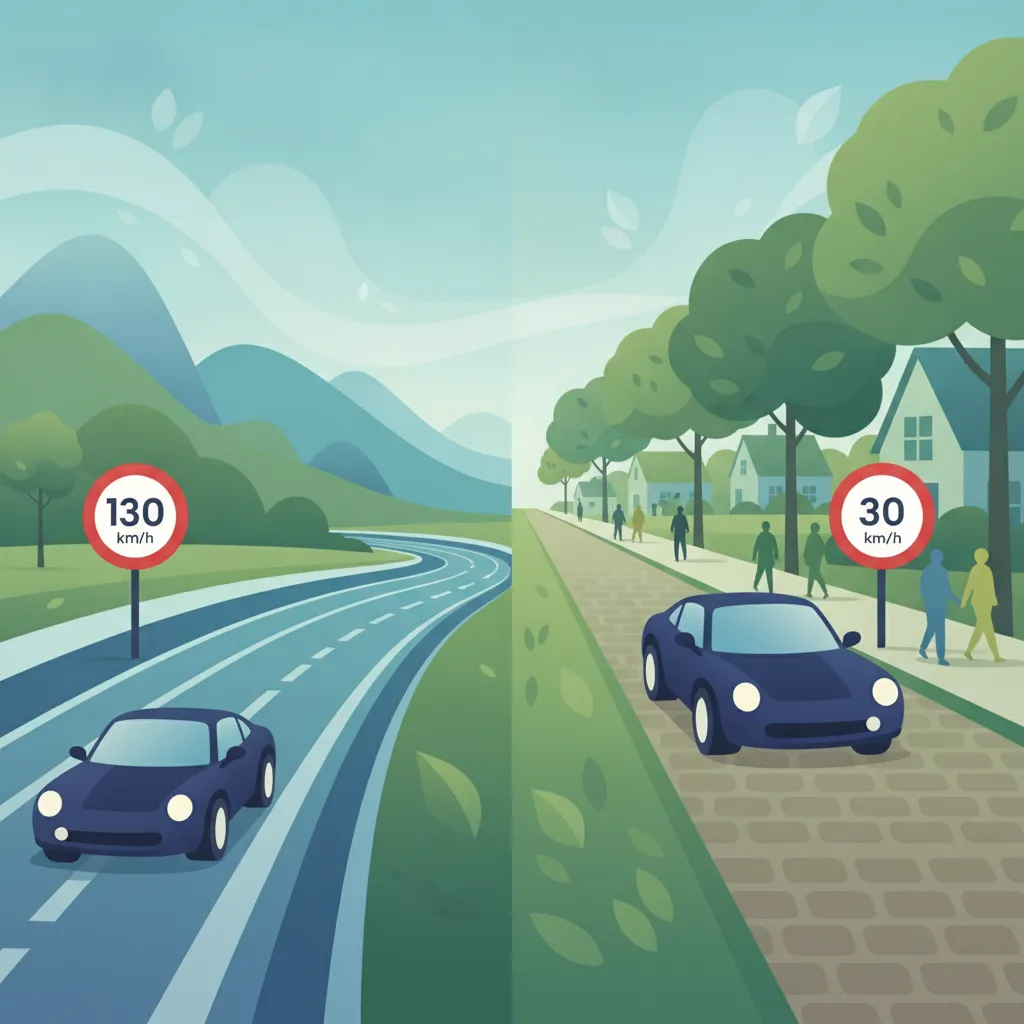
This lesson details the legally prescribed speed limits across Austria's road network, including the specific limits for urban areas (Ortsgebiet), rural roads (Landstraßen), motorways (Autobahnen), and expressways (Schnellstraßen). Learners will understand how to interpret speed limit signs, including those with supplementary conditions. Adherence to these legal requirements is a fundamental aspect of road safety and compliance with the Austrian road traffic act (StVO).

This lesson explains the mandatory multi-stage training system in Austria, known as Mehrphasenausbildung. It details the required theoretical and practical training modules that riders must complete after obtaining their initial licence. Understanding this structured pathway helps learners plan their skill development and meet all legal requirements for full licensure.
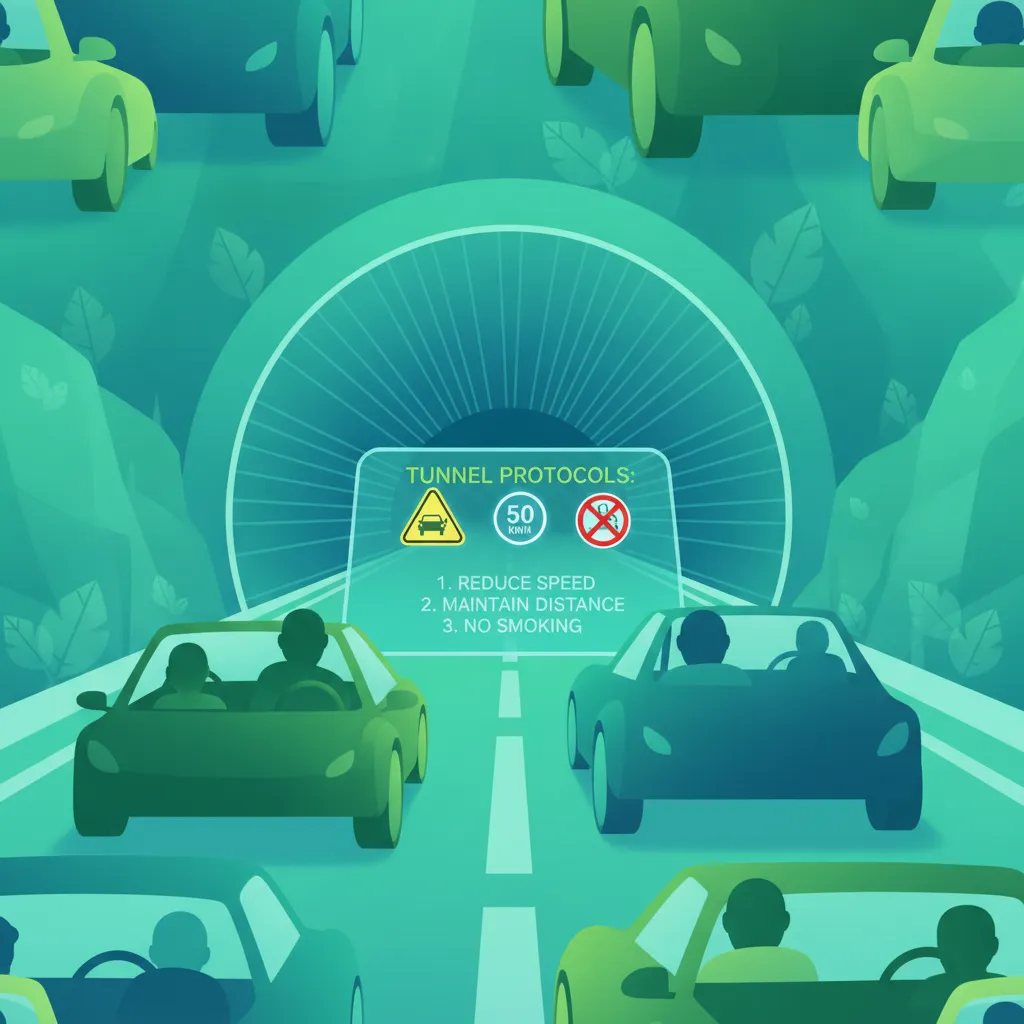
Austria's mountainous terrain means drivers will frequently encounter long tunnels. This lesson details the specific regulations, such as turning on lights and maintaining distance, as well as how to react to tunnel-specific warning signs and signals. Crucially, it covers the correct emergency procedures to follow in the event of a fire, accident, or breakdown inside a tunnel.
Find clear answers to common questions learners have about L17 Accompanied Driving Fundamentals. Learn how the lesson is structured, which driving theory objectives it supports, and how it fits into the overall learning path of units and curriculum progression in Austria. These explanations help you understand key concepts, lesson flow, and exam focused study goals.
A supervising driver must hold a valid driver's license for at least 7 years, have sufficient driving experience, and meet specific legal criteria set by the Austrian authorities to ensure they can provide safe and competent guidance.
Yes, you must ensure that the vehicle used for the L17 program is correctly registered and covered by insurance that explicitly includes accompanied driving practice. Always carry the necessary training documents provided by your driving school.
Yes, the L17 program requires a specific minimum number of kilometers of accompanied driving to be completed. These must be recorded accurately in the official logbook to be accepted for your license application.
Traffic violations during the L17 phase can have serious consequences for both the learner and the supervising driver. It is crucial to strictly follow all road rules, as violations may lead to penalties, point assessments, or even the suspension of your training eligibility.
Refine your study plan by searching for specific Austrian driving theory practice sets. Pinpoint questions related to particular road rules, signs, or challenge levels, and begin practicing immediately to reinforce your knowledge and excel in your official exam with confidence. Get started with focused revision today.