
This lesson establishes the legal foundation for your driving journey by defining exactly what you are permitted to drive with a Category B license. You will explore vehicle mass limits, seat capacities, and the specific regulations for towing trailers. Understanding these boundaries is essential for complying with Austrian law and preparing for your theory exam.

Lesson content overview
Obtaining your Austrian Category B driving license grants you the legal permission to operate a range of vehicles on public roads. However, this permission comes with specific limits and conditions designed to ensure safety and maintain roadworthiness. Comprehending the precise scope of your Category B license is fundamental for every driver, preventing accidental legal violations, maintaining vehicle control, and fostering responsible driving habits across Austria's diverse road network.
This lesson provides a comprehensive overview of the vehicle types, maximum permissible mass, passenger seat limitations, and various trailer combinations you are legally allowed to handle. We will explore the standard Category B license, delve into the requirements and capabilities of the B96 extension, and define the full entitlement of the BE category. A clear understanding of these distinctions is vital for safe and compliant driving, especially when considering towing or transporting multiple passengers.
The Category B driving license in Austria is the standard qualification for private car use. It permits individuals to drive motor vehicles that fall within specific classifications regarding their size, weight, and passenger capacity. This base license forms the foundation for personal mobility, allowing you to operate common passenger cars, small vans, and light trucks, provided they meet the defined criteria.
The regulations governing the Category B license are rooted in national and European Union traffic laws, ensuring a standardized approach to driver competence and vehicle safety. Understanding these regulations is not just about avoiding penalties; it's about recognizing the inherent limitations and responsibilities that come with operating different types of vehicles and combinations on the road.
One of the most critical factors defining the scope of your Category B license is the Maximum Permissible Mass (MVM), also known as "höchstzulässige Gesamtmasse" in Austria. The MVM refers to the total weight of a vehicle when it is fully loaded, encompassing the vehicle's unladen mass, fuel, passengers, and any cargo. This figure is determined by the vehicle manufacturer and is specified in the vehicle's registration documents.
For a standard Category B license, you are permitted to drive motor vehicles with a Maximum Permissible Mass (MVM) of up to 3,500 kg (3.5 tonnes). This limit ensures that drivers operate vehicles they can safely control, particularly during braking, cornering, and emergency maneuvers. Exceeding this MVM is a serious offense that can lead to significant fines and jeopardize road safety.
It is essential to distinguish between a vehicle's MVM and its unladen mass. The unladen mass is the weight of the vehicle without any occupants or cargo. The difference between the MVM and the unladen mass represents the vehicle's payload capacity – the maximum weight of passengers and cargo it can legally carry. Always ensure that the total weight of your vehicle, including everything and everyone inside, does not surpass its specified MVM.
Beyond vehicle mass, your Category B license also restricts the number of passengers you can legally transport. With a standard Category B license, you are allowed to drive motor vehicles designed and constructed for the carriage of up to 8 passengers, in addition to the driver. This means the vehicle can have a maximum of 9 seats in total (driver + 8 passengers).
This limitation is crucial for distinguishing between standard passenger cars and larger vehicles like minibuses. While many minivans or larger SUVs might have an MVM under 3,500 kg, they could potentially exceed the 8-passenger seat limit. Vehicles designed for more than 8 passenger seats require a different license category, such as D1 or D, regardless of their MVM. Always check the vehicle's registration documents to confirm its official seating capacity.
Towing a trailer significantly alters a vehicle's handling characteristics, braking performance, and overall dimensions. Austrian regulations, in line with EU standards, meticulously define what type of trailer combinations are permissible with different license categories. Understanding these distinctions is paramount for safety and legal compliance.
With a standard Category B license, you are permitted to tow a light trailer without requiring any special extension. A light trailer is defined as a trailer with a Maximum Permissible Mass (MVM) that does not exceed 750 kg. This type of trailer typically includes small utility trailers, boat trailers for dinghies, or luggage trailers.
Even when towing a light trailer, you must ensure that the combined MVM of your towing vehicle and the trailer does not exceed 3,500 kg. For instance, if your car has an MVM of 2,800 kg and you tow a light trailer with an MVM of 600 kg, the combined MVM would be 3,400 kg, which is within the standard Category B limit. No additional driving test or practical training is required for towing such light trailers, but proper loading, securing the load, and functional trailer lights are always mandatory.
The rules become more specific when towing trailers with an MVM exceeding 750 kg. These are often referred to as medium trailers. If the trailer's MVM is greater than 750 kg, it is a legal requirement in Austria for the trailer to be equipped with its own functional braking system. This could be an overrun brake system, where the trailer's brakes are activated when the tow vehicle slows down, or a more complex air/hydraulic system for heavier trailers.
For drivers holding only a standard Category B license, you can tow a trailer with an MVM exceeding 750 kg, provided two conditions are met:
For example, if your car has an MVM of 2,000 kg and you want to tow a caravan with an MVM of 1,200 kg, the combined MVM would be 3,200 kg. Since 3,200 kg is less than 3,500 kg, and the 1,200 kg trailer (which is over 750 kg) has its own braking system, this combination is permissible with a standard Category B license. These trailers must also undergo mandatory periodic technical inspections (TÜV).
When the combined Maximum Permissible Mass of the towing vehicle and trailer exceeds 3,500 kg but does not surpass 4,250 kg, you will need the B96 extension to your Category B license. This extension is specifically designed for drivers who need to tow moderately heavier trailer combinations without obtaining the full BE category.
To acquire the B96 extension, you typically need to complete a practical training course, which concludes with a practical test demonstrating your ability to safely handle a vehicle and trailer combination within these limits. It's important to note that while B96 allows for a higher combined MVM, the trailer itself must still have a valid braking system if its MVM exceeds 750 kg.
A common scenario requiring B96 might be towing a larger caravan or a substantial horse trailer. For example, if your car has an MVM of 2,500 kg and you wish to tow a caravan with an MVM of 1,500 kg, the combined MVM would be 4,000 kg. Since this exceeds 3,500 kg but is within 4,250 kg, a B96 extension would be required.
For the heaviest trailer combinations, the BE category provides the fullest entitlement. With a BE license, you can tow trailers where the combined MVM of the towing vehicle and the trailer can reach up to 7,000 kg (7 tonnes). There are two main conditions for the BE category:
Obtaining the BE category requires a separate practical driving test, often including specific maneuvers with a trailer. This ensures that drivers possess the advanced skills necessary to safely control larger and heavier combinations. The BE category is essential for towing large caravans, car transporters, or substantial commercial trailers.
For instance, if you have a powerful SUV with an MVM of 3,000 kg and you want to tow a large horse trailer with an MVM of 2,500 kg, the combined MVM would be 5,500 kg. This falls comfortably within the 7,000 kg limit of the BE category, and as long as the trailer's MVM (2,500 kg) does not exceed the tow vehicle's MVM (3,000 kg), this combination is permissible.
As highlighted, trailers with an MVM exceeding 750 kg are legally required to have an operational braking system. This system is crucial for ensuring effective braking performance of the entire vehicle combination, reducing stopping distances, and maintaining stability, especially during emergency stops or on downhill gradients.
In Austria, all trailers used on public roads, regardless of their MVM (except for very specific exceptions like certain agricultural trailers), must undergo regular technical inspections (TÜV or "Pickerl"). This inspection verifies the trailer's roadworthiness, including the condition of its chassis, tires, lighting, and crucially, its braking system. Operating a trailer without a valid inspection sticker ("Pickerl") is illegal and can result in fines and impoundment of the trailer. Ensure your trailer's inspection is always up-to-date before embarking on any journey.
Adhering to the specific regulations for the Austrian Category B driving license and its extensions is not merely a recommendation; it is a mandatory legal requirement under the Road Traffic Act (StVO) and associated decrees. Non-compliance carries significant penalties, including fines, points on your driving record, and even the suspension or revocation of your license.
Here is a summary of the core regulations:
Many drivers inadvertently violate licensing regulations due to a lack of detailed knowledge. Understanding common pitfalls can help you stay compliant and safe.
The practical application of your Category B license, especially when towing, is also influenced by various contextual factors. Safe driving always involves adapting to circumstances.
The concepts covered in this lesson are foundational and link to many other aspects of the Austrian Driving License B Theory Course.
The Austrian Category B driving license empowers you with significant driving freedom, but it comes with precise legal boundaries. You can drive vehicles with a Maximum Permissible Mass (MVM) up to 3,500 kg and designed for up to 8 passengers (excluding the driver).
When it comes to trailers, a standard B license allows you to tow light trailers (MVM ≤ 750 kg) or medium trailers (MVM > 750 kg), provided the latter have a braking system and the combined MVM does not exceed 3,500 kg. For heavier combinations, the B96 extension allows a combined MVM up to 4,250 kg, while the BE category provides the fullest entitlement for combined MVM up to 7,000 kg, with additional conditions on trailer MVM. Remember that all trailers, especially those over 750 kg MVM, must have functional brakes and a valid technical inspection (TÜV).
Understanding and respecting these limits is not merely a legal obligation; it is a fundamental aspect of safe and responsible driving. Always verify your vehicle and trailer specifications against your license category before driving to ensure full compliance and reduce risks on Austria's roads.
The Austrian Category B license allows driving vehicles up to 3,500 kg MVM with up to 8 passenger seats (plus driver). For towing, standard Category B permits light trailers (≤750 kg MVM) and medium trailers (>750 kg MVM) with functional brakes as long as combined MVM stays under 3,500 kg. Heavier combinations require B96 extension (3,500–4,250 kg combined) or full BE category (up to 7,000 kg combined, with trailer MVM not exceeding vehicle MVM). All trailers exceeding 750 kg MVM must have operational brakes and valid technical inspection (TÜV), and drivers must always verify their specific vehicle and trailer combination against their license entitlements before driving.
A short set of high-value points that capture the most important learning from this lesson.
A standard Category B license permits driving vehicles with a Maximum Permissible Mass (MVM) up to 3,500 kg and seating up to 8 passengers (plus driver).
Light trailers (MVM ≤ 750 kg) can be towed with standard Category B, while medium trailers (MVM > 750 kg) require functional brakes and combined MVM must stay under 3,500 kg.
The B96 extension allows combined MVM between 3,500 kg and 4,250 kg, while BE category permits combinations up to 7,000 kg with additional conditions.
Payload capacity equals MVM minus unladen mass, representing the maximum weight of passengers and cargo a vehicle can legally carry.
All trailers with MVM exceeding 750 kg must have a functional braking system and valid technical inspection (TÜV) to operate on Austrian roads.
Explore all units and lessons included in this driving theory course.
MVM stands for Maximum Permissible Mass – the total legal weight when fully loaded including fuel, passengers, and cargo.
Light trailer: MVM ≤ 750 kg. Medium trailer: MVM > 750 kg but combined MVM ≤ 3,500 kg (standard B).
B96 extension: combined MVM 3,500–4,250 kg. BE category: combined MVM up to 7,000 kg with trailer MVM not exceeding vehicle MVM.
Trailers over 750 kg MVM legally require their own braking system regardless of license category.
Passenger seat limit for Category B is 8 (excluding driver), regardless of vehicle MVM being under 3,500 kg.
Assuming all vans or SUVs under 3,500 kg MVM are legal with Category B, without checking if they exceed the 8-passenger seat limit.
Confusing light and medium trailer categories and forgetting that trailers over 750 kg MVM must have functional brakes.
Believing a standard Category B license covers all trailer combinations up to 3,500 kg combined MVM without checking the actual trailer MVM limits.
Overloading a vehicle by not distinguishing between MVM and unladen mass, thereby exceeding the payload capacity.
Operating a trailer with an expired technical inspection (TÜV/Pickerl), which is illegal even if the trailer is otherwise roadworthy.
Lesson content overview
A short set of high-value points that capture the most important learning from this lesson.
A standard Category B license permits driving vehicles with a Maximum Permissible Mass (MVM) up to 3,500 kg and seating up to 8 passengers (plus driver).
Light trailers (MVM ≤ 750 kg) can be towed with standard Category B, while medium trailers (MVM > 750 kg) require functional brakes and combined MVM must stay under 3,500 kg.
The B96 extension allows combined MVM between 3,500 kg and 4,250 kg, while BE category permits combinations up to 7,000 kg with additional conditions.
Payload capacity equals MVM minus unladen mass, representing the maximum weight of passengers and cargo a vehicle can legally carry.
All trailers with MVM exceeding 750 kg must have a functional braking system and valid technical inspection (TÜV) to operate on Austrian roads.
Explore all units and lessons included in this driving theory course.
MVM stands for Maximum Permissible Mass – the total legal weight when fully loaded including fuel, passengers, and cargo.
Light trailer: MVM ≤ 750 kg. Medium trailer: MVM > 750 kg but combined MVM ≤ 3,500 kg (standard B).
B96 extension: combined MVM 3,500–4,250 kg. BE category: combined MVM up to 7,000 kg with trailer MVM not exceeding vehicle MVM.
Trailers over 750 kg MVM legally require their own braking system regardless of license category.
Passenger seat limit for Category B is 8 (excluding driver), regardless of vehicle MVM being under 3,500 kg.
Assuming all vans or SUVs under 3,500 kg MVM are legal with Category B, without checking if they exceed the 8-passenger seat limit.
Confusing light and medium trailer categories and forgetting that trailers over 750 kg MVM must have functional brakes.
Believing a standard Category B license covers all trailer combinations up to 3,500 kg combined MVM without checking the actual trailer MVM limits.
Overloading a vehicle by not distinguishing between MVM and unladen mass, thereby exceeding the payload capacity.
Operating a trailer with an expired technical inspection (TÜV/Pickerl), which is illegal even if the trailer is otherwise roadworthy.
Explore search topics learners often look for when studying Permission Scope of Category B. These topics reflect common questions about road rules, driving situations, safety guidance, and lesson level theory preparation for learners in Austria.
Browse additional driving theory lessons that cover connected traffic rules, road signs, and common driving situations related to this topic. Improve your understanding of how different rules interact across everyday traffic scenarios.
Understand the specific regulations for towing trailers with an Austrian Category B license, including light, medium, and heavy trailers. Learn about the B96 and BE extensions and their respective weight limits for safe and legal towing.
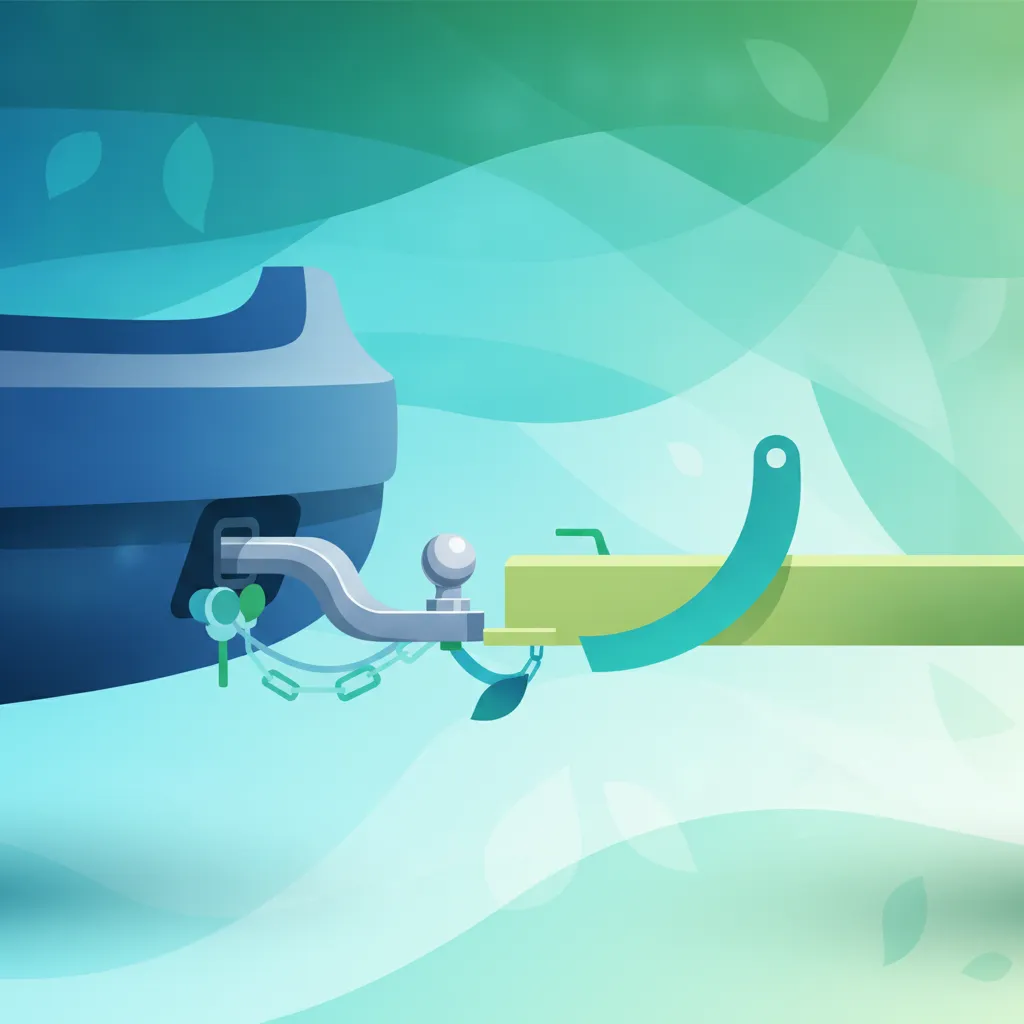
This lesson provides a foundational overview of towing a trailer with a Category B vehicle. It explains the basics of the coupling process, the importance of safety checks, and the principles of correct load distribution for stability. The content clarifies the legal framework, outlining the weight limits that apply to a standard B license and explaining when the B96 or BE permit extensions are required for heavier combinations.

This lesson explains the specific definitions and limitations of the C1, C1E, C, and CE heavy-goods vehicle licence categories in Austria. It details the permissible vehicle mass, axle configurations, and rules for trailer combinations associated with each category. Understanding these distinctions is fundamental for ensuring legal compliance and selecting the correct licence for specific vehicle configurations.

This lesson details the legal ramifications of operating an overloaded heavy vehicle in Austria, which include significant fines and penalty points. It also emphasizes the severe safety risks, such as compromised braking performance and increased mechanical stress on the vehicle. Understanding these consequences reinforces the importance of strict adherence to weight limits.

This lesson introduces the different classifications of trailers used in Austria, including drawbar trailers (Anhänger) and semi-trailers (Sattelanhänger/Auflieger). It explains their key structural differences, typical uses, and the types of coupling systems they employ. Understanding these types is the first step in learning to operate combination vehicles.
This lesson focuses on the legal restrictions concerning a heavy vehicle's dimensions, including maximum height, width, and length. It teaches drivers how to interpret road signs and supplemental plates that indicate these limits. This knowledge is crucial for route planning, especially when navigating under bridges, through tunnels, and on restricted roads.

This lesson details the general traffic rules applicable to heavy goods vehicles on Austrian roads, highlighting differences from passenger car regulations. It covers key topics such as right-of-way at intersections, specific rules for overtaking, maintaining proper lane discipline, and adhering to designated speed limits. Understanding these rules is critical for safe integration into mixed traffic.

This lesson explains the critical importance of properly securing any load, whether inside the vehicle, on a roof rack, or in a trailer. It covers the principles of correct weight distribution to maintain the vehicle's center of gravity and stability. Learners will understand the legal requirements and best practices for using tie-downs and other securing methods to prevent items from shifting or falling, which could create a serious hazard on the road.
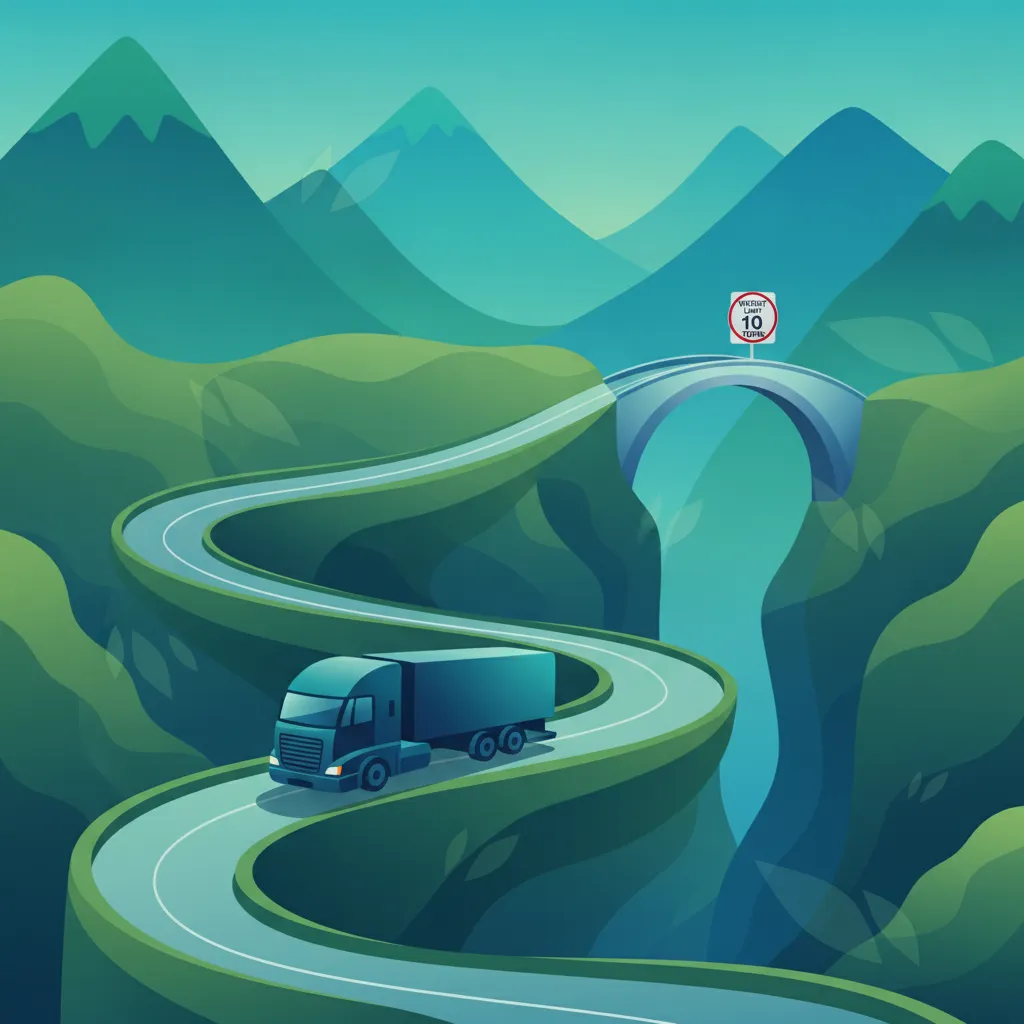
This lesson covers the specific weight restrictions that apply to sensitive infrastructure like Alpine passes and bridges throughout Austria. It explains how to identify these limits through road signage and incorporate them into route planning. Adhering to these restrictions is vital for preventing structural damage and ensuring safety in challenging terrain.
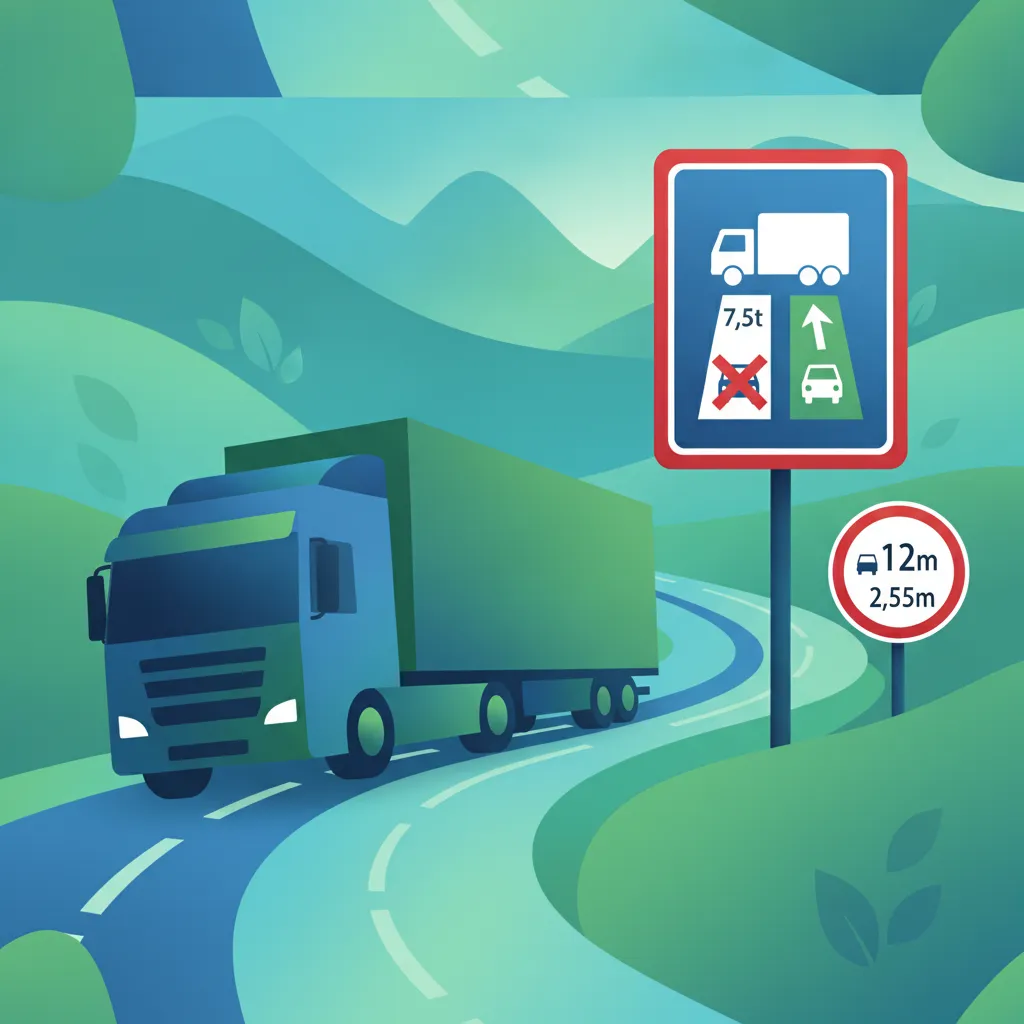
This lesson focuses on the specific Austrian road signs and supplemental plates that apply to heavy goods vehicles. It explains how to interpret signage indicating weight limits, height and width restrictions, lane usage rules, and other critical regulatory information. Correctly understanding these signs is essential for legal compliance and safe navigation on Austria's roads.

This lesson consolidates the legal restrictions on the maximum dimensions and weight for different vehicle combinations in Austria. It covers how to read signs indicating these limits and the importance of compliance for route planning. Adhering to these regulations is essential for legal operation and avoiding fines.
Clarify the types of vehicles you can drive with an Austrian Category B license, focusing on the maximum permissible mass (MVM) and the limit of 8 passenger seats. Essential knowledge for legal and safe driving.
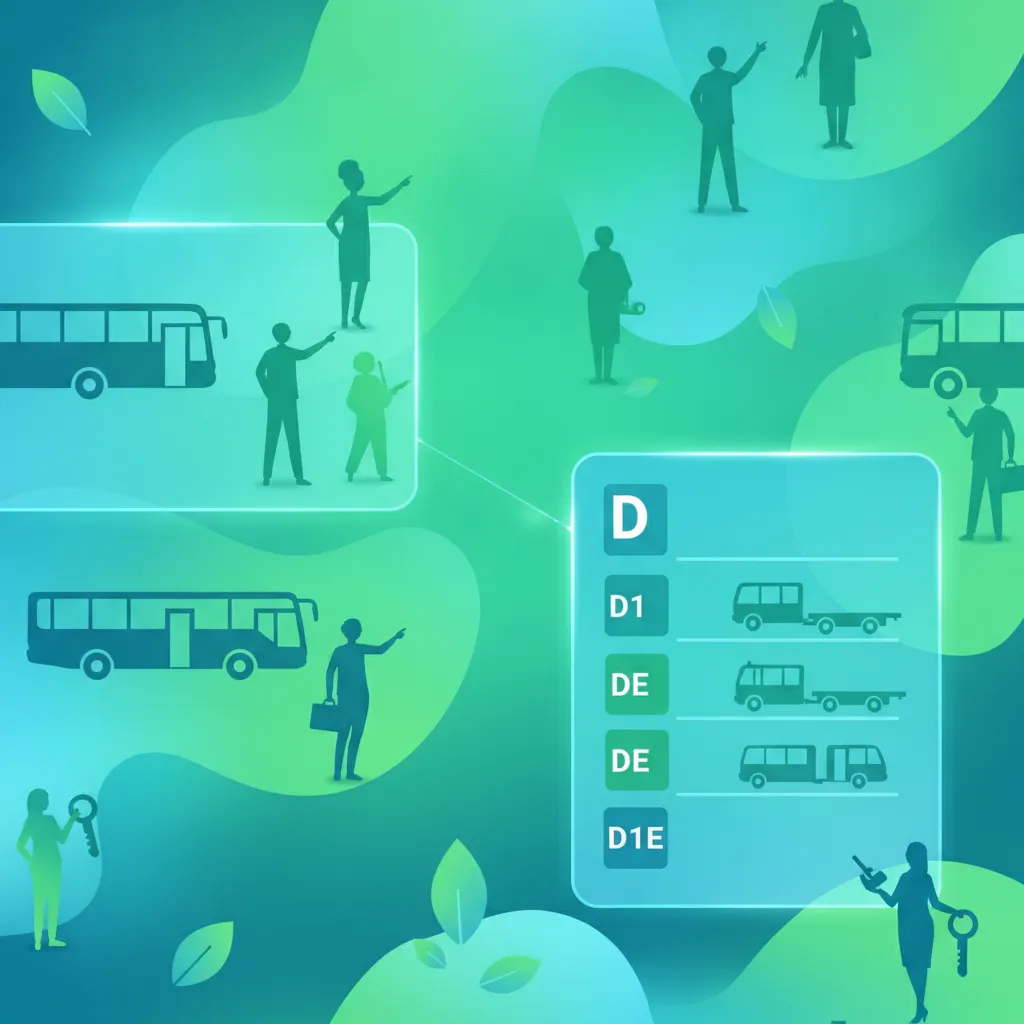
This lesson provides a clear breakdown of the different Category D licences in Austria. It explains the specific rights and limitations associated with each, including the maximum number of passengers for D1 (minibus) and D (bus/coach). Furthermore, it details the rules for combination vehicles, covering trailers (D1E, DE) and their specific operational requirements.

This lesson focuses on the driver's legal and ethical responsibility for the safety of all passengers. It details the mandatory use of seatbelts for all occupants and provides a thorough explanation of Austrian regulations concerning child restraints. Learners will understand how to choose and correctly install the appropriate child seat based on a child's age, weight, and height, ensuring maximum protection in the event of a collision.
This lesson explains the specific definitions and limitations of the C1, C1E, C, and CE heavy-goods vehicle licence categories in Austria. It details the permissible vehicle mass, axle configurations, and rules for trailer combinations associated with each category. Understanding these distinctions is fundamental for ensuring legal compliance and selecting the correct licence for specific vehicle configurations.
This lesson focuses on the legal restrictions concerning a heavy vehicle's dimensions, including maximum height, width, and length. It teaches drivers how to interpret road signs and supplemental plates that indicate these limits. This knowledge is crucial for route planning, especially when navigating under bridges, through tunnels, and on restricted roads.
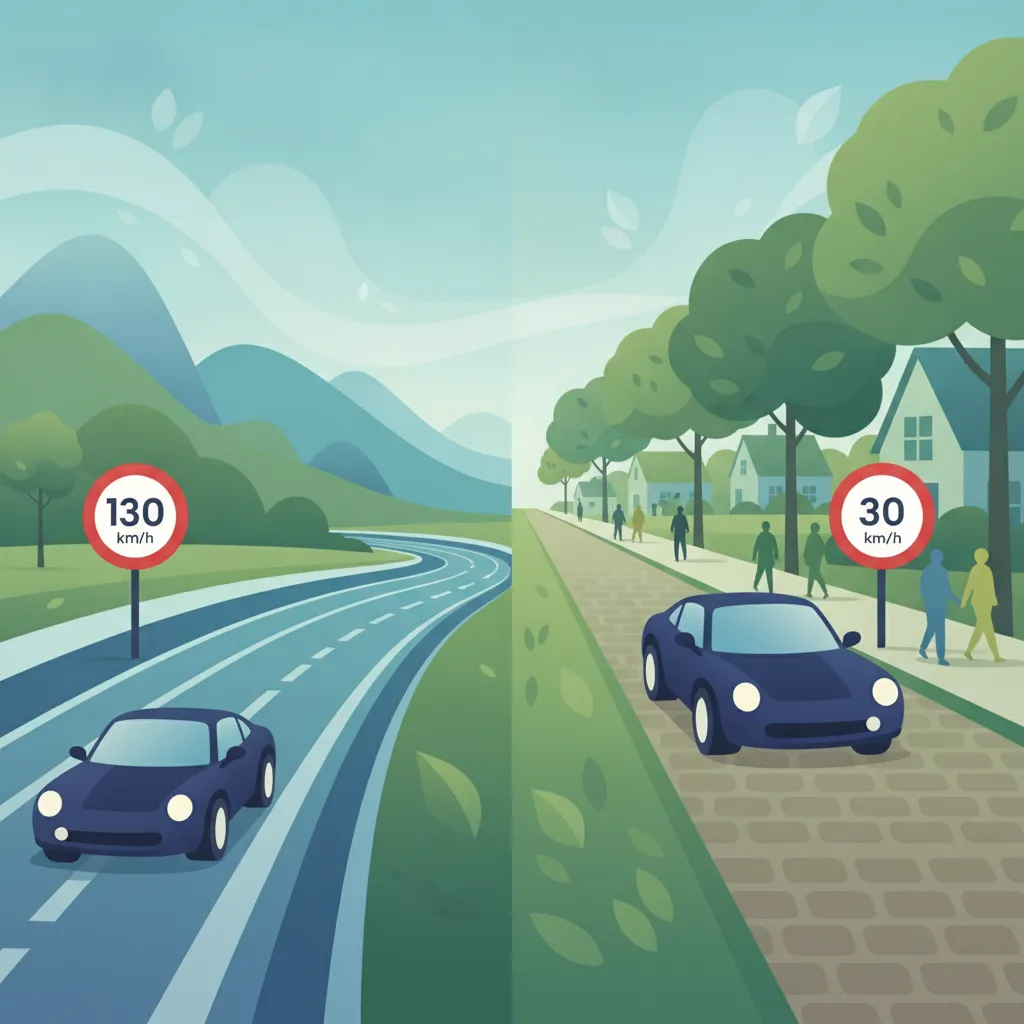
This lesson details the legally prescribed speed limits across Austria's road network, including the specific limits for urban areas (Ortsgebiet), rural roads (Landstraßen), motorways (Autobahnen), and expressways (Schnellstraßen). Learners will understand how to interpret speed limit signs, including those with supplementary conditions. Adherence to these legal requirements is a fundamental aspect of road safety and compliance with the Austrian road traffic act (StVO).
This lesson details the legal ramifications of operating an overloaded heavy vehicle in Austria, which include significant fines and penalty points. It also emphasizes the severe safety risks, such as compromised braking performance and increased mechanical stress on the vehicle. Understanding these consequences reinforces the importance of strict adherence to weight limits.
This lesson details the general traffic rules applicable to heavy goods vehicles on Austrian roads, highlighting differences from passenger car regulations. It covers key topics such as right-of-way at intersections, specific rules for overtaking, maintaining proper lane discipline, and adhering to designated speed limits. Understanding these rules is critical for safe integration into mixed traffic.

Carrying standing passengers significantly increases a driver's responsibility for smooth control. This lesson details the specific adjustments required, such as reducing speed before turns to minimize sideways forces and increasing following distances to avoid sudden braking. It emphasizes the importance of awareness and observation of passengers' stability before accelerating from a stop.

This lesson delves into the specific Austrian laws and regulations that professional passenger drivers must adhere to. It provides an overview of rules concerning driving and rest times, the use of the digital tachograph, and the essential documents that must be carried at all times. Understanding these legal obligations is crucial for compliance and avoiding penalties during roadside checks.
This lesson covers the specific weight restrictions that apply to sensitive infrastructure like Alpine passes and bridges throughout Austria. It explains how to identify these limits through road signage and incorporate them into route planning. Adhering to these restrictions is vital for preventing structural damage and ensuring safety in challenging terrain.
Find clear answers to common questions learners have about Permission Scope of Category B. Learn how the lesson is structured, which driving theory objectives it supports, and how it fits into the overall learning path of units and curriculum progression in Austria. These explanations help you understand key concepts, lesson flow, and exam focused study goals.
A Category B license allows you to drive motor vehicles with a maximum permissible mass of up to 3,500 kg, designed for the carriage of no more than eight passengers in addition to the driver.
Not always. A standard Category B license allows you to tow a light trailer (up to 750 kg). For heavier trailers, the combined maximum permissible mass of the car and trailer must not exceed 3,500 kg, or you may need the B96 extension or BE license.
The B96 code is an extension that allows you to tow a trailer with a maximum permissible mass exceeding 750 kg, provided the total combined mass of the vehicle and trailer is between 3,500 kg and 4,250 kg.
Yes, the Category B license is strictly limited to vehicles designed to carry a maximum of eight passengers plus the driver. Anything larger requires a different license category, such as Class D.
Refine your study plan by searching for specific Austrian driving theory practice sets. Pinpoint questions related to particular road rules, signs, or challenge levels, and begin practicing immediately to reinforce your knowledge and excel in your official exam with confidence. Get started with focused revision today.