
This lesson breaks down the physics of vehicle control by exploring the vital relationship between speed, perception-reaction time, and actual braking distance. Mastering these calculations is a fundamental requirement for the Austrian Category B theory exam and is essential for maintaining safe following distances on any road type. By understanding how environmental factors affect your vehicle, you will gain the confidence to make smarter speed choices in varying traffic conditions.
Lesson content overview
Driving safely requires a profound understanding of how much distance your vehicle needs to come to a complete stop. This crucial knowledge, central to the Austrian Driving License B Theory Course, allows drivers to choose appropriate speeds, maintain safe following distances, and anticipate hazards effectively, significantly reducing the risk of collisions. Total stopping distance is not a fixed number; it is a dynamic measurement influenced by numerous factors related to the driver, the vehicle, and the environment.
The process of bringing a moving vehicle to a standstill involves two distinct phases: the time it takes for a driver to react to a perceived hazard, and the time the vehicle's brakes need to physically stop it. The sum of the distances covered during these two phases is known as the Total Stopping Distance. Mastering this concept is fundamental for safe driving decisions and hazard avoidance.
Total Stopping Distance (TSD) is defined as the total distance a vehicle travels from the moment a driver perceives a hazard until the vehicle comes to a complete stop. This metric serves as a vital guide for selecting a safe speed and maintaining adequate following distances. Drivers must always adjust their speed based on the anticipated TSD in prevailing conditions, ensuring they can stop before encountering any obstruction.
The TSD is calculated by adding the Reaction Distance (RD) and the Braking Distance (BD). Understanding each component individually is key to grasping the overall concept. Without considering both, a driver risks overestimating their ability to stop quickly, particularly at higher speeds where the distances increase exponentially.
The combined distance covered during a driver's perception-reaction time and the subsequent braking phase until the vehicle comes to a complete stop.
The first and often underestimated component of total stopping distance is the human element: how long it takes a driver to perceive a danger and initiate a response. This delay, known as perception-reaction time, directly translates into distance traveled before any braking action even begins.
Perception-Reaction Time (PRT) is the time interval that elapses from the moment a hazard becomes visible to the driver until the driver initiates a braking action. This isn't an instantaneous process; it involves several cognitive steps: perceiving the hazard, processing the information, deciding on a course of action, and finally, executing that action (e.g., moving the foot from accelerator to brake pedal).
For an alert driver under normal conditions, PRT typically ranges between 0.7 and 1.5 seconds. However, this time can extend significantly under various circumstances. Factors such as fatigue, alcohol or drug impairment, distraction (e.g., using a mobile phone), or reduced visibility (e.g., fog, heavy rain, night driving) can all prolong a driver's PRT, directly increasing the reaction distance. Drivers are legally obligated to reduce their speed in conditions that increase PRT, ensuring they can still react safely.
Never assume your reaction time is instantaneous. Even a delay of one second can mean traveling a significant distance, especially at higher speeds, before you even begin to brake.
The Reaction Distance (RD) is the distance a vehicle travels during the driver's perception-reaction time (PRT) before any braking is applied. Since the vehicle is still moving at its initial speed during this phase, RD is directly proportional to both the vehicle's speed and the driver's PRT.
The formula for Reaction Distance is straightforward: Reaction Distance (RD) = Vehicle Speed (v) × Perception-Reaction Time (t)
For example, if you are driving at 50 km/h (approximately 13.9 metres per second) and your PRT is 1.0 second, your reaction distance would be 13.9 metres. At 100 km/h (27.8 m/s) with the same PRT, the reaction distance doubles to 27.8 metres. This linear relationship highlights why higher speeds dramatically increase the overall distance needed to stop, even before the brakes engage. Drivers must always maintain a safe following distance that exceeds this reaction distance, especially in adverse conditions or when distracted.
Once the driver reacts and applies the brakes, the vehicle enters the braking phase. The distance covered during this phase, known as the braking distance, is heavily influenced by the vehicle's mechanics and the condition of the road surface. This is where kinetic energy is converted into heat through friction, bringing the vehicle to a halt.
Braking Distance (BD) is the distance required to bring the vehicle to a complete stop after the brakes are applied, assuming a constant rate of deceleration. Unlike reaction distance, braking distance does not increase linearly with speed; instead, it increases with the square of the vehicle's speed. This means doubling your speed quadruples your braking distance.
The formula for Braking Distance is: Braking Distance (BD) = v² / (2 × a) Where:
v is the vehicle's speed in metres per second (m/s).a is the deceleration rate in metres per second squared (m/s²).For instance, if a vehicle traveling at 80 km/h (22.2 m/s) brakes on a dry road with a deceleration rate of 7 m/s², its braking distance would be approximately 35.3 metres. However, if the same vehicle were traveling at 120 km/h (33.3 m/s), the braking distance would jump to about 79.4 metres. This exponential increase underscores why speeding is so dangerous; it drastically extends the distance needed to stop, leaving far less room for error.
The distance a vehicle travels from the moment the brakes are fully applied until it comes to a complete stop.
Deceleration (denoted as 'a') is the rate at which a vehicle reduces its speed once the brakes are applied. It is essentially negative acceleration, and its value is measured in metres per second squared (m/s²). The effectiveness of a vehicle's braking system and the grip between its tyres and the road surface are the primary determinants of the deceleration rate.
On a perfectly dry, clean road with good tyres and brakes, a car can achieve a high deceleration rate, typically around 7 to 8 m/s². However, this rate can plummet significantly under less ideal conditions. A lower deceleration rate directly results in a longer braking distance, as the vehicle takes more time and covers more ground to shed its kinetic energy. Drivers must understand that they cannot assume a constant deceleration regardless of environmental factors.
The physical state of the road pavement plays a critical role in determining the coefficient of friction between the tyres and the surface, directly impacting the vehicle's deceleration capability and thus its braking distance.
When driving on wet or icy roads, anticipate significantly longer braking distances. Reduce your speed well in advance and increase your following distance to provide an adequate safety margin.
Beyond road surface, the characteristics and condition of your vehicle also significantly influence braking distance.
The rate at which a vehicle's speed decreases after the brakes are applied, expressed in m/s².
Understanding the components of total stopping distance is just the beginning. Drivers must also learn to apply this knowledge to various real-world scenarios, considering how different conditions demand adjustments to speed and driving behaviour.
Visibility range is the maximum distance at which a driver can clearly perceive hazards. This range is dynamic and heavily influenced by ambient lighting, weather conditions, and obstacles.
Each road type presents unique challenges and requires different considerations for stopping distances.
Pedestrians, cyclists, and motorcyclists are particularly vulnerable due to their lack of protective shielding. Their smaller size or unpredictable movements can delay a driver's perception of a hazard, increasing PRT.
Austrian traffic law (Straßenverkehrsordnung – StVO) places a strong emphasis on safe driving practices that directly relate to stopping distances. Drivers have a legal obligation to adjust their speed and maintain adequate distances to prevent collisions.
Several articles within the StVO govern driver conduct regarding speed, visibility, and following distances:
Ignorance of how speed, road conditions, and driver state affect total stopping distance is not an excuse under Austrian law. Drivers are expected to continuously adapt their driving to ensure safety.
Failing to correctly estimate or account for total stopping distance can lead to serious consequences, both legally and in terms of safety:
Understanding stopping distances and reaction times is a cornerstone of defensive driving. It equips drivers with the knowledge to make informed decisions that prioritize safety, reduce risk, and promote smoother traffic flow.
Defensive driving integrates the understanding of stopping distances into a broader strategy for safety:
By diligently applying these principles and techniques, drivers can proactively manage the risks associated with stopping distances, contributing to a safer driving environment for everyone on Austrian roads.
Total stopping distance combines reaction distance (the distance covered during perception-reaction time before brakes engage) and braking distance (the distance needed to stop once brakes are applied). Reaction distance increases linearly with speed and perception-reaction time, while braking distance grows with the square of speed, meaning small speed increases create large stopping distance increases. Road surface conditions (dry, wet, icy), visibility range, vehicle load, and driver state all significantly affect stopping performance. Austrian traffic law requires drivers to adjust speed so their total stopping distance always fits within the visible hazard range, and defensive drivers maintain adequate following distances while proactively adapting to conditions.
A short set of high-value points that capture the most important learning from this lesson.
Total stopping distance is the sum of reaction distance (linear with speed) and braking distance (increases with the square of speed)
Perception-reaction time (PRT) typically ranges from 0.7 to 1.5 seconds for an alert driver, but can extend significantly with fatigue, distraction, or impairment
Road surface conditions dramatically affect deceleration: dry roads allow 7-8 m/s² while icy roads may drop to 2-3 m/s²
Doubling your speed quadruples braking distance, making high-speed driving exponentially more dangerous
Under Austrian law, drivers must ensure their total stopping distance never exceeds their visibility range
Explore all units and lessons included in this driving theory course.
Reaction Distance formula: RD = Speed (m/s) × Perception-Reaction Time (s)
Braking Distance formula: BD = v² / (2 × a), where a is deceleration in m/s²
Use the two-second rule as a minimum following distance, extending it in adverse conditions
Wet roads increase braking distance by 25-50%; icy roads can increase it by several hundred percent
Factors that extend PRT (fatigue, distraction, alcohol, poor visibility) also extend your reaction distance proportionally
Assuming braking distance increases linearly with speed rather than quadratically, leading to dangerous underestimation at higher speeds
Forgetting that road conditions reduce maximum possible deceleration, not just adding a fixed distance to dry-weather calculations
Driving at the posted speed limit without adjusting for reduced visibility in fog, heavy rain, or night conditions
Not accounting for increased braking distance when the vehicle is heavily loaded with passengers or cargo
Believing reaction time is effectively zero or instantaneous when in reality it takes at least 0.7 seconds for an alert driver
Lesson content overview
A short set of high-value points that capture the most important learning from this lesson.
Total stopping distance is the sum of reaction distance (linear with speed) and braking distance (increases with the square of speed)
Perception-reaction time (PRT) typically ranges from 0.7 to 1.5 seconds for an alert driver, but can extend significantly with fatigue, distraction, or impairment
Road surface conditions dramatically affect deceleration: dry roads allow 7-8 m/s² while icy roads may drop to 2-3 m/s²
Doubling your speed quadruples braking distance, making high-speed driving exponentially more dangerous
Under Austrian law, drivers must ensure their total stopping distance never exceeds their visibility range
Explore all units and lessons included in this driving theory course.
Reaction Distance formula: RD = Speed (m/s) × Perception-Reaction Time (s)
Braking Distance formula: BD = v² / (2 × a), where a is deceleration in m/s²
Use the two-second rule as a minimum following distance, extending it in adverse conditions
Wet roads increase braking distance by 25-50%; icy roads can increase it by several hundred percent
Factors that extend PRT (fatigue, distraction, alcohol, poor visibility) also extend your reaction distance proportionally
Assuming braking distance increases linearly with speed rather than quadratically, leading to dangerous underestimation at higher speeds
Forgetting that road conditions reduce maximum possible deceleration, not just adding a fixed distance to dry-weather calculations
Driving at the posted speed limit without adjusting for reduced visibility in fog, heavy rain, or night conditions
Not accounting for increased braking distance when the vehicle is heavily loaded with passengers or cargo
Believing reaction time is effectively zero or instantaneous when in reality it takes at least 0.7 seconds for an alert driver
Explore search topics learners often look for when studying Stopping Distances and Reaction Times. These topics reflect common questions about road rules, driving situations, safety guidance, and lesson level theory preparation for learners in Austria.
Browse additional driving theory lessons that cover connected traffic rules, road signs, and common driving situations related to this topic. Improve your understanding of how different rules interact across everyday traffic scenarios.
Explore how vehicle speed, reaction times, and road surface conditions like wet or icy roads impact total stopping distance. Understand the physics behind braking and reaction distance for safer driving decisions.
This lesson teaches correct braking techniques, including the coordinated use of front and rear brakes for maximum efficiency. It explains how to calculate total stopping distance based on speed, perception time, and reaction time. The content also covers adjustments needed for braking on wet or slippery surfaces to avoid loss of control.

This lesson explains the various factors that determine the total stopping distance of a heavy vehicle. It covers the effects of speed, vehicle weight, road conditions, and driver reaction time. Understanding these variables helps drivers to maintain a safe following distance and anticipate how much space is needed to stop.

This lesson addresses the critical skill of adapting driving behavior to conditions of reduced visibility, such as fog, heavy rain, snow, or darkness. It explains the principle of driving only as fast as you can see, ensuring your stopping distance is within your visibility range. The content covers the correct use of headlights and fog lights and emphasizes why speed reduction is essential for maintaining safety when your ability to perceive hazards is compromised.

This lesson explains the importance of maintaining a safe following distance to prevent rear-end collisions. It introduces practical methods for judging a safe gap, such as the widely-used 'two-second rule,' and clarifies how this distance needs to be increased in adverse weather or poor visibility. The content emphasizes that an adequate buffer zone provides the necessary time and space to react and brake safely if the vehicle in front stops suddenly.
This lesson explores the key psychological factors that influence a driver's performance and safety on the road. It covers topics such as risk perception, attention allocation, and the process of making sound decisions, especially when under stress or facing unexpected hazards. By understanding concepts like cognitive load and the importance of maintaining a defensive mindset, drivers can better anticipate dangers and avoid common mental errors that lead to collisions.
This lesson details the specific regulations and best practices for driving in areas with high pedestrian activity, such as bus stops and school zones. It explains the driver's obligation to stop for school buses with flashing lights and to yield to public buses pulling out from a stop. The content emphasizes the requirement to significantly reduce speed in marked school zones to ensure the safety of children.
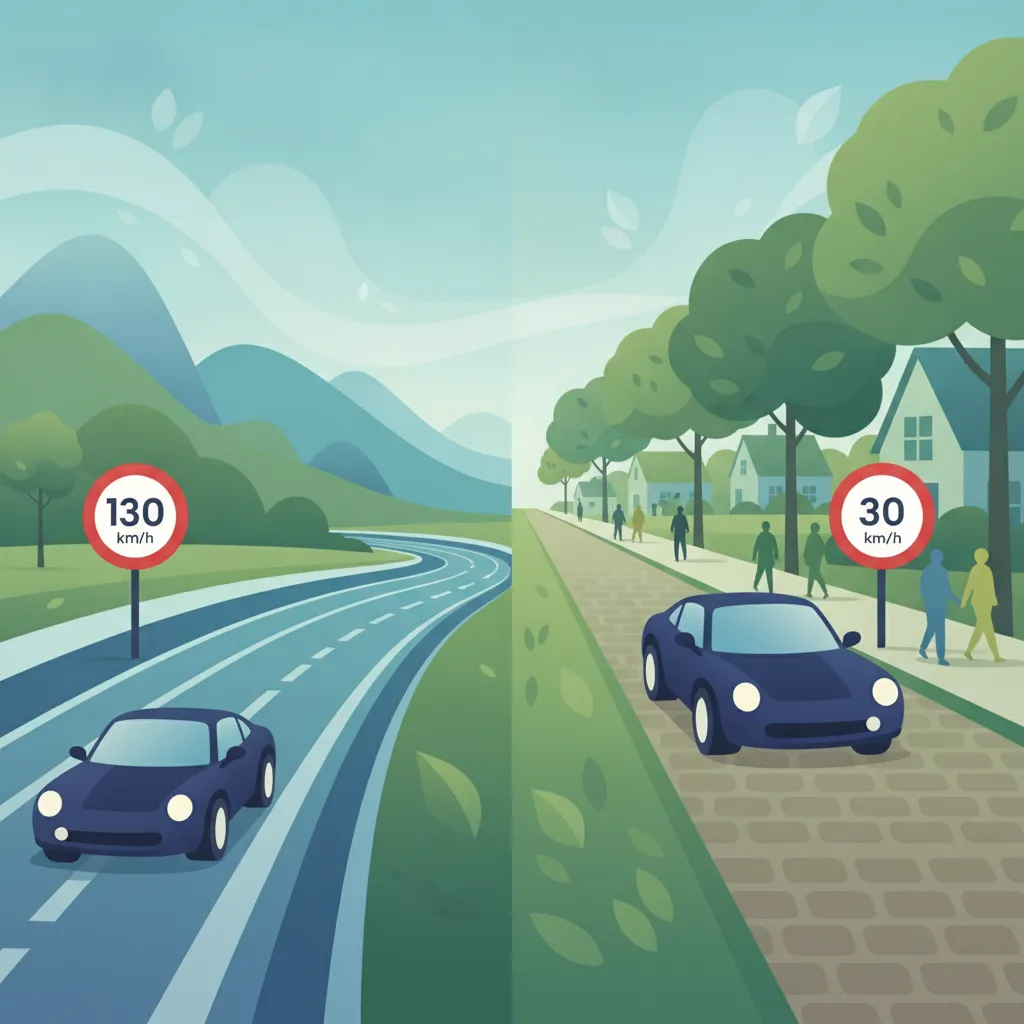
This lesson details the legally prescribed speed limits across Austria's road network, including the specific limits for urban areas (Ortsgebiet), rural roads (Landstraßen), motorways (Autobahnen), and expressways (Schnellstraßen). Learners will understand how to interpret speed limit signs, including those with supplementary conditions. Adherence to these legal requirements is a fundamental aspect of road safety and compliance with the Austrian road traffic act (StVO).
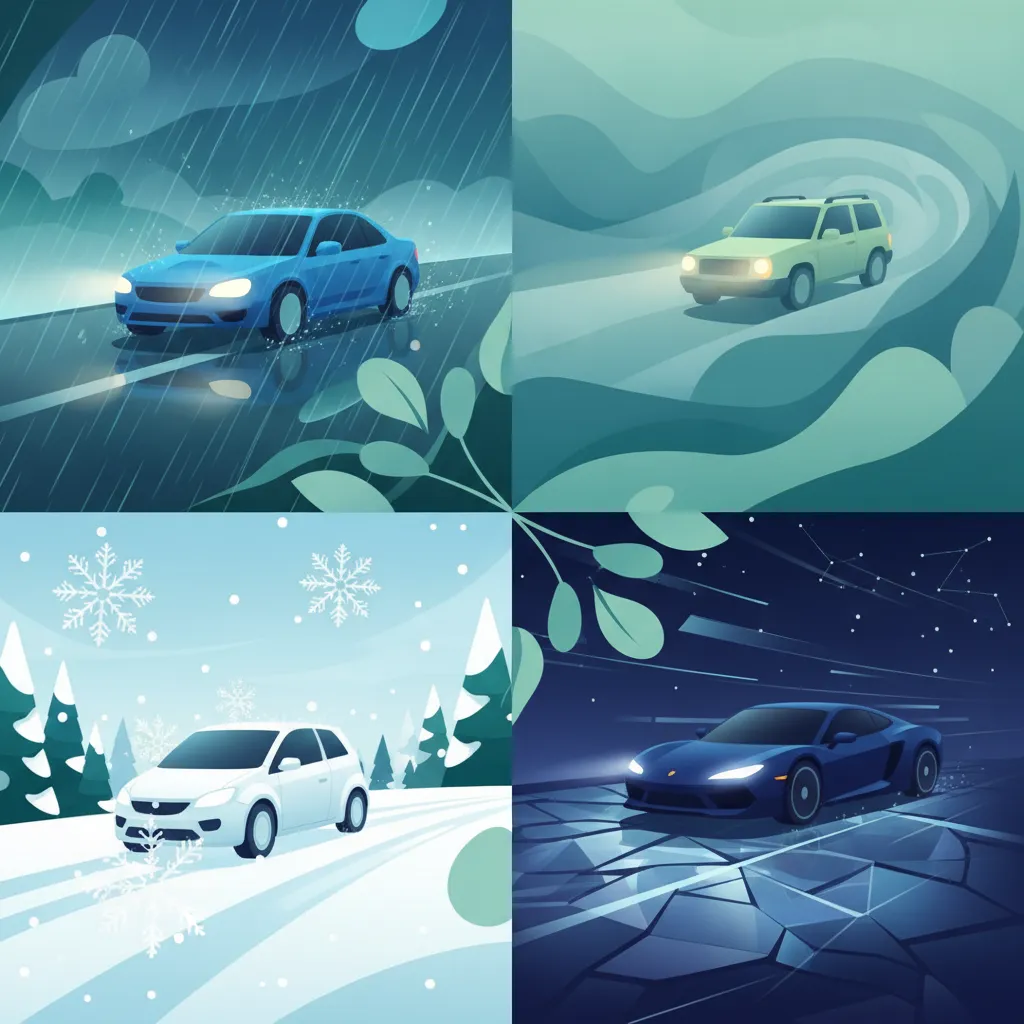
This lesson equips drivers with the knowledge to handle a range of adverse weather conditions safely. It explains the risks of hydroplaning in heavy rain, reduced visibility in fog, and loss of traction on snow and ice, including the hidden danger of black ice. The content provides practical strategies for speed adaptation, correct use of lighting, and maintaining vehicle control, as well as specific considerations for night driving.
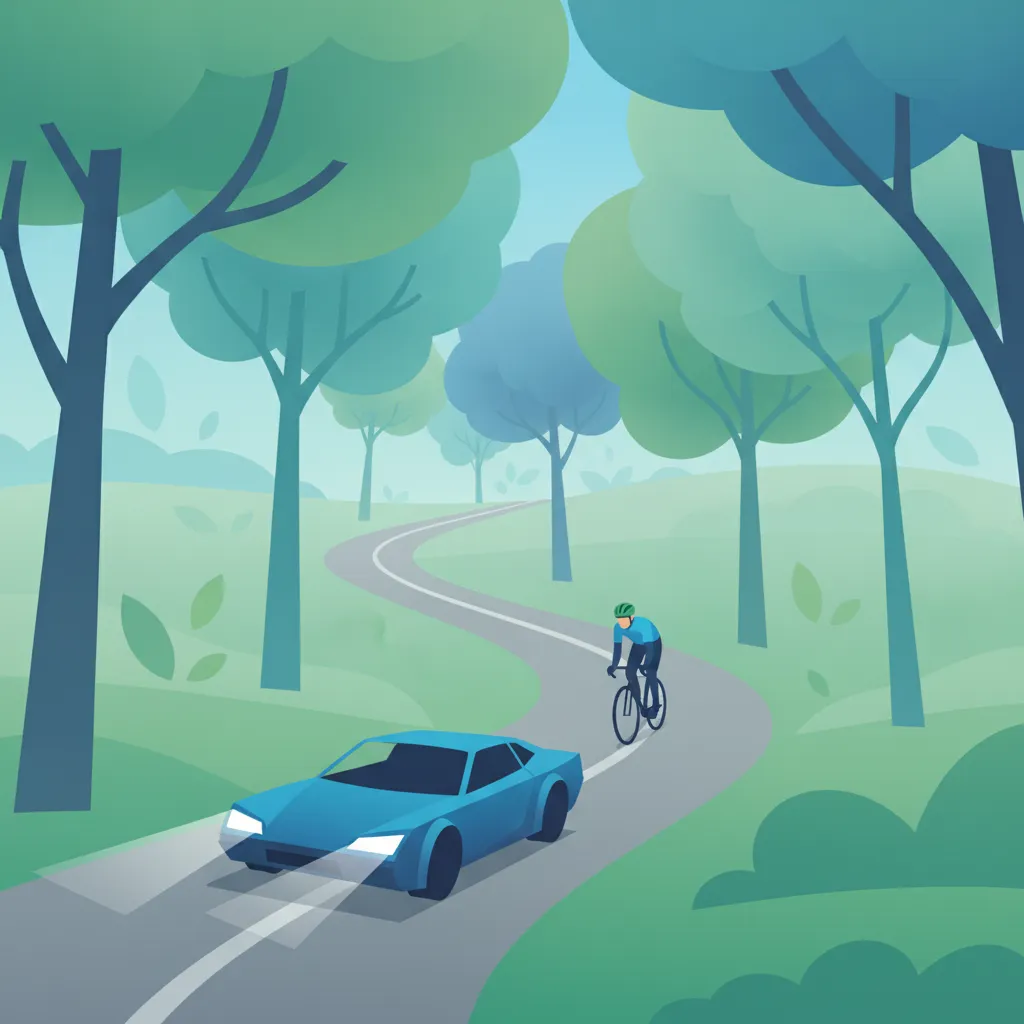
This lesson explores the specific characteristics and hazards of rural roads (Landstraßen). It emphasizes the need for careful speed adjustment due to factors like narrow lanes, poor road surfaces, and hidden entrances. Learners will understand how to safely navigate blind curves, use passing places, and anticipate the presence of slow-moving agricultural vehicles or livestock on the road.
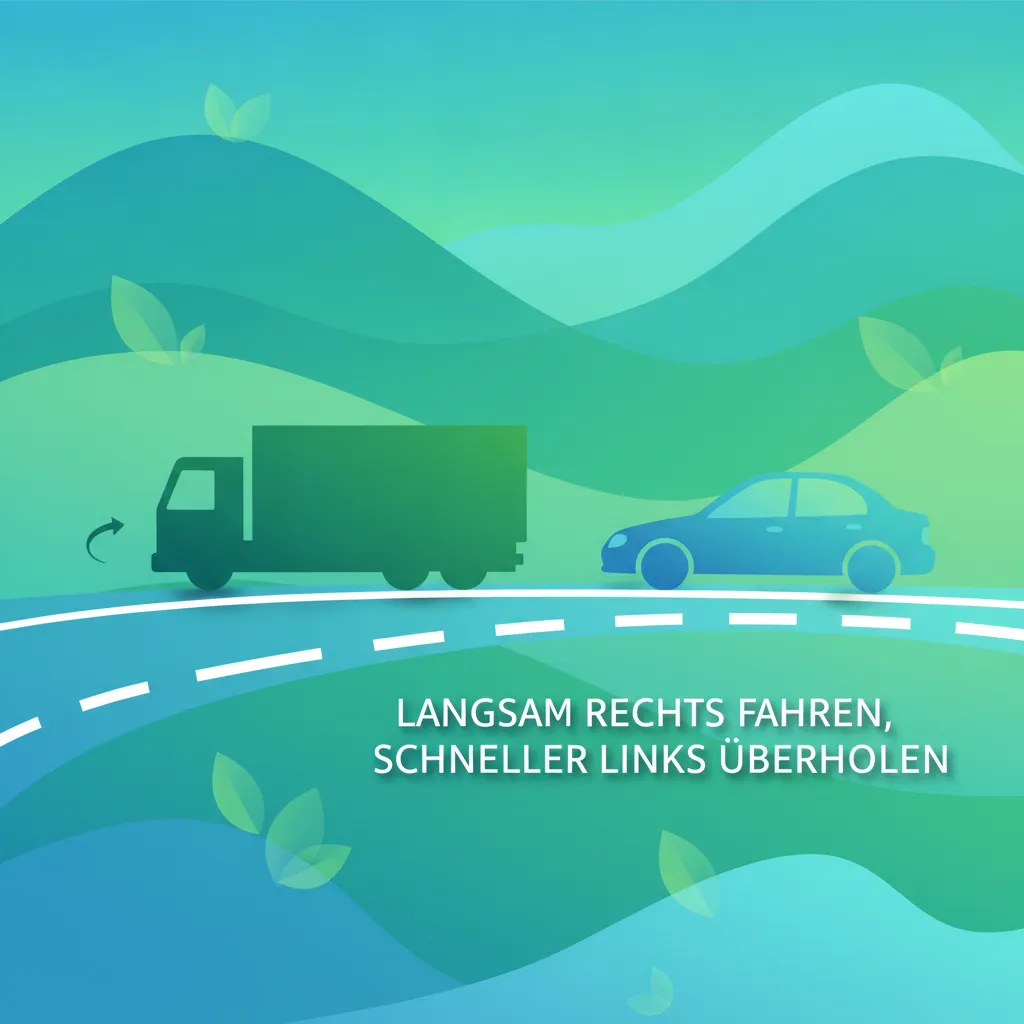
High-speed driving in a large vehicle requires excellent lane discipline and forward planning. This lesson covers Austrian speed limits for buses, rules for joining and leaving the motorway, safe overtaking procedures, and maintaining appropriate following distances. The critical importance of forming an emergency corridor ('Rettungsgasse') in traffic jams is also a key topic.
Learn the legal obligations under Austrian traffic law (StVO) regarding maintaining safe stopping distances based on visibility range and driving conditions. Essential knowledge for safe speed selection and hazard avoidance.
This lesson explains the importance of maintaining a safe following distance to prevent rear-end collisions. It introduces practical methods for judging a safe gap, such as the widely-used 'two-second rule,' and clarifies how this distance needs to be increased in adverse weather or poor visibility. The content emphasizes that an adequate buffer zone provides the necessary time and space to react and brake safely if the vehicle in front stops suddenly.

This lesson covers the proper and legal use of a vehicle's entire lighting system to see and be seen. It explains the regulations for using headlights, including daytime running lights, and the specific conditions under which fog lights and high beams are permitted. Correct use of turn signals and brake lights is also emphasized as essential for communicating intentions to other drivers and ensuring safety in all visibility conditions.
This lesson addresses the critical skill of adapting driving behavior to conditions of reduced visibility, such as fog, heavy rain, snow, or darkness. It explains the principle of driving only as fast as you can see, ensuring your stopping distance is within your visibility range. The content covers the correct use of headlights and fog lights and emphasizes why speed reduction is essential for maintaining safety when your ability to perceive hazards is compromised.
This lesson details the specific regulations and best practices for driving in areas with high pedestrian activity, such as bus stops and school zones. It explains the driver's obligation to stop for school buses with flashing lights and to yield to public buses pulling out from a stop. The content emphasizes the requirement to significantly reduce speed in marked school zones to ensure the safety of children.

This lesson focuses on the safety-critical skill of reversing, emphasizing the importance of all-around observation before and during the manoeuvre. It covers the correct use of mirrors and the necessity of checking blind spots to ensure the path is clear of pedestrians, obstacles, and other vehicles. Learners will understand techniques for maintaining slow, controlled speed and making accurate steering adjustments while backing up in various situations.
This lesson details the legally prescribed speed limits across Austria's road network, including the specific limits for urban areas (Ortsgebiet), rural roads (Landstraßen), motorways (Autobahnen), and expressways (Schnellstraßen). Learners will understand how to interpret speed limit signs, including those with supplementary conditions. Adherence to these legal requirements is a fundamental aspect of road safety and compliance with the Austrian road traffic act (StVO).

This lesson details the general traffic rules applicable to heavy goods vehicles on Austrian roads, highlighting differences from passenger car regulations. It covers key topics such as right-of-way at intersections, specific rules for overtaking, maintaining proper lane discipline, and adhering to designated speed limits. Understanding these rules is critical for safe integration into mixed traffic.
This lesson breaks down the overtaking maneuver into a safe, repeatable process: assess, signal, check, move, and return. It emphasizes the importance of ensuring a sufficient gap in oncoming traffic, checking mirrors and blind spots thoroughly, and maintaining a proper speed differential. Adherence to Austrian laws regarding where overtaking is prohibited is also covered in detail.
This lesson teaches correct braking techniques, including the coordinated use of front and rear brakes for maximum efficiency. It explains how to calculate total stopping distance based on speed, perception time, and reaction time. The content also covers adjustments needed for braking on wet or slippery surfaces to avoid loss of control.
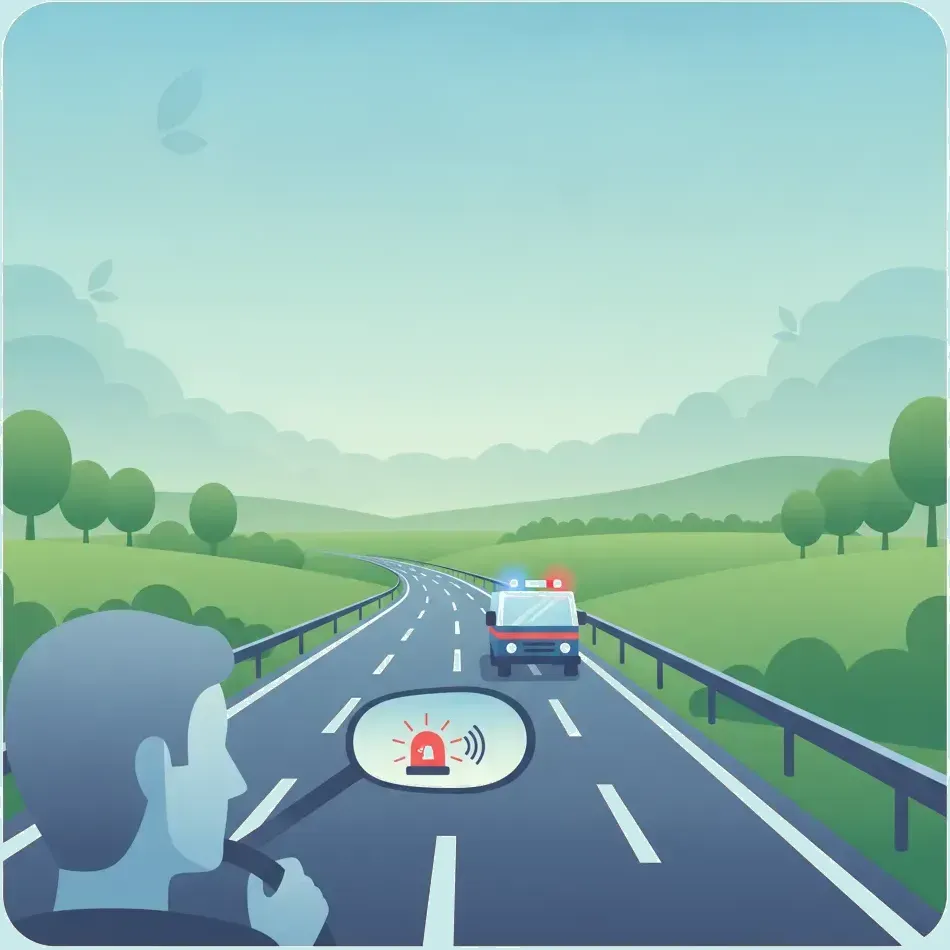
This lesson explains the correct protocol when encountering emergency vehicles with active sirens and lights. It details the legal requirement to yield the right-of-way and provides practical guidance on how to pull over safely and efficiently. Understanding these procedures helps ensure emergency services can reach their destination without delay.
Find clear answers to common questions learners have about Stopping Distances and Reaction Times. Learn how the lesson is structured, which driving theory objectives it supports, and how it fits into the overall learning path of units and curriculum progression in Austria. These explanations help you understand key concepts, lesson flow, and exam focused study goals.
Reaction distance is the distance your vehicle travels from the moment you perceive a hazard until you physically touch the brake pedal. Braking distance is the distance covered from the moment you apply the brakes until the vehicle comes to a complete standstill.
Poor surface conditions like wet asphalt, snow, or ice significantly reduce the friction between your tyres and the road. This extends your braking distance considerably, requiring you to increase your following distance to remain safe.
In theory test scenarios, a standard reaction time is usually assumed for calculations. However, in reality, a driver's reaction can be slowed by fatigue, distraction, alcohol, or medication, which must always be factored into your defensive driving strategy.
The exam focuses on your understanding of the principles and the ability to estimate safe gaps. While you should know the factors that increase distance, the exam primarily tests your ability to apply these rules to identify hazardous situations.
Refine your study plan by searching for specific Austrian driving theory practice sets. Pinpoint questions related to particular road rules, signs, or challenge levels, and begin practicing immediately to reinforce your knowledge and excel in your official exam with confidence. Get started with focused revision today.