
This lesson guides you through the mandatory speed limits across the Austrian road network, which are essential for your Category B theory exam and daily driving. You will learn how to identify speed limits in various zones, including urban areas, rural roads, and motorways, ensuring full compliance with the StVO.
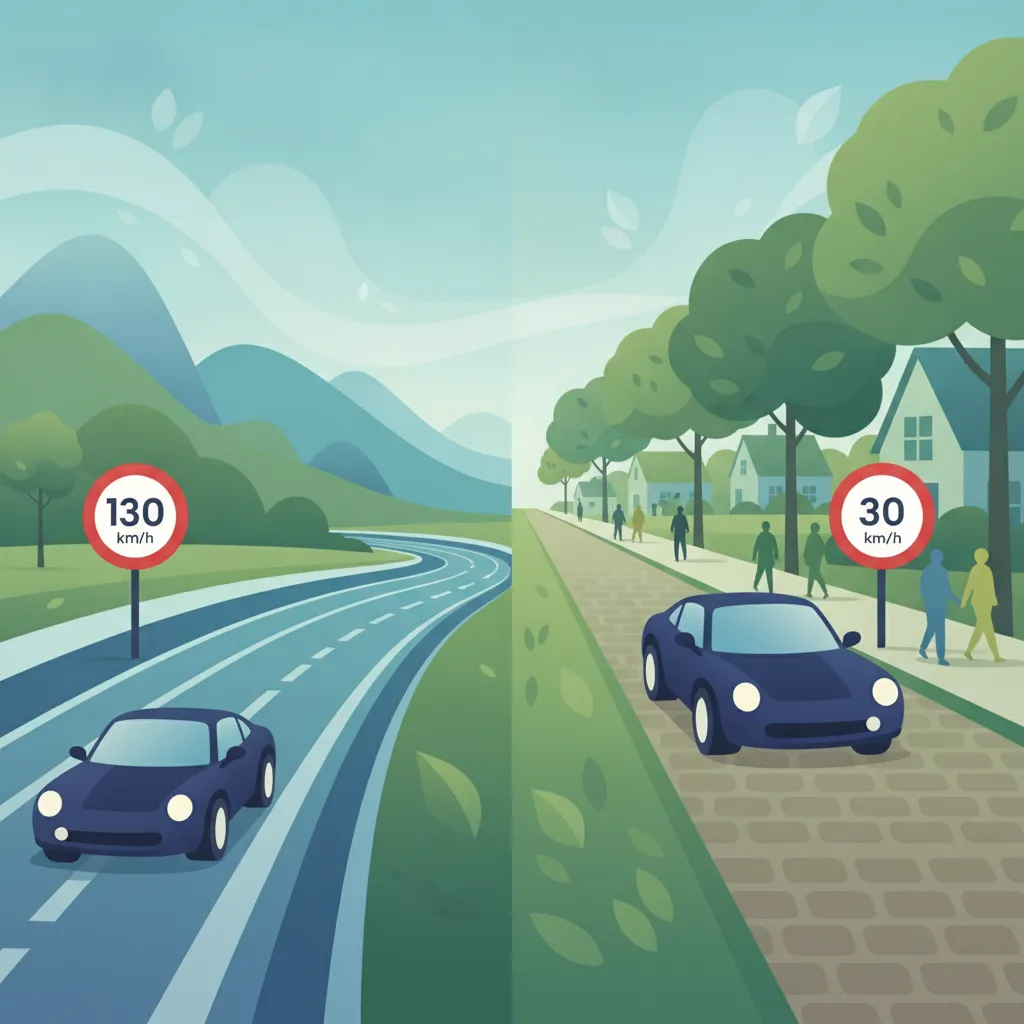
Lesson content overview
Driving in Austria requires a thorough understanding of the country's speed limits, which are legally mandated under the Austrian Road Traffic Act (Straßenverkehrsordnung – StVO). These limits are not arbitrary; they are meticulously designed to ensure road safety, regulate traffic flow, and minimize the severity of potential accidents across Austria's diverse road network. Adhering to these rules is a fundamental aspect of responsible driving and a core component of the Austrian Driving License B Theory Course.
This lesson provides a comprehensive overview of legally prescribed speed limits, how to interpret speed limit signs, including those with supplementary conditions, and the critical importance of adjusting your speed to various environmental and road conditions. Mastering these regulations is essential for passing your theory test and, more importantly, for safe and compliant driving on Austrian roads.
Speed limits are a cornerstone of road safety. They represent the maximum permissible speed under ideal conditions, carefully balancing road capacity with the safety of all road users. Driving within these limits significantly influences stopping distances, vehicle dynamics, and the severity of an accident should one occur. The StVO establishes these mandatory maximum velocities to protect drivers, passengers, pedestrians, and cyclists, while also standardizing traffic flow.
Exceeding a speed limit, even by a small margin, increases the kinetic energy of a vehicle dramatically. This elevated energy directly translates to longer stopping distances and more forceful impacts in collisions, which in turn leads to a higher likelihood of serious injuries or fatalities. Therefore, understanding and strictly adhering to all speed regulations is not just a legal obligation but a moral responsibility every driver in Austria must uphold.
Austria's road network is categorized, and each category has a default speed limit that applies unless otherwise indicated by specific signage. Drivers must be able to recognize these road types and automatically apply the corresponding default speed limit. These limits reflect varying design standards, traffic density, and typical vehicle speeds for each environment.
Within urban areas, known as Ortsgebiet or built-up areas, a standard default speed limit applies. This limit is designed to protect a higher concentration of pedestrians, cyclists, and other vulnerable road users, as well as to manage frequent intersections and property access points.
An urban area or built-up locality, typically defined by specific town or village limit signs, where a default speed limit of 50 km/h applies unless otherwise signposted.
The default speed limit within an Ortsgebiet is 50 km/h. This limit begins immediately upon passing the "Beginning of Built-up Area" sign and continues until you pass the "End of Built-up Area" sign. Even if no explicit "50" speed limit sign is posted, this default rule is legally binding. Within these zones, drivers should be particularly vigilant for changing conditions, such as school zones or residential areas where further reductions may apply.
Rural roads, or Landstraßen, connect urban areas and traverse open countryside. These roads typically have fewer intersections and vulnerable road users compared to urban areas, allowing for higher default speeds.
A rural road outside built-up areas, connecting towns and villages, where the default speed limit is 100 km/h unless otherwise indicated.
The default speed limit on Landstraßen is 100 km/h. This limit applies once you exit an Ortsgebiet and no other speed limit signs are present. However, it is common to find sections of Landstraßen with lower posted limits due to factors like sharp curves, steep gradients, or proximity to small settlements or specific hazards. Always pay attention to any posted speed limit signs that override the default.
Schnellstraßen, or expressways, are high-speed roads with limited access, designed for efficient travel. They typically feature multiple lanes and separated opposing traffic flows, similar to motorways but with slightly different design standards or fewer access points.
An expressway or fast road, with limited access, often designed for higher speeds than rural roads. The default speed limit is typically 100 km/h, but can be 130 km/h on certain designated sections.
The default speed limit on Schnellstraßen is 100 km/h. However, some specific sections of Schnellstraßen may permit speeds up to 130 km/h if explicitly signposted. It is crucial to look for signs indicating these higher limits; otherwise, the 100 km/h default applies.
Autobahnen, or motorways, are Austria's highest-speed, controlled-access highways. They are designed for fast and safe long-distance travel, featuring multiple lanes, grade-separated intersections, and no direct property access.
A motorway or highway, designed for high-speed travel with controlled access. The default speed limit is 130 km/h, though reduced limits are common in specific zones.
The default speed limit on Autobahnen is 130 km/h. Similar to Schnellstraßen, this limit can be reduced in specific zones due to tunnels, urban peripheries, heavy traffic, or environmental considerations (e.g., noise reduction zones). Reductions to 100 km/h or even 80 km/h are common in such areas and must be strictly observed.
While default limits apply, specific traffic signs frequently override them. Understanding how to interpret these signs, including any supplementary plates, is paramount for safe and legal driving in Austria.
The most common way to communicate a speed limit is through a circular sign with a red border and a number in the center. These are known as mandatory speed limit signs.
These signs (Zeichen 110) clearly display the maximum permissible speed in kilometers per hour (km/h). Upon sighting such a sign, drivers must immediately adjust their speed to be at or below the indicated limit, regardless of the previous limit or the default for the road category. These signs are legally binding and supersede any default limits.
Supplementary plates, or Zusatzschilder, are rectangular plates typically placed directly below a primary speed limit sign. Their purpose is to provide additional information that modifies, restricts, or clarifies the applicability of the primary sign. Ignoring these plates can lead to misinterpretation of the legal speed limit.
A rectangular plate placed beneath a primary traffic sign to provide additional information, such as conditions, restrictions, or the duration/scope of the primary sign's applicability.
Common types of supplementary plates include:
Always interpret the combination of the main sign and its supplementary plate. The plate refines the meaning of the primary speed limit, so it's not merely decorative.
Just as speed limits begin, they also end. The "End of Speed Limit" sign indicates that a previously posted restriction no longer applies.
A white, circular sign with a black diagonal stripe, signifying that the previous speed limit, which was specifically indicated by a sign, is no longer in effect. Drivers must then revert to the default speed limit for the road category or any new limit subsequently signposted.
Upon passing Zeichen 101, drivers must revert to the default speed limit for the particular road category (e.g., 50 km/h in an Ortsgebiet, 100 km/h on a Landstraße, 130 km/h on an Autobahn), unless a new speed limit sign is immediately posted. It's crucial not to simply maintain the previous lower speed if it's no longer necessary, as this can impede traffic flow.
Speed limits are maximums under ideal conditions. Drivers are always required to adjust their speed to prevailing circumstances, even if that means driving below the posted limit.
Temporary speed limits are often implemented for specific, limited periods to enhance safety in areas where conditions are atypical. These include road works, construction sites, school zones, or special events.
A sign, often distinct in color (e.g., orange or yellow) or design, indicating a speed limit that applies only for a limited period or specific situation, such as road works or school zones.
These limits are typically marked by temporary signs, which may be of a different color (e.g., orange or yellow) or placed on portable stands. They are just as mandatory as permanent signs and often carry heightened penalties for violations due to the increased risk in these zones (e.g., presence of workers, uneven surfaces, or vulnerable pedestrians). You must obey these limits until you pass an "End of Speed Limit" sign or a new, permanent speed limit sign.
On modern Autobahnen and Schnellstraßen, particularly in tunnels or areas prone to congestion or adverse weather, electronic display boards are used to show variable speed limits.
An electronic display board that shows dynamic speed limits, which can change in real-time based on traffic flow, weather conditions, incidents, or environmental factors.
These variable speed limit signs are legally binding. The displayed limit takes immediate precedence over any static (permanent) signs or default limits. Drivers must adjust their speed according to the electronic display, as these systems are often used for dynamic traffic management, aiming to improve safety and reduce congestion by reacting to live conditions.
The StVO explicitly states that drivers must always adapt their speed to the prevailing road, traffic, and weather conditions. This means that even if the posted limit is 100 km/h, it might be unsafe and illegal to drive at that speed if, for example, there is heavy fog, black ice, or a sudden downpour.
The posted speed limit is a maximum for ideal conditions. Under adverse conditions like rain, snow, fog, ice, or limited visibility, you are legally obliged to reduce your speed significantly, even if it means driving well below the posted limit. Failure to do so can lead to liability in accidents.
Consider these factors:
Landstraßen, can hide dangers and requires a more cautious speed.In addition to general speed limits, certain vehicle categories are subject to specific, often lower, speed restrictions due to their size, weight, or handling characteristics. These limits apply regardless of what signs are posted for general traffic.
Vehicles with a gross weight exceeding 3.5 tonnes (heavy goods vehicles or Lastkraftwagen - LKW) generally have lower speed limits to account for their longer braking distances and reduced maneuverability.
On Schnellstraßen and Autobahnen, heavy vehicles are typically restricted to a maximum speed of 80 km/h, even if the signs indicate a higher limit (e.g., 100 km/h or 130 km/h) for passenger cars. Drivers of such vehicles must be fully aware of and adhere to these specific regulations.
Vehicles towing trailers also face specific speed restrictions due to the added length, weight, and dynamic behavior of the trailer. This applies to both light (e.g., car with small trailer) and heavy combinations.
Generally, vehicles with trailers may be limited to 80 km/h on Schnellstraßen and Autobahnen. Specific regulations can vary based on the trailer's weight and whether it has its own braking system. Always check the specific regulations for your vehicle-trailer combination in the StVO or your vehicle's documentation.
Drivers of heavy vehicles or those towing trailers must know and adhere to the specific speed limits applicable to their vehicle class, even if general traffic signs permit higher speeds.
The Austrian Road Traffic Act (StVO) forms the legal basis for all traffic regulations, including speed limits. Non-compliance with these rules carries significant legal consequences.
The StVO specifies not only the default speed limits but also the hierarchy of signs and the general obligation for drivers to adjust their speed to conditions. Here are some core principles enshrined in the StVO:
Violating speed limits can lead to a range of penalties, escalating with the degree of the transgression and the location (e.g., higher fines in built-up areas or hazardous zones).
Vormerksystem), and even license suspension for significant violations. Repeated offenses lead to harsher penalties.Penalties for speeding can include administrative fines, penalty points that contribute to license suspension, mandatory driver improvement courses, and, in severe cases, the temporary or permanent revocation of your driving license.
The strict enforcement and design of speed limits are rooted in fundamental principles of physics and human psychology, which directly impact road safety:
Understanding speed limits in theory is one thing; applying them correctly in real-world driving situations is another. Here are some common scenarios you might encounter:
You are driving on a Landstraße at 100 km/h. You approach a sign indicating the beginning of an Ortsgebiet (town/village limits). There is no "50" sign immediately following it.
Ortsgebiet is 50 km/h, regardless of whether a "50" sign is posted.Ortsgebiet sign.You are on a Schnellstraße where the default speed is 100 km/h. You see orange temporary signs indicating "Baustelle" (construction site) with a "60 km/h" speed limit, which extends for a few hundred meters.
You are driving a heavy goods vehicle (over 3.5 tonnes) on an Autobahn where the posted speed limit for passenger cars is 130 km/h.
Autobahnen and Schnellstraßen, regardless of the posted limit for other vehicles.You are approaching an Autobahn tunnel, and an electronic overhead sign displays "80 km/h" due to heavy traffic inside. The static limit outside the tunnel was 130 km/h.
Understanding speed limits is integrated with many other aspects of safe driving. To further enhance your knowledge and prepare for your Austrian Category B driving license theory test, consider exploring these related topics.
This lesson covers the legally mandated speed limits across Austria's road network, from the 50 km/h default in built-up areas (Ortsgebiet) to the 130 km/h maximum on Autobahnen. It teaches how to interpret mandatory speed limit signs (Zeichen 110), end-of-restriction signs (Zeichen 101), and supplementary plates that modify limits based on conditions, vehicle type, or location. Special attention is given to vehicle-specific restrictions for heavy goods vehicles and trailers, variable electronic limits in tunnels and high-traffic zones, and the driver's ongoing legal obligation to adjust speed for weather, visibility, and road conditions. Understanding these rules is essential for both passing the Category B theory exam and ensuring legal, safe driving on Austrian roads.
A short set of high-value points that capture the most important learning from this lesson.
Austria's default speed limits are 50 km/h in Ortsgebiet (built-up areas), 100 km/h on Landstraßen and Schnellstraßen, and 130 km/h on Autobahnen, unless otherwise posted.
Speed limit signs (Zeichen 110) are mandatory and supersede default limits, while Zeichen 101 cancels previous restrictions and reverts to the default for that road type.
Variable electronic speed limits on motorways are legally binding and take immediate precedence over static signs and default limits.
Heavy vehicles over 3.5 tonnes and vehicles towing trailers are restricted to 80 km/h on Schnellstraßen and Autobahnen, regardless of posted limits for passenger vehicles.
Drivers must always adjust speed to actual conditions (weather, visibility, road surface) even if this means driving below the posted limit.
Explore all units and lessons included in this driving theory course.
Ortsgebiet signs (B10/B11) mark where the 50 km/h default applies without needing an explicit '50' sign.
Supplementary plates (Zusatzschilder) modify the main sign's meaning and must always be read in combination with the primary speed limit sign.
Temporary speed limits (orange or yellow signs) for road works or school zones carry heightened penalties and are mandatory until cancelled.
Temporary signs for bad weather (Winter, Regen) or specific hazards (Kurven) create conditional speed limits that only apply under those circumstances.
Driving within the speed limit does not exempt you from liability if your speed was inappropriate for the actual conditions.
Assuming no speed limit applies when entering an Ortsgebiet because no explicit '50' sign is visible—the default is legally binding without a sign.
Failing to reduce speed when variable electronic signs display a lower limit, treating them as advisory rather than mandatory.
Heavy vehicle drivers exceeding 80 km/h on motorways because they see 130 km/h posted for passenger cars.
Continuing at the previous lower speed after Zeichen 101, which can impede traffic and is unnecessary if conditions allow the default limit.
Ignoring temporary construction zone limits or assuming they are less enforced than permanent limits.
Lesson content overview
A short set of high-value points that capture the most important learning from this lesson.
Austria's default speed limits are 50 km/h in Ortsgebiet (built-up areas), 100 km/h on Landstraßen and Schnellstraßen, and 130 km/h on Autobahnen, unless otherwise posted.
Speed limit signs (Zeichen 110) are mandatory and supersede default limits, while Zeichen 101 cancels previous restrictions and reverts to the default for that road type.
Variable electronic speed limits on motorways are legally binding and take immediate precedence over static signs and default limits.
Heavy vehicles over 3.5 tonnes and vehicles towing trailers are restricted to 80 km/h on Schnellstraßen and Autobahnen, regardless of posted limits for passenger vehicles.
Drivers must always adjust speed to actual conditions (weather, visibility, road surface) even if this means driving below the posted limit.
Explore all units and lessons included in this driving theory course.
Ortsgebiet signs (B10/B11) mark where the 50 km/h default applies without needing an explicit '50' sign.
Supplementary plates (Zusatzschilder) modify the main sign's meaning and must always be read in combination with the primary speed limit sign.
Temporary speed limits (orange or yellow signs) for road works or school zones carry heightened penalties and are mandatory until cancelled.
Temporary signs for bad weather (Winter, Regen) or specific hazards (Kurven) create conditional speed limits that only apply under those circumstances.
Driving within the speed limit does not exempt you from liability if your speed was inappropriate for the actual conditions.
Assuming no speed limit applies when entering an Ortsgebiet because no explicit '50' sign is visible—the default is legally binding without a sign.
Failing to reduce speed when variable electronic signs display a lower limit, treating them as advisory rather than mandatory.
Heavy vehicle drivers exceeding 80 km/h on motorways because they see 130 km/h posted for passenger cars.
Continuing at the previous lower speed after Zeichen 101, which can impede traffic and is unnecessary if conditions allow the default limit.
Ignoring temporary construction zone limits or assuming they are less enforced than permanent limits.
Explore search topics learners often look for when studying Speed Limits and Legal Requirements in Different Zones. These topics reflect common questions about road rules, driving situations, safety guidance, and lesson level theory preparation for learners in Austria.
Browse additional driving theory lessons that cover connected traffic rules, road signs, and common driving situations related to this topic. Improve your understanding of how different rules interact across everyday traffic scenarios.
Learn about specific speed limits for heavy vehicles, vehicles with trailers, and how variable and temporary speed limits apply in Austria. Understand rules beyond the basic limits for your driving theory test.

This lesson outlines the legal speed limits for Category AM vehicles in Austria, covering urban, residential, and rural areas. It explains how to identify different speed zones through signage and the importance of adjusting speed based on traffic, weather, and road conditions. Adherence to these limits is a fundamental aspect of both legal compliance and safety.

This lesson details the regulations for heavy goods vehicles on Austria's high-speed road network. It covers the specific speed limits, rules on lane usage (e.g., when overtaking is permitted), and procedures for entering and exiting the motorway. Adherence to these rules is crucial for safety in a fast-paced environment.
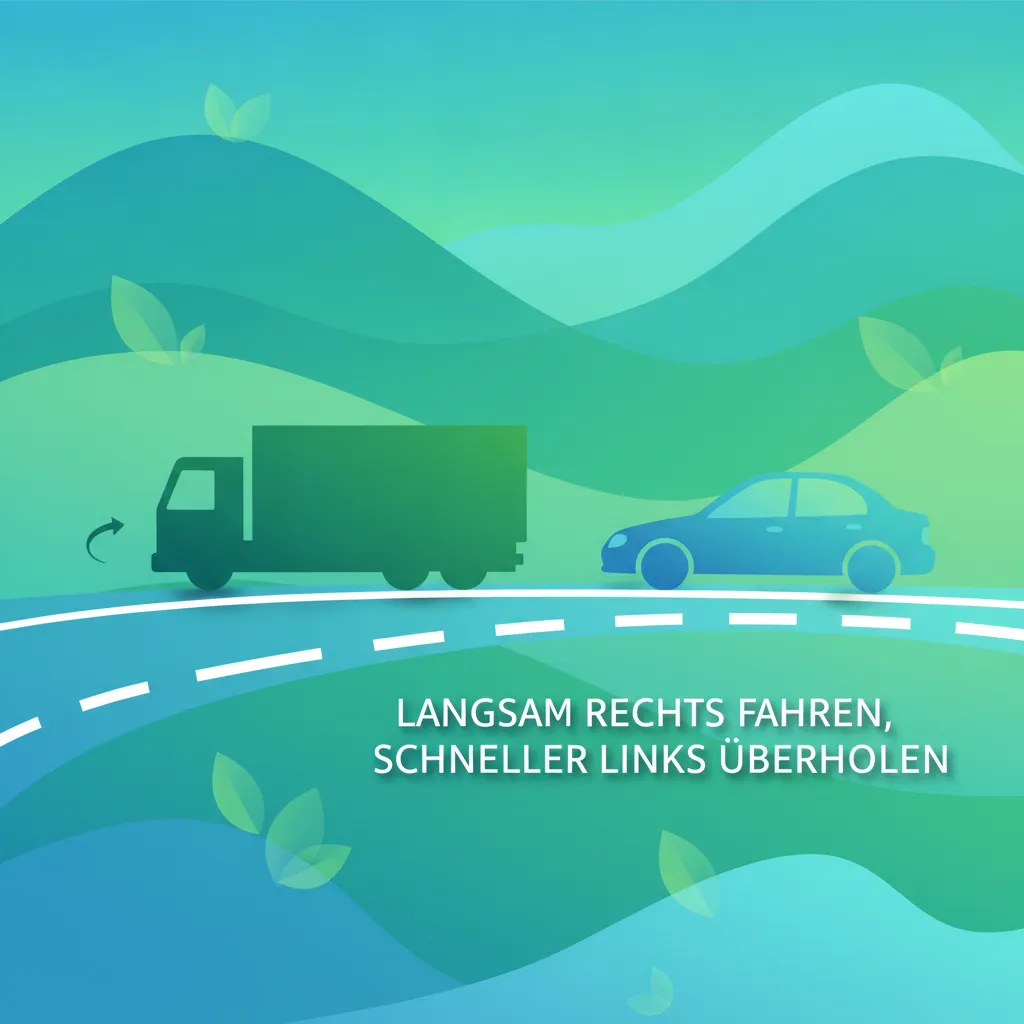
High-speed driving in a large vehicle requires excellent lane discipline and forward planning. This lesson covers Austrian speed limits for buses, rules for joining and leaving the motorway, safe overtaking procedures, and maintaining appropriate following distances. The critical importance of forming an emergency corridor ('Rettungsgasse') in traffic jams is also a key topic.

This lesson provides a comprehensive guide to driving on high-speed motorways (Autobahnen) and expressways (Schnellstraßen). It details the correct procedure for using the acceleration lane to merge safely, the principles of strict lane discipline, and strategies for choosing a safe speed relative to traffic flow and conditions. The lesson also explains the rules for using exit ramps and the purpose of the hard shoulder (Pannenstreifen).

This lesson provides essential knowledge for using Austria's high-speed road network. It covers the correct procedure for entering via acceleration lanes, maintaining strict lane discipline (keeping right, passing left), and understanding the digital or physical Vignette (toll sticker) requirement. The formation of the 'Rettungsgasse' (emergency corridor) during traffic jams is also a key topic.

This lesson details the general traffic rules applicable to heavy goods vehicles on Austrian roads, highlighting differences from passenger car regulations. It covers key topics such as right-of-way at intersections, specific rules for overtaking, maintaining proper lane discipline, and adhering to designated speed limits. Understanding these rules is critical for safe integration into mixed traffic.

This lesson addresses the critical skill of adapting driving behavior to conditions of reduced visibility, such as fog, heavy rain, snow, or darkness. It explains the principle of driving only as fast as you can see, ensuring your stopping distance is within your visibility range. The content covers the correct use of headlights and fog lights and emphasizes why speed reduction is essential for maintaining safety when your ability to perceive hazards is compromised.

This lesson focuses on the legal restrictions concerning a heavy vehicle's dimensions, including maximum height, width, and length. It teaches drivers how to interpret road signs and supplemental plates that indicate these limits. This knowledge is crucial for route planning, especially when navigating under bridges, through tunnels, and on restricted roads.
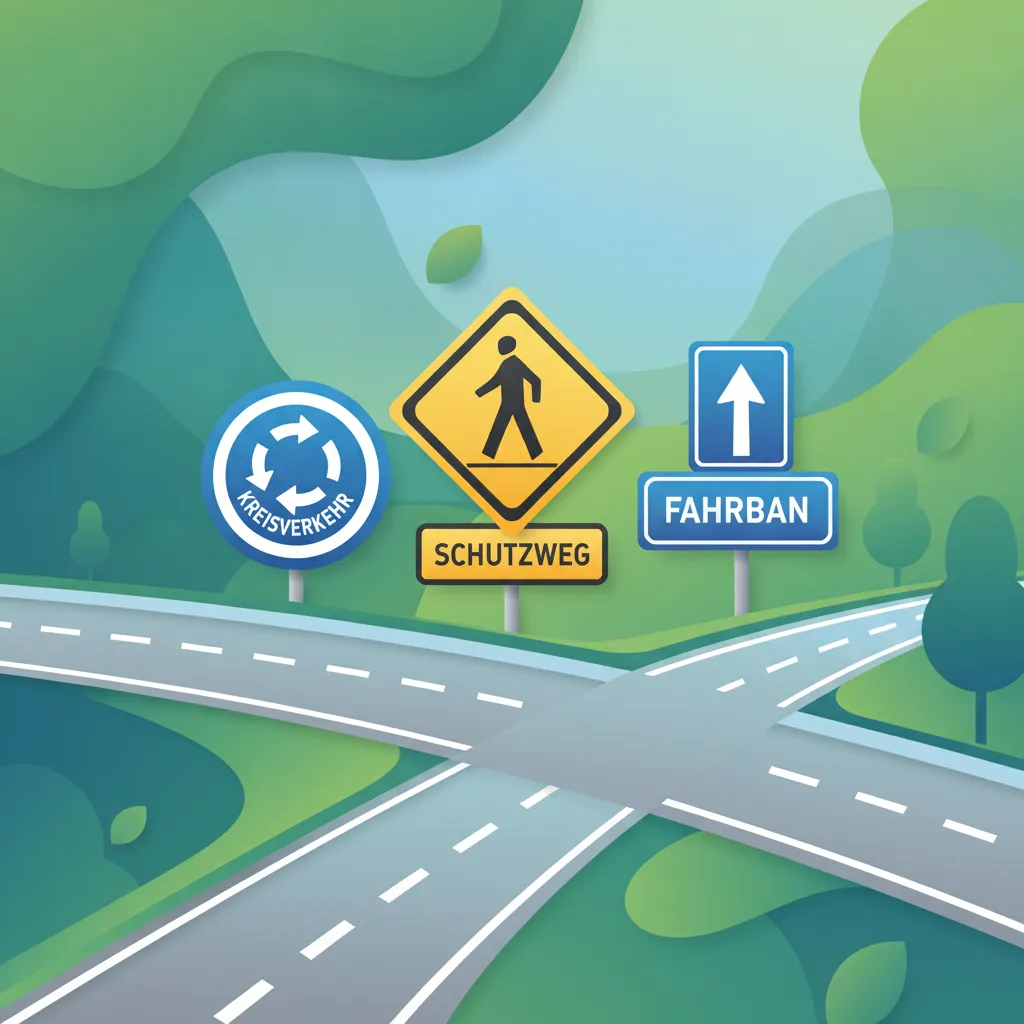
This lesson covers the specific regulations associated with special Austrian road signs and areas. It details the rules for 'Schutzweg' (protected pedestrian crossings), 'Kreisverkehr' (roundabouts), and the distinction between 'Fahrbahn' (road) and 'Fahrstreifen' (lane). Understanding these specific contexts is essential for safe navigation in urban and suburban environments.

This lesson explores the specific characteristics and hazards of rural roads (Landstraßen). It emphasizes the need for careful speed adjustment due to factors like narrow lanes, poor road surfaces, and hidden entrances. Learners will understand how to safely navigate blind curves, use passing places, and anticipate the presence of slow-moving agricultural vehicles or livestock on the road.
Understand the legal basis of speed limits in Austria (StVO), the consequences of violations, including fines and penalty points, and the importance of adjusting speed to conditions for your driving theory.

This lesson provides a clear overview of the legal penalties for traffic violations in Austria. It details the system of fines, demerit points, and the conditions that can lead to license suspension or revocation. Understanding these consequences reinforces the importance of lawful and responsible riding.

This lesson provides an overview of the legal framework for traffic enforcement in Austria. It explains the structure of fines for common offenses, the demerit point system that can lead to licence suspension, and the more severe consequences for major violations. Understanding these penalties reinforces the importance of consistent adherence to all traffic laws.
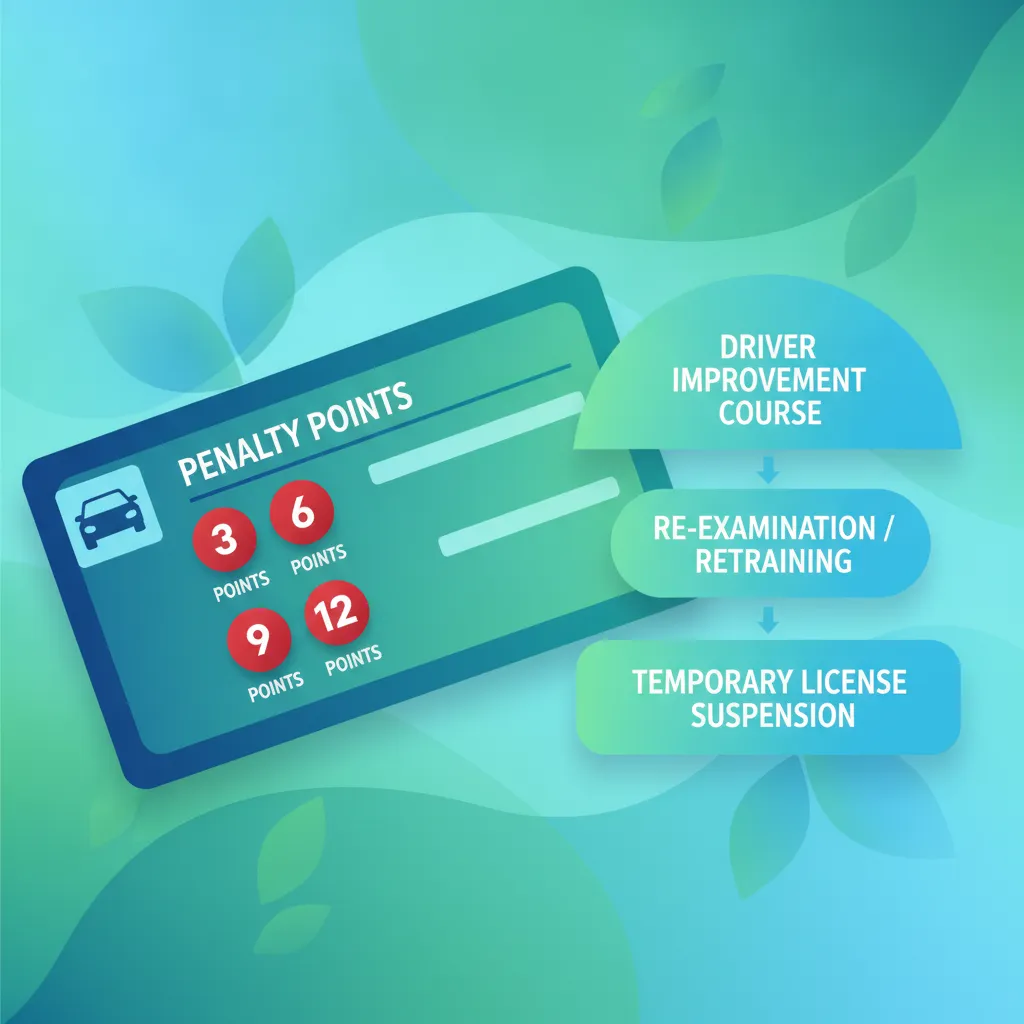
This lesson offers a clear explanation of the Austrian system of penalties for traffic offenses, including the demerit points system (Vormerksystem). It details which violations lead to points, the accumulation process, and the consequences at each stage, such as mandatory driver improvement courses and potential license suspension (Fahrverbot). Understanding this system provides a strong incentive for consistent compliance with all traffic regulations.

This lesson provides a comprehensive overview of a driver's legal responsibilities and the potential consequences of failing to adhere to traffic laws. Learners will explore the concept of liability in the event of an accident and the structure of the official penalty catalogue. The material covers the impact of fines, demerit points, and potential driving bans (Fahrverbot) on one's license, as well as the effects on insurance premiums.
This lesson explains the system of penalties and enforcement for heavy vehicle operations in Austria. It covers the fines and penalty points associated with common traffic violations, such as overloading or insecure loads. Learners will understand the role of authorities in conducting roadside checks and inspections to ensure regulatory compliance.
Find clear answers to common questions learners have about Speed Limits and Legal Requirements in Different Zones. Learn how the lesson is structured, which driving theory objectives it supports, and how it fits into the overall learning path of units and curriculum progression in Austria. These explanations help you understand key concepts, lesson flow, and exam focused study goals.
The general speed limit in an Austrian built-up area is 50 km/h, unless otherwise indicated by road signs. Always watch for the yellow rectangular sign indicating the start of a town.
Yes, the general limit on motorways (Autobahn) is 130 km/h for passenger cars. However, always look for digital speed displays or permanent signs that may impose lower limits due to traffic or weather conditions.
Yes, supplementary plates often restrict when a speed limit applies, such as specific times of day, weather conditions, or vehicle types. You must read the main sign in combination with any plate beneath it to understand the full regulation.
Unless signs indicate otherwise, the maximum speed limit on Austrian rural roads (Landstraßen) is 100 km/h.
Refine your study plan by searching for specific Austrian driving theory practice sets. Pinpoint questions related to particular road rules, signs, or challenge levels, and begin practicing immediately to reinforce your knowledge and excel in your official exam with confidence. Get started with focused revision today.