
This lesson explores the psychological factors that influence your performance as a driver. Understanding how to manage your attention and maintain a defensive mindset is essential for passing the Austrian Category B theory exam and ensuring safety on the road.
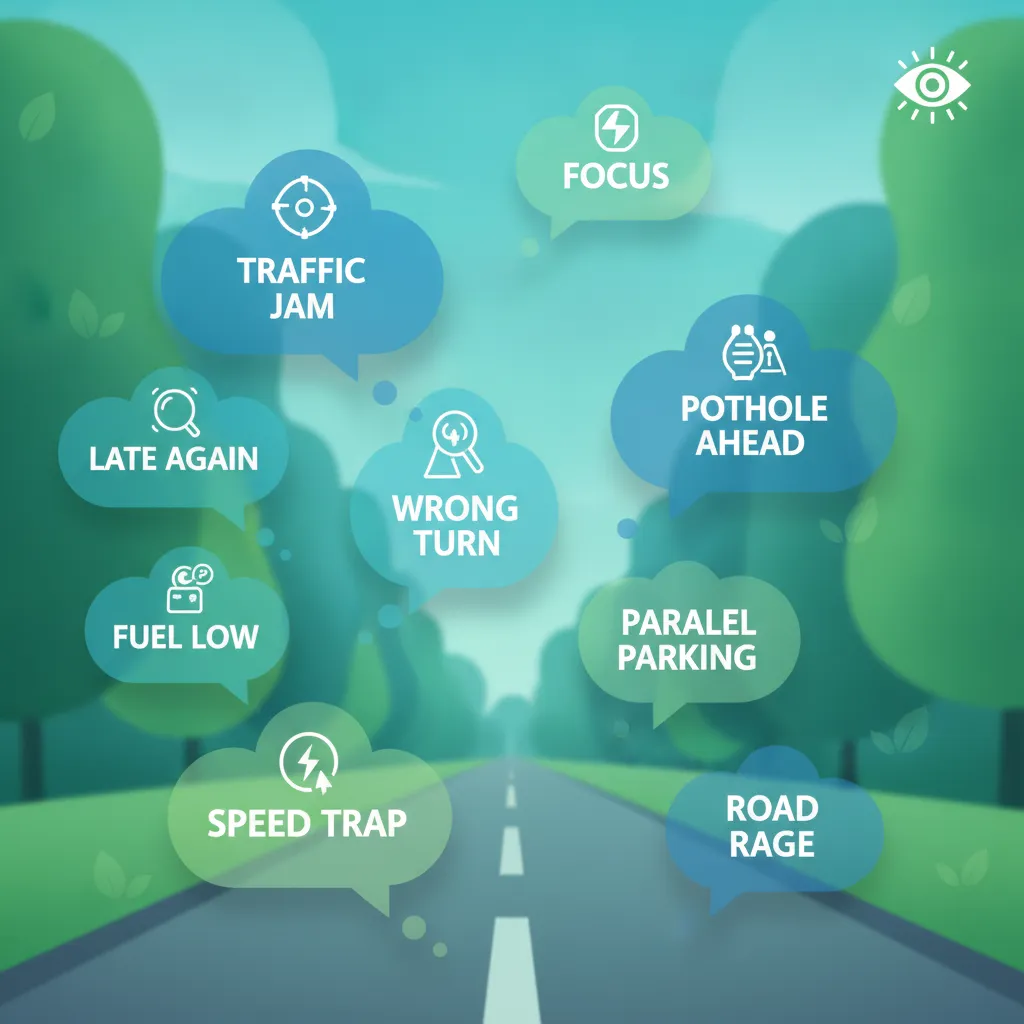
Lesson content overview
Driving is far more than simply operating a vehicle; it involves a complex interplay of mental processes, emotional states, and behavioral choices. For those pursuing an Austrian Category B driver's license, comprehending these psychological aspects is crucial for safe road participation. This lesson explores the hidden drivers behind every decision, reaction, and interaction on the road, offering a foundation for anticipating hazards and adopting a defensive mindset in the diverse Austrian traffic landscape.
Every moment spent behind the wheel is a testament to the human brain's incredible capacity to process information, assess risks, and make rapid decisions under dynamic conditions. Our perception, attention, emotional state, and even our ingrained beliefs about how traffic works profoundly influence our ability to drive safely. Ignoring these psychological factors can lead to misjudgments, delayed reactions, and ultimately, collisions.
This comprehensive guide delves into how our mental processes shape driving behavior. By understanding concepts like risk perception, selective attention, cognitive load, and the decision-making process, drivers can not only comply with traffic laws but also develop the proactive habits necessary to navigate challenging situations effectively. This knowledge empowers drivers to anticipate potential errors, both their own and those of others, thereby fostering a safer and more harmonious traffic environment within Austria's official driving regulations.
Risk perception is a fundamental psychological process that underpins nearly every driving decision. It refers to the mental assessment of the potential danger associated with a specific traffic situation, encompassing both the probability of an event occurring and the severity of its potential consequences. An accurate assessment of risk allows drivers to adjust their speed, following distance, and maneuvering decisions to mitigate potential dangers effectively.
Understanding risk involves differentiating between two key types:
The disconnect between objective and subjective risk can be perilous. Overconfidence, for example, can lead a driver to underestimate objective risks, resulting in unsafe overtaking maneuvers or excessive speed. Conversely, an overestimation of risk might cause unnecessary hesitation, disrupting traffic flow or missing safe opportunities.
Proper risk perception directly dictates driving behavior. When a driver accurately perceives high risk—for example, due to wet roads, heavy traffic, or poor visibility—they should instinctively adapt their driving. This means reducing speed, increasing following distances, and exercising greater caution in maneuvers like overtaking or changing lanes.
For example, a driver who perceives a narrow, winding Alpine road as high risk due to limited visibility will naturally reduce speed and prepare for potential hazards around blind corners. In contrast, a driver who underestimates the risk on the same road might maintain higher speeds, significantly increasing the likelihood of an accident. The Austrian traffic laws (StVO) implicitly recognize this by requiring drivers to adapt their speed not just to posted limits, but also to road, traffic, and weather conditions.
The road environment is a constant stream of information. To drive safely, a driver must effectively process relevant stimuli while filtering out distractions. This critical cognitive function is known as selective attention – the ability to allocate limited mental resources to specific, important stimuli at any given moment.
Every second, a driver is bombarded with sensory input: road signs, traffic lights, other vehicles, pedestrians, cyclists, road conditions, dashboard indicators, and internal thoughts or conversations. Selective attention enables the brain to prioritize this information, focusing on what is crucial for immediate safety and planning future actions. Without it, the driving task would be overwhelmingly complex, leading to missed hazards and delayed reactions.
A key challenge to selective attention is multitasking. While the human brain can switch between tasks quickly, it cannot truly process multiple demanding tasks simultaneously with full efficiency. Attempting to manage a mobile phone conversation, adjust GPS settings, and navigate heavy traffic simultaneously significantly impairs a driver's ability to selectively attend to critical road information. Austrian law, like many others, prohibits the use of handheld mobile devices while driving precisely because it severely compromises selective attention.
Within selective attention, we can distinguish between:
Effective driving requires a dynamic balance between focal attention and ambient awareness. A driver must maintain focal attention on the primary path ahead while simultaneously scanning mirrors and peripheral areas to maintain a comprehensive situational awareness. Forgetting to check blind spots before a lane change is a classic example of failing to adequately shift between focal and ambient awareness, potentially missing a cyclist or a rapidly approaching vehicle.
Driving is inherently a mentally demanding task, requiring significant cognitive effort. Cognitive load refers to the total amount of mental resources required to process information, make decisions, and control the vehicle. When this load becomes excessive, a driver's situational awareness, reaction time, and decision quality can all rapidly decline, increasing the risk of errors and collisions.
Cognitive load can be broken down into two main categories:
Both types of load contribute to the overall mental burden. When combined, especially in challenging conditions, they can quickly push a driver beyond their mental capacity.
High cognitive load significantly reduces a driver's ability to process new information and react appropriately. When overloaded, drivers may experience "tunnel vision," where they only focus on a small, immediate area and miss critical hazards in their periphery. Their reaction times lengthen, and the quality of their decisions suffers, leading to hesitation or incorrect actions.
Consider a driver trying to find an unfamiliar address in heavy city traffic during a downpour. The heavy traffic and adverse weather create high intrinsic load. If this driver is also trying to use a handheld phone for navigation or having an intense argument with a passenger, they are adding significant extraneous load. The cumulative effect can lead to missed turns, failure to notice a pedestrian, or an inability to react to sudden braking by the vehicle ahead. Managing cognitive load involves prioritizing driving tasks and minimizing non-essential distractions.
Safe driving is a continuous cycle of observation, assessment, and decision-making. The decision-making process describes the sequential mental steps a driver takes from the moment a potential hazard is detected to the execution of an appropriate action. A clear and timely decision-making process is vital to avoiding collisions and ensuring smooth traffic flow.
While often occurring in a fraction of a second, the decision-making process generally follows these steps:
Situation Assessment (Perception & Hazard Detection): The driver observes the environment, recognizes a change or potential hazard (e.g., brake lights ahead, a ball rolling into the road, an approaching intersection). This step relies heavily on accurate risk perception and selective attention.
Option Generation: Based on the assessed situation, the driver quickly considers possible actions (e.g., brake, steer left, steer right, accelerate, maintain speed).
Option Selection: The driver evaluates the generated options, weighing their potential outcomes, risks, and benefits, and chooses the safest and most effective course of action. This is where experience and a defensive mindset play a crucial role.
Action Execution: The driver performs the chosen maneuver (e.g., applying brakes, turning the steering wheel, signaling).
Any delay or error in these steps can increase collision risk. For instance, before overtaking another vehicle on a rural Austrian road, a driver must quickly assess oncoming traffic, road curvature, available space, their own vehicle's acceleration capabilities, and the weather conditions. Only after a thorough assessment and selection of the safest option should the overtaking maneuver be initiated.
A common pitfall in decision-making is relying too heavily on "habitual actions" without properly reassessing each unique situation. While habits can make routine driving tasks more efficient, they can be dangerous when conditions change. For example, consistently accelerating through a yellow light without considering the speed of oncoming traffic or the presence of pedestrians is a habitual error that can lead to severe consequences.
Good drivers continuously reassess situations, even familiar ones. They actively look for new information, question assumptions, and remain flexible in their decision-making. This prevents dangerous assumptions, such as believing other drivers will always yield or that a road always has consistent grip.
Driving is not just a cognitive task; it's also deeply intertwined with our emotional and physiological states. Stress and arousal refer to the body's psychological and physiological responses that can profoundly influence a driver's alertness, attention, and overall performance.
Not all stress is detrimental. Psychologists distinguish between two types of arousal:
The relationship between arousal and performance is often described by the Yerkes-Dodson Law, which suggests that performance improves with increased arousal up to a certain point, after which it deteriorates. The key is to maintain an optimal level of arousal – enough to be alert, but not so much as to be overwhelmed.
Drivers must learn to recognize the signs of both optimal and excessive arousal. Moderate stress can lead to quicker reactions, which is beneficial in an emergency. However, excessive stress can manifest as impatience, aggression, recklessness, or even debilitating anxiety. A driver experiencing distress might start tailgating, honking excessively, or making sudden, erratic lane changes.
To cope with stress, drivers should take proactive steps:
Maintaining emotional regulation ensures that decisions are based on rational assessment rather than impulsive reactions, especially vital on busy Austrian motorways or during challenging city driving.
A defensive mindset is perhaps the most crucial psychological attribute for safe driving. It is a proactive attitude that prioritizes the anticipation of hazards, avoids unnecessary risks, and plans safe actions well in advance. Rather than merely reacting to events, defensive drivers actively seek to prevent them.
The cornerstone of a defensive mindset is anticipatory scanning. This involves continuously observing the road ahead, to the sides, and behind, actively looking for potential hazards and predicting the actions of other road users. It means looking beyond the vehicle immediately in front of you, scanning intersections, checking mirrors frequently, and being aware of what's happening two or three steps ahead in the traffic flow.
Proactive driving extends beyond simple observation. It means taking preventative action even before a hazard fully materializes. For example, seeing a ball roll into the street automatically prompts a defensive driver to reduce speed and cover the brakes, anticipating that a child might follow it. Similarly, seeing brake lights several cars ahead triggers early speed reduction, providing ample time to react.
A defensive mindset inherently encourages conservative decision-making, favoring safety over speed or convenience. This translates into concrete behaviors:
This approach significantly reduces reliance on chance and external cues, promoting consistently safer behavior on Austrian roads.
Every driver operates with a "mental model" of how traffic works. This internal representation encompasses expectations about traffic rules, vehicle capabilities, typical road user behavior, and the dynamics of various road environments. Accurate mental models are essential for making correct predictions and informed decisions.
An effective mental model is built on a realistic understanding of how different traffic participants behave, especially in the Austrian context. For example:
By internalizing these realities, drivers can anticipate potential conflicts and adjust their behavior accordingly. For instance, an accurate mental model would prompt a driver to give ample space to a cyclist, rather than assuming they will always stay tightly to the right.
Dangerous assumptions often stem from inaccurate mental models. Common misconceptions include:
These types of assumptions are recipe for disaster. Instead, a driver should operate under the assumption that others might make errors, leading to a more cautious and defensive approach. Continually updating one's mental model with real-world observations and adherence to traffic laws helps to create a safer driving experience.
Many Austrian traffic laws (StVO) are designed to reinforce sound psychological principles of driving, aiming to mitigate risks associated with human cognitive and emotional limitations.
The driver must first observe traffic from all relevant directions before changing lane or overtaking. This is mandatory for all lane changes and overtaking on any road type in Austria.
This rule directly addresses the principle of selective attention and situational awareness. By requiring drivers to check mirrors, blind spots, and ahead, it ensures that they gather all necessary information before making a move that could affect other road users, preventing collisions with faster traffic or vulnerable road users who might be in a blind spot.
The driver must keep a safe distance to allow full braking without endangering other road users. This is a continuous mandatory requirement while driving.
This regulation is a direct application of risk perception and decision-making. A safe following distance (often recommended as at least a 2-second gap in dry conditions, more in adverse weather) ensures sufficient perception-reaction distance and braking distance. It accounts for the human reaction time (averaging about 1 second) and the physical properties of braking, allowing a driver enough time to perceive a hazard, decide on a course of action, and execute it without colliding with the vehicle ahead.
Speed limits must be reduced proportionally in rain, fog, snow, or night conditions to maintain safety. Drivers must not exceed speed limits under any conditions and must adapt speed to road, traffic, and weather.
This rule directly relates to risk perception and cognitive load. Adverse weather or poor visibility inherently increase objective risk and raise intrinsic cognitive load. Reduced speed provides more time for hazard detection, shorter braking distances, and less demand on a driver's limited attentional resources, thus reducing the chance of losing control or failing to see an obstacle in time.
Use of hand-held mobile phones or electronic devices while driving is prohibited in all traffic conditions, regardless of speed.
This law directly addresses the dangers of cognitive load and selective attention. Handheld device usage creates significant extraneous cognitive load and diverts selective attention from the primary driving task, dramatically increasing reaction times and the likelihood of missing critical road events. Even hands-free conversations can increase cognitive load, but handheld use is particularly dangerous.
Drivers must yield to pedestrians at crosswalks and give sufficient space to cyclists.
This regulation reinforces the importance of an accurate mental model of traffic and a defensive mindset. It recognizes the increased vulnerability of pedestrians and cyclists and legally mandates drivers to anticipate their presence and prioritize their safety, rather than assuming right-of-way or underestimating the risks they face.
Even experienced drivers can fall victim to common psychological traps that compromise safety. Recognizing these tendencies is the first step to overcoming them.
Description: When under extreme stress or facing an immediate threat, a driver may focus intensely on a single obstacle (e.g., an approaching vehicle) and fail to scan the peripheral environment for other hazards (e.g., a cyclist merging from the side). Correction: Consciously force a broader visual scan (360° check), even in high-stress moments. Practice remaining calm and taking a breath to prevent overwhelming distress.
Description: Believing one possesses exceptional driving skills that allow for risky maneuvers (e.g., safely overtaking a bus on a narrow road with limited space) that would be dangerous for others. This often leads to underestimation of objective risk. Correction: Adhere strictly to traffic laws and exercise caution even on familiar roads. Always prioritize safety margins over demonstrating skill. Recognize that vehicle limitations and environmental factors are often more critical than driver skill in preventing accidents.
Description: Maintaining posted speeds or normal driving habits despite reduced visibility (fog, heavy rain) or altered road conditions (ice, gravel). This is a failure to adjust risk perception and cognitive load based on reality. Correction: Proactively reduce speed to a level that ensures safe stopping within the visible range. Increase following distance and anticipate reduced grip.
Description: Attempting to manage multiple mentally demanding tasks simultaneously, such as navigating a complex route, engaging in a heated phone conversation, and changing lanes in heavy traffic, leading to cognitive overload and reduced selective attention. Correction: Prioritize the primary driving task. If possible, defer secondary tasks (phone calls, infotainment adjustments) until safely parked. Utilize voice-guided navigation to keep eyes on the road.
Description: Assuming an empty, straight road is inherently safe and accelerating excessively, neglecting the possibility of hidden hazards like animals, debris, or unexpected turns. Correction: Maintain a reasonable speed regardless of perceived emptiness. Continuously scan for potential, even unexpected, hazards. Develop a defensive mindset that anticipates the unknown.
Description: Habitually tailgating or failing to increase following distance in response to sudden braking ahead, resulting in insufficient perception-reaction distance and a rear-end collision. Correction: Consistently apply the "two-second rule" (or more in adverse conditions). Be prepared to react to the vehicle two cars ahead, not just the one directly in front.
The application of psychological principles in driving is not static; it must adapt to dynamic road and environmental conditions.
Mastering the psychological aspects of driving is just as vital as understanding traffic laws and vehicle operation. It is the invisible force that dictates how effectively a driver responds to the ever-changing road environment.
By internalizing and applying these psychological insights, drivers can actively avoid common violations, confidently recognize and manage edge cases, and consistently maintain safe operation across all driving environments, contributing positively to Austrian road safety.
This lesson covers the psychological factors that influence safe driving, including how drivers perceive and assess risk differently, how selective attention filters road information while cognitive load determines mental capacity, and how stress levels affect performance through eustress and distress. The four-step decision-making process from hazard detection to action execution is explained, emphasizing the need for continuous reassessment rather than habitual responses. Austrian traffic laws are shown to be practical applications of these psychological principles, mandating observation before maneuvers, safe following distances, speed adaptation to conditions, and prohibition of distracting devices to compensate for human cognitive limitations.
A short set of high-value points that capture the most important learning from this lesson.
Accurate risk perception requires distinguishing between objective danger (statistical probability) and subjective danger (personal feeling), with overconfidence leading to dangerous underestimation of real risks.
Selective attention enables drivers to filter irrelevant information and focus on critical road events, but it requires actively balancing focal attention on immediate hazards with ambient awareness of the broader environment.
Cognitive load combines intrinsic demands (traffic complexity, weather) and extraneous demands (distractions), with excessive total load causing tunnel vision and delayed reactions.
The decision-making process follows four sequential steps: situation assessment, option generation, option selection, and action execution, each requiring full cognitive engagement.
A defensive driving mindset prioritizes proactive hazard anticipation over reactive responses, treating every maneuver as if other road users might make errors.
Explore all units and lessons included in this driving theory course.
Objective risk is based on empirical data and statistics; subjective risk is your personal intuition and may be unreliable.
Cognitive overload causes tunnel vision and impairs reaction time; manage it by minimizing distractions like phone use.
Eustress (moderate arousal) improves performance, while distress (excessive stress) leads to aggressive driving and impaired judgment.
The Yerkes-Dodson Law shows that performance improves with alertness up to a point, then deteriorates when stress becomes overwhelming.
Maintain at least a 2-second following distance in dry conditions, longer in adverse weather, to ensure perception-reaction and braking distance.
Assuming all drivers will signal correctly or yield as expected, rather than maintaining a defensive mindset that prepares for others' errors.
Failing to shift between focal attention (immediate hazard) and ambient awareness (mirrors, blind spots) when changing lanes.
Relying on habitual actions in changing conditions, such as accelerating through a yellow light without assessing actual traffic flow.
Maintaining posted speed limits without adapting to weather, visibility, or road conditions, increasing objective risk.
Using handheld mobile devices while driving, which creates significant extraneous cognitive load and severely compromises selective attention.
Lesson content overview
A short set of high-value points that capture the most important learning from this lesson.
Accurate risk perception requires distinguishing between objective danger (statistical probability) and subjective danger (personal feeling), with overconfidence leading to dangerous underestimation of real risks.
Selective attention enables drivers to filter irrelevant information and focus on critical road events, but it requires actively balancing focal attention on immediate hazards with ambient awareness of the broader environment.
Cognitive load combines intrinsic demands (traffic complexity, weather) and extraneous demands (distractions), with excessive total load causing tunnel vision and delayed reactions.
The decision-making process follows four sequential steps: situation assessment, option generation, option selection, and action execution, each requiring full cognitive engagement.
A defensive driving mindset prioritizes proactive hazard anticipation over reactive responses, treating every maneuver as if other road users might make errors.
Explore all units and lessons included in this driving theory course.
Objective risk is based on empirical data and statistics; subjective risk is your personal intuition and may be unreliable.
Cognitive overload causes tunnel vision and impairs reaction time; manage it by minimizing distractions like phone use.
Eustress (moderate arousal) improves performance, while distress (excessive stress) leads to aggressive driving and impaired judgment.
The Yerkes-Dodson Law shows that performance improves with alertness up to a point, then deteriorates when stress becomes overwhelming.
Maintain at least a 2-second following distance in dry conditions, longer in adverse weather, to ensure perception-reaction and braking distance.
Assuming all drivers will signal correctly or yield as expected, rather than maintaining a defensive mindset that prepares for others' errors.
Failing to shift between focal attention (immediate hazard) and ambient awareness (mirrors, blind spots) when changing lanes.
Relying on habitual actions in changing conditions, such as accelerating through a yellow light without assessing actual traffic flow.
Maintaining posted speed limits without adapting to weather, visibility, or road conditions, increasing objective risk.
Using handheld mobile devices while driving, which creates significant extraneous cognitive load and severely compromises selective attention.
Explore search topics learners often look for when studying Psychological Aspects of Road Participation. These topics reflect common questions about road rules, driving situations, safety guidance, and lesson level theory preparation for learners in Austria.
Browse additional driving theory lessons that cover connected traffic rules, road signs, and common driving situations related to this topic. Improve your understanding of how different rules interact across everyday traffic scenarios.
Learn to proactively anticipate hazards, manage risks, and make safer decisions. This lesson focuses on cultivating a defensive driving attitude essential for Austrian road safety, helping you avoid common errors and prevent accidents.

This lesson introduces the proactive mindset of defensive driving, which focuses on anticipating potential hazards rather than just reacting to them. It teaches techniques for systematic risk assessment, including scanning the road ahead, checking mirrors frequently, and being aware of the potential actions of other road users. By adopting these safe habits, drivers can create a buffer of safety around their vehicle and significantly reduce the likelihood of being involved in an accident.

This lesson provides advanced strategies for proactively managing interactions with vulnerable road users to prevent conflicts before they arise. It teaches drivers to predict the likely behavior of pedestrians, cyclists, and e-scooter riders, especially at intersections and in congested areas. Key techniques include maintaining larger safety distances, covering the brake, and making eye contact to ensure mutual awareness and avoid accidents.

Driving in tourist hotspots in cities like Salzburg or alpine resorts requires extra patience and vigilance. This lesson explores common unpredictable behaviours, such as pedestrians stepping into the road to take photos or groups of tourists being unaware of traffic. It teaches drivers to slow down, be prepared for anything, and use communication tools like the horn sparingly and appropriately.
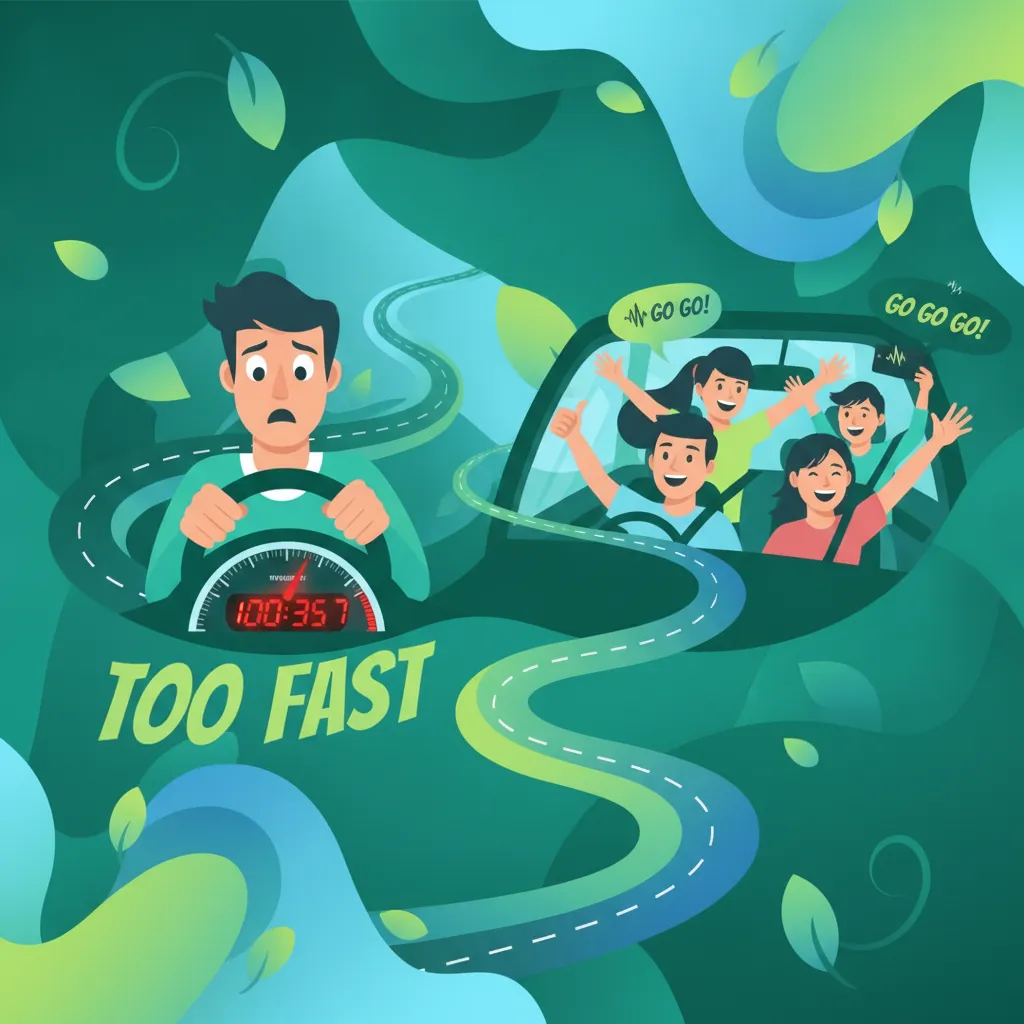
This lesson examines the specific risk factors that are statistically higher for novice drivers, including issues like inaccurate risk perception, overconfidence, and susceptibility to peer pressure and distractions. It aims to build self-awareness about these behavioural tendencies. By understanding these common pitfalls, new drivers can consciously adopt strategies to manage them, leading to safer driving habits from the very beginning of their driving career.

This lesson consolidates knowledge by applying it to common everyday driving situations. It offers practical tips on topics like smooth driving for fuel efficiency, managing distractions in the cabin, and maintaining courtesy in frustrating traffic. The content reinforces defensive driving principles as a constant habit, helping learners transition from theoretical knowledge to confident, safe, and responsible real-world driving.

This lesson explains how to use different positions within a lane to maximize visibility, create safety buffers, and plan escape routes. It introduces the concept of anticipative riding, which involves actively scanning for potential hazards and predicting the actions of other drivers. Strategic positioning is a dynamic skill that allows a rider to manage space and time effectively in changing traffic.

This lesson provides advice for navigating popular scenic routes, which often feature heavy traffic, cyclists, and distracted drivers. It emphasizes maintaining focus on the road despite beautiful scenery and anticipating unpredictable actions from other tourists who may stop suddenly. Adopting a patient and defensive mindset is key to safely enjoying these remarkable roads.

This lesson reinforces the critical importance of protecting vulnerable road users in dense urban settings. It teaches drivers to be hyper-aware of pedestrians and cyclists, especially near intersections and crosswalks. Key techniques include reducing speed, making eye contact to confirm intentions, and giving ample space.

This lesson focuses on warning signs, which are designed to alert drivers to potential hazards ahead. Learners will explore the meanings of signs indicating sharp curves, changes in road surface, potential animal crossings, and upcoming construction zones. The content explains how the characteristic triangular shape and symbols convey specific dangers, enabling drivers to anticipate conditions and adjust their speed and attention accordingly.

Driving a bus in a busy city like Vienna or Salzburg requires constant forward planning and anticipation. This lesson teaches techniques for maintaining adequate space around the vehicle, positioning correctly for upcoming junctions, and reading the flow of traffic. Adopting a defensive mindset is key to navigating complex urban environments without incident.
Understand how stress and arousal impact driving performance. This lesson explores techniques for maintaining focus, making sound decisions under pressure, and recognizing how psychological states affect your ability to drive safely according to Austrian traffic regulations.
This lesson examines the specific risk factors that are statistically higher for novice drivers, including issues like inaccurate risk perception, overconfidence, and susceptibility to peer pressure and distractions. It aims to build self-awareness about these behavioural tendencies. By understanding these common pitfalls, new drivers can consciously adopt strategies to manage them, leading to safer driving habits from the very beginning of their driving career.

Pressure to stay on schedule is a daily reality, but it must never lead to unsafe driving. This lesson provides mental strategies for staying calm and focused when running late. It emphasizes that the driver's professional judgement to operate safely always overrides the timetable and covers the importance of communicating delays according to company procedure.
This lesson introduces the proactive mindset of defensive driving, which focuses on anticipating potential hazards rather than just reacting to them. It teaches techniques for systematic risk assessment, including scanning the road ahead, checking mirrors frequently, and being aware of the potential actions of other road users. By adopting these safe habits, drivers can create a buffer of safety around their vehicle and significantly reduce the likelihood of being involved in an accident.
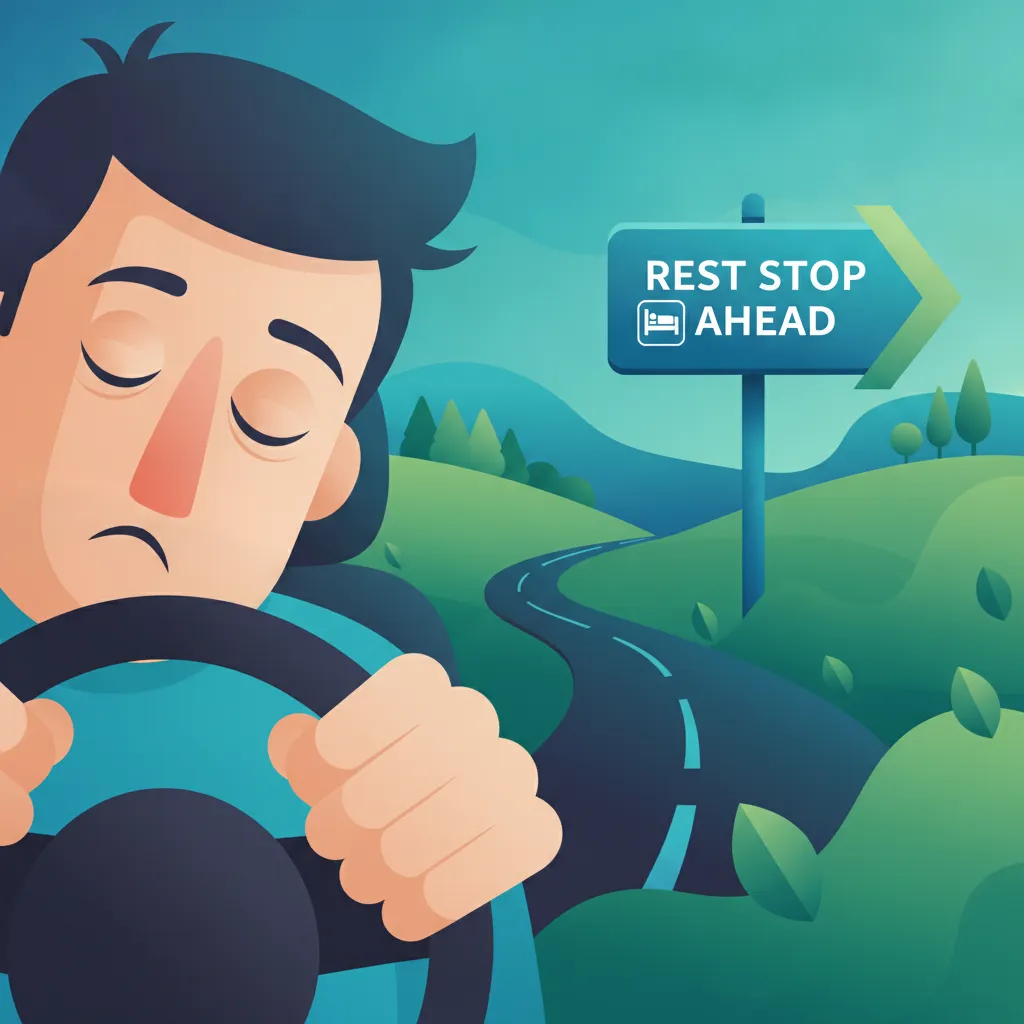
Fatigue is a major cause of serious accidents. This lesson teaches you to identify the subtle signs of tiredness, such as frequent yawning, slow reactions, and difficulty concentrating. It stresses that the only effective cure for fatigue is sleep and reinforces the importance of planning journeys to include regular, legally-mandated breaks and ensuring adequate rest before a shift.

This lesson highlights the serious risks of driving while fatigued. It teaches drivers to recognize the physical and mental symptoms of fatigue and explains the legal regulations regarding driving hours and mandatory rest breaks. The lesson also offers practical strategies for managing alertness and ensuring fitness to drive.

This lesson delves into the psychology of riding, exploring how mental states like stress, anger, or overconfidence can lead to poor decisions. It discusses common cognitive errors, such as tunnel vision and risk compensation, that can compromise a rider's safety. Developing self-awareness and maintaining a calm, focused mindset are presented as key defensive skills.
Driving in tourist hotspots in cities like Salzburg or alpine resorts requires extra patience and vigilance. This lesson explores common unpredictable behaviours, such as pedestrians stepping into the road to take photos or groups of tourists being unaware of traffic. It teaches drivers to slow down, be prepared for anything, and use communication tools like the horn sparingly and appropriately.

This lesson explains how fatigue, alcohol, and drugs dangerously impair a rider's judgment, coordination, and reaction time. It specifies the legal blood alcohol concentration (BAC) limit for vehicle operators in Austria and describes the severe penalties for driving under the influence (DUI). The importance of being well-rested and completely sober before every ride is strongly emphasized.
This lesson consolidates knowledge by applying it to common everyday driving situations. It offers practical tips on topics like smooth driving for fuel efficiency, managing distractions in the cabin, and maintaining courtesy in frustrating traffic. The content reinforces defensive driving principles as a constant habit, helping learners transition from theoretical knowledge to confident, safe, and responsible real-world driving.
This lesson provides advanced strategies for proactively managing interactions with vulnerable road users to prevent conflicts before they arise. It teaches drivers to predict the likely behavior of pedestrians, cyclists, and e-scooter riders, especially at intersections and in congested areas. Key techniques include maintaining larger safety distances, covering the brake, and making eye contact to ensure mutual awareness and avoid accidents.
Find clear answers to common questions learners have about Psychological Aspects of Road Participation. Learn how the lesson is structured, which driving theory objectives it supports, and how it fits into the overall learning path of units and curriculum progression in Austria. These explanations help you understand key concepts, lesson flow, and exam focused study goals.
The exam tests not only knowledge of laws but also your ability to recognize risks. Understanding your own psychological limits helps you make safer decisions, which is a critical competency for new drivers in Austria.
Mental errors often come from over-confidence or distraction. During the test, carefully read every question to avoid misinterpreting the scenario, and always focus on the most defensive choice in any given traffic situation.
Cognitive load refers to the amount of mental processing power you use while driving. In complex Austrian traffic, your load is high, so minimizing distractions and maintaining constant situational awareness helps you process information more accurately.
You do not need to memorize academic theories, but you must understand how human factors like fatigue, stress, and attention span affect your ability to follow the StVO and interact safely with other road users.
Refine your study plan by searching for specific Austrian driving theory practice sets. Pinpoint questions related to particular road rules, signs, or challenge levels, and begin practicing immediately to reinforce your knowledge and excel in your official exam with confidence. Get started with focused revision today.