
This lesson guides you through the crucial safety rules for navigating around public transport and school environments in Austria. You will learn the specific legal requirements for yielding to buses and managing your speed near schools to ensure the safety of all road users.
Lesson content overview
Driving in areas with frequent public transport and high pedestrian activity, especially around schools, requires heightened awareness and adherence to specific traffic regulations. This lesson, part of your Austrian Driving License B Theory Course, details the crucial rules and best practices for interacting safely with school buses, public transport vehicles, and within school zones in Austria. Understanding these rules is not just about avoiding penalties; it's fundamentally about protecting vulnerable road users like children and ensuring the smooth flow of public services.
The core principle behind regulations concerning bus stops, school zones, and public transport is the protection of vulnerable road users and the efficient operation of essential public services. Children, due to their unpredictable behavior and limited perception of traffic dangers, require special consideration, leading to reduced speed limits and mandatory stops in their vicinity. Public transport vehicles, being large and carrying many passengers, have limited maneuverability and longer stopping distances, necessitating priority in certain situations to maintain schedules and ensure passenger safety.
These rules are not merely suggestions; they are legally binding under the Austrian Road Traffic Act (Straßenverkehrsordnung – StVO) and non-compliance can lead to significant fines, penalty points, and dangerous situations. By understanding and applying these principles, you contribute to a safer, more efficient road network for everyone.
Driving near schools or where children might be present demands extreme caution. Specific rules govern how you must behave when encountering a school bus or entering a designated school zone.
One of the most critical rules for driver safety is the obligation to stop for school buses. When a school bus is picking up or dropping off children, it will activate distinct visual signals to warn approaching traffic.
A school bus stopping to let children on or off will:
Your Obligation: When a school bus has its stop arm extended and its amber flashing lights activated, all vehicles approaching from either direction must come to a complete stop. You must stop at a safe distance from the bus, typically 5 to 7 metres, to allow children ample space to cross the road safely and without obstruction. You must remain stopped until the stop arm is retracted and the flashing lights are turned off, indicating it is safe to proceed. This rule applies regardless of whether you see children present; the activation of signals is the definitive trigger for your stop.
Common Mistake: Drivers often mistakenly assume they only need to stop if children are visible. However, the law requires you to stop as soon as the bus activates its warning signals, protecting children who may suddenly appear or be obscured.
School zones are areas specifically designated around educational institutions where a reduced speed limit applies to enhance safety for students. These zones are clearly marked with traffic signs and often additional road markings.
Key Characteristics:
Your Obligation: Upon entering a marked school zone, you must immediately reduce your speed to the indicated limit (e.g., 30 km/h). This reduced speed is mandatory at all times within the zone, regardless of whether children are visible. The lower speed provides significantly more reaction time to respond to unexpected movements from children, who may dart into the road without looking.
Always be extra vigilant in school zones. Look for children on sidewalks, near parked cars, or potentially crossing the street. Anticipate their movements and be prepared to stop.
Public transport vehicles, such as city buses, trams, and trolleybuses, play a vital role in urban mobility. To ensure their efficiency and the safety of their many passengers, specific priority rules apply when interacting with them, particularly when they are leaving a stop or operating in dedicated lanes.
In many urban areas, public buses have priority when re-entering the flow of traffic from a designated bus stop. This rule helps maintain public transport schedules and prevents unnecessary delays.
Your Obligation: If a public bus, trolleybus, or tram signals its intention to leave a designated stop and merge into traffic, drivers in the adjacent lane are generally required to yield. This means you must adjust your speed, create a safe gap, and allow the bus to merge safely before you proceed. Do not accelerate to block the bus, and avoid overtaking it while it is in the process of pulling out. This rule is particularly important when bus stops are integrated into main traffic lanes or when buses are exiting dedicated priority lanes.
Common Mistake: Many drivers assume they have the right of way over a bus pulling out. However, Austrian traffic law, particularly in urban settings, mandates yielding to public transport vehicles in such situations to ensure smooth operation and prevent collisions.
Many cities feature dedicated bus lanes to expedite public transport services and reduce congestion. These lanes are exclusively reserved for buses (and sometimes taxis) and often come with specific priority rules.
Key Characteristics:
Your Obligation: You must never drive or park in a dedicated bus lane unless explicitly permitted by signage (e.g., during off-peak hours or for a very short distance to turn right where indicated). When a bus in a dedicated lane signals to merge into your lane, you must yield to it according to the priority rules. Respecting these lanes ensures public transport can operate efficiently and reliably, benefiting everyone in the community.
Trams, in particular, have specific priority rules at intersections, often indicated by dedicated traffic signals or signs. Due to their fixed tracks and inability to swerve, trams generally have priority to prevent severe collisions.
Your Obligation: When approaching an intersection with tram tracks, always be aware of tram signals. If a tram has a green light (often a white vertical bar or arrow), it has the right of way, and you must stop, even if your vehicle's traffic light appears to allow you to proceed otherwise (e.g., if you are turning across the tracks). Trams cannot stop quickly or deviate from their path, making it imperative for other road users to yield without hesitation. Failing to respect tram priority is extremely dangerous and can lead to severe accidents.
Always check your mirrors and blind spots before turning or changing lanes near tram tracks, as trams can approach silently and quickly.
The rules discussed in this lesson apply universally, but your driving behavior must adapt to various conditions to ensure maximum safety.
Violating rules related to school bus stops, school zones, and public transport priority carries significant legal repercussions under Austrian law:
Always prioritize safety over convenience. A few seconds saved by ignoring a rule is never worth the risk of an accident or the legal consequences.
Successfully navigating areas with bus stops, school zones, and public transport priorities requires a clear understanding of your responsibilities and a proactive, defensive driving approach.
By consistently applying these principles, you contribute to a safer, more predictable, and efficient road environment for all users in Austria.
This lesson covers the critical safety rules for driving near school zones and public transport in Austria. When a school bus activates its amber flashing lights and extends its stop arm, you must stop 5-7 metres away and remain stopped until signals cease. School zones enforce reduced speed limits (typically 30 km km/h) throughout their marked boundaries. Public buses, trolleybuses, and trams have priority when merging from stops, requiring you to yield and allow them to re-enter traffic. Dedicated bus lanes must be respected during operating hours, and trams have special priority at intersections indicated by separate signals. These rules are legally binding under the Austrian StVO and aim to protect vulnerable road users, especially children, while ensuring efficient public transport operations.
A short set of high-value points that capture the most important learning from this lesson.
You must stop 5 to 7 metres from a school bus when its amber flashing lights are active and stop arm is extended, regardless of whether children are visible
School zones require reducing speed to the indicated limit (typically 30 km/h) at all times within the marked area
You must yield to public buses, trolleybuses, and trams when they signal to merge back into traffic from a designated stop
Dedicated bus lanes are reserved exclusively for buses (and taxis where permitted) during operating hours; other vehicles must not enter, stop, or park in them
Trams have priority at intersections when indicated by special traffic signals because they cannot stop quickly or deviate from their tracks
Explore all units and lessons included in this driving theory course.
School bus obligation triggers when lights flash and stop arm extends, not when children become visible
School zone speed limits apply continuously within marked boundaries, even if no children are currently present
When a bus signals to leave a stop, you must create a gap and allow it to merge safely without accelerating to block it
Tram priority is indicated by separate signals (often a white vertical bar) and you must stop even if your own light appears green
Adverse weather, low light, and heavy loads all require earlier reactions and longer stopping distances in these zones
Believing you only need to stop for a school bus if children are actually visible crossing the road
Assuming you have right of way over a bus pulling out of a stop and trying to proceed before it merges
Ignoring school zone speed restrictions during school holidays or assumed off-peak hours
Overtaking a bus while it is in the process of pulling out from a stop
Entering a bus lane briefly to get around congestion, not realizing the restrictions apply during operating hours
Lesson content overview
A short set of high-value points that capture the most important learning from this lesson.
You must stop 5 to 7 metres from a school bus when its amber flashing lights are active and stop arm is extended, regardless of whether children are visible
School zones require reducing speed to the indicated limit (typically 30 km/h) at all times within the marked area
You must yield to public buses, trolleybuses, and trams when they signal to merge back into traffic from a designated stop
Dedicated bus lanes are reserved exclusively for buses (and taxis where permitted) during operating hours; other vehicles must not enter, stop, or park in them
Trams have priority at intersections when indicated by special traffic signals because they cannot stop quickly or deviate from their tracks
Explore all units and lessons included in this driving theory course.
School bus obligation triggers when lights flash and stop arm extends, not when children become visible
School zone speed limits apply continuously within marked boundaries, even if no children are currently present
When a bus signals to leave a stop, you must create a gap and allow it to merge safely without accelerating to block it
Tram priority is indicated by separate signals (often a white vertical bar) and you must stop even if your own light appears green
Adverse weather, low light, and heavy loads all require earlier reactions and longer stopping distances in these zones
Believing you only need to stop for a school bus if children are actually visible crossing the road
Assuming you have right of way over a bus pulling out of a stop and trying to proceed before it merges
Ignoring school zone speed restrictions during school holidays or assumed off-peak hours
Overtaking a bus while it is in the process of pulling out from a stop
Entering a bus lane briefly to get around congestion, not realizing the restrictions apply during operating hours
Explore search topics learners often look for when studying Bus Stops, School Zones, and Public Transport Priorities. These topics reflect common questions about road rules, driving situations, safety guidance, and lesson level theory preparation for learners in Austria.
Browse additional driving theory lessons that cover connected traffic rules, road signs, and common driving situations related to this topic. Improve your understanding of how different rules interact across everyday traffic scenarios.
Understand Austrian traffic law regarding public transport priority, including yielding to buses and trams. Learn essential regulations for safe driving in school zones and near bus stops to protect vulnerable road users.
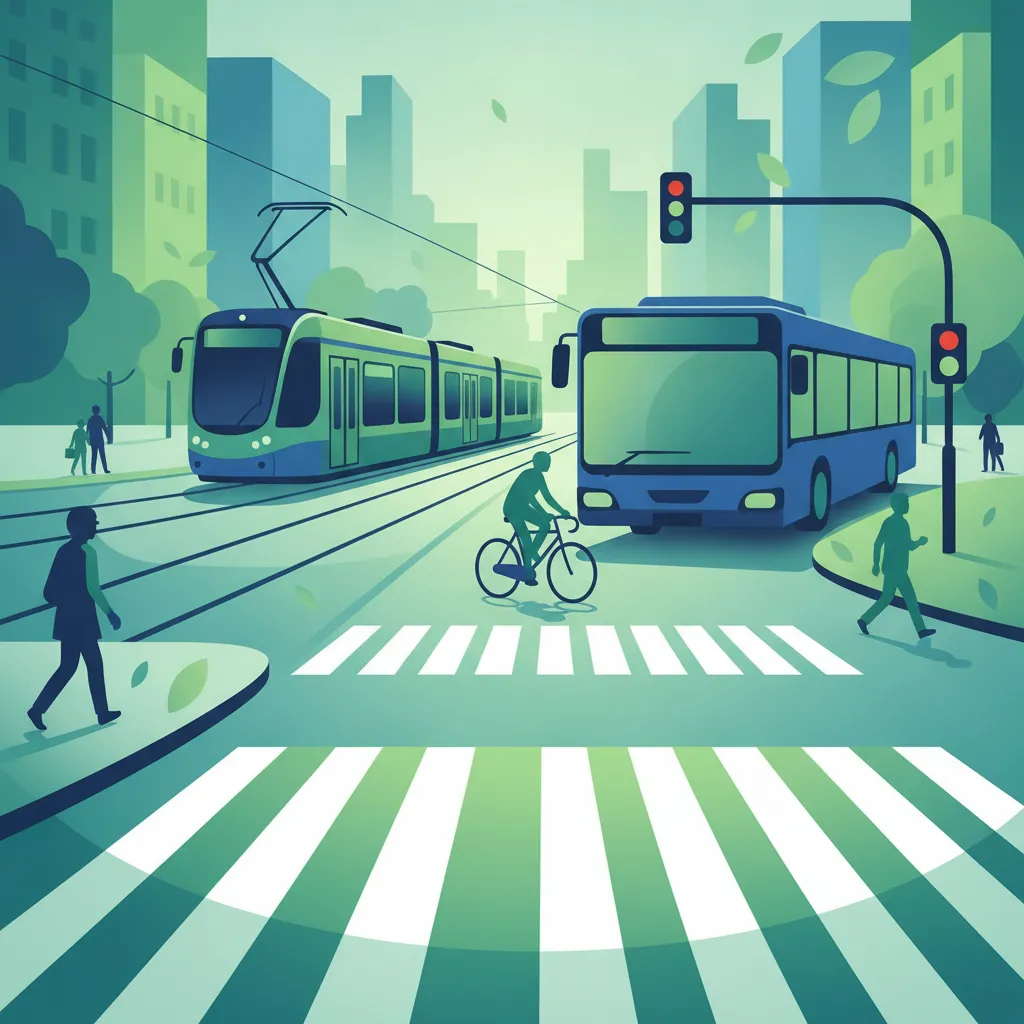
This lesson addresses the unique challenges and priority rules that apply when interacting with public transport and cyclists at intersections. It clarifies the specific right-of-way regulations for trams, which often have priority over other traffic, and the procedures for navigating around bus stops. The content also covers how to safely manage crossings with dedicated bicycle lanes, ensuring the protection of all road users.

Many Austrian cities use special signalling to give buses and trams priority at intersections. This lesson explains how to identify and understand these signals, which often use white bars or letters instead of standard colours. Learning to anticipate these signals allows for a smoother, more efficient driving style that takes full advantage of the public transport infrastructure.

Cities like Vienna and Graz have extensive tram networks that require special attention from bus drivers. This lesson covers the rules of priority concerning trams, the dangers of crossing tracks, and the specific hazards at shared stops where passengers cross traffic lanes. It emphasizes the need for extreme caution and clear communication with other road users in these complex environments.

Pedestrians have absolute priority on marked crossings in Austria, and a bus driver must always be ready to give way. This lesson covers the rules for approaching and stopping for pedestrians, and highlights the risk of pedestrians being hidden by the vehicle's structure. It also stresses the danger of passengers crossing the road after alighting from your bus.
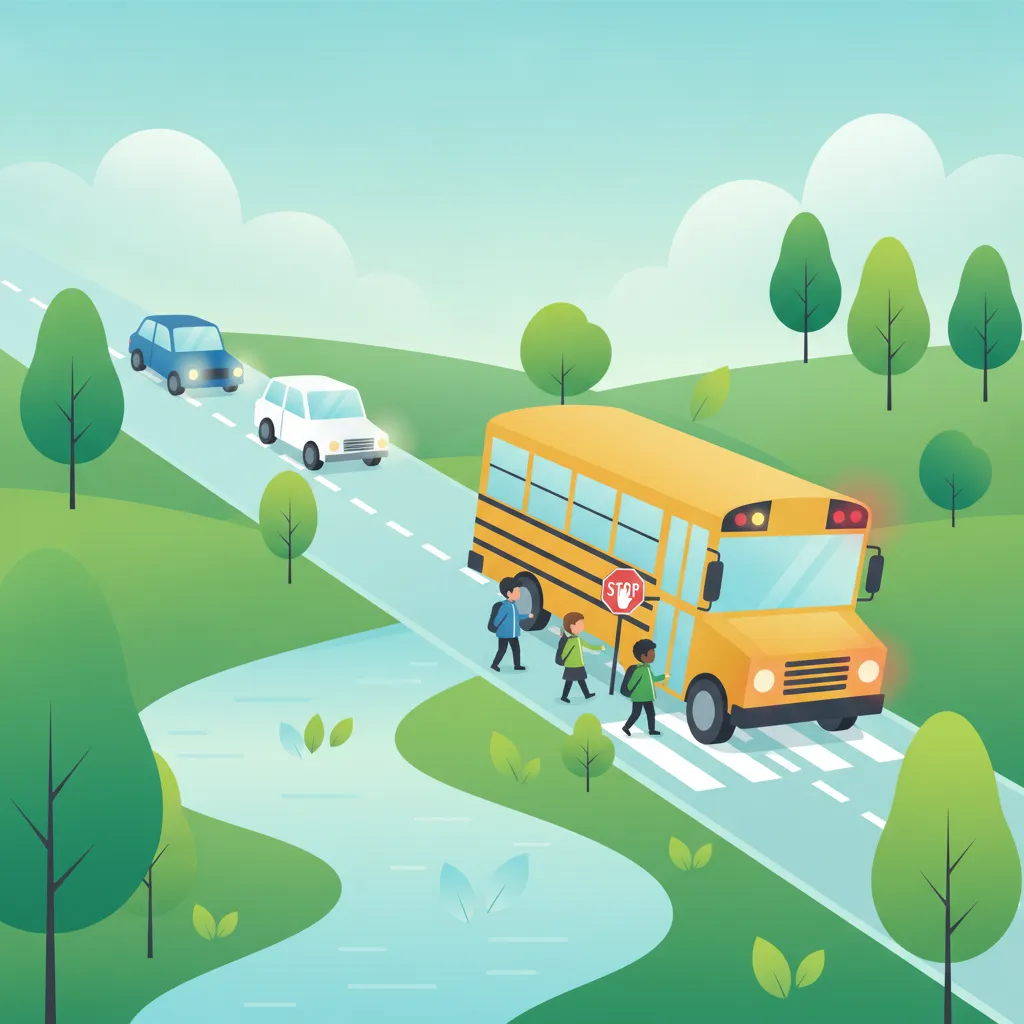
Transporting children carries the highest level of responsibility. This lesson covers the specific Austrian rules for school buses, including the use of warning signs and lights. It focuses on developing a mindset of extreme caution, anticipating that children may run into the road unexpectedly, and managing the chaotic traffic environment often found around schools during drop-off and pick-up times.

This lesson focuses on the specific regulations and safety protocols for driving near trams (Straßenbahn) in Austrian cities. It clarifies the priority rules, which almost always favor the tram, and explains how to safely share lanes or cross tram tracks. The content provides critical guidance on how to behave at tram stops, ensuring the safety of boarding and alighting passengers is always the primary concern.
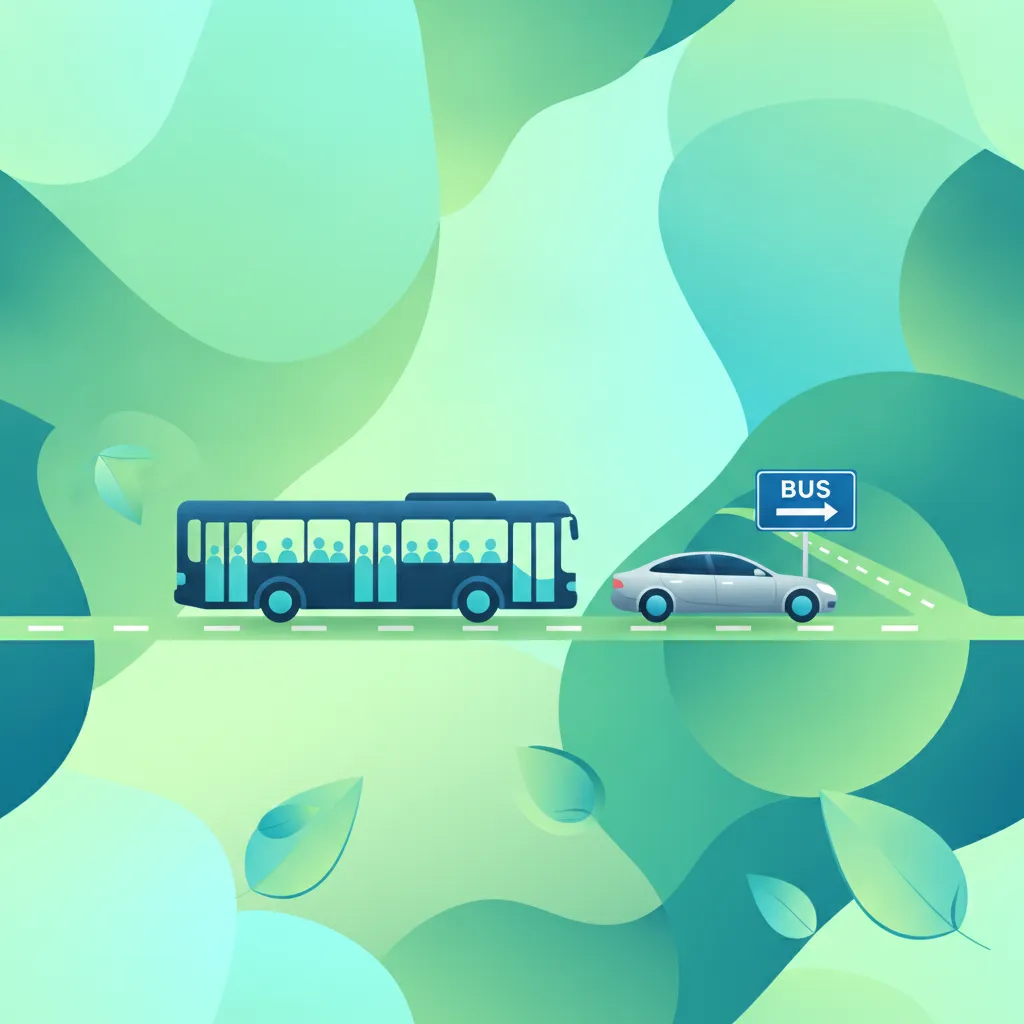
Bus lanes are a key tool for public transport efficiency, but they have specific rules. This lesson explains how to identify Austrian bus lanes through road markings and signs, including their hours of operation. It clarifies the regulations for entering or leaving a lane to make turns and identifies other authorized users, such as taxis or cyclists, where permitted.
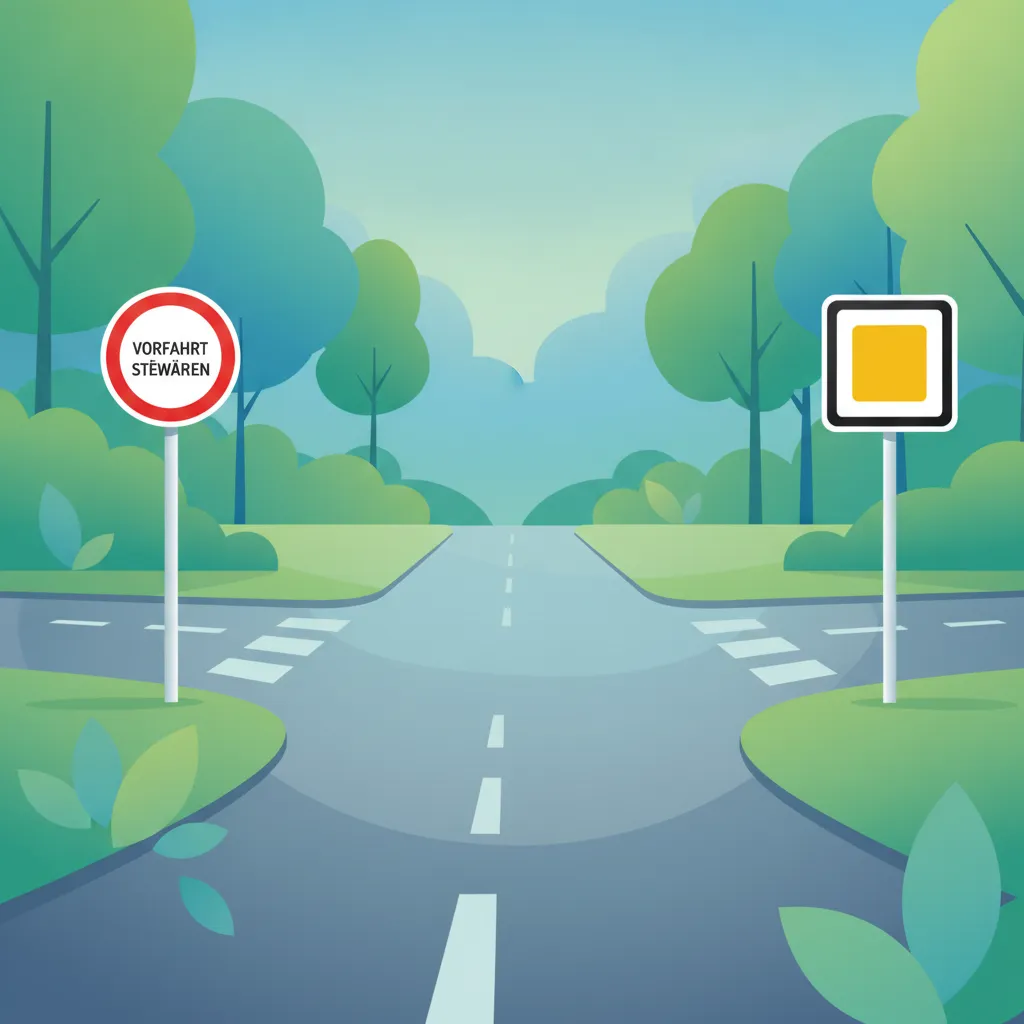
This lesson explains the fundamental concepts of priority that govern traffic at Austrian junctions. It differentiates between having priority ('Vorfahrt') and the duty to yield ('Nachrang'), detailing the signs that establish these rules. Correct application of these principles is critical for preventing collisions at intersections and roundabouts.
This lesson provides a comprehensive explanation of Austria's right-of-way laws, which are fundamental to intersection safety. It covers the meaning of different priority signs and clarifies the 'Rechts vor Links' (priority to the right) rule that applies at unmarked junctions. A clear understanding of these rules is essential to prevent conflicts and collisions in urban and rural settings.
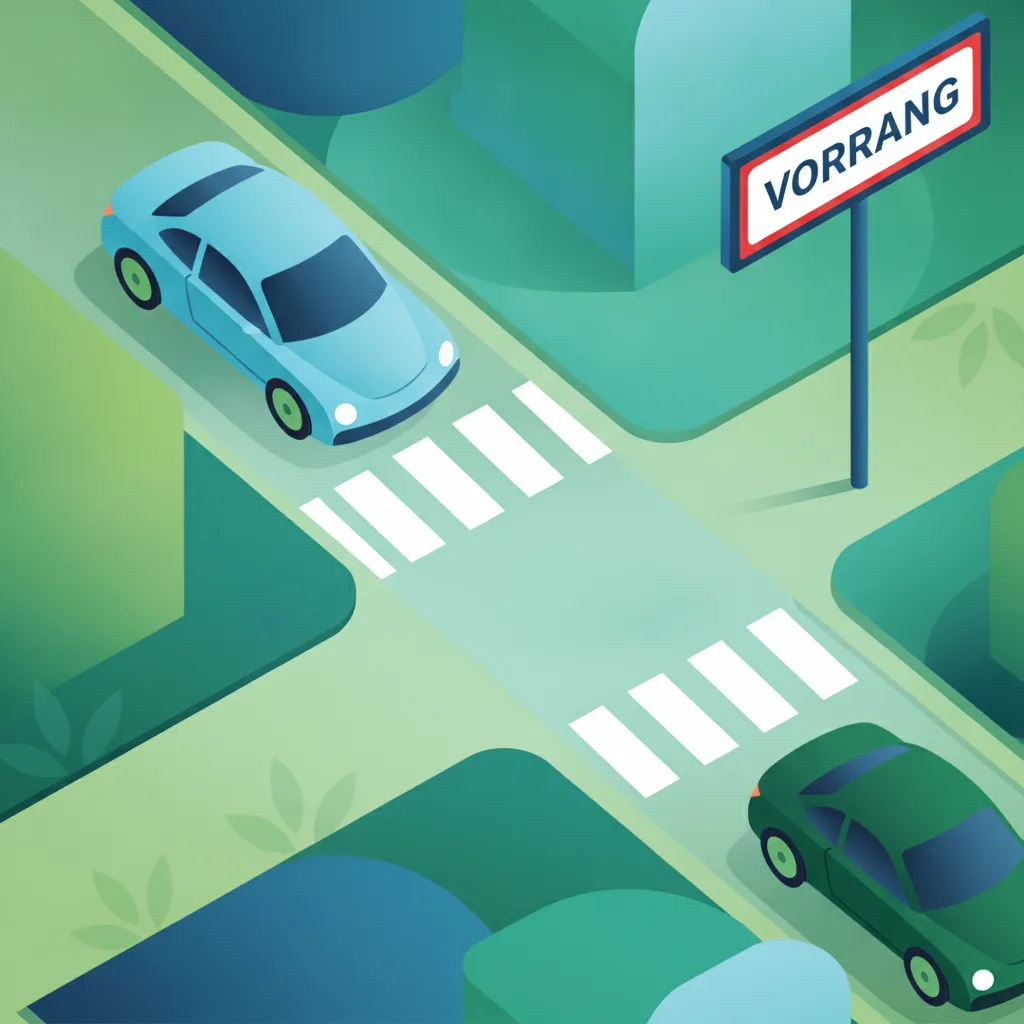
This lesson provides a detailed analysis of the core Austrian traffic rules that govern priority at junctions and in traffic. It focuses on the principles of Vorrang (having priority), Nachrang (yielding), and the Rechtsregel (default right-of-way from the right). Learners will understand the hierarchy of these rules and their application at various types of intersections, from unmarked junctions to those controlled by priority road signs, ensuring correct and safe decision-making.
Master defensive driving techniques for safely navigating areas with school zones, bus stops, and public transport. Focus on protecting children, pedestrians, and cyclists through heightened awareness and adherence to priority rules.
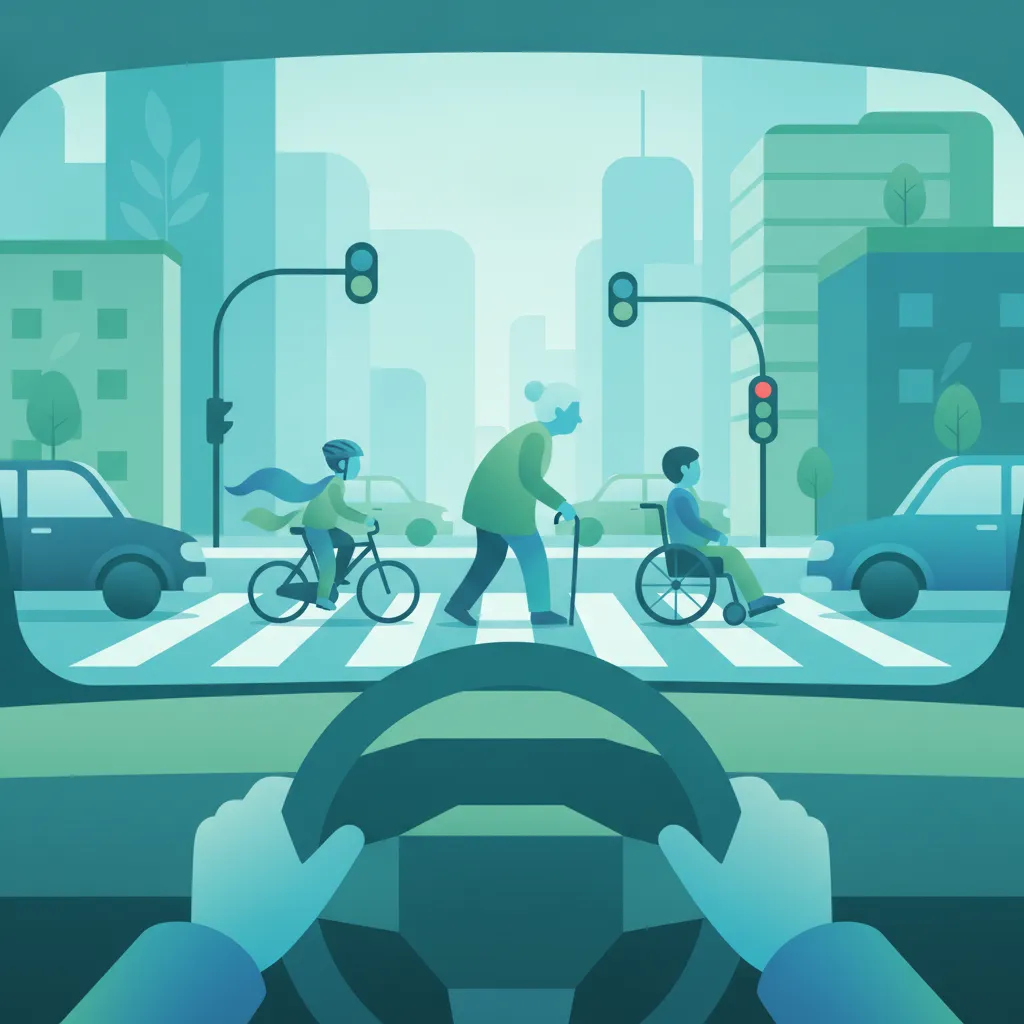
This lesson provides advanced strategies for proactively managing interactions with vulnerable road users to prevent conflicts before they arise. It teaches drivers to predict the likely behavior of pedestrians, cyclists, and e-scooter riders, especially at intersections and in congested areas. Key techniques include maintaining larger safety distances, covering the brake, and making eye contact to ensure mutual awareness and avoid accidents.
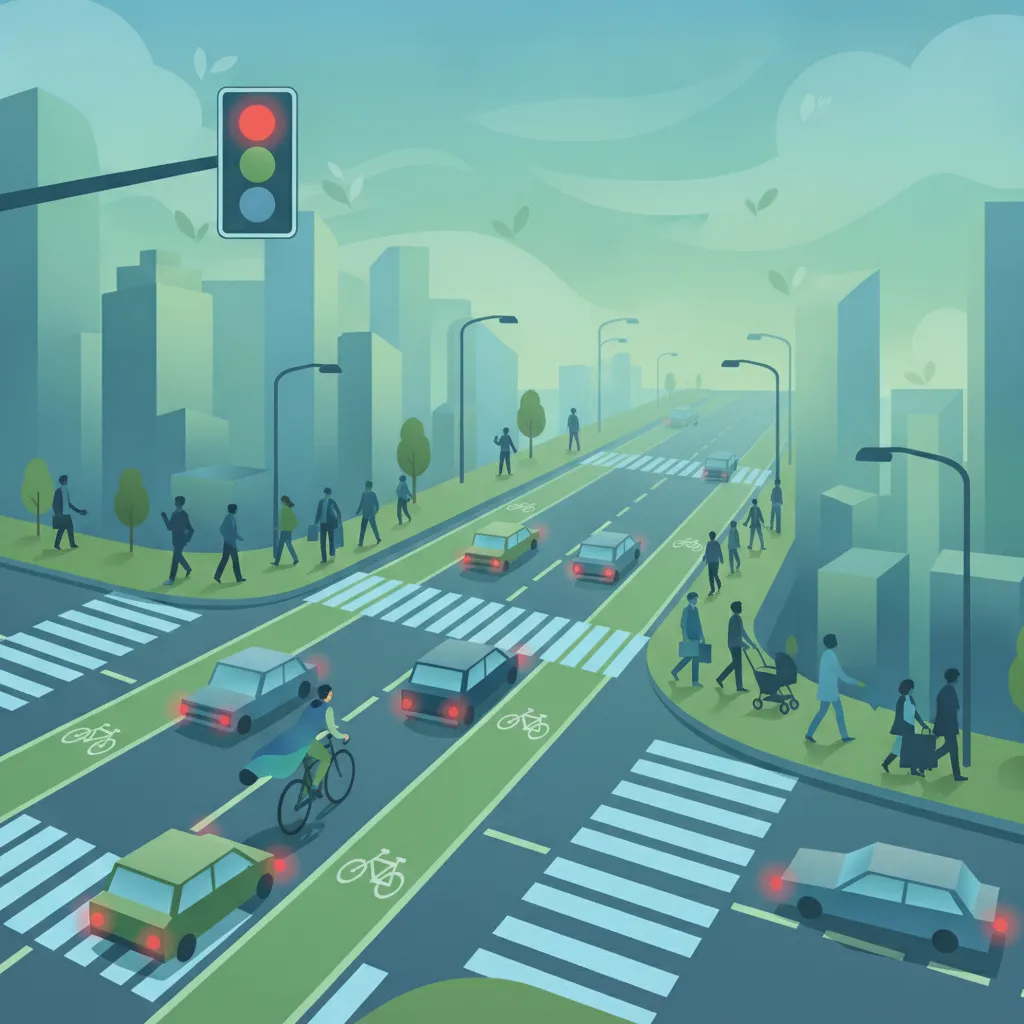
This lesson teaches drivers how to safely coexist with cyclists and pedestrians, who are prevalent in urban areas. It covers the rules for dedicated bike lanes (Radweg), the importance of yielding to pedestrians in designated zones, and the need for extra caution when turning or opening car doors. Maintaining safe overtaking distances and anticipating the movements of these vulnerable road users are key themes for preventing accidents.
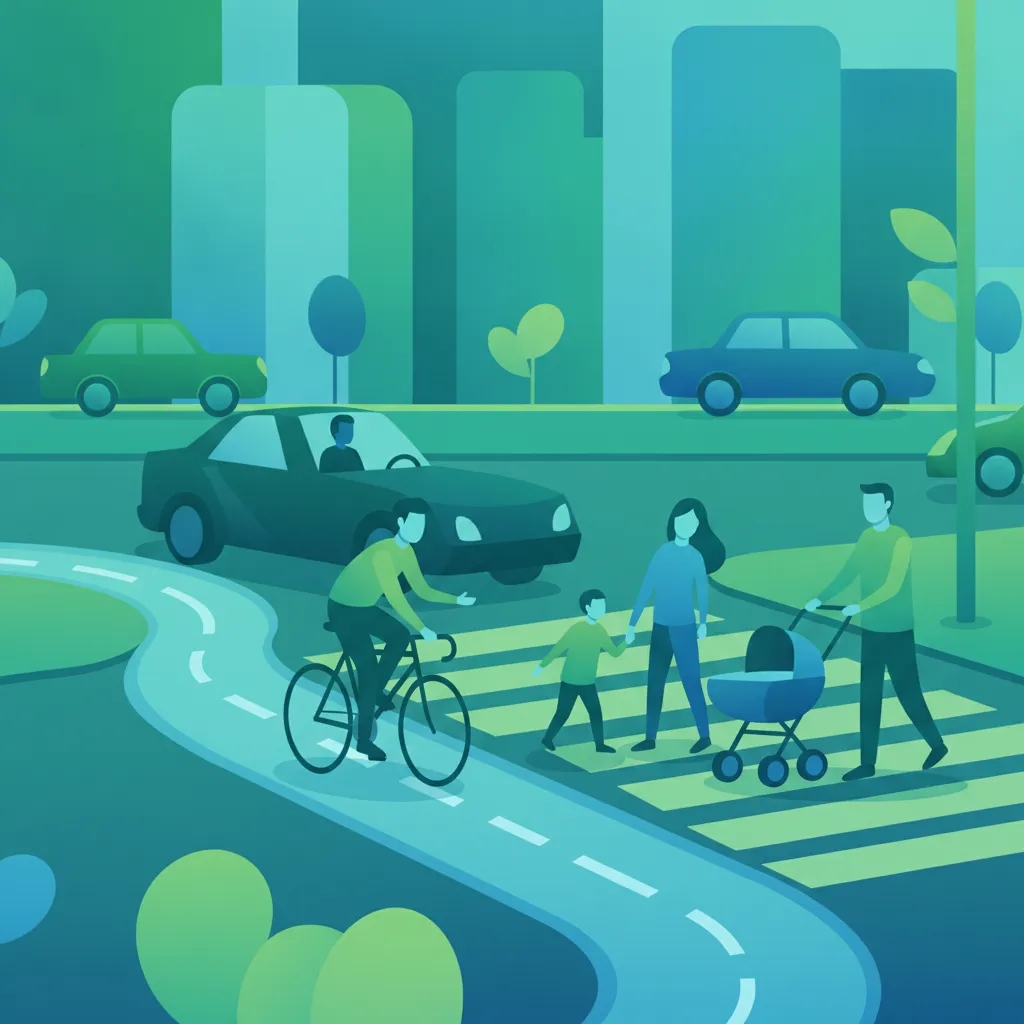
This lesson reinforces the critical importance of protecting vulnerable road users in dense urban settings. It teaches drivers to be hyper-aware of pedestrians and cyclists, especially near intersections and crosswalks. Key techniques include reducing speed, making eye contact to confirm intentions, and giving ample space.
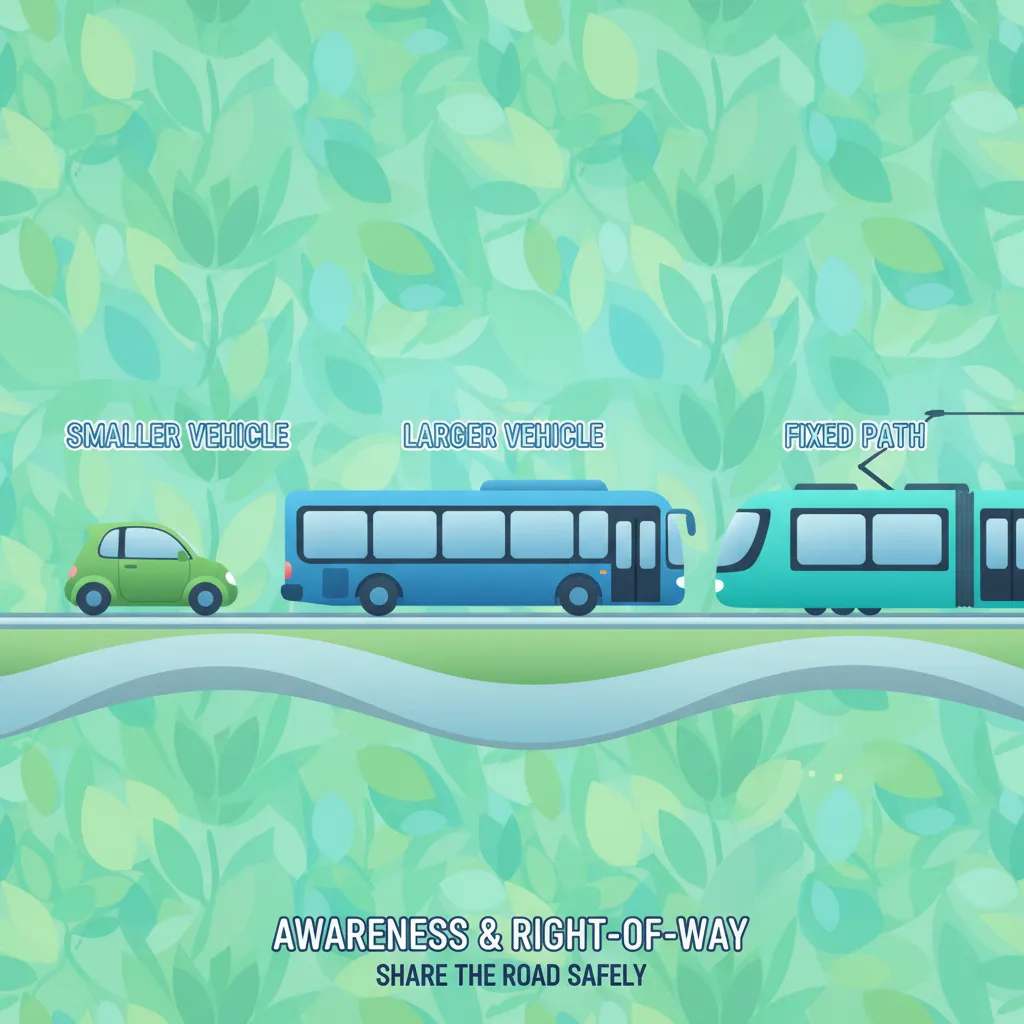
This lesson provides specific guidance for sharing the road with different types of vehicles in Austria. It covers the dangers of large vehicle blind spots, the rules for navigating near buses and dedicated tram tracks, and common conflict points at intersections. Understanding the behavior and limitations of other vehicles is key to safely navigating complex urban environments.
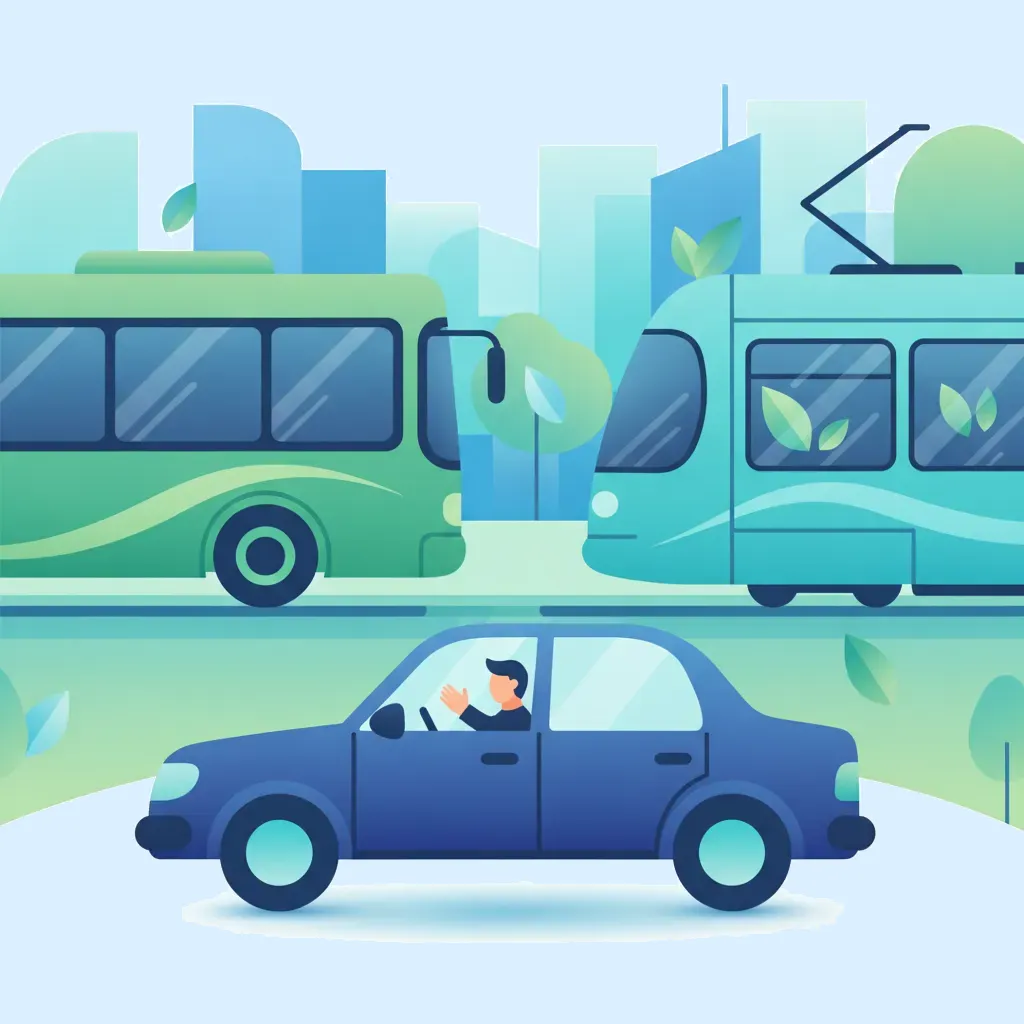
This lesson addresses the specific challenges of interacting with larger vehicles like buses and trams in an urban environment. It explains how to signal intentions clearly and predictably to avoid conflicts in shared spaces. Key topics include safely crossing tram tracks and maintaining awareness around public transport stops.
Pedestrians have absolute priority on marked crossings in Austria, and a bus driver must always be ready to give way. This lesson covers the rules for approaching and stopping for pedestrians, and highlights the risk of pedestrians being hidden by the vehicle's structure. It also stresses the danger of passengers crossing the road after alighting from your bus.
This lesson introduces the proactive mindset of defensive driving, which focuses on anticipating potential hazards rather than just reacting to them. It teaches techniques for systematic risk assessment, including scanning the road ahead, checking mirrors frequently, and being aware of the potential actions of other road users. By adopting these safe habits, drivers can create a buffer of safety around their vehicle and significantly reduce the likelihood of being involved in an accident.
Cyclists and e-scooter riders are highly vulnerable and can be hard to see from a high driving position. This lesson focuses on the critical danger points, such as making right turns across cycle lanes and checking blind spots before pulling away from a stop. It teaches the importance of giving ample space when overtaking and anticipating their movements in busy city traffic.
Driving a bus in a busy city like Vienna or Salzburg requires constant forward planning and anticipation. This lesson teaches techniques for maintaining adequate space around the vehicle, positioning correctly for upcoming junctions, and reading the flow of traffic. Adopting a defensive mindset is key to navigating complex urban environments without incident.

Driving in tourist hotspots in cities like Salzburg or alpine resorts requires extra patience and vigilance. This lesson explores common unpredictable behaviours, such as pedestrians stepping into the road to take photos or groups of tourists being unaware of traffic. It teaches drivers to slow down, be prepared for anything, and use communication tools like the horn sparingly and appropriately.
Find clear answers to common questions learners have about Bus Stops, School Zones, and Public Transport Priorities. Learn how the lesson is structured, which driving theory objectives it supports, and how it fits into the overall learning path of units and curriculum progression in Austria. These explanations help you understand key concepts, lesson flow, and exam focused study goals.
You are not required to stop if the bus is at the stop, but you must pass with extreme caution. If a bus signals its intention to pull out, you must yield only if you can do so without endangering yourself or following traffic.
In designated school zones, you must drive at a speed that allows for an immediate stop. Always follow posted speed limits and be prepared for children crossing, even if no crossing is marked.
In Austria, if a school bus has its warning lights active while boarding or alighting children, you must exercise heightened caution. Passing such a bus should be done at a reduced speed and only when it is safe to do so.
Exam questions often present visual scenarios showing a bus pulling away or a school sign. You must identify the correct defensive action, such as adjusting speed or checking blind spots for pedestrians.
Refine your study plan by searching for specific Austrian driving theory practice sets. Pinpoint questions related to particular road rules, signs, or challenge levels, and begin practicing immediately to reinforce your knowledge and excel in your official exam with confidence. Get started with focused revision today.