
This lesson explores the specific characteristics and hazards of driving on rural roads (Landstraßen) in Austria. You will learn how to adapt your driving style to narrow lanes, poor surfaces, and the unique challenges posed by agricultural vehicles and livestock. Mastering these skills is essential for safely navigating the diverse Austrian road network during your Category B practical and theory exams.
Lesson content overview
Driving on rural roads, known as Landstraßen in Austria, presents a unique set of challenges compared to urban or motorway driving. These roads often feature varied geometry, diverse surface conditions, and unexpected hazards that demand heightened awareness and adaptable driving skills. This lesson, part of the Austrian Driving License B Theory Course, will equip you with the knowledge and practices necessary to navigate these routes safely and confidently.
Understanding the specific characteristics of Landstraßen is crucial for accident prevention and adherence to Austrian traffic regulations. By mastering proactive speed management, careful observation, and defensive maneuvering, drivers can effectively mitigate the risks associated with blind curves, narrow lanes, and the presence of agricultural vehicles or livestock.
Austrian Landstraßen form an extensive network connecting towns, villages, and rural areas. Unlike controlled motorways or well-regulated city streets, these roads are dynamic environments with less predictable conditions.
Designated rural roads in Austria, often connecting towns and villages, typically with a default speed limit of 100 km/h for passenger cars unless otherwise posted. They can vary significantly in width, surface quality, and traffic composition.
Landstraßen are integral to Austria's infrastructure, providing vital links across diverse landscapes, from rolling hills to mountainous regions. While they often permit higher speeds than urban roads, the environmental factors and road design require a more cautious approach from drivers. These roads are not just conduits for travel; they are shared spaces where local life, agriculture, and nature intersect with vehicular traffic.
The distinct nature of Landstraßen stems from several key physical and environmental attributes. Recognizing these characteristics is the first step toward safe driving.
Rural roads in Austria can vary dramatically in their physical layout. Some sections may be wide and relatively straight, while others are narrow, winding, and present significant challenges. Lane widths can be inconsistent, and shoulders (the area immediately adjacent to the main driving lane) may be very narrow or non-existent. This lack of defined space can make passing other vehicles, or even simply meeting oncoming traffic, significantly more difficult. Gradients, or changes in elevation, are also common, particularly in hilly or mountainous regions, affecting vehicle performance and visibility.
The quality and type of road surface on Landstraßen can change frequently. You might encounter stretches of well-maintained asphalt, followed by sections with rougher pavement, potholes, or even unpaved gravel. Wet leaves, dirt, or debris from agricultural activities can also accumulate on the road, significantly reducing tire grip. These varying conditions directly impact braking distance, vehicle stability, and overall traction, demanding constant vigilance and speed adaptation.
Always assume rural road surfaces may have reduced grip. Be especially cautious after rain, during autumn with falling leaves, or near agricultural fields where dirt might be present on the road.
A road curve where the driver's line of sight is severely limited by terrain, vegetation, buildings, or other obstructions, preventing them from seeing oncoming traffic or hazards until they are very close.
Blind curves are a prevalent and significant hazard on rural roads. Due to the natural topography, dense vegetation, or structures, drivers may not be able to see around a bend until they are well into the curve. This dramatically reduces reaction time for unexpected obstacles, oncoming traffic, or slow-moving vehicles. Similarly, hidden entrances to farms, houses, or forest paths can lead to vehicles or pedestrians suddenly appearing on the road with little warning. Drivers must always assume something could be hidden around the bend or behind a visual obstruction.
Mastering specific driving techniques is paramount for safe navigation on rural roads. These practices focus on anticipation, adaptability, and proactive risk management.
While rural roads often have a default speed limit of 100 km/h for passenger cars, this is a maximum limit under ideal conditions, not a target. On Landstraßen, it is critical to adjust your speed not just to the posted limit, but to the actual prevailing conditions. Factors such as road geometry (tight bends, narrowness), surface quality (wet, gravel, uneven), visibility (fog, heavy rain, dusk, night), and potential hazards (agricultural vehicles, livestock, hidden entrances) all necessitate reducing your speed.
A lower speed provides more time to react, reduces stopping distance, and allows for better vehicle control, especially on unfamiliar or challenging stretches. It's a fundamental principle of defensive driving: always be able to stop within the distance you can see clearly ahead.
On rural roads, it is prudent to increase your following distance beyond what you might typically maintain in urban traffic. The varied road surfaces, potential for sudden stops (e.g., for an animal), and the presence of larger, slower vehicles mean you need more space to react and brake safely. A general rule of thumb is to maintain a distance of at least two seconds in dry conditions, and considerably more (three to four seconds or more) in wet, icy, or otherwise adverse conditions. This extended distance is crucial for compensating for longer braking distances on potentially slippery or uneven surfaces.
To estimate a safe following distance, choose a fixed point ahead (like a road sign). When the vehicle in front passes that point, start counting "one thousand one, one thousand two." If you reach the point before finishing your count, you are too close.
Approaching and navigating blind curves requires a specific strategy:
Reduce Speed Before Entering: Significantly decrease your speed before you even enter the curve. This gives you more time to react to anything hidden.
Position for Visibility: On a right-hand curve, position your vehicle slightly to the left within your lane (without crossing the center line) to maximize your view into the curve. On a left-hand curve, stay slightly to the right of your lane.
Scan Actively: Use your peripheral vision and constantly scan the road and surroundings for any clues of what might be ahead – light reflections, vehicle sounds, or even dust.
Be Prepared to Stop: Keep your foot lightly over the brake pedal (covering the brake) so you can react immediately if an obstacle or oncoming vehicle suddenly appears.
Never Overtake on a Blind Curve: Overtaking is strictly prohibited if visibility is insufficient to complete the maneuver safely.
A widened section on a narrow, often single-lane, rural road specifically designed for one vehicle to pull aside temporarily, allowing an oncoming vehicle or a vehicle wishing to overtake to pass safely.
On very narrow rural roads, particularly those that are effectively single-lane for two-way traffic, designated passing places are crucial for maintaining traffic flow and safety. These are usually wider sections of the road or small lay-bys. When you encounter oncoming traffic on such a road, assess who can more easily or safely pull into a passing place. The driver with the closer or more accessible passing place, or the driver who needs to traverse a more difficult section, should typically yield.
Always pull fully into the passing place and wait for the other vehicle to pass. Never stop or park on the main, narrow lane, even briefly, if a passing place is available.
Rural roads are often shared with agricultural vehicles (such as tractors, harvesters, and trailers) and livestock (cattle, sheep, horses). These present unique challenges:
Effective use of vehicle lighting is vital on rural roads, especially during dawn, dusk, night, or adverse weather conditions. Landstraßen are often unlit, making your vehicle's lights your primary means of seeing and being seen.
Misusing high beams or fog lights can be dangerous. High beams can blind other drivers, and fog lights used in clear conditions can cause glare and are a legal violation.
Adhering to specific regulations is non-negotiable for safe and legal driving on Austrian Landstraßen.
For passenger cars (Category B vehicles), the default maximum speed limit on Landstraßen in Austria is 100 km/h, unless specific signage indicates a different limit. However, as discussed, this is a legal maximum, and drivers are always obligated to adjust their speed to what is safe given the prevailing road, traffic, and weather conditions. Driving at 100 km/h on a wet, winding, or visibility-restricted rural road would be both unsafe and a violation of the general duty of care in traffic, potentially leading to fines or worse.
The Austrian Traffic Regulations (StVO) strictly prohibit overtaking in situations where visibility is insufficient to complete the maneuver safely. This explicitly includes:
The responsibility for safe overtaking lies entirely with the overtaking driver. Furthermore, drivers are required to yield to agricultural vehicles when they signal an intention to turn or manoeuvre on narrow roads, acknowledging their size and limited agility.
Where specific passing places (Überholstellen) are provided on narrow rural roads, their use is mandatory when meeting oncoming traffic. Failure to pull into a passing place when required can create dangerous obstructions and force other drivers into unsafe maneuvers, potentially leading to accidents. These spaces are specifically designed to facilitate the safe flow of two-way traffic on otherwise single-lane sections.
Austrian traffic law mandates the appropriate use of vehicle lighting. As detailed above:
Many accidents on rural roads stem from predictable errors. By understanding these common mistakes, you can actively work to avoid them.
One of the most frequent violations on Landstraßen is driving too fast for the conditions. Even if you are below the legal speed limit, if your speed does not allow you to stop within the visible distance, or if it compromises your control on winding or slippery roads, it is unsafe. Always assess the road ahead, the weather, and your vehicle's capabilities.
Attempting to overtake on a blind curve, or entering a blind curve at an excessive speed, are extremely dangerous. The consequences can be catastrophic head-on collisions. Always assume there is something or someone around the bend and adjust your speed accordingly. Patience is a virtue on rural roads; wait for clear, straight sections with ample visibility before considering an overtaking maneuver.
A common error is to assume flexibility regarding passing places. Drivers sometimes continue on the main lane, forcing the oncoming vehicle to stop or reverse, or they may even stop on the main lane instead of fully pulling into the designated area. This creates unnecessary obstruction and hazard. Always utilize passing places fully and responsibly to ensure smooth traffic flow.
Failing to give ample space to agricultural vehicles, attempting to overtake them impatiently, or underestimating their width and turning circle are hazardous. Remember that these vehicles have limited maneuverability and can make unexpected wide turns or slow down abruptly. Yielding when necessary and maintaining a significant distance are crucial.
Using high beams when approaching or following other vehicles, or activating fog lights in clear weather, are common mistakes. These actions cause glare for other road users, reduce their visibility, and can lead to dangerous situations. Always ensure your lighting setup is appropriate for the current visibility conditions.
The versatility of rural roads means conditions can change rapidly, necessitating constant adaptation from the driver.
Weather conditions profoundly impact rural road driving.
Driving on unlit rural roads at night or during dusk/dawn requires extra vigilance.
Your vehicle's characteristics also play a role:
Rural roads are often used by pedestrians, cyclists, and motorcyclists who are particularly vulnerable due to the lack of dedicated paths or lighting.
Understanding the fundamental principles underpinning safe driving practices can reinforce your commitment to responsible behavior.
The kinetic energy of a moving vehicle increases with the square of its speed. This means that even a small increase in speed leads to a disproportionately larger increase in stopping distance. For example, doubling your speed from 50 km/h to 100 km/h doesn't just double your stopping distance; it quadruples it. Coupled with an average human reaction time of about 1.5 seconds, maintaining appropriate speed and following distance directly translates to having sufficient time and space to react and avoid an accident. On uneven or slippery rural surfaces, these margins become even more critical.
Proactive observation means constantly scanning the road ahead, to the sides, and in your mirrors for potential hazards. On rural roads, this involves looking for:
By continuously gathering information, you can anticipate potential dangers and adjust your driving plan well in advance, rather than reacting suddenly when a hazard is already upon you.
Defensive driving on rural roads is about constantly asking "What if?" and preparing for the worst-case scenario.
Austrian Landstraßen require adaptive driving that goes beyond simply following posted speed limits, as these roads feature varied geometry, inconsistent surfaces, and hidden hazards like blind curves and farm entrances. Safe navigation depends on proactive speed management, maintaining extended following distances, and using designated passing places fully when encountering oncoming traffic on narrow sections. Drivers must also master appropriate lighting use—dipped beam as the default for reduced visibility, fog lights only when conditions severely limit sight distance. Common errors include driving too fast for conditions, overtaking in visibility-restricted areas, and misusing vehicle lights, all of which significantly increase accident risk on rural roads.
A short set of high-value points that capture the most important learning from this lesson.
The 100 km/h speed limit on Landstraßen is a maximum under ideal conditions, not a target—always adjust to actual road surface, weather, and visibility
Blind curves require reducing speed before entering, proper lane positioning to maximize visibility, and never attempting to overtake
Passing places (Überholstellen) on narrow rural roads must be used fully when meeting oncoming traffic—this is mandatory under Austrian traffic law
Agricultural vehicles require significantly increased following distances and overtaking only on straight sections with clear visibility
Lighting must match conditions: dipped beam as standard, fog lights only when visibility drops below 100 metres (front) or 50 metres (rear)
Explore all units and lessons included in this driving theory course.
Stopping distance increases with the square of speed—doubling from 50 to 100 km/h quadruples stopping distance
On a right-hand blind curve, position slightly left in your lane; on a left-hand curve, stay slightly right to maximize sight distance
Always be able to stop within the distance you can see clearly ahead on rural roads
Use the two-second rule for following distance in dry conditions, extending to 3-4 seconds in wet or slippery conditions
High beams must be dipped immediately when approaching oncoming traffic or following another vehicle within 150 metres
Driving at the posted speed limit regardless of actual road conditions, especially on wet or winding sections
Attempting to overtake on blind curves or hill crests where visibility is insufficient—this is prohibited under StVO
Not pulling fully into passing places or failing to use them when meeting oncoming traffic on narrow roads
Using high beams when approaching or following other vehicles, or activating fog lights in clear weather conditions
Underestimating the width and turning radius of agricultural vehicles and failing to maintain safe following distances
Lesson content overview
A short set of high-value points that capture the most important learning from this lesson.
The 100 km/h speed limit on Landstraßen is a maximum under ideal conditions, not a target—always adjust to actual road surface, weather, and visibility
Blind curves require reducing speed before entering, proper lane positioning to maximize visibility, and never attempting to overtake
Passing places (Überholstellen) on narrow rural roads must be used fully when meeting oncoming traffic—this is mandatory under Austrian traffic law
Agricultural vehicles require significantly increased following distances and overtaking only on straight sections with clear visibility
Lighting must match conditions: dipped beam as standard, fog lights only when visibility drops below 100 metres (front) or 50 metres (rear)
Explore all units and lessons included in this driving theory course.
Stopping distance increases with the square of speed—doubling from 50 to 100 km/h quadruples stopping distance
On a right-hand blind curve, position slightly left in your lane; on a left-hand curve, stay slightly right to maximize sight distance
Always be able to stop within the distance you can see clearly ahead on rural roads
Use the two-second rule for following distance in dry conditions, extending to 3-4 seconds in wet or slippery conditions
High beams must be dipped immediately when approaching oncoming traffic or following another vehicle within 150 metres
Driving at the posted speed limit regardless of actual road conditions, especially on wet or winding sections
Attempting to overtake on blind curves or hill crests where visibility is insufficient—this is prohibited under StVO
Not pulling fully into passing places or failing to use them when meeting oncoming traffic on narrow roads
Using high beams when approaching or following other vehicles, or activating fog lights in clear weather conditions
Underestimating the width and turning radius of agricultural vehicles and failing to maintain safe following distances
Explore search topics learners often look for when studying Rural Road Features and Safe Driving Practices. These topics reflect common questions about road rules, driving situations, safety guidance, and lesson level theory preparation for learners in Austria.
Browse additional driving theory lessons that cover connected traffic rules, road signs, and common driving situations related to this topic. Improve your understanding of how different rules interact across everyday traffic scenarios.
Explore detailed explanations and scenarios for Austrian rural road driving, focusing on blind curves, agricultural vehicles, and varying road conditions. Understand how to apply core traffic rules in challenging Landstraßen situations.

Rural Austrian roads present unique challenges, including lack of markings, tight spaces, and slow-moving agricultural vehicles. This lesson teaches how to read the road ahead, anticipate hazards around blind bends, and use passing places effectively when meeting other large vehicles. It emphasizes adjusting speed to suit the limited visibility and variable road conditions.

This lesson highlights the specific hazards of riding on countryside roads in Austria. It teaches riders to be vigilant for wildlife crossing signs, especially at dawn and dusk, and how to safely approach and overtake slow-moving agricultural machinery. Awareness of potential surface hazards like mud, gravel, or manure from farm access points is also crucial for maintaining traction.
This lesson provides advice for navigating popular scenic routes, which often feature heavy traffic, cyclists, and distracted drivers. It emphasizes maintaining focus on the road despite beautiful scenery and anticipating unpredictable actions from other tourists who may stop suddenly. Adopting a patient and defensive mindset is key to safely enjoying these remarkable roads.

This lesson addresses advanced manoeuvres that require precise timing and judgment, such as merging onto a motorway from an acceleration lane. It explains the importance of matching the speed of the traffic flow and finding a safe gap before moving over. The content also covers procedures for navigating lane drops and the 'zipper merge' (Reißverschlusssystem) principle in congested situations, promoting efficient and cooperative driving.

This lesson focuses on the specialized skills required for navigating alpine roads safely. It covers techniques for managing steep gradients, such as using a lower gear for engine braking on descents, and how to safely negotiate hairpin turns. The content stresses the importance of being prepared for rapid weather changes and understanding the effects of altitude on both the driver and the vehicle's performance.
This lesson addresses the challenge of manoeuvring a large vehicle through streets not designed for its size. It covers how to assess vertical and horizontal clearances, plan the vehicle's path through tight turns, and heed all restrictive signage. Careful planning and slow, precise control are essential for success.
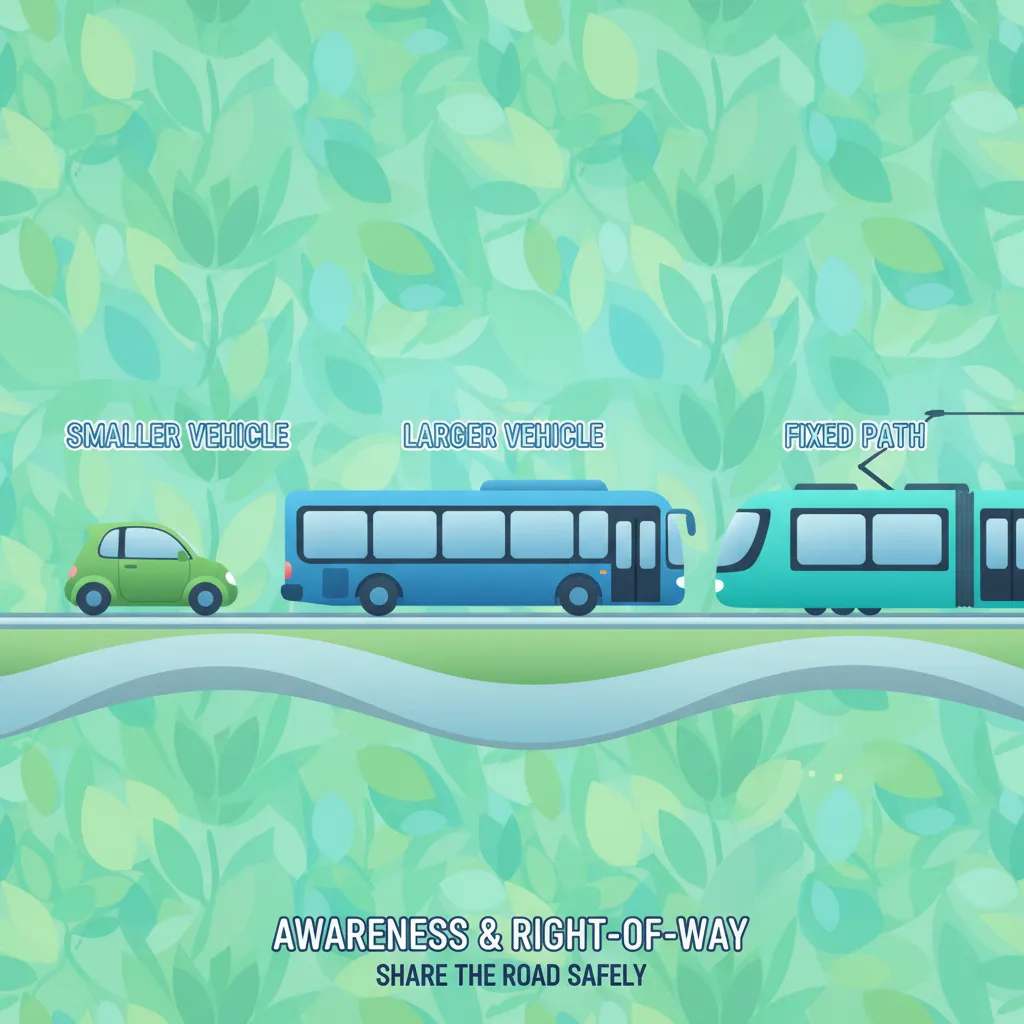
This lesson provides specific guidance for sharing the road with different types of vehicles in Austria. It covers the dangers of large vehicle blind spots, the rules for navigating near buses and dedicated tram tracks, and common conflict points at intersections. Understanding the behavior and limitations of other vehicles is key to safely navigating complex urban environments.
This lesson covers the specific regulations associated with special Austrian road signs and areas. It details the rules for 'Schutzweg' (protected pedestrian crossings), 'Kreisverkehr' (roundabouts), and the distinction between 'Fahrbahn' (road) and 'Fahrstreifen' (lane). Understanding these specific contexts is essential for safe navigation in urban and suburban environments.

This lesson explores the distinct challenges of urban driving, focusing on managing the vehicle in dense, slow-moving, or stop-and-go traffic. It covers strategies for effective lane management, anticipating traffic signal changes, and navigating common city road features like one-way streets and traffic calming measures. Understanding these dynamics helps reduce stress and improve safety in congested environments.

Many Austrian towns and city centres feature narrow roads not designed for large vehicles. This lesson provides strategies for assessing tight spaces, positioning the vehicle to maximize clearance, and navigating complex, non-standard junctions. It emphasizes the importance of slow speeds, constant observation, and understanding the vehicle's swept path to avoid contact with buildings, street furniture, and other vehicles.
Learn about crucial driving techniques for Austrian rural roads, focusing on adapting speed to conditions, proper use of headlights and fog lights, and managing visibility challenges like night driving and fog for your theory exam.

This lesson addresses the critical skill of adapting driving behavior to conditions of reduced visibility, such as fog, heavy rain, snow, or darkness. It explains the principle of driving only as fast as you can see, ensuring your stopping distance is within your visibility range. The content covers the correct use of headlights and fog lights and emphasizes why speed reduction is essential for maintaining safety when your ability to perceive hazards is compromised.

This lesson equips drivers with the knowledge to handle a range of adverse weather conditions safely. It explains the risks of hydroplaning in heavy rain, reduced visibility in fog, and loss of traction on snow and ice, including the hidden danger of black ice. The content provides practical strategies for speed adaptation, correct use of lighting, and maintaining vehicle control, as well as specific considerations for night driving.

This lesson covers the proper and legal use of a vehicle's entire lighting system to see and be seen. It explains the regulations for using headlights, including daytime running lights, and the specific conditions under which fog lights and high beams are permitted. Correct use of turn signals and brake lights is also emphasized as essential for communicating intentions to other drivers and ensuring safety in all visibility conditions.

This lesson focuses on strategies for riding safely in conditions of poor visibility, such as rain, fog, and low sun glare. It explains how to use lights effectively, increase following distances, and moderate speed to maintain control. The content also addresses braking techniques on wet surfaces to prevent skidding and hydroplaning.

This lesson covers the various lighting and reflector systems required on heavy goods vehicles in Austria. It explains the function and legal requirements for headlights, taillights, brake lights, indicators, and reflective markings. Ensuring all lighting systems are operational is essential for visibility and communicating intentions to other road users.

This lesson focuses on adapting driving techniques for hazardous weather conditions. It details the legal requirements for winter tires and the proper use of snow chains in Austria. Additionally, it covers safe driving practices in low visibility conditions like fog, such as reducing speed and using appropriate lights.
Rural Austrian roads present unique challenges, including lack of markings, tight spaces, and slow-moving agricultural vehicles. This lesson teaches how to read the road ahead, anticipate hazards around blind bends, and use passing places effectively when meeting other large vehicles. It emphasizes adjusting speed to suit the limited visibility and variable road conditions.

This lesson details the mandatory lighting and reflector requirements for Category AM vehicles in Austria. It explains the functions of different light settings, including daytime running lights, and their importance for being seen. Additionally, it covers the legal standards for protective helmets, a critical component of rider safety.

This lesson covers the foundational principles of making a motorcyclist conspicuous to other road users. It examines the role of brightly colored and reflective clothing, effective helmet colors, and the mandatory use of headlights during the day. Understanding how to create a strong visual presence in traffic is a key component of proactive accident prevention for any rider.

This lesson examines how adverse weather directly affects motorcycle safety. It explains how water on the road reduces tyre grip, increasing braking distances and the risk of aquaplaning. Strategies for riding in fog, dealing with reduced visibility from road spray, and identifying potential ice patches are covered to help riders manage weather-related risks.
Find clear answers to common questions learners have about Rural Road Features and Safe Driving Practices. Learn how the lesson is structured, which driving theory objectives it supports, and how it fits into the overall learning path of units and curriculum progression in Austria. These explanations help you understand key concepts, lesson flow, and exam focused study goals.
Unless otherwise indicated by traffic signs, the general speed limit on rural roads in Austria for passenger cars (Category B) is 100 km/h. However, you must always adjust your speed based on road conditions, visibility, and traffic density.
Reduce your speed early and look for a wide enough section of the road to pass safely. If the road is too narrow, you may need to stop and wait. Always be patient and ensure there is sufficient lateral distance before proceeding.
Yes, look for warning signs indicating upcoming curves, narrow roads, or potential animal crossings. These signs are critical in rural areas because hazards are often hidden by the landscape.
Rural roads often have fewer marked crossings and more natural obstructions like trees or hills that hide oncoming traffic or pedestrians. You must use scanning techniques to proactively look for hazards well in advance.
Refine your study plan by searching for specific Austrian driving theory practice sets. Pinpoint questions related to particular road rules, signs, or challenge levels, and begin practicing immediately to reinforce your knowledge and excel in your official exam with confidence. Get started with focused revision today.