
Prepare for the Belgian driving theory exam by practicing questions on reaction distance, braking distance, and total stopping distance. This set delves into the official Belgian formulas and rules, exploring how speed, road conditions, and driver reaction time impact stopping capabilities. Strengthen your knowledge of this crucial safety topic for your official test.
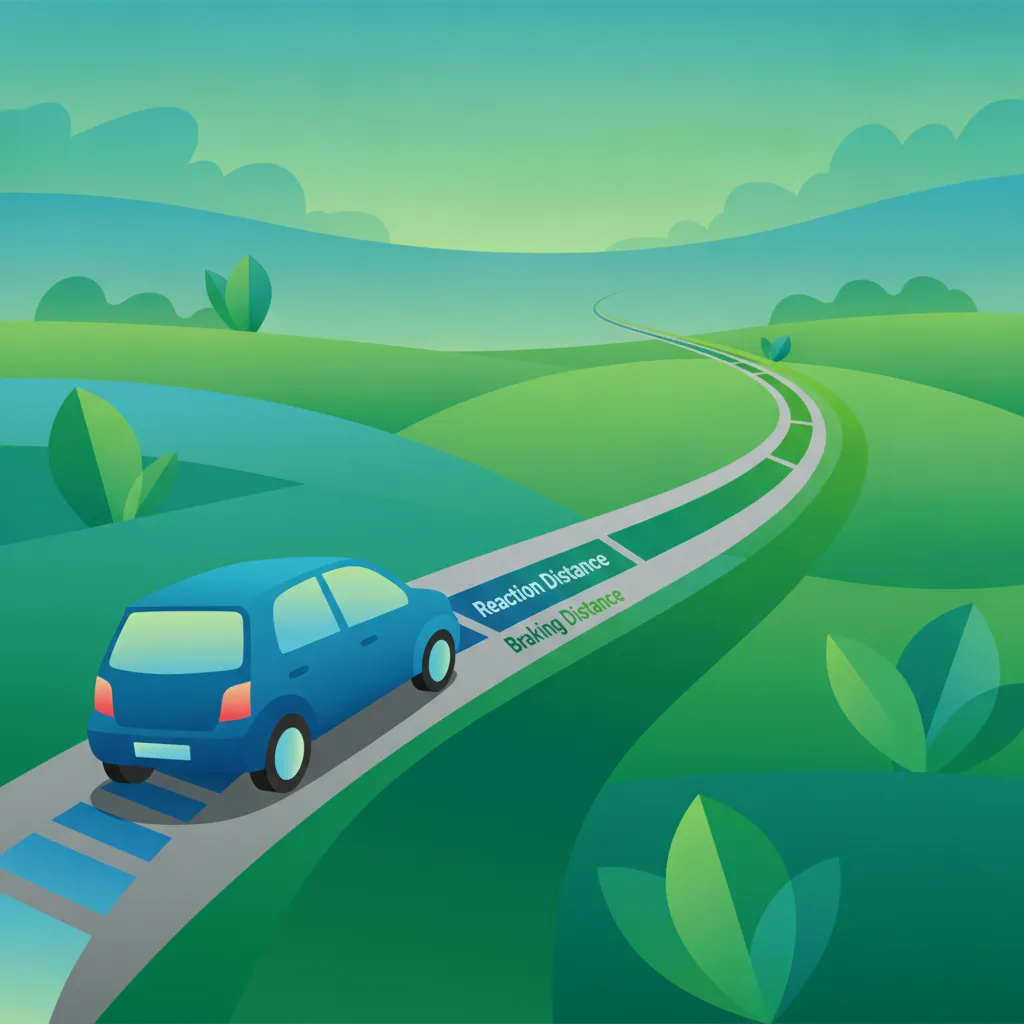
Sharpen your understanding of braking and reaction distances, crucial elements for safe driving in Belgium. This practice set offers targeted revision questions to ensure you master the calculations required for your theory test preparation, building the confidence needed for exam success.
Understand the components of stopping a vehicle, including reaction distance, braking distance, and total stopping distance. This set covers the specific formulas and rules used in Belgian driving theory, helping you avoid common calculation errors and pass your exam with confidence.
Preview sample questions from the Braking & Reaction Distances practice set to see how they help you prepare for the driving theory exam in Belgium.
Learners choose Braking & Reaction Distances to improve accuracy and understanding of key exam themes in Belgium. It offers realistic driving theory questions and targeted revision for effective preparation.
Find answers to the most common queries learners have when practising Braking & Reaction Distances, including how questions match the official theory exam in Belgium, how scoring works, and how this practice improves exam readiness.
Reaction distance is the distance a vehicle travels from the moment a driver perceives a hazard to the moment they actually apply the brakes. In Belgian theory, this is typically approximated at 1 second.
The formula used in the Belgian driving theory exam is: Speed in km/h divided by 10, then multiplied by 3. This gives you the reaction distance in metres. For example, at 50 km/h, it's (50 / 10) * 3 = 15 metres.
Braking distance increases exponentially with speed. If you double your speed, your braking distance will quadruple (multiply by four). This is because kinetic energy is proportional to the square of the speed.
The total stopping distance is the sum of your reaction distance and your braking distance. It's the entire distance your vehicle travels from the moment you see a hazard until it comes to a complete stop.
Adverse conditions like ice or black ice significantly increase braking distance. On black ice, for instance, your braking distance can be approximately 10 times longer compared to dry roads, making stopping extremely difficult.
By completing Braking & Reaction Distances, you will gain stronger rule knowledge, faster recognition of signs and situations, better decision making in traffic scenarios, and increased accuracy on exam style questions used in Belgium. These outcomes directly support higher scoring exam performance.
Expand your knowledge by exploring similar practice questions on braking, reaction time, and stopping distances, essential for comprehensive theory test practice in Belgium. Reinforce your understanding of Belgian road laws and prepare thoroughly for your driving licence exam.
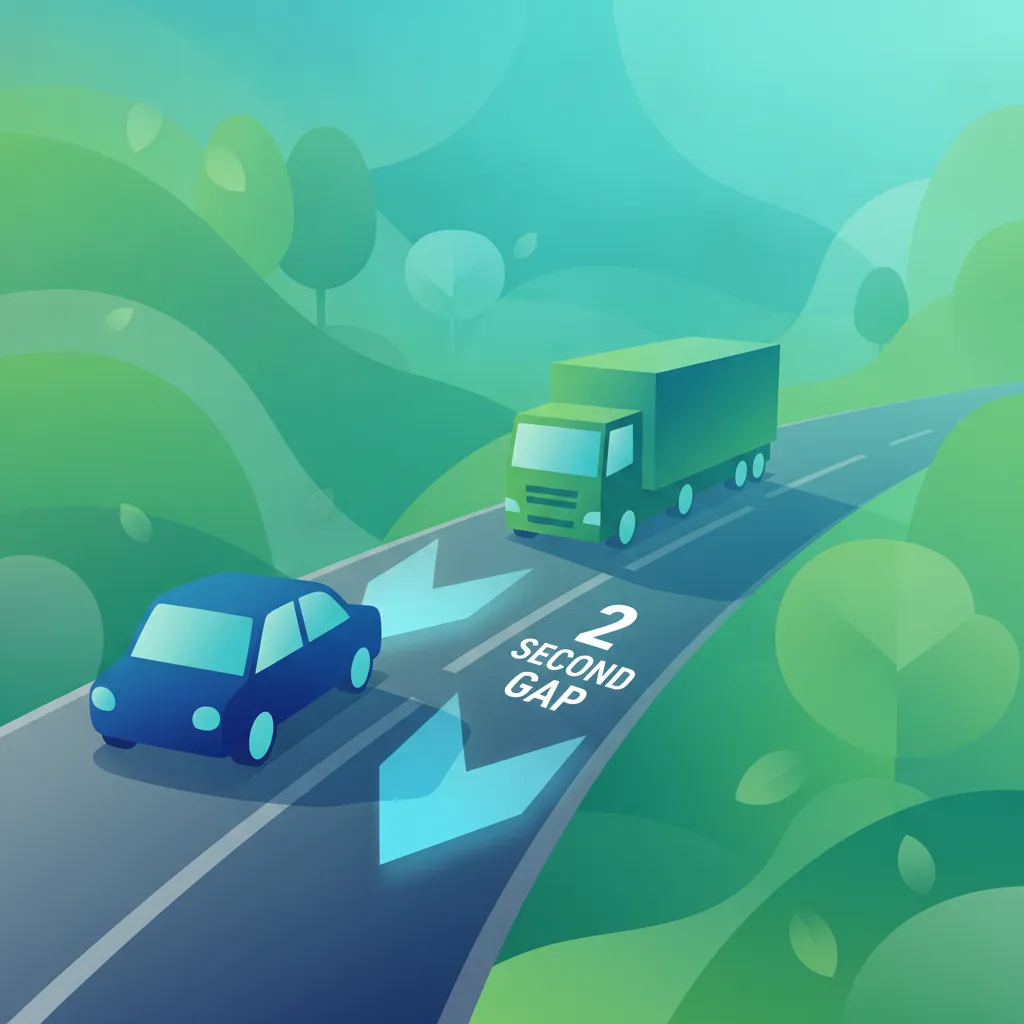
Master the Two-Second Rule and Stopping Distances for Belgian Roads.
Avoid Fines and Master Belgian Stopping and Parking Rules for Your Exam!
Navigate Belgian Motorways with Confidence and Pass Your Theory Exam.
Master safe driving on wet Belgian roads and conquer aquaplaning risks with confidence.
Navigate School Zones Safely and Ace Your Belgian Driving Theory Exam!
Master the Exam Details Before You Even Step into the Test Centre.
Questions in Braking & Reaction Distances
Exam focused questionss
Braking & Reaction Distances offers quick, focused exam style practice to boost your Belgian knowledge for the driving theory exam in Belgium.
Braking & Reaction Distances helps learners in Belgium with clear explanations and targeted Belgian practice to improve essential driving theory topics.
This practice set is ideal for intermediate learners preparing for the Belgian driving theory exam who need to solidify their understanding of stopping distances. It's especially useful for those who find calculations tricky or want to eliminate common misconceptions about how speed and conditions affect a vehicle's ability to stop.
Explore more topics for the Belgian driving theory exam in Belgium.
Strengthen your Belgian driving theory knowledge by diving into targeted practice. Select any category from this overview to begin exercises immediately. Focus on areas where you need improvement, such as specific road signs, priority rules, or hazard perception, to build confidence for your official Belgian driving licence exam.
Explore Practice Categories