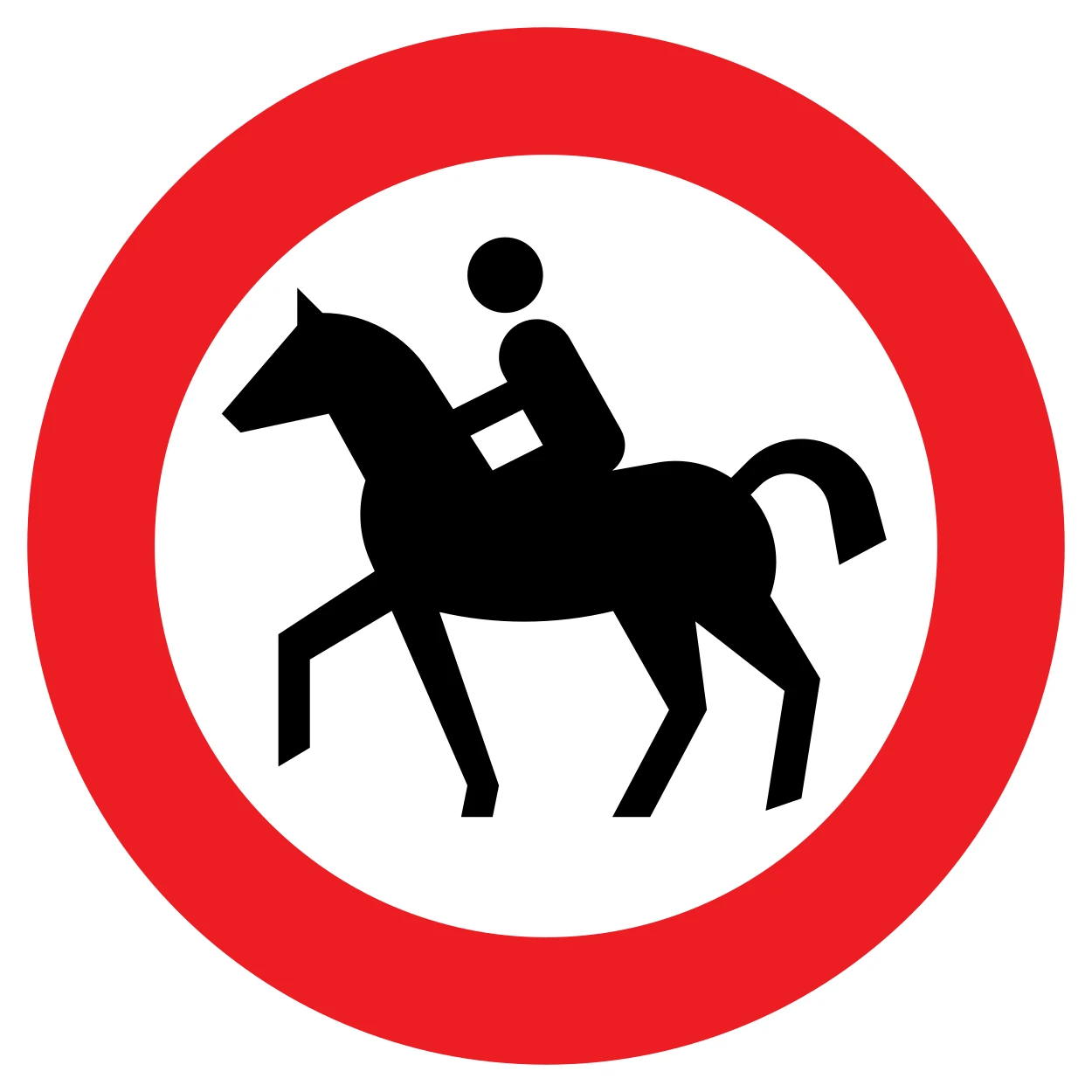
As part of Belgium's prohibitory signs, the C15 road sign clearly indicates 'No Entry for Horse Riders'. This sign is crucial for maintaining order and safety on specific roads. Drivers must understand that they are forbidden from entering an area where horse riders are normally present or are prohibited from entering themselves. Always pay attention to supplementary panels that might specify the scope, direction, or duration of this restriction.
Master the meaning and application of Belgian road sign C15, crucial for your theory test revision. This prohibitory sign specifically restricts horse riders, requiring drivers to recognise its implications for road user interaction and decision-making in Belgian traffic.
Belgian road sign C15, titled "No entry for horse riders", belongs to the belgian prohibitory signs group. It is used to communicate no entry for horse riders in a form that drivers can recognise quickly during Belgian theory study and real traffic. The practical task is to check whether the ban applies to your vehicle category, direction, speed, load, or manoeuvre, because the legal effect of a road sign starts from its placement and can be refined by panels, lane markings, traffic lights, or zone signs. For learners, the safest approach is to identify the sign early, say what road users or manoeuvres it affects, and then choose speed, position, and priority behaviour that match the displayed instruction.
Belgian road sign C15 means "No entry for horse riders". In practice, it tells drivers to respect the prohibition from the sign position until the rule ends or another sign changes it, while checking the exact road layout, markings, and any supplementary panels before acting.
Get clear, practical answers to the most common questions about the C15 - No entry for horse riders road sign. Learn how the sign works, what rules it represents, and how it affects real driving situations. This FAQ strengthens your understanding and supports accurate decision making for the Belgian driving theory exam in Belgium.
The Belgian C15 road sign means 'No Entry for Horse Riders'. It prohibits horse riders from entering the section of road or area where the sign is displayed. Drivers should be aware of this restriction when interpreting traffic flow and potential hazards.
When you see the C15 sign, you should be aware that horse riders are prohibited from entering. While the sign directly restricts horse riders, drivers need to be observant of their surroundings and any potential alternative routes or diversions for horse traffic that might be indicated by supplementary signs. You must always comply with the sign's instruction.
The C15 sign itself prohibits entry for horse riders. However, supplementary panels placed below the sign can introduce exceptions. These might specify certain times, distances, vehicle categories (though unlikely for this specific sign's focus), or specific zones where the prohibition applies. Always read these panels carefully.
A common trap with the C15 sign is misunderstanding its direct impact. While it primarily targets horse riders, learners might incorrectly assume it directly prohibits other vehicles or implies a general road closure. Remember, it specifically prohibits horse riders from entering, and drivers must respect this directive and any associated supplementary information.
No, the C15 sign directly prohibits entry for horse riders. It does not prohibit cars or other motor vehicles from entering the area. However, it's important to note that if you see this sign, it might indicate a road where specific traffic management for horse riders is in place, so remain vigilant.
A clear reference image of the C15 - No entry for horse riders road sign used in Belgium.
The C15 - No entry for horse riders road sign may also be known by these alternative names or terms.
The C15 - No entry for horse riders road sign is part of the Belgian Prohibitory Signs category, which groups together signs with similar rules and functions.
Master Belgian road signs by comparing related indicators like the 'No entry for horse riders' sign with others in its category. This focused revision aids sign recognition and reduces errors, essential for your theory test revision and traffic sign comparison.
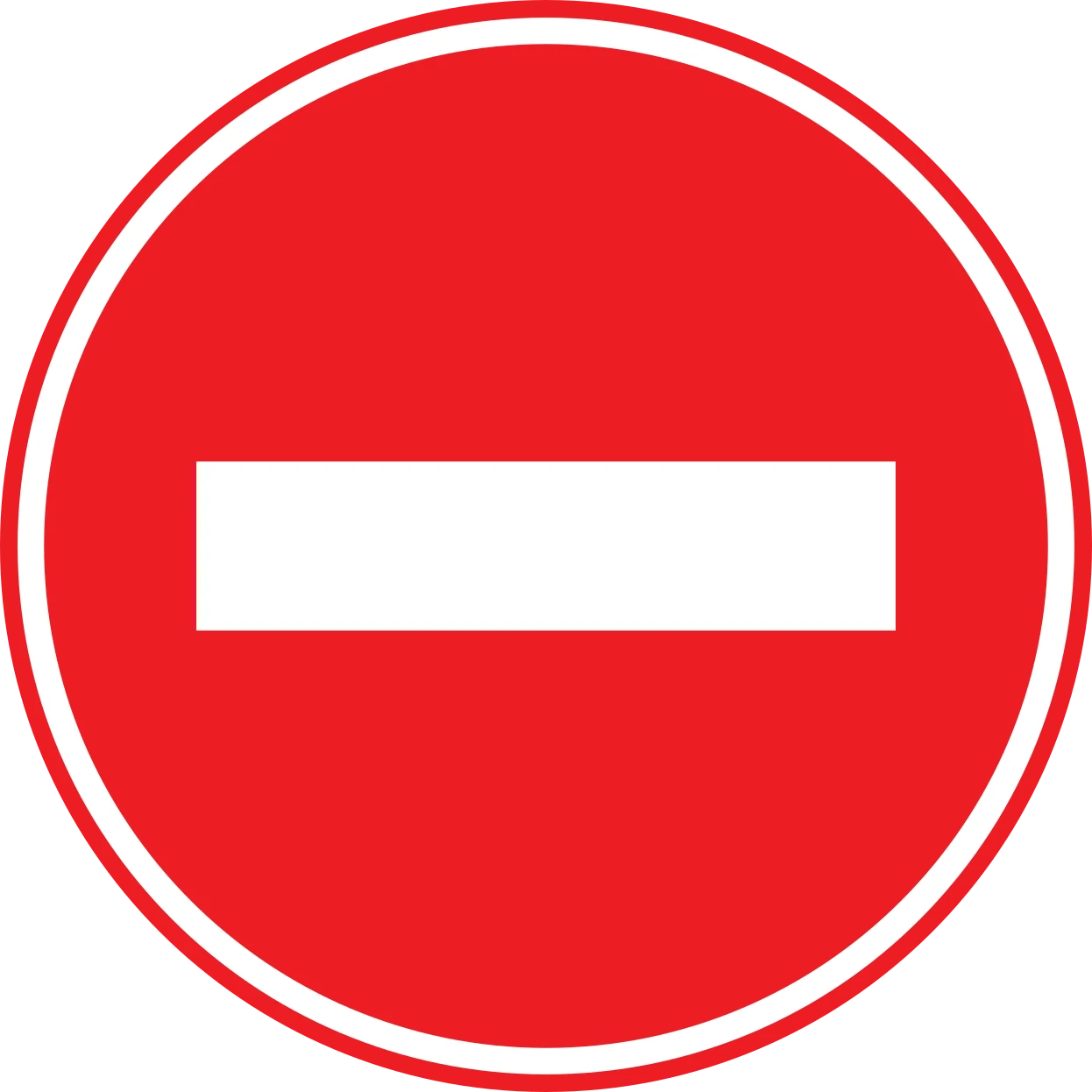
The C1 'Do Not Enter' Sign: Know When to Stop and Avoid Entry
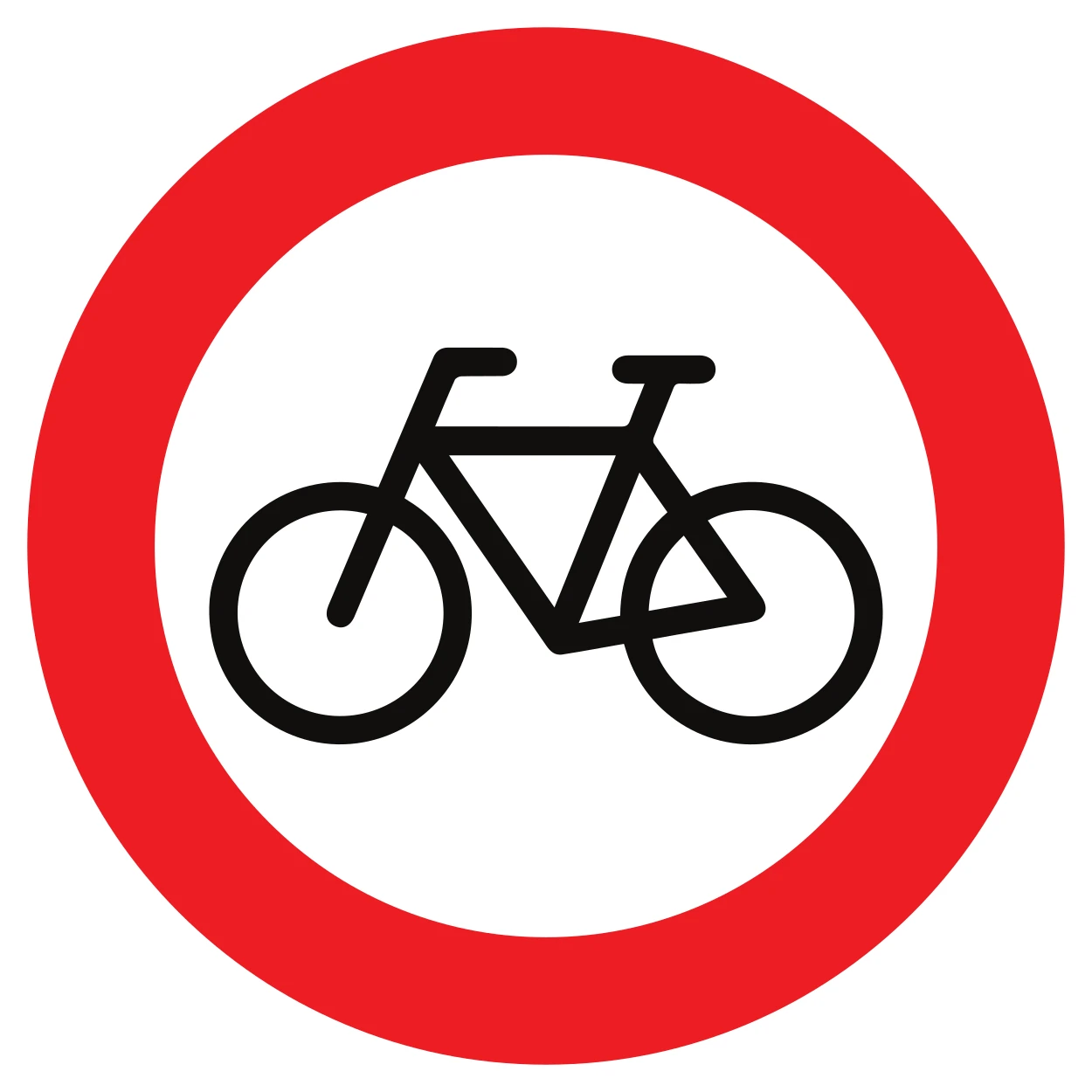
Belgian C11 Sign: No Entry for Bicycles
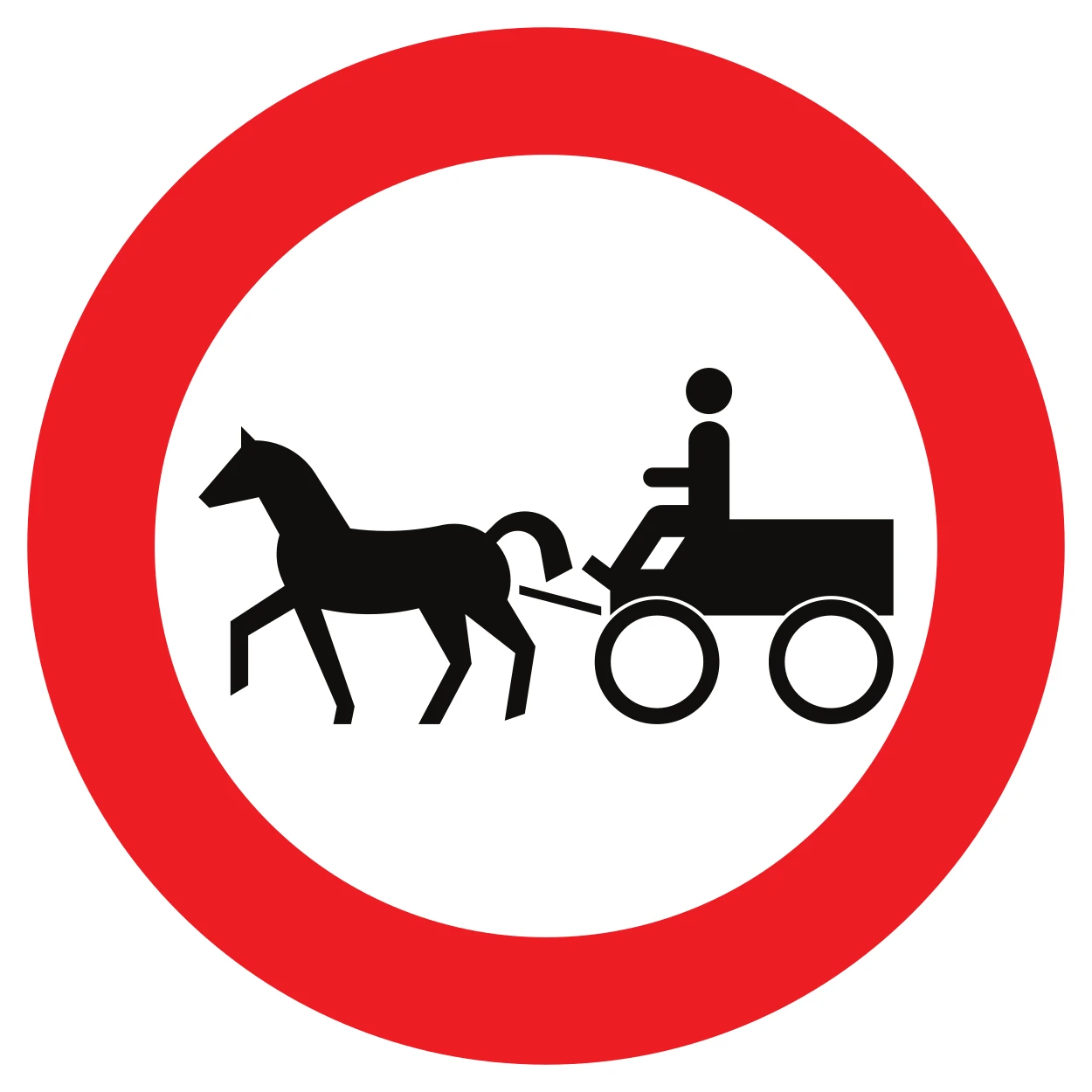
Belgian C13 Sign: No Entry for Horse-drawn Vehicles
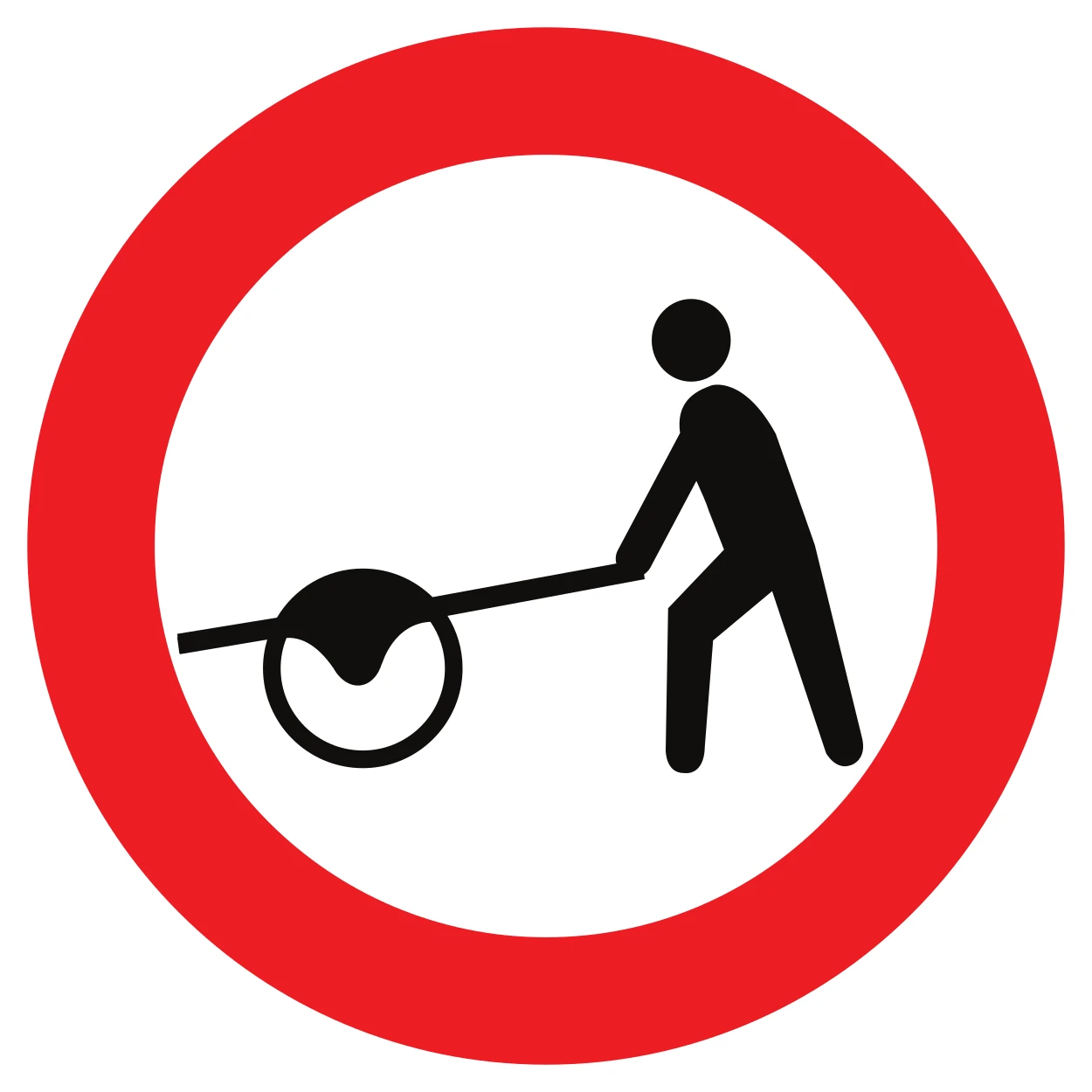
Belgian Sign C17: No Entry for Hand Carts
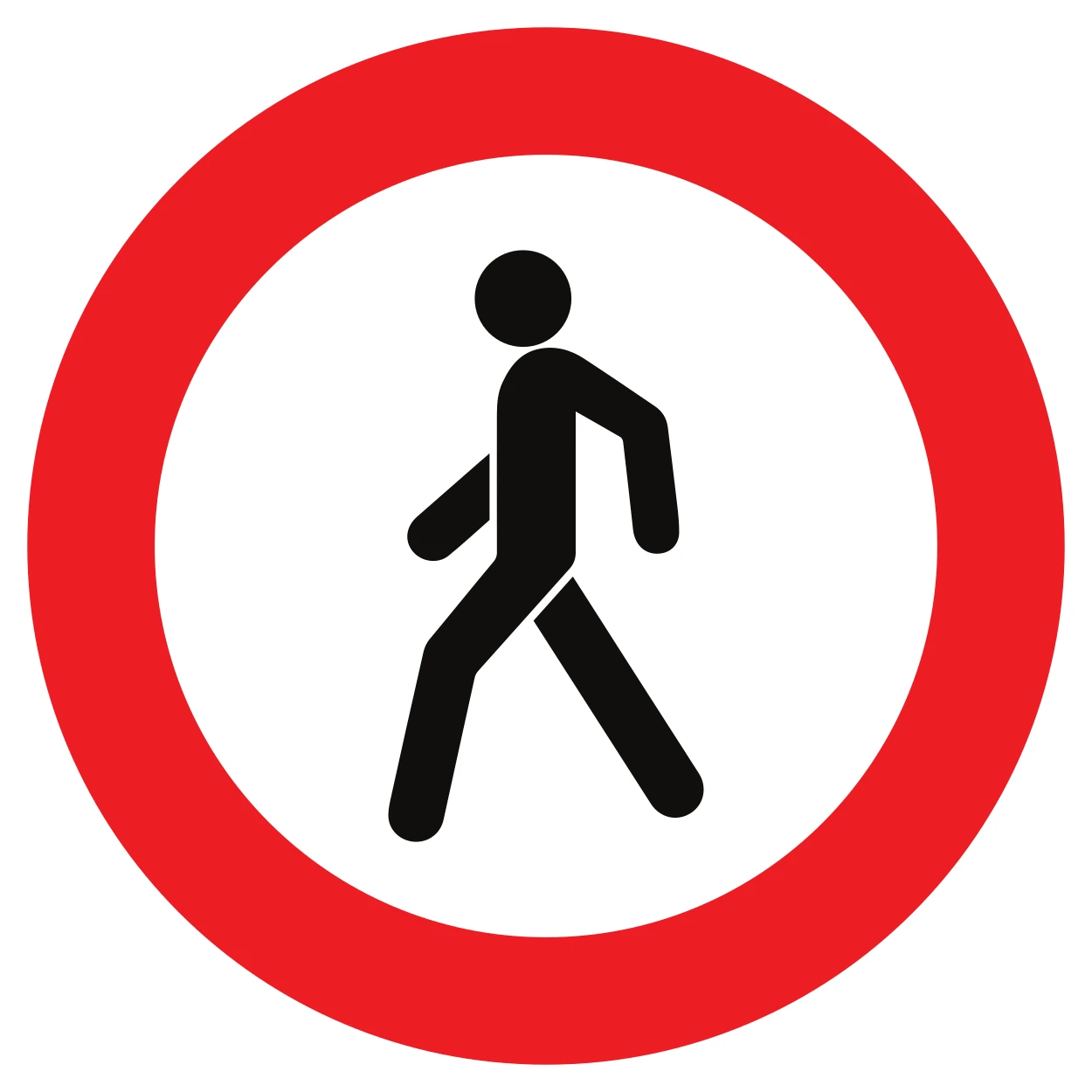
Belgian C19 Sign: No Entry Allowed for Pedestrians
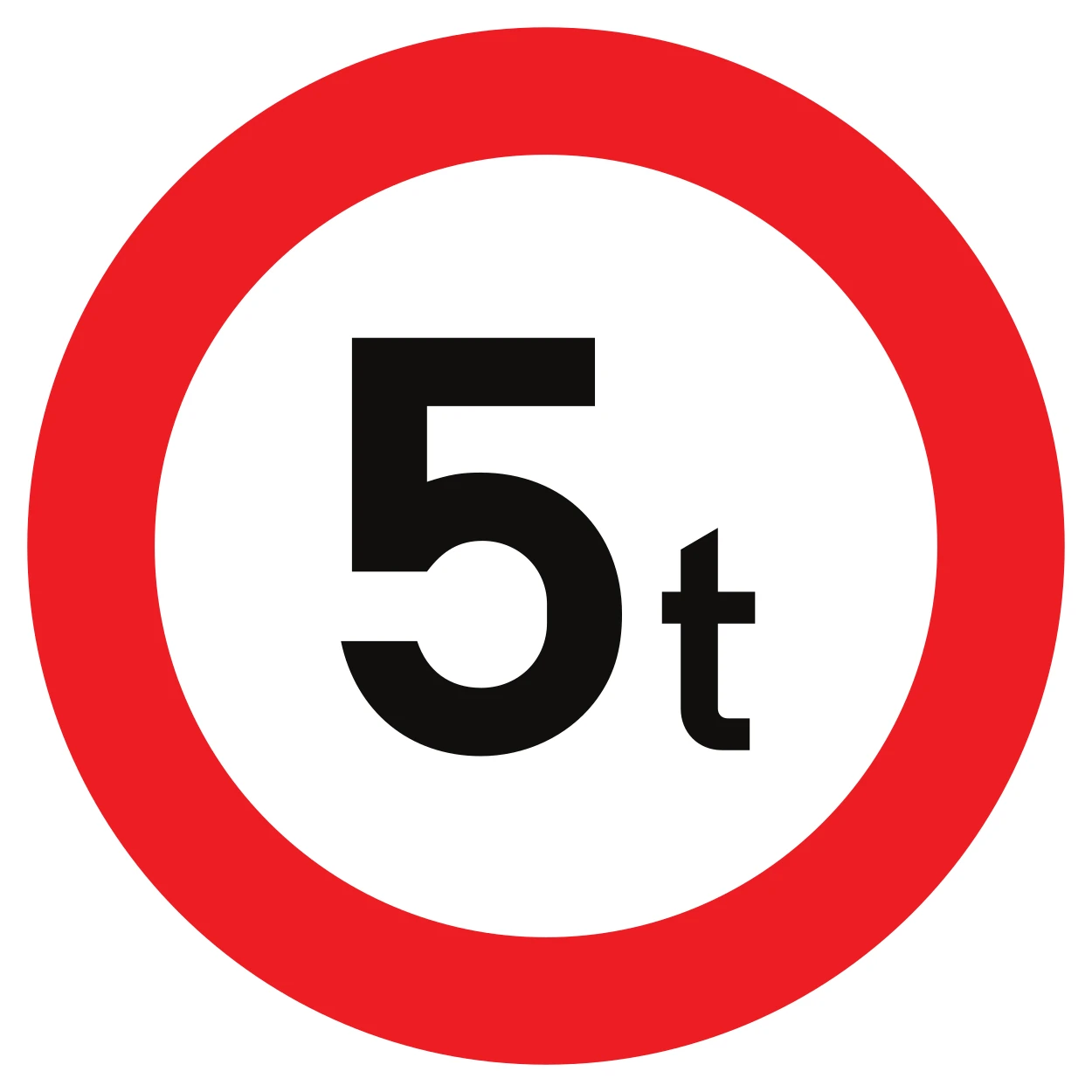
Belgian C21 Sign: Respect the Weight Limit or Find Another Route!
Understand the C22 'No Entry for Buses' Prohibitory Sign
Belgian C23 Sign: What it Means for Trucks and Drivers
Deepen your understanding by exploring how specific road signs dictate right-of-way, speed limits, and safety obligations across Belgian roads. Review these related theory modules to ensure you can confidently identify and apply each sign correctly.
Towing a trailer in Belgium comes with specific rules tied to weight limits that often confuse drivers. This article breaks down exactly when your standard Category B licence is sufficient and when you must obtain a Category BE licence, explaining the critical Masses Authorisées (MAM) for both the trailer and the combined vehicle. Understanding these distinctions is vital for legal compliance and safe driving on Belgian roads.
Belgian turbo roundabouts, known as 'turborotondes', have a distinct design that enhances safety. This article will guide you through the essential rules, emphasizing the non-negotiable need to select your lane upon approach. Understanding this concept is crucial for both safe driving in Belgium and for passing your theory test.
Be prepared for unexpected breakdowns on Belgian roads.
Master Belgian Overtaking Distances for a Safer Road and a Confident Exam Pass.
Belgian road sign C39, titled "No overtaking for vehicles with a maximum allowed mass of over 3,5 tonnes", belongs to the belgian prohibitory signs group. It is used to communicate no overtaking for vehicles with a maximum allowed mass of over 3,5 tonnes in a form that drivers can recognise quickly during Belgian theory study and real traffic. The practical task is to check whether the ban applies to your vehicle category, direction, speed, load, or manoeuvre, because the legal effect of a road sign starts from its placement and can be refined by panels, lane markings, traffic lights, or zone signs. For learners, the safest approach is to identify the sign early, say what road users or manoeuvres it affects, and then choose speed, position, and priority behaviour that match the displayed instruction.
Belgian road sign C41, titled "End of the overtaking restriction for vehicles with a maximum allowed mass of over 3,5 tonnes", belongs to the belgian prohibitory signs group. It is used to communicate end of the overtaking restriction for vehicles with a maximum allowed mass of over 3,5 tonnes in a form that drivers can recognise quickly during Belgian theory study and real traffic. The practical task is to check whether the ban applies to your vehicle category, direction, speed, load, or manoeuvre, because the legal effect of a road sign starts from its placement and can be refined by panels, lane markings, traffic lights, or zone signs. For learners, the safest approach is to identify the sign early, say what road users or manoeuvres it affects, and then choose speed, position, and priority behaviour that match the displayed instruction.
After reviewing all Belgian road signs, deepen your understanding by exploring specific categories such as warning, regulatory, or prohibitory signs. Practice recognition with targeted quizzes to reinforce learning for a successful theory test.
All Belgian Road Signs List