
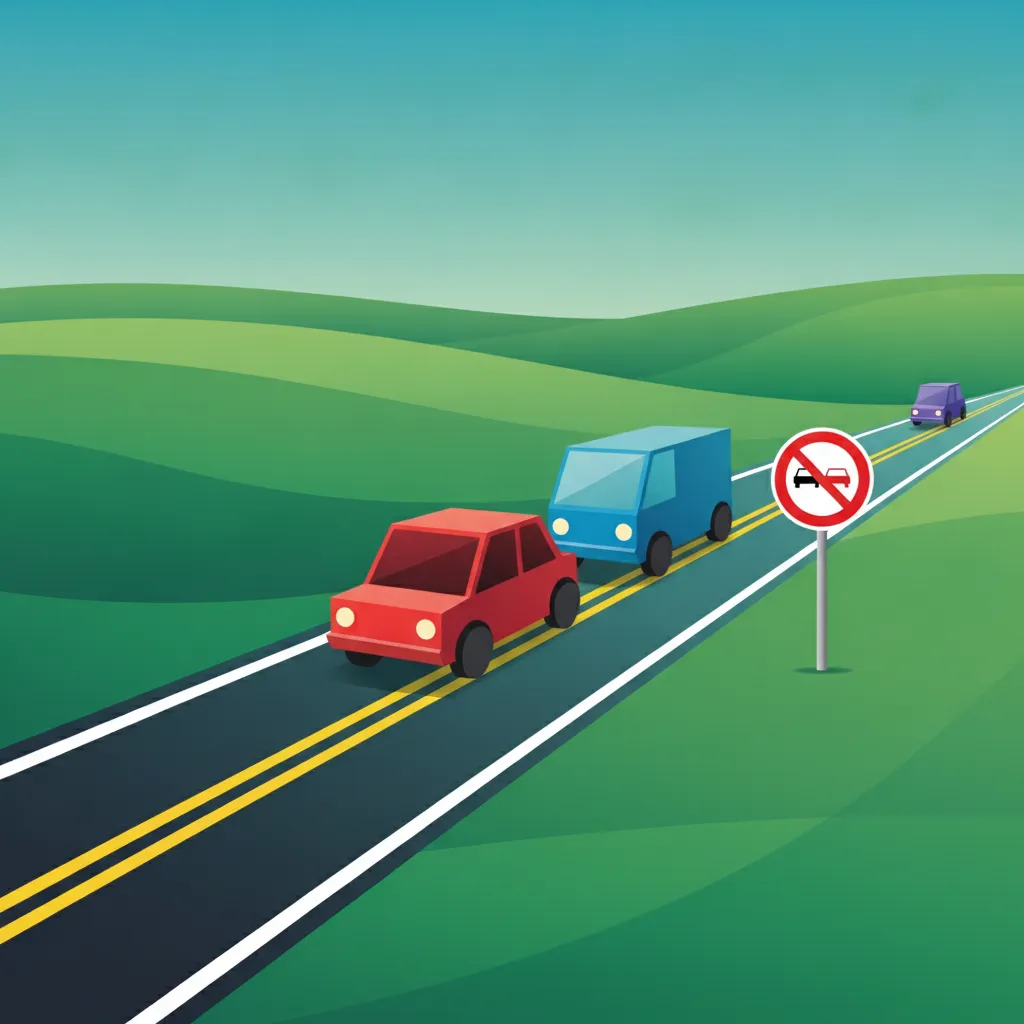
Overtaking another vehicle requires precise judgment, careful observation, and strict adherence to Belgian traffic regulations. This page explains the step-by-step procedure for safe overtaking, highlighting key conditions that permit or prohibit the maneuver. Pay close attention to visibility, road markings, and priority situations to avoid dangerous errors and pass your theory test.
Theory topic content overview
Read the full theory topic guide for Belgian Overtaking Rules with structured, easy-to-scan content built for learners in Belgium. This detailed section explains the exact rule, meaning, traffic context, comparison points, and exam logic behind this Belgian driving theory topic so you can study faster, understand the concept more clearly, and avoid common interpretation mistakes on the theory test.
Overtaking, known as dépassement in French or inhalen in Dutch, is a fundamental driving maneuver in which a vehicle moves past a slower vehicle travelling in the same direction. In Belgium, performing an overtaking maneuver safely and legally is a critical skill, heavily tested in the driving theory exam and essential for practical road safety. It requires a precise assessment of road conditions, traffic flow, and strict adherence to the Belgian Road Code.
Understanding the rules for overtaking is paramount for several reasons:
A successful and safe overtaking maneuver in Belgium follows a clear sequence of steps, prioritizing observation and planning over impulse.
Several factors must be considered before initiating an inhaalmanoeuvre (overtaking maneuver) to ensure safety and compliance with Belgian traffic rules:
in een zeer korte tijd (in a very short time) but always within legal speed boundaries.doorlopende witte streep / ligne blanche continue) strictly prohibit crossing them to overtake. Broken lines permit overtaking if safe.Belgian traffic law clearly defines scenarios where overtaking (especially by the left) is forbidden. These are frequent points of failure in the theory exam:
voorrang verlenen / céder le passage), or where priority is regulated by traffic lights but the light is not green in your favour. This includes prioriteit van rechts (priority from the right) intersections.top van een helling) or a sharp bend (bocht), overtaking is forbidden. An exception is if you can overtake without crossing a continuous white line, meaning you remain entirely within your designated lane(s).oversteekplaats voor voetgangers) or a cyclist crossing (oversteekplaats voor fietsers) is strictly prohibited. This is to protect vulnerable road users.overweg) indicated by signs A45 or A47, unless the crossing has barriers or is regulated by traffic lights.On Belgian motorways, specific rules apply:
rechts houden (keep to the right) and use the rightmost available lane. The left lanes are primarily for overtaking.Rechts Inhalen / Dépassement par la droite)While dépassement par la gauche (overtaking on the left) is the general rule in Belgium, there are limited exceptions where overtaking on the right is permitted:
Belgian learners often make mistakes during overtaking due to:
priorité de droite.For your Belgian driving theory test, always adopt a defensive and cautious mindset when considering overtaking. Prioritize safety and legality. When faced with an overtaking scenario in a question:
Mastering the nuances of dépassement or inhalen in Belgium is about far more than just accelerating past another car; it's about making informed, safe, and lawful decisions in dynamic traffic environments.
Start with a short, direct summary of Belgian Overtaking Rules before reading the full explanation below.
Overtaking in Belgium involves carefully passing a slower vehicle by moving into an adjacent lane, usually the left, only when safe and permitted by road markings and signs. Drivers must assess oncoming traffic, visibility, and the ability to return to their lane without impeding other road users. The maneuver is strictly prohibited in specific scenarios like at intersections where priority must be yielded or near pedestrian crossings.
Review the most important terms, rule signals, and traffic concepts linked to Belgian Overtaking Rules.
Explore related theory topic pages connected to Belgian Overtaking Rules and continue with the next useful rule explanation.
See the common search queries learners use when trying to understand Belgian Overtaking Rules in Belgium.

Start your comprehensive preparation for the Belgian driving licence theory exam. Dive into our expertly curated topics, master the road rules and concepts, and build the confidence you need to pass your test and drive safely on Belgian roads. Begin mastering theory today.
Explore Belgian Theory TopicsTheory topic content overview
Start with a short, direct summary of Belgian Overtaking Rules before reading the full explanation below.
Overtaking in Belgium involves carefully passing a slower vehicle by moving into an adjacent lane, usually the left, only when safe and permitted by road markings and signs. Drivers must assess oncoming traffic, visibility, and the ability to return to their lane without impeding other road users. The maneuver is strictly prohibited in specific scenarios like at intersections where priority must be yielded or near pedestrian crossings.
Review the most important terms, rule signals, and traffic concepts linked to Belgian Overtaking Rules.
Explore related theory topic pages connected to Belgian Overtaking Rules and continue with the next useful rule explanation.
See the common search queries learners use when trying to understand Belgian Overtaking Rules in Belgium.
Start your comprehensive preparation for the Belgian driving licence theory exam. Dive into our expertly curated topics, master the road rules and concepts, and build the confidence you need to pass your test and drive safely on Belgian roads. Begin mastering theory today.
Explore Belgian Theory TopicsUse this exam-focused revision tip to understand how Belgian Overtaking Rules is likely to appear in theory questions for learners in Belgium. This section helps you identify the most testable part of the rule, avoid common traps, and remember the concept more effectively during Belgian driving theory exam preparation.
Many Belgian theory exam questions test your ability to identify prohibited overtaking situations, especially at intersections with priority rules or near railway crossings. Always remember: if visibility is insufficient (e.g., hill crest, bend) or if you would need to cross a continuous white line, overtaking is generally forbidden. Double-check road signs and markings, as they often give direct instructions.
Read direct answers to the most common learner questions about Belgian Overtaking Rules in Belgium. This FAQ focuses on rule confusion, practical meaning, comparison with similar concepts, and the exact uncertainties that appear most often in Belgian driving theory revision and exam preparation.
In Belgium, you generally overtake by the left. Overtaking by the right is only permitted in specific situations, such as when the vehicle you are following indicates a left turn and moves to the left side of its lane, or in slow-moving traffic in urban areas with multiple lanes.
Overtaking is prohibited at railway crossings (A45 or A47 signs unless regulated by barriers/lights), at intersections where you must yield priority, at hill crests or bends with insufficient visibility, and when the vehicle in front is already overtaking another (unless 3+ lanes in your direction).
Before overtaking, ensure the road ahead is clear for a sufficient distance to complete the maneuver without risk to oncoming traffic or other road users. This includes checking for blind spots and ensuring no continuous white lines will be crossed.
No, crossing a continuous white line to overtake is prohibited in Belgium, as it defines the part of the roadway intended for opposing traffic or separates lanes where crossing is unsafe.
The procedure includes checking mirrors and blind spots, signalling your intention (left indicator), moving out and accelerating to pass, maintaining a safe lateral distance, and then signalling again (right indicator) to return to your lane once you can see the overtaken vehicle in your interior rearview mirror.
Yes, in Belgium, during precipitation, heavy goods vehicles (over 7.5 tonnes) and vehicle trains are generally prohibited from overtaking by the left on motorways, expressways, and roads with at least four lanes, unless overtaking slow vehicles in a dedicated slow lane or agricultural tractors.
'Dépassement par la droite' (overtaking by the right) is generally forbidden but allowed when the vehicle ahead is signaling to turn left and has moved to the left to prepare for the turn, or in slow-moving traffic in urban areas where lanes are clearly defined and traffic density allows multi-lane circulation.
Ready to focus your Belgian driving theory revision? Utilize our powerful search tool to pinpoint exact topics, road signs, or difficulty levels. Engage with practice questions that directly address your learning needs and solidify your understanding of Belgian traffic laws for your upcoming exam.