
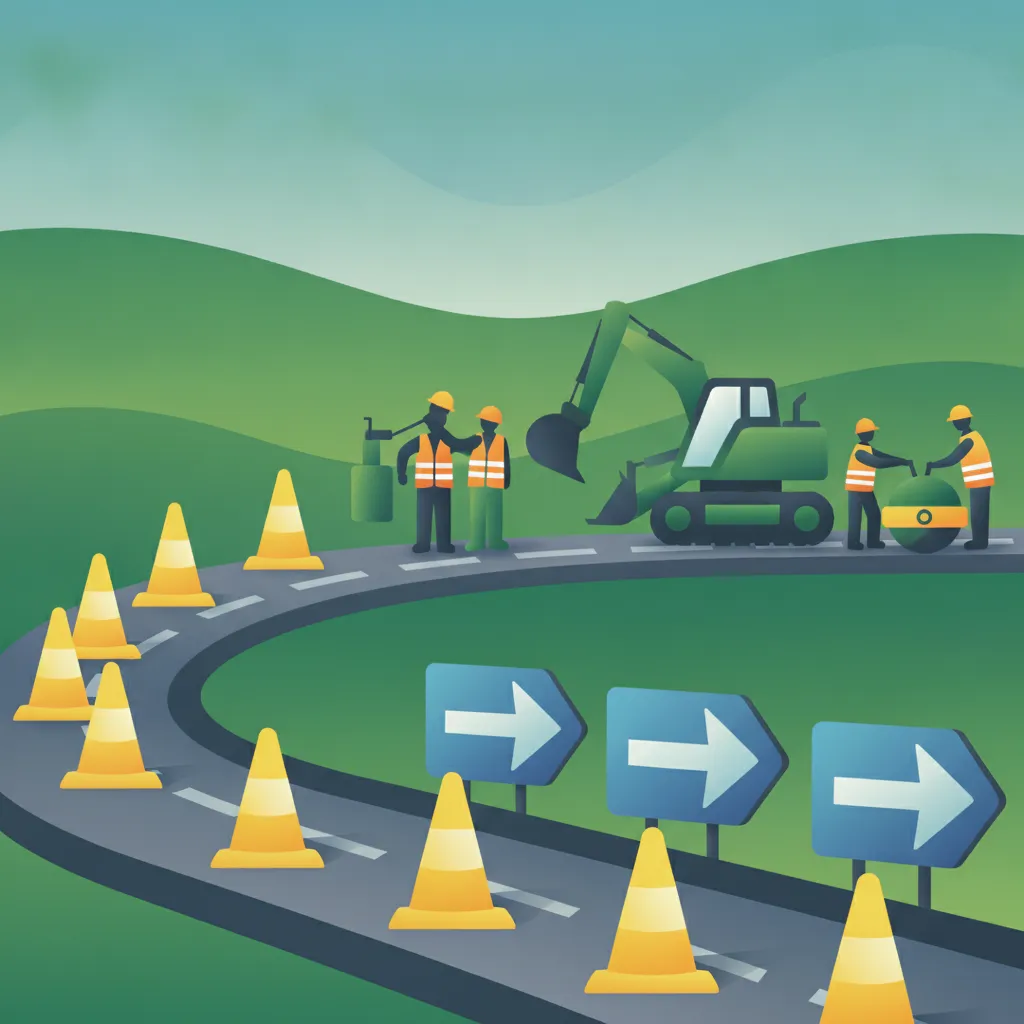
When you encounter a road work zone in Belgium, normal traffic rules and road layouts may be temporarily altered. It's crucial to understand how to interpret temporary signage and markings, adjust your speed, and maintain focus to ensure safety for everyone. These areas often have narrower lanes, unexpected obstacles, and workers close to traffic.
Theory topic content overview
Read the full theory topic guide for Road Work Zones with structured, easy-to-scan content built for learners in Belgium. This detailed section explains the exact rule, meaning, traffic context, comparison points, and exam logic behind this Belgian driving theory topic so you can study faster, understand the concept more clearly, and avoid common interpretation mistakes on the theory test.
Wegenwerken / Chantiers)?Road work zones, known as wegenwerken in Dutch-speaking Belgium and chantiers in French-speaking Belgium, are designated areas on public roads where maintenance, construction, or repair activities are actively taking place. These zones are temporary and are established to allow workers to improve, repair, or modify the road infrastructure.
Unlike regular road sections, work zones introduce significant changes to the driving environment. They often involve altered road layouts, temporary speed limits, lane closures, diversions, and the presence of workers and heavy machinery. Successfully navigating these areas requires drivers to understand and strictly adhere to specific temporary rules and signals.
Understanding the rules for Belgian road work zones is crucial for several reasons:
wegenwerken are unfortunately common, often linked to distraction and excessive speed. In Wallonia, for example, accident statistics highlight the persistent risks, including fatalities and injuries, on motorways due to incidents in or near work zones.Driving through a wegenwerken or chantier requires heightened awareness and a proactive approach. Here's a breakdown of the practical steps:
As you approach a road work zone in Belgium, you will typically see a series of warning signs designed to prepare you for the changes ahead. These temporary signs often have a yellow or orange background or are supplemented with specific temporary markings. Look for:
Verkeerskegels (traffic cones) and other barriers are used to mark the edges of the work zone, guide traffic, and protect workers.Begin to adjust your driving as soon as you see the first warning signs, not when you enter the work area itself.
Speed is a major factor in accidents within wegenwerken. Always reduce your speed upon entering a work zone.
This is one of the most critical and uniquely emphasized rules in Belgium:
marques routières jaune-orange or overlangse voorlopige markeringen) always take precedence over permanent white markings. This means you must ignore the white lines and follow the yellow-orange ones for lane guidance, pedestrian crossings, or cycling paths within the work area.With reduced space and unpredictable conditions, increasing your following distance is paramount. This gives you more time to react to:
Road work zones often require lane reductions or changes.
The dynamic and unpredictable nature of road work zones demands your full attention. Put away your phone, ignore in-car distractions, and keep your focus entirely on the road ahead, your mirrors, and your surroundings. Distraction is a leading cause of accidents in these areas.
Always assume workers might be present, even if you don't immediately see them.
wegenwerken is the legal maximum, but the actual safe speed might be much lower depending on conditions like visibility, narrowness of lanes, or heavy rain.werf is a prime example of applying hazard perception skills – identifying potential dangers early and anticipating how they might affect your driving.Rijstrookvermindering): You're on a Belgian motorway (e.g., E40) and see a large orange-backed sign with a diagram showing a lane closing ahead (e.g., an F79 sign). Immediately after, you see a speed limit sign for 70 km/h, then 50 km/h, and yellow-orange markings guiding you into the left lane, even though the white lines still suggest two lanes. Your responsibility is to slow down to the indicated speed limit, signal your intention, and smoothly merge into the open lane following the yellow-orange markings, completely disregarding the white lines.werf blocking a main lane. Cones and temporary yellow arrows divert traffic onto what was previously a parking lane or even the opposing side of the road, marked by temporary yellow lines. You must follow the yellow lines precisely, watch for pedestrians who might be confused by the changes, and adjust your speed for the narrower, temporary path.Learners and even experienced drivers frequently make these mistakes:
When you encounter wegenwerken or chantiers in Belgium, remember the core principles: Observe, Adapt, and Prioritize Safety. Always look out for temporary yellow-orange markings – they are your primary guide. Reduce your speed, increase your following distance, and give your full attention to the road and your surroundings, especially for the safety of the workers. Your careful driving ensures a safer environment for everyone in these hazardous zones.
Start with a short, direct summary of Road Work Zones before reading the full explanation below.
When entering a Belgian road work zone, drivers must reduce speed, increase their following distance, and strictly follow all temporary traffic signs and road markings. Be extra vigilant for workers, equipment, and sudden changes in the road layout, as temporary yellow markings always override permanent white ones. Your primary goal is to pass through the zone smoothly and safely, prioritizing the safety of yourself and others.
Review the most important terms, rule signals, and traffic concepts linked to Road Work Zones.
Explore related theory topic pages connected to Road Work Zones and continue with the next useful rule explanation.
See the common search queries learners use when trying to understand Road Work Zones in Belgium.

Start your comprehensive preparation for the Belgian driving licence theory exam. Dive into our expertly curated topics, master the road rules and concepts, and build the confidence you need to pass your test and drive safely on Belgian roads. Begin mastering theory today.
Explore Belgian Theory TopicsTheory topic content overview
Start with a short, direct summary of Road Work Zones before reading the full explanation below.
When entering a Belgian road work zone, drivers must reduce speed, increase their following distance, and strictly follow all temporary traffic signs and road markings. Be extra vigilant for workers, equipment, and sudden changes in the road layout, as temporary yellow markings always override permanent white ones. Your primary goal is to pass through the zone smoothly and safely, prioritizing the safety of yourself and others.
Review the most important terms, rule signals, and traffic concepts linked to Road Work Zones.
Explore related theory topic pages connected to Road Work Zones and continue with the next useful rule explanation.
See the common search queries learners use when trying to understand Road Work Zones in Belgium.
Start your comprehensive preparation for the Belgian driving licence theory exam. Dive into our expertly curated topics, master the road rules and concepts, and build the confidence you need to pass your test and drive safely on Belgian roads. Begin mastering theory today.
Explore Belgian Theory TopicsUse this exam-focused revision tip to understand how Road Work Zones is likely to appear in theory questions for learners in Belgium. This section helps you identify the most testable part of the rule, avoid common traps, and remember the concept more effectively during Belgian driving theory exam preparation.
In the Belgian theory test, questions about road work zones often focus on the hierarchy of markings (yellow overriding white), adjusted speed limits, and the importance of worker safety. Always assume workers might be present and unseen, and prioritize adaptation over strict adherence to permanent rules. Distraction and correct lane merging are common pitfalls.
Read direct answers to the most common learner questions about Road Work Zones in Belgium. This FAQ focuses on rule confusion, practical meaning, comparison with similar concepts, and the exact uncertainties that appear most often in Belgian driving theory revision and exam preparation.
Road work zones, or 'wegenwerken' in Dutch, are temporary areas on Belgian roads where construction, maintenance, or repair is taking place. They are typically marked by temporary signs, cones, and barriers to guide traffic safely.
Yes, in Belgium, temporary yellow-orange road markings always override any permanent white road markings. You must follow the instructions given by the yellow markings, whether they define lanes, pedestrian crossings, or other traffic guidance.
Speed limits in Belgian road work zones are often reduced, commonly to 70 km/h or even 50 km/h, especially when workers are present or lanes are significantly narrowed. Always follow the posted temporary speed limit signs.
Extra caution is crucial due to the presence of workers, construction vehicles, narrower lanes, uneven road surfaces, and potential distractions. These factors increase the risk of accidents if drivers are not fully attentive.
Anticipate lane closures early, merge smoothly and safely into the open lane, and avoid sudden braking or aggressive maneuvers. Follow any signs or arrow boards indicating the correct path through the zone.
If traffic is queuing in a construction zone, maintain a constant, reduced speed if possible. Avoid unnecessary lane changes within the queue, as this can worsen congestion and increase accident risk.
Yes, Belgian road authorities often implement measures like physical barriers (e.g., concrete walls on motorways), safety zones between traffic and the work area, and warning vehicles (botsers) to protect workers.
In Belgium, 'botsers' refer to crash attenuators or warning vehicles, often equipped with illuminated arrows, placed before a work zone or working vehicle to absorb impact in case of a collision and protect workers and road users.
Absolutely. Road work zones are common on Belgian motorways (snelwegen/autoroutes) and often involve significant lane reconfigurations or speed reductions. Always be prepared for changes when driving on motorways.
'Werf signalisatie' (site signage) refers to all temporary signs and markings used to manage traffic around a construction site. Understanding and respecting these signals is fundamental for safety and is a key part of Belgian driving theory.
You'll often see signs indicating 'Werken' (Works) or 'Chantier', reduced speed limits (e.g., C43 signs with lower numbers), lane diversion arrows (F series), and warning signs for uneven roads (A19) or loose gravel (A20).
Yes, distraction and excessive speed are identified as major risk factors for accidents in Belgian road work zones. Drivers must maintain full focus and avoid using mobile devices or other distracting activities.
'Tijdelijke signalisatie' is the Dutch term for temporary signage. This refers to all signs, markings, and devices used to control traffic for a limited period, typically during road works or special events.
Ready to focus your Belgian driving theory revision? Utilize our powerful search tool to pinpoint exact topics, road signs, or difficulty levels. Engage with practice questions that directly address your learning needs and solidify your understanding of Belgian traffic laws for your upcoming exam.