Denmark has achieved a remarkable reduction in road fatalities through a combination of strict legislation, infrastructure upgrades, and ongoing public awareness campaigns. This overview provides learners with the essential background on national safety targets and the 'why' behind the rules they must master for the theory exam. By recognizing the framework that governs Danish traffic, you will better appreciate how individual driver behavior contributes to the collective goal of safer roads.
Article content overview
Denmark has achieved one of the most remarkable improvements in road safety of any developed nation over the last fifty years. By looking at historical data, we can see a shift from a peak of over 1,200 traffic fatalities in 1971 to fewer than 200 annually in recent years. This transformation is not a coincidence but the result of a concerted effort by legislative bodies, infrastructure planners, and public advocacy groups to create a system where human error does not result in the loss of life.
For driving students, understanding this context is essential. When you study the rules of the road, you are learning the framework of a safety system designed to protect vulnerable road users like cyclists and pedestrians. Recognizing the "why" behind traffic legislation—such as speed limits, mandatory seat belt laws, and alcohol limits—will help you develop the defensive driving mindset required to pass your theory exam and, more importantly, to drive safely in the real world.
The core philosophy driving Danish traffic policy today is "Vision Zero." This concept posits that no loss of life or serious injury is acceptable in the road transport system. Rather than accepting accidents as an inevitable cost of mobility, the Danish authorities work toward designing roads, vehicles, and rules that account for human fallibility.
The National Road Safety Action Plan (Handlingsplan for trafiksikkerhed) serves as the roadmap for these efforts. It is closely aligned with the European Union's road safety policy framework, which aims to halve the number of road deaths and serious injuries by 2030 compared to a 2020 baseline. As a learner, you will encounter the results of this plan through modernized intersections, traffic-calming measures in urban areas, and the implementation of advanced traffic management systems.
Navigating the Danish driving ecosystem requires knowing which organizations set the rules and which provide the guidance. The Danish authorities have created a collaborative environment where policy, enforcement, and education work in tandem.
While Færdselsstyrelsen defines the requirements for obtaining your license, the Rådet for Sikker Trafik is the primary body for public education. They launch campaigns that address common risks, such as the dangers of speed, the importance of visibility for cyclists, and the strict penalties for driving under the influence. Understanding these campaigns helps you anticipate the focus areas of your theory test, which often include hazard perception involving vulnerable road users.
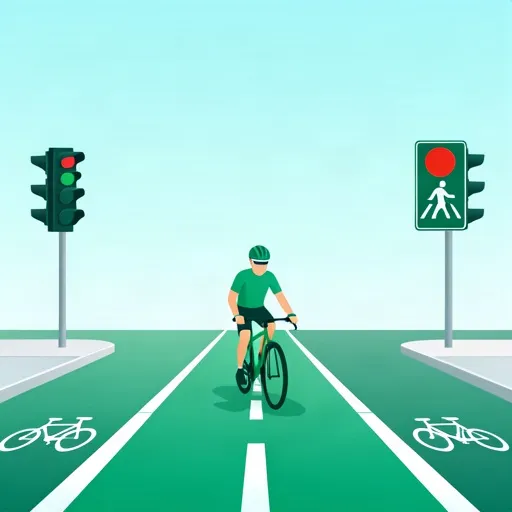
The design of the road network is a critical component of Denmark's safety success. Studies by the Danish Road Directorate have consistently shown that infrastructure modifications can lead to significant reductions in accidents. For instance, converting traditional intersections into roundabouts or signal-regulated junctions has been proven to lower the risk of serious collisions, particularly involving cyclists.
When you are out driving, look for how road signs and markings serve to guide your behavior. These are not merely suggestions; they are engineering solutions intended to minimize the potential for conflict.
To ensure compliance with speed limits, Denmark utilizes Automated Traffic Control (ATK). You may see these units—often referred to as mobile speed cameras—positioned in areas with a history of accidents or near schools and construction sites. These systems are part of a broader strategy to ensure that traffic flows at speeds appropriate for the environment.
Always remember that speed limits in Denmark are not just suggestions; exceeding them, especially in urban areas or near vulnerable road users, is a primary cause of accidents. The theory exam will frequently test your knowledge of speed limits in various zones, such as the 50 km/h limit in urban areas and the 80 km/h limit on rural roads.
Ultimately, the goal of the Danish theory test is to ensure you possess the knowledge to make safe decisions independently. You are expected to recognize the hierarchy of traffic rules, from the priority dictated by signs to the general rules of the road that apply when no signs are present.
Denmark's road safety transformation demonstrates that systematic policy, infrastructure investment, and public education can dramatically reduce fatalities. Vision Zero sets the ambitious target that no serious injury is acceptable in the transport system, guiding the National Road Safety Action Plan aligned with EU goals. Key institutions like the Danish Road Directorate research infrastructure solutions while the Road Safety Council runs public awareness campaigns targeting speed, cyclist visibility, and alcohol impairment. Automated enforcement through ATK cameras ensures compliance with speed limits, which are strictly enforced especially near schools and accident blackspots. For learners, understanding this framework provides essential context for mastering specific traffic rules and developing the safety-conscious mindset required for both the theory exam and real-world driving.
A short set of high-value points that capture the most important ideas from this article.
Vision Zero is Denmark's national commitment to eliminate all traffic fatalities and serious injuries on roads
Denmark reduced road fatalities from over 1,200 in 1971 to fewer than 200 annually through coordinated safety efforts
Traffic rules exist as a safety system designed to protect vulnerable road users including cyclists and pedestrians
Infrastructure improvements like roundabouts and traffic-calming measures directly reduce serious collision risks
Understanding the 'why' behind traffic legislation helps develop the defensive driving mindset needed for safe driving
ATK (Automatisk Trafikkontrol) refers to automated speed enforcement cameras used throughout Denmark
Speed limits are 50 km/h in urban areas and 80 km/h on rural roads, with strict enforcement
Færdselsstyrelsen handles licensing and driving tests; Vejdirektoratet manages state roads and safety research
When no signs are present, general rules of the road determine priority and appropriate behavior
Always check for cyclists in blind spots, especially when turning at intersections
Assuming speed limits are flexible suggestions rather than enforced safety requirements
Overlooking the role of infrastructure design in preventing accidents, not just driver behavior
Confusing the roles of different Danish road safety institutions
Failing to recognize cyclists as primary vulnerable road users in Danish traffic planning
Entering an intersection without confirming priority status from both signs and road markings
Article content overview
A short set of high-value points that capture the most important ideas from this article.
Vision Zero is Denmark's national commitment to eliminate all traffic fatalities and serious injuries on roads
Denmark reduced road fatalities from over 1,200 in 1971 to fewer than 200 annually through coordinated safety efforts
Traffic rules exist as a safety system designed to protect vulnerable road users including cyclists and pedestrians
Infrastructure improvements like roundabouts and traffic-calming measures directly reduce serious collision risks
Understanding the 'why' behind traffic legislation helps develop the defensive driving mindset needed for safe driving
ATK (Automatisk Trafikkontrol) refers to automated speed enforcement cameras used throughout Denmark
Speed limits are 50 km/h in urban areas and 80 km/h on rural roads, with strict enforcement
Færdselsstyrelsen handles licensing and driving tests; Vejdirektoratet manages state roads and safety research
When no signs are present, general rules of the road determine priority and appropriate behavior
Always check for cyclists in blind spots, especially when turning at intersections
Assuming speed limits are flexible suggestions rather than enforced safety requirements
Overlooking the role of infrastructure design in preventing accidents, not just driver behavior
Confusing the roles of different Danish road safety institutions
Failing to recognize cyclists as primary vulnerable road users in Danish traffic planning
Entering an intersection without confirming priority status from both signs and road markings
Explore related topics, search based questions, and concepts that learners often look up when studying Danish Road Safety Trends. These themes reflect real search intent and help you understand how this topic connects to wider driving theory knowledge in Denmark.
Find clear and practical answers to common questions learners often have about Danish Road Safety Trends. This section helps explain difficult points, remove confusion, and reinforce the key driving theory concepts that matter for learners in Denmark.
Vision Zero is the ambitious national objective to have zero people killed or seriously injured in the Danish road transport system, serving as the guiding framework for all modern traffic safety initiatives.
Rådet for Sikker Trafik (The Danish Road Safety Council) is the primary body responsible for public education, awareness campaigns, and promoting safe behavior among road users to help reduce accidents.
Denmark has seen a dramatic improvement, with road fatalities dropping from over 1,200 annually in the 1970s to fewer than 200 in recent years, representing an 85% reduction despite higher traffic volumes.
Key measures include the introduction of mandatory seatbelt laws, stricter drink-driving limits, the implementation of automated traffic control (ATK), and infrastructure improvements like divided motorways.
Continue your learning journey by searching for additional articles or browsing our comprehensive topic categories. Deepen your knowledge of Danish road law, vehicle mechanics, and hazard perception to ensure complete preparation for your official theory exam.