
Driving a motorhome in Denmark requires a clear understanding of vehicle weight classifications, as these dictate your license requirements and speed limits on various road types. This guide helps you navigate the complexities of the Danish Road Traffic Act, including rules for designated camping areas and local parking restrictions, ensuring you stay compliant while on the road. Whether you are a tourist or a learner driver, grasping these regulations is essential for safe navigation and avoiding common penalties.
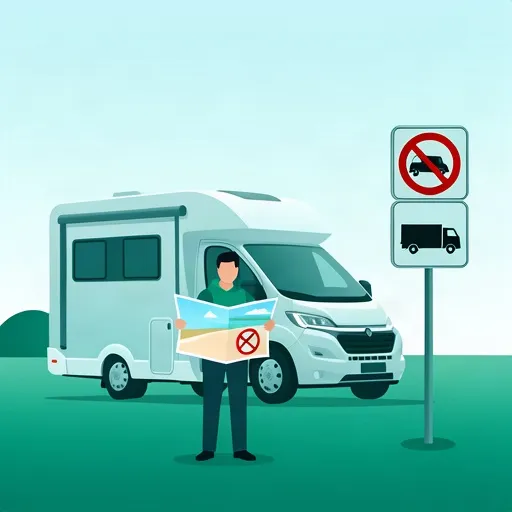
Article content overview
Driving a motorhome, or autocamper, in Denmark offers a unique way to explore the country’s diverse landscapes. However, because these vehicles vary significantly in size and weight, the Danish Road Traffic Act imposes specific requirements that every driver must understand. Whether you are a local resident preparing for your driving theory test or a tourist planning a trip, recognizing the distinction between vehicle categories is the first step toward legal and safe travel.
In Denmark, the rules governing your driving privileges are strictly tied to the Maximum Authorized Mass (MAM) of your vehicle. This weight determines not only which licence category you need but also how your vehicle is treated regarding speed limits and road regulations.
For most motorhomes with a MAM of up to 3,500 kg, you are governed by the same regulations as a standard passenger car. This requires a Category B driving licence. If your motorhome is heavier, typically falling between 3,500 kg and 7,500 kg, you enter the category of heavy vehicles, which necessitates a Category C1 driving licence. It is a common trap in the theory exam to assume that all recreational vehicles are treated identically; always check the vehicle registration papers to confirm your specific weight class before heading out on the road.
The total weight of the vehicle including its maximum load capacity, as specified by the manufacturer and recorded in the vehicle registration document.
Danish speed limits are strictly enforced, and heavy motorhomes are subject to lower limits than passenger vehicles. While a light motorhome (under 3,500 kg) can follow the standard limits of 50 km/h in urban areas, 80 km/h on rural roads, and 130 km/h on motorways, heavy vehicles are restricted to lower maximum speeds, usually 80 km/h on motorways and rural roads.
However, legal speed is not always a safe speed. According to §3 of the Danish Road Traffic Act, you must always adjust your speed to the current conditions, including wind, rain, and the vehicle’s specific handling characteristics. Motorhomes often have a high profile, making them susceptible to crosswinds, especially on exposed stretches like the Storebælt Bridge.
| Vehicle Weight (MAM) | Licence Required | Motorway Speed Limit |
|---|---|---|
| Up to 3,500 kg | Category B | 130 km/h (unless posted lower) |
| 3,501 – 7,500 kg | Category C1 | 80 km/h |
One of the most important aspects of Danish law regarding motorhomes is the strict regulation of overnight parking. Under the Nature Protection Act (Naturbeskyttelsesloven), wild camping is generally prohibited. You cannot simply park your motorhome on a public roadside or in a forest clearing for the night.
Overnight stays in a motor vehicle must take place at an authorized campingplads (official camping site). These sites provide the necessary facilities and are the only locations where you are legally permitted to set up for the night. While there are very limited exceptions in specific state-owned forest areas or national parks, these are the exception rather than the rule. Assuming you can camp anywhere will likely lead to fines and eviction by local authorities.
Driving or parking a motorhome on Danish beaches is strictly prohibited. The beach is a protected natural area, and while public access is guaranteed for pedestrians, motorized vehicles are barred from entry to preserve the ecosystem.
Navigating and parking large motorhomes in dense Danish city centers can be challenging. Because many urban streets are narrow and parking spaces are designed for compact cars, you should always look for designated autocamper parking zones. Cities like Rønne, Skagen, and Ribe have invested in specific areas that accommodate the dimensions of larger vehicles. Always check local signage upon entering a city, as many areas implement height or weight restrictions to prevent large vehicles from obstructing traffic flow.
Driving a motorhome in Denmark requires understanding that your licence category and speed limits depend entirely on the vehicle's Maximum Authorized Mass (MAM), with light motorhomes up to 3,500 kg falling under Category B rules and heavier ones requiring Category C1 with stricter 80 km/h motorway limits. Overnight parking is strictly regulated under the Nature Protection Act, making authorized camping sites the only legal option for staying overnight, while beach access is completely prohibited for all motorhomes. Always adjust your speed to weather conditions, particularly wind exposure on open stretches, and verify your vehicle's exact weight from registration documents before driving.
A short set of high-value points that capture the most important ideas from this article.
Your motorhome's Maximum Authorized Mass (MAM) determines both the licence category you need and your applicable speed limits
Light motorhomes up to 3,500 kg MAM require only a Category B licence and follow standard passenger vehicle speed limits
Heavy motorhomes between 3,500 kg and 7,500 kg require a Category C1 licence and are restricted to 80 km/h on motorways
Wild camping is prohibited under Danish Nature Protection Act; overnight stays must be at authorized camping sites only
Motorhomes are banned from all Danish beaches regardless of weight or licence category
Category B for MAM ≤ 3,500 kg; Category C1 for MAM 3,501–7,500 kg
Speed limits: Light motorhomes 130 km/h motorway, 80 km/h rural; heavy motorhomes capped at 80 km/h everywhere
Naturbeskyttelsesloven prohibits wild camping; campingplads is the only legal overnight option
Beach driving is strictly forbidden to protect the ecosystem, not just restricted areas
High-profile motorhomes are vulnerable to crosswinds; reduce speed in poor weather conditions
Assuming all motorhomes are treated identically regardless of weight when selecting speed limits or parking rules
Confusing Category B and C1 licence requirements, especially for vehicles near the 3,500 kg threshold
Believing that limited public access rights to nature areas extend to overnight motorhome parking
Overlooking the tachograph requirement for heavier commercial-style motorhomes
Neglecting to check local city signage for height and weight restrictions in urban areas
Article content overview
A short set of high-value points that capture the most important ideas from this article.
Your motorhome's Maximum Authorized Mass (MAM) determines both the licence category you need and your applicable speed limits
Light motorhomes up to 3,500 kg MAM require only a Category B licence and follow standard passenger vehicle speed limits
Heavy motorhomes between 3,500 kg and 7,500 kg require a Category C1 licence and are restricted to 80 km/h on motorways
Wild camping is prohibited under Danish Nature Protection Act; overnight stays must be at authorized camping sites only
Motorhomes are banned from all Danish beaches regardless of weight or licence category
Category B for MAM ≤ 3,500 kg; Category C1 for MAM 3,501–7,500 kg
Speed limits: Light motorhomes 130 km/h motorway, 80 km/h rural; heavy motorhomes capped at 80 km/h everywhere
Naturbeskyttelsesloven prohibits wild camping; campingplads is the only legal overnight option
Beach driving is strictly forbidden to protect the ecosystem, not just restricted areas
High-profile motorhomes are vulnerable to crosswinds; reduce speed in poor weather conditions
Assuming all motorhomes are treated identically regardless of weight when selecting speed limits or parking rules
Confusing Category B and C1 licence requirements, especially for vehicles near the 3,500 kg threshold
Believing that limited public access rights to nature areas extend to overnight motorhome parking
Overlooking the tachograph requirement for heavier commercial-style motorhomes
Neglecting to check local city signage for height and weight restrictions in urban areas
Explore related topics, search based questions, and concepts that learners often look up when studying Denmark Motorhome Rules. These themes reflect real search intent and help you understand how this topic connects to wider driving theory knowledge in Denmark.
Find clear and practical answers to common questions learners often have about Denmark Motorhome Rules. This section helps explain difficult points, remove confusion, and reinforce the key driving theory concepts that matter for learners in Denmark.
Motorhomes with a maximum authorized mass (MAM) of 3,500 kg or less are treated as passenger cars. This means they must follow the standard speed limits for cars, which are typically 50 km/h in urban areas, 80 km/h on rural roads, and 130 km/h on motorways, unless signposted otherwise.
Yes, if your motorhome has a MAM between 3,500 kg and 7,500 kg, you require a Category C1 license. Furthermore, these heavier vehicles are subject to lower speed limits, generally 80 km/h on motorways and rural roads.
No, wild camping is generally prohibited. Under the Nature Protection Act, overnight stays in motor vehicles on public roads or public land must take place at official, designated camping sites, known as campingpladser.
No, driving or parking motorized vehicles, including motorhomes, on Danish beaches is strictly prohibited to protect the environment and public access.
Continue your learning journey by searching for additional articles or browsing our comprehensive topic categories. Deepen your knowledge of Danish road law, vehicle mechanics, and hazard perception to ensure complete preparation for your official theory exam.