
Drivers in Denmark bear full legal responsibility for ensuring all passengers, especially children, are secured according to current road safety legislation. This guide details the mandatory height requirements and the vital safety protocols regarding airbag deactivation that are essential for passing your theory exam and protecting young passengers.
Article content overview
Transporting children safely is one of the most critical responsibilities of any driver in Denmark. As a future driver, you are legally obligated to ensure that every passenger, regardless of age, is secured according to the strict requirements set out in the Danish Road Traffic Act (Færdselsloven). Understanding these regulations is not only essential for the safety of young passengers but is also a frequent subject of the Danish theory test. Failure to secure a child correctly can lead to significant penalties, including fines, the payment of a contribution to the Victims' Fund (Offerfonden), and a penalty point (klip) on your driving license.
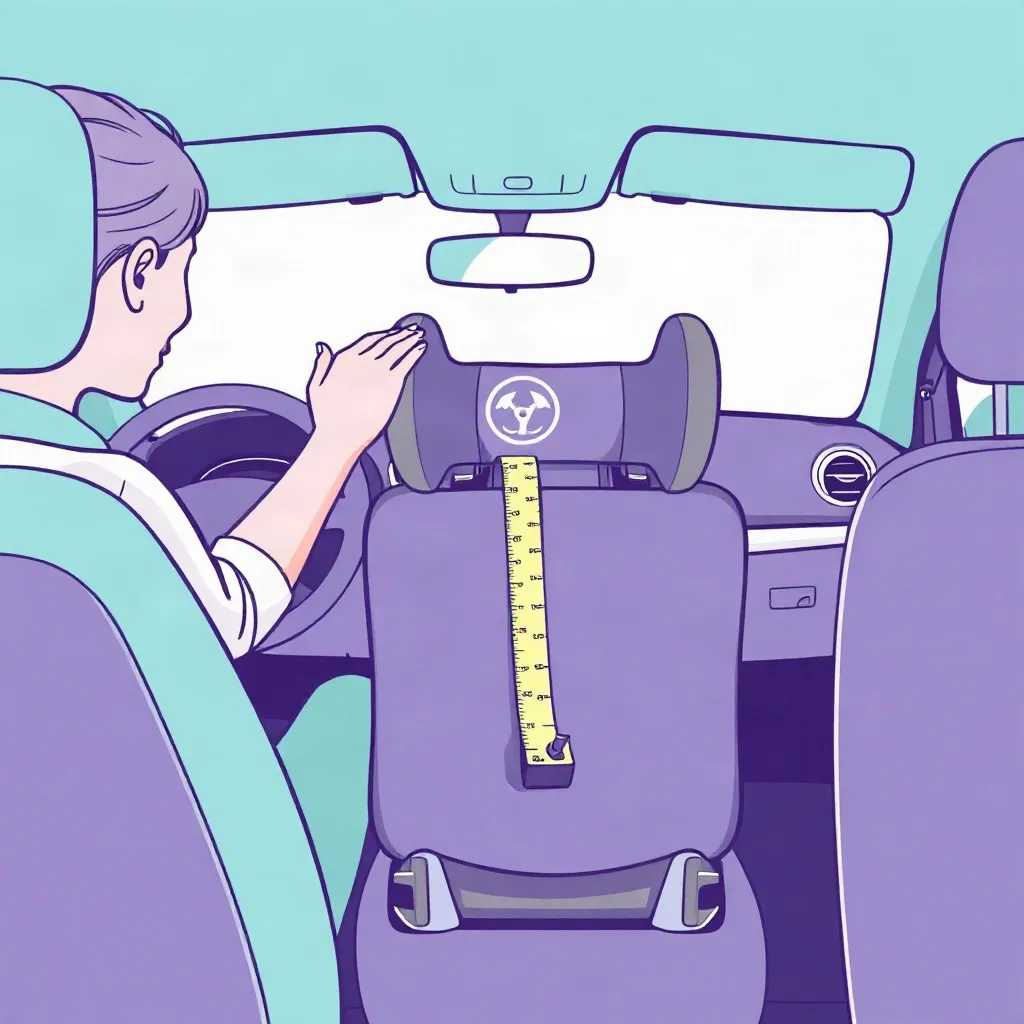
According to §80 of the Danish Road Traffic Act, all children in a vehicle must be secured using safety equipment approved for their specific height and weight until they are at least 135 cm tall. This regulation applies to all types of cars, and it is the driver’s duty to verify that the equipment is installed and used correctly. For many years, standards such as ECE 44-03 and 44-04 were the benchmark for approved child seats. However, current regulations and safety recommendations prioritize the more modern ECE R129 (i-Size) standard. While older seats remain legal to use, the focus is always on ensuring the equipment is perfectly suited to the child's physical development.
It is a serious offense to transport more passengers than there are seatbelts available in the vehicle. The driver is held legally responsible for ensuring that all passengers under the age of 15 are properly secured.
One of the most dangerous misconceptions new drivers face is the idea that the front seat is a suitable place for a child in a rear-facing seat. If a vehicle is equipped with an active front airbag on the passenger side, it is strictly forbidden to place a rear-facing child seat there. In the event of a collision, the force of the airbag deploying can strike the back of the child seat with lethal intensity, causing severe or fatal injuries to the child. Unless the airbag can be deactivated—either automatically or through a manual override provided by the manufacturer—you must never place a child in this position.
While the law defines the minimum requirements for when a child can sit in the front seat, safety experts, including the Danish Road Safety Council (Rådet for Sikker Trafik), strongly recommend keeping children in the back seat for as long as possible. The back seat is statistically the safest location in the event of an impact, shielded from the immediate deployment of dashboard airbags and the direct force of frontal collisions. Even when a child reaches the 135 cm threshold, the back seat remains the best choice for long-term passenger safety.
The specific section of the Danish Road Traffic Act that dictates the mandatory use of approved safety equipment for children under 135 cm in height.
The theory test often presents scenarios testing your knowledge of these penalties. If you are stopped by the police and a child under 15 years old is found to be unfastened or improperly secured, the consequences are immediate. You will receive a fine and a penalty point on your license. In Denmark, accumulating multiple penalty points within a short period leads to a mandatory re-examination or a suspension of your driving privileges. Therefore, demonstrating a rigorous attitude toward child safety is a core component of becoming a responsible, licensed driver.
| Condition | Safety Equipment Requirement |
|---|---|
| Child < 135 cm | Must use approved safety seat/booster |
| Rear-facing seat | Airbag MUST be deactivated |
| Child > 135 cm | Standard seatbelt allowed |
| Driver duty | Ensure all < 15 years are secured |
Danish law under Færdselsloven §80 requires all children under 135 cm to use approved safety equipment appropriate for their height and weight, with the driver holding full legal responsibility for compliance. The most critical safety warning involves the absolute prohibition of placing rear-facing child seats in front seats with active airbags, as deployment forces can cause fatal injuries. Drivers face immediate fines, contributions to Offerfonden, and penalty points for violations, with repeated offenses potentially leading to license suspension. While the 135 cm threshold sets the legal minimum, the Danish Road Safety Council recommends maximizing back seat use for children's safety.
A short set of high-value points that capture the most important ideas from this article.
Children must use approved safety equipment until they reach 135 cm in height, regardless of age.
Rear-facing child seats are strictly prohibited in front seats with active airbags due to the lethal force of deployment.
The driver bears full legal responsibility for securing all passengers under 15 years old.
The current safety standard for child seats is ECE R129 (i-Size), though older approved seats remain legal.
Beyond the legal 135 cm minimum, safety experts strongly recommend keeping children in the back seat as long as possible.
The 135 cm height requirement marks when a child can legally stop using child safety equipment and use a standard seatbelt.
Before placing any child seat in the front, verify that the passenger airbag is deactivated.
Færdselsloven §80 is the specific Danish law section governing child passenger safety requirements.
Accumulating penalty points can lead to mandatory re-examination or suspension of driving privileges.
Using safety equipment not approved for the child's height and weight is a violation regardless of good intentions.
Assuming a rear-facing seat is acceptable in the front if the child seems comfortable, ignoring the mandatory airbag deactivation requirement.
Believing the 135 cm rule is a recommendation rather than a hard legal requirement for using standard seatbelts.
Assuming the back seat is automatically safe without considering whether all safety equipment is properly installed.
Thinking that a brief journey or familiar route reduces the need for proper child restraint procedures.
Using a child seat that does not match the child's current height and weight simply because it was previously used.
Article content overview
A short set of high-value points that capture the most important ideas from this article.
Children must use approved safety equipment until they reach 135 cm in height, regardless of age.
Rear-facing child seats are strictly prohibited in front seats with active airbags due to the lethal force of deployment.
The driver bears full legal responsibility for securing all passengers under 15 years old.
The current safety standard for child seats is ECE R129 (i-Size), though older approved seats remain legal.
Beyond the legal 135 cm minimum, safety experts strongly recommend keeping children in the back seat as long as possible.
The 135 cm height requirement marks when a child can legally stop using child safety equipment and use a standard seatbelt.
Before placing any child seat in the front, verify that the passenger airbag is deactivated.
Færdselsloven §80 is the specific Danish law section governing child passenger safety requirements.
Accumulating penalty points can lead to mandatory re-examination or suspension of driving privileges.
Using safety equipment not approved for the child's height and weight is a violation regardless of good intentions.
Assuming a rear-facing seat is acceptable in the front if the child seems comfortable, ignoring the mandatory airbag deactivation requirement.
Believing the 135 cm rule is a recommendation rather than a hard legal requirement for using standard seatbelts.
Assuming the back seat is automatically safe without considering whether all safety equipment is properly installed.
Thinking that a brief journey or familiar route reduces the need for proper child restraint procedures.
Using a child seat that does not match the child's current height and weight simply because it was previously used.
Explore related topics, search based questions, and concepts that learners often look up when studying Child Safety in Front Seats. These themes reflect real search intent and help you understand how this topic connects to wider driving theory knowledge in Denmark.
Find clear and practical answers to common questions learners often have about Child Safety in Front Seats. This section helps explain difficult points, remove confusion, and reinforce the key driving theory concepts that matter for learners in Denmark.
There is no specific minimum height for sitting in the front seat itself, but children under 135 cm must use approved safety equipment, such as a child seat or booster, which must be installed correctly regardless of where they are seated.
It is illegal to place a child in a rear-facing seat on the front seat if an active airbag is present. The airbag must be deactivated if you intend to use a rear-facing seat in that position.
The driver is responsible for ensuring children are secured properly. Failure to comply can result in a fine, a payment to the Victims' Fund, and a penalty point (klip) on your driver's license.
Continue your learning journey by searching for additional articles or browsing our comprehensive topic categories. Deepen your knowledge of Danish road law, vehicle mechanics, and hazard perception to ensure complete preparation for your official theory exam.