
Navigating intersections safely requires a precise understanding of when you must stop and when you are permitted to proceed. This guide breaks down the Danish rules for traffic signals, clarifying why the 'hazard' exception is the only valid reason to cross on yellow and what flashing yellow signals mean for your right-of-way. Master these regulations to improve your driving decisions and avoid common errors on the official theory exam.
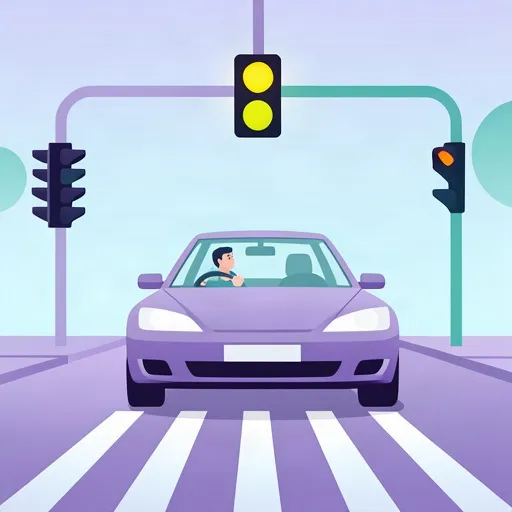
Article content overview
Navigating intersections in Denmark requires more than just basic vehicle control; it demands a precise interpretation of the Danish Traffic Act (Færdselsloven). Many learners approach the theory exam believing that a yellow light is merely a warning to prepare for a stop. However, according to the official Danish traffic regulations, a yellow light carries a legal command similar to a red light: you are required to stop at the stop line if you can do so safely.
Under the Bekendtgørelse om vejafmærkning, a yellow light serves as a clear instruction that the signal is about to change to red. The primary rule is that you must come to a complete stop at the stop line, or before the intersection if no stop line is present. The common misconception that you can "squeeze through" a yellow light to save time is not only a frequent cause of traffic violations but is also a guaranteed way to lose points on your theory exam.
The yellow light is not a suggestion to speed up. Unless you are already so far into the intersection that braking would cause a dangerous situation, such as a rear-end collision with a vehicle following too closely, you are legally obligated to stop. Convenience or the desire to reach your destination faster is never a valid legal excuse for proceeding through a yellow signal.
Danish traffic signals follow specific patterns that you must master for your theory exam. A steady yellow light is different from a red-yellow signal, which indicates that the light is about to turn green. Confusing these two phases is a common pitfall.
| Signal Type | Meaning | Required Action |
|---|---|---|
| Steady Yellow | Stop | Stop at the stop line unless it creates a hazard. |
| Red & Yellow | Imminent Green | Do not move yet; prepare to drive. |
| Flashing Yellow | Caution | The lights are out or inactive; follow signs or priority rules. |
The "hazard" exception, mentioned in the Danish Traffic Act, is frequently misunderstood. It is intended to prevent accidents caused by sudden, forceful braking. If you are approaching a traffic light at a normal speed and the light changes to yellow, you should be able to stop comfortably. If, however, you have committed to entering the intersection and a sudden stop would force you to halt in the path of cross-traffic or cause the car behind you to crash into your rear, the law allows you to clear the intersection. This is a situational judgment, not a license to accelerate when you see the light change.
You will often encounter situations where traffic lights are flashing yellow. This typically indicates that the signals are not currently regulating traffic flow, either due to a technical fault or because they are deactivated during low-traffic hours. In these scenarios, you must treat the intersection as unregulated or look for physical road signs (like the "Give Way" or "Stop" signs) to determine your right-of-way.
The Danish theory test often presents scenarios where a driver is in a "dilemma zone"—the space where stopping is dangerous but proceeding is technically a violation. The correct answer always prioritizes the safety of other road users. Always remember that the examiner is looking for your ability to predict hazards. If the test shows a vehicle tailgating you, the "hazard" of braking hard becomes a legitimate reason to proceed through a yellow light, as preventing a collision takes precedence.
In Denmark, a steady yellow traffic light carries the same legal weight as red—you must stop at the stop line unless doing so would create a hazard like a sudden rear-end collision. The hazard exception is narrowly defined and never justifies proceeding for convenience. The red-yellow phase signals an imminent green where you should prepare to move, while flashing yellow means the signals are inactive and you must follow priority rules or posted signs. The Danish theory exam frequently tests the hazard exception through dilemma zone scenarios, and the correct answer always prioritizes safety over time or convenience.
A short set of high-value points that capture the most important ideas from this article.
A steady yellow light is a legal command to stop, not a warning to prepare for stopping
You must stop at the stop line on yellow unless doing so would create a hazard such as a rear-end collision
The hazard exception applies only when braking suddenly would cause danger, not when it is merely inconvenient
Red-yellow signals mean the light is about to turn green and you should prepare to move
Flashing yellow lights indicate the signals are inactive and priority rules or road signs apply
Stoplinje is the white line where you must halt on a yellow light
Red-yellow (rød-gul) = imminent green; flashing yellow = unregulated intersection
The hazard exception is situational judgment, not permission to accelerate through a yellow light
Convenience, time pressure, or being in a hurry are never valid legal excuses for proceeding on yellow
If you have already entered the intersection safely, you must clear it rather than stop in the path of cross-traffic
Believing you can squeeze through a yellow light to save time when a safe stop is possible
Confusing red-yellow (prepare to go) with steady yellow (must stop)
Misinterpreting the hazard exception as a general license to proceed whenever stopping feels inconvenient
Assuming flashing yellow signals still control the intersection when they actually mean lights are inactive
Not checking for road signs (Give Way or Stop) at intersections with flashing yellow lights
Article content overview
A short set of high-value points that capture the most important ideas from this article.
A steady yellow light is a legal command to stop, not a warning to prepare for stopping
You must stop at the stop line on yellow unless doing so would create a hazard such as a rear-end collision
The hazard exception applies only when braking suddenly would cause danger, not when it is merely inconvenient
Red-yellow signals mean the light is about to turn green and you should prepare to move
Flashing yellow lights indicate the signals are inactive and priority rules or road signs apply
Stoplinje is the white line where you must halt on a yellow light
Red-yellow (rød-gul) = imminent green; flashing yellow = unregulated intersection
The hazard exception is situational judgment, not permission to accelerate through a yellow light
Convenience, time pressure, or being in a hurry are never valid legal excuses for proceeding on yellow
If you have already entered the intersection safely, you must clear it rather than stop in the path of cross-traffic
Believing you can squeeze through a yellow light to save time when a safe stop is possible
Confusing red-yellow (prepare to go) with steady yellow (must stop)
Misinterpreting the hazard exception as a general license to proceed whenever stopping feels inconvenient
Assuming flashing yellow signals still control the intersection when they actually mean lights are inactive
Not checking for road signs (Give Way or Stop) at intersections with flashing yellow lights
Explore related topics, search based questions, and concepts that learners often look up when studying Danish Yellow Light Rules. These themes reflect real search intent and help you understand how this topic connects to wider driving theory knowledge in Denmark.
Find clear and practical answers to common questions learners often have about Danish Yellow Light Rules. This section helps explain difficult points, remove confusion, and reinforce the key driving theory concepts that matter for learners in Denmark.
A yellow light legally means stop, just like a red light. You are only permitted to cross if you are so close to the stop line that braking suddenly would create a hazard, such as risking a rear-end collision from a following vehicle.
A flashing yellow light indicates that the intersection is not currently regulated by the traffic signals. You must follow the posted road signs or the general priority rules for that intersection.
A red and yellow light appearing simultaneously indicates that the signal is about to switch to green. It remains a stop command, but it serves as a preparation signal for drivers to get ready to move.
No. Convenience, haste, or wanting to avoid waiting for the next cycle are not legal justifications for crossing on a yellow light under the Danish Traffic Act.
Continue your learning journey by searching for additional articles or browsing our comprehensive topic categories. Deepen your knowledge of Danish road law, vehicle mechanics, and hazard perception to ensure complete preparation for your official theory exam.