
Understanding where you can legally stop or park is a fundamental skill for every driver in France. This guide explains the official Code de la route terminology used to classify illegal parking, helping you recognize high-risk zones and avoid fines or vehicle impoundment. Whether you are preparing for the ETG exam or driving in urban traffic, mastering these rules ensures you stay safe and compliant with current French traffic regulations.
Article content overview
Mastering the rules of stopping and parking is essential for any driver in France. Whether you are preparing for your ETG theory exam or practicing for your practical test, the ability to distinguish between authorized, restricted, and prohibited areas is a core competency. In France, the Code de la route maintains strict definitions to ensure traffic flow, pedestrian safety, and emergency access. Understanding these legal nuances is the first step toward becoming a responsible driver and avoiding costly fines or vehicle impoundment.
In the French theory exam, you must clearly distinguish between an "arrêt" (stopping) and a "stationnement" (parking). An arrêt is defined as the temporary immobilization of a vehicle on a road during the time necessary to allow passengers to enter or leave the vehicle, or to load or unload goods, while the driver remains at the controls or in the immediate vicinity to move the vehicle if necessary.
A stationnement, on the other hand, is any immobilization of the vehicle that does not qualify as an arrêt. If you leave your vehicle unattended, or if you stop for a longer duration than required for immediate boarding or loading, you are legally considered to be parking. This distinction is vital because many zones that prohibit stationnement still allow for a brief arrêt.
Stationnement abusif refers to parking a vehicle in the same public location for more than seven consecutive days, or for a shorter period determined by local municipal regulations. This practice is strictly prohibited and can lead to the vehicle being towed by the authorities.
The Code de la route categorizes illegal parking based on the severity of the obstruction caused to other road users. Identifying these categories is a frequent requirement in theory exam questions.
Parking is considered gênant when it complicates traffic flow or access. This includes parking on reserved spots for public transport, taxis, or car-sharing vehicles. It also covers parking between the edge of the roadway and a solid line where the remaining width is insufficient for another vehicle to pass without crossing that line.
Parking is très gênant when it directly interferes with vulnerable road users or protected infrastructure. This includes parking on sidewalks, pedestrian crossings, or spaces reserved for persons with reduced mobility. These infractions carry heavier fines because they pose a significant safety risk to pedestrians and cyclists.
Parking is classified as dangereux when the vehicle's position poses a clear risk of accident. This typically includes parking near intersections, on bends, on the crest of a hill, or inside tunnels and underpasses where visibility is severely restricted.
| Category | Definition | Potential Consequence |
|---|---|---|
| Gênant | Hinders public transport or traffic flow. | Fine and potential impoundment. |
| Très Gênant | Blocks sidewalks or vulnerable road users. | Higher fines and mandatory towing. |
| Dangereux | Hides visibility on bends, tunnels, or hills. | Severe fines, points deduction, towing. |
| Abusif | Parked longer than 7 days in one spot. | Towing and impoundment costs. |
The theory exam often tests your ability to anticipate these situations. Remember that local authorities can modify certain rules through municipal decrees. Always look for local signage, such as zone signs that indicate specific time limits or pay-to-park requirements. If you see a parking meter or a blue zone sign, you must comply with the specific display requirements, such as placing a parking disc on your dashboard.
Failure to follow these rules often results in a "mise en fourrière" (impoundment of the vehicle). If you leave your vehicle unattended in a prohibited zone and a police officer decides it is necessary to clear the road, they have the authority to have your car towed at your expense.
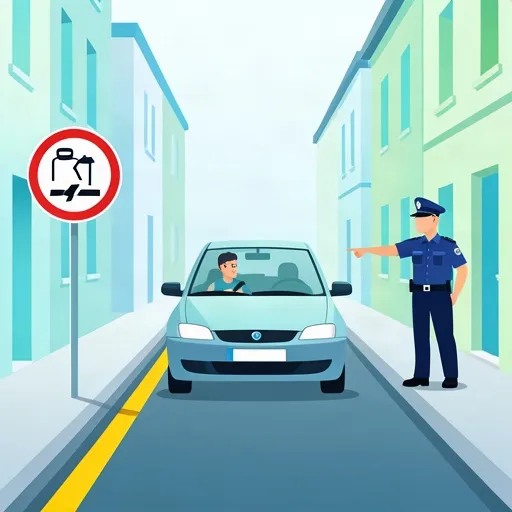
Always check the pavement markings. A yellow dashed line signifies that parking is prohibited, but stopping may be allowed. A solid yellow line indicates that both stopping and parking are prohibited.
This article covers the essential French parking regulations tested on the Code de la route, starting with the legal distinction between 'arrêt' (a temporary stop with the driver present) and 'stationnement' (any unattended or extended immobilization). It then details the four severity levels of illegal parking: gênant (disrupting traffic flow), très gênant (blocking pedestrians and vulnerable users), dangereux (creating visibility or accident hazards), and abusif (leaving a vehicle for over seven days). Key visual markers include yellow dashed and solid lines, plus specific road signs B6a and B6d. The content emphasizes that prohibited zones often permit brief stops, and that violations carry escalating consequences from fines to vehicle impoundment at the owner's expense.
A short set of high-value points that capture the most important ideas from this article.
The distinction between 'arrêt' (temporary stop with driver present) and 'stationnement' (unattended or extended stop) is fundamental because many zones prohibit parking but still allow brief stopping
Parking violations are classified by severity: gênant (obstructive), très gênant (highly obstructive), dangereux (dangerous), and abusif (over 7 days)
Yellow line markings are critical: dashed yellow prohibits parking but allows stopping; solid yellow prohibits both stopping and parking
Dangerous parking includes positions that reduce visibility near intersections, bends, hills, and tunnels—not just blocking traffic
Vehicle impoundment ('mise en fourrière') is a real consequence for prohibited parking, with costs borne by the owner
Arrêt = temporary stop for boarding/loading with driver at controls and ready to move; Stationnement = any unattended immobilization or longer stop
Gênant disrupts public transport, taxis, or car-sharing spots and leaves insufficient width for other vehicles
Très gênant blocks sidewalks, pedestrian crossings, or spaces reserved for persons with reduced mobility
Dangereux creates accident risk through reduced visibility at bends, tunnels, underpasses, intersections, or hill crests
Abusif means parking in the same public location for more than 7 consecutive days, or the period set by local municipal decree
Confusing 'arrêt' and 'stationnement'—a brief stop without the driver present or ready nearby legally counts as parking, not stopping
Assuming prohibited parking always means prohibited stopping—dashed yellow lines specifically allow stopping but forbid parking
Overlooking that very gênant violations include disabled parking spaces and car-sharing bays, not just sidewalk parking
Believing dangerous parking only applies to blocking traffic flow, not to visibility hazards at bends or hill crests
Forgetting that local municipalities can modify rules through decrees, so signage always takes precedence over general knowledge
Article content overview
A short set of high-value points that capture the most important ideas from this article.
The distinction between 'arrêt' (temporary stop with driver present) and 'stationnement' (unattended or extended stop) is fundamental because many zones prohibit parking but still allow brief stopping
Parking violations are classified by severity: gênant (obstructive), très gênant (highly obstructive), dangereux (dangerous), and abusif (over 7 days)
Yellow line markings are critical: dashed yellow prohibits parking but allows stopping; solid yellow prohibits both stopping and parking
Dangerous parking includes positions that reduce visibility near intersections, bends, hills, and tunnels—not just blocking traffic
Vehicle impoundment ('mise en fourrière') is a real consequence for prohibited parking, with costs borne by the owner
Arrêt = temporary stop for boarding/loading with driver at controls and ready to move; Stationnement = any unattended immobilization or longer stop
Gênant disrupts public transport, taxis, or car-sharing spots and leaves insufficient width for other vehicles
Très gênant blocks sidewalks, pedestrian crossings, or spaces reserved for persons with reduced mobility
Dangereux creates accident risk through reduced visibility at bends, tunnels, underpasses, intersections, or hill crests
Abusif means parking in the same public location for more than 7 consecutive days, or the period set by local municipal decree
Confusing 'arrêt' and 'stationnement'—a brief stop without the driver present or ready nearby legally counts as parking, not stopping
Assuming prohibited parking always means prohibited stopping—dashed yellow lines specifically allow stopping but forbid parking
Overlooking that very gênant violations include disabled parking spaces and car-sharing bays, not just sidewalk parking
Believing dangerous parking only applies to blocking traffic flow, not to visibility hazards at bends or hill crests
Forgetting that local municipalities can modify rules through decrees, so signage always takes precedence over general knowledge
Explore related topics, search based questions, and concepts that learners often look up when studying French Parking and Stopping Rules. These themes reflect real search intent and help you understand how this topic connects to wider driving theory knowledge in France.
Find clear and practical answers to common questions learners often have about French Parking and Stopping Rules. This section helps explain difficult points, remove confusion, and reinforce the key driving theory concepts that matter for learners in France.
An arrêt is a momentary halt while the driver remains at the wheel to let passengers board or exit, whereas a stationnement is when the vehicle is immobilized for a longer period with the driver potentially away from the vehicle.
A stationnement très gênant is a severe parking offense that strongly impedes vulnerable road users or protected areas, such as parking on sidewalks, pedestrian crossings, or spaces reserved for people with disabilities.
No, stopping and parking are generally prohibited on bridges, in tunnels, in underpasses, and under overpasses unless explicitly allowed by municipal regulations, as these are classified as dangerous areas.
A stationnement dangereux refers to parking in a location where the vehicle creates a significant risk of collision for other road users, such as near intersections, blind spots, or on crests of hills.
Continue your preparation for the French permis de conduire exam. Dive deeper into specific Code de la route sections, practice scenarios, or review official procedures. Use our comprehensive article collection to master every aspect of driving theory.