
Understanding the unique restrictions placed on novice drivers is a core requirement for passing your theory exam and becoming a safe road user in France. This guide details the legal obligations of the probationary period, helping you identify common exam traps related to speed limits and point penalties while establishing a strong foundation for defensive driving habits.
Article content overview
Obtaining your driving licence in France is a significant milestone, but it also marks the beginning of your probationary period, known as the permis probatoire. During these first few years, your status as a novice driver implies specific legal responsibilities designed to curb accident rates and encourage defensive driving habits. Understanding these rules is not only essential for your safety but is also a core requirement for passing the Code de la route theory exam, where you will frequently encounter questions testing your knowledge of these specific constraints.
When you first receive your French driving licence, it is issued with a reduced point total compared to an experienced driver. You begin with 6 points on your licence, and you must maintain safe driving habits to grow this total over the next three years—or two years if you completed the "AAC" (conduite accompagnée) apprenticeship. Each year, provided you do not commit any traffic infractions, your point total increases automatically.
The French point-based licence system operates on a credit scale. Novice drivers start with 6 points and accumulate additional points annually, provided they do not lose points through traffic violations, until they reach the standard 12-point limit.
It is vital to recognize that traffic violations do not just result in fines; they can trigger point deductions that effectively reset your progression. For the ETG (Epreuve Théorique Générale), you should be prepared to answer questions about how various offences, such as speeding or failing to stop at a red light, impact this probationary balance.
One of the most frequent topics in the French theory exam concerns speed limits. While standard speed limits apply to all road users, novice drivers are subject to stricter regulations, especially during adverse weather conditions. You must always adapt your speed to the environment, but you are also legally bound to adhere to lower maximums than experienced drivers when the weather is poor.
| Road Type | Standard Limit | Novice (Permis Probatoire) |
|---|---|---|
| Autoroute | 130 km/h | 110 km/h |
| Dual Carriageway | 110 km/h | 100 km/h |
| Roads with 2+ lanes same direction | 90 km/h | 80 km/h |
| Standard two-way roads | 80 km/h | 80 km/h |
Always be mindful of weather conditions. In the event of rain or other precipitation, the speed limits on motorways and other major roads are further reduced for all drivers. Novice drivers must ensure they comply with both their probationary status and the current meteorological speed regulations.
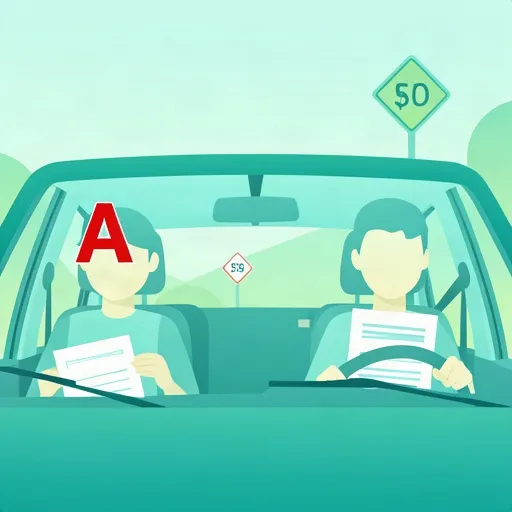
The mandatory display of the 'A' sticker on the rear of your vehicle is a legal requirement for all drivers in their probationary period. This red 'A' on a white circular background serves as a visual indicator to other road users that you have limited experience. By law, this sticker must be placed on the lower right-hand side of the rear of your vehicle, ensuring it does not obstruct your vision or the visibility of your licence plate and lights.
Beyond the legalities, the theory exam emphasizes your role as a responsible road user. Novice drivers are statistically at a higher risk of accidents due to a lack of experience in complex traffic environments. You are expected to demonstrate knowledge of hazard perception, such as identifying potential risks in urban areas, maintaining adequate safety distances, and understanding the priority rules at intersections.
Mastering these concepts requires consistent practice with official exam-style questions. By focusing on the reasoning behind these rules—why we lower speeds for new drivers or why we require the 'A' sticker—you will be better equipped to handle both the theory exam and the real-world demands of driving on French roads.
This article covers the essential rules governing French novice drivers during their permis probatoire period, including the 6-point starting balance and annual accumulation system, the reduced speed limits specific to probationary drivers on motorways and dual carriageways, and the mandatory 'A' sticker requirement. It emphasizes that traffic violations impact both finances and point totals, potentially resetting progression toward the full 12-point licence. The content highlights defensive driving skills and hazard perception as critical for both passing the ETG theory exam and safe real-world driving.
A short set of high-value points that capture the most important ideas from this article.
Novice drivers in France start with 6 points on their permis probatoire and must accumulate to 12 points over 3 years (or 2 years with AAC)
Probationary speed limits are stricter than standard limits on motorways (110 km/h vs 130 km/h) and dual carriageways (100 km/h vs 110 km/h)
The red 'A' sticker is a legal requirement displayed on the lower right of the vehicle rear during the probationary period
Traffic violations cause point deductions that can reset your progress toward the full 12-point licence
Hazard perception and awareness of vulnerable road users are core competencies tested in the ETG exam
Speed limits during rain or adverse weather apply additionally to the novice driver restrictions
The permis à points system means infractions carry both fines and point penalties
The probationary period reduces to 2 years if you completed the conduite accompagnée (AAC) programme
The 'A' sticker must not obstruct the licence plate or vehicle lights
Standard two-way roads maintain the same 80 km/h limit for both novice and experienced drivers
Confusing standard speed limits with the stricter novice driver limits on higher-category roads
Forgetting that weather conditions trigger additional speed reductions on top of probationary limits
Believing the probationary period is always 3 years without knowing the AAC reduction to 2 years
Placing the 'A' sticker in the wrong position (must be lower right-hand side of rear)
Assuming point deductions only result in fines rather than also resetting probationary progress
Article content overview
A short set of high-value points that capture the most important ideas from this article.
Novice drivers in France start with 6 points on their permis probatoire and must accumulate to 12 points over 3 years (or 2 years with AAC)
Probationary speed limits are stricter than standard limits on motorways (110 km/h vs 130 km/h) and dual carriageways (100 km/h vs 110 km/h)
The red 'A' sticker is a legal requirement displayed on the lower right of the vehicle rear during the probationary period
Traffic violations cause point deductions that can reset your progress toward the full 12-point licence
Hazard perception and awareness of vulnerable road users are core competencies tested in the ETG exam
Speed limits during rain or adverse weather apply additionally to the novice driver restrictions
The permis à points system means infractions carry both fines and point penalties
The probationary period reduces to 2 years if you completed the conduite accompagnée (AAC) programme
The 'A' sticker must not obstruct the licence plate or vehicle lights
Standard two-way roads maintain the same 80 km/h limit for both novice and experienced drivers
Confusing standard speed limits with the stricter novice driver limits on higher-category roads
Forgetting that weather conditions trigger additional speed reductions on top of probationary limits
Believing the probationary period is always 3 years without knowing the AAC reduction to 2 years
Placing the 'A' sticker in the wrong position (must be lower right-hand side of rear)
Assuming point deductions only result in fines rather than also resetting probationary progress
Explore related topics, search based questions, and concepts that learners often look up when studying Novice Driver Rules in France. These themes reflect real search intent and help you understand how this topic connects to wider driving theory knowledge in France.
Find clear and practical answers to common questions learners often have about Novice Driver Rules in France. This section helps explain difficult points, remove confusion, and reinforce the key driving theory concepts that matter for learners in France.
Novice drivers holding a probationary licence are subject to lower speed limits compared to experienced drivers, such as 110 km/h on motorways instead of 130 km/h, and 80 km/h on many rural roads.
The 'A' sticker indicates that the driver is in their probationary period, signaling to other road users that the driver has limited experience and is subject to specific regulatory restrictions.
New drivers start with a reduced point total, and they must avoid traffic violations to prevent point loss, which can lead to licence restrictions or the requirement to attend safety courses.
No, novice drivers must also adapt their speed to weather conditions such as rain or fog, which requires further reduction below their already limited maximum speed thresholds.
Continue your preparation for the French permis de conduire exam. Dive deeper into specific Code de la route sections, practice scenarios, or review official procedures. Use our comprehensive article collection to master every aspect of driving theory.