When faced with an accident scenario in the French driving theory exam, knowing the correct order of operations is essential for safety and compliance. This guide details the legal obligations for drivers to protect the site, alert authorities, and provide assistance without compromising their own safety or that of others. These protocols are fundamental to both the ETG exam and safe driving practices across France.
Article content overview
Being involved in or witnessing a road accident is a stressful experience, but for any driver in France, maintaining composure is a legal and moral obligation. The French Code de la route dictates a very specific, logical sequence of actions designed to minimize further harm to victims and prevent additional incidents on the road. Understanding this protocol is not just about being a responsible citizen; it is a fundamental requirement for passing the ETG (Épreuve Théorique Générale) theory exam.
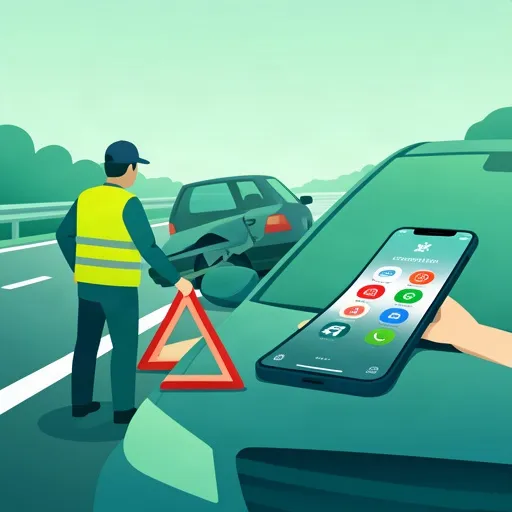
In the context of the French driving theory exam, you will often encounter questions regarding the order of operations after a collision. The official sequence—Protéger, Alerter, Secourir (Protect, Alert, Rescue)—is the gold standard of emergency response. Many candidates fall into the trap of wanting to rush to help injured parties immediately, but the law is clear: you must ensure the site is safe first. Failing to secure the area can lead to a suraccident, where a secondary collision occurs involving you, the initial victims, or emergency responders.
The concept of a suraccident is a frequent theme in ETG theory questions. A suraccident occurs when a new collision happens because the scene of an initial accident was not properly marked or secured. When you are the first on the scene, your role is to make the situation visible to other road users as quickly as possible. You should use your vehicle's hazard warning lights and, if it is safe to do so, move your vehicle to a location that does not obstruct traffic flow if the vehicle is operable and there are no injuries. If you must exit the vehicle, always wear your reflective high-visibility vest, as it is a mandatory safety item that must be kept within reach of the driver.
Never move a victim unless there is an immediate, life-threatening danger such as fire or an explosion. Moving an injured person without proper medical training can cause irreparable damage to their spine or internal organs. Your role in the theory exam is to demonstrate that you understand this limitation.
Once the scene is protected, the Alerter phase begins. In France, you should call the appropriate emergency number. Calling 112 is the universal European emergency number, but you can also use 18 for the Sapeurs-Pompiers (fire department/rescue) or 15 for the SAMU (medical emergency). When you report the accident, provide the precise location, the number of vehicles involved, and whether there are apparent injuries. The dispatcher will guide you through the next steps, and you must stay on the line until instructed otherwise.
A secondary accident that occurs when other road users, failing to notice the initial crash, collide with the damaged vehicles or the people involved in the first incident. Preventing this is the driver's absolute priority.
While your primary focus is immediate safety, remember that the Code de la route also mandates that you must stop to help if you are involved in an accident. Leaving the scene of an accident in France is considered a serious criminal offense, often referred to as délit de fuite (hit-and-run). In the exam, always choose the option that involves stopping, securing the area, and notifying authorities. Administrative details like filling out a constat amiable (friendly accident report) for insurance purposes only occur once the immediate emergency has been managed and the site is officially secured.
After any road accident in France, drivers must follow the mandatory 'Protéger, Alerter, Secourir' sequence prescribed by the Code de la route. The first priority is securing the scene using hazard lights, a high-visibility vest, and a warning triangle to prevent secondary collisions. Once the scene is safe, emergency services should be contacted via 112, 18, or 15 with precise location and incident details. Assistance to injured parties should only be provided after securing the scene and within the limits of your training - never move a victim unless they face immediate danger. This protocol is a core component of the ETG theory exam and represents a driver's fundamental legal and moral obligations on French roads.
A short set of high-value points that capture the most important ideas from this article.
The emergency response sequence must always follow this exact order: Protéger (secure the scene), Alerter (call emergency services), Secourir (provide assistance)
Protecting the scene prevents a 'suraccident' - a secondary collision that endangers victims, rescuers, and other road users
Driver must activate hazard lights, wear a high-visibility vest before exiting the vehicle, and place a warning triangle at a safe distance
When alerting emergency services, provide the precise location, number of vehicles involved, and apparent injuries
Leaving the scene of an accident in France constitutes a serious criminal offense known as 'délit de fuite'
The Protéger-Alerter-Secourir sequence is mandatory and non-negotiable - never skip to Secourir without securing the scene first
Emergency numbers: 112 (EU-wide), 18 (Sapeurs-Pompiers/fire department), 15 (SAMU/medical emergency)
The high-visibility vest (gilet jaune) and warning triangle are mandatory items that must be kept within the driver's reach
Never move an injured person unless they face an immediate life-threatening danger such as fire
Administrative procedures like the constat amiable only come after the emergency is fully managed
Wanting to rush and help injured parties before securing the scene, which can cause a suraccident
Forgetting to wear the high-visibility vest before exiting the vehicle after an accident
Failing to place the warning triangle at a sufficient distance, especially on curves where visibility is limited
Leaving the scene to seek help rather than calling from the scene, which delays response time
Moving an injured victim without proper training, risking spinal or internal organ damage
Article content overview
A short set of high-value points that capture the most important ideas from this article.
The emergency response sequence must always follow this exact order: Protéger (secure the scene), Alerter (call emergency services), Secourir (provide assistance)
Protecting the scene prevents a 'suraccident' - a secondary collision that endangers victims, rescuers, and other road users
Driver must activate hazard lights, wear a high-visibility vest before exiting the vehicle, and place a warning triangle at a safe distance
When alerting emergency services, provide the precise location, number of vehicles involved, and apparent injuries
Leaving the scene of an accident in France constitutes a serious criminal offense known as 'délit de fuite'
The Protéger-Alerter-Secourir sequence is mandatory and non-negotiable - never skip to Secourir without securing the scene first
Emergency numbers: 112 (EU-wide), 18 (Sapeurs-Pompiers/fire department), 15 (SAMU/medical emergency)
The high-visibility vest (gilet jaune) and warning triangle are mandatory items that must be kept within the driver's reach
Never move an injured person unless they face an immediate life-threatening danger such as fire
Administrative procedures like the constat amiable only come after the emergency is fully managed
Wanting to rush and help injured parties before securing the scene, which can cause a suraccident
Forgetting to wear the high-visibility vest before exiting the vehicle after an accident
Failing to place the warning triangle at a sufficient distance, especially on curves where visibility is limited
Leaving the scene to seek help rather than calling from the scene, which delays response time
Moving an injured victim without proper training, risking spinal or internal organ damage
Explore related topics, search based questions, and concepts that learners often look up when studying French Accident Emergency Procedures. These themes reflect real search intent and help you understand how this topic connects to wider driving theory knowledge in France.
Find clear and practical answers to common questions learners often have about French Accident Emergency Procedures. This section helps explain difficult points, remove confusion, and reinforce the key driving theory concepts that matter for learners in France.
The first priority is always to protect the scene (protéger) to prevent a 'suraccident', which is a secondary collision involving other road users.
It is the official French emergency protocol: first, protect the area to secure the site; second, alert the emergency services (112); and third, provide assistance to victims if possible.
No, you should not move victims unless there is an immediate and life-threatening danger, such as a fire or risk of explosion, as moving them can worsen their injuries.
A 'suraccident' refers to a secondary accident that occurs because the original scene was not properly secured, often involving vehicles hitting people or objects already involved in the initial collision.
Continue your preparation for the French permis de conduire exam. Dive deeper into specific Code de la route sections, practice scenarios, or review official procedures. Use our comprehensive article collection to master every aspect of driving theory.