
This lesson provides a comprehensive overview of the legal motorcycle categories in France under the Code de la route. You will learn the specific age requirements, power-to-weight ratios, and the transition path from A2 to a full Category A licence to ensure you are fully prepared for your exam.
Lesson content overview
The French system for motorcycle licensing is governed strictly by the Code de la route. To systematically reduce accident rates among motorcyclists—who are statistically among the most vulnerable road users—France employs a graduated licensing framework. This progressive system ensures that riders build practical experience, physical coordination, and hazard perception on lower-powered machines before moving on to unrestricted, high-performance motorcycles.
Understanding these legal categories, technical constraints, and examination pathways is not only mandatory for passing your theoretical exam but is also fundamental to ensuring your legal compliance, safety, and insurance validity on public roads.
The core philosophy of the French motorcycle licensing structure is the mitigation of risk through tiered access. Novice riders lack the specialized muscle memory and cognitive processing speed required to handle high-power motorcycles under emergency conditions, such as sudden braking or high-speed cornering. By limiting engine displacement, maximum power output, and power-to-weight ratios in the early stages of a rider's journey, the law establishes a protective buffer.
This graduated system is divided into three distinct categories:
Each tier has strict age thresholds, specific training regimes, and precise vehicle technical limitations that cannot be bypassed.
The Category A1 licence (Permis A1) is designed for young riders and those seeking light, efficient transport. It serves as the initial step into motorized two-wheeler operations on public highways.
An A1 licence holder is legally restricted to riding "light motorcycles" (motocyclettes légères) and motor tricycles that meet the following exact specifications:
The power-to-weight ratio is calculated by dividing the vehicle's maximum engine power (in kW) by its weight (in kg). Controlling this ratio prevents manufacturers from building ultra-lightweight motorcycles that accelerate dangerously fast despite having low nominal horsepower.
Common Misunderstanding: Believing that any 125 cc motorcycle is legal under an A1 licence is a frequent and costly mistake. Some older or off-road 125 cc motorcycles produce up to 30 hp (approx. 22 kW), which far exceeds the legal 11 kW limit. Always check the official registration certificate (carte grise) under section P.2 (power in kW) and Q (power-to-weight ratio) before riding.
The Category A2 licence (Permis A2) is the mandatory starting point for all adult motorcycle candidates in France, regardless of their age (unless they qualify for direct access to Category A later in life).
A2 riders may operate medium-powered motorcycles that conform to three cumulative rules:
To comply with the law, many riders buy a more powerful motorcycle and have it fitted with a certified power restriction kit (bridage) to reduce its output to 35 kW. However, the Code de la route prevents riders from restricting high-performance superbikes.
For example:
The Category A licence (Permis A) is the ultimate tier, removing all mechanical restrictions on motorcycle power, engine capacity, and power-to-weight ratios.
A Category A licence allows you to ride any two-wheeled or three-wheeled motorcycle, including high-performance superbikes, heavy touring machines, and custom cruisers (e.g., engines exceeding 1000 cc and producing well over 100 kW).
There are two distinct routes to obtaining a Category A licence:
Hold the A2 Licence: You must have held your Category A2 licence for a minimum of 2 continuous years.
Complete the Bridge Training: Complete a mandatory 7-hour bridge training course (passerelle A2 vers A) at an approved training centre.
Administrative Upgrade: There is no final examination for this bridge course. Upon successful completion, the training centre issues a certificate, and you must apply to upgrade your physical driving licence before operating an unrestricted motorcycle.
Age Requirement: You must be at least 24 years of age.
Theoretical Exam: You must take and pass the motorcycle-specific theory test (ETM).
Practical Training: Complete a minimum of 20 hours of practical training (or 15 hours if you already hold an A1 licence).
Practical Exams: Successfully pass both the off-road and on-road practical examinations on a motorcycle that meets Category A power specifications.
To obtain any of these licences, you must complete a rigorous two-step examination process designed to test both your cognitive understanding of traffic laws and your physical mastery of the motorcycle.
Known officially as the Épreuve Théorique Moto (ETM), this exam is distinct from the general car theory test (ETG). It focuses heavily on motorcycle-specific safety, rider dynamics, mechanical components, and protective gear.
The practical exam is split into two separate evaluations, usually taken on the same day or in close succession:
Operating a motorcycle that does not match your licence category is a severe criminal offence under French law. The legal system treats this infraction with the utmost seriousness due to the extreme danger it poses to the rider and other road users.
Novice A2 riders sometimes attempt to remove the restriction kits (débridage) from their motorcycles to achieve full power before their 2-year progression period is complete. Doing so triggers severe penalties:
If you ride an unrestricted motorcycle with an A2 licence, your insurance policy is legally voided. In the event of an accident:
To help consolidate your understanding of these rules, let us look at how they apply in everyday contexts.
A rider recently passed their practical exam at age 19 and wants to buy a used sportbike. They find a beautiful Suzuki GSX-R 600 which has been restricted by the seller to 35 kW.
During the plateau (off-road) exam, a sudden rainstorm begins.
The French motorcycle licence system follows a graduated progression through A1 (125cc/11kW limit, age 16+), A2 (35kW limit with 0.2 kW/kg ratio and 70kW derivation ceiling, age 18+), and Category A (unrestricted, age 24+ for direct access or after 2 years on A2 plus a 7-hour bridge course). The ETM theoretical exam requires 35 correct answers out of 40 questions, while the practical exam comprises an off-road plateau testing low-speed control and emergency maneuvers at 50 km/h, followed by an on-road circulation test. Operating a motorcycle outside your licence category results in criminal prosecution, fines up to €15,000, vehicle confiscation, and automatic insurance voidance leaving you personally liable for all damages.
A short set of high-value points that capture the most important learning from this lesson.
France uses a three-tier graduated motorcycle licence system: A1 (light), A2 (intermediate), and Category A (unrestricted), each with strict technical and age requirements.
Category A1 permits motorcycles up to 125cc and 11kW with a power-to-weight ratio not exceeding 0.1 kW/kg, with a minimum age of 16.
Category A2 restricts riders to motorcycles producing a maximum of 35kW with a 0.2 kW/kg ratio, and the base model must not exceed 70kW under the Derivation Rule.
To upgrade from A2 to Category A, riders must hold A2 for at least 2 years and complete a 7-hour bridge training course with no additional exam required.
The ETM theoretical exam consists of 40 multiple-choice questions requiring a minimum score of 35/40, valid for 5 years or until 5 practical attempts are exhausted.
Explore all units and lessons included in this driving theory course.
A1 power limit is 11kW (15hp) maximum, not all 125cc motorcycles qualify—check the carte grise fields P.2 and Q.
The A2 Derivation Rule prohibits restricting motorcycles originally exceeding 70kW, even if restriction kits exist.
Direct access to Category A requires being at least 24 years old, passing the ETM, and completing 20 hours of practical training.
The practical motorcycle exam has two parts: the off-road plateau (slaloms, braking, avoidance at 50 km/h) and on-road circulation (40-minute public road assessment).
Removing a restriction kit (*débridage*) before completing the A2 to A progression is a criminal offence, not merely a traffic fine.
Assuming any 125cc motorcycle is legal under an A1 licence—older or off-road models can produce up to 22kW, exceeding the 11kW limit.
Believing a high-performance superbike can be legally restricted for A2 use; if the base model exceeds 70kW, it violates the Derivation Rule regardless of restriction kits.
Assuming a restricted motorcycle is automatically insured; riding above licence category voids insurance coverage entirely.
Confusing the ETG (car theory test) with the ETM (motorcycle theory test)—they are separate examinations with different content focuses.
Attempting to remove bridage before the 2-year A2 holding period is complete, exposing oneself to €15,000 fines and potential licence revocation.
Lesson content overview
A short set of high-value points that capture the most important learning from this lesson.
France uses a three-tier graduated motorcycle licence system: A1 (light), A2 (intermediate), and Category A (unrestricted), each with strict technical and age requirements.
Category A1 permits motorcycles up to 125cc and 11kW with a power-to-weight ratio not exceeding 0.1 kW/kg, with a minimum age of 16.
Category A2 restricts riders to motorcycles producing a maximum of 35kW with a 0.2 kW/kg ratio, and the base model must not exceed 70kW under the Derivation Rule.
To upgrade from A2 to Category A, riders must hold A2 for at least 2 years and complete a 7-hour bridge training course with no additional exam required.
The ETM theoretical exam consists of 40 multiple-choice questions requiring a minimum score of 35/40, valid for 5 years or until 5 practical attempts are exhausted.
Explore all units and lessons included in this driving theory course.
A1 power limit is 11kW (15hp) maximum, not all 125cc motorcycles qualify—check the carte grise fields P.2 and Q.
The A2 Derivation Rule prohibits restricting motorcycles originally exceeding 70kW, even if restriction kits exist.
Direct access to Category A requires being at least 24 years old, passing the ETM, and completing 20 hours of practical training.
The practical motorcycle exam has two parts: the off-road plateau (slaloms, braking, avoidance at 50 km/h) and on-road circulation (40-minute public road assessment).
Removing a restriction kit (*débridage*) before completing the A2 to A progression is a criminal offence, not merely a traffic fine.
Assuming any 125cc motorcycle is legal under an A1 licence—older or off-road models can produce up to 22kW, exceeding the 11kW limit.
Believing a high-performance superbike can be legally restricted for A2 use; if the base model exceeds 70kW, it violates the Derivation Rule regardless of restriction kits.
Assuming a restricted motorcycle is automatically insured; riding above licence category voids insurance coverage entirely.
Confusing the ETG (car theory test) with the ETM (motorcycle theory test)—they are separate examinations with different content focuses.
Attempting to remove bridage before the 2-year A2 holding period is complete, exposing oneself to €15,000 fines and potential licence revocation.
Explore search topics learners often look for when studying Legal Framework and Licence Categories. These topics reflect common questions about road rules, driving situations, safety guidance, and lesson level theory preparation for learners in France.
Browse additional driving theory lessons that cover connected traffic rules, road signs, and common driving situations related to this topic. Improve your understanding of how different rules interact across everyday traffic scenarios.
Learn the specific requirements and structure of the Épreuve Théorique Moto. This guide covers the scoring system, validity periods, and the key thematic areas of French traffic law that appear on the theory exam to help you prepare your study plan effectively.

This lesson emphasizes that driving a motorcycle in France involves unique moral and social responsibilities towards vulnerable road users like cyclists and pedestrians. You will examine the importance of defensive riding habits, civil road etiquette, and the prioritizing of shared road safety. Understanding these principles helps to prevent dangerous situations, respect local communities, and lower overall accident statistics.
This lesson covers the environmental legalities that motorcyclists must follow in French urban areas, including low-emission zones designated as ZFE. You will understand how Euro emissions classifications affect your motorcycle and learn the process for acquiring and placing a Crit'Air vignette. The lesson also explores eco-driving techniques that help reduce fuel consumption, greenhouse gas emissions, and exhaust noise levels.

This lesson explains the correct procedures for entering, circulating, and exiting roundabouts, which are highly prevalent throughout France. You will learn the exact lane choice strategies based on your intended exit, and how to use your turn indicators at each stage of the maneuver. The content also addresses the critical task of performing over-the-shoulder blind spot checks to avoid conflicts with overtaking vehicles when exiting.

This lesson covers the operational logic of traffic light signals in France, emphasizing the legal implications of the red, amber, and green cycles. You will study how to safely manage the amber phase to avoid rear-end collisions from vehicles behind while maintaining control. Additionally, you will discover the unique challenge of electromagnetic induction loops, which sometimes fail to detect lightweight motorcycles at quiet intersections.
This lesson focuses on the defensive value of CE-certified motorcycle apparel, including jackets, trousers, gloves, and boots. You will learn about the technical properties of abrasion-resistant materials like Cordura or leather, and the integration of armor inserts. Crucially, the lesson covers the French legal mandate requiring riders and passengers to wear certified protective gloves, detailing the legal fines for non-compliance.
This lesson provides a comprehensive breakdown of the mandatory paperwork required to legally operate a motorcycle in France. It covers the exact details of obtaining the vehicle registration document, known as the carte grise, and securing the mandatory civil liability insurance. Additionally, you will learn how to properly display the green insurance certificate and understand the serious penalties for driving without proper coverage.

This lesson addresses the unique physiological demands of operating a heavy motorcycle, requiring high muscular coordination, core stability, and rapid reaction times. You will learn to perform self-assessments of your current health status and identify how minor physical ailments can impair balance. The lesson also covers cognitive load management, ensuring that mental stress does not compromise your reaction patterns on the road.
This lesson details how to safely enter, cruise on, and exit French motorways, known as autoroutes, which feature high-speed traffic flows. You will master the process of matching highway speeds in the acceleration lane and performing blind spot checks before merging. The lesson also explains correct lane positioning to avoid aerodynamic turbulences from large semi-trucks, and how to safely prepare for decelerating at exit ramps.
This lesson focuses on identifying and managing the wide range of road surface grip levels encountered on French highways. You will learn to recognize hazardous low-traction situations, such as tar strips ('tar snakes'), wet manhole covers, gravel patches, and diesel spills at roundabouts. The lesson provides strategies for adjusting your throttle and lean angle in advance to prevent sudden, dangerous slides on compromised pavement.
This lesson focuses on identifying regulatory signs, which are circular signs with red borders for prohibitions or blue backgrounds for obligations. You will learn about specific restrictions that impact motorcycle paths, including narrow lane access bans, motorcycle-specific speed limits, and overtaking prohibitions. Mastering these symbols is vital to ensuring compliance with French road law and avoiding immediate traffic penalty points.
Explore the legal responsibilities and ethical conduct required of motorcyclists under the French Code de la route. This overview details rider safety obligations, environmental regulations, and the importance of maintaining documentation to ensure full legal compliance while riding on public highways.
This lesson emphasizes that driving a motorcycle in France involves unique moral and social responsibilities towards vulnerable road users like cyclists and pedestrians. You will examine the importance of defensive riding habits, civil road etiquette, and the prioritizing of shared road safety. Understanding these principles helps to prevent dangerous situations, respect local communities, and lower overall accident statistics.

Learners explore the specific responsibilities that accompany operating a small, exposed vehicle, emphasizing the need for heightened defensive driving techniques under French law. The lesson stresses the importance of maintaining visibility and predictability, adhering strictly to the Code de la route, and understanding the dynamics of sharing the road safely. By internalizing these responsibilities, riders can significantly reduce risks and contribute to a safer traffic environment for all users.
This lesson provides a clear, step-by-step procedure to follow if you witness or are involved in a traffic accident in France. You will learn how to secure the scene using your mandatory hazard triangle and yellow vest to prevent secondary collisions. Crucially, it explains how to contact emergency services via 112 and covers basic first-aid rules, including the absolute ban on removing an injured rider's helmet unless necessary.

Operating a passenger vehicle in France requires strict compliance with dynamic safety laws and maintenance rules. This lesson explains your duty of care toward other road users, mandatory child restraint and seatbelt laws, and strict prohibitions on phone use while driving. You will also learn about the required periodic technical vehicle inspections (controle technique) and third-party insurance mandates.
This lesson provides a comprehensive breakdown of the mandatory paperwork required to legally operate a motorcycle in France. It covers the exact details of obtaining the vehicle registration document, known as the carte grise, and securing the mandatory civil liability insurance. Additionally, you will learn how to properly display the green insurance certificate and understand the serious penalties for driving without proper coverage.
This lesson explores practical methods to make yourself visible to other road users, preventing the classic 'sorry mate, I didn't see you' hazard. You will analyze the use of high-visibility yellow or orange retro-reflective waistcoats, which are legally required to be carried on board in France. Additionally, you will study optimal headlight utilization and correct placement of auxiliary indicators to capture driver attention.
This lesson focuses on the importance of wearing appropriate protective clothing and gear, such as jackets, CE-certified gloves, and durable boots, that meet safety standards for impact and abrasion resistance. Learners will examine the material properties that provide optimal protection while ensuring comfort and adaptability to various weather conditions. Selecting correct gear helps mitigate injury severity and promotes long-term safety habits among AM riders.
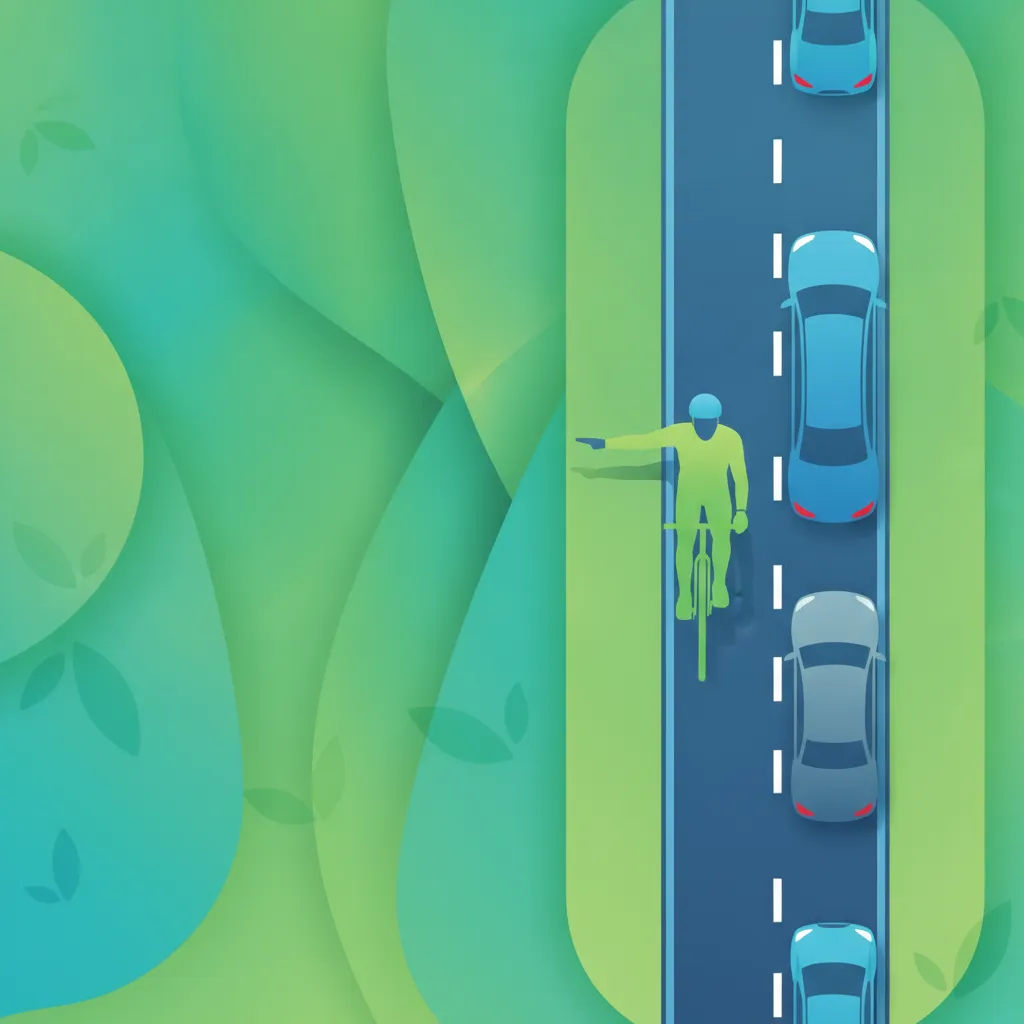
Bicycles represent an eco-friendly transport method with specific rights on French public roadways. This lesson teaches you how to identify dedicated cycle paths, respect bike lanes, and understand cyclist turning privileges at intersections. You will learn the legal minimum safety distance required when overtaking a cyclist: 1 meter in urban areas and 1.5 meters outside city limits.

This lesson covers the strict legal conditions under which you may overtake other vehicles on French roads, including necessary visibility criteria. You will master the step-by-step process of checking rearview mirrors, performing head checks, signaling, and maintaining a safe speed differential during the pass. It also details when overtaking is strictly forbidden, such as before intersections, near pedestrian crossings, or across solid lines.
This lesson focuses on the legal requirement to yield to pedestrians on or about to step onto zebra crossings, a major focus of French road safety. You will learn how to approach school zones and pedestrian islands with heightened vigilance and reduced speed. Additionally, the lesson explores shared urban spaces, explaining how to maintain safe lateral distances when overtaking cyclists or personal electric scooters.
Find clear answers to common questions learners have about Legal Framework and Licence Categories. Learn how the lesson is structured, which driving theory objectives it supports, and how it fits into the overall learning path of units and curriculum progression in France. These explanations help you understand key concepts, lesson flow, and exam focused study goals.
An A2 licence is restricted to motorcycles with a power output not exceeding 35 kW. A Category A licence allows you to ride any motorcycle, typically after two years of holding an A2 licence and completing a specific training module.
You can apply for the A1 motorcycle licence at 16 years old. This category is for motorcycles with a cylinder capacity not exceeding 125 cc and a power output not exceeding 11 kW.
All motorcycle categories in France follow the same theoretical examination framework, known as the ETG (Épreuve Théorique Générale), which tests your knowledge of the Code de la route.
No, if you already hold an A2 licence, you do not need to retake the theory test to progress to a full Category A licence, provided you complete the mandatory practical training after the required two-year period.
Ready to focus your study? Use the practice search to find exactly the French driving theory questions you need for the Code de la route and permis de conduire ETG. Refine your knowledge on specific topics or challenging rules to boost your confidence and exam readiness.