
This lesson details the legal responsibilities and safety requirements mandated for every Category B driver in France. Understanding these obligations is crucial not only for passing the official ETG theory exam but also for ensuring your long-term safety and compliance on French roads.

Lesson content overview
Operating a passenger vehicle in France requires strict compliance with dynamic safety laws, administrative mandates, and vehicle maintenance rules. Under the French Code de la route, holding a Category B license (permis de conduire de catégorie B) comes with significant legal responsibilities designed to protect you, your passengers, and other road users.
This lesson details the statutory obligations of a Category B driver. Mastery of these topics is critical not only for passing the French driving theory exam, the Épreuve Théorique Générale (ETG), but also for navigating French roads safely and avoiding severe penalties, point losses, or criminal prosecution.
The foundational legal principle for any motorist in France is the Duty of Care (Devoir de vigilance). This duty is a statutory obligation requiring drivers to act with constant caution, foresight, and adaptability to avoid endangering other road users.
The legal and moral obligation under French traffic law requiring drivers to constantly assess risks, adapt their speed and positioning, and proactively safeguard vulnerable road users.
French traffic law explicitly prioritizes the protection of the most vulnerable road users. The "vulnerability hierarchy" positions pedestrians first, followed by cyclists, motorcyclists, and lastly, occupants of motor vehicles. Under this framework, you must continuously anticipate potential hazards.
Maintaining a defensive driving posture means recognizing that having the "right of way" does not absolve you of your legal duty to avoid an accident if you have the opportunity to do so.
Distracted driving is one of the leading causes of fatal accidents on French roads. Under Article R412-6-1 of the Code de la route, the physical handling of a mobile phone while driving is strictly prohibited.
The law distinguishes strictly between handheld physical interaction and hands-free technology:
The Red Light Myth: Many drivers believe it is legal to check their phones while stationary at a red light or stuck in a traffic jam. In France, the vehicle is still considered to be "in traffic" (en circulation). Using a handheld phone in these scenarios is fully illegal and subject to the same penalties as using it at high speed. The only legal exception is if your vehicle is safely parked in a designated parking bay with the engine turned off.
French law mandates the use of approved safety restraints for all occupants of a Category B vehicle. Proper restraint usage drastically reduces injury severity in collisions.
Every occupant of the vehicle—both in the front and rear seats—must wear a properly adjusted and fastened three-point seatbelt whenever the vehicle is in motion.
Children must be secured in an approved Child Restraint System (CRS) matching their physical development. Under Articles R412-2 to R412-6 of the Code de la route, child safety seats are categorized by height, weight, and age.
Infants and Toddlers (up to 135 cm or 18 kg): Must be secured in an approved, rear-facing seat. The rear-facing position protects the child's fragile neck and spine by distributing collision forces across the back of the seat.
Young Children (up to 150 cm or 36 kg): Must use a suitable forward-facing car seat with an integrated harness or a high-back booster seat (réhausseur) that positions the vehicle's adult seatbelt safely across their hips and chest.
Placement in the Vehicle: Children under 10 years old must travel in the rear seats of the vehicle. Traveling in the front passenger seat is strictly forbidden for children under 10 unless:
Active Front Airbags: If you must place a rear-facing infant seat in the front passenger seat (due to one of the legal exceptions listed above), you must manually deactivate the front passenger airbag. Failure to deactivate the airbag can result in fatal injuries to the infant if the airbag deploys during a crash.
To prevent mechanical failures from causing accidents on public roads, the French government enforces a mandatory periodic technical inspection known as the Contrôle Technique.
A compulsory government-regulated inspection verifying that passenger vehicles comply with safety and environmental standards.
For a standard Category B passenger vehicle, the inspection timeline is strictly defined:
Once the inspection is completed, the certified center will issue a classification based on their findings:
Driving a motor vehicle in France without valid insurance is a serious criminal offense (délit). Under Article L211-1 of the Code des assurances, all vehicle owners must obtain civil liability coverage.
This mandatory minimum insurance—often called assurance au tiers—covers bodily injury and property damage that your vehicle inflicts on third parties (pedestrians, cyclists, other drivers, and your own passengers) in the event of an accident.
Historically, vehicles in France were required to display a small green paper square (papillon vert) on the bottom-right corner of the windshield. While France has transitioned toward a digital verification system—utilizing the Fichier des Véhicules Assurés (FVA) (Insured Vehicles Database) accessible by law enforcement cameras—drivers are still issued an insurance certificate (attestation d'assurance). You must be able to prove valid coverage during roadside inspections.
When operating a Category B vehicle, you must carry original, physical documents inside the vehicle at all times. Electronic copies on a smartphone are generally not accepted as legal substitutes during a roadside police check.
Driving License (Permis de Conduire): A valid Category B license (either the classic pink paper format or the modern credit-card style, or an official digital license secured within the state-approved France Identité application).
Vehicle Registration Certificate (Carte Grise): Formally known as the Certificat d’Immatriculation. This document proves the vehicle's registration, contains its technical specifications, and identifies the owner.
Proof of Insurance (Attestation d'assurance): Document confirming the vehicle is covered by at least a third-party liability policy.
If you are stopped by the Gendarmerie or Police Nationale, failing to immediately present these physical documents constitutes an infraction and results in immediate fines. You are typically given a brief grace period (usually 5 days) to present the missing documents at a police station to avoid additional, heavier penalties.
Understanding how the law applies in complex, real-world situations is essential for safe driving and passing the ETG.
| Driver Obligation | Legal Basis (Code de la route) | Direct Safety Purpose | Key Violation Consequence |
|---|---|---|---|
| Duty of Care | Article R313-1 | Protects vulnerable road users through defensive driving. | Liability in accidents; fines for endangering others. |
| No Handheld Phone | Article L121-6 / R412-6-1 | Prevents cognitive and visual distraction. | Fines, deduction of license points, possible license suspension. |
| Seatbelts (All Occupants) | Article R412-1 | Reduces crash injuries and fatalities. | Driver fined for minors; adult passengers fined directly. |
| Child Restraints (under 10) | Articles R412-2 to R412-6 | Tailors protection to child skeletal development. | Point deduction and fines for the driver. |
| Contrôle Technique | Articles R323-1 to R323-5 | Prevents mechanical failure on public roads. | Fines, vehicle impoundment (immobilisation). |
| Third-Party Insurance | Article L211-1 (Code des ass.) | Guarantees financial compensation for crash victims. | Criminal prosecution, heavy fines, vehicle confiscation. |
To build a complete understanding of French driving rules, you should connect this lesson's concepts to surrounding topics in your study plan:
This lesson covers the core legal obligations for Category B drivers in France, including the statutory Duty of Care requiring constant vigilance toward vulnerable road users, strict prohibitions on handheld phone use and audio devices while driving, mandatory seatbelt and child restraint requirements with specific rules for children under 10, the Contrôle Technique vehicle inspection timeline and outcomes, and mandatory third-party insurance. Learners should understand that physical documents must be carried at all times, that phone use at traffic lights is illegal, and that child seats must match the child's physical development. These obligations are enforced with fines, point deductions, and in serious cases criminal prosecution.
A short set of high-value points that capture the most important learning from this lesson.
The Duty of Care (Devoir de vigilance) legally obligates drivers to continuously anticipate hazards and prioritize protection of vulnerable road users (pedestrians > cyclists > motorcyclists > vehicle occupants).
Handheld mobile phone use is prohibited in France at all times when the vehicle is en circulation, including while stopped at red lights or in traffic jams.
Children under 10 must travel exclusively in rear seats unless the vehicle has no rear seats, rear seats lack seatbelts, or they are already occupied by other children under 10.
The first Contrôle Technique must occur within 6 months before the vehicle's fourth anniversary, then every 2 years thereafter.
Third-party insurance (Assurance Responsabilité Civile) is mandatory and covers damages your vehicle causes to others, but does not cover your own vehicle or injuries.
Explore all units and lessons included in this driving theory course.
Rear-facing infant seats protect fragile neck and spine; children up to 135 cm or 18 kg must use them.
If placing a rear-facing child seat in the front passenger seat due to no rear seats, you must manually deactivate the front airbag.
A Favorable (A) result grants 2-year approval; Major defects (S) allow 2 months for contre-visite; Critical defects (R) immediately suspend the vehicle's road authorization.
Digital copies on smartphones are NOT accepted as legal substitutes during roadside police checks in France.
Drivers are legally responsible for ensuring all passengers under 18 are properly seatbelted; adults aged 18+ are responsible for their own compliance.
Believing it is legal to check a phone while stopped at a red light; the vehicle is still considered en circulation until parked in a designated parking bay with the engine off.
Assuming headphones or earphones are permitted if wireless; all audio devices worn in or over the ears while driving are illegal.
Installing a child seat without verifying it matches the child's height and weight group, which legally equals having an unrestrained child.
Failing to deactivate the front passenger airbag when placing a rear-facing infant seat in the front seat, risking fatal airbag deployment injuries.
Neglecting to carry physical documents; electronic copies on a phone are not accepted as legal substitutes during police stops.
Lesson content overview
A short set of high-value points that capture the most important learning from this lesson.
The Duty of Care (Devoir de vigilance) legally obligates drivers to continuously anticipate hazards and prioritize protection of vulnerable road users (pedestrians > cyclists > motorcyclists > vehicle occupants).
Handheld mobile phone use is prohibited in France at all times when the vehicle is en circulation, including while stopped at red lights or in traffic jams.
Children under 10 must travel exclusively in rear seats unless the vehicle has no rear seats, rear seats lack seatbelts, or they are already occupied by other children under 10.
The first Contrôle Technique must occur within 6 months before the vehicle's fourth anniversary, then every 2 years thereafter.
Third-party insurance (Assurance Responsabilité Civile) is mandatory and covers damages your vehicle causes to others, but does not cover your own vehicle or injuries.
Explore all units and lessons included in this driving theory course.
Rear-facing infant seats protect fragile neck and spine; children up to 135 cm or 18 kg must use them.
If placing a rear-facing child seat in the front passenger seat due to no rear seats, you must manually deactivate the front airbag.
A Favorable (A) result grants 2-year approval; Major defects (S) allow 2 months for contre-visite; Critical defects (R) immediately suspend the vehicle's road authorization.
Digital copies on smartphones are NOT accepted as legal substitutes during roadside police checks in France.
Drivers are legally responsible for ensuring all passengers under 18 are properly seatbelted; adults aged 18+ are responsible for their own compliance.
Believing it is legal to check a phone while stopped at a red light; the vehicle is still considered en circulation until parked in a designated parking bay with the engine off.
Assuming headphones or earphones are permitted if wireless; all audio devices worn in or over the ears while driving are illegal.
Installing a child seat without verifying it matches the child's height and weight group, which legally equals having an unrestrained child.
Failing to deactivate the front passenger airbag when placing a rear-facing infant seat in the front seat, risking fatal airbag deployment injuries.
Neglecting to carry physical documents; electronic copies on a phone are not accepted as legal substitutes during police stops.
Explore search topics learners often look for when studying Legal Obligations of a Category B Driver. These topics reflect common questions about road rules, driving situations, safety guidance, and lesson level theory preparation for learners in France.
Browse additional driving theory lessons that cover connected traffic rules, road signs, and common driving situations related to this topic. Improve your understanding of how different rules interact across everyday traffic scenarios.
Learn about the mandatory documents every driver must carry in France, including the Carte Grise and proof of insurance. Understand the administrative procedures for vehicle registration and the legal requirements for presenting documentation during police road checks as required by the French Code de la route.

Every driver in France must be able to present official, up-to-date documentation during routine roadside police checks. This lesson details the certificat d'immatriculation (commonly known as the carte grise), valid insurance documents, and the Crit'Air environmental vignette required in low-emission zones. It explains how to complete transfers of ownership and update addresses using the official ANTS digital portal.
This lesson provides a comprehensive breakdown of the mandatory paperwork required to legally operate a motorcycle in France. It covers the exact details of obtaining the vehicle registration document, known as the carte grise, and securing the mandatory civil liability insurance. Additionally, you will learn how to properly display the green insurance certificate and understand the serious penalties for driving without proper coverage.

In this lesson, drivers will learn about the mandatory documentation required for operating a goods vehicle in France. The content covers the NEPH number needed for licence applications, vehicle registration certificates (carte grise), and proof of insurance. Learners will also explore the technical inspection process, load and customs documentation for cross-border transport, and the importance of maintaining an up-to-date driver logbook.
This lesson explains the critical documentation required to be kept onboard every passenger vehicle under French and European transport regulations. Learners will explore requirements for passenger manifests, insurance policies, valid transport permits, and official logbooks like the chronotachygraphe. Crucially, the lesson covers proper procedures for presenting these documents during routine roadside inspections by French law enforcement agencies.
This lesson addresses the procedures and expectations when professional drivers encounter law enforcement or customs officials in France. Topics include the types of checks that may be performed, required documentation, rights and obligations of drivers, and the consequences of non-compliance. Learners will be guided on best practices for interacting with authorities, emphasizing cooperation, transparency, and the importance of maintaining valid and up-to-date documents for both the vehicle and driver.

This lesson outlines the complete administrative process required to obtain an AM licence, from acquiring a NEPH number through the ANTS portal to registering for the theoretical exam. Learners will gain insight into the necessary documentation, the role of France Titres in the licence issuance, and the legal obligations that accompany licence acquisition. Understanding this framework ensures that candidates are prepared for both the procedural and legal aspects of becoming licensed AM drivers in France.
Understand the French system of periodic technical vehicle inspections known as the Contrôle Technique. This lesson explains how safety and environmental standards are verified, the frequency of required inspections for Category B vehicles, and the legal implications of receiving unfavorable inspection results for your vehicle.
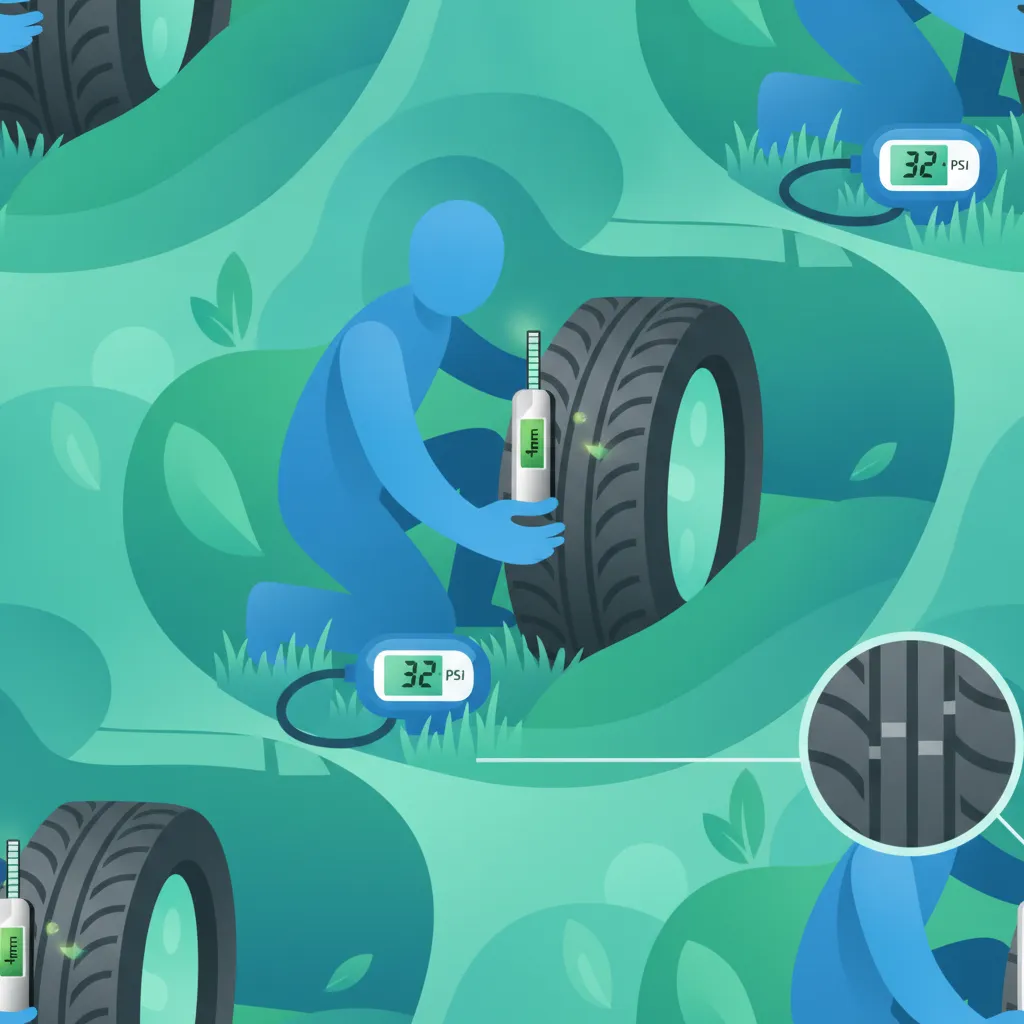
Tyres are the only points of physical contact between your vehicle and the road surface, making their maintenance critical. This lesson details the legal minimum tread depth of 1.6 mm and how to locate tyre wear indicators (temoins d'usure). You will learn how to monitor tyre pressures, detect underinflation hazards, and select summer, winter, or all-season tyres according to regional regulations.

In this lesson, drivers will learn the importance of maintaining correct tyre pressure, assessing tyre condition, and ensuring tyre load rating matches the vehicle’s payload. The content covers tyre identification, regular tyre inspections, and the potential consequences of tyre failure, such as reduced braking performance and vehicle instability. Learners will also be introduced to best practices for tyre upkeep, including load capacity verification and safety standards compliance.

This lesson covers techniques for managing gradients while driving goods vehicles, focusing on downhill control, engine braking, and appropriate gear selection. Learners will understand how load distribution and vehicle dynamics affect descending performance and the importance of avoiding brake overheating. The content includes practical advice on using hill start assistance systems and maintaining safe speeds on steep slopes.

This lesson examines how different road surfaces affect tire grip and vehicle stability. Learners will explore strategies for maintaining traction on wet surfaces, gravel, and irregular roadways, including appropriate lean angles and smooth throttle control under French road conditions. Understanding these principles helps riders avoid slip incidents and preserve control during cornering and braking.

In this lesson, drivers will learn how to adjust their driving techniques in response to adverse weather conditions such as rain, fog, snow, ice, and strong winds. The content covers strategies for maintaining visibility, managing reduced traction on wet or icy surfaces, and adjusting speed and braking distances accordingly. Learners will also be introduced to the use of anti-skid and stability control systems under challenging weather.

This lesson details the dangerous blind spots (angles morts) that surround heavy passenger vehicles and explains how to mitigate them. Drivers will master the systematic mirror check sequence (retro-information) before executing any turns or lane changes. It also covers the mandatory French "Angles Morts" warning stickers displayed on the vehicle exterior to alert vulnerable road users of danger zones.

This lesson covers the physical dimensions of passenger vehicles and how their high profile, length, and width alter spatial awareness on the road. Learners will study tail-swing mechanics and track the path of the rear wheels during sharp turns to avoid hitting roadside obstacles. Accurate measurement of overhead structures, bridges, and underpass clearances is taught to prevent catastrophic structural collisions.

The physical composition of a road surface directly influences vehicle traction, braking performance, and tyre wear. This lesson explains how asphalt, cobblestones, and gravel impact your vehicle's handling, especially during wet or icy conditions. You will learn to recognize reduced friction signs, manage tyre adhesion, and adjust your speed to ensure stability and control on all road types.
This lesson focuses on the specific considerations for operating goods vehicles on French motorways, including lane selection, speed management, and proper merging techniques. Learners will understand the importance of maintaining lane discipline, using appropriate overtaking practices, and respecting motorway-specific speed limits for heavy vehicles. The content also covers the use of emergency lanes and the handling of traffic flow.

Adverse weather reduces tyre traction and limits visibility, dramatically raising the risk of multi-car accidents on highways. This lesson details speed reductions required during rainfall, techniques for avoiding aquaplaning, and demisting windshields for visibility. You will learn how to maintain extra stopping distance on snow-covered roads and the correct headlight adjustments to make during fog.
Find clear answers to common questions learners have about Legal Obligations of a Category B Driver. Learn how the lesson is structured, which driving theory objectives it supports, and how it fits into the overall learning path of units and curriculum progression in France. These explanations help you understand key concepts, lesson flow, and exam focused study goals.
No, the use of any device that requires wearing an earpiece or headset is strictly prohibited while driving in France, as it significantly impairs your attention to the road and potential hazards.
For a new car, the first technical inspection is required four years after the initial registration, and then every two years subsequently to ensure the vehicle remains roadworthy.
Failure to wear a seatbelt results in a fine and a point deduction from your driving licence. It is a fundamental safety rule for both the driver and all passengers in the vehicle.
Yes, children under 10 years old must typically use an approved restraint system adapted to their size and weight, and it is generally recommended they travel in the back seat for maximum safety.
Ready to focus your study? Use the practice search to find exactly the French driving theory questions you need for the Code de la route and permis de conduire ETG. Refine your knowledge on specific topics or challenging rules to boost your confidence and exam readiness.