
This lesson explores the vital social contract of driving, focusing on courtesy, defensive habits, and eco-friendly driving strategies. As part of your Category B theory preparation, you will learn how these ethical principles directly impact your safety and influence your success on the official French exam.

Lesson content overview
To pass the French Category B driving theory exam (known as the Épreuve Théorique Générale or ETG), you must understand that driving is not merely a technical skill. It is a shared social contract. Every time you get behind the wheel, you enter a dynamic public space where your actions directly affect the safety, well-being, and lives of others.
This lesson covers the ethical, social, and environmental responsibilities of a driver in France. You will learn the core principles of defensive driving, how to protect vulnerable road users, how to manage personal physiological factors like stress and fatigue, and how to practice eco-driving to minimize your environmental footprint.
The French Code de la route is built on the concept of collective responsibility. The road is a shared environment where cooperative behavior prevents conflicts and minimizes the risk of collisions. Ethical driving aligns your legal obligations with your moral duties, ensuring traffic flows smoothly and safely.
In France, the legal cornerstone of ethical driving is the Duty of Care (le devoir de vigilance). Under Article R412-6 of the Code de la route, every driver must behave cautiously and respectfully toward other road users, especially those who are most vulnerable.
The legal and moral obligation for drivers to maintain constant control of their vehicle, remain attentive to the environment, and act with reasonable caution to avoid causing harm to others.
This duty of care means that having the "right of way" (la priorité) is never an absolute right to proceed if doing so would cause an accident. If another road user makes a mistake, your legal and ethical obligation is to adapt your speed or path to avoid a collision.
Many new drivers mistakenly assume that if they have the legal right-of-way, they do not need to slow down or anticipate potential hazards. In the eyes of French law, maintaining your speed in a hazardous situation simply because you had priority can still result in legal liability if you failed to exercise basic duty of care.
Defensive driving (la conduite préventive) is a proactive approach to navigating the road network. It requires you to anticipate potential hazards and plan your reactions before those hazards materialize.
To drive defensively on French roads, you should systematically apply the following three principles:
The 2-Second Rule Demonstration: To measure your following distance, pick a stationary object along the road (like a signpost). When the car in front passes it, count: "One thousand and one, one thousand and two." If your front bumper passes the same object before you finish counting, you are driving too close.
Your defensive driving margin must adapt to physical realities. Your total stopping distance (distance d'arrêt) consists of two parts:
Because braking distance increases with the square of your speed, doubling your speed quadruples your braking distance. This physical law highlights why maintaining safe following distances is non-negotiable.
Vulnerable Road Users (VRUs) include pedestrians, cyclists, motorcyclists, children, the elderly, and people with reduced mobility. Because they lack the protective metal shell of a car, collisions involving VRUs have a much higher rate of serious injury or fatality.
Pedestrians always have absolute priority when crossing the road, or when they clearly show an intention to do so.
Strict French Law on Pedestrian Crossings: Under Article R412-7, failing to yield to a pedestrian who is crossing or who has indicated an intention to cross a marked pedestrian crossing (passage piéton) is a severe traffic violation. It carries a heavy fine and a 6-point deduction from your driving licence.
When approaching a pedestrian crossing:
Cyclists are highly exposed and can easily lose their balance due to wind, road debris, or the air displacement of passing vehicles. When overtaking a cyclist, you must respect the strict legal lateral safety margins dictated by Article R413-1:
Assess the Environment: Ensure there is no oncoming traffic and that you have a clear view ahead.
Signal Your Intent: Use your left indicator to signal your maneuver to drivers behind you.
Maintain Lateral Clearance: Maintain a minimum lateral distance of 1.0 metre in urban areas (en agglomération) and 1.5 metres in rural/non-urban areas (hors agglomération).
Return to the Lane: Check your right side-mirror to ensure you have fully cleared the cyclist before gently returning to your lane.
Your state of mind and physical condition directly influence your reaction times, hazard perception, and overall decision-making. Ethical driving requires you to recognize when you are unfit to drive and to take immediate corrective action.
Fatigue is a major contributor to fatal accidents on French motorways. It slows down your sensory reflexes, impairs your judgment, and can lead to micro-sleeps (periods of unconsciousness lasting a few seconds).
A physical or mental state of weariness that degrades sensory perception, cognitive processing, and physical reaction time.
Under Article R412-1, it is illegal to operate a vehicle when your physical state is so impaired by fatigue that you cannot safely maintain control.
The Golden Rule of Motorway Driving: "Toutes les deux heures, la pause s'impose" (Every two hours, a break is a must). Plan to stop for at least 15 to 20 minutes for every two hours of continuous driving. Coffee or energy drinks only mask fatigue temporarily; they do not replace actual rest.
Traffic congestion, delays, and the unpredictable actions of other drivers can trigger stress and anger. When stress takes over, drivers tend to engage in riskier behaviors such as tailgating, speeding, or making sudden lane changes.
If you feel your stress rising, practice deep breathing, consciously relax your grip on the steering wheel, and remember that arriving a few minutes late is infinitely better than risking an accident.
Driving under the influence of alcohol or drugs is strictly prohibited. Alcohol alters depth perception, slows reflexes, and creates a false sense of confidence.
In the French Category B theory exam, environmental awareness is a core topic. Eco-driving (l'éco-conduite) is a collection of driving techniques designed to reduce fuel consumption, minimize greenhouse gas emissions, and lower vehicle wear and tear, all while enhancing overall road safety.
By adopting eco-driving habits, you can reduce your fuel consumption and CO₂ emissions by up to 15%.
Avoid aggressive starts and hard braking. Instead, accelerate smoothly and gently. When you need to stop or slow down, anticipate early by lifting your foot off the accelerator and letting the engine brake slow the vehicle naturally (le frein moteur). This practice, known as coasting, cuts fuel delivery to the engine entirely in modern vehicles.
Running the engine at high Revolutions Per Minute (RPM) wastes fuel.
Aerodynamic drag increases exponentially with speed. Driving slightly slower can result in significant fuel savings with only a negligible impact on your travel time.
An inefficient or overloaded vehicle requires more energy to move.
An ethical driver constantly adapts their driving style to match environmental conditions, changing road types, and vehicle states.
The choices you make behind the wheel have clear, direct consequences on the traffic ecosystem.
[Driver Behavior] ────────────────────────► [Consequence on Traffic Ecosystem]

Adhering to Ethical Principles (e.g., Yielding, Safe Following Distance)
  └─► Safe road sharing, lower accident rates, smoother traffic flow.

Violating Ethical Principles (e.g., Aggressive Driving, Failure to Yield)
  └─► Traffic conflicts, increased collision risk, heavy legal penalties, loss of points.

Practicing Smooth Eco-Driving Techniques
  └─► Up to 15% lower fuel consumption, reduced CO2 emissions, less vehicle wear.
This lesson establishes that driving in France is a social contract grounded in the legal Duty of Care under Article R412-6, requiring drivers to prioritize safety over pure priority rights. Defensive driving principles teach learners to scan ahead, maintain proper following distances, and anticipate others' errors, while the physics of stopping distance highlights why these margins are non-negotiable. The content emphasizes protection of vulnerable road users through specific pedestrian priority rules at zebra crossings and quantified lateral clearance requirements for cyclists. Eco-driving techniques offer practical benefits, reducing fuel consumption by up to 15% through smooth acceleration, optimal gear selection, and speed management, while driver fitness requirements under French law address fatigue, stress, and alcohol limits with explicit BAC thresholds for standard and probationary drivers.
A short set of high-value points that capture the most important learning from this lesson.
The French Code de la route is built on collective responsibility, and having right-of-way never obligates you to proceed if doing so risks an accident
Defensive driving requires proactive awareness: scanning 15-20 seconds ahead, maintaining a 2-second following distance, and assuming other drivers may make mistakes
Vulnerable road users like cyclists and pedestrians must be given explicit lateral and temporal space, with strict legal margins specified in Article R413-1
Eco-driving techniques can reduce fuel consumption by up to 15% through smooth acceleration, early gear shifts below 2,000 RPM, and moderate speed management
Your physical and mental state directly impacts safety; fatigue under Article R412-1 and alcohol impairment carry severe legal consequences and point deductions
Explore all units and lessons included in this driving theory course.
Article R412-6 Duty of Care: always adapt speed or path to avoid collisions, even when you have priority
Cyclist overtaking distances: minimum 1.0 metre in urban areas and 1.5 metres in rural areas
Standard BAC limit is 0.5 g/L blood (0.25 mg/L exhaled air); probationary drivers face a 0.2 g/L zero-tolerance limit
Stopping distance = thinking distance (approximately 1 second) + braking distance, which increases with the square of speed
Fatigue warning signs include heavy eyelids, lane position difficulty, and missing road signs; take a 15-20 minute break every two hours
Believing that having right-of-way means you can maintain speed regardless of hazards; your duty of care overrides priority in dangerous situations
Underestimating total stopping distance by forgetting that braking distance grows with the square of speed, not linearly
Failing to maintain the correct lateral distance when overtaking cyclists, especially in urban areas where the 1.0 metre minimum is often violated
Assuming one alcoholic drink is safe for probationary drivers; the 0.2 g/L threshold means essentially zero tolerance
Relying on caffeine to combat fatigue instead of taking actual rest breaks, which only masks symptoms temporarily
Lesson content overview
A short set of high-value points that capture the most important learning from this lesson.
The French Code de la route is built on collective responsibility, and having right-of-way never obligates you to proceed if doing so risks an accident
Defensive driving requires proactive awareness: scanning 15-20 seconds ahead, maintaining a 2-second following distance, and assuming other drivers may make mistakes
Vulnerable road users like cyclists and pedestrians must be given explicit lateral and temporal space, with strict legal margins specified in Article R413-1
Eco-driving techniques can reduce fuel consumption by up to 15% through smooth acceleration, early gear shifts below 2,000 RPM, and moderate speed management
Your physical and mental state directly impacts safety; fatigue under Article R412-1 and alcohol impairment carry severe legal consequences and point deductions
Explore all units and lessons included in this driving theory course.
Article R412-6 Duty of Care: always adapt speed or path to avoid collisions, even when you have priority
Cyclist overtaking distances: minimum 1.0 metre in urban areas and 1.5 metres in rural areas
Standard BAC limit is 0.5 g/L blood (0.25 mg/L exhaled air); probationary drivers face a 0.2 g/L zero-tolerance limit
Stopping distance = thinking distance (approximately 1 second) + braking distance, which increases with the square of speed
Fatigue warning signs include heavy eyelids, lane position difficulty, and missing road signs; take a 15-20 minute break every two hours
Believing that having right-of-way means you can maintain speed regardless of hazards; your duty of care overrides priority in dangerous situations
Underestimating total stopping distance by forgetting that braking distance grows with the square of speed, not linearly
Failing to maintain the correct lateral distance when overtaking cyclists, especially in urban areas where the 1.0 metre minimum is often violated
Assuming one alcoholic drink is safe for probationary drivers; the 0.2 g/L threshold means essentially zero tolerance
Relying on caffeine to combat fatigue instead of taking actual rest breaks, which only masks symptoms temporarily
Explore search topics learners often look for when studying Ethical Driving and Social Responsibility. These topics reflect common questions about road rules, driving situations, safety guidance, and lesson level theory preparation for learners in France.
Browse additional driving theory lessons that cover connected traffic rules, road signs, and common driving situations related to this topic. Improve your understanding of how different rules interact across everyday traffic scenarios.
Learn how to improve hazard perception and anticipation skills on French roads. This guide covers scanning strategies, space management, and the physics of stopping distances to help you effectively manage risks while driving in various traffic conditions.

Proactive drivers scan the road constantly, detecting potential dangers before they turn into real-world emergency situations. This lesson teaches scanning techniques, the use of rear-view mirrors, and the interpretation of visual cues from other road users. You will learn to anticipate hazards like child play near roads, merging vehicles, and sudden lane changes, helping you drive defensively.

Learners will develop the ability to anticipate potential hazards on the road, enhancing reaction times and defensive riding strategies. The lesson emphasizes constant scanning, early identification of threats such as sudden stops, pedestrian crossings, or unexpected lane changes, and appropriate response measures. By cultivating proactive risk assessment, AM riders can significantly reduce accident likelihood.
Warning signs on French roads are triangular with a red border, designed to alert drivers to upcoming dangers. This lesson teaches you how to interpret warnings for sharp curves, slippery surfaces, narrowing lanes, and wildlife or animal crossing hazards. You will understand the safety adjustments needed when approaching school zones, active roadworks, or crossings where vulnerable pedestrians are present.

This lesson focuses on French warning signs that alert drivers to potential hazards ahead, such as curves, animal crossings, or slippery surfaces, with particular attention to signs relevant to AM riders. Learners will examine how to interpret these signs, understand the associated risks, and adapt riding behavior accordingly. By mastering warning sign recognition, riders can proactively manage safety risks in diverse road conditions.

In this lesson, drivers will learn strategies to avoid conflicts with smaller vehicles, such as cars and vans, which may not be as visible in large vehicle blind spots. The content emphasizes maintaining adequate spacing, using proper lane discipline, and being aware of small vehicles' behavior during lane changes and turns. Learners will also be introduced to communication techniques, such as signalling and eye contact.

Certain groups of road users require heightened defensive attention from drivers due to physical limitations or unpredictable behaviors. This lesson covers how to recognize signs of visual impairment (white canes), mobility challenges, and the unpredictability of young children. You will learn to reduce your speed, extend yielding patience, and proactively secure extra space to protect these vulnerable users.

This lesson provides global defensive driving strategies to minimize collision risks for all non-motorized and vulnerable road users. Drivers will learn to systematically lower vehicle speed in dense pedestrian zones, even when no active hazards are visible. By cultivating an anticipatory mindset and maintaining generous safety margins, professional drivers establish a protective safety envelope around their vehicle.
This final lesson integrates all course concepts into a single, cohesive approach to defensive riding and continuous risk assessment. You will study how to maintain a high-mileage visual lead, continuously scanning the road ahead for warning signs of conflict. By learning to assume that other motorists may not see you, you will build the proactive slowing habits and situational awareness needed to remain safe throughout your riding life.

Adverse weather reduces tyre traction and limits visibility, dramatically raising the risk of multi-car accidents on highways. This lesson details speed reductions required during rainfall, techniques for avoiding aquaplaning, and demisting windshields for visibility. You will learn how to maintain extra stopping distance on snow-covered roads and the correct headlight adjustments to make during fog.
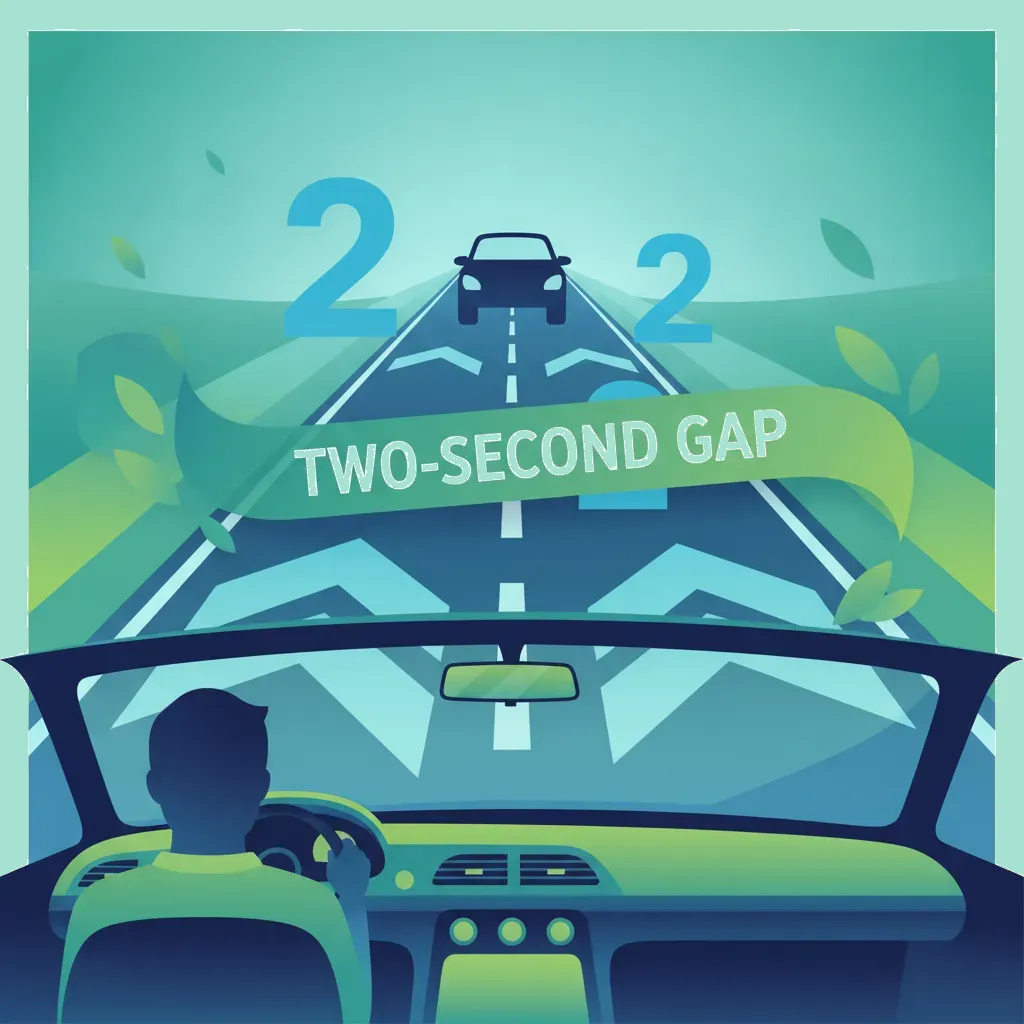
Maintaining a safe distance behind the lead vehicle is essential to prevent rear-end collisions during sudden braking maneuvers. This lesson teaches you the two-second safety rule and how to calculate this gap at different highway speeds. You will also study unique safety margin requirements, such as maintaining minimum distance intervals in road tunnels or doubling your following distance on wet roads.
Understand the legal obligations and safety protocols for sharing the road with cyclists, pedestrians, and public transport. This lesson details the specific French regulations for pedestrian crossings and the required lateral safety margins when overtaking vulnerable users.
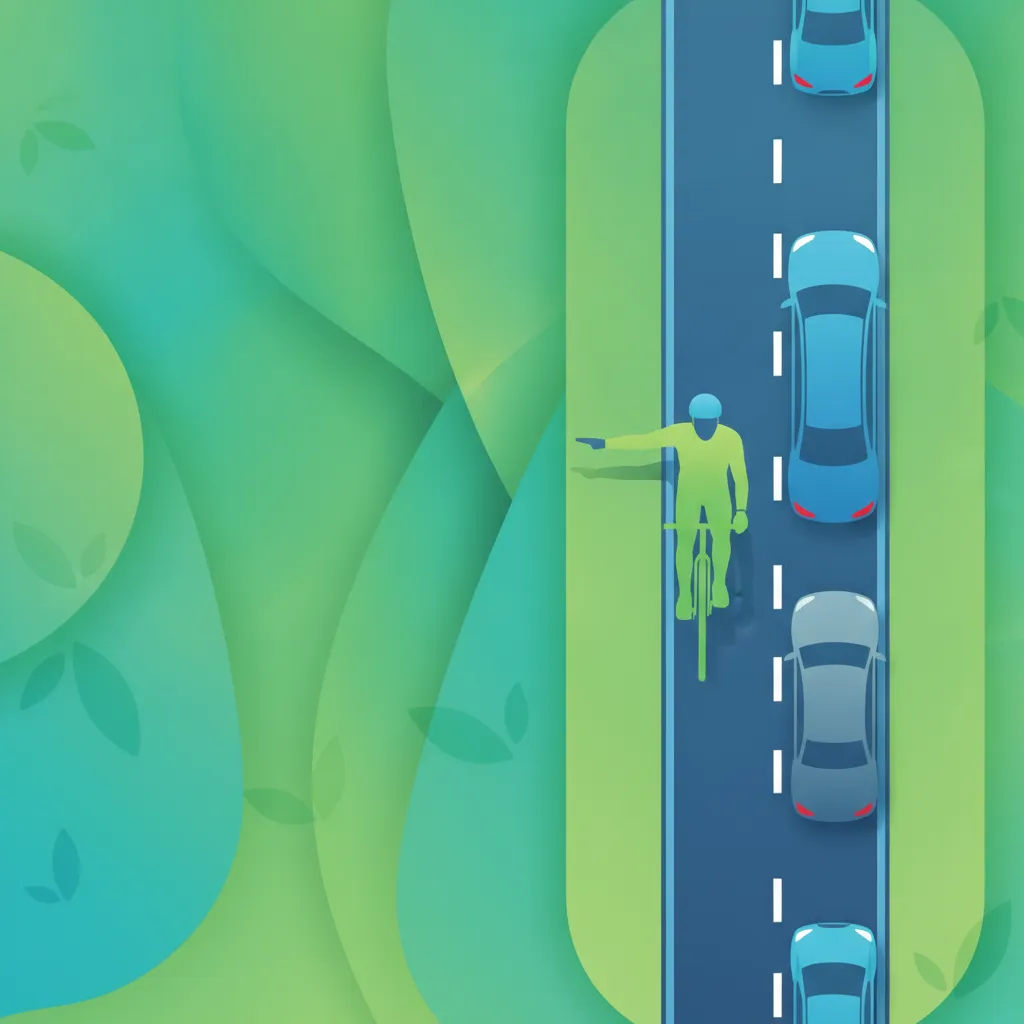
Bicycles represent an eco-friendly transport method with specific rights on French public roadways. This lesson teaches you how to identify dedicated cycle paths, respect bike lanes, and understand cyclist turning privileges at intersections. You will learn the legal minimum safety distance required when overtaking a cyclist: 1 meter in urban areas and 1.5 meters outside city limits.
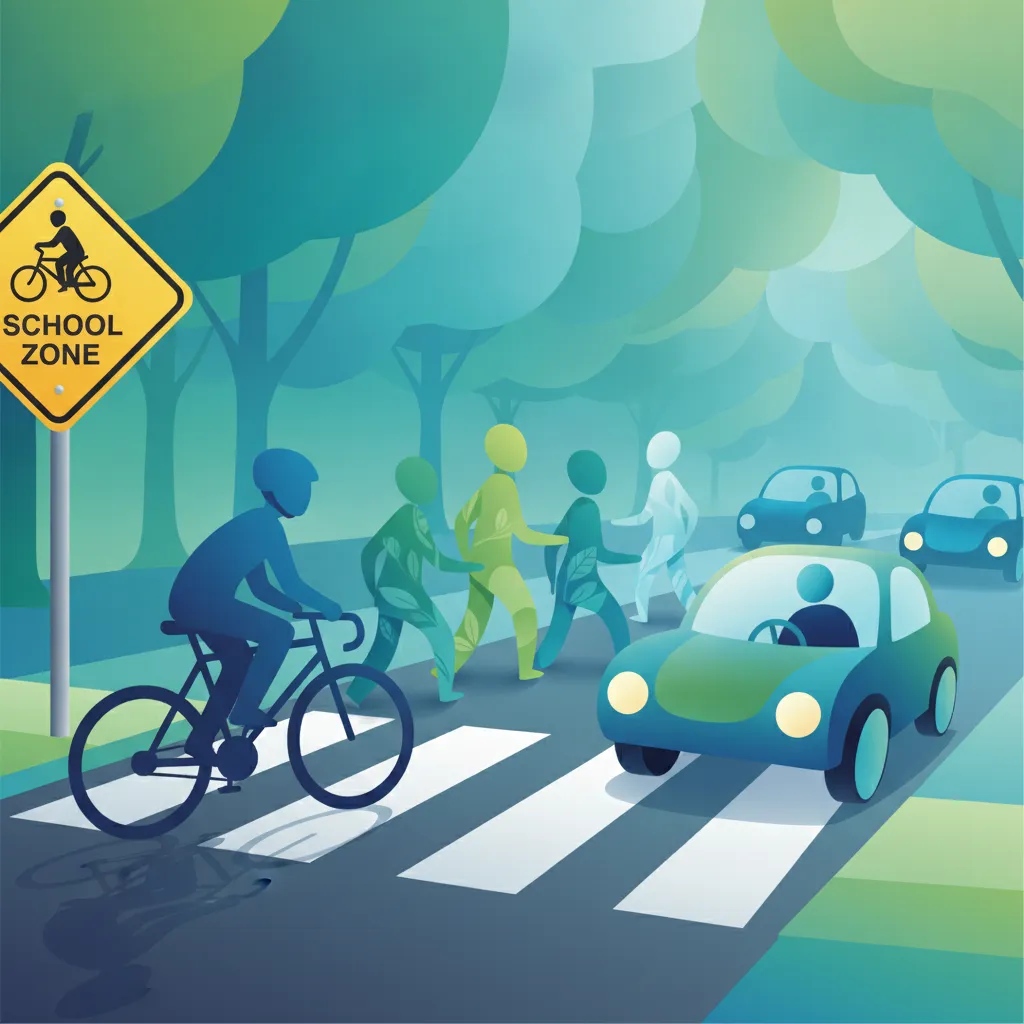
This lesson focuses on the legal requirement to yield to pedestrians on or about to step onto zebra crossings, a major focus of French road safety. You will learn how to approach school zones and pedestrian islands with heightened vigilance and reduced speed. Additionally, the lesson explores shared urban spaces, explaining how to maintain safe lateral distances when overtaking cyclists or personal electric scooters.
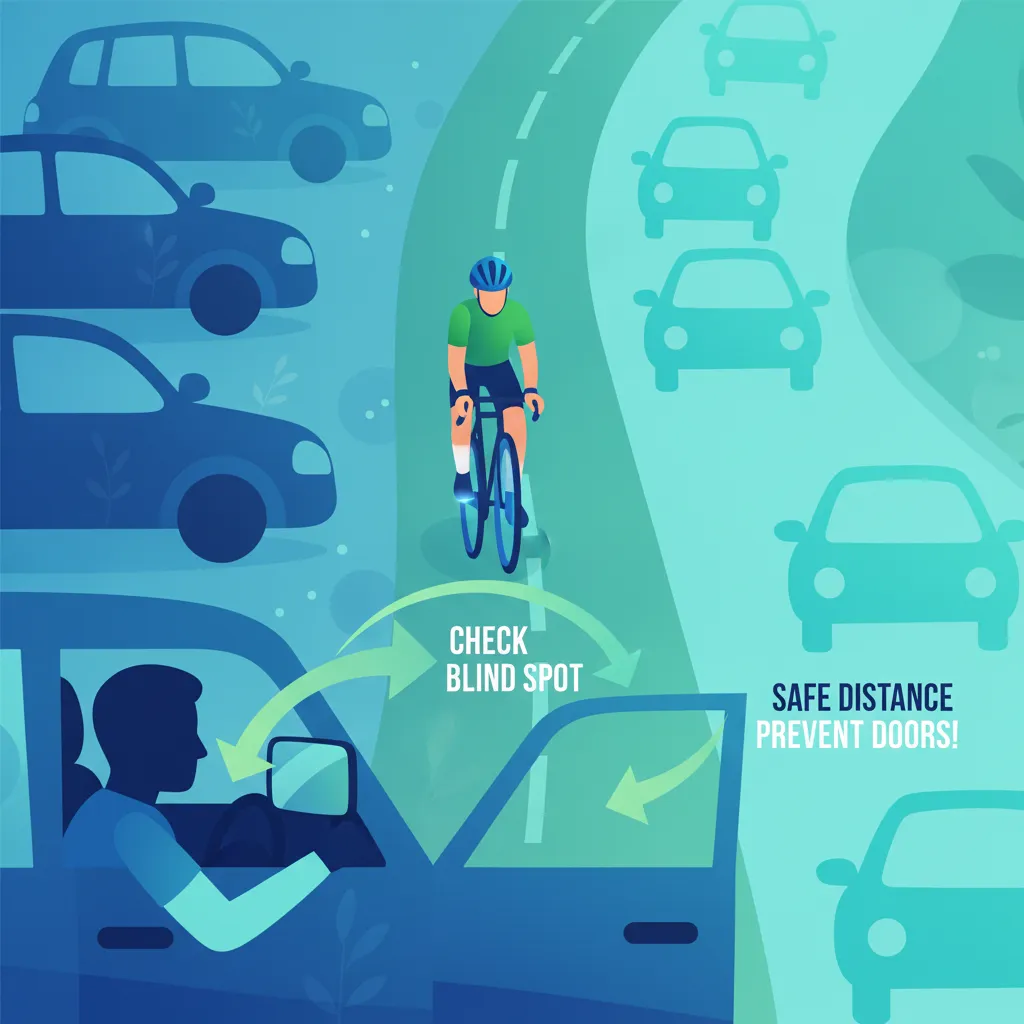
This lesson explains how to share the road safely with cyclists in both urban and rural environments. Drivers will study the legal minimum passing distances when overtaking cyclists, which is one meter in cities and one and a half meters outside urban areas. It also covers recognizing specialized cycling infrastructure, bike boxes at intersections, and preventing blind-spot collisions during right turns.
Certain groups of road users require heightened defensive attention from drivers due to physical limitations or unpredictable behaviors. This lesson covers how to recognize signs of visual impairment (white canes), mobility challenges, and the unpredictability of young children. You will learn to reduce your speed, extend yielding patience, and proactively secure extra space to protect these vulnerable users.

Learners explore the specific responsibilities that accompany operating a small, exposed vehicle, emphasizing the need for heightened defensive driving techniques under French law. The lesson stresses the importance of maintaining visibility and predictability, adhering strictly to the Code de la route, and understanding the dynamics of sharing the road safely. By internalizing these responsibilities, riders can significantly reduce risks and contribute to a safer traffic environment for all users.

Learners will explore the rules related to pedestrian crossings, focusing on the obligation to yield to pedestrians at zebra crossings and flashing pedestrian signals. The lesson highlights the importance of stopping before the stop line, reducing speed, and maintaining vigilance for pedestrian movement. Mastery of these practices ensures the safety of both pedestrians and AM riders at crossing points.
This lesson emphasizes that driving a motorcycle in France involves unique moral and social responsibilities towards vulnerable road users like cyclists and pedestrians. You will examine the importance of defensive riding habits, civil road etiquette, and the prioritizing of shared road safety. Understanding these principles helps to prevent dangerous situations, respect local communities, and lower overall accident statistics.
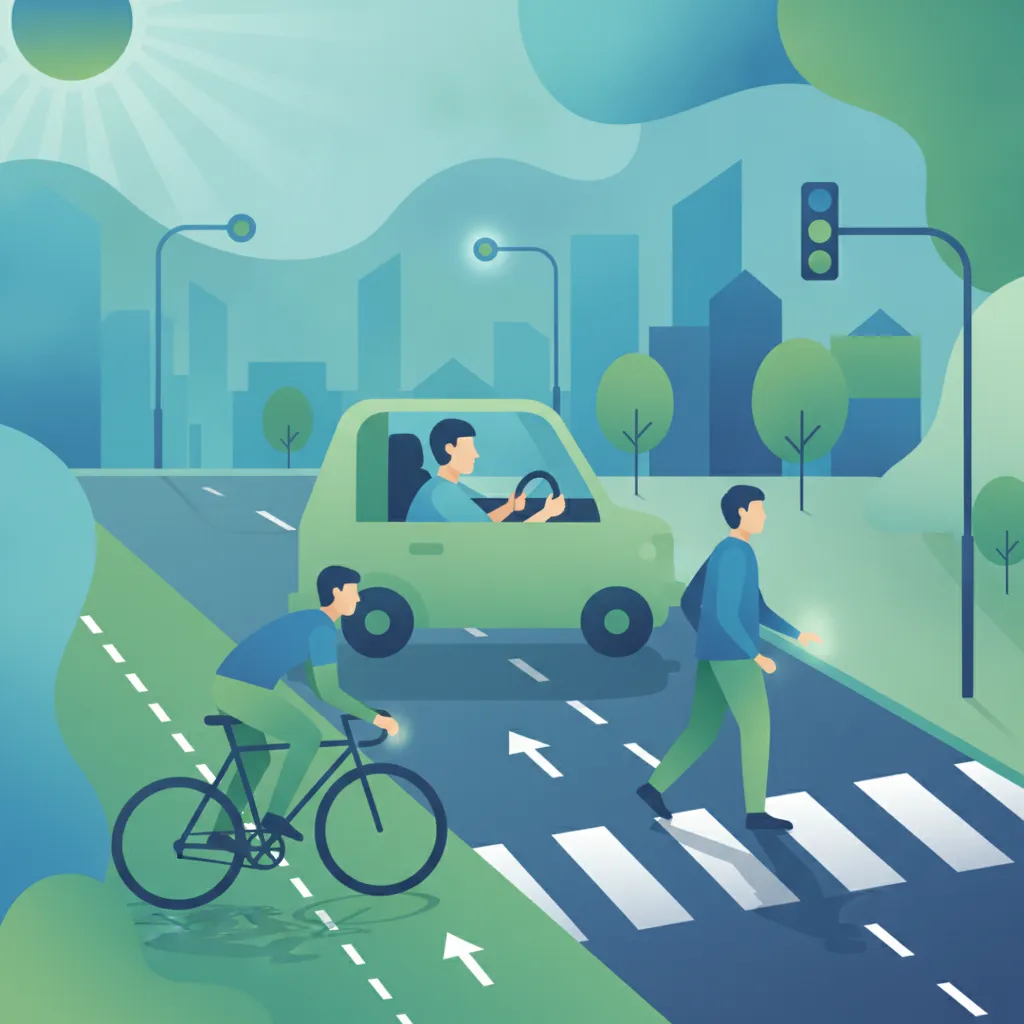
This lesson examines the specific challenges and responsibilities goods vehicle drivers face when interacting with pedestrians and cyclists in urban environments. Learners will understand right-of-way rules, the importance of yielding at pedestrian crossings, and safe turning practices that protect cyclists. The content emphasizes heightened driver vigilance, especially when navigating bike lanes and crowded sidewalks.

Learners will focus on the best practices for interacting safely with cyclists and pedestrians in mixed traffic environments. The lesson covers proper lane usage, overtaking protocols, maintaining adequate safety gaps, and non-verbal communication techniques in the French urban landscape. By applying these principles, AM riders can coexist harmoniously with vulnerable road users, reducing the likelihood of accidents.
Find clear answers to common questions learners have about Ethical Driving and Social Responsibility. Learn how the lesson is structured, which driving theory objectives it supports, and how it fits into the overall learning path of units and curriculum progression in France. These explanations help you understand key concepts, lesson flow, and exam focused study goals.
Driving is a shared activity. The theory exam tests your awareness of others to ensure you understand that safety depends on mutual respect, not just following basic signs.
Focus on always anticipating the actions of others, particularly vulnerable road users. Always assume others might make mistakes and keep a safety buffer at all times.
Yes, the French theory exam includes questions on eco-driving, such as proper gear shifting and fuel-efficient speed management, as part of environmental awareness.
The key is preparation and maintaining a safe distance. Being well-prepared reduces uncertainty, which is a major source of stress when driving in complex traffic.
Ready to focus your study? Use the practice search to find exactly the French driving theory questions you need for the Code de la route and permis de conduire ETG. Refine your knowledge on specific topics or challenging rules to boost your confidence and exam readiness.