
This lesson provides an in-depth look at the warning signs used on German roads as part of the StVO. By mastering these visual cues, you will learn how to identify potential hazards early and adjust your driving behavior proactively to ensure safety. This is a critical step in your preparation for the Category B theoretical exam.
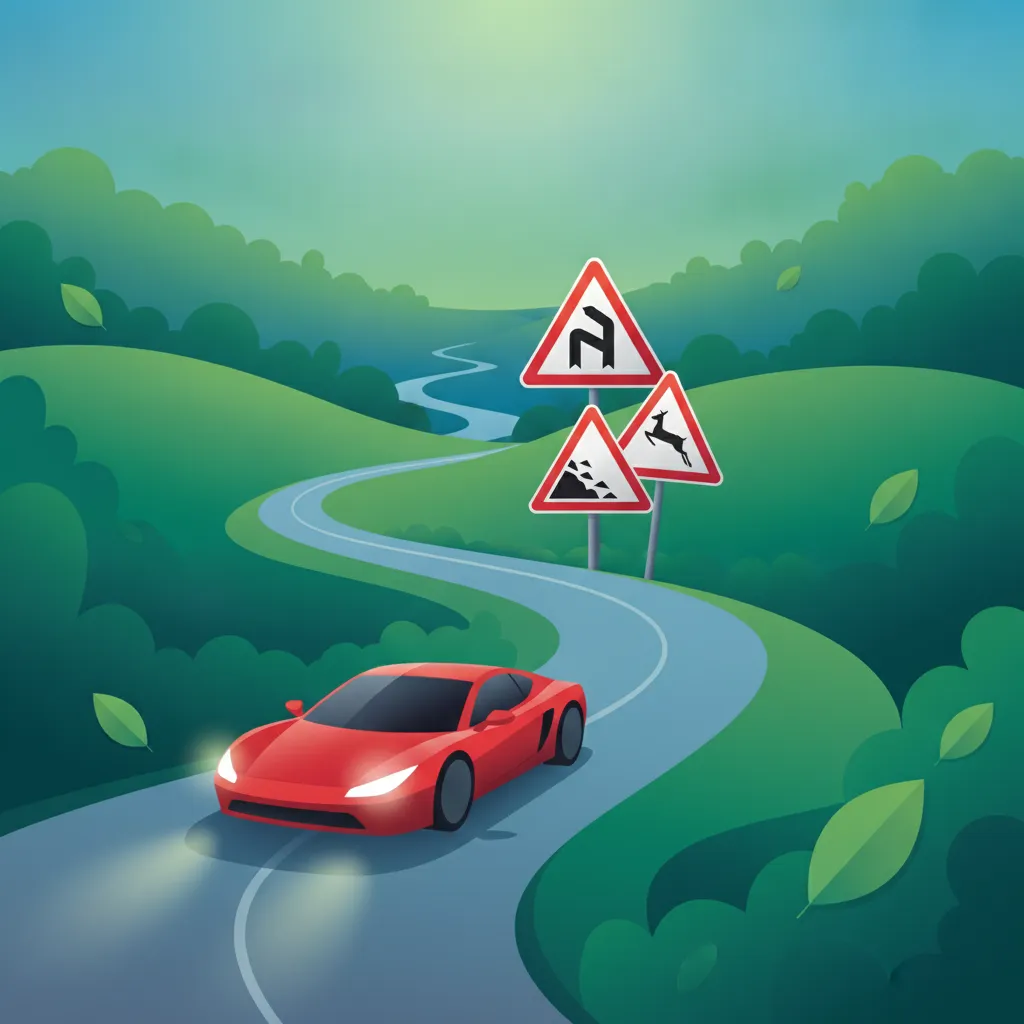
Lesson content overview
Welcome to this essential lesson, part of your German Driving License Theory – Comprehensive Category B Course. This chapter focuses specifically on warning signs, which are a critical component of road safety, designed to alert drivers to potential dangers or unusual conditions on the road ahead. Mastering these signs allows you to anticipate hazards, adjust your driving proactively, and contribute significantly to accident prevention.
Warning signs play a preventative safety function, acting as an early alert system for drivers. They give you sufficient time to recognize an upcoming hazard and adjust your speed, positioning, or behavior accordingly. By understanding and reacting correctly to these signs, you enhance your own safety and the safety of all other road users. This proactive approach to driving is fundamental to navigating German roads effectively and safely.
All warning signs within the German road network adhere to a set of fundamental principles to ensure their effectiveness and immediate recognition by drivers.
The German Road Traffic Regulations (StVO) categorize various warning signs, each addressing a unique type of hazard. Understanding these specific signs and their implications is vital for safe driving.
Sharp bend warning signs alert drivers to upcoming curves or bends in the road that may require a significant reduction in speed. These signs are crucial for preventing loss of control accidents, especially on unfamiliar or winding roads.
Warning signs for intersections alert drivers to upcoming junctions where traffic from different directions converges. These signs are essential for preparing drivers to yield, stop, or adjust their speed based on right-of-way rules.
STOP signs or Yield signs, full compliance is mandatory.Railway crossing warning signs are among the most critical, signaling areas where roads intersect with railway tracks. These signs demand extreme caution due to the severe consequences of a collision with a train.
269, 270) might indicate the distance to the crossing.Road work warning signs alert drivers to temporary changes in road conditions due to construction, maintenance, or other work. These zones often involve reduced speed limits, altered lane configurations, and the presence of workers.
Slippery surface warning signs indicate a reduction in road friction due to various environmental factors. These conditions significantly increase stopping distances and the risk of skidding or losing control.
Wildlife crossing warning signs indicate sections of road where wild animals are known to frequently cross. These areas pose a risk of collision with animals, particularly large ones like deer or wild boar, which can cause significant damage and injury.
Compliance with warning signs is not merely a suggestion but a legal requirement under the StVO. Ignoring these signs can lead to dangerous situations, penalties, and significantly increased accident risk.
Proactive Driving: Always consider warning signs as a cue to begin adjusting your driving before you reach the hazard. This "anticipatory driving" is a hallmark of safe and skilled drivers.
Ignoring warning signs is a frequent cause of accidents and can lead to significant legal consequences under German traffic law.
Rechts vor Links junction) can result in a direct collision.Violations of traffic regulations, especially those leading to dangerous situations or accidents, can result in fines, penalty points (Punkte in Flensburg), and even driving bans.
The effectiveness of warning signs is maximized when drivers interpret them dynamically, considering surrounding circumstances.
Always remember that a warning sign is a general alert. Your specific response must always be tailored to the exact conditions you are experiencing at that moment.
Understanding and correctly reacting to German warning signs is a cornerstone of safe driving practice. These triangular signs, with their distinctive red borders, provide vital information that allows you to anticipate potential dangers and adjust your driving proactively. From sharp bends and complex intersections to railway crossings, road works, and environmental hazards like slippery surfaces or wildlife, each sign demands a specific, cautious response. By consistently applying the principles of early warning, consistency, and adaptation, you not only comply with traffic regulations but also significantly enhance your ability to drive safely and confidently on German roads.
German warning signs serve as an early alert system under StVO, using standardized triangular designs with red borders to signal hazards like sharp bends, intersections, railway crossings, road works, slippery surfaces, and wildlife areas. The core response involves proactive speed reduction and behavioral adjustment before reaching the hazard, with reactions tailored to current conditions such as weather, vehicle state, and visibility. Compliance is mandatory and violations can result in fines, penalty points in Flensburg, or driving bans. Mastering these signs is essential for both safe real-world driving in Germany and passing the Category B theoretical exam.
A short set of high-value points that capture the most important learning from this lesson.
Warning signs in Germany are triangular with red borders and black symbols on white backgrounds, providing consistent visual recognition.
Speed reduction is the fundamental response to almost all warning signs, with the degree depending on the hazard type, road conditions, and weather.
Railway crossing signs (150, 151) demand extreme caution, requiring full stops when barriers are closing or flashing signals are active.
Warning signs require contextual adaptation—reactions must account for weather, vehicle load, road type, and visibility conditions.
Proactive driving means adjusting behavior BEFORE reaching the hazard, not just when you arrive at it.
Explore all units and lessons included in this driving theory course.
Sign 102 indicates an intersection with Rechts vor Links (right-before-left) priority, requiring yield to traffic from the right.
Sign 114 (slippery road) covers various conditions including ice, snow, oil, and wet leaves—all demanding smoother inputs and longer following distances.
Road work signs (123, 121) are temporary hazards where temporary markings override permanent ones.
Wildlife crossing areas (Sign 142) require highest vigilance during dawn, dusk, and night hours.
Heavy loads or trailers increase braking distances, demanding greater speed reductions at all warning signs.
Braking too late or maintaining normal speed through sharp bend signs, risking loss of control and skidding.
Failing to yield correctly at intersections where right-before-left applies, assuming priority without checking.
Attempting to cross railway tracks when signals are active or barriers are closing, creating catastrophic collision risks.
Ignoring temporary speed limits in road work zones and driving at normal speeds through construction areas.
Continuing at normal speed when a slippery surface sign is displayed, leading to hydroplaning or skidding.
Lesson content overview
A short set of high-value points that capture the most important learning from this lesson.
Warning signs in Germany are triangular with red borders and black symbols on white backgrounds, providing consistent visual recognition.
Speed reduction is the fundamental response to almost all warning signs, with the degree depending on the hazard type, road conditions, and weather.
Railway crossing signs (150, 151) demand extreme caution, requiring full stops when barriers are closing or flashing signals are active.
Warning signs require contextual adaptation—reactions must account for weather, vehicle load, road type, and visibility conditions.
Proactive driving means adjusting behavior BEFORE reaching the hazard, not just when you arrive at it.
Explore all units and lessons included in this driving theory course.
Sign 102 indicates an intersection with Rechts vor Links (right-before-left) priority, requiring yield to traffic from the right.
Sign 114 (slippery road) covers various conditions including ice, snow, oil, and wet leaves—all demanding smoother inputs and longer following distances.
Road work signs (123, 121) are temporary hazards where temporary markings override permanent ones.
Wildlife crossing areas (Sign 142) require highest vigilance during dawn, dusk, and night hours.
Heavy loads or trailers increase braking distances, demanding greater speed reductions at all warning signs.
Braking too late or maintaining normal speed through sharp bend signs, risking loss of control and skidding.
Failing to yield correctly at intersections where right-before-left applies, assuming priority without checking.
Attempting to cross railway tracks when signals are active or barriers are closing, creating catastrophic collision risks.
Ignoring temporary speed limits in road work zones and driving at normal speeds through construction areas.
Continuing at normal speed when a slippery surface sign is displayed, leading to hydroplaning or skidding.
Explore search topics learners often look for when studying Warning Signs. These topics reflect common questions about road rules, driving situations, safety guidance, and lesson level theory preparation for learners in Germany.
Browse additional driving theory lessons that cover connected traffic rules, road signs, and common driving situations related to this topic. Improve your understanding of how different rules interact across everyday traffic scenarios.
Understand the purpose and specific meanings of various German warning signs. Learn how to identify potential road hazards like sharp curves, slippery surfaces, and construction zones to anticipate dangers and drive safely.
This lesson explains the function of informational signs, which provide helpful guidance for navigation and services. You will learn how to read directional signs on all types of roads, including the Autobahn, and understand distance markers to upcoming cities and exits. The lesson also covers the symbols for services such as fuel stations, restaurants, and tourist attractions.
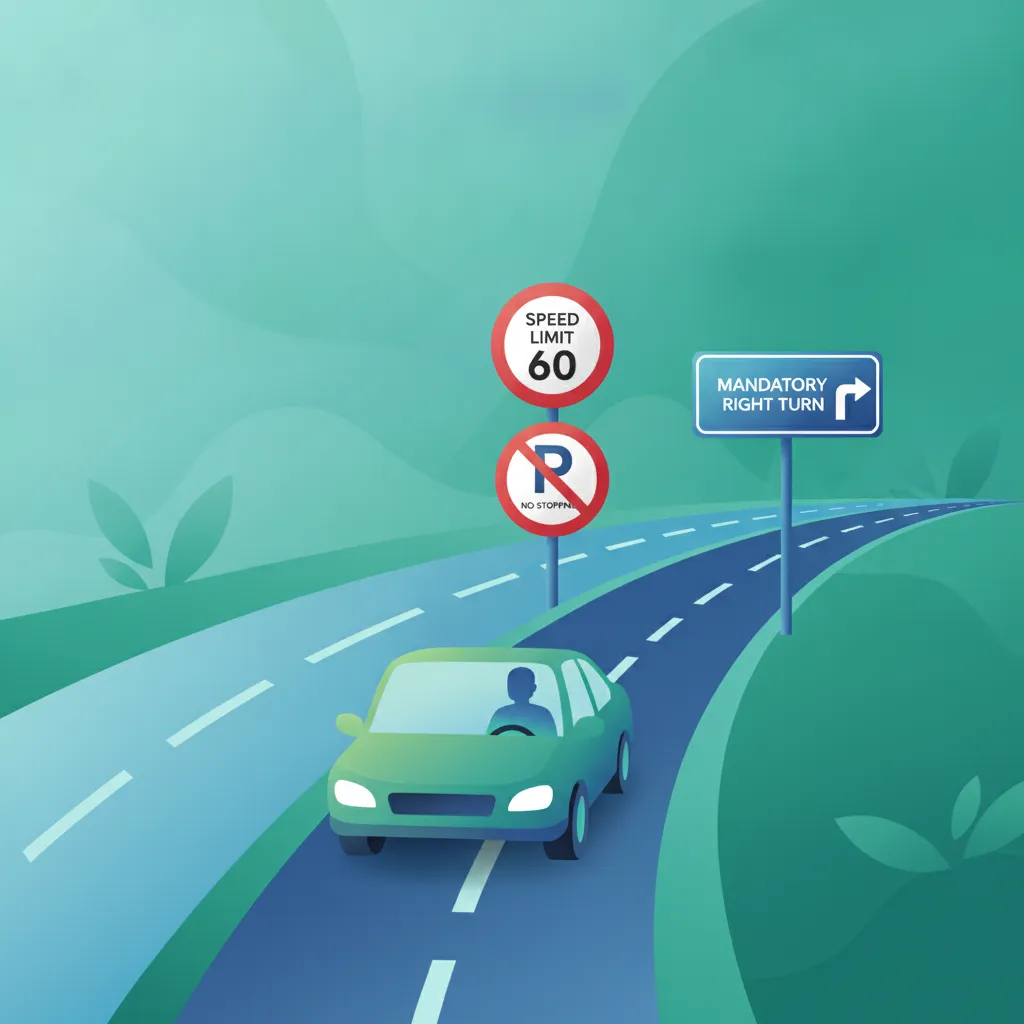
This lesson covers regulatory signs, which are legally enforceable and command specific actions from drivers. You will learn the meaning of critical signs such as the stop sign, yield sign, no-entry signs, and various parking and stopping prohibitions. The content also explains signs that establish speed limits, one-way streets, and restricted areas like environmental or pedestrian zones.
This lesson provides comprehensive guidance on using vehicle signals to communicate with other road users. It covers the correct timing and use of turn indicators, the application of hand signals when necessary, and the proper use of hazard lights. Effective signaling is presented as a cornerstone of predictable and safe driving.
This lesson provides a thorough explanation of traffic light systems ('Lichtzeichenanlagen') used in Germany. It details the meaning of red, amber, and green lights and the correct response to each phase of the signal sequence. The lesson also covers special signals, such as the green arrow for turning right on red, pedestrian and cyclist signals, and the authority of signals given by a police officer, which override all other signs.
Effective communication is critical for road safety, and this lesson details the correct use of a vehicle's signaling devices. It explains when and how to use turn signals (indicators), hazard warning lights, the horn, and headlight flashes to clearly communicate your intentions to other road users. Proper signaling helps prevent misunderstandings and is a key component of defensive and cooperative driving.
This lesson is dedicated to supplementary signs ('Zusatzzeichen'), which appear below main signs to provide additional, specific information. You will learn how these signs modify the primary rule, for example by specifying time restrictions, excepting certain types of vehicles, or indicating a specific distance. Correctly interpreting these signs is essential for understanding the full context of a traffic regulation.
This lesson explains the function and meaning of traffic light signals, including standard cycles, flashing lights, and arrows. It also details how to interpret and obey hand signals given by police officers, which override all other signs and signals. Understanding these instructions is crucial for navigating controlled junctions and emergency situations.

This lesson explains the various types of road markings and their significance for guiding traffic and ensuring safety. It covers the difference between solid and broken lines for lane separation and overtaking rules, the function of stop lines at intersections, and the markings for pedestrian crosswalks. You will also learn to interpret directional arrows, bicycle lane markings, and other symbols painted on the road.
This lesson introduces the various categories of German road signs, focusing on their meaning and application for AM riders. It covers regulatory signs like speed limits, warning signs for hazards, and informational signs for guidance. Learners will be ableto identify signs by their shape, color, and symbols, ensuring correct interpretation while riding.
This lesson focuses on interpreting various road markings, from lane lines and directional arrows to stop lines and pedestrian crossings. It explains the rules associated with solid versus broken lines and how to navigate temporary markings found in construction zones. Correctly reading these markings is vital for proper lane discipline and safety.
Explore other categories of German road signs beyond warning signs. This includes understanding regulatory signs that dictate actions and informational signs that provide guidance, complementing your knowledge of traffic control devices.
This lesson covers regulatory signs, which are legally enforceable and command specific actions from drivers. You will learn the meaning of critical signs such as the stop sign, yield sign, no-entry signs, and various parking and stopping prohibitions. The content also explains signs that establish speed limits, one-way streets, and restricted areas like environmental or pedestrian zones.
This lesson explains the function of informational signs, which provide helpful guidance for navigation and services. You will learn how to read directional signs on all types of roads, including the Autobahn, and understand distance markers to upcoming cities and exits. The lesson also covers the symbols for services such as fuel stations, restaurants, and tourist attractions.
This lesson explains the various types of road markings and their significance for guiding traffic and ensuring safety. It covers the difference between solid and broken lines for lane separation and overtaking rules, the function of stop lines at intersections, and the markings for pedestrian crosswalks. You will also learn to interpret directional arrows, bicycle lane markings, and other symbols painted on the road.
This lesson focuses on interpreting various road markings, from lane lines and directional arrows to stop lines and pedestrian crossings. It explains the rules associated with solid versus broken lines and how to navigate temporary markings found in construction zones. Correctly reading these markings is vital for proper lane discipline and safety.
Effective communication is critical for road safety, and this lesson details the correct use of a vehicle's signaling devices. It explains when and how to use turn signals (indicators), hazard warning lights, the horn, and headlight flashes to clearly communicate your intentions to other road users. Proper signaling helps prevent misunderstandings and is a key component of defensive and cooperative driving.
This lesson provides a thorough explanation of traffic light systems ('Lichtzeichenanlagen') used in Germany. It details the meaning of red, amber, and green lights and the correct response to each phase of the signal sequence. The lesson also covers special signals, such as the green arrow for turning right on red, pedestrian and cyclist signals, and the authority of signals given by a police officer, which override all other signs.
This lesson introduces the various categories of German road signs, focusing on their meaning and application for AM riders. It covers regulatory signs like speed limits, warning signs for hazards, and informational signs for guidance. Learners will be ableto identify signs by their shape, color, and symbols, ensuring correct interpretation while riding.
This lesson provides comprehensive guidance on using vehicle signals to communicate with other road users. It covers the correct timing and use of turn indicators, the application of hand signals when necessary, and the proper use of hazard lights. Effective signaling is presented as a cornerstone of predictable and safe driving.
This lesson details the specific regulations and safety considerations for driving in tunnels. It explains the importance of using headlights, adhering to lower speed limits, and maintaining a steady pace to ensure smooth traffic flow. Learners will also be taught how to interpret tunnel-specific signage and the correct procedures to follow in case of a breakdown or fire, including locating emergency exits and breakdown bays.

This lesson provides a comprehensive guide to a vehicle's lighting systems, explaining the purpose and correct usage of each type of light. It covers dipped and main beam headlights, fog lights, and the legally required use of lights during the day or in poor visibility. You will also review the function of brake lights, indicators, and hazard warning lights for communication and safety.
Find clear answers to common questions learners have about Warning Signs. Learn how the lesson is structured, which driving theory objectives it supports, and how it fits into the overall learning path of units and curriculum progression in Germany. These explanations help you understand key concepts, lesson flow, and exam focused study goals.
Most German warning signs are triangular with a red border and a white background. This standardized appearance helps drivers quickly identify that a hazard lies ahead, regardless of the specific icon inside.
Outside of towns, warning signs are typically placed 150 to 250 meters before the hazard to give you enough time to adjust your speed and behavior. Inside towns, they are often closer to the hazard due to lower speeds.
No, warning signs do not mandate a full stop unless accompanied by a specific stop sign or traffic light. They act as a warning to adjust your speed, exercise increased caution, and be prepared to take action if necessary.
Warning signs are generally triangular and indicate a potential danger, whereas regulatory signs, which impose a legal requirement, are often circular with a red border or other distinct shapes. Always look for the shape and color to determine the sign's intent.
Begin your targeted revision now. Use our practice search to quickly find specific German driving theory questions. Filter by StVO rules, road signs, or hazard perception to create your focused study plan. Master challenging areas and prepare confidently for your theoretical driving test.