
This lesson explores how to communicate your intentions clearly to other road users using your vehicle's signalling devices. Mastering these methods is a core part of the German Category B theory course and essential for safe, cooperative driving. You will learn the precise rules for indicators, hazard lights, and acoustic signals to ensure your actions on the road remain predictable and safe.
Lesson content overview
Effective communication is a cornerstone of road safety, acting as a preventative measure against misunderstandings and accidents. For drivers undertaking the German Driving License Theory – Comprehensive Category B Course, mastering the correct use of a vehicle's signalling devices is not merely a formality but a fundamental skill that underpins safe and cooperative driving. This lesson delves into the precise application of turn signals (indicators), hazard warning lights, the horn, and headlight flashes, all critical tools for clearly communicating your intentions to other road users.
Driving is a complex activity that requires constant interaction and anticipation among all participants. Without clear communication, traffic flow would devolve into unpredictable chaos, significantly increasing the risk of collisions. Signalling devices are designed to provide other drivers, cyclists, and pedestrians with advance notice of your intended actions, allowing them to react safely and appropriately. This adherence to established conventions fosters a predictable environment, reducing the cognitive load on all road users and enhancing overall safety.
Communication in German traffic, as regulated by the Straßenverkehrs-Ordnung (StVO), is built upon several core principles aimed at ensuring predictability and safety. These principles guide not only what signals to use, but also when and how to use them.
A driver must signal intentions early and clearly, allowing other road users sufficient time to anticipate and react safely to upcoming manoeuvres. This prevents sudden, unexpected actions that can lead to dangerous situations or collisions.
Hazard warning lights are specifically designated for situations where your vehicle poses an unusual danger or obstruction to traffic. Their purpose is to alert other road users to extraordinary circumstances, such as a breakdown, an accident, or an unexpected stop.
Auditory and high-beam light signals, specifically the horn and headlight flashes, should be used judiciously. Their primary function is to prevent an imminent collision or to alert another road user to a potential danger, not for general greetings or expressing frustration. This avoids sensory overload and helps maintain a calm traffic flow.
Many signalling actions are not merely suggestions but are legally mandated by the StVO. For instance, using turn signals before changing lanes or turning is a legal requirement. Adherence to these obligations ensures consistency and legal clarity across various traffic scenarios, contributing to a universal understanding of driver intentions.
These principles collectively establish a framework for decentralized traffic safety, where individual drivers contribute to the overall flow and safety by consistently and correctly communicating their intentions.
Turn signals, often referred to as indicators or "Blinker" in German, are essential electrical devices located on the front, sides, and rear of a vehicle. They flash to clearly indicate a driver's intention to change direction, whether turning left or right, or to change lanes.
The primary purpose of turn signals is to communicate your intended path to surrounding traffic. This includes vehicles in front, behind, to the side, and even pedestrians or cyclists who might be affected by your manoeuvre.
Always activate your turn signal well in advance of your intended manoeuvre. This provides other road users ample time to perceive your signal, process the information, and adjust their own driving behaviour accordingly.
Mandatory situations for using turn signals include:
Under German law, specifically StVO §9.1, the use of turn signals is explicitly mandatory for turns and lane changes. The rule specifies that the signal must be activated at least three seconds before the manoeuvre begins. This seemingly short duration is crucial for ensuring that following drivers, those in adjacent lanes, and oncoming traffic have sufficient time to register your intention and react safely.
Despite the clear rules, misuse or non-use of turn signals remains a frequent source of misunderstanding and danger on the roads.
Hazard warning lights, or "Warnblinkanlage" in German, involve the simultaneous flashing of all a vehicle's turn signals. Their primary function is to indicate that the vehicle itself poses an unusual danger to traffic, either because it is stationary in a hazardous location or moving abnormally slowly under specific conditions.
According to StVO §31, hazard warning lights must be activated if your vehicle is stopped or parked in a location where it creates a dangerous situation for other road users. This typically applies to:
In addition to activating hazard lights, drivers must also place a warning triangle ("Warndreieck") at an appropriate distance behind the vehicle to provide an even earlier warning, especially outside built-up areas.
A common misunderstanding is that hazard lights can be used while driving to signal a non-urgent problem or to allow for illegal parking. However, this is generally prohibited and can lead to confusion.
The vehicle horn, or "Hupe" in German, is an audible signalling device intended for specific safety-critical situations. Its use is strictly regulated to prevent unnecessary noise pollution and ensure its effectiveness as a warning.
Under StVO §47.1, the horn is permitted for use only to avoid danger. This means its primary function is to alert other road users to an imminent collision risk or a potential hazard that they may not have perceived.
Examples of appropriate horn use:
Excessive or unnecessary use of the horn, especially in residential areas ("geschlossene Ortschaften"), is prohibited and considered a nuisance. Using the horn out of frustration or impatience is illegal and can result in fines.
The principle of minimal disruption applies strongly to horn use. Overuse or misuse not only contributes to noise pollution but also desensitizes road users to its warning function. It can also cause panic or confusion rather than a clear alert. Therefore, drivers should exercise restraint and only use the horn when absolutely necessary to prevent danger.
Headlight flashes involve a quick activation of the vehicle's high-beam headlights. This non-verbal form of communication serves specific purposes, primarily related to warning or indicating yielding.
Under StVO §9.3, headlight flashes can be used to indicate yielding before a turn or to warn another road user of a potential danger.
Common appropriate uses of headlight flashes:
Headlight flashes can be easily misinterpreted, leading to confusion or even dangerous situations if not used in the correct context.
Understanding the legal framework is crucial for correct and safe signalling. The Straßenverkehrs-Ordnung (StVO) provides clear regulations for the use of all vehicle signalling devices.
StVO §9 specifically addresses turning, changing lanes, and general changes of direction. It mandates the timely and clear use of turn signals before any such manoeuvre. The "three-second rule" is a practical guideline derived from the requirement to signal "in good time and clearly" ("rechtzeitig und deutlich"). Failure to signal, or signalling improperly, is a common traffic violation and a significant cause of accidents.
StVO §31 outlines the conditions under which hazard warning lights must be used. It emphasizes that these lights are for warning purposes when a vehicle poses a danger, particularly when stationary. This section reinforces the idea that hazard lights are not for general use while driving, except in very specific, pre-defined emergency situations.
StVO §47 governs the use of audible (horn) and light signals (headlight flashes). It explicitly states that these signals may only be used to warn of danger or to signal an overtaking manoeuvre outside built-up areas. This section aims to prevent the misuse of these signals for non-essential communication or as a form of harassment.
The effectiveness and appropriate use of signalling devices can vary significantly depending on the prevailing conditions. Adaptability is key to ensuring your signals are always understood.
When interacting with vulnerable road users such as pedestrians and cyclists, signalling takes on heightened importance:
The consistent and correct use of signalling devices is a simple yet profoundly effective method of accident prevention. By making your intentions clear and predictable, you empower other road users to make safe decisions, thereby reducing the likelihood of collisions. This proactive approach to communication is a hallmark of defensive driving, minimizing risks for yourself and others.
Understanding and applying these rules consistently is not just about passing your German Category B driving license theory exam; it's about becoming a responsible, predictable, and safe driver who contributes positively to the overall safety of the road network.
This lesson covers the proper use of vehicle signalling devices as regulated by German traffic law (StVO). Turn signals must be activated at least three seconds before any directional change or lane switch, with mandatory use at intersections, when overtaking, and when entering or exiting roundabouts. Hazard warning lights serve exclusively to warn of stationary dangers such as breakdowns or accidents, and may not be used while driving except for specific emergencies. The horn is restricted to preventing imminent danger only, while headlight flashes can indicate yielding or warn of hazards but must never demand right-of-way. Consistent and correct signalling creates predictability on the road, reducing the risk of conflict and collisions for all road users including vulnerable participants.
A short set of high-value points that capture the most important learning from this lesson.
Turn signals (indicators) must be activated at least three seconds before any turn, lane change, or manoeuvre according to StVO §9
Hazard warning lights are reserved exclusively for stationary vehicles posing danger, not for use while driving except in specific emergencies like sudden traffic queues
The vehicle horn may only be used to prevent imminent danger under StVO §47; unnecessary use in built-up areas is prohibited
Headlight flashes serve to indicate yielding or warn of hazards, but must never be used to demand right-of-way or as a casual greeting
StVO establishes the Principle of Predictability: all drivers must signal early and clearly so other road users can anticipate and react safely
Explore all units and lessons included in this driving theory course.
Mandatory indicator use: turning at intersections, changing lanes, entering/exiting roundabouts, overtaking, pulling from curb, and parking manoeuvres
StVO §31: Hazard lights must be activated for breakdowns, accidents, emergency stops, and when towing—both the towing and towed vehicle
StVO §47: Horn use is restricted to avoiding danger only—no horn greetings, expressions of frustration, or casual use in residential areas
When exiting a roundabout, the right indicator must always be activated regardless of which exit you take
On motorways and rural roads, signals should be activated earlier than usual due to higher speeds and reduced reaction time
Activating indicators too late (less than three seconds before the manoeuvre), which reduces reaction time for other road users
Using hazard warning lights while driving in non-emergency situations, which misleads other drivers into thinking the vehicle is stationary
Forgetting to switch off indicators after completing a manoeuvre, causing confusion for following traffic
Misinterpreting headlight flashes as a signal to pull back after overtaking—this is prohibited and creates false security
Using the horn out of frustration or impatience rather than solely to prevent an imminent collision
Lesson content overview
A short set of high-value points that capture the most important learning from this lesson.
Turn signals (indicators) must be activated at least three seconds before any turn, lane change, or manoeuvre according to StVO §9
Hazard warning lights are reserved exclusively for stationary vehicles posing danger, not for use while driving except in specific emergencies like sudden traffic queues
The vehicle horn may only be used to prevent imminent danger under StVO §47; unnecessary use in built-up areas is prohibited
Headlight flashes serve to indicate yielding or warn of hazards, but must never be used to demand right-of-way or as a casual greeting
StVO establishes the Principle of Predictability: all drivers must signal early and clearly so other road users can anticipate and react safely
Explore all units and lessons included in this driving theory course.
Mandatory indicator use: turning at intersections, changing lanes, entering/exiting roundabouts, overtaking, pulling from curb, and parking manoeuvres
StVO §31: Hazard lights must be activated for breakdowns, accidents, emergency stops, and when towing—both the towing and towed vehicle
StVO §47: Horn use is restricted to avoiding danger only—no horn greetings, expressions of frustration, or casual use in residential areas
When exiting a roundabout, the right indicator must always be activated regardless of which exit you take
On motorways and rural roads, signals should be activated earlier than usual due to higher speeds and reduced reaction time
Activating indicators too late (less than three seconds before the manoeuvre), which reduces reaction time for other road users
Using hazard warning lights while driving in non-emergency situations, which misleads other drivers into thinking the vehicle is stationary
Forgetting to switch off indicators after completing a manoeuvre, causing confusion for following traffic
Misinterpreting headlight flashes as a signal to pull back after overtaking—this is prohibited and creates false security
Using the horn out of frustration or impatience rather than solely to prevent an imminent collision
Explore search topics learners often look for when studying Communication and Signalling. These topics reflect common questions about road rules, driving situations, safety guidance, and lesson level theory preparation for learners in Germany.
Browse additional driving theory lessons that cover connected traffic rules, road signs, and common driving situations related to this topic. Improve your understanding of how different rules interact across everyday traffic scenarios.
Understand the correct use of indicators, hazard lights, horn, and headlights according to German traffic laws (StVO). This lesson focuses on effective communication for road safety and preventing misunderstandings between drivers, cyclists, and pedestrians.
This lesson provides comprehensive guidance on using vehicle signals to communicate with other road users. It covers the correct timing and use of turn indicators, the application of hand signals when necessary, and the proper use of hazard lights. Effective signaling is presented as a cornerstone of predictable and safe driving.

This lesson provides a comprehensive guide to a vehicle's lighting systems, explaining the purpose and correct usage of each type of light. It covers dipped and main beam headlights, fog lights, and the legally required use of lights during the day or in poor visibility. You will also review the function of brake lights, indicators, and hazard warning lights for communication and safety.

This lesson provides a thorough explanation of traffic light systems ('Lichtzeichenanlagen') used in Germany. It details the meaning of red, amber, and green lights and the correct response to each phase of the signal sequence. The lesson also covers special signals, such as the green arrow for turning right on red, pedestrian and cyclist signals, and the authority of signals given by a police officer, which override all other signs.
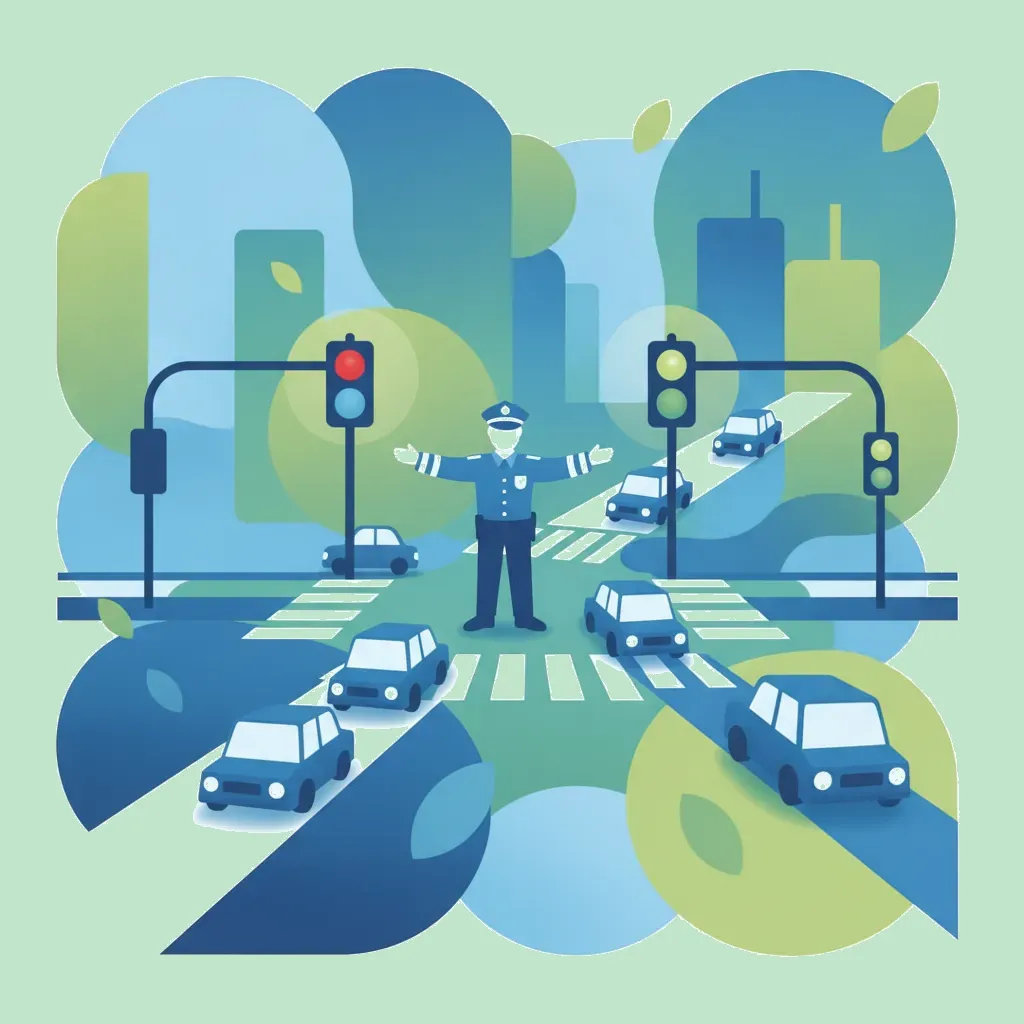
This lesson explains the function and meaning of traffic light signals, including standard cycles, flashing lights, and arrows. It also details how to interpret and obey hand signals given by police officers, which override all other signs and signals. Understanding these instructions is crucial for navigating controlled junctions and emergency situations.

This lesson serves as an introduction to the driver's interface with the car. It explains the function of the primary controls—steering wheel, accelerator, brake, and clutch—and the gear selector. You will also learn to identify and understand the various symbols and gauges on the dashboard, including the speedometer, fuel gauge, and critical warning lights.

This lesson focuses on how motorcyclists can clearly communicate their intentions to other road users to prevent misunderstandings and collisions. It covers the correct use of indicators, brake lights, and standardized hand signals for turning and stopping. The importance of making eye contact with other drivers to confirm they have seen you is also a key topic for enhancing safety.

This lesson covers the lighting and reflector requirements for heavy vehicles, including headlamps, side markers, and brake lights. It explains the function of these systems and the necessity of underrun protection to safeguard other road users. The content also discusses regulations governing lighting systems and their importance for safety in all conditions.
This lesson explains the function of informational signs, which provide helpful guidance for navigation and services. You will learn how to read directional signs on all types of roads, including the Autobahn, and understand distance markers to upcoming cities and exits. The lesson also covers the symbols for services such as fuel stations, restaurants, and tourist attractions.
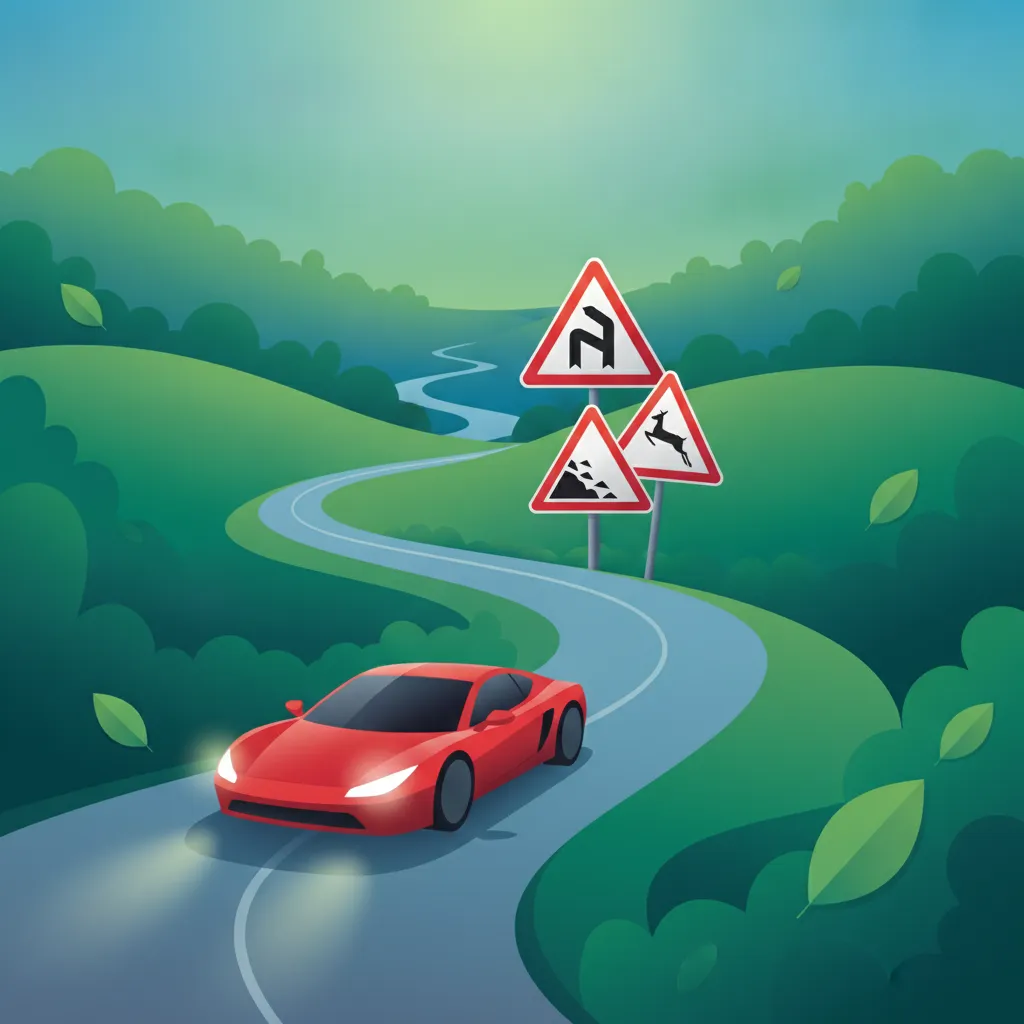
This lesson focuses on warning signs, which are designed to alert drivers to potential dangers or unusual conditions on the road ahead. You will learn to identify signs indicating sharp bends, upcoming intersections, railway crossings, road works, and risks like slippery surfaces or wildlife. Recognizing these signs allows you to anticipate hazards and adjust your driving proactively.

This lesson explains the various types of road markings and their significance for guiding traffic and ensuring safety. It covers the difference between solid and broken lines for lane separation and overtaking rules, the function of stop lines at intersections, and the markings for pedestrian crosswalks. You will also learn to interpret directional arrows, bicycle lane markings, and other symbols painted on the road.
Explore nuanced scenarios where clear communication and signalling are critical. Learn how to anticipate other road users' actions and effectively signal your intentions in complex urban and rural traffic situations, adhering to German driving regulations.
This lesson provides comprehensive guidance on using vehicle signals to communicate with other road users. It covers the correct timing and use of turn indicators, the application of hand signals when necessary, and the proper use of hazard lights. Effective signaling is presented as a cornerstone of predictable and safe driving.
This lesson provides a thorough explanation of traffic light systems ('Lichtzeichenanlagen') used in Germany. It details the meaning of red, amber, and green lights and the correct response to each phase of the signal sequence. The lesson also covers special signals, such as the green arrow for turning right on red, pedestrian and cyclist signals, and the authority of signals given by a police officer, which override all other signs.
This lesson explains the function and meaning of traffic light signals, including standard cycles, flashing lights, and arrows. It also details how to interpret and obey hand signals given by police officers, which override all other signs and signals. Understanding these instructions is crucial for navigating controlled junctions and emergency situations.
This lesson covers the principles of effective route planning and the practical skills for navigating different types of junctions. It provides guidance on using navigation aids and understanding the specific challenges large vehicles face at roundabouts and complex intersections. Emphasis is placed on correct lane selection and positioning well in advance of a turn to execute the maneuver safely and without impeding other traffic.

This lesson focuses on complex traffic environments where different types of road users share the same space. It provides guidance on situations like driving on streets with integrated tram tracks or where bus and bicycle lanes are part of the roadway. The content emphasizes understanding the specific priority rules and being extra vigilant to anticipate potential conflicts in these busy, shared zones.
This lesson familiarizes drivers with the various special traffic signals and signs that apply exclusively to buses and other public transport vehicles. It covers the interpretation of bus-only signals (often showing bars or letters), flashing priority indicators, and lane-use control signs. Correctly understanding these signals is crucial for legal compliance and for taking advantage of public transport priority measures in urban areas.
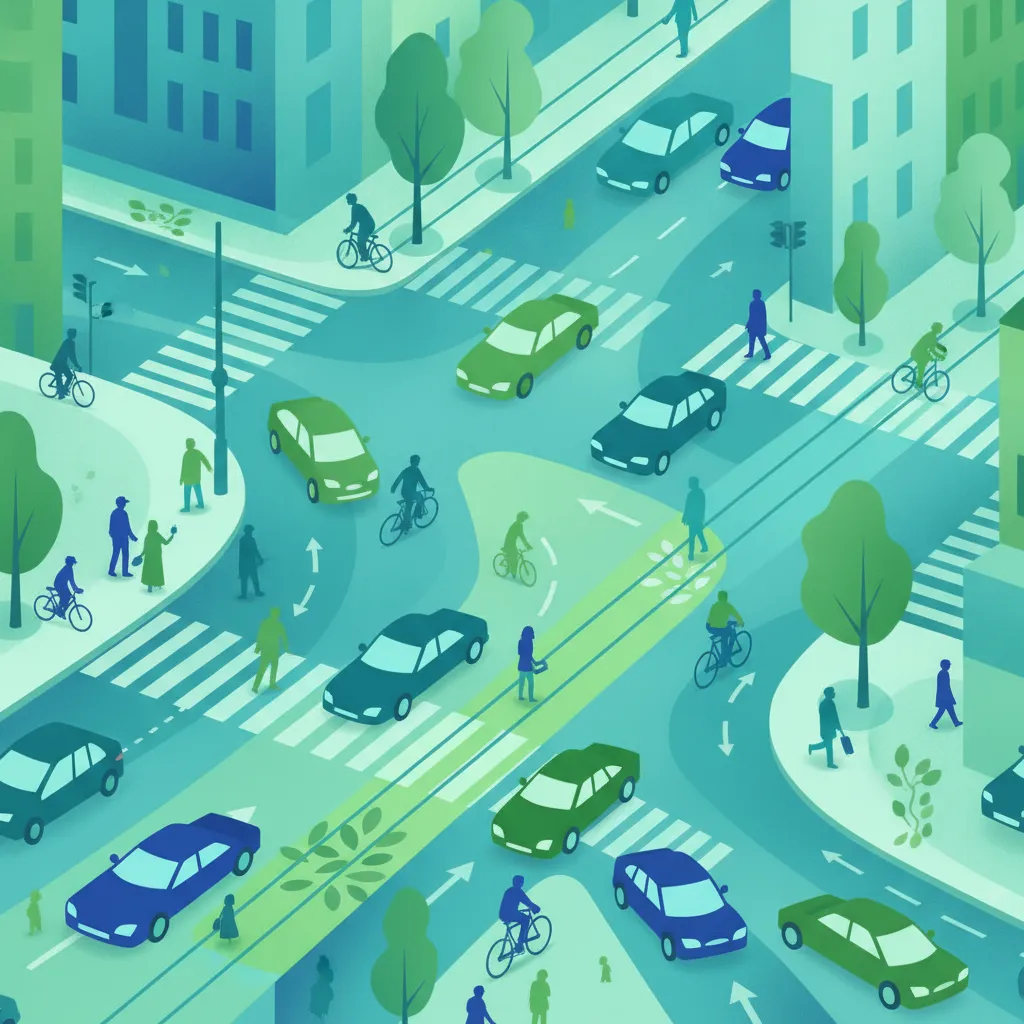
This lesson addresses the challenges of operating a small AM vehicle in dense, mixed traffic. It provides strategies for increasing visibility to other drivers, positioning oneself defensively, and safely sharing lanes with cyclists. The content emphasizes awareness of larger vehicles' blind spots and maintaining a safe space cushion.
This lesson provides clear instructions on how to navigate roundabouts in Germany. It explains the crucial rule of yielding to traffic already inside the circle, proper lane choice for your intended exit, and the correct use of signals. Safe interaction with cyclists and pedestrians at roundabout exits is also covered.
This lesson teaches a structured method for approaching any intersection. It covers identifying the type of junction, determining who has the right-of-way based on signs or rules, and performing thorough visual checks. The focus is on developing a safe and decisive approach to reduce risk in these high-conflict areas.
This lesson focuses on the critical maneuver of changing lanes ('Fahrstreifenwechsel'), a common cause of accidents if done incorrectly. It teaches a systematic, safe procedure based on thorough observation, clear signaling, and a final blind spot check. You will learn how to assess traffic speed and identify a safe gap before smoothly moving into the adjacent lane.
Find clear answers to common questions learners have about Communication and Signalling. Learn how the lesson is structured, which driving theory objectives it supports, and how it fits into the overall learning path of units and curriculum progression in Germany. These explanations help you understand key concepts, lesson flow, and exam focused study goals.
You may only use your horn or bright lights to give a warning of approach or to warn other road users of an immediate danger. In built-up areas, you are generally not allowed to use these signals unless you are in a situation where a collision is imminent.
Yes, you must signal your intention to leave the roundabout by using your right turn indicator before exiting. You do not need to signal when entering the roundabout.
Hazard lights should be used if your vehicle has broken down, if you are being towed, or to warn others of an end-of-traffic jam or severe danger ahead. They must not be used merely to indicate illegal parking.
Using a headlight flasher is generally only permitted to warn of danger. It should not be used to 'invite' other drivers to cross or to claim priority, as this can lead to dangerous misunderstandings on the road.
Begin your targeted revision now. Use our practice search to quickly find specific German driving theory questions. Filter by StVO rules, road signs, or hazard perception to create your focused study plan. Master challenging areas and prepare confidently for your theoretical driving test.