
This lesson provides an in-depth look at regulatory signs, which are legally binding commands you must follow while driving on German roads. By mastering these critical signs, you will be prepared to correctly interpret instructions at junctions, in urban areas, and on highways, ensuring your compliance with the StVO during the official theory exam and in practice.
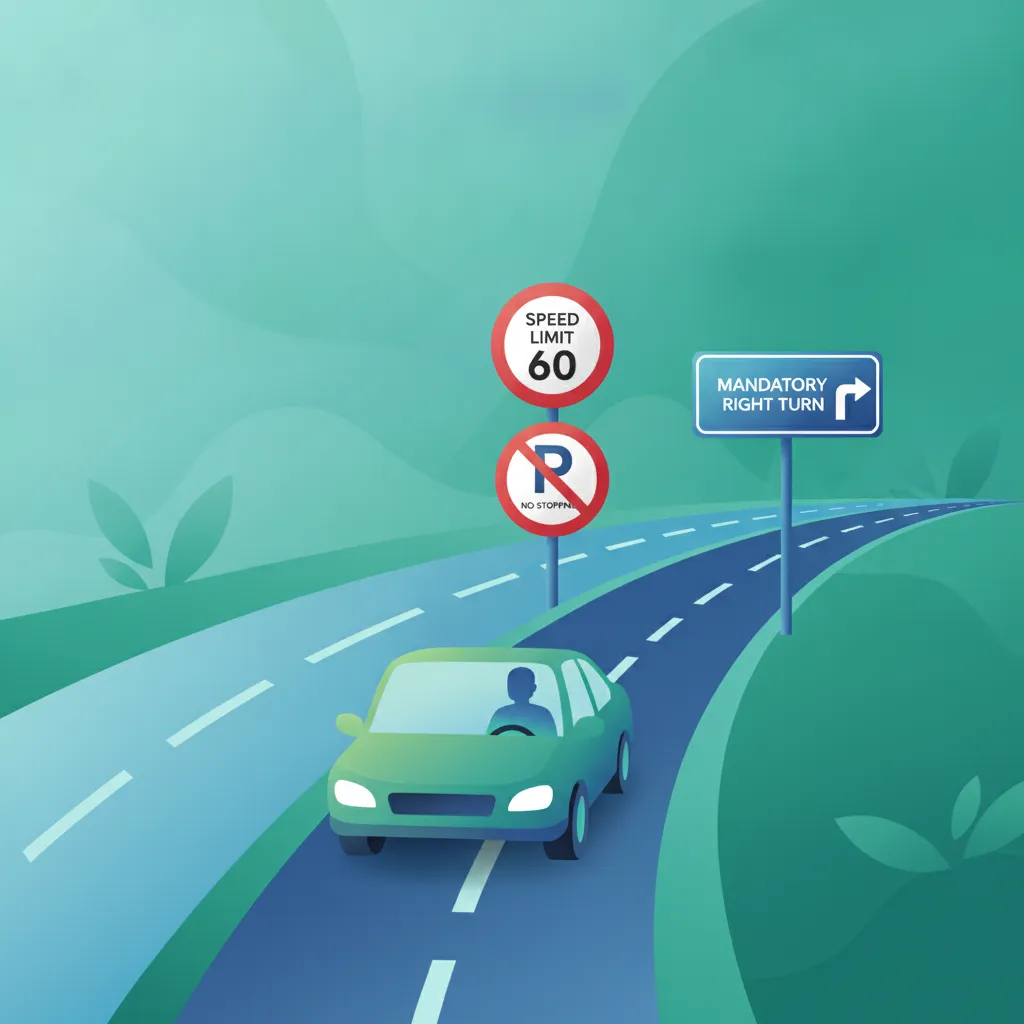
Lesson content overview
Navigating the roads safely and legally in Germany requires a thorough understanding of its traffic signage system, particularly regulatory signs (Verkehrszeichen). These signs are not merely suggestions; they are legally binding commands or prohibitions that dictate specific actions for all drivers. For anyone preparing for their German Category B driving license, mastering these signs is fundamental to both passing the theoretical exam and ensuring responsible conduct on the road.
This lesson provides an in-depth look at the purpose, meaning, and legal implications of Germany's most critical regulatory signs. By understanding their underlying logic and practical application, you will develop the necessary knowledge to respond correctly and confidently to diverse traffic situations.
Regulatory signs are the backbone of Germany's traffic control system, designed to maintain order, prevent accidents, and ensure a predictable flow of vehicles and pedestrians. Their primary characteristic is their legally binding nature, meaning non-compliance carries penalties.
Understanding the principles governing regulatory signs helps in grasping their importance and interpreting their instructions correctly.
Germany utilizes a variety of regulatory signs, each serving a specific function to manage traffic. Here, we delve into the most common and crucial ones you will encounter.
These signs are critical for managing intersections and merging traffic, preventing collisions by clearly assigning priority.
The stop sign is one of the most vital regulatory signs, demanding an absolute halt.
This distinctive red octagonal sign with the word "STOP" in white unequivocally requires drivers to come to a complete stop before the marked stop line or, if no line is present, at the point where they have a clear view of intersecting traffic without entering the flow. The purpose is to ensure drivers can fully assess cross-traffic before proceeding safely. Even if the road appears clear, a full stop is mandatory. A common misunderstanding is to merely slow down or perform a "rolling stop"; this is a violation and highly dangerous. After stopping, you must yield to all traffic on the intersecting road before continuing.
The yield sign indicates that you must give priority to other road users.
The inverted white triangle with a red border signifies that you must yield (give way) to all vehicles on the intersecting road. While a complete stop is not always necessary, you must slow down sufficiently to allow other vehicles to pass without obstruction. The practical meaning of this sign is to ensure safe merging or crossing by giving priority to traffic that is already established on the main road. Failing to yield can lead to dangerous situations and is a significant traffic violation. Always assume the right-of-way belongs to traffic on the intersecting road when encountering this sign.
These signs control access to roads and define the flow of traffic, preventing head-on conflicts and ensuring orderly movement.
This sign strictly prohibits entry for all vehicles.
The "No Entry" sign, a red circle with a horizontal white bar, indicates an absolute prohibition for any vehicle to enter the road or area beyond the sign from the direction it is facing. This sign is typically placed at the entry point of one-way streets, preventing drivers from entering against the designated traffic flow. Disregarding this sign is a serious offense due to the high risk of head-on collisions it creates. It is crucial not to confuse this with a "No Through Road" sign, which merely indicates a dead-end but not a prohibition of entry.
This sign designates a street for traffic flow in one direction only.
The "One-Way Street" sign, a blue rectangle with a white arrow, indicates that traffic flow is permitted only in the direction the arrow points. This sign is crucial for managing urban traffic and preventing congestion and conflicts. While drivers inside a one-way street follow the arrow, approaching drivers from other directions might encounter "No Entry" signs. It is imperative to always drive in the indicated direction; driving against it is a severe traffic violation.
Speed limits are fundamental for road safety, adapting vehicle speeds to road conditions and potential hazards.
These signs set the maximum permissible speed.
Speed limit signs, typically white circles with a red border and a black number, indicate the maximum speed in kilometres per hour (km/h) that vehicles are permitted to travel. These limits can be temporary (e.g., during roadworks) or permanent (e.g., in residential areas). They are enforced strictly, often by speed cameras, to reduce the risk and severity of accidents. A related sign is the "End of Speed Limit" sign (StVO sign 278), a white circle with a black diagonal line, indicating that a previous speed restriction no longer applies. Always adjust your speed to comply with the posted limit before entering the restricted zone.
Understanding the nuances of parking and stopping prohibitions is essential to avoid fines and ensure clear pathways for other road users.
This sign prohibits parking but generally allows short stops.
The "No Parking" sign, a blue circle with a red border and a single red diagonal line, means that parking is prohibited. However, this sign generally allows for brief stops, such as picking up or dropping off passengers or loading/unloading goods, as long as the vehicle is not left unattended and traffic flow is not obstructed. If the duration of the stop exceeds three minutes, or if the driver leaves the vehicle, it is considered parking and thus a violation. Supplementary signs may indicate specific times or conditions when this prohibition applies.
This sign represents an absolute prohibition against any stop.
The "No Stopping" sign, easily identifiable by its blue circular design with a red border and a red diagonal cross, indicates an absolute prohibition against any stop, even for a moment. This includes stopping to pick up or drop off passengers, or for loading/unloading. The only exception is when you are forced to stop by traffic conditions (e.g., a traffic jam or red light). Confusing "No Parking" with "No Stopping" is a common mistake and can lead to immediate fines.
These signs define areas with specific access restrictions for environmental protection or pedestrian safety.
This sign indicates areas with emission-based access restrictions.
An "Environmental Zone" sign, often indicating "Umweltzone," marks a specific urban area where only vehicles meeting certain emission standards are permitted to enter. To enter these zones, vehicles must display a valid emissions sticker (typically a green badge) on their windshield. The purpose is to reduce air pollution in city centers. Entering an environmental zone without the required badge, or with an incorrect badge, is subject to fines. The badge must be permanently displayed and correspond to your vehicle's emission class.
This sign designates an area primarily for pedestrian use.
The "Pedestrian Zone" sign designates an area where pedestrians have priority, and vehicle traffic is generally prohibited. These zones are common in city centers and shopping districts to provide safe spaces for walkers. Unless specific supplementary signs explicitly permit entry for certain vehicles (e.g., residents, delivery vehicles during specific hours, or emergency services), drivers must not enter. Violating a pedestrian zone restriction can endanger pedestrians and result in fines.
Compliance with regulatory signs is not just a matter of good driving practice; it is a legal requirement under German law. The StVO outlines the specific rules and penalties for non-compliance.
| Regulation | Rule Statement | Applicability | Legal Status | Rationale |
|---|---|---|---|---|
| StVO § 37 (5) | At a stop sign (sign 206), a driver must stop completely before the stop line. | All stop signs. | Mandatory | Ensures visibility and right-of-way assessment at intersections. |
| StVO § 38 (2) | At a yield sign (sign 205), a driver must give way to all vehicles on the intersecting road. | All yield signs. | Mandatory | Prevents collisions at merges and intersections. |
| StVO § 41 (1) | No vehicle may enter a road marked with a "No Entry" sign (sign 267). | "No Entry" signs. | Mandatory | Prevents head-on collisions in one-way traffic. |
| StVO § 42 (1) | Vehicles must follow the direction indicated by a "One-Way" sign (sign 220). | One-way signs. | Mandatory | Ensures orderly and safe traffic flow. |
| StVO § 45 (2) | Speed limits shown on signs (sign 274) must not be exceeded. | All speed limit signs. | Mandatory | Controls vehicle speed, reduces accident severity, and protects vulnerable road users. |
| StVO § 48 (1) | Parking is prohibited where "No Parking" (sign 286) or "No Stopping" (sign 283) signs are displayed. | Parking and stopping prohibition signs. | Mandatory | Prevents obstruction of traffic, ensures safe access, and maintains visibility. |
| StVO § 50 (1) | Vehicles without an appropriate emissions badge must not enter an environmental zone (sign 275.1). | Environmental zone signs. | Mandatory | Reduces air pollution in urban areas for public health. |
| StVO § 55 (1) | Vehicles must not enter pedestrian zones (sign 242.1) unless expressly permitted. | Pedestrian zone signs. | Mandatory | Protects pedestrians and provides safe public spaces. |
Ignoring regulatory signs can lead to severe penalties. Here are some common violations and their potential repercussions:
While regulatory signs provide clear instructions, drivers must also consider various contextual factors that might influence how they interpret and comply with these directives.
The consistent application and obedience of regulatory signs are paramount to overall road safety and efficiency.
By internalizing the meaning and purpose of each regulatory sign, drivers contribute to a safer, more orderly, and more predictable traffic environment for everyone. This knowledge is not just for passing an exam; it is for life on the road.
German regulatory signs are legally mandatory commands under the StVO, distinguished by red circles for prohibitions, blue circles for positive commands, and octagonal red STOP signs. Key signs include stop (206), yield (205), no entry (267), one-way (220), speed limits (274), no parking (286), no stopping (283), environmental zones (275.1), and pedestrian zones (242.1). The critical distinction between no parking and no stopping is that brief stops are permitted under no parking but absolutely prohibited under no stopping. Master these signs to navigate intersections safely, comply with parking rules, and pass the Category B theory exam with full confidence in your legal obligations.
A short set of high-value points that capture the most important learning from this lesson.
Regulatory signs are legally binding commands under StVO; non-compliance results in fines and penalty points
Stop signs require a complete halt before proceeding, not merely slowing down or rolling through
The inverted red-bordered triangle (yield sign) demands giving way to all traffic on the intersecting road
No Parking (one red diagonal) permits brief stops up to three minutes, while No Stopping (red cross) prohibits any pause whatsoever
Environmental zones require the correct emissions badge displayed permanently on the windshield
Explore all units and lessons included in this driving theory course.
No Entry (red circle, white bar) prohibits entry completely; do not confuse it with dead-end signs
One-way streets are marked blue with a white arrow; always drive in the indicated direction only
Temporary yellow-background signs override permanent signs during roadworks or events
Pedestrian zones prohibit vehicles unless supplementary signs explicitly permit exceptions for residents or deliveries
Speed limit signs show the maximum in km/h; 50 km/h is standard in urban areas unless otherwise posted
Confusing No Parking with No Stopping, leading to fines for brief stops in no-stopping zones
Performing a rolling stop instead of a complete halt at stop signs, which is a violation regardless of traffic
Entering one-way streets from the wrong direction, creating serious head-on collision risks
Forgetting that environmental zones require a permanently displayed emissions badge matching the vehicle's class
Assuming a clear road at a yield sign means no action is needed; you must still assess and yield properly
Lesson content overview
A short set of high-value points that capture the most important learning from this lesson.
Regulatory signs are legally binding commands under StVO; non-compliance results in fines and penalty points
Stop signs require a complete halt before proceeding, not merely slowing down or rolling through
The inverted red-bordered triangle (yield sign) demands giving way to all traffic on the intersecting road
No Parking (one red diagonal) permits brief stops up to three minutes, while No Stopping (red cross) prohibits any pause whatsoever
Environmental zones require the correct emissions badge displayed permanently on the windshield
Explore all units and lessons included in this driving theory course.
No Entry (red circle, white bar) prohibits entry completely; do not confuse it with dead-end signs
One-way streets are marked blue with a white arrow; always drive in the indicated direction only
Temporary yellow-background signs override permanent signs during roadworks or events
Pedestrian zones prohibit vehicles unless supplementary signs explicitly permit exceptions for residents or deliveries
Speed limit signs show the maximum in km/h; 50 km/h is standard in urban areas unless otherwise posted
Confusing No Parking with No Stopping, leading to fines for brief stops in no-stopping zones
Performing a rolling stop instead of a complete halt at stop signs, which is a violation regardless of traffic
Entering one-way streets from the wrong direction, creating serious head-on collision risks
Forgetting that environmental zones require a permanently displayed emissions badge matching the vehicle's class
Assuming a clear road at a yield sign means no action is needed; you must still assess and yield properly
Explore search topics learners often look for when studying Regulatory Signs. These topics reflect common questions about road rules, driving situations, safety guidance, and lesson level theory preparation for learners in Germany.
Browse additional driving theory lessons that cover connected traffic rules, road signs, and common driving situations related to this topic. Improve your understanding of how different rules interact across everyday traffic scenarios.
Explore the nuances and complex applications of German regulatory signs not covered in the introductory lesson. Deepen your understanding of mandatory actions, prohibitions, and specific conditions related to traffic control signs under the StVO for the driving theory test.
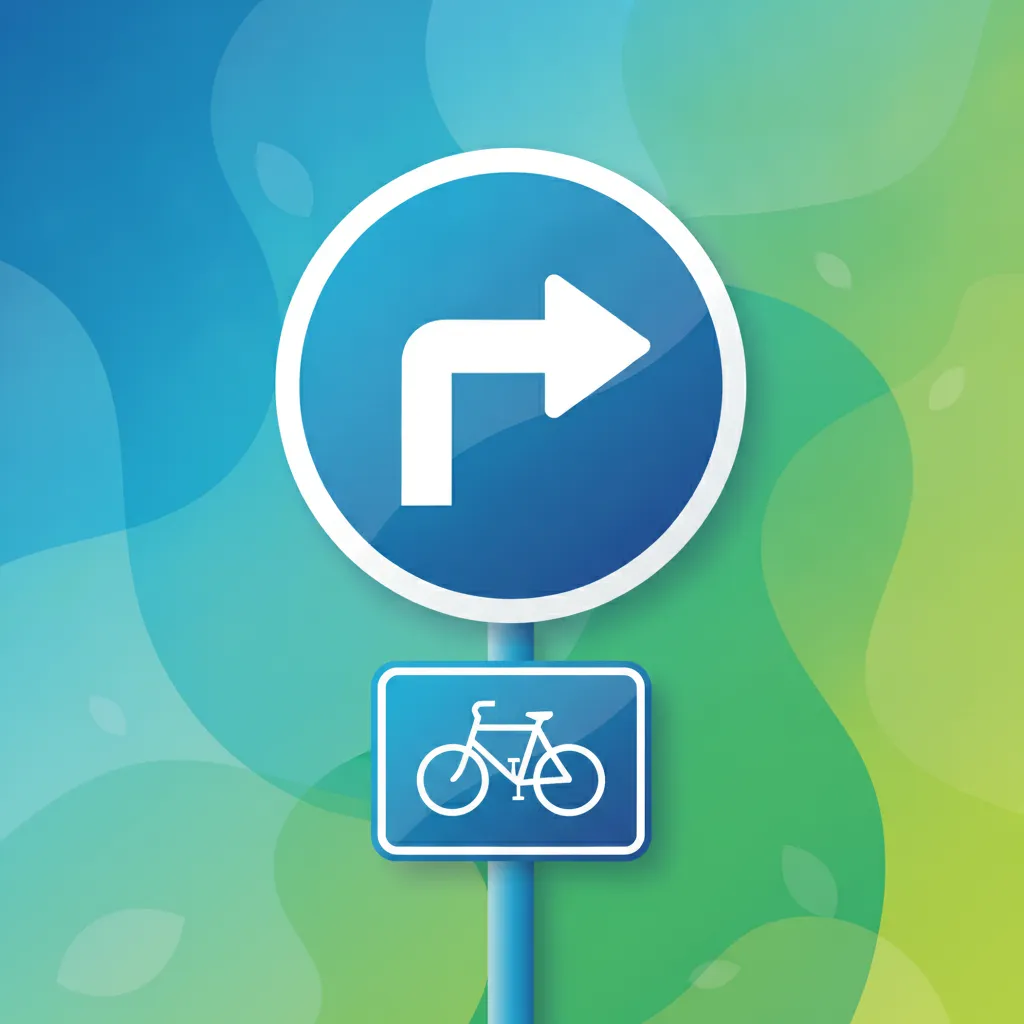
This lesson is dedicated to supplementary signs ('Zusatzzeichen'), which appear below main signs to provide additional, specific information. You will learn how these signs modify the primary rule, for example by specifying time restrictions, excepting certain types of vehicles, or indicating a specific distance. Correctly interpreting these signs is essential for understanding the full context of a traffic regulation.
This lesson explains the function of informational signs, which provide helpful guidance for navigation and services. You will learn how to read directional signs on all types of roads, including the Autobahn, and understand distance markers to upcoming cities and exits. The lesson also covers the symbols for services such as fuel stations, restaurants, and tourist attractions.
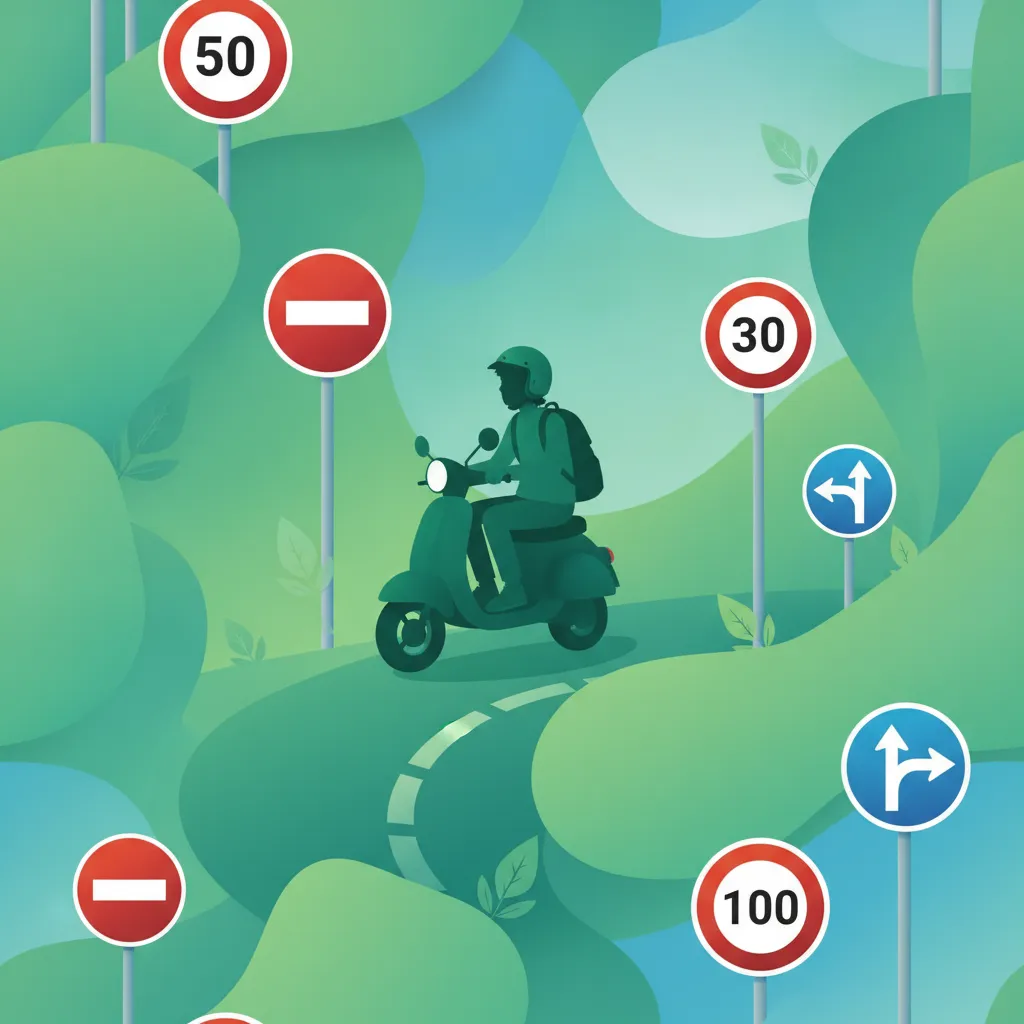
This lesson introduces the various categories of German road signs, focusing on their meaning and application for AM riders. It covers regulatory signs like speed limits, warning signs for hazards, and informational signs for guidance. Learners will be ableto identify signs by their shape, color, and symbols, ensuring correct interpretation while riding.
This lesson provides an overview of the German system for penalizing traffic offenses. It explains the catalogue of fines ('Bußgeldkatalog'), the system of demerit points ('Punkte in Flensburg') for more serious violations, and the conditions under which a temporary driving ban ('Fahrverbot') or a full revocation of the license can be imposed. Understanding these consequences reinforces the importance of lawful driving.

This lesson provides comprehensive guidance on using vehicle signals to communicate with other road users. It covers the correct timing and use of turn indicators, the application of hand signals when necessary, and the proper use of hazard lights. Effective signaling is presented as a cornerstone of predictable and safe driving.

Effective communication is critical for road safety, and this lesson details the correct use of a vehicle's signaling devices. It explains when and how to use turn signals (indicators), hazard warning lights, the horn, and headlight flashes to clearly communicate your intentions to other road users. Proper signaling helps prevent misunderstandings and is a key component of defensive and cooperative driving.

This lesson provides a thorough explanation of traffic light systems ('Lichtzeichenanlagen') used in Germany. It details the meaning of red, amber, and green lights and the correct response to each phase of the signal sequence. The lesson also covers special signals, such as the green arrow for turning right on red, pedestrian and cyclist signals, and the authority of signals given by a police officer, which override all other signs.

This lesson explains the various types of road markings and their significance for guiding traffic and ensuring safety. It covers the difference between solid and broken lines for lane separation and overtaking rules, the function of stop lines at intersections, and the markings for pedestrian crosswalks. You will also learn to interpret directional arrows, bicycle lane markings, and other symbols painted on the road.
This lesson addresses the concept of environmental zones in German cities, explaining the requirements for emission stickers and the impact on heavy vehicles. It discusses the legal consequences of non-compliance, such as fines, and the importance of ensuring the vehicle meets emission standards. The content covers planning routes to avoid restricted zones if necessary.
Learn to identify and interpret German warning signs that alert to hazards and information signs that provide guidance. Complement your knowledge of regulatory signs with a comprehensive understanding of all traffic sign categories relevant to the driving theory exam.
This lesson focuses on warning signs, which are designed to alert drivers to potential dangers or unusual conditions on the road ahead. You will learn to identify signs indicating sharp bends, upcoming intersections, railway crossings, road works, and risks like slippery surfaces or wildlife. Recognizing these signs allows you to anticipate hazards and adjust your driving proactively.
This lesson explains the function of informational signs, which provide helpful guidance for navigation and services. You will learn how to read directional signs on all types of roads, including the Autobahn, and understand distance markers to upcoming cities and exits. The lesson also covers the symbols for services such as fuel stations, restaurants, and tourist attractions.
Effective communication is critical for road safety, and this lesson details the correct use of a vehicle's signaling devices. It explains when and how to use turn signals (indicators), hazard warning lights, the horn, and headlight flashes to clearly communicate your intentions to other road users. Proper signaling helps prevent misunderstandings and is a key component of defensive and cooperative driving.
This lesson provides comprehensive guidance on using vehicle signals to communicate with other road users. It covers the correct timing and use of turn indicators, the application of hand signals when necessary, and the proper use of hazard lights. Effective signaling is presented as a cornerstone of predictable and safe driving.
This lesson introduces the various categories of German road signs, focusing on their meaning and application for AM riders. It covers regulatory signs like speed limits, warning signs for hazards, and informational signs for guidance. Learners will be ableto identify signs by their shape, color, and symbols, ensuring correct interpretation while riding.
This lesson explains the various types of road markings and their significance for guiding traffic and ensuring safety. It covers the difference between solid and broken lines for lane separation and overtaking rules, the function of stop lines at intersections, and the markings for pedestrian crosswalks. You will also learn to interpret directional arrows, bicycle lane markings, and other symbols painted on the road.
This lesson introduces the concept of defensive driving ('vorausschauendes Fahren'), a proactive approach focused on anticipating and mitigating potential risks. It teaches techniques for scanning the road ahead, identifying potential hazards early, and managing the space around your vehicle to create a safety buffer. The goal is to develop a mindset that prioritizes safety and collision avoidance above all else.

This lesson serves as an introduction to the driver's interface with the car. It explains the function of the primary controls—steering wheel, accelerator, brake, and clutch—and the gear selector. You will also learn to identify and understand the various symbols and gauges on the dashboard, including the speedometer, fuel gauge, and critical warning lights.

This lesson explores the critical role of visibility in safe driving, covering topics such as sight distance, managing blind spots, and the correct use of mirrors. It provides guidance on how to adjust your driving in conditions of reduced visibility, such as at night, in fog, or during heavy rain, including the proper use of headlights. The importance of the over-the-shoulder check ('Schulterblick') is also a key focus.
This lesson provides a thorough explanation of traffic light systems ('Lichtzeichenanlagen') used in Germany. It details the meaning of red, amber, and green lights and the correct response to each phase of the signal sequence. The lesson also covers special signals, such as the green arrow for turning right on red, pedestrian and cyclist signals, and the authority of signals given by a police officer, which override all other signs.
Find clear answers to common questions learners have about Regulatory Signs. Learn how the lesson is structured, which driving theory objectives it supports, and how it fits into the overall learning path of units and curriculum progression in Germany. These explanations help you understand key concepts, lesson flow, and exam focused study goals.
A stop sign requires you to come to a complete halt at the stop line or intersection, even if the road appears clear. A yield sign requires you to slow down and prepare to stop only if other traffic has priority, but you do not need to perform a full, stationary stop if the way is completely clear.
In Germany, most prohibition signs are circular with a white background and a red border. They dictate what you are not allowed to do, such as 'No Entry' or 'No Overtaking'. If a sign is circular with a blue background, it is usually a mandatory sign, meaning you must perform the action shown.
You are still legally required to follow signs if their shape or general appearance is recognizable. If a sign is completely obscured, you must follow the general rules of the StVO, but you should always exercise extreme caution and assume a restriction exists if there is any doubt.
Yes, parking signs often feature supplementary signs below them that define time limits, vehicle types, or days of the week. In the theory exam, always look for these additional plates, as they define the specific boundaries of the regulation.
Begin your targeted revision now. Use our practice search to quickly find specific German driving theory questions. Filter by StVO rules, road signs, or hazard perception to create your focused study plan. Master challenging areas and prepare confidently for your theoretical driving test.