
This lesson provides the essential legal foundation for operating heavy goods vehicles on German roads, ensuring you understand your professional responsibilities under the StVO. It covers the crucial balance between regulatory compliance, documentation standards, and the duty of care expected of a professional driver. Mastering these concepts is vital for your C1, C1E, C, or CE theory exam and for establishing a safe, compliant career in transport.

Lesson content overview
Operating heavy vehicles in Germany involves a complex interplay of general traffic law and specific commercial transport regulations. For drivers pursuing a German Heavy Vehicle Driving License Theory – C1, C1E, C, CE, understanding this comprehensive legal framework and the associated professional obligations is paramount. This lesson provides an in-depth exploration of these requirements, highlighting their significance for road safety, vehicle roadworthiness, and preventing legal penalties.
The responsibilities of a heavy vehicle driver extend far beyond merely operating the vehicle; they encompass a diligent adherence to statutory rules, thorough pre-trip preparations, and meticulous documentation. This foundational knowledge is crucial for safe and compliant operation and forms the basis for understanding subsequent lessons on vehicle dimensions, masses, braking systems, and advanced load securing principles.
The legal framework governing heavy vehicle operation in Germany is multi-layered, beginning with general traffic laws and extending to highly specific commercial transport regulations. Professional drivers must navigate this intricate system to ensure legal compliance and uphold public safety.
The Straßenverkehrs-Ordnung (StVO) is the fundamental body of German road traffic regulations, applicable to all road users, regardless of vehicle type. It dictates general provisions for traffic behavior, specific rules for different vehicles, priority regulations, and permissible driver actions. For heavy vehicle drivers, adherence to the StVO is not only mandatory but often comes with heightened expectations due to the inherent risks associated with larger and heavier vehicles.
This means that heavy vehicles, despite their size and operational characteristics, must fully comply with general speed limits, turning rules, overtaking prohibitions, and signaling requirements as outlined in the StVO. A common misconception is that commercial drivers might be exempt from certain StVO rules due to their professional capacity; however, this is incorrect. The StVO serves as the baseline, upon which further commercial regulations are built. For instance, a heavy goods vehicle must respect a 50 km/h speed limit within urban areas, just like a passenger car, even though its braking distance might be considerably longer.
While the StVO sets the general rules, the commercial transport sector is subject to additional, specific regulations designed to address the unique challenges and risks associated with professional freight and passenger transport. These regulations focus on areas such as driver working hours, vehicle maintenance, and comprehensive load security.
Key commercial transport regulations in Germany include:
These supplementary regulations mean that a commercial driver must, for example, maintain a driver logbook (Fahrtenbuch) or use a digital tachograph to record driving and rest periods. They also outline strict vehicle inspection schedules that go beyond the general TÜV requirements, ensuring that heavy vehicles are continuously roadworthy for commercial operations. Ignoring these specific rules can lead to severe penalties, impacting both the driver and the transport company.
The concept of professional duty of care is central to operating heavy vehicles. It encompasses the legal and ethical obligation of a heavy vehicle driver to ensure that their vehicle and its cargo do not pose a danger to themselves or other road users. This heightened responsibility stems from the significant potential for damage and severe consequences should an incident occur involving a heavy goods vehicle.
This duty manifests in several critical areas:
Many heavy vehicle drivers mistakenly believe that only fleet managers or mechanics are solely responsible for vehicle inspections. However, the professional duty of care mandates that the driver themselves must verify the roadworthiness of the vehicle before each trip. For instance, a driver must confirm that all brake lights and turn signals are operational, and that the load is visibly secure, even if the vehicle has undergone recent workshop maintenance. Failure to uphold this duty of care can lead to serious legal consequences and compromise road safety.
Proper documentation is a non-negotiable aspect of professional heavy vehicle operation in Germany. Drivers must carry a specific set of official papers that prove the vehicle's compliance with various regulations and confirm the driver's qualifications. These documents must be current and presented upon request during roadside checks by law enforcement or regulatory bodies.
Essential vehicle documentation includes:
Forgetting to carry these documents, or presenting expired ones, can lead to immediate fines and potentially prevent the continuation of a journey until compliance is met. For example, operating a truck with an expired TÜV inspection sticker will result in penalties during a police check. Drivers should regularly check the validity dates of all their documents and ensure they are easily accessible within the vehicle.
A deeper dive into specific paragraphs and regulations clarifies the legal demands placed on heavy vehicle drivers. These rules are designed to mitigate risks and ensure that professional transport is conducted safely and responsibly.
Rule Statement: According to § 21 StVO (Personenbeförderung), while specifically addressing passenger transport, the broader principle of duty to exercise caution applies to all drivers, especially those operating heavy vehicles. Drivers must always act with due care and attention, taking into account the particular risks associated with their vehicle type and current driving conditions.
Applicability: This applies universally to all road users in Germany, with increased expectations for heavy vehicle drivers who, due to their vehicle's size and mass, have a greater potential to cause harm. Rationale: Heavy vehicles have longer stopping distances, larger blind spots, and can cause more severe damage in an accident. This necessitates heightened vigilance and a proactive approach to safety. Practical Example: A heavy vehicle driver demonstrating correct application would conduct a thorough visual check of their vehicle and its immediate surroundings before moving off, especially after a stop, to account for vulnerable road users. Incorrect application would be ignoring a clear warning light on the dashboard related to braking system performance.
Rule Statement: § 73 StVO, referring to the technical requirements specified in the Straßenverkehrs-Zulassungs-Ordnung (StVZO), mandates that the roadworthy condition of vehicles must be regularly confirmed through certified inspections. In Germany, these are primarily conducted by organizations like TÜV, DEKRA, GTÜ, or KÜS, resulting in the Hauptuntersuchung (HU) and Abgasuntersuchung (AU).
Applicability: All motor vehicles must undergo these inspections, with specific intervals depending on the vehicle type and usage. For commercial trucks, inspections are generally more frequent than for passenger cars. Rationale: These inspections ensure that vehicles meet critical safety and environmental standards, thereby reducing the risk of accidents caused by technical defects and minimizing environmental impact. Practical Example: Correct application involves ensuring a heavy goods vehicle undergoes its annual (or otherwise specified) HU/AU inspection and carries the valid inspection report. Incorrect application would be operating a truck with an expired inspection sticker or knowingly with defects that would cause it to fail an inspection.
Rule Statement: The Fahrpersonalverordnung (FPersV) implements European Union Regulation (EC) No 561/2006 in Germany, regulating driving hours, mandatory breaks, and daily/weekly rest periods for commercial drivers.
Applicability: This regulation applies to drivers operating vehicles requiring a driver's license class C, C1, C1E, CE, or C1E, and vehicles with a permissible maximum mass exceeding 3.5 tonnes (including trailers). Rationale: The core purpose is to prevent driver fatigue, which significantly impairs judgment and reaction time, and is a major contributing factor to accidents. By mandating rest periods, the FPersV aims to enhance road safety and improve drivers' working conditions. Practical Example: A driver correctly applies FPersV by taking a minimum 45-minute break after 4.5 hours of continuous driving. An incorrect application would be continuing to drive beyond the maximum daily driving limit or reducing a mandatory rest period to meet a deadline.
Rule Statement: The Verordnung über die Sicherung von Ladungen (PSV) specifies detailed requirements for securing cargo on vehicles to prevent it from shifting, tipping, rolling, or falling off during transport. This includes regulations on lashing, blocking, and friction-enhancing measures.
Applicability: This regulation is mandatory for all commercial vehicles carrying cargo on public roads. Rationale: Unsecured or improperly secured loads pose significant hazards. They can cause loss of vehicle control, directly endanger other road users if they fall off, and damage the vehicle or cargo itself. Practical Example: Correct application involves using appropriate and certified tie-downs, non-slip mats, and securing techniques (e.g., top-over lashing, direct lashing) according to the weight and type of cargo. An incorrect application would be relying solely on the weight of the cargo (friction) without additional securing devices, or using damaged or insufficient lashing straps.
Rule Statement: While § 39 StVO specifically relates to acoustic warning signals, the broader principle of vehicle equipment and roadworthiness is covered by various sections within the StVZO (Straßenverkehrs-Zulassungs-Ordnung), to which the StVO refers. This states that vehicles must be equipped and maintained in a technical condition that ensures safety for all road users.
Applicability: Applies to all vehicles, but with specific, enhanced equipment obligations for heavy vehicles. These often include requirements for certain types of fire extinguishers, reflective warning triangles, reflective vests, and sometimes spare tires or appropriate repair kits. Rationale: Ensures that critical safety equipment is available for emergencies and that the vehicle's technical components (brakes, lights, steering, tires) are always in proper working order to prevent accidents. Practical Example: A heavy vehicle driver correctly applies this by ensuring a functional fire extinguisher is accessible and regularly checked for expiry, and that their vehicle's lighting system (headlights, tail lights, indicators) is fully operational before every trip. Incorrect application would involve knowingly operating a truck with faulty brake lights or an expired fire extinguisher.
Non-compliance with the legal framework for heavy vehicles can lead to a range of violations, from minor infractions to serious criminal offenses. Enforcement mechanisms in Germany include roadside checks, company inspections, and accident investigations, with penalties varying significantly based on the severity of the offense.
Common violations include:
The legal framework and professional duty of care are not static; they require adaptation to varying driving conditions and circumstances. Professional heavy vehicle drivers must continuously assess and adjust their behavior based on contextual factors.
Understanding these conditional variations is critical for compliant and safe driving. The law often expects drivers to not only follow prescriptive rules but also to apply sound judgment based on prevailing circumstances, especially when operating a vehicle with such significant impact potential.
The consequences of failing to comply with legal and professional obligations are severe and multi-faceted.
Conversely, correct compliance ensures vehicle roadworthiness, significantly reduces the risk of accidents, protects drivers and other road users, and avoids legal and financial penalties. It fosters a professional image and contributes to the overall safety and efficiency of the commercial transport sector in Germany.
The successful operation of a heavy vehicle in Germany demands more than just driving skill; it requires a deep understanding and strict adherence to a comprehensive legal framework. The Straßenverkehrs-Ordnung (StVO) forms the general foundation, governing all road traffic. On top of this, Commercial Transport Regulations, such as the Fahrpersonalverordnung (FPersV) for driving and rest times and the Verordnung über die Sicherung von Ladungen (PSV) for cargo security, impose specific, stringent requirements on professional drivers.
A Professional Duty of Care is paramount, obligating drivers to ensure their vehicle is roadworthy through diligent pre-trip inspections and proper maintenance. Maintaining and carrying correct Vehicle Documentation, including registration, insurance, tachograph records, and TÜV reports, is also legally mandated and crucial for roadside checks. Adherence to these regulations mitigates risks, enhances road safety, and prevents significant legal and financial penalties for both drivers and transport companies. Understanding and applying these principles is fundamental for any heavy vehicle driver aiming for safe and compliant operation within Germany.
This lesson establishes that operating heavy vehicles in Germany requires compliance with both the general Straßenverkehrs-Ordnung (StVO) and specific commercial transport regulations including the Fahrpersonalverordnung (FPersV) for driving hours and the Verordnung über die Sicherung von Ladungen (PSV) for cargo security. Professional drivers bear a heightened duty of care that extends beyond basic traffic rules, encompassing mandatory pre-trip inspections, proper documentation maintenance, and continuous risk assessment based on conditions. Violations such as expired inspections, exceeded driving times, or unsecured loads carry significant penalties including fines, license points, and potential vehicle impoundment. Success in both the theory exam and professional practice depends on understanding how these regulatory layers interact and applying them contextually to ensure road safety.
A short set of high-value points that capture the most important learning from this lesson.
The StVO provides the baseline traffic rules for all vehicles, but commercial drivers face additional specific regulations built on top of these general requirements.
Professional duty of care requires drivers to personally verify vehicle roadworthiness, load security, and equipment functionality before each journey, not just rely on fleet maintenance.
Commercial heavy vehicle drivers must carry and present specific documentation including registration, insurance, tachograph records, and valid TÜV inspection reports.
Regulations like FPersV (driving times) and PSV (load securing) impose legally binding obligations that apply to all commercial transport operations.
Heavy vehicle drivers must adapt their driving behavior to conditions such as weather, road type, and vehicle load, applying judgment beyond basic rule compliance.
Explore all units and lessons included in this driving theory course.
§ 21 StVO mandates heightened caution from all drivers, with increased expectations for heavy vehicle operators due to longer stopping distances and larger blind spots.
The Fahrpersonalverordnung (FPersV) requires mandatory breaks of at least 45 minutes after 4.5 hours of continuous driving to prevent fatigue.
Load securing under PSV requires more than relying on friction—cargo must be physically restrained using lashing, blocking, or friction-enhancing measures.
Expired TÜV inspection stickers (Hauptuntersuchung) result in immediate fines and potential vehicle impoundment during roadside checks.
Drivers must always carry their digital tachograph driver card and be able to produce printouts showing compliance with driving and rest regulations.
Assuming professional drivers are exempt from certain StVO rules due to their commercial status—they are not; the StVO applies to all road users.
Believing that only mechanics or fleet managers are responsible for vehicle inspections—the driver bears personal legal responsibility for pre-trip checks.
Relying solely on cargo weight (friction) without additional securing devices—this violates PSV requirements for proper load restraint.
Forgetting to check document validity dates, particularly TÜV inspection stickers and tachograph records, before commencing a journey.
Failing to adjust braking distances and speeds appropriately when vehicle load changes or weather conditions deteriorate.
Lesson content overview
A short set of high-value points that capture the most important learning from this lesson.
The StVO provides the baseline traffic rules for all vehicles, but commercial drivers face additional specific regulations built on top of these general requirements.
Professional duty of care requires drivers to personally verify vehicle roadworthiness, load security, and equipment functionality before each journey, not just rely on fleet maintenance.
Commercial heavy vehicle drivers must carry and present specific documentation including registration, insurance, tachograph records, and valid TÜV inspection reports.
Regulations like FPersV (driving times) and PSV (load securing) impose legally binding obligations that apply to all commercial transport operations.
Heavy vehicle drivers must adapt their driving behavior to conditions such as weather, road type, and vehicle load, applying judgment beyond basic rule compliance.
Explore all units and lessons included in this driving theory course.
§ 21 StVO mandates heightened caution from all drivers, with increased expectations for heavy vehicle operators due to longer stopping distances and larger blind spots.
The Fahrpersonalverordnung (FPersV) requires mandatory breaks of at least 45 minutes after 4.5 hours of continuous driving to prevent fatigue.
Load securing under PSV requires more than relying on friction—cargo must be physically restrained using lashing, blocking, or friction-enhancing measures.
Expired TÜV inspection stickers (Hauptuntersuchung) result in immediate fines and potential vehicle impoundment during roadside checks.
Drivers must always carry their digital tachograph driver card and be able to produce printouts showing compliance with driving and rest regulations.
Assuming professional drivers are exempt from certain StVO rules due to their commercial status—they are not; the StVO applies to all road users.
Believing that only mechanics or fleet managers are responsible for vehicle inspections—the driver bears personal legal responsibility for pre-trip checks.
Relying solely on cargo weight (friction) without additional securing devices—this violates PSV requirements for proper load restraint.
Forgetting to check document validity dates, particularly TÜV inspection stickers and tachograph records, before commencing a journey.
Failing to adjust braking distances and speeds appropriately when vehicle load changes or weather conditions deteriorate.
Explore search topics learners often look for when studying Legal Framework and Professional Obligations. These topics reflect common questions about road rules, driving situations, safety guidance, and lesson level theory preparation for learners in Germany.
Browse additional driving theory lessons that cover connected traffic rules, road signs, and common driving situations related to this topic. Improve your understanding of how different rules interact across everyday traffic scenarios.
Explore the enforcement mechanisms and penalties associated with violating German heavy vehicle laws. This lesson details the driver's duty of care, documentation, and the legal consequences of non-compliance, vital for C and CE category theory preparation.

This lesson outlines the legal ramifications of operating a heavy vehicle while fatigued or overloaded. It covers potential fines, license suspension, and the negative impact on insurance coverage. The content also discusses the increased liability in the event of an accident caused by these violations.

This lesson provides an overview of the German system for penalizing traffic offenses. It explains the catalogue of fines ('Bußgeldkatalog'), the system of demerit points ('Punkte in Flensburg') for more serious violations, and the conditions under which a temporary driving ban ('Fahrverbot') or a full revocation of the license can be imposed. Understanding these consequences reinforces the importance of lawful driving.

This lesson explains the German catalogue of fines (Bußgeldkatalog) and the points system for traffic violations. It details which offenses lead to fines, points in Flensburg, or even licence revocation. Understanding these consequences reinforces the importance of adhering to all traffic laws.

This lesson focuses on the legal responsibilities and duties of a vehicle operator according to German traffic law, primarily the StVO. It covers the obligation to drive safely, the rules of conduct at an accident scene, and the legal consequences of traffic violations. Understanding these principles is crucial for maintaining road safety and avoiding penalties such as fines, points, or driving bans.

This lesson examines the specific height, width, and length constraints that affect heavy vehicle operation, including bridge and tunnel clearances. It discusses how to interpret and comply with traffic signs indicating dimensional limits and the consequences of violating these restrictions. The content also covers practical strategies for route planning to avoid restricted areas.

This lesson outlines the legal requirements for load securing according to German traffic law (StVO) and other relevant regulations. It details the obligations for cargo safety, inspection, and documentation. The content also explains the penalties for non-compliance, emphasizing adherence to legal standards to ensure safety.

This lesson outlines the legal requirements for vehicle roadworthiness, including mandatory periodic inspections (TÜV) and the issuance of safety certificates. It explains the standards for emissions, safety devices, and the proper documentation of defects. The content underscores the importance of complying with inspection intervals and addressing repair obligations promptly.
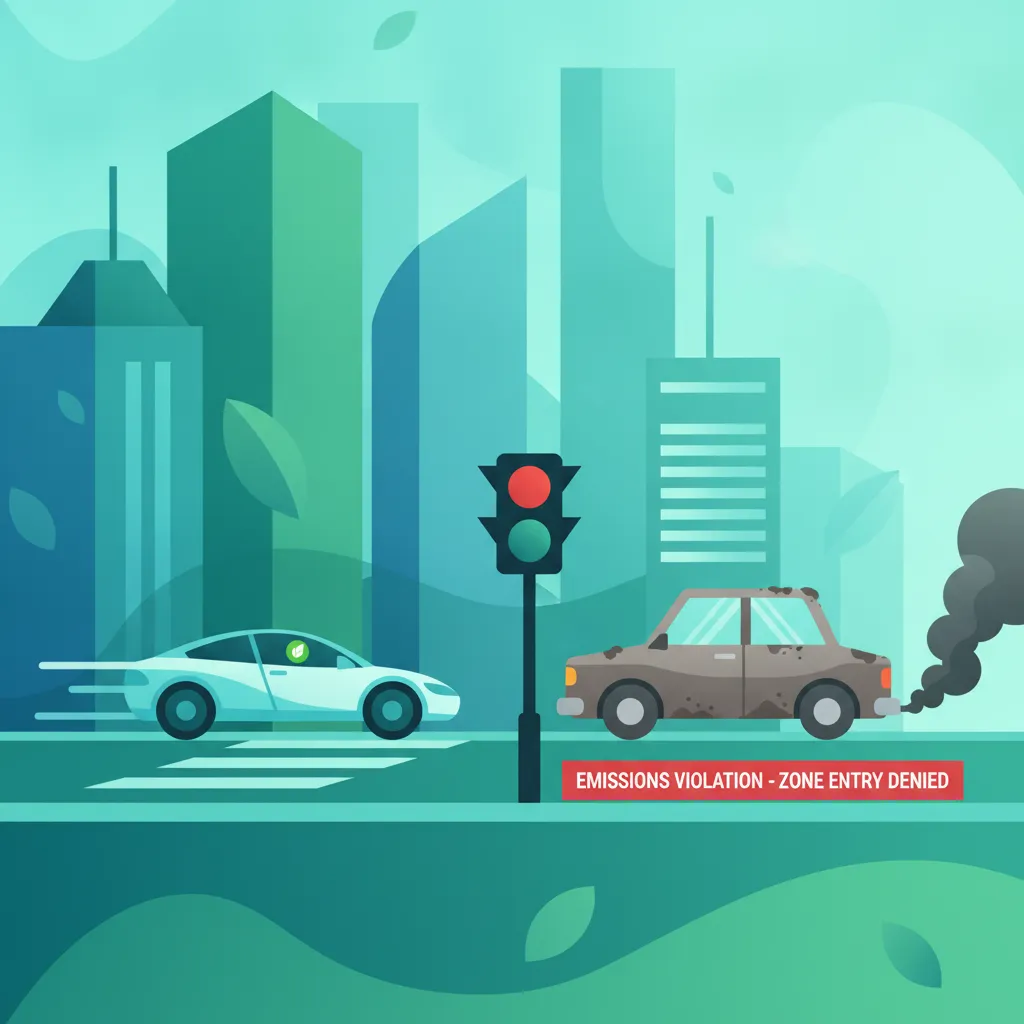
This lesson addresses the concept of environmental zones in German cities, explaining the requirements for emission stickers and the impact on heavy vehicles. It discusses the legal consequences of non-compliance, such as fines, and the importance of ensuring the vehicle meets emission standards. The content covers planning routes to avoid restricted zones if necessary.

This lesson covers the dimensional limits for heavy vehicles, focusing on height, width, and length restrictions. It explains how to interpret clearance signage for bridges, tunnels, and overhead obstacles, and discusses the implications for route planning. The content also addresses the importance of understanding turning radii and swept paths to avoid collisions.

This lesson examines the ethical and environmental responsibilities of heavy vehicle drivers, including the impact of emissions, fuel consumption, and noise pollution. It explains the principles of sustainable logistics and making environmentally conscious decisions while operating heavy vehicles. The content also covers the broader implications of transportation on public health and resource usage.
Understand the core legal framework governing heavy vehicle operation in Germany, including the StVO and commercial transport laws. This lesson covers your professional duties, documentation requirements, and the consequences of non-compliance for C and CE category drivers.
This lesson outlines the legal requirements for vehicle roadworthiness, including mandatory periodic inspections (TÜV) and the issuance of safety certificates. It explains the standards for emissions, safety devices, and the proper documentation of defects. The content underscores the importance of complying with inspection intervals and addressing repair obligations promptly.
This lesson outlines the legal requirements for load securing according to German traffic law (StVO) and other relevant regulations. It details the obligations for cargo safety, inspection, and documentation. The content also explains the penalties for non-compliance, emphasizing adherence to legal standards to ensure safety.
This lesson examines the specific height, width, and length constraints that affect heavy vehicle operation, including bridge and tunnel clearances. It discusses how to interpret and comply with traffic signs indicating dimensional limits and the consequences of violating these restrictions. The content also covers practical strategies for route planning to avoid restricted areas.
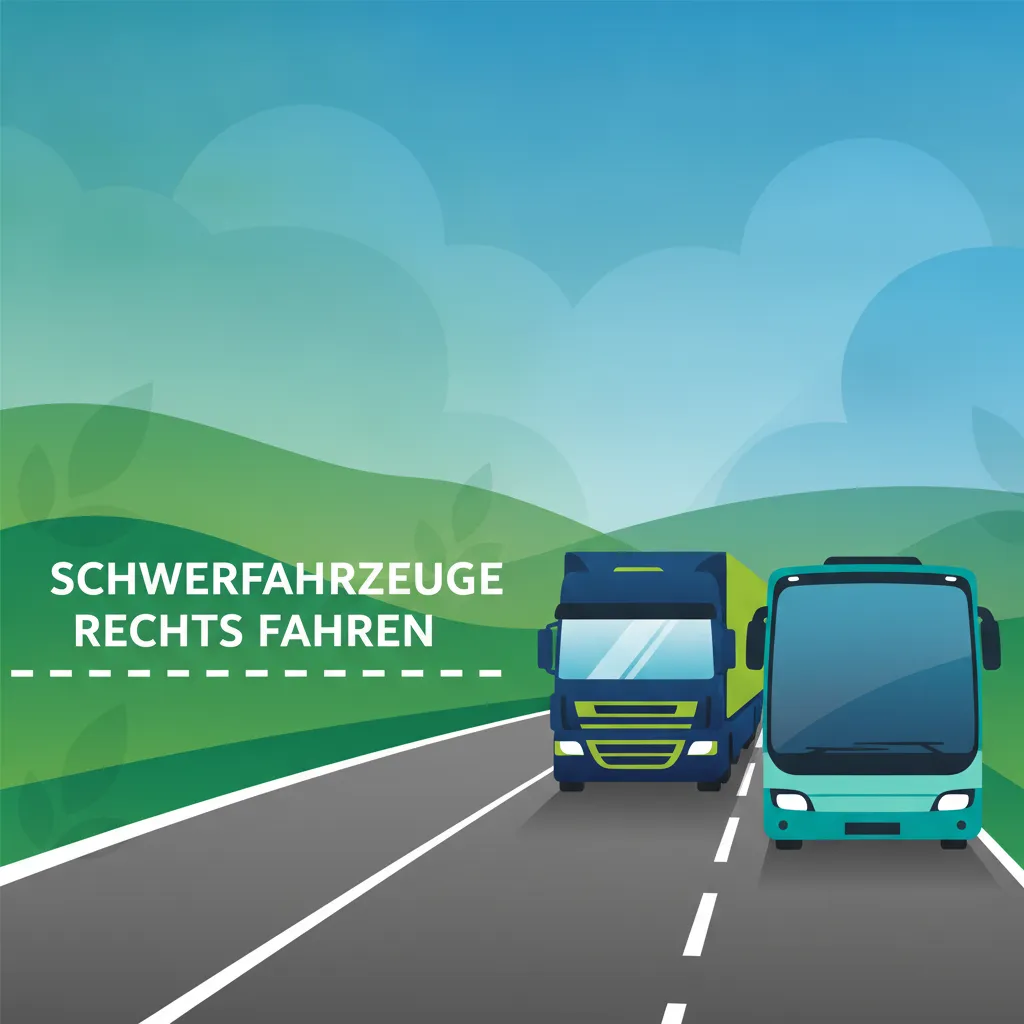
This lesson explains the specific regulations for operating heavy vehicles on Autobahnen, including speed limits, lane discipline, and overtaking rules. It discusses the use of dedicated truck lanes and the importance of maintaining appropriate following distances. The content also covers procedures for merging and exiting high-speed roads safely.
This lesson covers the dimensional limits for heavy vehicles, focusing on height, width, and length restrictions. It explains how to interpret clearance signage for bridges, tunnels, and overhead obstacles, and discusses the implications for route planning. The content also addresses the importance of understanding turning radii and swept paths to avoid collisions.

This lesson explains the legal and safety requirements for transporting goods and cargo. It covers the importance of proper load distribution to maintain vehicle stability and the methods for securely fastening items to prevent them from shifting or falling. The regulations concerning maximum vehicle weight, roof loads, and the correct marking of loads that overhang the vehicle are also detailed.
This lesson focuses on the legal responsibilities and duties of a vehicle operator according to German traffic law, primarily the StVO. It covers the obligation to drive safely, the rules of conduct at an accident scene, and the legal consequences of traffic violations. Understanding these principles is crucial for maintaining road safety and avoiding penalties such as fines, points, or driving bans.
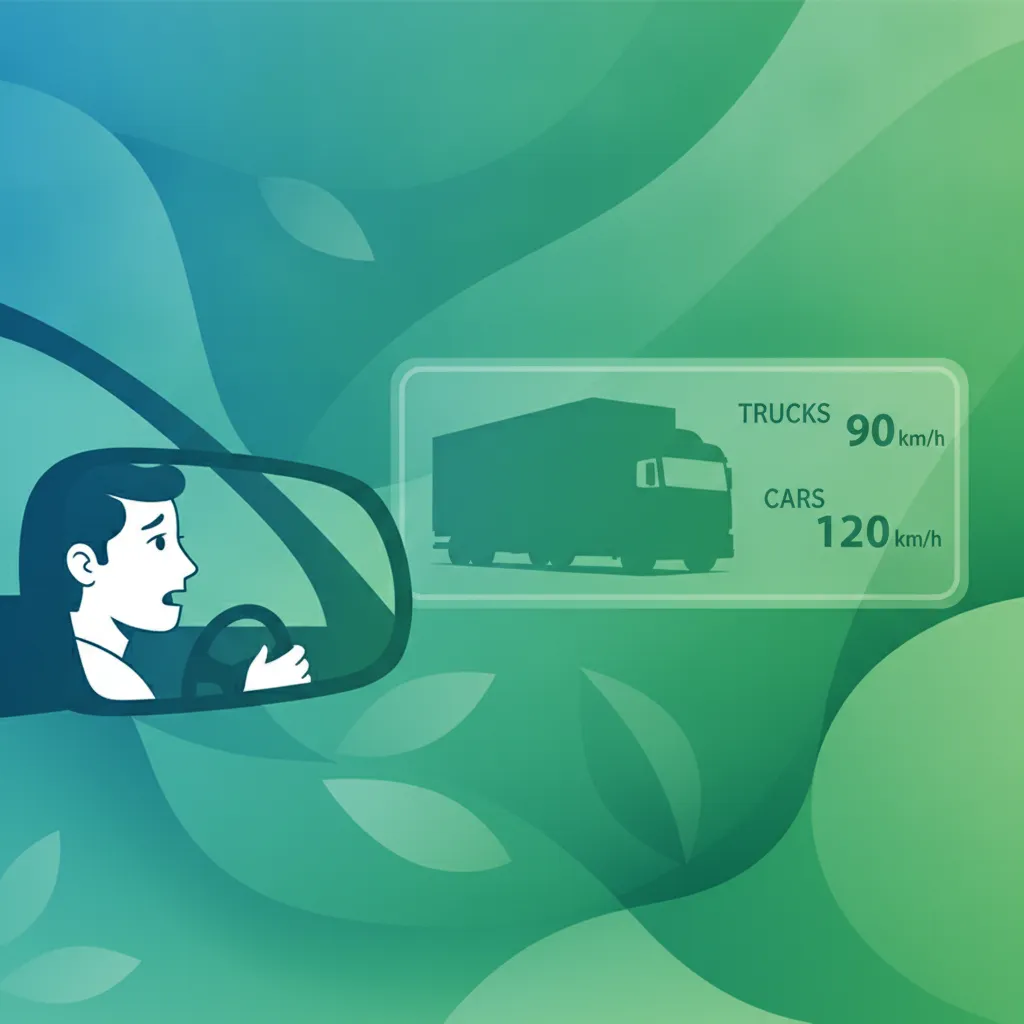
This lesson introduces the interplay between driving licence theory and broader commercial transport regulations. It outlines the essentials of tachograph use, including rules on driver work hours and mandatory rest periods to ensure compliance with European Union regulations. It also covers regulations specific to freight transport, providing context for professional driving responsibilities.
Find clear answers to common questions learners have about Legal Framework and Professional Obligations. Learn how the lesson is structured, which driving theory objectives it supports, and how it fits into the overall learning path of units and curriculum progression in Germany. These explanations help you understand key concepts, lesson flow, and exam focused study goals.
Due to the size, mass, and potential danger posed by heavy vehicles, the law imposes a higher duty of care. This includes more stringent vehicle checks and strict adherence to commercial transport regulations that do not apply to regular passenger cars.
You must have your valid driving licence for the relevant category, vehicle registration documents, and, depending on the trip, freight papers and records concerning working and driving times. Missing these during an enforcement stop leads to significant penalties.
The StVO sets the baseline for road usage, but professional drivers must also factor in specific commercial laws regarding loading, parking in industrial zones, and environmental restrictions that vary based on vehicle weight and emissions standards.
Yes, professional drivers face not only standard traffic fines but also potential regulatory penalties that can impact their professional authorization and career longevity if serious or repeat violations occur.
Begin your targeted revision now. Use our practice search to quickly find specific German driving theory questions. Filter by StVO rules, road signs, or hazard perception to create your focused study plan. Master challenging areas and prepare confidently for your theoretical driving test.