
This lesson guides you through the complex rules surrounding environmental zones (Umweltzonen) in German cities. You will learn how to identify restricted areas, understand the different emission sticker requirements for heavy vehicles, and master the route planning necessary to avoid costly fines while operating C1, C, or CE class vehicles.
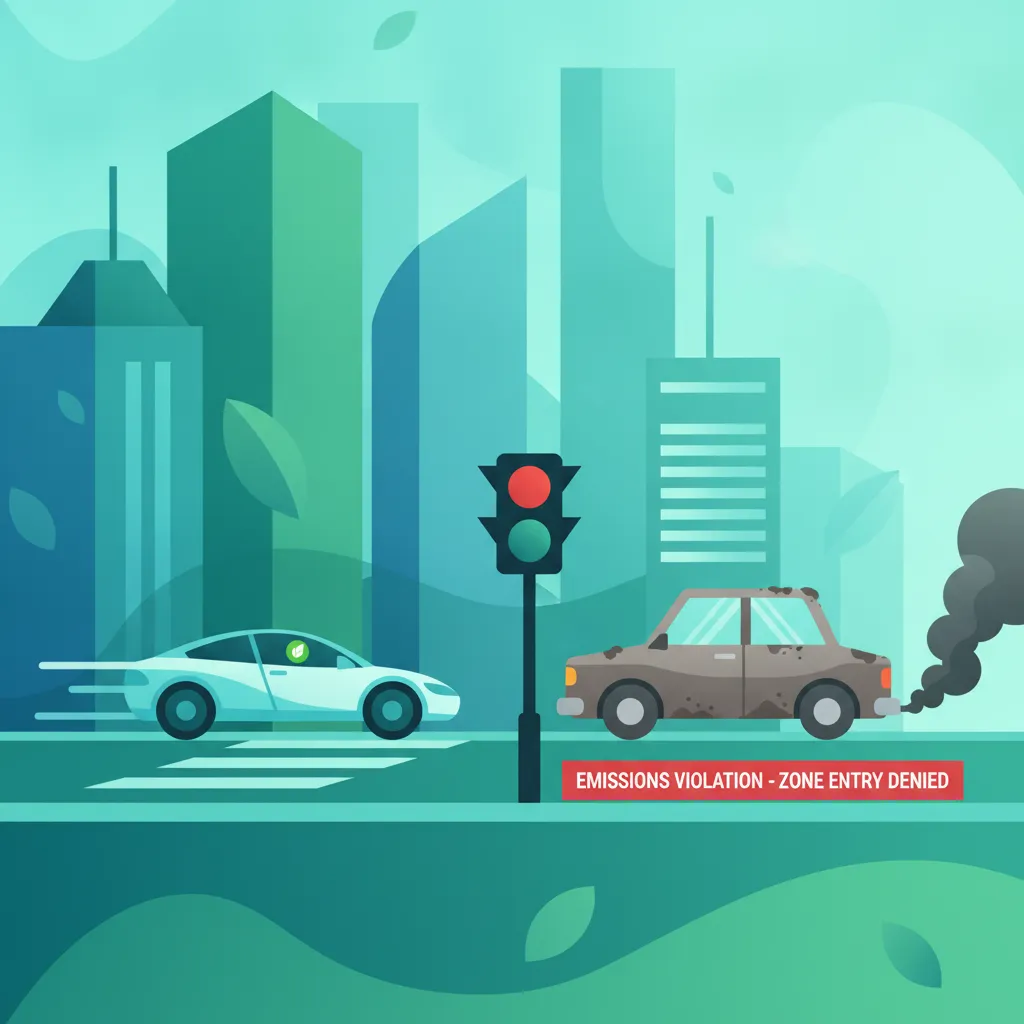
Lesson content overview
Navigating German cities as a heavy vehicle driver requires a thorough understanding of various regulations designed to manage traffic flow, ensure safety, and protect the environment. Among these, environmental zones, known as Umweltzonen, play a critical role in controlling air quality in urban areas. This lesson provides an in-depth guide for professional drivers operating vehicles in categories C1, C1E, C, and CE, detailing the requirements, legal obligations, and best practices for compliance with German environmental zone regulations and emission restrictions.
Environmental zones, or Umweltzonen, are specifically designated areas within German cities and municipalities where vehicle access is restricted based on their emission standards. The primary goal of these zones is to improve urban air quality by reducing pollutants such as nitrogen oxides (NOx) and particulate matter (PM) emitted by road traffic. These measures are particularly crucial in densely populated regions, where vehicle emissions can have a significant impact on public health.
The establishment of Umweltzonen is legally anchored in German environmental law, notably the Federal Immission Control Act (Bundes-Immissionsschutzgesetz). These zones are clearly marked with distinct traffic signs at their entry points, indicating the start of the restricted area and often specifying the type of emission sticker required. It is imperative for all drivers, especially those operating heavy goods vehicles, to be aware of these zones and the rules that govern them, as non-compliance can lead to considerable penalties.
The beginning of an environmental zone is marked by a specific traffic sign. This sign typically depicts a red circle with vehicles inside and a banner below stating "Umweltzone." Crucially, a supplementary sign below will indicate which Umweltplakette (emission sticker) is required for entry into that particular zone. The most common requirement in German cities today is the green sticker.
These signs clearly define the boundaries, and drivers must verify an area’s status before entering. A common misunderstanding is assuming that all zones have the same standards or that temporary stickers are acceptable. Requirements can vary between cities and may be updated over time, making it essential to consult up-to-date information, particularly for professional drivers planning routes across different regions.
The Umweltplakette, or emission sticker, is a visible testament to a vehicle's compliance with specific Euro emission standards. This physical sticker must be affixed to the inside of the vehicle's windshield, typically in the lower right-hand corner (from the driver's perspective), ensuring it is clearly visible from outside the vehicle. Its presence and correct classification are mandatory for entry into any designated environmental zone in Germany.
These stickers are not merely decorative; they serve as an instant visual check for enforcement authorities, allowing them to quickly identify whether a vehicle is permitted to enter a restricted zone. The sticker's color directly correlates with the vehicle's emission class, which is determined by its Euro emission standard.
There are three main colors of emission stickers used in Germany, each representing a different level of emission compliance:
Umweltzonen no longer permit entry with a yellow sticker.An Umweltplakette can be obtained from various authorized bodies in Germany, including vehicle registration offices (Zulassungsbehörden), technical inspection stations (TÜV, DEKRA, GTÜ, KÜS), and many authorized workshops. To acquire a sticker, you will need your vehicle registration document (Zulassungsbescheinigung Teil I or Fahrzeugschein), which contains the necessary information about the vehicle's emission class.
For heavy vehicles, it is crucial to ensure that the Euro emission class is correctly documented. An incorrect sticker or an expired one is considered invalid and will lead to the same penalties as having no sticker at all. Professional drivers should regularly check the validity and condition of their Umweltplakette and replace it if it becomes damaged, unreadable, or if the vehicle's emission standard changes (e.g., after an engine modification).
Always verify your vehicle's exact Euro emission standard from its registration documents before purchasing an Umweltplakette. An authorized workshop or inspection body can assist if you are unsure.
Euro emission standards are a series of European Union directives that define the acceptable limits for exhaust emissions of new vehicles sold in EU member states. These standards are progressively stricter, aiming to reduce the levels of harmful pollutants released into the atmosphere. For heavy vehicles, understanding these standards is fundamental, as they directly determine which Umweltplakette your vehicle qualifies for and, consequently, which environmental zones it can enter.
The Euro standards have evolved significantly since their introduction:
For heavy vehicle categories (C1, C1E, C, CE), achieving higher Euro classifications (e.g., Euro 5 or Euro 6) often requires advanced emission control technologies such as Diesel Particulate Filters (DPF) and Selective Catalytic Reduction (SCR) systems using AdBlue. The vehicle's manufacturer typically specifies its Euro standard.
The correlation between Euro emission standards and Umweltplakette colors is crucial:
This means a heavy truck with a Euro 5 diesel engine would qualify for a green sticker, allowing entry into most Umweltzonen. Conversely, a Euro 3 diesel truck would only qualify for a yellow sticker, which is largely insufficient for current German environmental zones. It is a common misunderstanding that a vehicle automatically qualifies for a specific sticker based on its age; the actual Euro class, as stated in the vehicle's documents, is the determining factor.
For heavy vehicles, upgrading an older engine to a higher Euro standard through retrofitting (e.g., installing a particulate filter) may allow it to qualify for a green sticker. Such modifications must be certified and documented in the vehicle's registration.
Non-compliance with environmental zone regulations in Germany carries significant legal consequences. Entering an Umweltzone without a valid and correctly displayed Umweltplakette corresponding to the required emission standard is an administrative offense (Ordnungswidrigkeit) punishable by a fine. This applies equally to all vehicles, including heavy goods vehicles.
The typical fine for entering an environmental zone without the appropriate sticker is around €100. This fine can be issued on the spot by traffic police or by automated systems that photograph vehicles within the zone. Crucially, the fine is imposed on the driver of the vehicle, not necessarily the owner, making it a direct responsibility for professional drivers.
While historically, some violations could lead to points in the driver's central traffic register (Fahreignungsregister in Flensburg), it is important to verify the current regulations regarding point accrual for Umweltzone violations. Regardless, the financial penalty alone serves as a strong deterrent, especially for professional drivers whose livelihood depends on their ability to operate without incurring repeated fines.
Enforcement of environmental zone restrictions is generally strict. Traffic authorities conduct regular checks, and many cities utilize surveillance cameras to monitor vehicle entry. A single instance of non-compliance can result in a fine, and repeated violations by the same driver or vehicle can lead to further scrutiny and potentially more severe legal actions.
For heavy vehicle fleet operators, continuous non-compliance can result in substantial costs and logistical challenges. It can also reflect poorly on the company's reputation and its commitment to environmental responsibility. Therefore, ensuring all vehicles in a fleet are compliant and all drivers are properly informed is a critical management task.
For professional drivers of heavy vehicles (C1, C1E, C, CE), proactive route planning is not just advisable; it is a necessity when operating in Germany. The presence of Umweltzonen means that routes must be carefully selected to either avoid restricted areas entirely or ensure the vehicle is fully compliant before entering them.
Before embarking on a journey that might take them through or near German urban areas, heavy vehicle drivers should:
Umweltzonen and their specific requirements. Many navigation systems for trucks also offer features to highlight these zones.Umweltplakette that meets or exceeds the requirements of any zones on the planned route.Heavy vehicles often have specific operational constraints (e.g., height, weight, length restrictions) that can limit alternative routes. This makes environmental zone compliance even more critical.
Umweltplakette is primarily for the towing vehicle, drivers should be aware if local rules require additional considerations for trailers in specific Umweltzonen. Generally, the sticker on the towing vehicle dictates entry for the entire combination, but it's good practice to verify.Never assume temporary provisions (e.g., due to roadworks or special events) exempt entry into an Umweltzone without explicit official confirmation. Always operate under the assumption that standard rules apply.
Recognizing and understanding the relevant traffic signs is paramount for every driver, especially when approaching or within Umweltzonen. German traffic signs are standardized and provide clear instructions regarding entry restrictions.
The primary signs to be aware of are:
Umweltplakette color (e.g., "grüne Plakette").It is crucial for heavy vehicle drivers to pay close attention to these signs, especially when navigating unfamiliar urban areas. Missing an Umweltzone sign can lead to inadvertent entry and subsequent fines.
Even experienced drivers can sometimes fall prey to common misunderstandings regarding environmental zones. Being aware of these pitfalls can help professional heavy vehicle drivers maintain compliance.
Hauptuntersuchung or HU) includes an emission test (Abgasuntersuchung or AU), but passing these does not automatically grant you an Umweltplakette or guarantee entry into all zones. The sticker is a separate requirement based on the vehicle's certified Euro emission class.Umweltzonen require a green sticker, the specific requirements can vary, and some cities might have stricter rules or specific entry dates for different vehicle types. Always check the local regulations for your destination.Umweltzonen. Always be vigilant for any specific local signage or information.Umweltzone restrictions without explicit, highly localized official communication. Unless a sign specifically indicates an exemption, assume the rules apply.For professional drivers holding German heavy vehicle driving licenses in categories C1, C1E, C, and CE, understanding and complying with environmental zone regulations is more than just avoiding a fine; it's a critical aspect of their professional responsibility and operational efficiency.
Umweltzone rules ensures drivers operate within the bounds of German law, protecting their license and record.In addition to emission stickers, remember that some cities may also have general traffic restrictions for heavy vehicles (e.g., weight limits, time-restricted access). Always combine your knowledge of Umweltzonen with other local traffic regulations.
Environmental zones are a permanent fixture in many German cities, designed to enhance urban air quality. For professional heavy vehicle drivers in categories C1, C1E, C, and CE, understanding and adhering to these regulations is paramount for legal compliance, operational efficiency, and environmental responsibility.
Key Takeaways:
Umweltzonen are designated areas requiring specific emission standards for vehicle entry.Umweltplakette (emission sticker) is mandatory and must be displayed on the windshield.Umweltzone traffic signs correctly.By consistently applying these principles, professional heavy vehicle drivers can navigate Germany's urban landscapes safely, legally, and efficiently, contributing to cleaner air for everyone.
German environmental zones (Umweltzonen) restrict vehicle access based on Euro emission standards, requiring drivers to display a corresponding Umweltplakette on their windshield. The green sticker (Euro 4/5/6 diesel) is currently required for most urban zones, while yellow and red stickers have very limited or no acceptance. Heavy vehicle drivers must verify their vehicle's certified Euro class before obtaining a sticker and plan routes to avoid fines of approximately €100 for non-compliance. Signs 270.1 and 270.2 clearly mark zone boundaries, and requirements can vary between municipalities, making up-to-date route planning essential for professional drivers operating C1, C1E, C, or CE vehicles.
A short set of high-value points that capture the most important learning from this lesson.
Environmental zones (Umweltzonen) are restricted urban areas where vehicle access depends on the vehicle's Euro emission standard, marked by signs 270.1 and 270.2.
The green Umweltplakette corresponds to Euro 4/5/6 diesel or Euro 3+ petrol standards and is required for entry into most German environmental zones.
The yellow sticker (Euro 3 diesel) has very limited acceptance in current environmental zones, while the red sticker (Euro 1-2 diesel) is generally not accepted.
Non-compliance with environmental zone requirements results in a fine of approximately €100, issued directly to the driver.
Proactive route planning is essential—drivers must verify their vehicle's Euro class, check zone requirements before travel, and plan alternative routes if necessary.
Explore all units and lessons included in this driving theory course.
Sign 270.1 marks the start of an Umweltzone; Sign 270.2 marks its end—always check supplementary signs for required sticker color.
A vehicle's Euro emission class (from registration documents) determines sticker eligibility, not the vehicle's age or inspection date.
The HU (Hauptuntersuchung) inspection passing does not automatically grant entry to environmental zones—Umweltplakette is a separate requirement.
Environmental zone requirements can vary between cities and may be updated—always consult current, authoritative sources.
Temporary circumstances like roadworks or special events do not exempt vehicles from Umweltzone rules unless explicitly communicated by official signs.
Assuming all environmental zones have identical requirements—the specific sticker color needed can differ by city and may change over time.
Confusing the vehicle inspection (HU/AU) with emission sticker eligibility—they are separate processes with different criteria.
Relying on outdated navigation systems or maps that may not reflect recent changes to environmental zone boundaries or requirements.
Believing that older but well-maintained vehicles automatically qualify for higher sticker classes based on age rather than their documented Euro standard.
Assuming enforcement is lenient or inconsistent—German authorities use both police checks and automated camera systems for monitoring.
Lesson content overview
A short set of high-value points that capture the most important learning from this lesson.
Environmental zones (Umweltzonen) are restricted urban areas where vehicle access depends on the vehicle's Euro emission standard, marked by signs 270.1 and 270.2.
The green Umweltplakette corresponds to Euro 4/5/6 diesel or Euro 3+ petrol standards and is required for entry into most German environmental zones.
The yellow sticker (Euro 3 diesel) has very limited acceptance in current environmental zones, while the red sticker (Euro 1-2 diesel) is generally not accepted.
Non-compliance with environmental zone requirements results in a fine of approximately €100, issued directly to the driver.
Proactive route planning is essential—drivers must verify their vehicle's Euro class, check zone requirements before travel, and plan alternative routes if necessary.
Explore all units and lessons included in this driving theory course.
Sign 270.1 marks the start of an Umweltzone; Sign 270.2 marks its end—always check supplementary signs for required sticker color.
A vehicle's Euro emission class (from registration documents) determines sticker eligibility, not the vehicle's age or inspection date.
The HU (Hauptuntersuchung) inspection passing does not automatically grant entry to environmental zones—Umweltplakette is a separate requirement.
Environmental zone requirements can vary between cities and may be updated—always consult current, authoritative sources.
Temporary circumstances like roadworks or special events do not exempt vehicles from Umweltzone rules unless explicitly communicated by official signs.
Assuming all environmental zones have identical requirements—the specific sticker color needed can differ by city and may change over time.
Confusing the vehicle inspection (HU/AU) with emission sticker eligibility—they are separate processes with different criteria.
Relying on outdated navigation systems or maps that may not reflect recent changes to environmental zone boundaries or requirements.
Believing that older but well-maintained vehicles automatically qualify for higher sticker classes based on age rather than their documented Euro standard.
Assuming enforcement is lenient or inconsistent—German authorities use both police checks and automated camera systems for monitoring.
Explore search topics learners often look for when studying Environmental Zones and Emission Restrictions. These topics reflect common questions about road rules, driving situations, safety guidance, and lesson level theory preparation for learners in Germany.
Browse additional driving theory lessons that cover connected traffic rules, road signs, and common driving situations related to this topic. Improve your understanding of how different rules interact across everyday traffic scenarios.
Understand German environmental zones (Umweltzonen) and emission sticker requirements for heavy vehicles (C1, C, CE). Learn about compliance, penalties for violations, and how to plan routes effectively to avoid restricted areas based on official German traffic law.
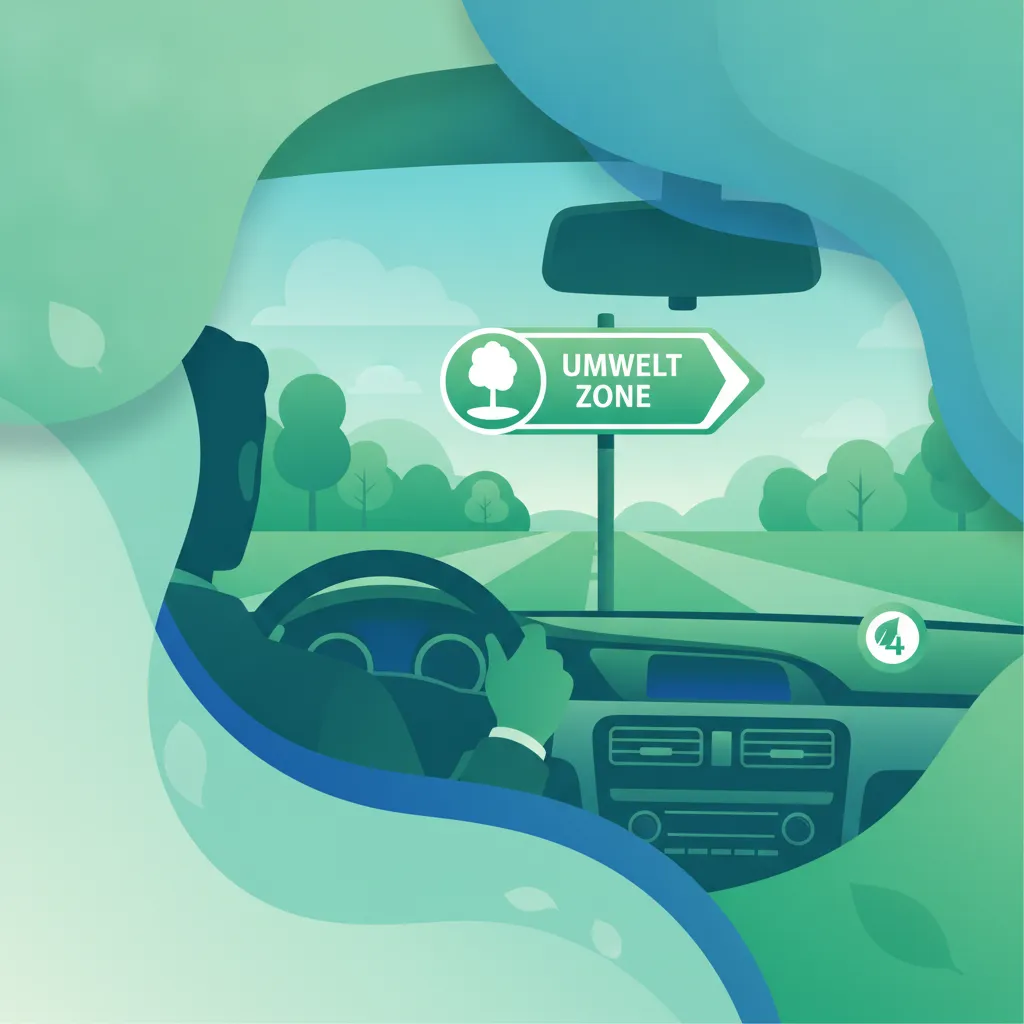
This lesson explains the system of low-emission zones ('Umweltzonen') established in many German cities to improve air quality. It details the different types of emissions stickers ('Feinstaubplakette') based on a vehicle's pollution standard. You will learn how to identify these zones and understand the legal requirement of displaying the correct sticker to be allowed entry.

This lesson covers the dimensional limits for heavy vehicles, focusing on height, width, and length restrictions. It explains how to interpret clearance signage for bridges, tunnels, and overhead obstacles, and discusses the implications for route planning. The content also addresses the importance of understanding turning radii and swept paths to avoid collisions.

This lesson explores the legal framework governing heavy vehicle operation in Germany, focusing on the Straßenverkehrs-Ordnung (StVO) and specific commercial transport regulations. It details the professional duty of care required from drivers, including responsibilities for vehicle inspection and documentation. You will understand the enforcement mechanisms and potential penalties for non-compliance.

This lesson examines the ethical and environmental responsibilities of heavy vehicle drivers, including the impact of emissions, fuel consumption, and noise pollution. It explains the principles of sustainable logistics and making environmentally conscious decisions while operating heavy vehicles. The content also covers the broader implications of transportation on public health and resource usage.
This lesson explains the specific regulations for operating heavy vehicles on Autobahnen, including speed limits, lane discipline, and overtaking rules. It discusses the use of dedicated truck lanes and the importance of maintaining appropriate following distances. The content also covers procedures for merging and exiting high-speed roads safely.

This lesson outlines the legal requirements for vehicle roadworthiness, including mandatory periodic inspections (TÜV) and the issuance of safety certificates. It explains the standards for emissions, safety devices, and the proper documentation of defects. The content underscores the importance of complying with inspection intervals and addressing repair obligations promptly.

This lesson provides a detailed overview of the German licence categories C1, C1E, C, and CE, explaining the specific vehicle weight limits associated with each class. It clarifies the legal definitions that differentiate rigid trucks from vehicle combinations. You will also learn about the required driver qualifications and the theoretical knowledge necessary for each category.

This lesson examines the dynamics of delivery traffic within urban areas and industrial estates, focusing on right-of-way rules and loading zone usage. It discusses the importance of adhering to delivery windows and managing traffic flow to minimize congestion. The content also highlights the challenges of navigating narrow aisles and loading docks.

This lesson covers the lighting and reflector requirements for heavy vehicles, including headlamps, side markers, and brake lights. It explains the function of these systems and the necessity of underrun protection to safeguard other road users. The content also discusses regulations governing lighting systems and their importance for safety in all conditions.

This lesson provides a systematic approach to pre-drive inspection, outlining a comprehensive checklist to verify fluid levels, brake functionality, and tyre condition. It emphasizes the importance of checking lighting, mirror adjustments, and load securement before every journey. The content highlights safety protocols to ensure the vehicle is roadworthy.
Explore the specific rules and challenges for heavy vehicles in urban deliveries and restricted environments in Germany. This includes understanding right-of-way with cyclists and pedestrians, environmental zone impacts, and safe loading practices for the C1, C, CE driving theory.
This lesson examines the dynamics of delivery traffic within urban areas and industrial estates, focusing on right-of-way rules and loading zone usage. It discusses the importance of adhering to delivery windows and managing traffic flow to minimize congestion. The content also highlights the challenges of navigating narrow aisles and loading docks.
This lesson covers the dimensional limits for heavy vehicles, focusing on height, width, and length restrictions. It explains how to interpret clearance signage for bridges, tunnels, and overhead obstacles, and discusses the implications for route planning. The content also addresses the importance of understanding turning radii and swept paths to avoid collisions.

This lesson focuses on the right-of-way rules that heavy vehicles must follow when interacting with cyclists and pedestrians, particularly at intersections and crossings. It emphasizes the need for trucks to yield appropriately and maintain safe distances. The content also covers the interpretation of traffic signs governing priority in urban areas.
This lesson explains the specific regulations for operating heavy vehicles on Autobahnen, including speed limits, lane discipline, and overtaking rules. It discusses the use of dedicated truck lanes and the importance of maintaining appropriate following distances. The content also covers procedures for merging and exiting high-speed roads safely.

This lesson focuses on the interaction between heavy vehicles and vulnerable road users at crossings, particularly when turning right. It covers the need for heightened vigilance, the importance of properly using mirrors, and correct signaling to alert others. The content highlights legal responsibilities and safe distance requirements to prevent accidents.

This lesson examines best practices for loading and unloading heavy vehicles at delivery points, including proper vehicle positioning and coordination with ground personnel. It emphasizes the importance of verifying load stability during unloading to prevent accidents. The content also discusses time-window management and safety protocols for loading docks.
This lesson outlines the legal requirements for vehicle roadworthiness, including mandatory periodic inspections (TÜV) and the issuance of safety certificates. It explains the standards for emissions, safety devices, and the proper documentation of defects. The content underscores the importance of complying with inspection intervals and addressing repair obligations promptly.
This lesson examines the ethical and environmental responsibilities of heavy vehicle drivers, including the impact of emissions, fuel consumption, and noise pollution. It explains the principles of sustainable logistics and making environmentally conscious decisions while operating heavy vehicles. The content also covers the broader implications of transportation on public health and resource usage.
This lesson explores the legal framework governing heavy vehicle operation in Germany, focusing on the Straßenverkehrs-Ordnung (StVO) and specific commercial transport regulations. It details the professional duty of care required from drivers, including responsibilities for vehicle inspection and documentation. You will understand the enforcement mechanisms and potential penalties for non-compliance.
This lesson covers safe interaction with special vehicles. It details the challenges of driving near large trucks (LKW), including their extensive blind spots, longer stopping distances, and the effects of wind turbulence when overtaking them. A critical part of the lesson is explaining the correct procedure for reacting to emergency vehicles by creating an emergency corridor ('Rettungsgasse') on multi-lane roads.
Find clear answers to common questions learners have about Environmental Zones and Emission Restrictions. Learn how the lesson is structured, which driving theory objectives it supports, and how it fits into the overall learning path of units and curriculum progression in Germany. These explanations help you understand key concepts, lesson flow, and exam focused study goals.
Yes, generally all vehicles entering a designated environmental zone must display a valid emission sticker. Heavy vehicles must meet specific particulate matter emission standards; failure to display the correct sticker can result in fines and points on your licence.
Some exemptions exist for specific vehicle types, such as emergency vehicles, agricultural machinery, or vehicles with specific work-related permits. However, you must always be prepared to provide official proof of exemption.
Environmental zones are clearly marked with a sign featuring the words Umweltzone along with an additional sign showing the required emission sticker colors. Always check your route map for these zones before departing.
Entering a zone without the required sticker is a regulatory violation. You will face a mandatory fine, and if you are a professional driver, it may have further implications on your transport operation records.
Begin your targeted revision now. Use our practice search to quickly find specific German driving theory questions. Filter by StVO rules, road signs, or hazard perception to create your focused study plan. Master challenging areas and prepare confidently for your theoretical driving test.