
This lesson explores the legal classification of rural roads and the critical skill of speed limit determination for motorcycle riders. You will learn how to go beyond posted speed limits by assessing road conditions, visibility, and surface quality to ensure safe riding. Mastering these concepts is essential for navigating rural areas during your practical exams and for real-world safety.

Lesson content overview
Navigating Germany's diverse road network requires a thorough understanding of local traffic regulations, especially when riding a motorcycle. This lesson focuses on the classification of rural roads and how speed limits are determined in these non-urban environments, which is crucial for safety and legal compliance under the German Road Traffic Regulations (StVO). As a motorcycle rider aiming for a German Motorcycle Licence (Classes A, A1, A2), mastering these concepts ensures you can select appropriate speeds based on road characteristics, not just posted signs, enhancing your safety and that of others.
In Germany, roads are fundamentally categorized into urban (innerorts) and rural (außerorts) areas. Rural roads, known as Außerortsstraßen, are those situated outside densely populated areas, typically connecting towns, villages, and agricultural regions. These roads often differ significantly from urban streets in terms of design, traffic density, and potential hazards, necessitating specific rules and considerations for motorcyclists.
A rural road is generally defined as any road segment outside a built-up area. The transition from an urban area to a rural road is marked by specific road signs. Upon leaving a town, you will typically see a yellow square sign with the town's name crossed out diagonally, signifying the end of the urban speed limit and the application of rural road rules. Conversely, entering a town is indicated by a yellow square sign with the town's name.
These transitions are critical for motorcyclists, as they mark a change in the default speed limits and often in the nature of the road itself. Rural roads can range from wide, straight country lanes to winding routes through forests or small hamlets. Understanding these distinctions is paramount for safe riding.
While all Außerortsstraßen are rural roads, the German StVO subtly differentiates them, primarily impacting default speed limits. Recognizing these subcategories is vital for motorcyclists.
These are rural roads that traverse open countryside, often through agricultural land or forests, with minimal or no adjacent buildings. They are characterized by fewer intersections, generally lower traffic density, and a design that often allows for higher speeds. Think of long, sweeping roads connecting distant towns or villages, where the landscape is predominantly natural or agricultural.
On such roads, you typically won't encounter houses or commercial buildings directly bordering the roadway for extended stretches. The primary hazards here might include agricultural vehicles, wildlife crossings, and blind corners. These roads are where the highest default speed limits for rural areas generally apply, underscoring the need for excellent observation and hazard perception from motorcyclists.
This subcategory refers to rural roads that, despite being outside officially designated built-up areas, pass through stretches with higher population density or continuous adjacent development. This could include small hamlets, scattered houses, commercial properties, or industrial zones located along the road. The presence of these structures, even if not forming a continuous "town," significantly changes the driving environment.
On densely populated rural roads, you can expect higher traffic volumes, more driveways and entrances, increased pedestrian and cyclist activity, and potentially limited visibility due to buildings. These factors necessitate a lower default speed limit to ensure safety for all road users. Motorcyclists must be particularly vigilant for unexpected hazards emerging from properties or side roads.
The German StVO sets general, default speed limits for different road types, which apply unless overridden by specific road signs. These defaults are fundamental to understanding how fast you are legally allowed to ride your motorcycle on rural roads.
For motorcycles, as for passenger cars, the general speed limit on open farmland roads (Freilandstraßen) without specific signage is 100 km/h. This limit applies to roads outside built-up areas that do not feature continuous adjacent development. It is important to remember that this is a maximum limit, not a target speed.
Even if no sign explicitly states "100 km/h," this default limit applies once you exit a built-up area, provided the road fits the description of an open farmland road. Motorcyclists must constantly assess road conditions, weather, visibility, and their own skill level to determine a safe, appropriate speed, which may often be well below 100 km/h. High speeds on motorcycles demand exceptional observation, precise control, and longer stopping distances.
On rural roads that pass through areas with continuous adjacent development (Außerortsstraßen mit Bebauung), even if not officially a built-up area, the general default speed limit for motorcycles is 80 km/h. This lower limit accounts for the increased potential for hazards such as merging traffic, pedestrians, cyclists, and vehicles entering or exiting properties.
Unlike the 100 km/h limit on open farmland roads, the 80 km/h limit on more densely populated rural roads is often reinforced by explicit signage. However, even without a specific sign, the StVO expects drivers to adapt their speed to the conditions, and the presence of continuous development should signal a need for reduced speed and increased caution.
While default limits provide a baseline, speed limits on German rural roads are frequently adjusted by official signage to suit local conditions, special circumstances, or temporary situations. Motorcyclists must be adept at recognizing and complying with these variations.
Road signs are the primary means of communicating specific speed limits that override the general default rules. A circular sign with a red border and a number in the center indicates the maximum permissible speed for the road segment ahead. These signs can lower the speed limit below the default (e.g., to 70 km/h or 60 km/h) or, in very rare cases on specific Kraftfahrstraßen (expressways) outside motorways, even raise it.
Local authorities have the power to set speed limits lower than the default for safety reasons, such as accident blackspots, areas with increased pedestrian activity, or sections of road with poor visibility or geometry. As a motorcyclist, you must always be vigilant for these signs, as missing one could lead to a dangerous situation or a legal penalty. The end of a specific speed limit is marked by a circular sign with a grey diagonal line.
Beyond permanent local restrictions, speed limits can also be introduced for specific circumstances or limited durations. These include:
It is crucial for motorcyclists to not only adhere to the posted temporary limit but also to understand that the underlying conditions often make even that reduced speed challenging. Always scan for additional warning signs accompanying temporary speed limits, such as "Baustelle" (roadworks) or "Gefahr" (danger).
While speed limit signs provide the legal maximum, a truly responsible and safe motorcyclist understands that the "correct" speed is not always the highest permissible speed. Adapting your speed to prevailing conditions is a cornerstone of defensive riding and is legally required under German traffic law.
The physical state and layout of the road heavily influence the safe speed for a motorcycle.
External conditions play a significant role in determining a safe speed.
Your motorcycle's condition and your own capabilities also dictate safe speed.
Adhering to speed limits is not just a matter of safety; it is a legal requirement. German traffic law is strict on speed violations, and exceeding the limit can lead to severe penalties.
Even minor infringements can result in fines and points on your driving license. More significant speeding offenses can lead to higher fines, multiple points, temporary driving bans (Fahrverbot), or even the revocation of your license. For motorcyclists, these consequences can be particularly impactful, especially if a driving ban prevents you from using your primary mode of transport.
Beyond legal penalties, speeding dramatically increases the risk and severity of accidents. Higher speeds mean longer stopping distances and less time to react to hazards. For motorcyclists, who lack the protective cage of a car, the consequences of an accident at speed are often far more severe. Prioritizing safety through correct speed selection is therefore paramount.
Understanding the rules in theory is one thing; applying them in real-world scenarios is another. Here are a few practical examples relevant to motorcyclists on German rural roads:
Scenario 1: Open Farmland Road, No Signs
You are riding your motorcycle on a wide, well-maintained rural road, clearly an Freilandstraße with no buildings in sight, and no speed limit signs are posted. The weather is clear, and the road surface is dry.
Scenario 2: Densely Populated Rural Road with Posted Limit
You are on a rural road that passes through a small cluster of houses and businesses, clearly an Außerortsstraße mit Bebauung. A speed limit sign for 80 km/h is posted, and there's a side road or farm entrance coming up on your right.
Scenario 3: Temporary Speed Limit in a Roadworks Zone
You are approaching a section of a rural road that has temporary roadworks. A "Baustelle" warning sign is followed by a speed limit sign indicating 50 km/h.
Understanding and correctly applying speed limits on German rural roads is a fundamental skill for every motorcyclist. To ensure safety and compliance, remember these key points:
By diligently applying these principles, you will navigate Germany's rural roads safely and confidently, meeting the high standards expected of a licensed motorcyclist.
German rural roads are divided into two main classifications—open farmland roads (Freilandstraßen) with a default 100 km/h limit and densely populated rural roads (Außerortsstraßen mit Bebauung) with a default 80 km/h limit. Posted signs always override these defaults, and motorcyclists must constantly assess conditions like road surface, weather, visibility, and traffic to select a speed that allows safe stopping within the visible range. Temporary restrictions for roadworks or hazards are legally binding, and failing to comply results in penalties including fines, points, and potential driving bans. The core principle is that legal compliance and safety require riders to adapt speed based on real-time conditions, not just posted limits.
A short set of high-value points that capture the most important learning from this lesson.
Rural roads (Außerortsstraßen) in Germany are classified into open farmland roads (Freilandstraßen) and densely populated rural roads (Außerortsstraßen mit Bebauung), each with different default speed limits
The default speed limit on open farmland roads is 100 km/h, while on densely populated rural roads it is 80 km/h, unless modified by signage
Posted speed limit signs always override general default limits and reflect specific local hazard assessments
Safe motorcycle speed must account for road surface, curves, weather, visibility, and your own skill—not just the posted limit
Temporary speed limits from roadworks or hazardous conditions are legally binding for the stated duration and require full compliance
Explore all units and lessons included in this driving theory course.
Leaving a built-up area is marked by a yellow square sign with the town name crossed out diagonally—this switches you from urban to rural speed rules
Open farmland roads typically have no continuous adjacent buildings and allow the 100 km/h default limit
Densely populated rural roads have continuous buildings or development alongside them, triggering the 80 km/h default limit
Road conditions like wet surfaces, gravel, curves, and limited visibility mean you must ride significantly below the legal maximum
Temporary limits (Baustelle zones) and special restrictions must be obeyed until you see the appropriate 'end of restriction' sign
Assuming the default 100 km/h applies everywhere outside towns, without checking whether the road qualifies as a densely populated rural road warranting 80 km/h
Treating the posted speed limit as a target rather than a maximum, especially in challenging conditions like rain, fog, or poor road surface
Missing temporary speed limit signs in construction zones or failing to reduce speed sufficiently for the actual roadwork conditions
Not reducing speed for curves, intersections, or blind spots based on visibility and road geometry rather than the straight-line speed limit
Overlooking driveways, farm entrances, and side roads on densely populated rural roads where cyclists and pedestrians are more likely to appear
Lesson content overview
A short set of high-value points that capture the most important learning from this lesson.
Rural roads (Außerortsstraßen) in Germany are classified into open farmland roads (Freilandstraßen) and densely populated rural roads (Außerortsstraßen mit Bebauung), each with different default speed limits
The default speed limit on open farmland roads is 100 km/h, while on densely populated rural roads it is 80 km/h, unless modified by signage
Posted speed limit signs always override general default limits and reflect specific local hazard assessments
Safe motorcycle speed must account for road surface, curves, weather, visibility, and your own skill—not just the posted limit
Temporary speed limits from roadworks or hazardous conditions are legally binding for the stated duration and require full compliance
Explore all units and lessons included in this driving theory course.
Leaving a built-up area is marked by a yellow square sign with the town name crossed out diagonally—this switches you from urban to rural speed rules
Open farmland roads typically have no continuous adjacent buildings and allow the 100 km/h default limit
Densely populated rural roads have continuous buildings or development alongside them, triggering the 80 km/h default limit
Road conditions like wet surfaces, gravel, curves, and limited visibility mean you must ride significantly below the legal maximum
Temporary limits (Baustelle zones) and special restrictions must be obeyed until you see the appropriate 'end of restriction' sign
Assuming the default 100 km/h applies everywhere outside towns, without checking whether the road qualifies as a densely populated rural road warranting 80 km/h
Treating the posted speed limit as a target rather than a maximum, especially in challenging conditions like rain, fog, or poor road surface
Missing temporary speed limit signs in construction zones or failing to reduce speed sufficiently for the actual roadwork conditions
Not reducing speed for curves, intersections, or blind spots based on visibility and road geometry rather than the straight-line speed limit
Overlooking driveways, farm entrances, and side roads on densely populated rural roads where cyclists and pedestrians are more likely to appear
Explore search topics learners often look for when studying Rural Road Classification and Speed Limit Determination. These topics reflect common questions about road rules, driving situations, safety guidance, and lesson level theory preparation for learners in Germany.
Browse additional driving theory lessons that cover connected traffic rules, road signs, and common driving situations related to this topic. Improve your understanding of how different rules interact across everyday traffic scenarios.
Understand how German rural roads are classified and the factors that determine safe and legal speed limits. This lesson covers StVO rules for country roads and adapting speed to conditions for your motorcycle licence.
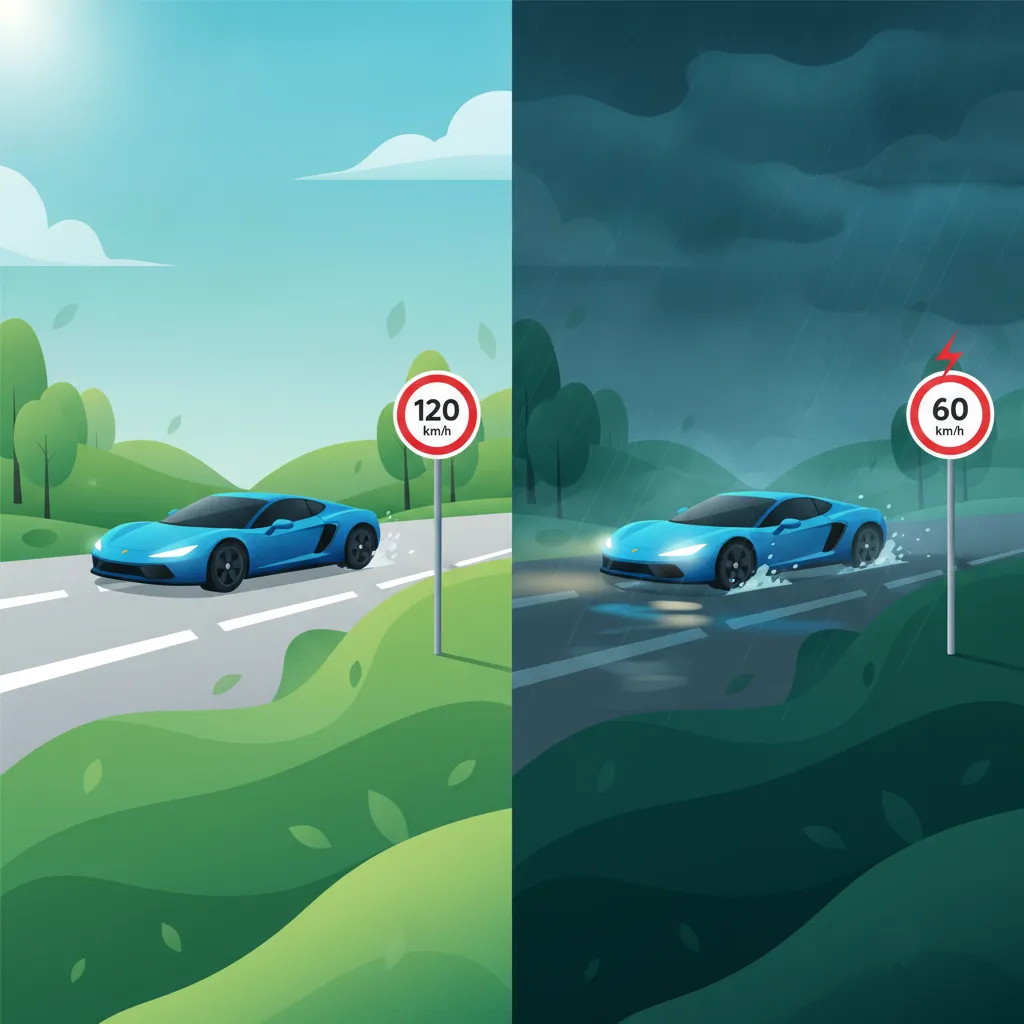
This lesson details the various speed limits applicable in Germany, from urban zones to rural roads. It emphasizes the critical skill of adapting speed to prevailing conditions such as rain, fog, or poor road surfaces. The content explains how external factors significantly impact vehicle handling and stopping distances.
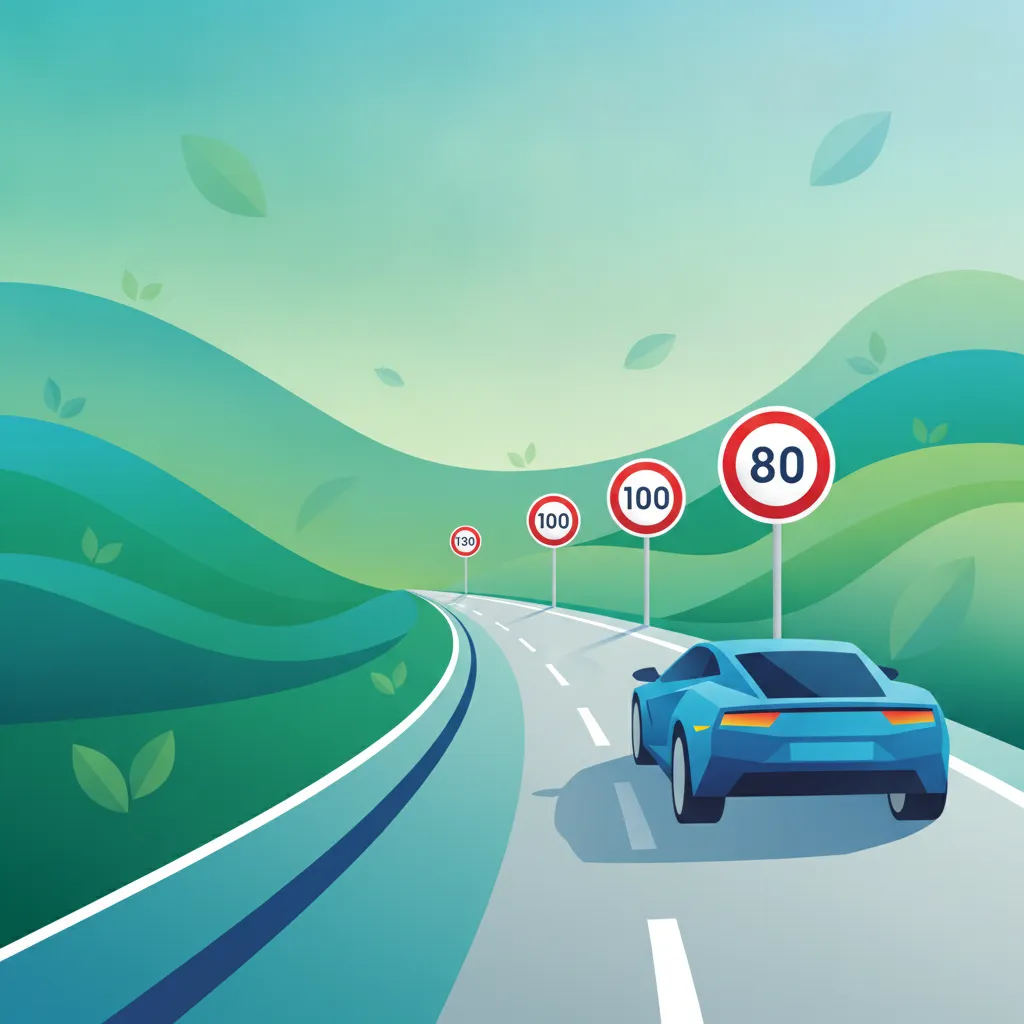
This lesson details the statutory speed limits in Germany, including the standard limits within built-up areas, on rural roads, and on the Autobahn. It emphasizes that the posted limit is a maximum and that drivers must always adapt their speed to traffic, weather, and visibility conditions. The concept of the recommended speed ('Richtgeschwindigkeit') on the Autobahn is also explained.
This lesson details the correct procedures for entering a motorway, using the acceleration lane to match traffic speed, and merging safely. It reinforces the strict lane discipline required, including keeping to the right lane except when overtaking. The content also provides guidance on maintaining increased following distances and performing safe lane changes at high speeds.
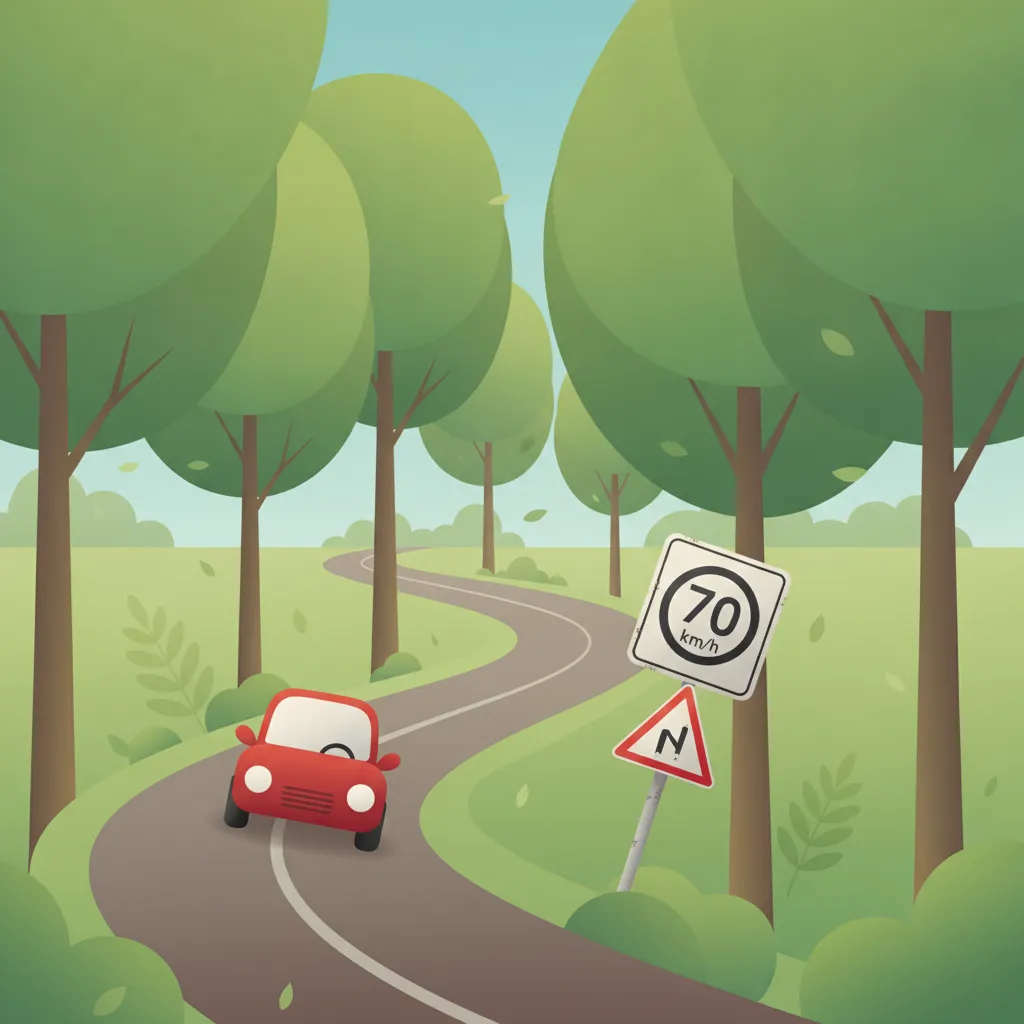
This lesson examines the specific hazards associated with driving on rural roads. It covers how to handle narrow lanes, sharp bends, and poor road surfaces, as well as how to anticipate and safely interact with slow-moving agricultural vehicles or livestock. Strategies for speed adaptation due to limited visibility and the risks associated with overtaking in these conditions are thoroughly discussed.

This lesson explains the two components of total stopping distance: reaction distance and braking distance. It teaches learners how factors like speed, road conditions, and rider attentiveness influence how far the motorcycle travels before coming to a complete stop. By understanding these principles, riders can make better decisions about safe speeds and following distances to ensure they can stop in time.

This lesson focuses on the specific challenges and dangers associated with driving on rural roads ('Landstraßen'). It highlights common hazards such as sharp, blind corners, unmarked junctions, hidden farm entrances, and the presence of slow-moving agricultural vehicles or wildlife. The lesson emphasizes the need for appropriate speed selection and caution when overtaking in these environments.
Explore common hazards and scenarios encountered on German country roads, and learn how to adjust your speed and riding based on road characteristics, visibility, and potential risks. Essential theory for the A licence.
This lesson examines the specific hazards associated with driving on rural roads. It covers how to handle narrow lanes, sharp bends, and poor road surfaces, as well as how to anticipate and safely interact with slow-moving agricultural vehicles or livestock. Strategies for speed adaptation due to limited visibility and the risks associated with overtaking in these conditions are thoroughly discussed.
This lesson focuses on the specific challenges and dangers associated with driving on rural roads ('Landstraßen'). It highlights common hazards such as sharp, blind corners, unmarked junctions, hidden farm entrances, and the presence of slow-moving agricultural vehicles or wildlife. The lesson emphasizes the need for appropriate speed selection and caution when overtaking in these environments.
This lesson details the various speed limits applicable in Germany, from urban zones to rural roads. It emphasizes the critical skill of adapting speed to prevailing conditions such as rain, fog, or poor road surfaces. The content explains how external factors significantly impact vehicle handling and stopping distances.
This lesson details the statutory speed limits in Germany, including the standard limits within built-up areas, on rural roads, and on the Autobahn. It emphasizes that the posted limit is a maximum and that drivers must always adapt their speed to traffic, weather, and visibility conditions. The concept of the recommended speed ('Richtgeschwindigkeit') on the Autobahn is also explained.
This lesson focuses on maintaining a safe buffer around the vehicle in traffic. It explains the 'two-second rule' as a simple method for ensuring adequate following distance and discusses how to adjust this for adverse conditions. A key focus is on developing hazard anticipation skills through continuous scanning and risk assessment.
This lesson provides a complete guide to driving on the German Autobahn. It covers the correct procedure for entering and exiting via acceleration and deceleration lanes, the strict lane discipline rule of keeping right ('Rechtsfahrgebot'), and the principle of overtaking only on the left. It also explains the recommended speed limit and the critical procedure for forming an emergency corridor ('Rettungsgasse') in a traffic jam.

This lesson builds on defensive driving by focusing specifically on hazard perception ('Gefahrenerkennung'). It teaches you how to actively scan the driving environment for potential risks, not just immediate dangers. You will learn to anticipate the likely actions of other road users and identify clues that signal a developing hazardous situation, allowing you to react early and safely.

This lesson teaches drivers how to safely manage their vehicle in challenging weather. It explains the dangers of aquaplaning in heavy rain, the loss of traction on snow and ice (including 'black ice'), and the severely reduced visibility in fog. You will learn to adjust your speed, increase following distances, and use lights correctly to suit these conditions.

This lesson focuses on the importance of strategic road positioning for enhancing safety and visibility. Learners explore different lane positions and understand when to use them to see, be seen, and create a safety buffer. The content emphasizes maintaining a long visual focus down the road to anticipate hazards and avoid target fixation, particularly when cornering.
This lesson introduces the concept of defensive driving ('vorausschauendes Fahren'), a proactive approach focused on anticipating and mitigating potential risks. It teaches techniques for scanning the road ahead, identifying potential hazards early, and managing the space around your vehicle to create a safety buffer. The goal is to develop a mindset that prioritizes safety and collision avoidance above all else.
Find clear answers to common questions learners have about Rural Road Classification and Speed Limit Determination. Learn how the lesson is structured, which driving theory objectives it supports, and how it fits into the overall learning path of units and curriculum progression in Germany. These explanations help you understand key concepts, lesson flow, and exam focused study goals.
For motorcycles and passenger cars, the general speed limit on rural roads (outside built-up areas) is 100 km/h, unless otherwise indicated by traffic signs or local conditions.
No. The legal limit is the maximum allowed speed under ideal conditions. You must always adjust your speed based on road surface, visibility, curves, traffic density, and your own riding experience.
Temporary restrictions are indicated by official traffic signs. Always look for speed limit signs accompanied by additional plates that might specify the length of the restriction or the reason, such as road damage.
Narrower rural roads offer less room for error, especially when encountering oncoming traffic or large agricultural vehicles. Being aware of road width helps you anticipate the need to position your motorcycle correctly and reduce speed.
Begin your targeted revision now. Use our practice search to quickly find specific German driving theory questions. Filter by StVO rules, road signs, or hazard perception to create your focused study plan. Master challenging areas and prepare confidently for your theoretical driving test.