
This lesson focuses on the unique challenges of driving large passenger vehicles on rural roads. You will learn how to adapt your speed and positioning to account for narrow lanes, limited visibility, and the presence of agricultural machinery or livestock, ensuring both passenger comfort and road safety.
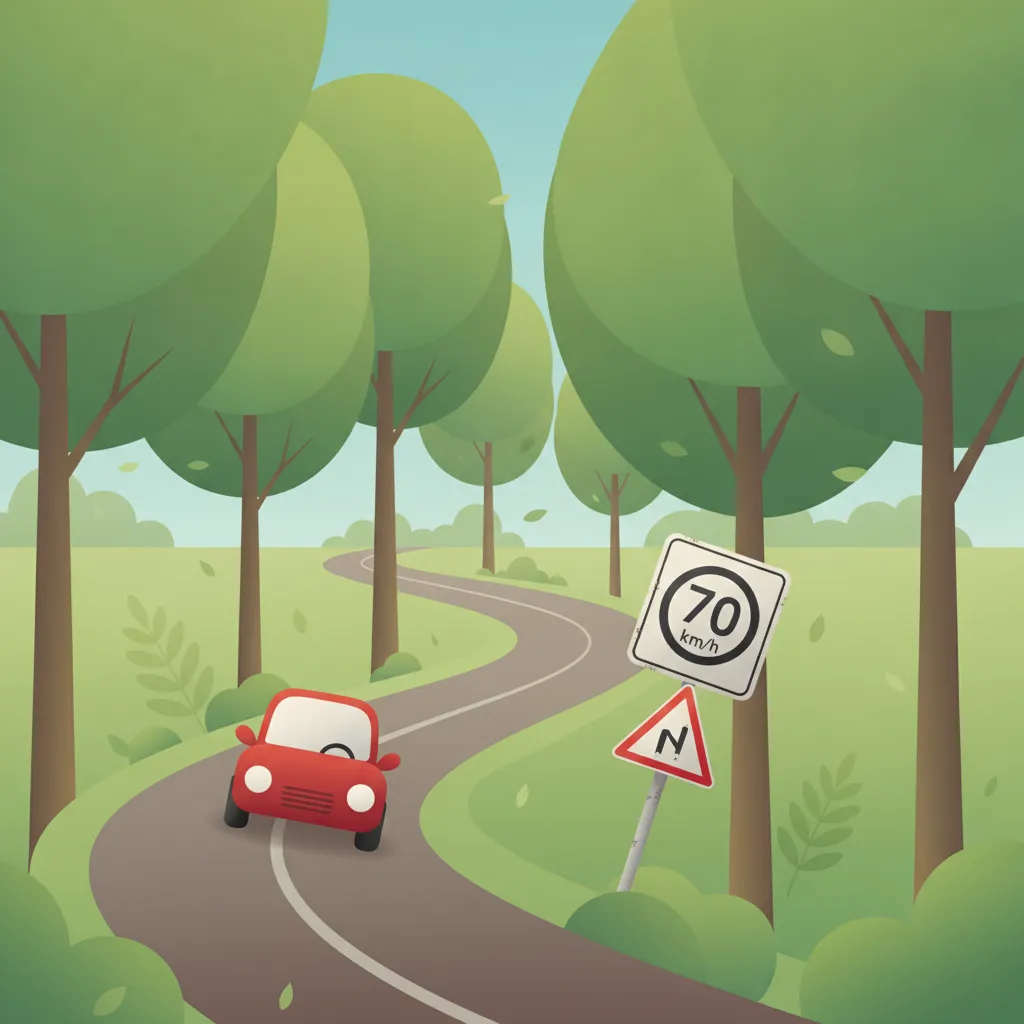
Lesson content overview
Driving on rural roads presents a unique set of challenges compared to urban environments or high-speed motorways (Autobahnen). For professional drivers operating passenger vehicles under Licence Categories D1, D1E, D, and DE, understanding these distinctions is paramount for ensuring passenger safety, maintaining vehicle control, and adhering to German traffic regulations. This lesson delves into the specific characteristics of rural road networks, highlighting the hazards and best practices for safe and efficient driving.
Rural roads, often referred to as Landstraßen in Germany, form a vast network connecting towns and villages. They differ significantly from other road types in their construction, layout, and the types of traffic encountered. These differences necessitate a specialized approach to driving, focusing on anticipation, precise vehicle control, and flexible speed adaptation. Recognizing these characteristics is the first step toward mitigating risks and ensuring a smooth journey for your passengers.
The primary challenges on rural roads stem from their distinctive physical attributes and the diverse traffic mix. These include:
The physical layout of rural roads, known as road geometry, is a critical factor influencing driving behavior. Unlike the standardized widths and gentle curves of main roads or Autobahnen, rural roads often feature less forgiving designs.
Many rural roads are considerably narrower than their urban or motorway counterparts. This reduced width leaves little margin for error, especially when encountering oncoming traffic or large vehicles. Shoulders, if present, are often unpaved, uneven, or extremely narrow, offering minimal recovery space if a driver deviates from the lane.
On such roads, precise vehicle positioning becomes crucial. As a professional driver, you must maintain a steady, central lane position while being prepared to adjust to the far right if necessary, to allow oncoming vehicles to pass safely. This requires constant awareness of your vehicle's dimensions, particularly when driving a larger passenger vehicle.
Rural roads are frequently characterized by sharp bends and curves with small radii, often hidden by terrain or vegetation. These curves demand a significant reduction in speed to maintain control and prevent drifting into the opposing lane or off the road.
When approaching a bend, look as far through the curve as possible to assess its tightness and any potential hazards. Position your vehicle appropriately for the curve, entering wide (if safe) to allow for a straighter exit, and always adapt your speed before entering the bend.
The curvature speed is the appropriate speed for navigating bends safely, which may be significantly lower than the posted speed limit. Incorrectly estimating the severity of a curve is a common cause of accidents on rural roads.
The quality and type of road surface on rural routes can vary dramatically, impacting vehicle handling, traction, and braking performance. Professional drivers must be acutely aware of these changes and adjust their driving accordingly.
While some rural roads are well-maintained asphalt, many suffer from wear and tear, leading to potholes, cracks, or uneven patches. Furthermore, it is not uncommon to encounter sections of gravel or entirely unpaved roads, particularly in more remote areas.
Poor or inconsistent road surfaces directly affect your vehicle's ability to maintain grip. Reduced traction means:
The adjusted speed necessary to safely navigate a particular road surface, such as gravel, wet asphalt, or uneven pavement, which is often lower than the legal maximum.
Always reduce your surface speed significantly when transitioning to loose or uneven surfaces. This proactive adjustment allows your tires to maintain better contact and provides a greater margin for error.
Visibility is often severely limited on rural roads due to terrain, dense vegetation, and the absence of streetlights. This reduced sight distance demands heightened awareness and anticipatory driving techniques.
Rural roads are rife with blind spots, areas where the road ahead or potential hazards are obscured. Common blind spots include:
Given the prevalence of blind spots, anticipatory driving is not just a recommendation but a necessity. This means constantly scanning the environment, looking for clues that might indicate a hidden hazard:
Reduce your speed whenever your sight distance is limited, allowing you more time to react if an unexpected hazard appears.
One of the most distinctive features of rural road traffic is the presence of agricultural vehicles and, occasionally, livestock. These road users require special consideration and patience from professional drivers.
Agricultural vehicles such as tractors, combine harvesters, and specialized trailers are typically:
When encountering agricultural vehicles, patience is key. On narrow roads, particularly those with bends or limited visibility, attempting to overtake a slow-moving tractor is highly dangerous and often prohibited by German traffic law (Straßenverkehrs-Ordnung – StVO).
To give priority to another road user, allowing them to proceed before you, particularly important for large or slow-moving agricultural vehicles on narrow roads where safe overtaking is not possible.
Speed adaptation is one of the most critical aspects of safe driving on rural roads. The posted speed limit is a maximum, not a target, and drivers are legally obliged by the StVO (§3 StVO) to adjust their speed to prevailing road, traffic, weather, and visibility conditions.
Never assume the posted speed limit is safe for all conditions. Professional drivers must constantly assess and adjust their speed to maintain full control of the vehicle and ensure passenger comfort and safety.
Even when no specific hazard is immediately apparent, the overall character of rural roads often warrants a speed lower than the maximum allowed. This proactive speed adaptation allows for better reaction time to unforeseen events, such as an animal darting onto the road, a concealed driveway, or a sudden change in road surface.
Overtaking on rural roads is inherently riskier than on multi-lane motorways. The limited road width, reduced visibility, and mixed traffic composition demand meticulous planning and extreme caution.
A safe overtaking maneuver requires several crucial conditions to be met:
Always err on the side of caution. Overtaking is strictly prohibited and highly dangerous in the following situations:
Patience is a virtue, especially for professional drivers. Waiting for a truly safe opportunity is always better than risking a collision.
The following distance you maintain between your passenger vehicle and the vehicle ahead is a fundamental safety measure, and it needs to be increased on rural roads compared to urban driving.
On rural routes, due to reduced visibility, variable road surfaces, and the often unpredictable behavior of agricultural vehicles or wildlife, a larger gap is crucial. A minimum of a two-second rule is standard under ideal conditions, but for professional drivers on rural roads, particularly when transporting passengers, extending this to three or even four seconds is often advisable.
The temporal or spatial gap maintained between one's vehicle and the vehicle ahead, typically measured in seconds (e.g., 2-second rule) or meters, and adjusted based on speed, road conditions, and visibility.
The German Road Traffic Regulations (StVO) provide the legal framework for driving on all roads, including rural routes. Several general principles are particularly relevant here:
Adhering to these regulations is not just a legal obligation but a fundamental aspect of professional, safe driving.
Understanding common errors helps professional drivers proactively prevent them.
Overtaking on a Blind Curve:
Maintaining Posted Speed on Poor Surfaces:
Following Too Closely Behind Agricultural Vehicles:
Failure to Yield on Narrow Roads:
Speeding on Curves:
Rural road characteristics are further amplified by external factors. Professional drivers must understand how these conditions necessitate even greater caution and adaptation.
Driving on rural roads at night reduces visibility to what your headlights can illuminate.
Transporting passengers means your vehicle is often heavier than a standard car. If you are also towing a trailer (relevant for D1E/DE categories), these considerations become even more critical:
Always adjust your speed, following distance, and maneuvering strategy to account for the increased mass and reduced agility of your vehicle combination.
| Term | Definition | Notes |
|---|---|---|
| Curvature Speed | The speed appropriate for safely navigating a bend or curve, often lower than the posted limit. | Depends on the curve's radius, road surface, and vehicle dynamics. |
| Sight Distance | The length of road ahead that is visible to the driver, unobstructed by terrain, vegetation, or other elements. | Crucial for safe overtaking and hazard anticipation. |
| Agricultural Vehicle | Farm machinery (e.g., tractors, harvesters, livestock trailers) that are typically slow, wide, and have limited maneuverability. | Requires special patience and yielding due to their size and speed differential. |
| Gravel Road | An unpaved or loosely surfaced road, often found in rural areas, offering reduced tire traction. | Demands significant speed reduction and increased following distance. |
| Following Distance | The gap maintained between your vehicle and the vehicle directly ahead, measured in seconds or meters. | Should be increased on rural roads, in poor visibility, or on challenging surfaces. |
| Overtaking Zone | A section of road where overtaking is permissible and safe, characterized by sufficient visibility and road width. | Marked by dashed lines; prohibited on blind curves, hill crests, or with solid lines. |
| Yield (Yield to) | To give priority to another road user, allowing them to proceed before your vehicle. | Mandatory when road conditions (e.g., narrowness) prevent safe simultaneous passage. |
| Blind Curve | A section of road where the driver cannot see oncoming traffic or hazards due to the road's curvature or obstacles. | Overtaking is strictly prohibited here due to the extreme risk of head-on collision. |
| Speed Adaptation | The mandatory adjustment of vehicle speed below posted limits to match prevailing road, traffic, and environmental conditions. | A legal requirement under StVO (§3), critical for maintaining safety and control. |
| Landstraße | The German term for a rural road or country road, distinct from Autobahnen (motorways) or inner-city roads. | Often characterized by the challenges discussed in this lesson. |
Mastering rural road characteristics is fundamental for professional drivers in Germany. It requires a holistic approach to safety that prioritizes anticipation, adaptability, and adherence to legal mandates.
By consistently applying these principles, professional German passenger-vehicle drivers can navigate rural routes safely, efficiently, and with the utmost regard for their passengers' comfort and security.
This lesson prepares D-category licence candidates to safely navigate rural roads (Landstraßen) in Germany, addressing narrow lanes, sharp bends, and inconsistent road surfaces that demand constant vigilance. Speed adaptation is not optional but a legal requirement under StVO §3, meaning drivers must reduce speed below posted limits for curves, poor surfaces, and reduced visibility. Safe interaction with slow-moving agricultural vehicles requires patience, increased following distances, and yielding when overtaking is too hazardous. Overtaking is only permitted when there is clear sight distance, sufficient road width, and absolutely no oncoming traffic—never at blind curves or hill crests. Professional drivers must also account for vehicle dimensions, passenger load, and trailer combinations when applying these principles.
A short set of high-value points that capture the most important learning from this lesson.
Rural road driving demands continuous speed adaptation based on road geometry, surface conditions, and visibility—not solely posted speed limits.
Agricultural vehicles require patience, increased following distances, and willingness to yield when safe overtaking is impossible.
Overtaking on rural roads is prohibited at blind curves, hill crests, intersections, and wherever visibility is restricted.
Road surfaces like gravel or wet asphalt significantly reduce tyre traction, extending braking distances and increasing skid risk.
Professional passenger-vehicle drivers must account for vehicle dimensions, passenger load, and trailer combinations when navigating rural routes.
Explore all units and lessons included in this driving theory course.
StVO §3 legally obliges drivers to adjust speed below posted limits when road, visibility, weather, or traffic conditions require it.
Use curvature speed approach: reduce speed before entering a bend based on its radius and surface conditions, not the posted limit.
Maintain a 3-4 second following distance behind agricultural vehicles to allow for sudden braking or turns into fields.
Watch for anticipatory cues—shadows, reflections, dust clouds, and engine sounds—to detect hidden hazards around blind curves and crests.
Night driving and adverse weather conditions on unlit rural roads demand additional speed reductions beyond normal rural speeds.
Attempting to overtake slow-moving vehicles on blind curves or hill crests where oncoming traffic cannot be seen, risking head-on collisions.
Driving at posted speed limits on gravel, unpaved, or wet surfaces without reducing speed for the loss of traction.
Following agricultural vehicles too closely, failing to account for their sudden stops, wide turns into fields, or objects falling from trailers.
Braking or steering sharply on poor road surfaces, causing loss of control due to reduced grip.
Failing to yield on narrow roads when encountering wide agricultural vehicles, resulting in side-swipe collisions or vehicle damage.
Lesson content overview
A short set of high-value points that capture the most important learning from this lesson.
Rural road driving demands continuous speed adaptation based on road geometry, surface conditions, and visibility—not solely posted speed limits.
Agricultural vehicles require patience, increased following distances, and willingness to yield when safe overtaking is impossible.
Overtaking on rural roads is prohibited at blind curves, hill crests, intersections, and wherever visibility is restricted.
Road surfaces like gravel or wet asphalt significantly reduce tyre traction, extending braking distances and increasing skid risk.
Professional passenger-vehicle drivers must account for vehicle dimensions, passenger load, and trailer combinations when navigating rural routes.
Explore all units and lessons included in this driving theory course.
StVO §3 legally obliges drivers to adjust speed below posted limits when road, visibility, weather, or traffic conditions require it.
Use curvature speed approach: reduce speed before entering a bend based on its radius and surface conditions, not the posted limit.
Maintain a 3-4 second following distance behind agricultural vehicles to allow for sudden braking or turns into fields.
Watch for anticipatory cues—shadows, reflections, dust clouds, and engine sounds—to detect hidden hazards around blind curves and crests.
Night driving and adverse weather conditions on unlit rural roads demand additional speed reductions beyond normal rural speeds.
Attempting to overtake slow-moving vehicles on blind curves or hill crests where oncoming traffic cannot be seen, risking head-on collisions.
Driving at posted speed limits on gravel, unpaved, or wet surfaces without reducing speed for the loss of traction.
Following agricultural vehicles too closely, failing to account for their sudden stops, wide turns into fields, or objects falling from trailers.
Braking or steering sharply on poor road surfaces, causing loss of control due to reduced grip.
Failing to yield on narrow roads when encountering wide agricultural vehicles, resulting in side-swipe collisions or vehicle damage.
Explore search topics learners often look for when studying Rural Road Characteristics. These topics reflect common questions about road rules, driving situations, safety guidance, and lesson level theory preparation for learners in Germany.
Browse additional driving theory lessons that cover connected traffic rules, road signs, and common driving situations related to this topic. Improve your understanding of how different rules interact across everyday traffic scenarios.
Understand the specific challenges of rural roads in Germany, including narrow lanes, sharp bends, and interaction with agricultural traffic. This lesson focuses on adapting speed and safe overtaking strategies for rural environments.

This lesson focuses on the specific challenges and dangers associated with driving on rural roads ('Landstraßen'). It highlights common hazards such as sharp, blind corners, unmarked junctions, hidden farm entrances, and the presence of slow-moving agricultural vehicles or wildlife. The lesson emphasizes the need for appropriate speed selection and caution when overtaking in these environments.
This lesson introduces the classification of rural roads and explains how speed limits are determined in these non-urban areas. It covers the German national speed limit for rural roads and how to identify local or temporary restrictions. Learners will understand the importance of adapting their speed to the road's characteristics, such as width, surface condition, and visibility, not just the posted limit.
This lesson introduces the concept of defensive driving ('vorausschauendes Fahren'), a proactive approach focused on anticipating and mitigating potential risks. It teaches techniques for scanning the road ahead, identifying potential hazards early, and managing the space around your vehicle to create a safety buffer. The goal is to develop a mindset that prioritizes safety and collision avoidance above all else.
This lesson provides a complete guide to driving on the German Autobahn. It covers the correct procedure for entering and exiting via acceleration and deceleration lanes, the strict lane discipline rule of keeping right ('Rechtsfahrgebot'), and the principle of overtaking only on the left. It also explains the recommended speed limit and the critical procedure for forming an emergency corridor ('Rettungsgasse') in a traffic jam.

This lesson focuses on the particular care required when driving near pedestrians, with a special emphasis on children and the elderly, whose behavior can be unpredictable. It covers the rules for yielding at zebra crossings and the importance of reducing speed near schools, playgrounds, and residential areas. The goal is to instill a habit of constant vigilance and readiness to stop.
This lesson covers the specific rules and safety precautions for driving through tunnels. This includes turning on dipped headlights, maintaining a safe distance, and knowing the location and use of emergency exits and equipment. It also addresses the potential hazards on bridges, such as increased risk of ice in winter and susceptibility to strong crosswinds.

This lesson builds on defensive driving by focusing specifically on hazard perception ('Gefahrenerkennung'). It teaches you how to actively scan the driving environment for potential risks, not just immediate dangers. You will learn to anticipate the likely actions of other road users and identify clues that signal a developing hazardous situation, allowing you to react early and safely.
This lesson focuses on identifying road users who require special attention and caution, such as children, the elderly, and individuals with disabilities. It details the appropriate behavior when encountering school buses and public transport, which often involve unpredictable pedestrian movement. A critical topic covered is the legal requirement to form an emergency corridor ('Rettungsgasse') for responding emergency vehicles.

This lesson teaches drivers how to safely manage their vehicle in challenging weather. It explains the dangers of aquaplaning in heavy rain, the loss of traction on snow and ice (including 'black ice'), and the severely reduced visibility in fog. You will learn to adjust your speed, increase following distances, and use lights correctly to suit these conditions.
This lesson examines the specific hazards posed by different weather conditions. It explains how rain can lead to hydroplaning and reduced grip, how fog impairs visibility, and how strong winds can affect stability. Riders will learn practical strategies, such as reducing speed and increasing following distance, to mitigate these risks.
Learn how to safely anticipate and interact with slow-moving agricultural vehicles and livestock on rural roads. This lesson covers specific German driving theory (StVO) rules and best practices for these encounters.
This lesson focuses on the specific challenges and dangers associated with driving on rural roads ('Landstraßen'). It highlights common hazards such as sharp, blind corners, unmarked junctions, hidden farm entrances, and the presence of slow-moving agricultural vehicles or wildlife. The lesson emphasizes the need for appropriate speed selection and caution when overtaking in these environments.
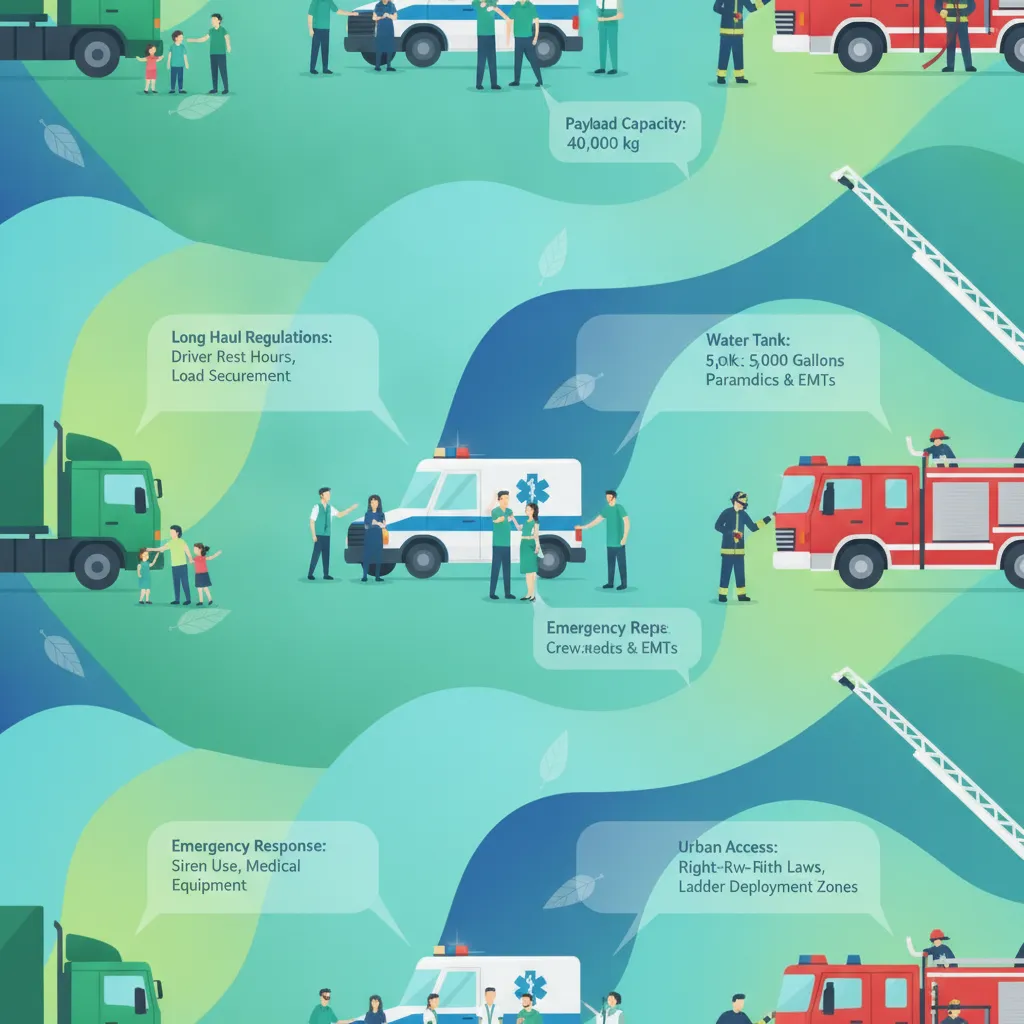
This lesson covers safe interaction with special vehicles. It details the challenges of driving near large trucks (LKW), including their extensive blind spots, longer stopping distances, and the effects of wind turbulence when overtaking them. A critical part of the lesson is explaining the correct procedure for reacting to emergency vehicles by creating an emergency corridor ('Rettungsgasse') on multi-lane roads.
This lesson teaches riders how to interact safely and predictably with pedestrians, cyclists, and public transport vehicles. It highlights the importance of yielding at designated crossings, maintaining a safe passing distance, and anticipating the movements of buses and trams. The content emphasizes using eye contact and clear signaling to foster safe and respectful interactions with all road users.
This lesson focuses on the interaction between heavy vehicles and vulnerable road users at crossings, particularly when turning right. It covers the need for heightened vigilance, the importance of properly using mirrors, and correct signaling to alert others. The content highlights legal responsibilities and safe distance requirements to prevent accidents.
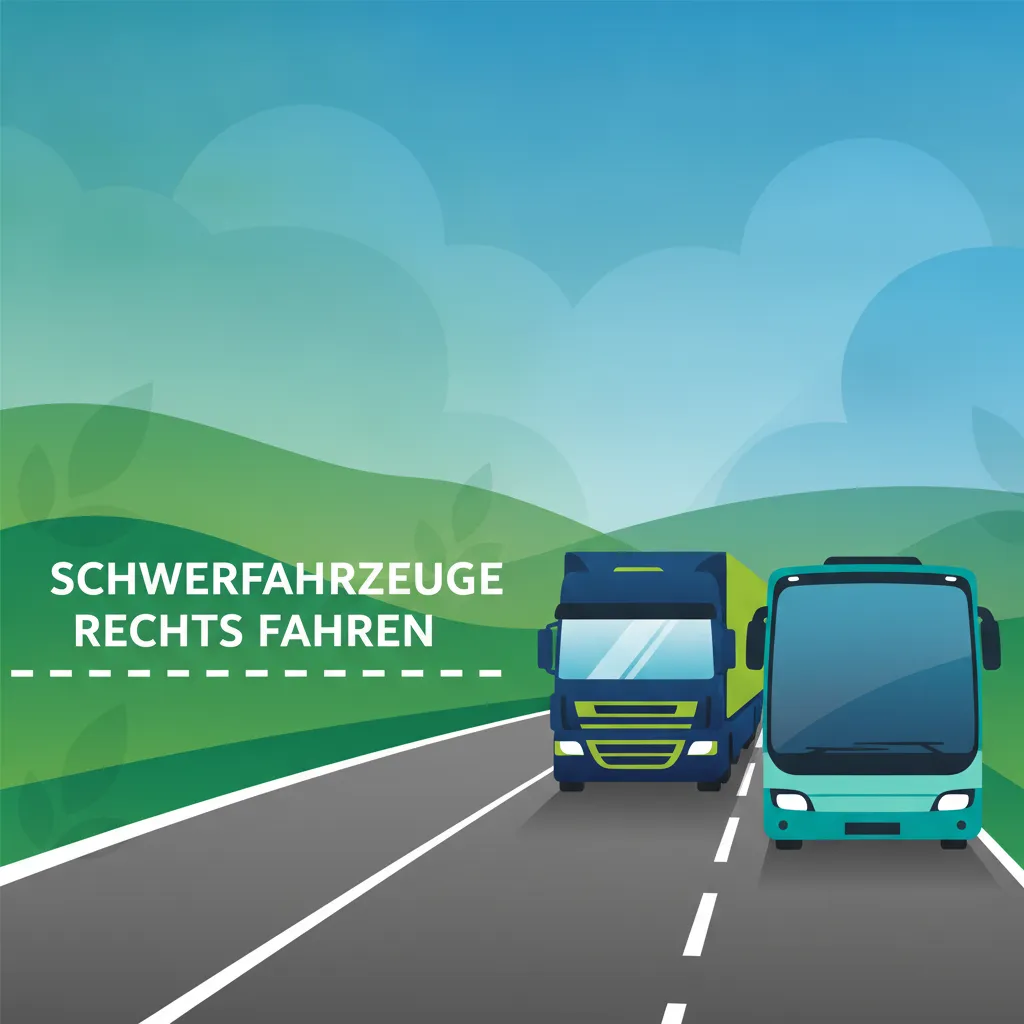
This lesson explains the specific regulations for operating heavy vehicles on Autobahnen, including speed limits, lane discipline, and overtaking rules. It discusses the use of dedicated truck lanes and the importance of maintaining appropriate following distances. The content also covers procedures for merging and exiting high-speed roads safely.

This lesson addresses the critical skill of safely interacting with other road users, particularly vulnerable ones like pedestrians and cyclists. It covers rules for yielding at crosswalks, maintaining a safe passing distance, and being aware of the limited visibility of a moped to car drivers. The focus is on fostering a defensive and cooperative mindset in mixed traffic.
This lesson addresses the challenges of operating a small AM vehicle in dense, mixed traffic. It provides strategies for increasing visibility to other drivers, positioning oneself defensively, and safely sharing lanes with cyclists. The content emphasizes awareness of larger vehicles' blind spots and maintaining a safe space cushion.
This lesson focuses on complex traffic environments where different types of road users share the same space. It provides guidance on situations like driving on streets with integrated tram tracks or where bus and bicycle lanes are part of the roadway. The content emphasizes understanding the specific priority rules and being extra vigilant to anticipate potential conflicts in these busy, shared zones.
This lesson provides specific guidance on how to safely share the road with pedestrians and cyclists, who are among the most vulnerable road users. It covers the rules of conduct at zebra crossings, traffic lights for pedestrians, and designated cycle lanes. The content emphasizes the importance of vigilance, yielding right-of-way, and maintaining a safe distance to prevent accidents in urban and rural environments.

This lesson focuses on the unique challenges and safety protocols required when operating alongside trams and light rail systems. It clarifies the strict right-of-way rules that typically favor trams and explains how to safely navigate shared roadways and cross tracks. Learners will be taught to recognize specific signals and markings related to tramways to prevent conflicts and ensure the safety of all road users.
Find clear answers to common questions learners have about Rural Road Characteristics. Learn how the lesson is structured, which driving theory objectives it supports, and how it fits into the overall learning path of units and curriculum progression in Germany. These explanations help you understand key concepts, lesson flow, and exam focused study goals.
Large passenger vehicles have a higher center of gravity and longer braking distances. On rural roads with narrow lanes and varied surfaces, excessive speed significantly increases the risk of tipping or losing control during emergency maneuvers or sharp turns.
Maintain a safe following distance and only overtake if you have a clear, long-distance view of oncoming traffic. Remember that your vehicle width may be significantly larger than a standard car, making narrow gaps riskier.
Yes, you may encounter questions about how loose chippings, mud from farm entrances, or ice in shaded woodland areas affect your braking capability and steering response.
The primary risk is encountering oncoming large vehicles or agricultural equipment where there is insufficient room to pass safely. Defensive driving and proactive speed reduction before entering narrow sections are essential.
Begin your targeted revision now. Use our practice search to quickly find specific German driving theory questions. Filter by StVO rules, road signs, or hazard perception to create your focused study plan. Master challenging areas and prepare confidently for your theoretical driving test.