
This lesson provides the foundation for your Category AM moped training by outlining the official legal specifications for mopeds in Iceland. You will learn the technical parameters that define these vehicles under Icelandic traffic law, which is essential for ensuring your vehicle is road-legal. This knowledge is vital for your upcoming theory exam and your future responsibilities as a rider.

Lesson content overview
Navigating the roads of Iceland on a moped offers a sense of freedom and practicality, especially in urban environments. However, this freedom comes with a crucial responsibility: understanding and adhering to the specific legal framework that governs Category AM mopeds. This foundational lesson delves into the precise statutory definitions and technical parameters that classify a vehicle as a Category AM moped under Icelandic traffic legislation. Knowing these rules is not just about avoiding penalties; it's about ensuring your vehicle is safe, compliant, and legally operable, setting the stage for responsible riding.
In Iceland, the definition of a Category AM moped is clearly outlined in the Road Traffic Act, specifically in § 9. This legal classification differentiates mopeds from motorcycles and other light vehicles, establishing measurable criteria based on safety, environmental impact, and vehicle handling characteristics suitable for riders with specific licensing. Essentially, a Category AM moped is a two- or three-wheeled motor vehicle engineered within strict performance limits.
To qualify as a Category AM moped, a vehicle must meet several precise technical parameters. These include limits on its maximum design speed, engine capacity for internal combustion engines, continuous rated power for electric motors, and a specific power-to-weight ratio. These limits are not arbitrary; they are designed to control the vehicle's potential kinetic energy, acceleration, and stopping distances, thereby mitigating risks in mixed traffic conditions. By ensuring mopeds operate within these parameters, the law helps maintain a manageable level of risk for both the rider and other road users.
The Category AM definition applies universally to both two-wheeled and three-wheeled motor vehicles, provided they adhere to all the stipulated technical limits. This means that whether you ride a traditional two-wheeled scooter or a three-wheeled moped, the same rules regarding speed, power, engine size, and power-to-weight ratio apply. The key is the vehicle's performance characteristics, not merely its number of wheels, for its classification under an Icelandic AM license.
The core of the Category AM legal framework lies in its detailed technical specifications. These are the hard numbers that every moped must comply with to be legally operated on public roads with an AM license in Iceland. Verifying these specifications is paramount for any moped owner or prospective buyer.
One of the most identifiable characteristics of a Category AM moped is its maximum design speed. Under Icelandic law, a Category AM moped must not be capable of exceeding 45 km/h under its own power. This is not simply a recommendation but a legal limitation integrated into the vehicle's manufacturing and design.
The maximum speed a vehicle is capable of attaining under its own propulsion, as determined by the manufacturer and often enforced by a speed governor. For Category AM mopeds, this limit is 45 km/h.
Manufacturers achieve this by installing a speed governor, which is a mechanical or electronic device that limits the vehicle's top speed. This regulation ensures that mopeds remain within speed ranges appropriate for urban and residential environments, where they are most commonly used. Exceeding this limit, even by modifying the vehicle to go faster, automatically disqualifies it from Category AM classification and requires a higher-category driving license for legal operation, with severe penalties for non-compliance.
For mopeds powered by internal combustion engines (ICE), the primary technical parameter is engine displacement. Icelandic law mandates that the total volume of all cylinders in an ICE moped must not exceed 50 cubic centimeters (cm³).
The total volume swept by the pistons within an internal combustion engine during one complete cycle, measured in cubic centimeters (cm³).
This limit provides a straightforward, measurable parameter that directly influences the potential power output and emissions of the engine. Low-displacement engines inherently generate less power, which aligns with the safety philosophy behind Category AM licensing. It is a common misconception that "50 cm³" refers to the fuel tank size; it refers exclusively to the engine's internal volume. Any modification that increases the engine displacement above 50 cm³ will render the vehicle non-compliant as a Category AM moped.
With the increasing popularity of electric mopeds, Icelandic legislation provides equivalent performance limits for these vehicles. For electric propulsion, the continuous rated power of the motor must not exceed 4 kilowatts (kW).
The maximum power output an electric motor can sustain over an extended period without overheating or suffering performance degradation. This is the key metric for classification, distinct from 'peak power'.
This 4 kW limit is carefully chosen to align electric mopeds with the same performance envelope as their internal combustion counterparts, ensuring consistent safety standards across different propulsion types. It's important to distinguish continuous rated power from peak power, which refers to the maximum power an electric motor can deliver for short bursts (e.g., during acceleration). While a moped's peak power might momentarily exceed 4 kW, its continuous rated power must remain within the legal limit for it to be classified as Category AM. Any battery or motor upgrade that increases the sustained output above 4 kW would invalidate its Category AM status.
Beyond engine size and power, the power-to-weight ratio is a critical parameter for Category AM mopeds. This ratio controls the vehicle's acceleration potential and overall kinetic energy, directly influencing accident severity and the rider's ability to control the vehicle. Under Icelandic law, the power-to-weight ratio must not exceed 0.25 kW/kg.
The ratio calculated by dividing the vehicle’s continuous rated power (in kilowatts, kW) by its unladen mass (in kilograms, kg).
This calculation uses the vehicle's unladen mass—its weight without any passengers, cargo, or fuel. For example, an electric moped with a 2 kW motor and an unladen mass of 80 kg would have a power-to-weight ratio of 2 kW / 80 kg = 0.025 kW/kg, which is well within the acceptable limit. However, if that same 2 kW motor was placed on an exceptionally light vehicle weighing only 5 kg, the ratio would be 0.4 kW/kg, exceeding the limit and making the vehicle non-compliant. This rule ensures that mopeds do not possess excessive acceleration capabilities that would require higher-grade licensing or more advanced rider competencies. Modifications that significantly alter a moped's unladen mass or continuous power output can easily push this ratio over the limit, leading to reclassification and legal non-compliance.
Even if a moped technically meets all the performance specifications, it cannot be legally operated on public roads in Iceland without fulfilling several mandatory legal requirements. These administrative steps are just as critical as the technical specifications.
Every Category AM moped intended for use on public roads in Iceland must be officially registered with the relevant authorities. During registration, the vehicle is assigned a specific registration category, which for mopeds is "Category AM." This designation is noted on the vehicle's registration certificate and corresponds to the type of license required to operate it.
The registration process typically involves obtaining specific license plates that identify the vehicle as a moped. This enables law enforcement to quickly verify the vehicle's class and ensure it complies with appropriate regulations. Operating an unregistered moped, regardless of its technical compliance, is illegal and can lead to significant fines and even vehicle impoundment.
In Iceland, as with all motor vehicles, Category AM mopeds are legally required to have mandatory liability insurance. This insurance covers third-party damages, meaning it protects other road users in the event that the moped causes an accident. It is a fundamental legal obligation designed to ensure financial protection for victims of road incidents.
Riding a moped without valid liability insurance is a serious offense in Iceland. It can result in substantial fines, legal penalties, and the inability to register your vehicle. In the event of an accident, you would be personally liable for all damages, which could be financially devastating.
Proof of insurance must be available and presented upon request by law enforcement. The insurance policy must explicitly cover the vehicle as a Category AM moped, and details are typically submitted to the Icelandic Traffic Authority.
One of the most crucial safety rules for Category AM moped riders in Iceland, and indeed across most of Europe, is the mandatory use of a certified helmet. Every rider and passenger on a Category AM moped must wear an approved, protective helmet at all times while operating the vehicle on public roads.
This rule is enforced without exception, whether you are riding in a busy urban center or a quiet rural area. Helmets are scientifically proven to significantly reduce the risk and severity of head injuries in the event of a collision or fall. Failure to wear an approved helmet can result in immediate fines and may even lead to a temporary suspension of your driving license. Always ensure your helmet is properly fastened and meets current safety standards (e.g., ECE 22.05 or ECE 22.06 certification).
Despite clear regulations, certain violations and misunderstandings are common among moped riders. Awareness of these pitfalls is crucial for staying compliant and safe on Icelandic roads.
One of the most frequent violations involves modifying a moped to exceed its legal performance limits.
Any modification that changes a moped's technical specifications beyond the Category AM limits means the vehicle is no longer legally a moped. Operating it with an AM license is akin to driving an unauthorized vehicle.
Another significant area of violation stems from failing to maintain correct documentation.
Mopeds, due to their design speed limits, are not permitted on all types of roads in Iceland. Specifically, they are prohibited from motorways (highways). Riders must always observe road signs indicating vehicle restrictions. Accidentally or intentionally entering a prohibited area can lead to fines and other penalties, regardless of the moped's technical compliance or the rider's adherence to other rules.
While not a technical modification to the vehicle itself, carrying excessive cargo or an additional passenger beyond the manufacturer's specified limits can impact the moped's compliance with the power-to-weight ratio. Although the regulatory limit is based on the unladen mass, overloading can lead to unsafe operation and, in some interpretations, push the effective power-to-weight performance outside its intended envelope, especially if acceleration is significantly compromised. Always adhere to the moped's passenger and cargo weight limits to ensure safe and legal operation.
The stringent legal framework for Category AM mopeds is not merely about bureaucratic checkboxes; it is deeply rooted in safety and the principles of risk reduction for all road users. Understanding this rationale helps riders appreciate the importance of compliance.
The limits on design speed, engine capacity, and power-to-weight ratio are directly linked to the physics of motion and impact. Kinetic energy, defined by the formula E = ½ mv² (where 'm' is mass and 'v' is velocity), is exponentially affected by speed.
Mopeds are often ridden by newer drivers who may have less experience with powered two-wheelers. The regulations are designed to ensure the vehicle's performance characteristics are manageable for riders with minimal training.
These safety considerations form the bedrock of the Category AM legal framework, guiding decisions on everything from vehicle design to rider training and operational rules.
Understanding the legal definition and requirements for Category AM mopeds is the crucial first step in your Icelandic Moped (Category AM) Driving License Theory Course. This knowledge is not only vital for passing your theory exam but, more importantly, for ensuring your safety and compliance on public roads.
This lesson has laid the groundwork for many subsequent topics. For instance, the discussion on mandatory helmet use leads directly into broader considerations of protective gear and rider visibility. The technical limits on speed and power inform lessons on road positioning, braking distances, and safe vehicle control. Moreover, understanding how mopeds are legally classified is essential for interpreting road signs and priority rules, as restrictions often apply differently to various vehicle categories.
By grasping these fundamental legal principles, you are well-equipped to delve deeper into the practical aspects of moped riding, knowing precisely what it means to operate a Category AM vehicle responsibly in Iceland.
This lesson covers the legal and technical framework for Category AM mopeds in Iceland as defined in Road Traffic Act § 9. Learners must master four key technical parameters: design speed (45 km/h maximum), engine displacement (50 cm³ for ICE engines), continuous rated power (4 kW for electric mopeds), and power-to-weight ratio (0.25 kW/kg maximum). Beyond technical specifications, legal operation requires vehicle registration, mandatory liability insurance, and approved helmet use at all times. Understanding these limits is essential not only for theory exam preparation but for ensuring safe, compliant riding on Icelandic roads.
A short set of high-value points that capture the most important learning from this lesson.
Category AM mopeds must not exceed a design speed of 45 km/h and require a speed governor to enforce this limit.
Internal combustion engine mopeds are limited to 50 cm³ displacement, while electric mopeds have a continuous rated power limit of 4 kW.
The power-to-weight ratio (continuous power ÷ unladen mass) must not exceed 0.25 kW/kg for AM classification.
Operating a moped on public roads requires valid registration as Category AM, mandatory liability insurance, and approved helmet use.
Modifications that push any technical parameter beyond AM limits reclassify the vehicle and require a higher license category.
Explore all units and lessons included in this driving theory course.
Design speed is the manufacturer-set maximum speed under own propulsion, capped at 45 km/h for AM mopeds.
50 cm³ refers to engine cylinder volume, not fuel tank size — a common misconception to avoid.
Continuous rated power (for electric mopeds) is the sustained output, distinct from peak power during acceleration bursts.
The power-to-weight ratio uses unladen mass (without rider, cargo, or fuel) in its calculation.
Mopeds are prohibited from motorways regardless of their technical compliance or the rider's license status.
Confusing continuous rated power with peak power when evaluating electric mopeds, leading to incorrect classification assumptions.
Believing that the 50 cm³ limit refers to fuel tank capacity rather than engine displacement.
Assuming mopeds can be registered and legally operated without mandatory third-party liability insurance.
Modifying the exhaust system or tuning the engine to increase performance, potentially invalidating Category AM compliance.
Entering motorways believing the speed restriction is about current speed rather than the vehicle's design capability.
Lesson content overview
A short set of high-value points that capture the most important learning from this lesson.
Category AM mopeds must not exceed a design speed of 45 km/h and require a speed governor to enforce this limit.
Internal combustion engine mopeds are limited to 50 cm³ displacement, while electric mopeds have a continuous rated power limit of 4 kW.
The power-to-weight ratio (continuous power ÷ unladen mass) must not exceed 0.25 kW/kg for AM classification.
Operating a moped on public roads requires valid registration as Category AM, mandatory liability insurance, and approved helmet use.
Modifications that push any technical parameter beyond AM limits reclassify the vehicle and require a higher license category.
Explore all units and lessons included in this driving theory course.
Design speed is the manufacturer-set maximum speed under own propulsion, capped at 45 km/h for AM mopeds.
50 cm³ refers to engine cylinder volume, not fuel tank size — a common misconception to avoid.
Continuous rated power (for electric mopeds) is the sustained output, distinct from peak power during acceleration bursts.
The power-to-weight ratio uses unladen mass (without rider, cargo, or fuel) in its calculation.
Mopeds are prohibited from motorways regardless of their technical compliance or the rider's license status.
Confusing continuous rated power with peak power when evaluating electric mopeds, leading to incorrect classification assumptions.
Believing that the 50 cm³ limit refers to fuel tank capacity rather than engine displacement.
Assuming mopeds can be registered and legally operated without mandatory third-party liability insurance.
Modifying the exhaust system or tuning the engine to increase performance, potentially invalidating Category AM compliance.
Entering motorways believing the speed restriction is about current speed rather than the vehicle's design capability.
Explore search topics learners often look for when studying Legal Framework for Category AM. These topics reflect common questions about road rules, driving situations, safety guidance, and lesson level theory preparation for learners in Iceland.
Browse additional driving theory lessons that cover connected traffic rules, road signs, and common driving situations related to this topic. Improve your understanding of how different rules interact across everyday traffic scenarios.
Understand the precise legal definitions for Category AM mopeds in Iceland, including engine displacement, continuous rated power, and maximum design speed. Essential theory for compliant operation.
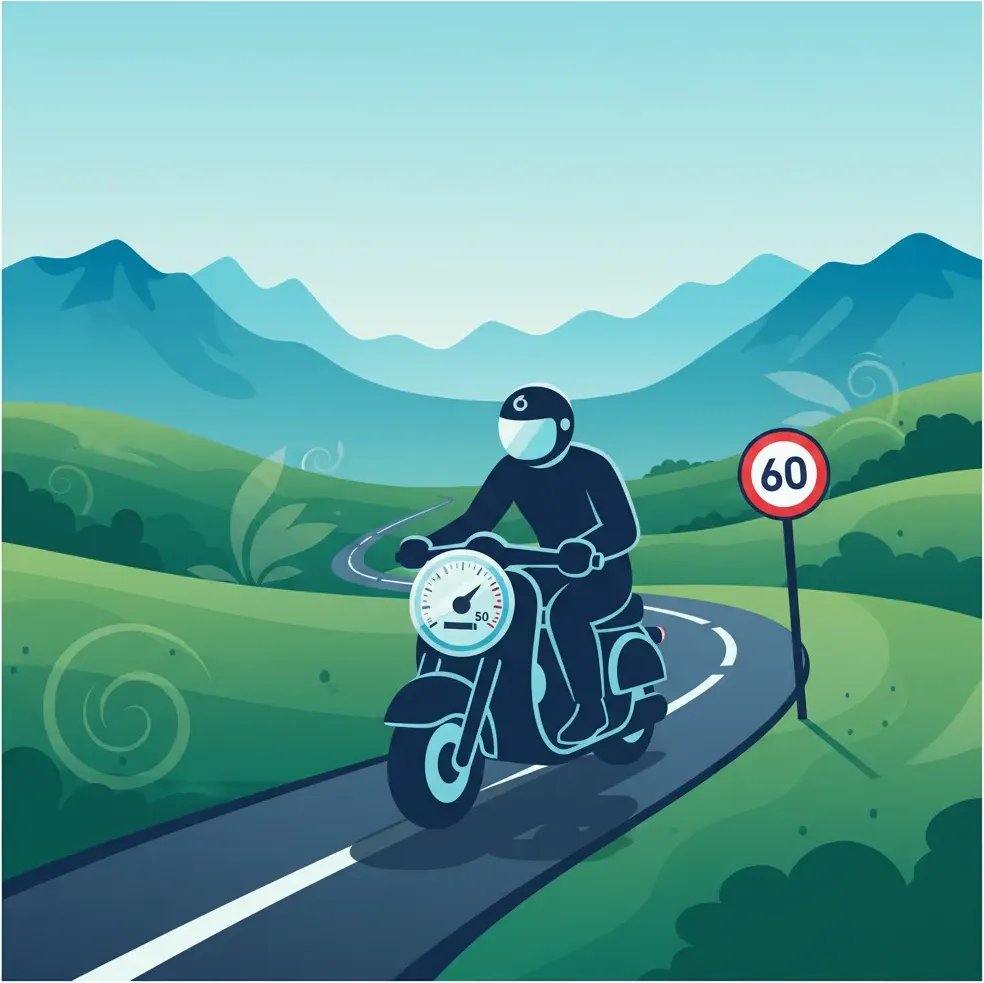
This lesson covers the statutory speed limits applicable to Category AM vehicles in various environments, from urban centers to rural roads. It emphasizes the critical importance of adapting speed to conditions such as rain, wind, or poor visibility. Riders will learn practical techniques for managing acceleration and maintaining a safe, legal speed at all times.

This lesson outlines the eligibility criteria for a Category AM license, including minimum age, residency, and health requirements. It details the application process with the Icelandic Transport Authority, covering the necessary documentation and examination stages. Learners will understand the complete pathway from application to receiving a full license, ensuring they are prepared for each step.
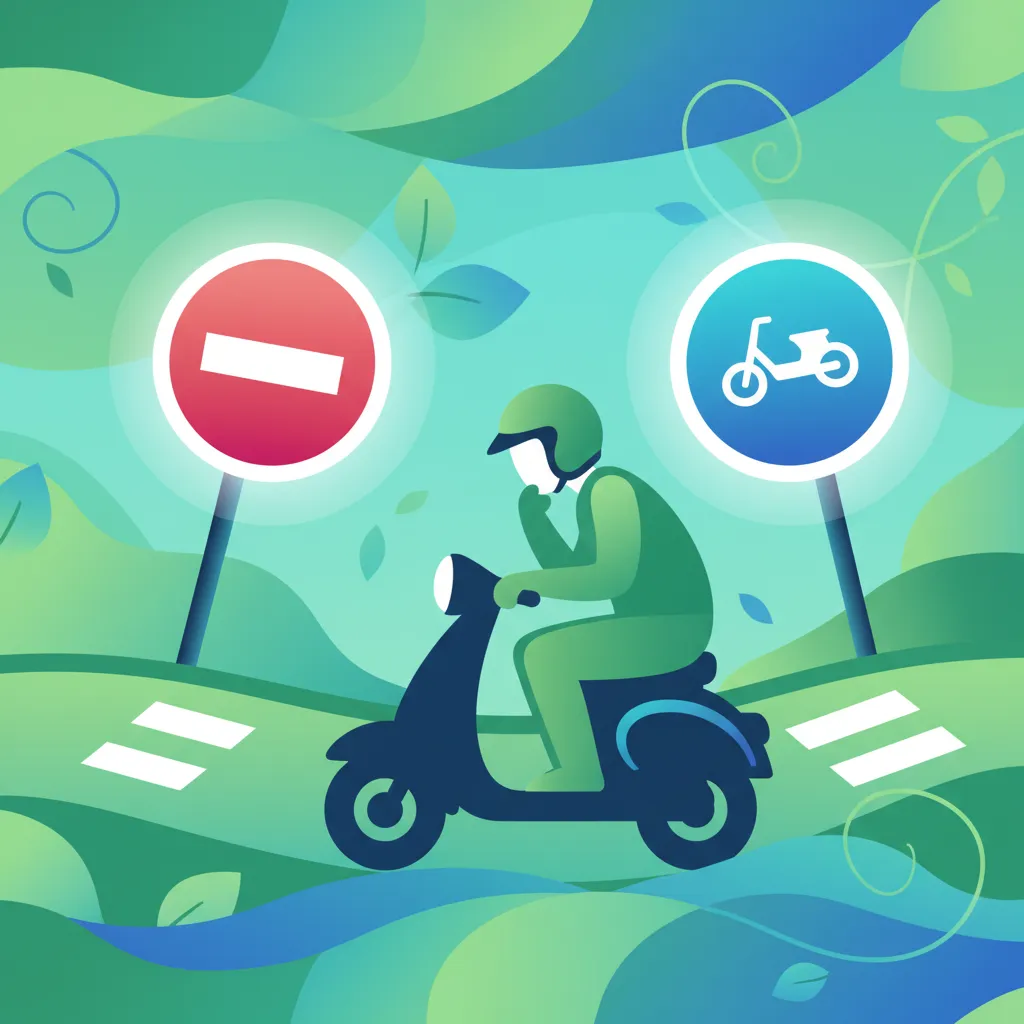
This lesson examines regulatory signs that impose legal obligations, focusing on those most relevant to moped riders like speed limits and mandatory direction signs. Learners will understand how sign shapes and colors convey specific commands or prohibitions. Attention is given to signs with vehicle-specific restrictions, ensuring riders know when rules apply directly to them.
This lesson covers the extensive obligations that come with riding a moped, emphasizing the duty of care to other road users. It details specific legal requirements, such as mandatory helmet use, adherence to speed limits, and correct signaling protocols. Understanding these responsibilities helps riders grasp the consequences of non-compliance and fosters a culture of safety on the road.
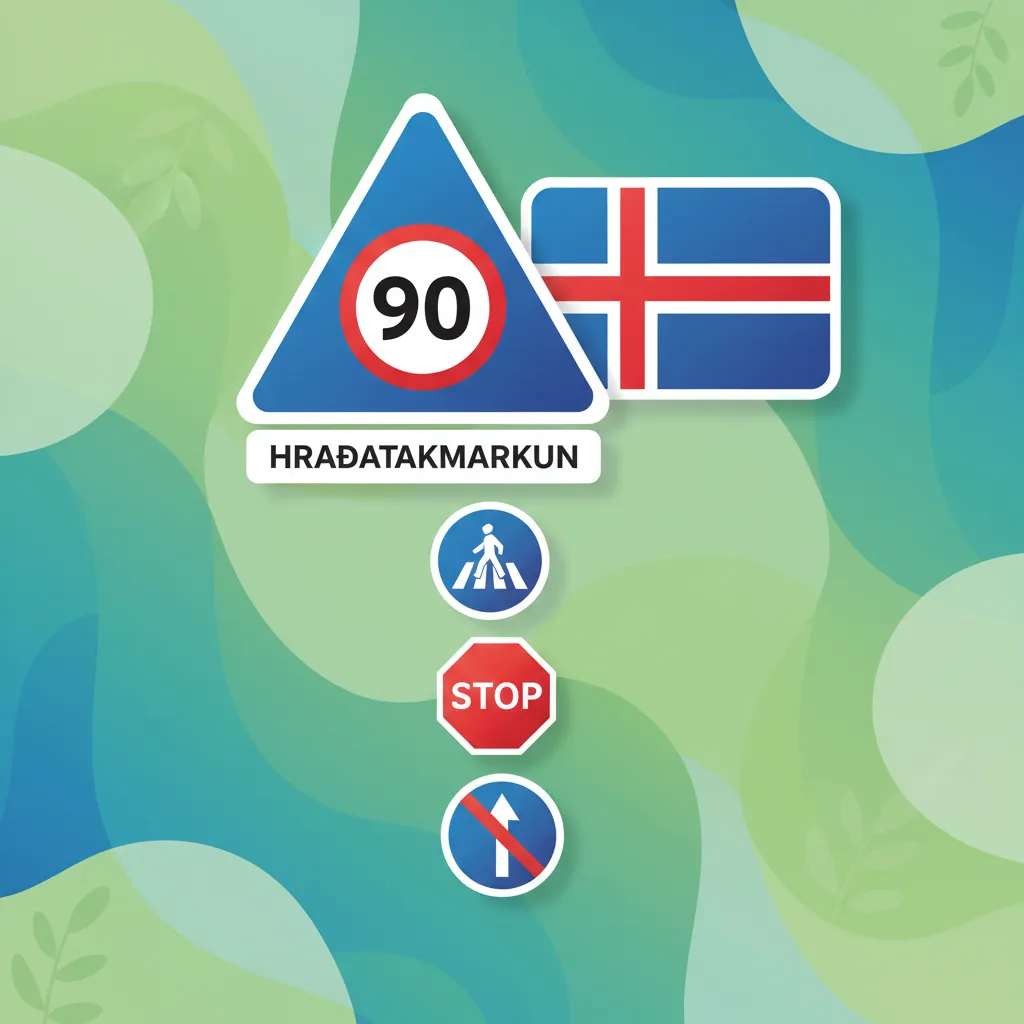
This lesson provides a contextual overview of Iceland's traffic law hierarchy, explaining how national statutes, road codes, and local rules interact. Learners will understand the precedence of national laws and how to interpret regulations in different jurisdictions. This knowledge ensures riders can correctly apply the relevant rules in any driving scenario, ensuring consistent legal compliance.
This lesson provides an overview of the legal penalties for traffic violations and outlines the correct procedures to follow after an accident. It covers how to secure an accident scene, contact emergency services using 112, and provide basic first aid. Riders will also learn about their legal obligations for reporting incidents and the initial steps for making an insurance claim.

This lesson details the legal and safety standards for moped helmets, emphasizing ECE certification and impact resistance. It provides instruction on selecting a properly fitting helmet, securing it correctly, and performing regular maintenance checks. Adhering to these guidelines is critical for head injury prevention and ensuring continuous compliance with safety regulations.

This lesson dissects the three-color traffic light system, detailing the meaning of red, amber, and green signals, including flashing lights and directional arrows. It explains how signal timing impacts moped riders and the legal requirement to obey all signals at intersections. Proper interpretation is crucial for navigating signalized junctions safely and avoiding conflicts with other traffic.

This lesson focuses on methods to enhance a rider's visibility, covering high-visibility clothing, reflective materials, and strategic lighting. Learners will understand how to use daytime running lights and position themselves to minimize time in others' blind spots. These proactive techniques are essential for being seen by other road users, significantly reducing the risk of collisions.
This lesson details how various weather conditions impact moped stability, traction, and visibility. It provides practical strategies for handling crosswinds, avoiding hydroplaning in rain, and maintaining grip on icy or snowy surfaces. Riders will learn to assess weather-related risks and adapt their speed and control inputs to navigate challenging conditions safely.
Learn the mandatory legal requirements for operating a Category AM moped in Iceland. Covers registration, compulsory insurance, helmet use, and prohibited road types, crucial for safe and legal riding.
This lesson outlines the eligibility criteria for a Category AM license, including minimum age, residency, and health requirements. It details the application process with the Icelandic Transport Authority, covering the necessary documentation and examination stages. Learners will understand the complete pathway from application to receiving a full license, ensuring they are prepared for each step.
This lesson covers the extensive obligations that come with riding a moped, emphasizing the duty of care to other road users. It details specific legal requirements, such as mandatory helmet use, adherence to speed limits, and correct signaling protocols. Understanding these responsibilities helps riders grasp the consequences of non-compliance and fosters a culture of safety on the road.
This lesson examines regulatory signs that impose legal obligations, focusing on those most relevant to moped riders like speed limits and mandatory direction signs. Learners will understand how sign shapes and colors convey specific commands or prohibitions. Attention is given to signs with vehicle-specific restrictions, ensuring riders know when rules apply directly to them.
This lesson covers the statutory speed limits applicable to Category AM vehicles in various environments, from urban centers to rural roads. It emphasizes the critical importance of adapting speed to conditions such as rain, wind, or poor visibility. Riders will learn practical techniques for managing acceleration and maintaining a safe, legal speed at all times.
This lesson details the legal and safety standards for moped helmets, emphasizing ECE certification and impact resistance. It provides instruction on selecting a properly fitting helmet, securing it correctly, and performing regular maintenance checks. Adhering to these guidelines is critical for head injury prevention and ensuring continuous compliance with safety regulations.
This lesson provides an overview of the legal penalties for traffic violations and outlines the correct procedures to follow after an accident. It covers how to secure an accident scene, contact emergency services using 112, and provide basic first aid. Riders will also learn about their legal obligations for reporting incidents and the initial steps for making an insurance claim.
This lesson provides a contextual overview of Iceland's traffic law hierarchy, explaining how national statutes, road codes, and local rules interact. Learners will understand the precedence of national laws and how to interpret regulations in different jurisdictions. This knowledge ensures riders can correctly apply the relevant rules in any driving scenario, ensuring consistent legal compliance.
This lesson explores the range of protective clothing vital for moped riders, focusing on abrasion resistance, impact protection, and weather adaptability. It covers the selection of appropriate gloves, boots, and jackets designed to mitigate injury and enhance comfort in Iceland's climate. The material explains how layering can provide both safety and insulation, allowing for safe riding in various conditions.
This lesson focuses on methods to enhance a rider's visibility, covering high-visibility clothing, reflective materials, and strategic lighting. Learners will understand how to use daytime running lights and position themselves to minimize time in others' blind spots. These proactive techniques are essential for being seen by other road users, significantly reducing the risk of collisions.
This lesson familiarizes learners with signs that warn of upcoming hazards, such as sharp curves, slippery surfaces, or animal crossings. It emphasizes the importance of early hazard recognition and response, which is especially critical for vulnerable moped riders. Understanding these signs allows riders to anticipate road conditions and adjust their riding strategy accordingly for increased safety.
Find clear answers to common questions learners have about Legal Framework for Category AM. Learn how the lesson is structured, which driving theory objectives it supports, and how it fits into the overall learning path of units and curriculum progression in Iceland. These explanations help you understand key concepts, lesson flow, and exam focused study goals.
A Category AM moped in Iceland is defined by specific technical limits, generally including an engine capacity not exceeding 50cc for internal combustion engines or a maximum power output for electric models, along with a design speed limit.
Not necessarily. Your AM license is only valid for vehicles that meet the strict criteria for a moped. If a vehicle exceeds the power, weight, or speed thresholds set by the Icelandic Transport Authority, it may be classified as a motorcycle, requiring a different license category.
The theory exam often includes questions about vehicle classifications to ensure you understand which rules apply to your specific mode of transport. Knowing these definitions helps you navigate legal requirements and ensures you avoid riding a vehicle that you are not licensed to operate.
Yes, electric mopeds are included in the Category AM framework. They must also adhere to specific power and speed limitations defined by current Icelandic road legislation to remain classified as mopeds.
Utilize our advanced practice set search to pinpoint the exact Icelandic driving theory topics you need to review. Filter by subject, difficulty, or question type to create a highly effective study plan and ensure you are fully prepared for your official driving licence test in Iceland.