
This lesson explores the unique challenges of riding a moped in Iceland’s unpredictable weather. You will learn how to adjust your riding techniques and manage risks posed by high winds, rain, and slippery winter surfaces to stay safe on the road.
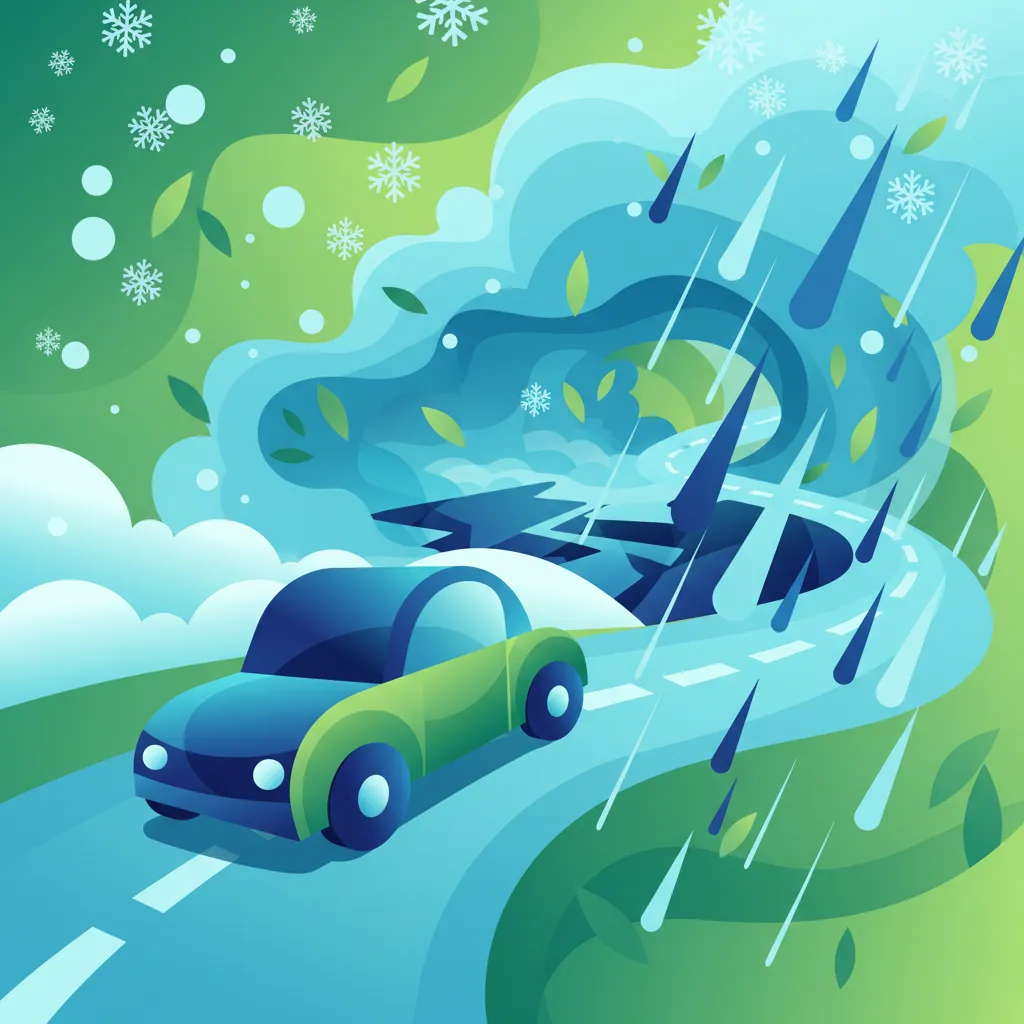
Lesson content overview
Navigating a moped, especially in a country with rapidly changing conditions like Iceland, demands a thorough understanding of how different weather elements impact your vehicle and your ability to ride safely. This lesson will equip you with the essential knowledge and practical strategies to handle wind, rain, snow, ice, and fog, ensuring you can maintain stability, traction, and visibility, and comply with Icelandic traffic regulations.
Category AM mopeds are lightweight vehicles, making them particularly susceptible to external forces such as strong winds and reduced tyre grip. Mastering how to adapt your riding technique in adverse weather is not just about comfort; it is crucial for preventing accidents, adhering to road laws, and building the confidence needed to operate your moped safely on public roads. This comprehensive guide will detail the unique challenges posed by each weather condition and outline the proactive measures every moped rider must take.
Proactive Safety: Always check the weather forecast before starting your journey and plan your route accordingly. Be prepared to delay or cancel your ride if conditions are too hazardous.
The interaction between your moped and the road, as well as the surrounding environment, changes significantly with different weather conditions. Several core principles govern these changes, directly influencing your safety.
The ratio of frictional force to the normal force between the tyre and the road surface. A higher µ means more grip, while a lower µ indicates less grip.
The traction coefficient, or µ (mu), is fundamental to understanding grip. Water, ice, and snow drastically reduce µ, leading to longer braking distances and an increased risk of skidding. This necessitates gentler inputs on the controls.
The pressure or drag exerted on a vehicle by moving air, which can affect its stability and direction.
Aerodynamic forces, particularly from wind, have a pronounced effect on lightweight mopeds. Crosswinds can push the vehicle sideways, demanding constant steering correction and reducing the vehicle's inherent stability margin. Headwinds increase drag, affecting acceleration and fuel efficiency.
The maximum distance at which a rider can clearly identify potential road hazards, other vehicles, and road markings.
Fog, heavy rain, and snow significantly reduce your visibility distance. This means you have less time to perceive and react to hazards, requiring you to reduce your speed and increase your following distance to compensate. Your ability to see and be seen by others is paramount.
The specific speed at which a layer of water on the road surface lifts the tyre off the road, causing a complete loss of steering, braking, and traction.
Hydroplaning is a critical risk on wet roads. When a moped tyre cannot displace water fast enough, a wedge of water forms under the tyre, separating it from the road. This can lead to a sudden and complete loss of control. Understanding this threshold, which depends on speed and tyre tread depth, is vital for safe riding in the rain.
The capacity of a vehicle to withstand external disturbances, such as wind gusts or uneven road surfaces, without losing control.
A moped's stability margin is inherently lower than that of larger vehicles. Adverse weather conditions further reduce this margin. For example, strong crosswinds can easily push a moped out of its lane if the rider does not actively counter the force.
Legal requirements for the use of specific vehicle lights under certain weather conditions or times of day to ensure visibility.
Icelandic traffic regulations mandate the use of lights to enhance conspicuity and visibility. Proper use of dipped beams, fog lights, and hazard warning lights is essential in conditions of reduced visibility.
Each type of adverse weather presents unique challenges for moped riders. Understanding these specifics allows for appropriate adjustments to your riding technique.
Wind, particularly strong gusts or consistent crosswinds, poses a significant threat to moped stability. Its effects are often underestimated by new riders.
Wind blowing perpendicular (from the side) to the direction of travel, creating a lateral force on the vehicle.
Crosswinds are the most dangerous type of wind for mopeds. They can push the moped sideways, potentially into another lane or off the road. Riding on coastal roads, open fields, or emerging from sheltered areas (e.g., between buildings, from underpasses) into open spaces can expose you to sudden, powerful gusts.
Wind Shear Risk: Be particularly cautious when passing large vehicles or buildings, as you might experience sudden changes in wind direction and intensity, known as wind shear, as you emerge from their slipstream.
Practical Strategies for Wind:
Rainfall, even light drizzle, dramatically alters road conditions, primarily by reducing the traction coefficient (µ) between your tyres and the road surface.
Practical Strategies for Rain:
Snow creates extremely challenging conditions, dramatically lowering the traction coefficient and often obscuring road markings and hazards.
Practical Strategies for Snow:
Ice, particularly "black ice," represents perhaps the most dangerous road condition for any vehicle, especially a moped. The traction coefficient can drop to critically low levels (0.1-0.2), offering almost no grip.
Practical Strategies for Ice:
Fog is a suspension of tiny water droplets in the air that severely reduces visual clarity and depth perception. It makes it difficult to see other vehicles, road markings, and hazards, and equally difficult for others to see you.
Practical Strategies for Fog:
Beyond specific weather conditions, there are overarching strategies and legal requirements that apply across all challenging environments.
On wet, snowy, or icy surfaces, the interaction between your tyres and the road is severely compromised. This demands a change in your braking technique.
Adjusting your speed to match current weather and road conditions is the most fundamental safety principle in adverse weather.
"Always be able to stop within the visible clear distance ahead." This fundamental rule is paramount in fog, heavy rain, and snow.
Ensuring you can see and are seen by other road users is vital, especially when visibility is naturally reduced.
Adherence to specific Icelandic traffic laws and regulations is paramount for safe moped operation in challenging weather.
Being aware of common errors can help you proactively prevent dangerous situations.
How weather impacts your ride also depends on various other factors.
Let's consider some real-world situations to illustrate the application of these principles.
Setting: You are riding your Category AM moped on a two-lane coastal road in Iceland. The weather forecast indicates strong crosswinds of 25 km/h, but the road surface is dry.
Decision Point: How do you handle the crosswind to maintain control and safety?
Correct Action: Reduce your speed significantly, perhaps to 35 km/h, and lean slightly into the wind to counteract the lateral force. Maintain a flexible grip on the handlebars and increase your following distance from other vehicles. Be extra vigilant for sudden gusts, especially when passing gaps in land features or large vehicles.
Incorrect Action: Maintaining your normal speed and rigid posture, expecting the moped to remain stable. This could lead to the moped being pushed sideways, causing you to drift into the opposite lane or off the road.
Setting: You are riding your moped on a city main road in Reykjavík. The speed limit is 50 km/h, and a moderate to heavy rain shower begins.
Decision Point: What adjustments should you make to your lighting and speed?
Correct Action: Immediately turn on your headlights and use your low beams. Reduce your speed to about 35 km/h (a 30% reduction from the limit). Increase your following distance to at least 4 seconds. Apply all braking, acceleration, and steering inputs gently and progressively to avoid skidding.
Incorrect Action: Continuing to ride at 50 km/h with headlights off, assuming the rain isn't heavy enough to warrant changes. This significantly increases your braking distance and makes you less visible to other traffic.
Setting: You are on a rural gravel road in the Icelandic countryside. It has recently snowed, leaving a 10 cm layer of fresh powder snow. The speed limit is 80 km/h.
Decision Point: How do you manage traction and speed in these challenging conditions?
Correct Action: First, ensure your moped is fitted with mandatory winter tyres. Reduce your speed drastically, perhaps to 30-40 km/h or even slower, depending on the snow depth and your comfort level. Avoid any abrupt acceleration, braking, or steering. Maintain a very light throttle and use engine braking gently. Be prepared to dab your feet on the ground for balance if needed.
Incorrect Action: Attempting to accelerate rapidly to overtake another vehicle or maintain a higher speed. This will almost certainly result in a loss of traction, causing the wheels to spin or skid.
Setting: You are riding on an Icelandic highway (e.g., Route 1) when dense fog suddenly rolls in, reducing visibility to approximately 40 metres. There is also a light drizzle.
Decision Point: What lighting should you use, and how should you adapt your speed and following distance?
Correct Action: Immediately switch on your low beams (if not already on) and activate your fog lights. Increase your following distance to at least 5 seconds, possibly more. Reduce your speed significantly so that you can stop within the visible distance ahead (e.g., if you can only see 40 metres, you must be able to stop in less than that). Avoid using high beams, as they will cause glare.
Incorrect Action: Using high beams, following too closely at 3 seconds, or maintaining a high speed. High beams will blind you with reflected light, and insufficient following distance combined with high speed in fog is extremely dangerous.
Setting: It's an early morning in winter, temperature -2 °C. As you approach a bridge over a river, you notice a thin, shimmering layer on the road surface, indicating black ice.
Decision Point: What is the safest course of action regarding speed, braking, and overtaking?
Correct Action: Do not attempt to overtake any vehicle on the bridge. Reduce your speed to an absolute crawl (e.g., 20-30 km/h) before reaching the ice, if possible. Once on the ice, maintain a perfectly straight line, avoid any braking or steering inputs, and keep your body relaxed. If you must slow down, use extremely gentle engine braking. If a skid occurs, try to steer gently into it without sudden movements.
Incorrect Action: Attempting to overtake another vehicle at normal speed on the bridge, or applying brakes abruptly upon seeing the ice. Both actions will almost certainly lead to a complete loss of control and a fall.
Mastering safe riding in various weather conditions is fundamental for any Category AM moped rider in Iceland. The core principles revolve around understanding how weather affects traction, stability, and visibility.
By internalizing these lessons and consistently applying safe riding behaviours, you will be well-prepared to navigate Iceland's diverse and often challenging weather, ensuring your safety and the safety of others on the road.
This lesson covers safe moped riding in Iceland's challenging weather, addressing wind, rain, snow, ice, and fog. Key technical concepts include the traction coefficient (µ), aerodynamic forces, hydroplaning threshold, and stability margin. Iceland mandates headlights at all times, low beams when visibility is below 100 metres, and winter tyres from November through April. Speed must be reduced by at least 20% on wet roads and 30% on snowy roads, with icy conditions requiring speeds below 30 km/h or no riding. High beams are prohibited in fog, overtaking on icy bridges is forbidden, and riders must always be able to stop within their visible range.
A short set of high-value points that capture the most important learning from this lesson.
Weather drastically reduces tyre grip: wet roads require at least 20% speed reduction, snowy roads 30%, and icy roads demand speeds below 30 km/h or no riding at all.
Headlights are legally mandatory at all times in Iceland regardless of weather or daylight conditions (§59), and low beams must be used when visibility drops below 100 metres.
Black ice is nearly invisible and forms most commonly on bridges, shaded areas, and near water; it can cause instant loss of traction with no recovery possible.
Strong crosswinds can push lightweight mopeds sideways, especially when passing large vehicles or emerging from sheltered areas into open spaces.
Hydroplaning occurs when tyre speed exceeds the rate at which water can be displaced; reducing speed below the hydroplaning threshold is the only effective prevention.
Explore all units and lessons included in this driving theory course.
The traction coefficient (µ) drops dramatically on wet, snowy, or icy surfaces, requiring gentler control inputs and longer stopping distances.
Use low beams (not high beams) in fog, rain, and snow; high beams cause dangerous glare by reflecting off water droplets.
Winter tyres are mandatory for mopeds in Iceland from November 1 to April 30 (§71).
Overtaking on icy bridges is prohibited unless you can see at least 30 metres ahead (§73).
Always be able to stop within your visible clear distance ahead—this is the fundamental safety rule in all reduced-visibility conditions.
Continuing at normal speed in wet, snowy, or icy conditions, which dramatically increases stopping distance and skid risk.
Using high beams in fog or heavy rain, which creates blinding glare and worsens visibility for both the rider and oncoming traffic.
Relying solely on ABS to prevent skids on ice; ABS prevents wheel lock-up but cannot create traction that does not exist.
Riding with worn tyres in winter or heavy rain, dramatically increasing hydroplaning risk and reducing grip on all surfaces.
Applying brakes or steering abruptly on slippery surfaces, which almost guarantees a loss of traction and a fall.
Lesson content overview
A short set of high-value points that capture the most important learning from this lesson.
Weather drastically reduces tyre grip: wet roads require at least 20% speed reduction, snowy roads 30%, and icy roads demand speeds below 30 km/h or no riding at all.
Headlights are legally mandatory at all times in Iceland regardless of weather or daylight conditions (§59), and low beams must be used when visibility drops below 100 metres.
Black ice is nearly invisible and forms most commonly on bridges, shaded areas, and near water; it can cause instant loss of traction with no recovery possible.
Strong crosswinds can push lightweight mopeds sideways, especially when passing large vehicles or emerging from sheltered areas into open spaces.
Hydroplaning occurs when tyre speed exceeds the rate at which water can be displaced; reducing speed below the hydroplaning threshold is the only effective prevention.
Explore all units and lessons included in this driving theory course.
The traction coefficient (µ) drops dramatically on wet, snowy, or icy surfaces, requiring gentler control inputs and longer stopping distances.
Use low beams (not high beams) in fog, rain, and snow; high beams cause dangerous glare by reflecting off water droplets.
Winter tyres are mandatory for mopeds in Iceland from November 1 to April 30 (§71).
Overtaking on icy bridges is prohibited unless you can see at least 30 metres ahead (§73).
Always be able to stop within your visible clear distance ahead—this is the fundamental safety rule in all reduced-visibility conditions.
Continuing at normal speed in wet, snowy, or icy conditions, which dramatically increases stopping distance and skid risk.
Using high beams in fog or heavy rain, which creates blinding glare and worsens visibility for both the rider and oncoming traffic.
Relying solely on ABS to prevent skids on ice; ABS prevents wheel lock-up but cannot create traction that does not exist.
Riding with worn tyres in winter or heavy rain, dramatically increasing hydroplaning risk and reducing grip on all surfaces.
Applying brakes or steering abruptly on slippery surfaces, which almost guarantees a loss of traction and a fall.
Explore search topics learners often look for when studying Weather Impacts: Wind, Rain, Snow, Ice, and Fog. These topics reflect common questions about road rules, driving situations, safety guidance, and lesson level theory preparation for learners in Iceland.
Browse additional driving theory lessons that cover connected traffic rules, road signs, and common driving situations related to this topic. Improve your understanding of how different rules interact across everyday traffic scenarios.
Learn advanced strategies for maintaining stability and control on your moped during severe Icelandic weather, including strong winds, ice, snow, and fog. This lesson details advanced rider responses and vehicle management for challenging conditions.
This lesson explores the range of protective clothing vital for moped riders, focusing on abrasion resistance, impact protection, and weather adaptability. It covers the selection of appropriate gloves, boots, and jackets designed to mitigate injury and enhance comfort in Iceland's climate. The material explains how layering can provide both safety and insulation, allowing for safe riding in various conditions.
This lesson focuses on the specific challenges of riding on gravel and uneven rural roads. It teaches techniques for maintaining stability and traction on loose surfaces, including speed management, body positioning, and gentle control inputs. Understanding how to handle these conditions is essential for safely exploring areas outside of main urban centers in Iceland.
This lesson addresses the unique challenges of riding at night, including reduced visibility and altered depth perception. It covers the correct use of lighting systems, the critical role of reflective gear, and strategies to maximize conspicuity. Riders will also learn to identify hazards specific to low-light conditions, such as animals or unlit obstacles on the road.
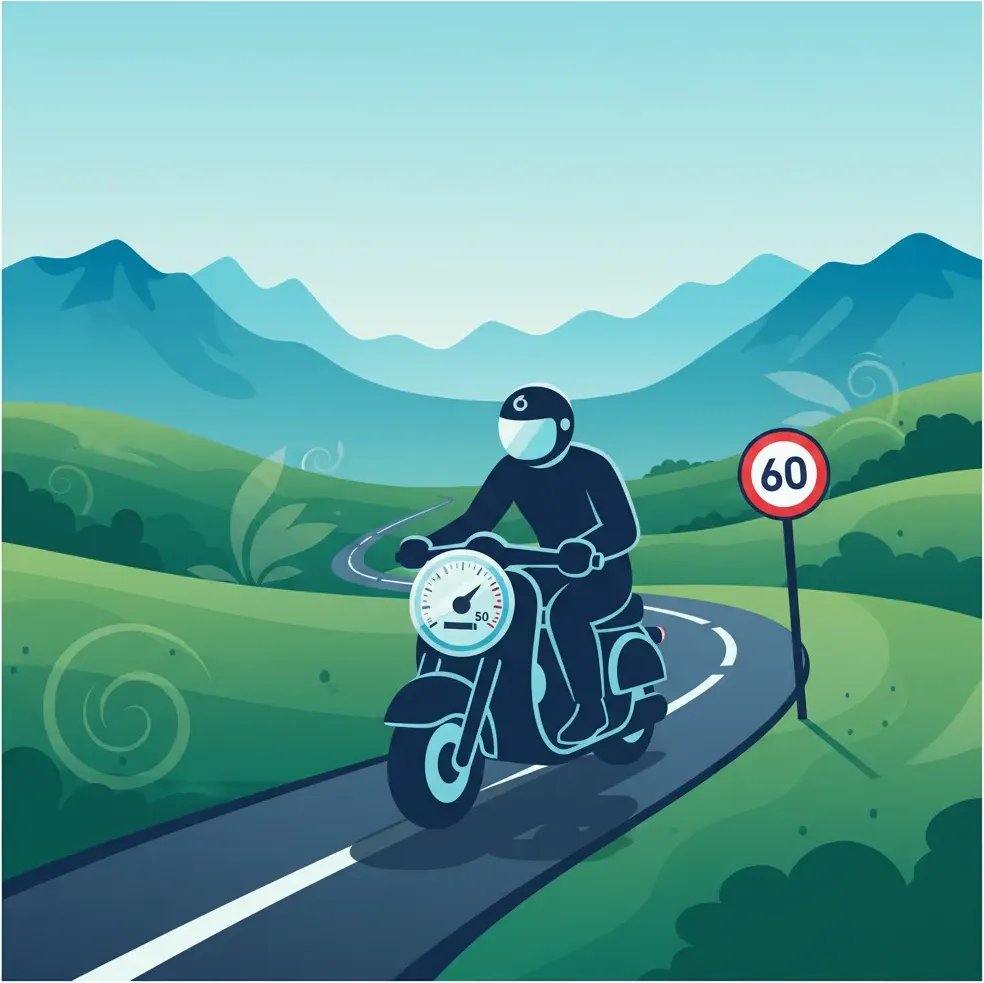
This lesson covers the statutory speed limits applicable to Category AM vehicles in various environments, from urban centers to rural roads. It emphasizes the critical importance of adapting speed to conditions such as rain, wind, or poor visibility. Riders will learn practical techniques for managing acceleration and maintaining a safe, legal speed at all times.
This lesson examines the psychological factors crucial for safe riding, promoting a defensive mindset and heightened risk awareness. It provides strategies for managing stress, identifying potential hazards early, and making proactive decisions to prevent dangerous situations. Cultivating mental discipline and a safety-conscious attitude is fundamental to long-term rider safety on Icelandic roads.

This lesson focuses on methods to enhance a rider's visibility, covering high-visibility clothing, reflective materials, and strategic lighting. Learners will understand how to use daytime running lights and position themselves to minimize time in others' blind spots. These proactive techniques are essential for being seen by other road users, significantly reducing the risk of collisions.
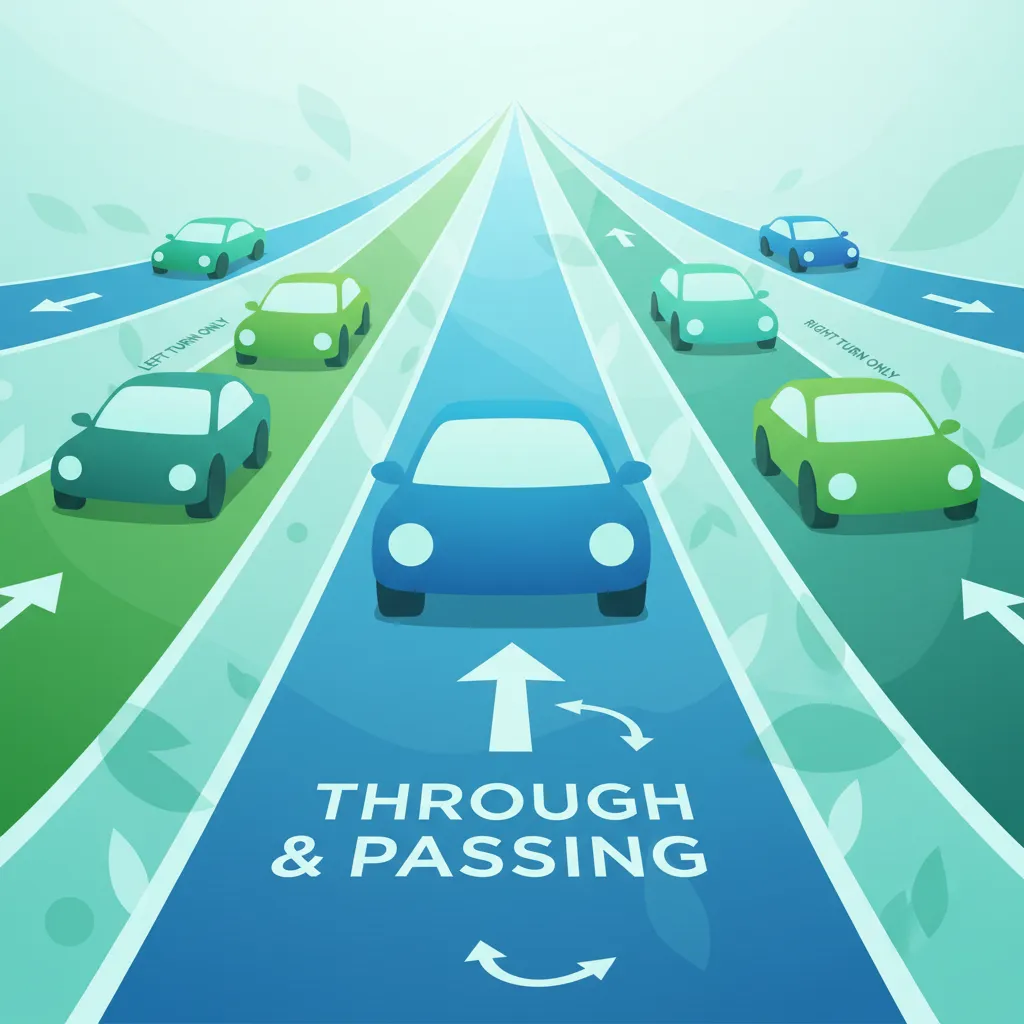
This lesson outlines best practices for positioning a moped on urban roads to maximize visibility and safety. It explains how to choose a lane position that makes you visible to drivers ahead and behind, while avoiding road debris and dooring hazards from parked cars. The content addresses adapting your position based on traffic speed, density, and road conditions.
This lesson examines the specific techniques required for safe driving on snow-covered or icy roads in Iceland, covering the mandatory use of winter tires and the operation of anti-lock braking systems. Learners will study optimal low-speed cornering, proper braking distances on ice, and how to recover from a skid safely. By mastering these techniques, drivers can maintain control in challenging winter conditions and significantly reduce the risk of accidents on slippery surfaces.
This lesson covers the extensive obligations that come with riding a moped, emphasizing the duty of care to other road users. It details specific legal requirements, such as mandatory helmet use, adherence to speed limits, and correct signaling protocols. Understanding these responsibilities helps riders grasp the consequences of non-compliance and fosters a culture of safety on the road.
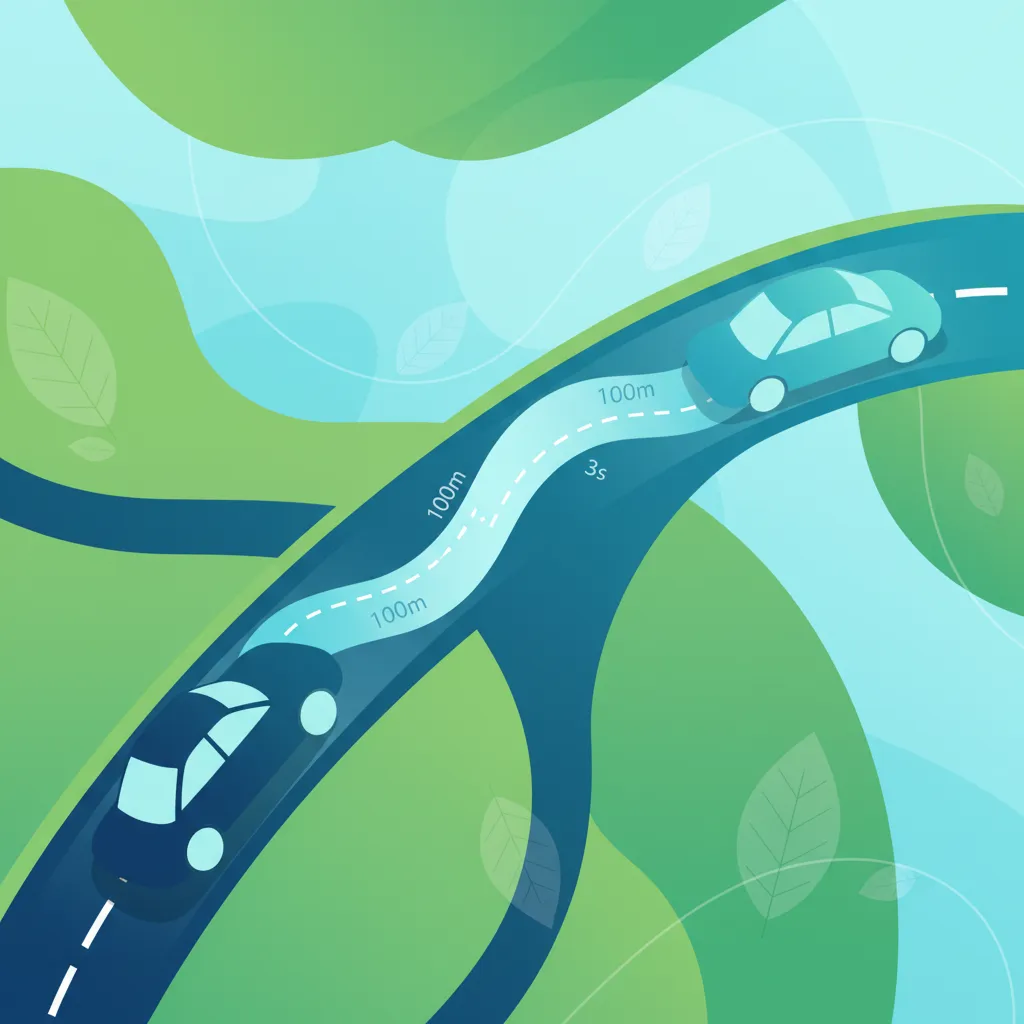
This lesson focuses on the concept of maintaining a safe following distance using the time-gap method. It explains how to create a sufficient buffer zone to react to sudden stops by the vehicle ahead. Riders will learn to adjust this gap based on speed, weather, and visibility to prevent rear-end collisions and ensure adequate reaction time.
Understand the critical importance of visibility and correct lighting usage for moped riders in Iceland's challenging weather. This lesson covers legal requirements and practical tips for seeing and being seen in rain, fog, snow, and darkness.
This lesson focuses on methods to enhance a rider's visibility, covering high-visibility clothing, reflective materials, and strategic lighting. Learners will understand how to use daytime running lights and position themselves to minimize time in others' blind spots. These proactive techniques are essential for being seen by other road users, significantly reducing the risk of collisions.
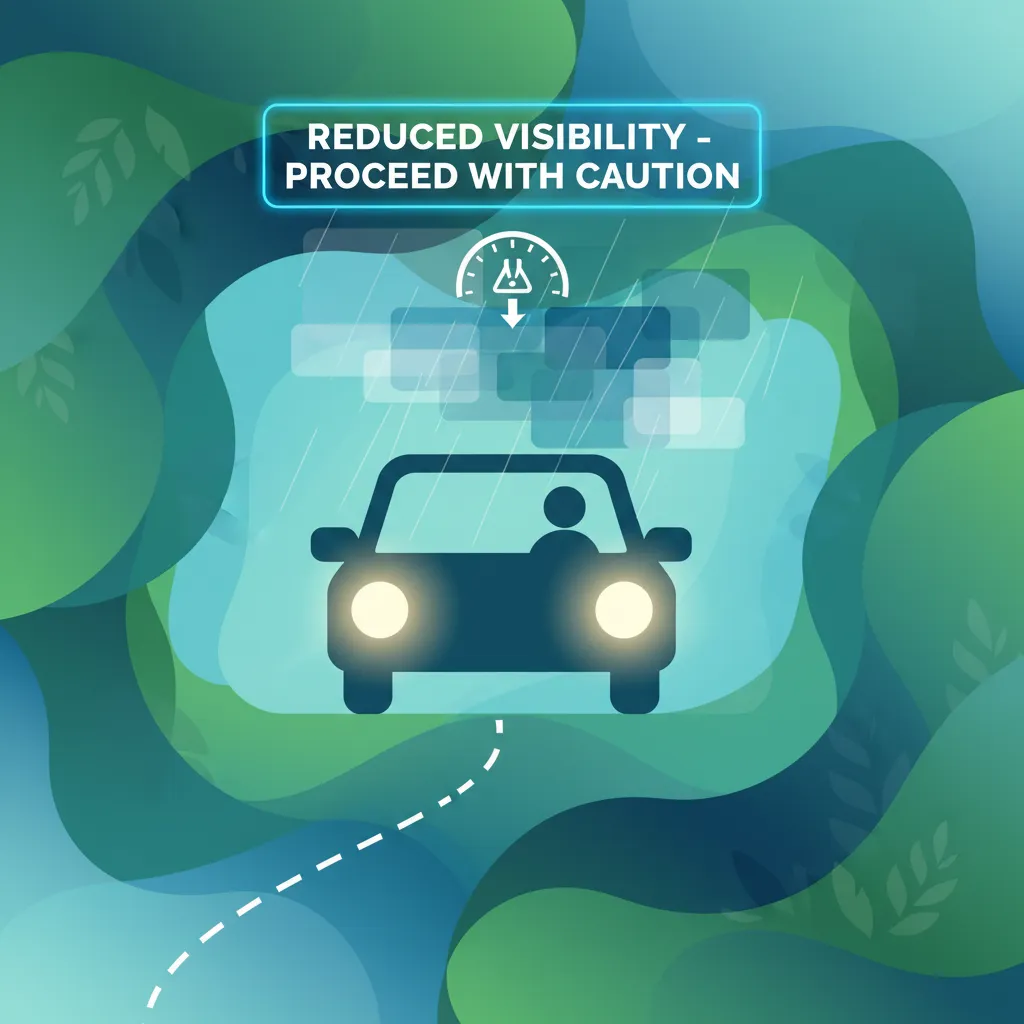
This lesson addresses the challenges of driving in rain and fog, focusing on strategies to maintain visibility and vehicle control. Learners will explore the correct use of windshield wipers, defoggers, and appropriate headlight settings, including when to use fog lights. The content also covers the increased risk of hydroplaning, the importance of adjusting speed in wet conditions, and the need to extend following distances to account for longer stopping distances.
This lesson addresses the unique challenges of riding at night, including reduced visibility and altered depth perception. It covers the correct use of lighting systems, the critical role of reflective gear, and strategies to maximize conspicuity. Riders will also learn to identify hazards specific to low-light conditions, such as animals or unlit obstacles on the road.
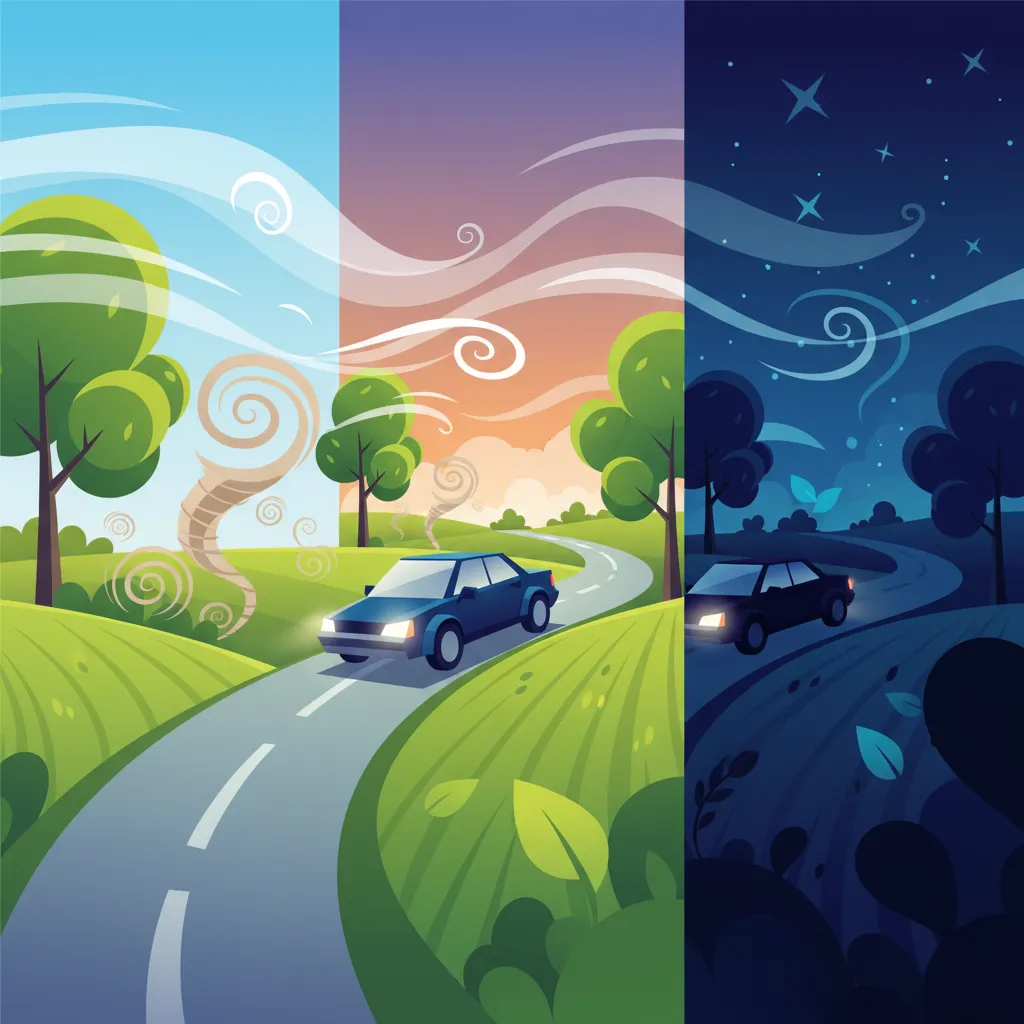
This lesson examines how strong winds and varying light conditions affect vehicle handling and safety, including techniques for maintaining stability under cross-winds and assessing gust intensity. The content also explains proper headlight usage during daylight, dusk, and nighttime, addressing glare reduction strategies and when to employ high-beam headlights. By mastering these concepts, drivers can navigate Icelandic weather and lighting challenges confidently and safely.
This lesson covers the statutory speed limits applicable to Category AM vehicles in various environments, from urban centers to rural roads. It emphasizes the critical importance of adapting speed to conditions such as rain, wind, or poor visibility. Riders will learn practical techniques for managing acceleration and maintaining a safe, legal speed at all times.

This lesson dissects the three-color traffic light system, detailing the meaning of red, amber, and green signals, including flashing lights and directional arrows. It explains how signal timing impacts moped riders and the legal requirement to obey all signals at intersections. Proper interpretation is crucial for navigating signalized junctions safely and avoiding conflicts with other traffic.
This lesson outlines best practices for positioning a moped on urban roads to maximize visibility and safety. It explains how to choose a lane position that makes you visible to drivers ahead and behind, while avoiding road debris and dooring hazards from parked cars. The content addresses adapting your position based on traffic speed, density, and road conditions.
This lesson familiarizes learners with signs that warn of upcoming hazards, such as sharp curves, slippery surfaces, or animal crossings. It emphasizes the importance of early hazard recognition and response, which is especially critical for vulnerable moped riders. Understanding these signs allows riders to anticipate road conditions and adjust their riding strategy accordingly for increased safety.
This lesson examines the psychological factors crucial for safe riding, promoting a defensive mindset and heightened risk awareness. It provides strategies for managing stress, identifying potential hazards early, and making proactive decisions to prevent dangerous situations. Cultivating mental discipline and a safety-conscious attitude is fundamental to long-term rider safety on Icelandic roads.
This lesson examines regulatory signs that impose legal obligations, focusing on those most relevant to moped riders like speed limits and mandatory direction signs. Learners will understand how sign shapes and colors convey specific commands or prohibitions. Attention is given to signs with vehicle-specific restrictions, ensuring riders know when rules apply directly to them.
Find clear answers to common questions learners have about Weather Impacts: Wind, Rain, Snow, Ice, and Fog. Learn how the lesson is structured, which driving theory objectives it supports, and how it fits into the overall learning path of units and curriculum progression in Iceland. These explanations help you understand key concepts, lesson flow, and exam focused study goals.
You must reduce your speed significantly, especially when passing larger vehicles or exiting tunnels, as these create sudden changes in wind pressure that can push a lightweight moped off-course.
The primary risk is a loss of traction leading to hydroplaning or skidding. You should avoid sudden braking or aggressive turning and ensure your tires have sufficient tread depth.
While technically legal if the vehicle is equipped for it, it is extremely dangerous due to the lack of stability. In the Icelandic theory exam, you are expected to know that choosing not to ride in severe winter conditions is the safest and most responsible decision.
In fog, your visibility is drastically reduced, making it harder to see road markings and other vehicles. You must decrease your speed to ensure you can stop within the distance you can clearly see ahead.
Utilize our advanced practice set search to pinpoint the exact Icelandic driving theory topics you need to review. Filter by subject, difficulty, or question type to create a highly effective study plan and ensure you are fully prepared for your official driving licence test in Iceland.