
As a moped rider in Iceland, understanding how to act after an accident and the consequences of traffic violations is crucial. This lesson in the AM license theory course focuses on exactly that. It builds upon previous units by preparing you for critical real-world situations and specific exam topics related to legal obligations and emergency response.
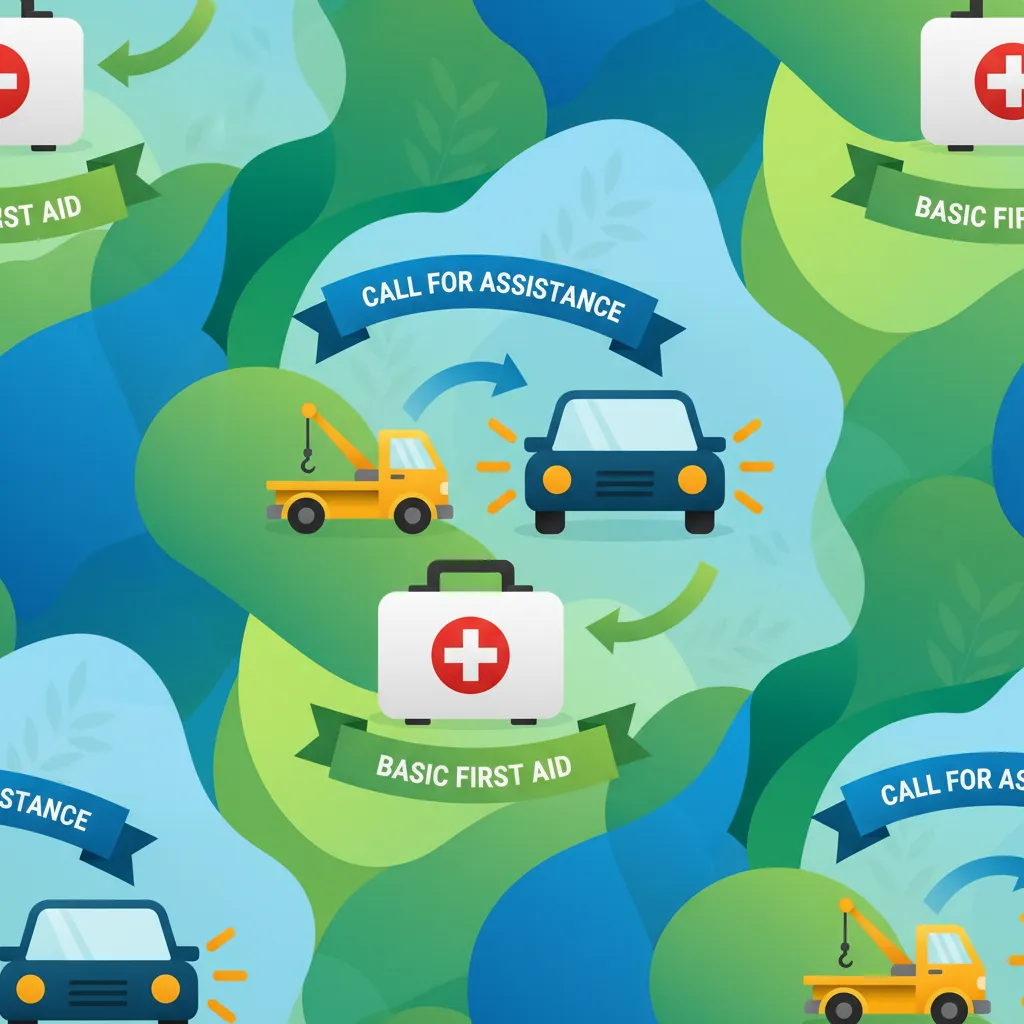
Lesson content overview
Riding a moped in Iceland, while offering freedom and efficiency, comes with significant legal responsibilities. This comprehensive lesson is designed to equip you with essential knowledge regarding traffic penalties, proper accident procedures, emergency response protocols, and basic first aid. Understanding these critical areas is not only crucial for avoiding legal consequences but also for ensuring your safety and the well-being of others on the road.
Navigating the complexities of Icelandic traffic law, knowing how to react immediately after an incident, and being prepared to offer basic medical assistance are vital skills for every Category AM moped rider. This knowledge reinforces lawful behavior, minimizes injury severity in accidents, and protects your legal rights, including insurance claims.
Operating a Category AM moped in Iceland requires adherence to specific traffic laws, and violations can lead to various penalties. These penalties are designed to deter unsafe behavior, maintain road order, and ensure accountability among all road users. Common infractions for moped riders can result in financial fines, demerit points on your license, and in more severe cases, license suspension. It is important to remember that even minor infractions can accumulate and impact your driving privileges.
The maximum speed limit for Category AM mopeds on public roads in Iceland is generally 45 km/h, unless otherwise indicated by road signs. Exceeding this limit, even by a small margin, constitutes a speeding violation. Icelandic traffic law imposes a predefined penalty schedule for speeding, with fines increasing significantly for higher speeds over the limit. For instance, a minor speed overrun might incur a 10% fine of the base amount, while more significant excesses will lead to substantially higher penalties. Always observe posted speed limits and adjust your speed to conditions, even if they are below the maximum allowed.
Wearing an approved helmet is a non-negotiable legal requirement for all moped riders and passengers in Iceland. This rule is enshrined in Icelandic Road Traffic Law (§84) and is strictly enforced. The purpose of this regulation is paramount: to protect riders from severe head injuries in the event of a fall or collision. Failure to wear an approved helmet will result in a significant fine. Even momentarily removing your helmet while stopped at a traffic light or for a short distance can lead to penalties, as the rule applies whenever the vehicle is in motion.
Driving under the influence of alcohol or drugs is a serious offense with severe consequences, irrespective of the vehicle type. For Category AM moped riders in Iceland, the Blood-Alcohol Concentration (BAC) limit is exceptionally strict, set at 0.02%. This low threshold reflects the heightened vulnerability of moped riders and the significant impairment that even small amounts of alcohol can cause to reaction time, judgment, and coordination. Violations of this limit lead to heavy fines, demerit points, and potential license suspension or revocation. It is always safest to avoid alcohol entirely if you plan to ride.
Moped riders must adhere to specific rules regarding lane usage and road positioning. Riding on sidewalks, pedestrian zones, or designated bicycle paths where prohibited constitutes a violation. These rules are in place to ensure the safety of pedestrians and cyclists and to maintain orderly traffic flow. Mopeds are generally expected to use the main carriageway, often positioned to allow other traffic to pass safely, adhering to the principles discussed in earlier lessons on road positioning.
Iceland operates a demerit points system for traffic offenses. Accumulating a certain number of demerit points within a specified period can lead to a temporary or permanent suspension of your driving license. This system acts as an additional deterrent, encouraging riders to maintain a clean driving record and adhere consistently to traffic laws. Each violation, depending on its severity, adds a specific number of points to your record.
In the unfortunate event of a moped accident, your immediate actions are critical for preventing further hazards, protecting yourself and others, and preserving evidence. Securing the accident scene is the first and most vital step.
As soon as an accident occurs and your moped is safely brought to a stop, or if it is immobilised in a dangerous position, immediately activate your hazard warning lights. These flashing lights alert other drivers to a potential obstruction or hazard ahead, significantly reducing the risk of secondary collisions, especially in low visibility conditions or at high-speed locations.
If your moped is immobilised and obstructs traffic, you are legally required to place a warning triangle. The placement distance is crucial:
This distance provides oncoming traffic with sufficient time to react and maneuver safely around the obstruction. Always ensure you place the triangle in a way that is visible to other road users, considering bends, hills, and other visual impediments.
After an accident, your personal safety should be a top priority.
Move yourself and any injured parties to a safe location, if possible, away from the flow of traffic, but only if moving them does not risk worsening their injuries (e.g., suspected spinal injury).
Turn off your moped's engine to prevent fire hazards.
If it is dark or visibility is poor, wear reflective clothing if you have it, and use a flashlight if available, to make yourself more visible to other drivers.
Assess the situation for any immediate dangers, such as fuel leaks or fire, and act accordingly.
In Iceland, 112 is the national emergency telephone number for immediate assistance from police, fire, or medical services. Knowing when and how to contact 112 is a critical skill that can save lives.
You are legally obligated to call 112 in the event of an accident under specific circumstances:
Even for seemingly minor incidents, if there's any doubt about injuries or the extent of damage, it is always safer to call 112 and let professionals assess the situation.
When you call 112, the dispatcher will ask for specific information to ensure the correct emergency services are dispatched promptly.
Exact Location: Provide the most precise location possible. This includes the road name, street number, nearest intersection, or any visible landmarks. If on a rural road, look for kilometer markers or distinctive features.
Nature of Incident: Clearly state that it is a "moped accident."
Number of Vehicles/Persons Involved: Indicate how many mopeds, cars, or other vehicles are involved, and how many people are affected.
Presence of Injured Persons: State clearly if there are any injured persons, how many, and if possible, a brief description of their condition (e.g., "unconscious," "bleeding," "complaining of severe pain").
Any Immediate Dangers: Report any additional hazards such as fire, spilled fuel, or broken glass.
Your Contact Details: Provide your name and phone number.
Follow Dispatcher Instructions: Stay on the line if requested and follow any instructions given by the dispatcher until emergency personnel arrive. They may guide you on how to provide initial assistance.
As a moped rider, you might be the first person on the scene of an accident, whether you are directly involved or a witness. Knowing basic first aid can make a critical difference in the outcome for an injured person before professional medical help arrives. Your duty to render assistance is not just ethical, but also legally encouraged in Iceland, provided it does not endanger yourself.
The absolute priority in any medical emergency is ensuring an open airway and effective breathing.
Check for Consciousness: Gently try to rouse the person.
Check for Breathing: Look, listen, and feel for breathing. Look for chest movement, listen for breath sounds, and feel for air on your cheek for about 10 seconds.
Open Airway (if unconscious and not breathing normally): If the person is unconscious and not breathing normally, perform a head-tilt, chin-lift maneuver. Gently tilt their head back and lift their chin to open the airway.
External bleeding can be severe and life-threatening. Prompt control is essential.
Direct Pressure: Apply firm, direct pressure to the wound using a clean cloth, bandage, or even your hand. Maintain continuous pressure.
Elevate: If possible and if no fracture is suspected, elevate the injured limb above the level of the heart to help reduce blood flow.
Tourniquet (Last Resort): A tourniquet should only be used as a last resort for severe, uncontrollable bleeding from a limb when direct pressure and elevation are ineffective, and medical help is not immediately available. Incorrect application can cause significant harm.
Any impact to the head, neck, or back in an accident should raise suspicion of a spinal injury.
If a spinal or neck injury is suspected, do not move the injured person unless they are in immediate danger (e.g., fire, oncoming traffic). Any unnecessary movement could worsen the injury.
Instead, try to keep their head and neck as still as possible until emergency services arrive. You can gently support the head and neck in the position you find it, if safe to do so.
If an injured person is unconscious but breathing normally, place them in the recovery position. This position helps to keep their airway open and prevents them from choking on vomit or fluids.
Shock is a life-threatening condition that can occur after any severe injury or trauma.
Keep Warm: Cover the person with a blanket or coat to prevent heat loss.
Comfort and Reassure: Speak calmly to the person and try to keep them as comfortable as possible.
Elevate Legs (if no spinal injury): If their injuries permit and there is no suspected spinal injury, gently raise their legs about 15-30 cm to improve blood flow to the brain.
Do Not Give Food or Drink: Do not give an injured or shocked person anything to eat or drink.
After an accident, in addition to immediate emergency response, you have legal obligations to report the incident to both the police and your insurance provider. Timely and accurate reporting is crucial for legal investigation, liability determination, and the processing of any insurance claims.
In Iceland, any accident resulting in personal injury, death, or significant property damage exceeding a specific monetary threshold (e.g., 500,000 ISK) must be reported to the police. This report should typically be filed within 24 hours of the accident, as stipulated by Section 149 of the Road Traffic Act. Even if no one appears injured at the scene, but pain or symptoms develop later, a police report might become necessary. Failure to report a mandatory accident can lead to fines and legal complications.
You are also legally obliged to notify your insurance company about an accident. The timeframe for this notification is usually quite strict:
Check your specific insurance policy for the exact terms. Delaying notification can potentially invalidate your claim or lead to difficulties in obtaining compensation for damages or medical expenses. Even if you initially believe the damage is minor, it is prudent to inform your insurer.
Filing an insurance claim after a moped accident is a procedural process designed to facilitate compensation for damages and medical expenses covered under your policy. Understanding this process ensures you receive fair treatment and that your claim is processed efficiently.
To successfully process an insurance claim, you will need to gather and submit various pieces of documentation. This typically includes:
Thorough documentation is key to supporting your claim.
Once you have gathered all necessary documentation, you will typically submit your claim through your insurer's online portal or by filling out a physical claim form within their specified timeframe.
Submit Claim: Provide all required information and attach your supporting documents.
Cooperate with Adjuster: An insurance adjuster will be assigned to your case to evaluate the circumstances of the accident, determine liability, and assess the extent of the damage or injuries. Be prepared to answer questions and provide further details if requested.
Assessment and Payout: The adjuster will then determine the claim's validity and the appropriate compensation, adhering to your policy's terms and coverage limits.
It is important to understand that insurance policies have coverage limits and exclusions. Not all damages may be automatically covered, and the payout will depend on the specifics of your policy and the outcome of the liability assessment.
To reinforce the core principles, here's a summary of key rules directly affecting Category AM riders and the implications of their violation.
Understanding how common violations and specific scenarios play out can help you avoid pitfalls.
Scenario: Failure to Secure an Accident Scene
Scenario: Driving Without a Helmet
Scenario: Undeclared Minor Accident
Scenario: First Aid Misapplication
Your preparedness for accidents and emergencies must always consider the unique driving conditions in Iceland.
Every action you take (or fail to take) on the road has consequences. Understanding these cause-and-effect relationships is fundamental to responsible riding:
This lesson covers the critical legal penalties and emergency procedures every Category AM moped rider in Iceland must know. Key penalties include a strict 0.02% BAC limit and 45 km/h speed limit, with fines and demerit points for violations. After any accident, secure the scene by activating hazard lights and placing a warning triangle (30m urban, 100m rural), then call 112 with precise location and incident details. Essential first aid skills include checking breathing, controlling bleeding with direct pressure, and placing unconscious casualties in the recovery position. Legal reporting obligations require notification to police within 24 hours if injuries, death, or property damage exceeding 500,000 ISK occurs, and insurance notification within 24-48 hours depending on damage type.
A short set of high-value points that capture the most important learning from this lesson.
The maximum speed for Category AM mopeds in Iceland is 45 km/h, and the BAC limit is an extremely strict 0.02%
Always place a warning triangle 30m behind your vehicle in urban areas and 100m on rural roads to prevent secondary collisions
Call 112 for any accident involving injuries, fatalities, property damage exceeding the reporting threshold, or traffic obstruction
Do not move an injured person if a spinal injury is suspected; keep their head and neck still until help arrives
Police reporting is mandatory within 24 hours for accidents involving injury, death, or property damage exceeding 500,000 ISK
Explore all units and lessons included in this driving theory course.
For bleeding control, apply direct pressure first; only use a tourniquet as a last resort for severe arterial bleeding
When calling 112, provide exact location, number of vehicles and persons involved, presence of injuries, and any additional hazards
If an injured person is unconscious but breathing normally, place them in the recovery position to keep their airway clear
Helmet use is mandatory at all times while the moped is in motion, referenced under Icelandic Road Traffic Law §84
Insurance notification must typically be made within 24 hours for personal injury and 48 hours for vehicle damage only
Placing the warning triangle too close to the vehicle instead of at the required distance, reducing reaction time for oncoming drivers
Removing a helmet temporarily while stopped at traffic lights, which still violates helmet laws
Attempting to move an injured person with a suspected spinal injury, potentially worsening their condition
Failing to call 112 for seemingly minor accidents that later develop into situations requiring police involvement
Applying a tourniquet for minor bleeding when direct pressure would suffice, which can cause unnecessary tissue damage
Lesson content overview
A short set of high-value points that capture the most important learning from this lesson.
The maximum speed for Category AM mopeds in Iceland is 45 km/h, and the BAC limit is an extremely strict 0.02%
Always place a warning triangle 30m behind your vehicle in urban areas and 100m on rural roads to prevent secondary collisions
Call 112 for any accident involving injuries, fatalities, property damage exceeding the reporting threshold, or traffic obstruction
Do not move an injured person if a spinal injury is suspected; keep their head and neck still until help arrives
Police reporting is mandatory within 24 hours for accidents involving injury, death, or property damage exceeding 500,000 ISK
Explore all units and lessons included in this driving theory course.
For bleeding control, apply direct pressure first; only use a tourniquet as a last resort for severe arterial bleeding
When calling 112, provide exact location, number of vehicles and persons involved, presence of injuries, and any additional hazards
If an injured person is unconscious but breathing normally, place them in the recovery position to keep their airway clear
Helmet use is mandatory at all times while the moped is in motion, referenced under Icelandic Road Traffic Law §84
Insurance notification must typically be made within 24 hours for personal injury and 48 hours for vehicle damage only
Placing the warning triangle too close to the vehicle instead of at the required distance, reducing reaction time for oncoming drivers
Removing a helmet temporarily while stopped at traffic lights, which still violates helmet laws
Attempting to move an injured person with a suspected spinal injury, potentially worsening their condition
Failing to call 112 for seemingly minor accidents that later develop into situations requiring police involvement
Applying a tourniquet for minor bleeding when direct pressure would suffice, which can cause unnecessary tissue damage
Explore search topics learners often look for when studying Penalties, Accident Procedures, Emergency Response and First Aid. These topics reflect common questions about road rules, driving situations, safety guidance, and lesson level theory preparation for learners in Iceland.
Browse additional driving theory lessons that cover connected traffic rules, road signs, and common driving situations related to this topic. Improve your understanding of how different rules interact across everyday traffic scenarios.
Understand the legal consequences of traffic violations for Category AM mopeds in Iceland, including fines and demerit points. Learn the mandatory procedures for reporting accidents to the police and insurance companies.
This lesson covers the extensive obligations that come with riding a moped, emphasizing the duty of care to other road users. It details specific legal requirements, such as mandatory helmet use, adherence to speed limits, and correct signaling protocols. Understanding these responsibilities helps riders grasp the consequences of non-compliance and fosters a culture of safety on the road.
This lesson provides a contextual overview of Iceland's traffic law hierarchy, explaining how national statutes, road codes, and local rules interact. Learners will understand the precedence of national laws and how to interpret regulations in different jurisdictions. This knowledge ensures riders can correctly apply the relevant rules in any driving scenario, ensuring consistent legal compliance.
This lesson covers the statutory speed limits applicable to Category AM vehicles in various environments, from urban centers to rural roads. It emphasizes the critical importance of adapting speed to conditions such as rain, wind, or poor visibility. Riders will learn practical techniques for managing acceleration and maintaining a safe, legal speed at all times.
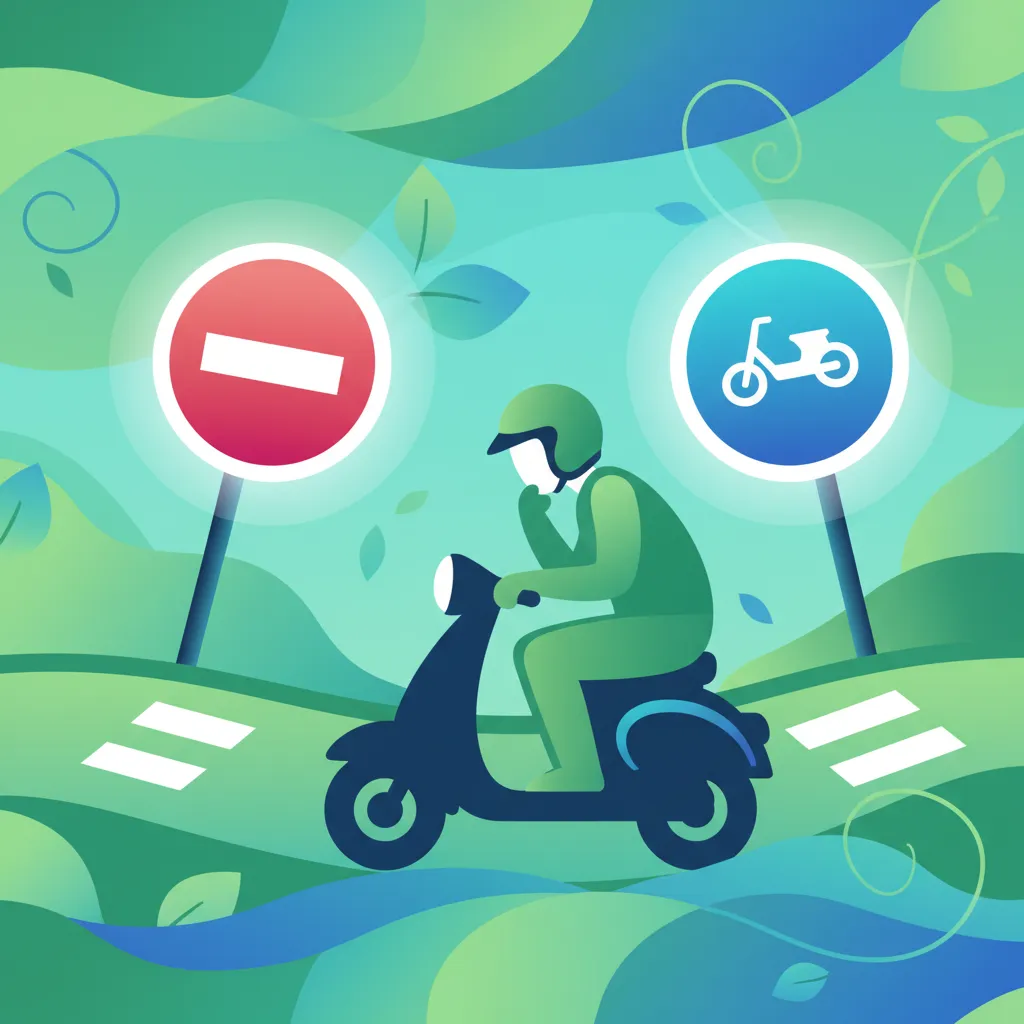
This lesson examines regulatory signs that impose legal obligations, focusing on those most relevant to moped riders like speed limits and mandatory direction signs. Learners will understand how sign shapes and colors convey specific commands or prohibitions. Attention is given to signs with vehicle-specific restrictions, ensuring riders know when rules apply directly to them.

This lesson examines the precise legal definition of a Category AM moped under Icelandic traffic law, focusing on technical parameters like engine capacity and power-to-weight ratios. It explains the criteria that classify a vehicle for an AM license, ensuring riders can verify their vehicle's compliance. Understanding these statutory definitions is crucial for legal operation on public roads and avoiding penalties.

This lesson details the legal and safety standards for moped helmets, emphasizing ECE certification and impact resistance. It provides instruction on selecting a properly fitting helmet, securing it correctly, and performing regular maintenance checks. Adhering to these guidelines is critical for head injury prevention and ensuring continuous compliance with safety regulations.

This lesson dissects the three-color traffic light system, detailing the meaning of red, amber, and green signals, including flashing lights and directional arrows. It explains how signal timing impacts moped riders and the legal requirement to obey all signals at intersections. Proper interpretation is crucial for navigating signalized junctions safely and avoiding conflicts with other traffic.

This lesson outlines the eligibility criteria for a Category AM license, including minimum age, residency, and health requirements. It details the application process with the Icelandic Transport Authority, covering the necessary documentation and examination stages. Learners will understand the complete pathway from application to receiving a full license, ensuring they are prepared for each step.
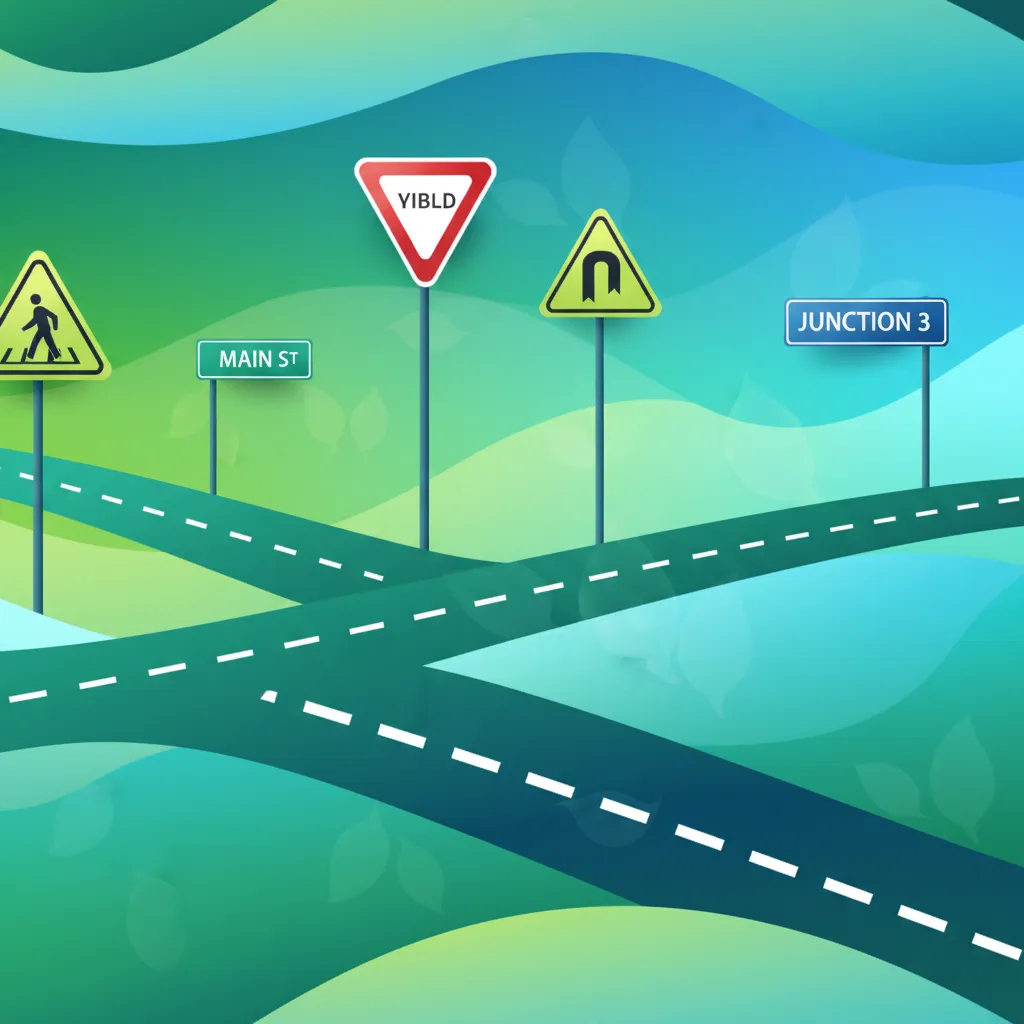
This lesson familiarizes learners with signs that warn of upcoming hazards, such as sharp curves, slippery surfaces, or animal crossings. It emphasizes the importance of early hazard recognition and response, which is especially critical for vulnerable moped riders. Understanding these signs allows riders to anticipate road conditions and adjust their riding strategy accordingly for increased safety.
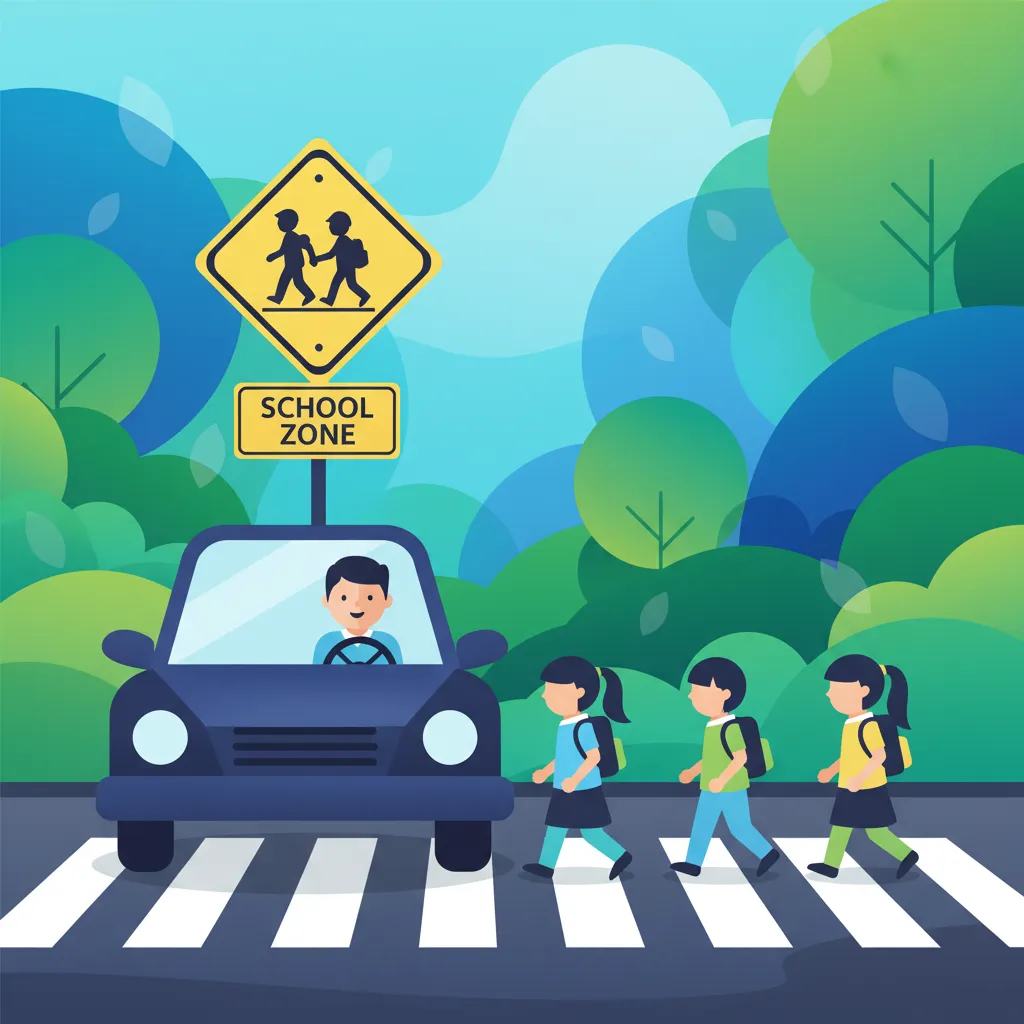
This lesson covers the strict rules governing pedestrian crossings and school zones, where riders have a heightened duty of care. It details the obligation to yield to pedestrians, recognize school zone signage, and reduce speed significantly. Riders learn to be extra vigilant for the unpredictable movements of children and other vulnerable road users in these sensitive areas.
Learn critical steps for securing an accident scene, making emergency calls to 112, and providing essential first aid to injured individuals following a moped incident in Iceland. Essential knowledge for rider safety.
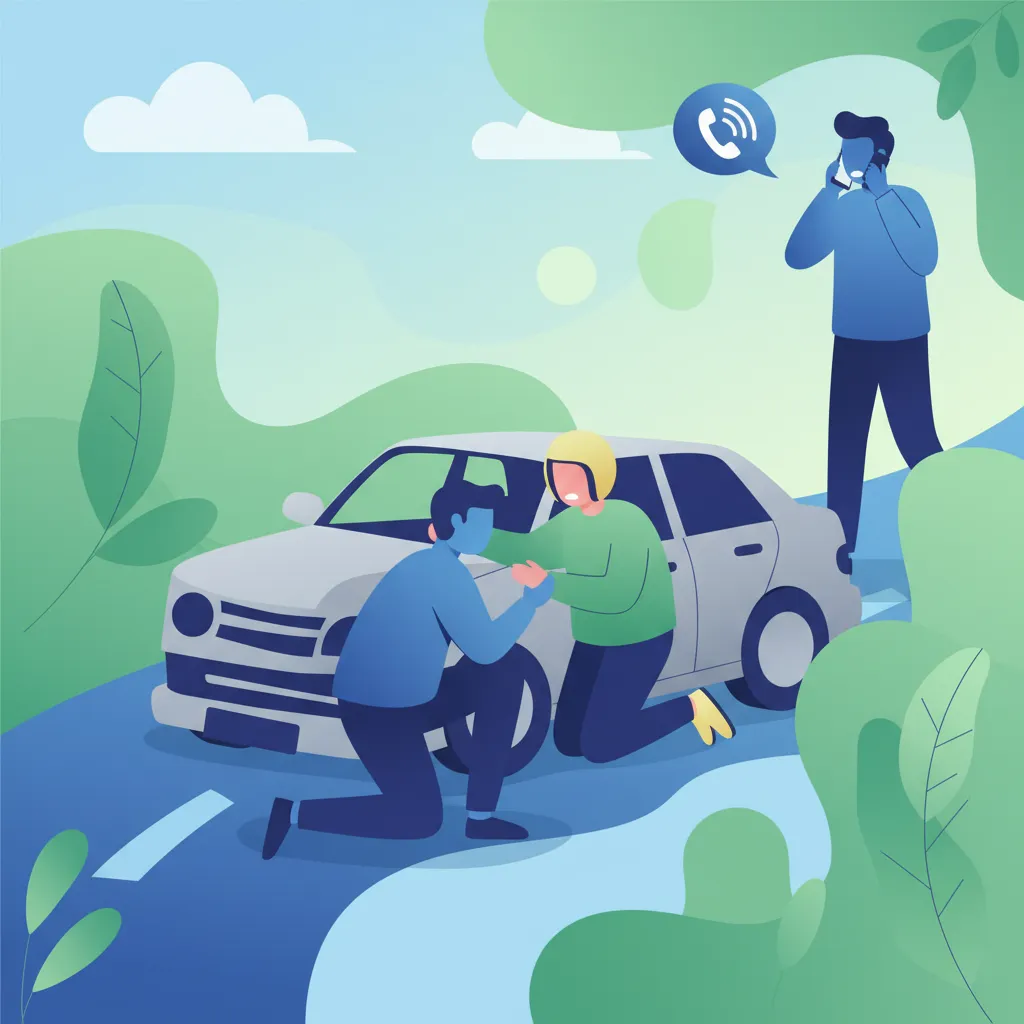
This lesson details the essential actions to take immediately after a collision, focusing on securing the accident scene and contacting emergency services using the universal number 112. The content explains how to use hazard lights, position vehicles to avoid secondary collisions, and assess the situation for immediate dangers. Learners also review their legal duty to report accidents and the appropriate information to provide to the police to ensure the scene remains safe.

This lesson provides foundational first-aid knowledge required for drivers who encounter an injury at a crash scene, covering how to control bleeding, perform basic CPR, and stabilize fractures. The content emphasizes maintaining scene safety while attending to injured parties, the correct use of an emergency kit, and effective communication with ambulance services. Mastering these basic medical interventions can contribute to better outcomes for accident victims.

This lesson examines the administrative and legal processes that follow a road accident, covering how to file a police report, document the scene with photographs, and gather witness statements. Learners will study the insurance claim process, including submission of documentation, arranging vehicle repairs, and understanding timelines for claim settlement. Additionally, the lesson outlines the legal obligations of drivers post-accident and the potential impact on their driving record.
This lesson explores the range of protective clothing vital for moped riders, focusing on abrasion resistance, impact protection, and weather adaptability. It covers the selection of appropriate gloves, boots, and jackets designed to mitigate injury and enhance comfort in Iceland's climate. The material explains how layering can provide both safety and insulation, allowing for safe riding in various conditions.
This lesson covers the extensive obligations that come with riding a moped, emphasizing the duty of care to other road users. It details specific legal requirements, such as mandatory helmet use, adherence to speed limits, and correct signaling protocols. Understanding these responsibilities helps riders grasp the consequences of non-compliance and fosters a culture of safety on the road.
This lesson familiarizes learners with signs that warn of upcoming hazards, such as sharp curves, slippery surfaces, or animal crossings. It emphasizes the importance of early hazard recognition and response, which is especially critical for vulnerable moped riders. Understanding these signs allows riders to anticipate road conditions and adjust their riding strategy accordingly for increased safety.
This lesson details how various weather conditions impact moped stability, traction, and visibility. It provides practical strategies for handling crosswinds, avoiding hydroplaning in rain, and maintaining grip on icy or snowy surfaces. Riders will learn to assess weather-related risks and adapt their speed and control inputs to navigate challenging conditions safely.
This lesson explores the conduct required at uncontrolled crossings where the right-hand rule typically applies. It emphasizes the need to reduce speed, be prepared to stop, and establish clear communication with other road users. Riders will learn to assess the situation carefully and proceed only when it is confirmed to be safe, a critical skill for rural and residential areas.
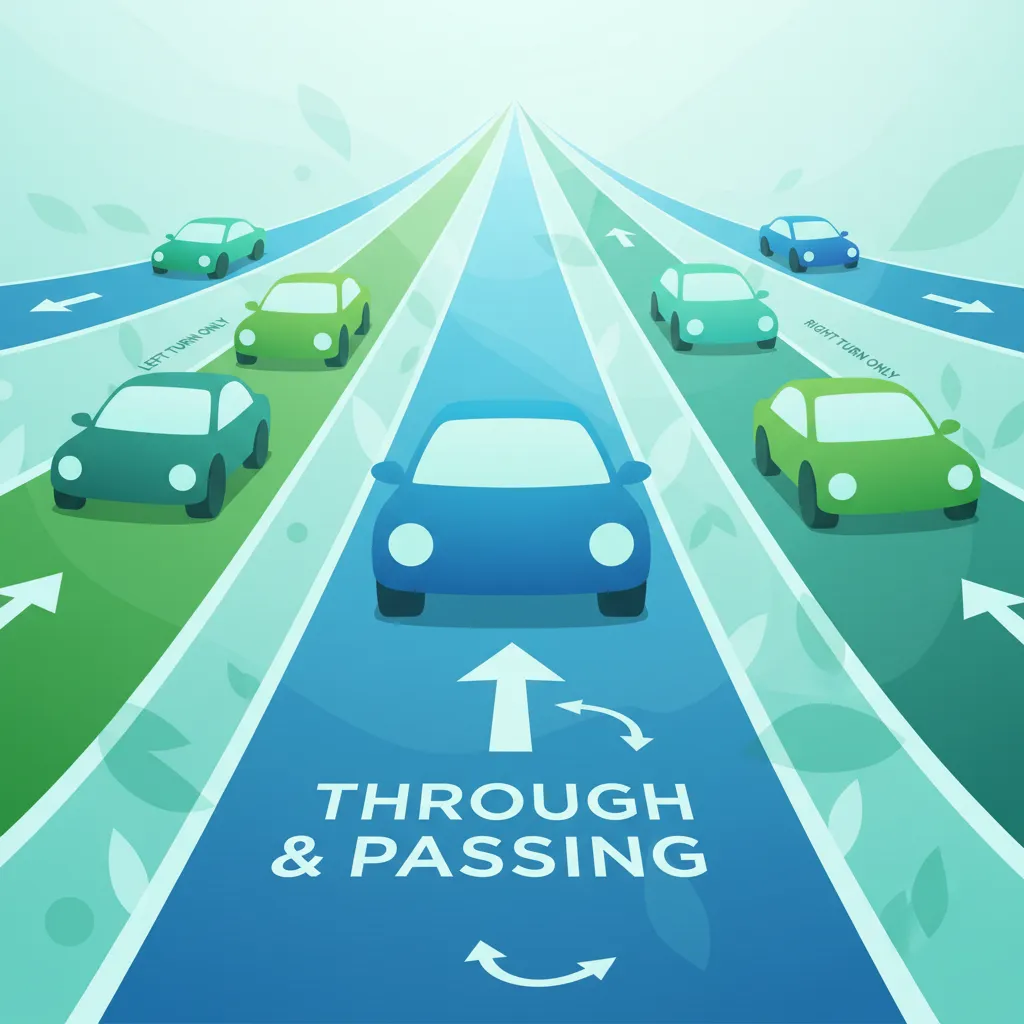
This lesson outlines best practices for positioning a moped on urban roads to maximize visibility and safety. It explains how to choose a lane position that makes you visible to drivers ahead and behind, while avoiding road debris and dooring hazards from parked cars. The content addresses adapting your position based on traffic speed, density, and road conditions.

This lesson focuses on methods to enhance a rider's visibility, covering high-visibility clothing, reflective materials, and strategic lighting. Learners will understand how to use daytime running lights and position themselves to minimize time in others' blind spots. These proactive techniques are essential for being seen by other road users, significantly reducing the risk of collisions.
Find clear answers to common questions learners have about Penalties, Accident Procedures, Emergency Response and First Aid. Learn how the lesson is structured, which driving theory objectives it supports, and how it fits into the overall learning path of units and curriculum progression in Iceland. These explanations help you understand key concepts, lesson flow, and exam focused study goals.
The primary emergency number in Iceland is 112. You should call 112 immediately after any accident, especially if there are injuries or significant damage. Be prepared to provide details about your location, the nature of the incident, and if anyone is injured.
Your legal obligations include stopping at the scene, checking for injuries, calling 112 if necessary, and ensuring the scene is safe. You must exchange information with other parties involved and report the accident to the police if required by law or if there are significant damages or injuries. You also have a duty to cooperate with insurance companies.
Basic first aid is very important. In an accident, immediate care can be critical for injured individuals before professional help arrives. Knowing how to administer basic first aid, like controlling bleeding or positioning an unconscious person, can significantly improve their outcome and is a vital skill for responsible riders.
Penalties vary depending on the severity and type of violation. They can range from fines to license suspension. Common violations include speeding, dangerous riding, not wearing a helmet, and driving under the influence. Understanding these penalties is crucial for safe and legal riding.
You should report an accident to the police if there are serious injuries, fatalities, significant property damage, or if you suspect a criminal offense (like drunk driving). For minor accidents with only property damage and no injuries, reporting might not be mandatory, but it’s often advisable for insurance purposes.
Utilize our advanced practice set search to pinpoint the exact Icelandic driving theory topics you need to review. Filter by subject, difficulty, or question type to create a highly effective study plan and ensure you are fully prepared for your official driving licence test in Iceland.