
Welcome to the 'Speed Management and Legal Limits for Mopeds' lesson, part of the 'Icelandic Moped (Category AM) Driving License Theory Course'. Understanding and adhering to speed limits is crucial for safe moped operation in Iceland and a key topic on the theory exam. This lesson builds on basic traffic rules, preparing you for the challenges of maintaining appropriate speeds in diverse Icelandic environments.
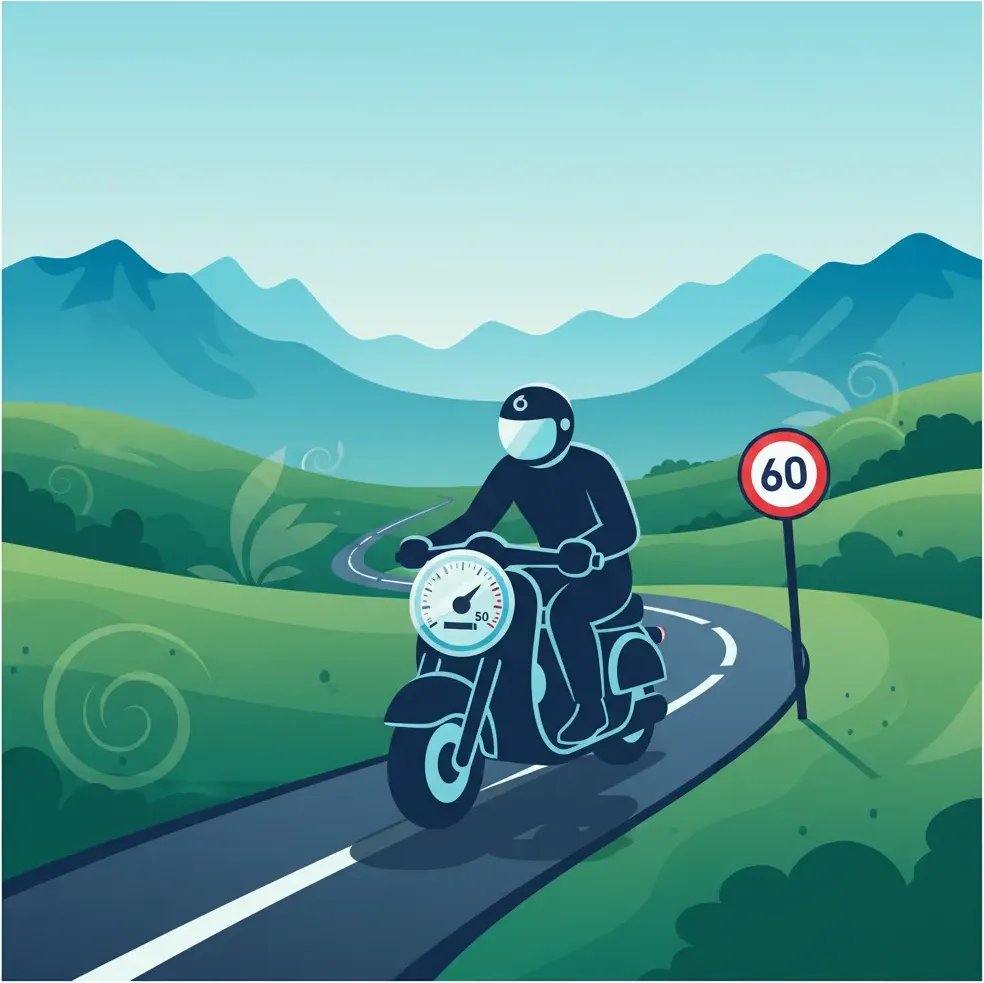
Lesson content overview
Operating a moped safely and legally in Iceland requires a thorough understanding of speed management. This isn't just about knowing the maximum speed your Category AM vehicle can achieve; it's about adhering to statutory speed limits and, more importantly, adapting your speed to ensure safety under all prevailing conditions. Effective speed management directly impacts your ability to stop, your moped’s stability, your reaction time, and your compliance with Icelandic traffic laws. Misjudging speed is a significant factor in moped accidents, highlighting its critical importance for every rider.
This lesson delves into the specific speed regulations for mopeds across various Icelandic road environments, from bustling urban centers to serene rural roads. It will also equip you with practical techniques for managing acceleration and deceleration, ensuring you maintain a safe and legal speed at all times. By mastering these principles, you will enhance your safety, reduce the risk of accidents, and avoid legal penalties.
Legal speed limits are the maximum speeds permitted by law for a given road type and vehicle category. For Category AM mopeds in Iceland, these limits are precisely defined to ensure uniform traffic flow and minimize collision risks, especially for vulnerable road users. It's crucial to remember that these limits apply regardless of your moped's physical capabilities; even if your moped could go faster, you must always adhere to the posted or default legal maximum.
In densely populated areas, lower speed limits are implemented to protect pedestrians, cyclists, and other road users. As a moped rider, you must be particularly vigilant in these zones.
The default speed limit in built-up areas, such as city centers and residential zones, is 30 km/h unless specifically indicated otherwise by traffic signs.
Residential streets often have even lower recommended or posted limits to enhance safety where children may be playing or where sightlines are restricted. These can sometimes be as low as 20 km/h. Always look for specific signage.
Outside built-up areas, speed limits generally increase, but mopeds still have specific restrictions. These limits are designed to reflect the nature of rural roads, which can include varying surfaces, bends, and less predictable hazards.
On single carriageway rural roads, the typical speed limit for mopeds is 45 km/h. If you encounter a dual carriageway rural road where higher speeds are generally permitted for other vehicles (e.g., 60 km/h), your moped's maximum design speed of 45 km/h effectively becomes your limit, as you cannot legally exceed your vehicle's type-approved maximum speed.
Remember, even if a rural road sign indicates a higher speed limit for other vehicles, your Category AM moped's maximum design speed, typically 45 km/h, is your ultimate legal ceiling. You cannot exceed this inherent vehicle limit.
For express roads where mopeds are permitted, the limit for Category AM vehicles is generally 50 km/h. However, riders should be acutely aware that many express roads may have sections where mopeds are prohibited, or where higher speeds make moped travel less safe. Always look for specific signage indicating moped permission and limits.
Certain areas demand even greater caution, leading to specific, often temporary, speed reductions. These zones are crucial for protecting vulnerable individuals or managing specific hazards.
School zones, for example, frequently have reduced speed limits, such as 20 km/h, during school hours to protect children. Construction areas will also feature temporary speed limit signs, overriding the default limit, to ensure the safety of workers and to account for potential road hazards like uneven surfaces or debris.
It is mandatory to obey these temporary limits. They are put in place for a reason and ignoring them can lead to serious accidents and legal consequences.
Some road types are entirely off-limits for Category AM mopeds due to their design for higher-speed traffic and the inherent safety risks mopeds would face.
Mopeds are strictly prohibited on motorways (high-speed roads) in Iceland. Attempting to enter or ride on a motorway with a moped is illegal and extremely dangerous. These roads are designed for vehicles traveling at much higher speeds, and mopeds cannot safely integrate into such traffic flow.
Always check road signs carefully to ensure you do not inadvertently enter a prohibited area. Signs for motorways are typically green with white text, distinct from other road signs.
While legal speed limits provide a maximum, they do not always represent a safe speed. A truly safe speed is one that you, as the rider, choose based on the prevailing road, weather, vehicle, and personal conditions. This often means riding below the posted legal limit to maintain control and anticipate hazards effectively.
Icelandic weather can change rapidly and dramatically, demanding constant speed adjustments.
Your ability to see and be seen directly impacts the speed at which you can safely travel.
In conditions of severely reduced visibility (fog, heavy rain), if you can only see 10 meters ahead, you must be able to stop your moped within that 10 meters. This principle means your speed must be drastically reduced.
The type and condition of the road surface profoundly affect your moped's grip and handling.
Carrying passengers or cargo alters your moped's dynamics, affecting acceleration, braking, and stability.
The Icelandic Vehicle Load Regulation (Section 22) states that mopeds may not carry more than one passenger and must not exceed a total load of 150 kg, including the rider, passenger, and any cargo. Exceeding this limit is illegal, dangerous, and can invalidate your insurance.
When carrying a heavy load:
Understanding stopping distance is fundamental to safe speed management. It's the total distance your moped travels from the moment you perceive a hazard until you come to a complete stop. This distance is divided into two main components: perception-reaction distance and braking distance.
This is the distance your moped travels during the time it takes for you to:
For educational purposes, a typical perception-reaction time is often assumed to be around 2 seconds for an alert driver. At higher speeds, even two seconds translates to a significant distance covered before you even begin to brake.
Braking distance is the distance your moped travels from the moment you apply the brakes until it comes to a complete halt. This distance is not linear; it increases exponentially with speed. This means if you double your speed, your braking distance roughly quadruples.
This quadratic relationship is a critical concept:
This dramatic increase underscores why higher speeds demand greater following gaps and earlier braking, especially in adverse conditions.
Velocity management is the continuous and smooth adjustment of your moped's speed using various controls. Mastering these techniques allows for safer, more efficient riding and reduces wear on your moped.
Abrupt acceleration or deceleration can destabilize your moped, especially in turns or on slippery surfaces.
For mopeds with manual transmissions (though many are automatic), proper gear selection is vital for speed control and efficiency.
Adhering to specific Icelandic regulations is not just about avoiding fines; it's about contributing to road safety for everyone.
Icelandic Traffic Act – Speed Limits (Section 38):
Mopeds must not exceed 30 km/h in built-up areas unless signs indicate a higher limit.
This is a mandatory rule applicable to all Category AM vehicles in urban zones, designed to reduce accident risk in densely populated areas.
Traffic Signs Ordinance – Temporary Limits:
Where a temporary speed limit sign is present (e.g., construction zone), the indicated speed supersedes the default limit.
These signs are mandatory and protect workers while accounting for reduced visibility or altered road conditions.
Vehicle Load Regulation (Section 22):
Mopeds may not carry more than one passenger and must not exceed a total load of 150 kg (including rider, passenger, cargo).
This mandatory regulation prevents overloading, which significantly compromises a moped's stability, handling, and braking performance. Violations can lead to fines and invalidate insurance.
Night Visibility Regulation:
When visibility is reduced (e.g., fog, heavy rain), riders must reduce speed to a level that ensures they can stop within the visibility distance.
This mandatory rule ensures that your speed is always aligned with your ability to react to unforeseen hazards under low visibility conditions.
Prohibited Areas – Motorways:
Category AM vehicles are not allowed on motorways (high-speed roads).
This is a mandatory and critical rule. Motorways require higher speeds and specific lane discipline that are unsuitable for mopeds, posing a high safety risk.
Ignoring speed management principles can lead to serious consequences. Here are common violations and associated risks for moped riders:
Applying speed management principles correctly is vital in real-world driving situations. Let’s look at some examples:
1. Urban Residential Street – Daytime, Dry Conditions:
2. Rural Road – Rainy Afternoon:
3. Construction Zone – Evening with Reduced Visibility:
4. Night Riding – Low Light Conditions:
5. Heavy Load Scenario – Suburban Road:
The ability to manage your speed effectively is a cornerstone of safe and legal moped operation. The consequences of poor speed management are severe and far-reaching:
By consistently applying safe speed selection and velocity management techniques, you reduce your risk of accidents, ensure your legal compliance, and contribute to a safer road environment for everyone.
This lesson covers the statutory speed limits for Category AM mopeds in Iceland, distinguishing between urban (30 km/h default), rural (45 km/h), and express roads (50 km/h), while emphasizing that mopeds are banned from motorways. It stresses that safe speed selection depends on conditions—you must reduce speed for rain, snow, ice, fog, strong wind, poor visibility, and heavy loads, and you must always be able to stop within what you can see. Key physics concepts include the exponential relationship between speed and stopping distance, with practical scenarios demonstrating how perception-reaction time and braking distance combine. Load regulations limit total weight to 150 kg with one passenger, and riders must obey temporary speed signs that override default limits. Mastery of these principles is essential for both the theory exam and safe real-world riding in Iceland.
A short set of high-value points that capture the most important learning from this lesson.
Category AM mopeds must not exceed 30 km/h in built-up areas unless signs indicate otherwise.
In adverse weather (rain, snow, ice, fog, wind), you must always reduce speed below the legal limit to maintain control.
Braking distance increases exponentially with speed—a 50% speed increase roughly doubles your stopping distance.
Mopeds are strictly prohibited from motorways; your maximum design speed (typically 45 km/h) is your ultimate legal ceiling.
When visibility is severely reduced, you must be able to stop within the distance you can see ahead.
Explore all units and lessons included in this driving theory course.
Urban residential default = 30 km/h; rural single carriageway = 45 km/h; express roads = 50 km/h.
In fog or heavy rain: if you can only see 10 meters, you must be able to stop within 10 meters.
Load limit is 150 kg total (rider + passenger + cargo) with only one passenger permitted.
Wet pavement requires at least 15 km/h reduction; snow/ice may require halving the legal limit.
Temporary speed signs (construction zones, school zones) always override default posted limits.
Assuming the legal speed limit is always a safe speed, regardless of actual road or weather conditions.
Attempting to overtake at the legal limit on wet rural roads, which dramatically increases hydroplaning risk.
Overloading the moped beyond 150 kg, which extends braking distance and compromises stability.
Entering motorways inadvertently—mopeds are prohibited and the speed differential with other vehicles is extremely dangerous.
Maintaining high speed through curves or intersections with reduced visibility due to blind spots or poor lighting.
Lesson content overview
A short set of high-value points that capture the most important learning from this lesson.
Category AM mopeds must not exceed 30 km/h in built-up areas unless signs indicate otherwise.
In adverse weather (rain, snow, ice, fog, wind), you must always reduce speed below the legal limit to maintain control.
Braking distance increases exponentially with speed—a 50% speed increase roughly doubles your stopping distance.
Mopeds are strictly prohibited from motorways; your maximum design speed (typically 45 km/h) is your ultimate legal ceiling.
When visibility is severely reduced, you must be able to stop within the distance you can see ahead.
Explore all units and lessons included in this driving theory course.
Urban residential default = 30 km/h; rural single carriageway = 45 km/h; express roads = 50 km/h.
In fog or heavy rain: if you can only see 10 meters, you must be able to stop within 10 meters.
Load limit is 150 kg total (rider + passenger + cargo) with only one passenger permitted.
Wet pavement requires at least 15 km/h reduction; snow/ice may require halving the legal limit.
Temporary speed signs (construction zones, school zones) always override default posted limits.
Assuming the legal speed limit is always a safe speed, regardless of actual road or weather conditions.
Attempting to overtake at the legal limit on wet rural roads, which dramatically increases hydroplaning risk.
Overloading the moped beyond 150 kg, which extends braking distance and compromises stability.
Entering motorways inadvertently—mopeds are prohibited and the speed differential with other vehicles is extremely dangerous.
Maintaining high speed through curves or intersections with reduced visibility due to blind spots or poor lighting.
Explore search topics learners often look for when studying Speed Management and Legal Limits for Mopeds. These topics reflect common questions about road rules, driving situations, safety guidance, and lesson level theory preparation for learners in Iceland.
Browse additional driving theory lessons that cover connected traffic rules, road signs, and common driving situations related to this topic. Improve your understanding of how different rules interact across everyday traffic scenarios.
Learn how Icelandic weather impacts moped stability and traction. This lesson covers essential theory for adjusting speed in rain, snow, ice, fog, and strong winds to ensure safe riding and compliance with traffic regulations.
This lesson details how various weather conditions impact moped stability, traction, and visibility. It provides practical strategies for handling crosswinds, avoiding hydroplaning in rain, and maintaining grip on icy or snowy surfaces. Riders will learn to assess weather-related risks and adapt their speed and control inputs to navigate challenging conditions safely.
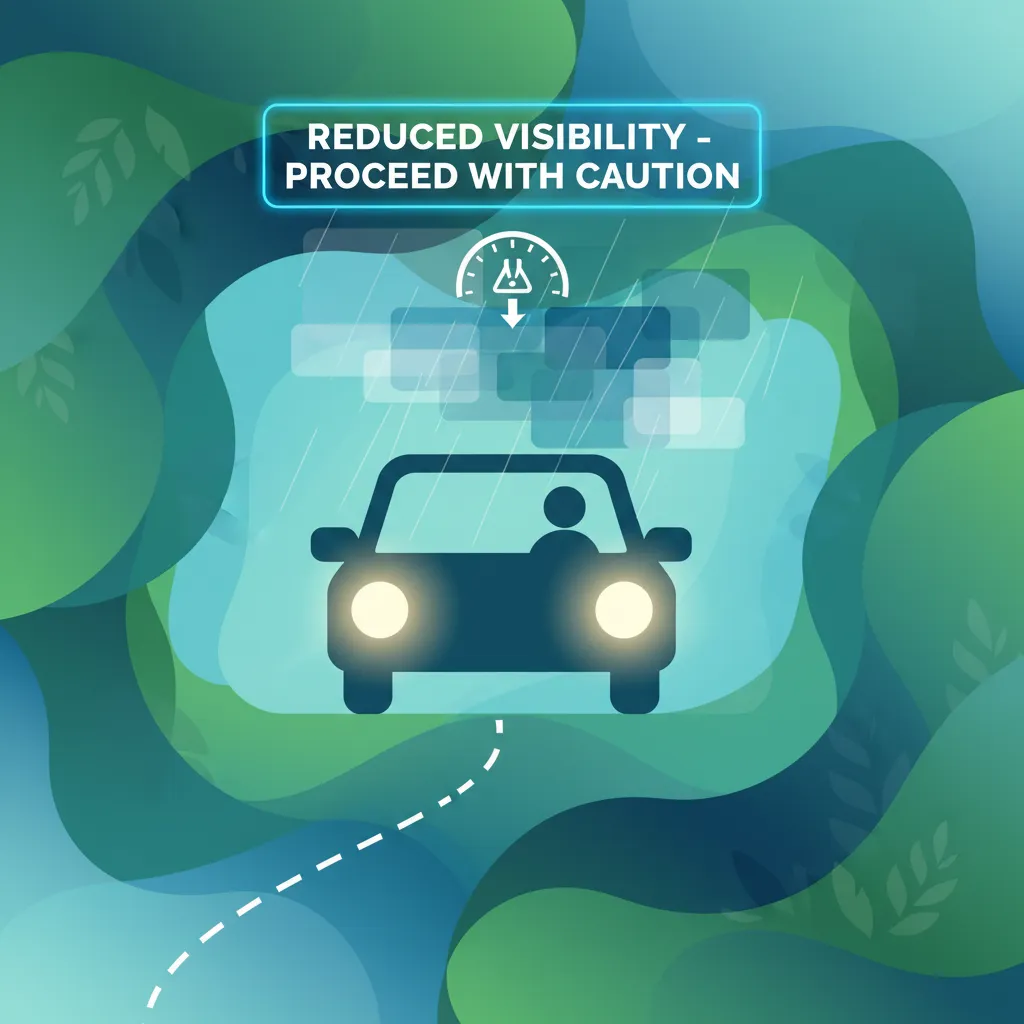
This lesson addresses the challenges of driving in rain and fog, focusing on strategies to maintain visibility and vehicle control. Learners will explore the correct use of windshield wipers, defoggers, and appropriate headlight settings, including when to use fog lights. The content also covers the increased risk of hydroplaning, the importance of adjusting speed in wet conditions, and the need to extend following distances to account for longer stopping distances.

This lesson examines how strong winds and varying light conditions affect vehicle handling and safety, including techniques for maintaining stability under cross-winds and assessing gust intensity. The content also explains proper headlight usage during daylight, dusk, and nighttime, addressing glare reduction strategies and when to employ high-beam headlights. By mastering these concepts, drivers can navigate Icelandic weather and lighting challenges confidently and safely.
This lesson focuses on the specific challenges of riding on gravel and uneven rural roads. It teaches techniques for maintaining stability and traction on loose surfaces, including speed management, body positioning, and gentle control inputs. Understanding how to handle these conditions is essential for safely exploring areas outside of main urban centers in Iceland.
This lesson examines the specific techniques required for safe driving on snow-covered or icy roads in Iceland, covering the mandatory use of winter tires and the operation of anti-lock braking systems. Learners will study optimal low-speed cornering, proper braking distances on ice, and how to recover from a skid safely. By mastering these techniques, drivers can maintain control in challenging winter conditions and significantly reduce the risk of accidents on slippery surfaces.

This lesson focuses on methods to enhance a rider's visibility, covering high-visibility clothing, reflective materials, and strategic lighting. Learners will understand how to use daytime running lights and position themselves to minimize time in others' blind spots. These proactive techniques are essential for being seen by other road users, significantly reducing the risk of collisions.
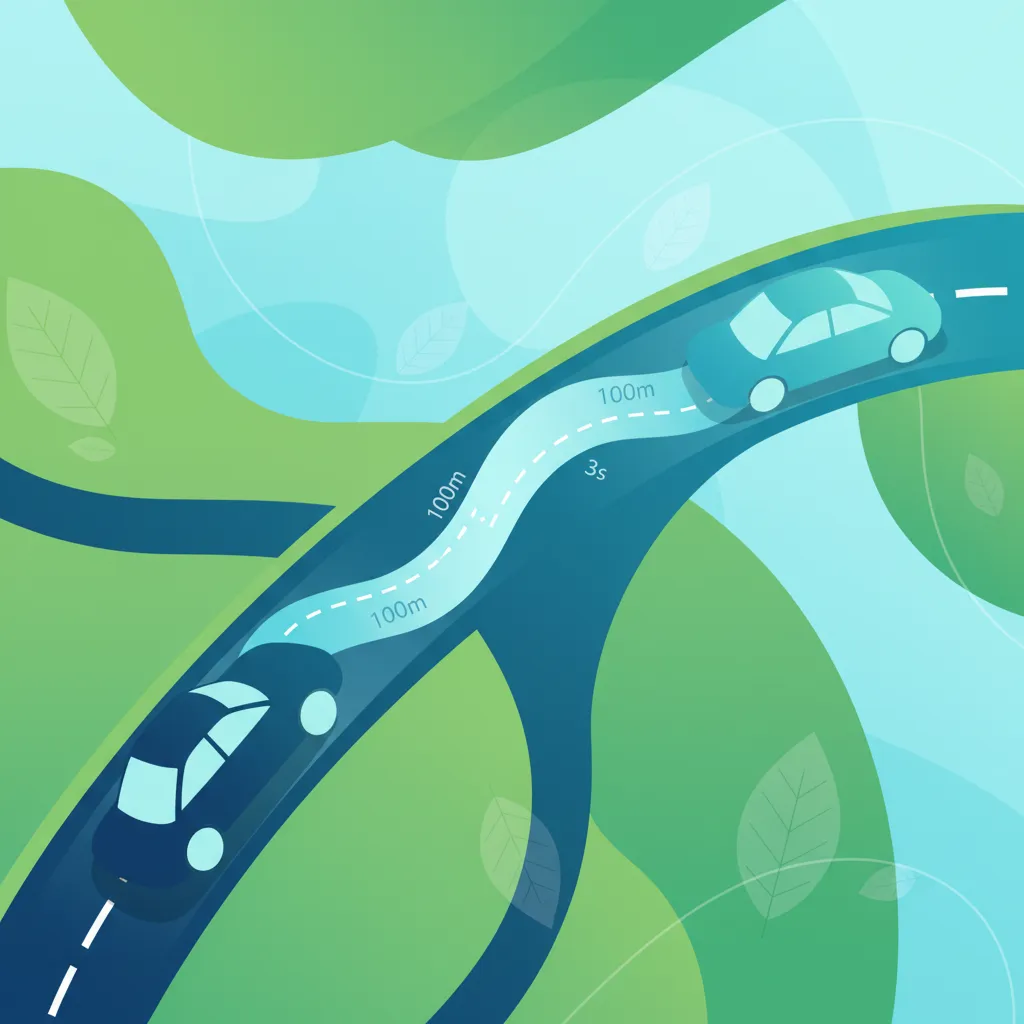
This lesson focuses on the concept of maintaining a safe following distance using the time-gap method. It explains how to create a sufficient buffer zone to react to sudden stops by the vehicle ahead. Riders will learn to adjust this gap based on speed, weather, and visibility to prevent rear-end collisions and ensure adequate reaction time.
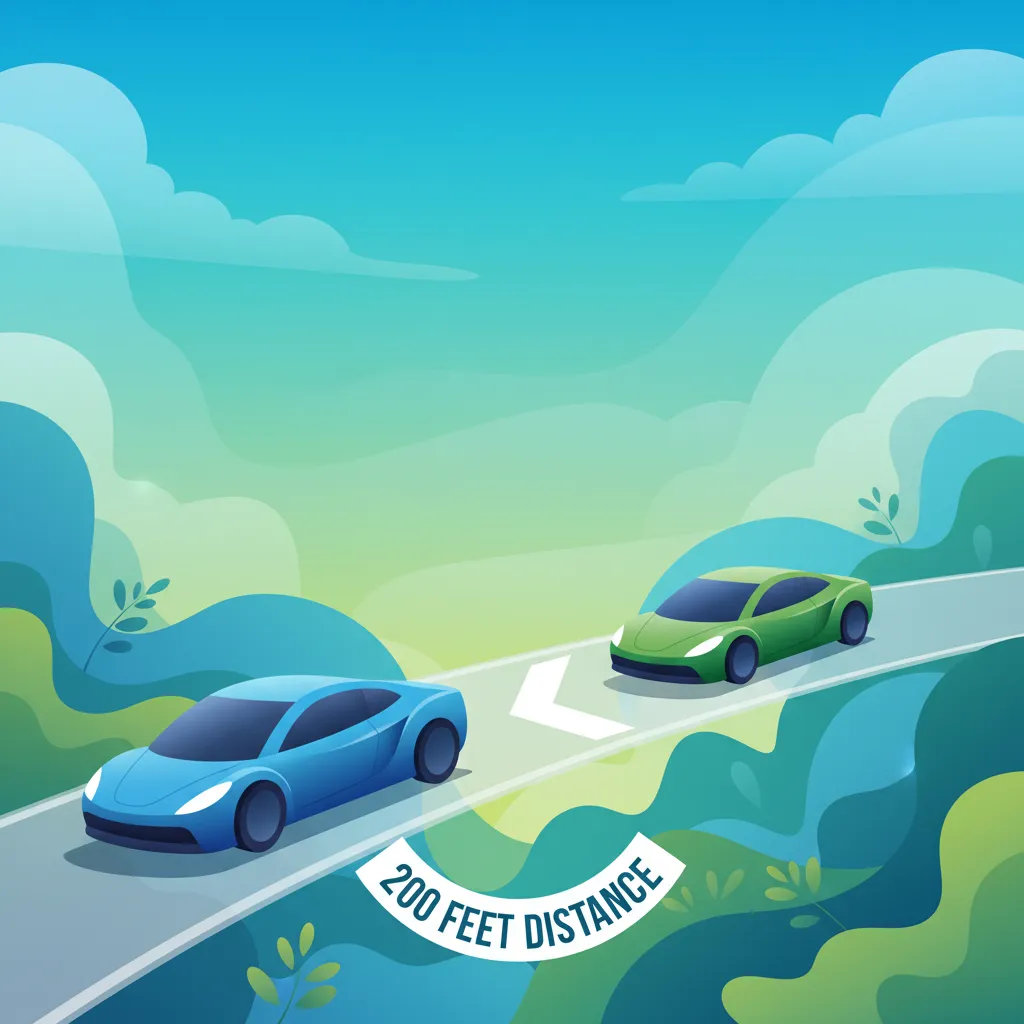
This lesson examines the calculation of safe following distances using the two-second rule and formulas that factor in vehicle speed and road conditions. The content explains how reaction time, weather conditions like ice or rain, and vehicle load affect braking zones. Students also learn specific techniques for stopping on hills and how to avoid tailgating, thereby maintaining sufficient safety margins under all Icelandic weather conditions.
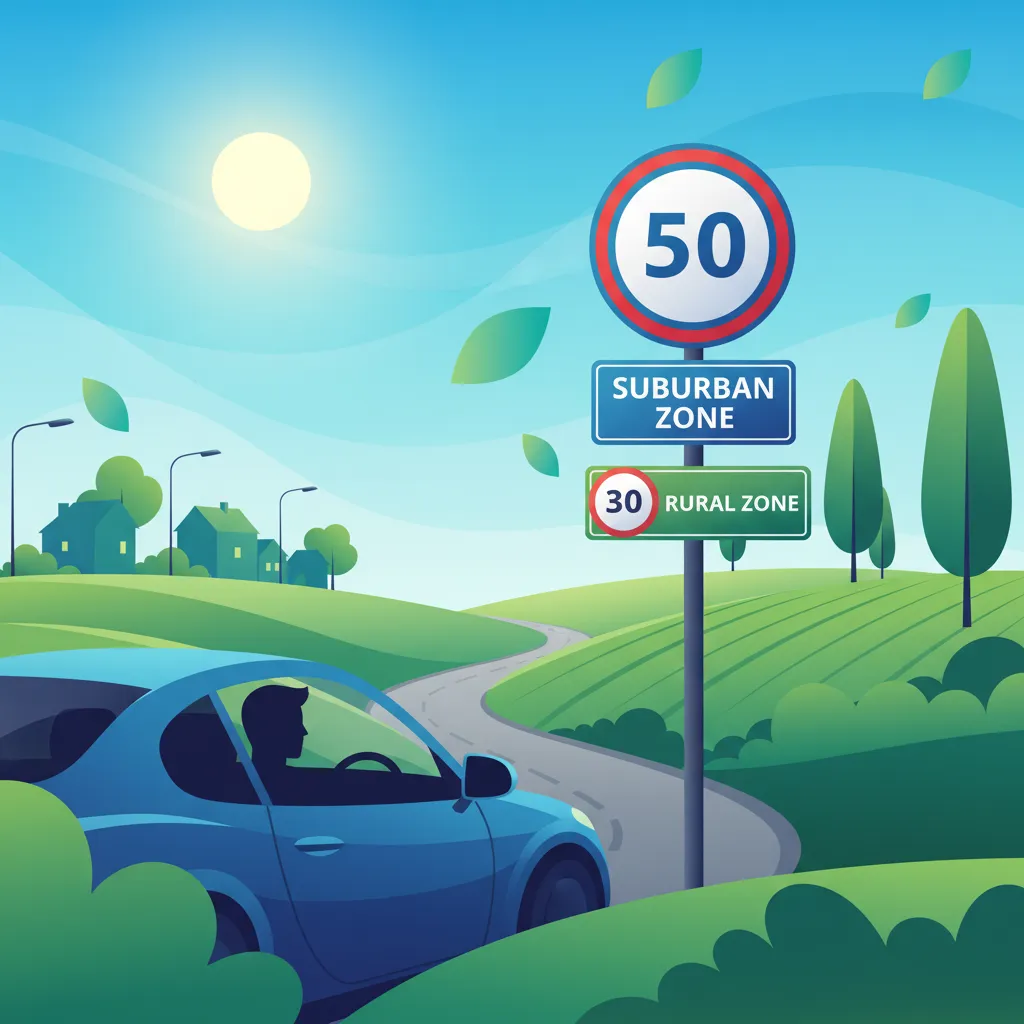
This lesson outlines the speed limits applicable to various road types in Iceland, from urban streets to rural highways and special zones like tunnels. Learners will interpret speed sign markings, understand variable speed limits that adjust for weather, and recognize when temporary speed reductions are enforced. The content also covers speed monitoring devices and the legal consequences of exceeding limits, emphasizing speed awareness in all driving contexts.
This lesson examines the psychological factors crucial for safe riding, promoting a defensive mindset and heightened risk awareness. It provides strategies for managing stress, identifying potential hazards early, and making proactive decisions to prevent dangerous situations. Cultivating mental discipline and a safety-conscious attitude is fundamental to long-term rider safety on Icelandic roads.
Explore the crucial relationship between speed, reaction time, and braking distance for mopeds in Iceland. This lesson provides theoretical insights into the physics behind stopping distances and how to calculate them to ensure safety.
This lesson details the fundamentals of effective braking, covering both controlled deceleration and emergency stops. Learners will understand how factors like speed, road surface, and reaction time collectively determine total stopping distance. It also explains how to balance front and rear brake application to maximize stopping power without losing control.
This lesson focuses on the concept of maintaining a safe following distance using the time-gap method. It explains how to create a sufficient buffer zone to react to sudden stops by the vehicle ahead. Riders will learn to adjust this gap based on speed, weather, and visibility to prevent rear-end collisions and ensure adequate reaction time.
Find clear answers to common questions learners have about Speed Management and Legal Limits for Mopeds. Learn how the lesson is structured, which driving theory objectives it supports, and how it fits into the overall learning path of units and curriculum progression in Iceland. These explanations help you understand key concepts, lesson flow, and exam focused study goals.
In Iceland, Category AM mopeds typically have specific speed limits depending on the area. Within urban areas (built-up zones), the general limit is 50 km/h unless otherwise signed. Outside these zones, on rural roads, the limit is usually 80 km/h. However, it's crucial to always observe posted speed limit signs, as they can vary. This lesson covers these limits in detail and how to interpret them.
Iceland's weather can change rapidly. In rain, snow, fog, or high winds, you must significantly reduce your speed. This lesson teaches you to increase your following distance and reduce speed to maintain control and visibility, as braking distances increase and traction decreases. Always prioritize safety over speed.
Generally, mopeds (Category AM) are not permitted on motorways or highways where the minimum speed is too high or where they would pose a hazard. This lesson focuses on the roads where mopeds are legally allowed, covering urban and rural speed limits, and emphasizes that mopeds should never exceed the maximum legal speed for their category, typically 80 km/h on appropriate roads.
The theory exam for Category AM in Iceland includes questions assessing your knowledge of legal speed limits in various environments and your ability to choose a safe speed based on road, traffic, and weather conditions. You'll encounter scenarios asking what speed is appropriate or what actions to take when speed limits are not clearly posted.
Safe following distance is the gap you maintain between your moped and the vehicle in front. It should be sufficient to stop safely if the vehicle ahead brakes suddenly. A common rule of thumb is the 'two-second rule' at normal speeds, but this distance must be increased significantly at higher speeds or in poor conditions. This lesson will guide you on maintaining appropriate distances.
Utilize our advanced practice set search to pinpoint the exact Icelandic driving theory topics you need to review. Filter by subject, difficulty, or question type to create a highly effective study plan and ensure you are fully prepared for your official driving licence test in Iceland.