Welcome to the 'Regulatory Road Signs for Mopeds' lesson, part of your Icelandic AM license theory preparation. This lesson focuses on the signs that dictate legal requirements for riders, ensuring you understand critical rules like speed limits and mandatory directions to ride safely and pass your theory exam. Understanding these signs is crucial for navigating Iceland's roads responsibly.
Lesson content overview
Navigating the roads safely and legally as a moped rider (Category AM) in Iceland requires a thorough understanding of traffic signs. Among the various types of road signs, regulatory signs are paramount. These signs issue legally binding commands or prohibitions that all road users, including moped riders, must strictly obey. Failure to comply can lead to serious consequences, from fines and penalty points to increased accident risk.
This lesson delves into the specifics of regulatory road signs, focusing on those most relevant to moped operators within the Icelandic traffic system. You will learn to identify these signs by their distinct shapes and colors, understand their precise meaning, and recognize when they apply specifically to mopeds. Mastering this knowledge is a critical step towards safe and responsible riding.
Regulatory signs are the backbone of traffic law, ensuring order, safety, and efficiency on public roads. For moped riders, their importance is amplified due to the unique characteristics of these vehicles, such as their smaller size, lower top speeds, and differing acceleration capabilities compared to cars or heavy vehicles.
These signs directly influence how you operate your moped, dictating crucial aspects like your maximum speed, permitted directions, and areas where mopeds may be restricted or prohibited. By understanding and adhering to these legal obligations, you contribute significantly to your own safety and that of other road users. Disregarding a regulatory sign is not merely a suggestion; it is a direct violation of Icelandic traffic legislation.
The design of regulatory signs is standardized to allow for immediate recognition, even at a glance. Their distinct shapes and color schemes provide crucial clues about the nature of the command or prohibition they convey.
Most regulatory signs are circular in shape, clearly distinguishing them from triangular warning signs or rectangular information signs. This circular form immediately signals a legally enforceable command or restriction.
The colors used further refine the message:
This intuitive visual coding helps riders quickly understand whether an action is forbidden or compulsory, allowing for faster and safer decision-making on the road.
Regulatory signs cover a wide array of commands and prohibitions. For moped riders, it is crucial to understand the most common categories you will encounter daily on Icelandic roads.
Speed limit signs are perhaps the most frequently encountered regulatory signs. They are circular with a red border and display a number indicating the maximum permissible speed in kilometers per hour (km/h).
General Speed Limits: These limits apply to all traffic, including mopeds, unless otherwise specified. Common limits in Iceland include 30 km/h in residential areas, 50 km/h in urban areas, and higher limits on main roads where mopeds may not always be permitted.
Vehicle-Specific Speed Limits: Occasionally, a speed limit sign may include a smaller icon, such as a motorcycle or moped silhouette, to indicate that the limit applies specifically to that vehicle type. This ensures that mopeds adhere to speeds appropriate for their design and the road conditions.
Temporary Speed Limits: During roadworks, special events, or adverse weather conditions, temporary speed limits may be put in place. These are often indicated by signs with a yellow background or accompanying supplementary plates. These temporary limits supersede permanent signs and must be obeyed.
Always remember that the posted speed limit is the maximum legal speed. You must adjust your actual riding speed downwards if conditions (weather, visibility, traffic) make it unsafe to travel at the maximum limit. For mopeds, this is particularly important due to their lighter weight and reduced stability in adverse conditions.
Prohibition signs forbid specific actions or entry to certain areas. These are typically circular with a red border and a black symbol, often with a diagonal red slash through the symbol to emphasize the prohibition.
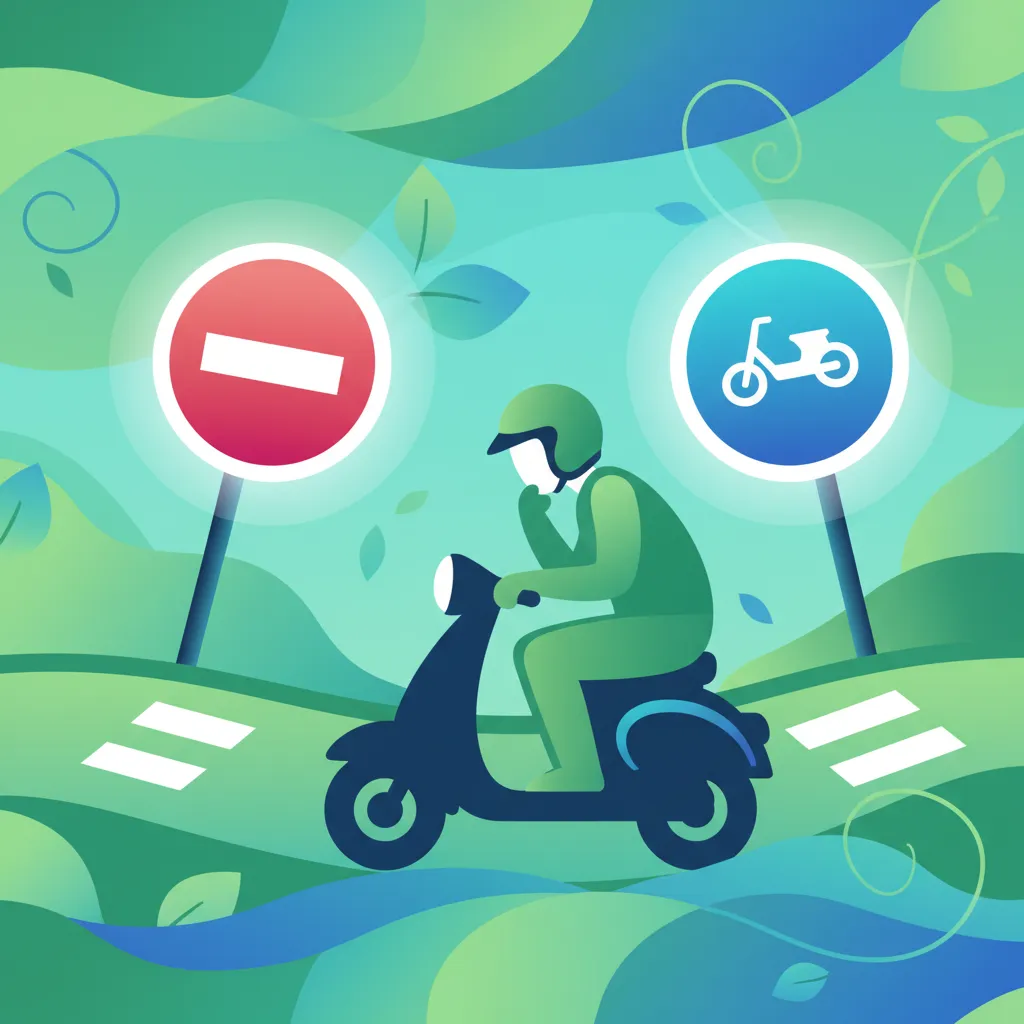
No Entry (General): This sign, a red circle with a white horizontal bar, means no vehicles are allowed to enter the road from that direction. Moped riders must never ignore this sign, as it usually indicates a one-way street or an exit.
No Mopeds: A red-bordered circular sign with a moped silhouette (often accompanied by an 'M' for motorcycles/mopeds) indicates that mopeds are prohibited from entering a specific road, lane, or area. This is a critical sign for moped riders to recognize and obey.
No Overtaking: This sign, showing two cars with a red slash, prohibits overtaking other motor vehicles. Mopeds must also comply with this, even if they could theoretically overtake a slower vehicle.
No Parking/Stopping: Signs with a red border and a blue background, displaying a red diagonal slash (no parking) or a red cross (no stopping), prohibit these actions. Mopeds must observe these restrictions like all other vehicles.
Understanding prohibition signs is crucial for route planning. If a sign indicates "No Mopeds," you must find an alternative route. Attempting to pass such a sign is not only illegal but can lead you into unsafe traffic situations.
Mandatory instruction signs are typically circular with a blue background and white symbols or arrows. These signs dictate actions that must be performed.
Mandatory Turn Ahead: These signs feature white arrows on a blue background, compelling traffic to turn in a specific direction (e.g., "Turn Left," "Turn Right," or "Go Straight or Turn Right"). You must follow the indicated direction.
Direction Signs for Mopeds: Similar to mandatory turn signs, some blue circular signs may include a small moped icon alongside a directional arrow. These signs indicate a mandatory direction specifically for mopeds, often guiding them to a dedicated moped lane or a safer route.
Mandatory Lane Use: In urban areas, you might encounter signs indicating that a specific lane is for mopeds only, or that mopeds must use a particular lane to proceed. These are crucial for ensuring mopeds are in appropriate traffic flows.
Pedestrian Crossing Ahead: While not always blue and circular in the classic sense, certain signs like the "Yield to Pedestrians" type may appear as a blue circular sign with a white pedestrian symbol or text, indicating a mandatory stop or yield for pedestrians.
Many regulatory signs are designed to control the flow and presence of specific vehicle types. For moped riders, recognizing signs that specifically include a moped or motorcycle silhouette is vital.
These signs often feature a silhouette of a moped (or sometimes a generic motorcycle icon if specific moped signs are not available) within the standard regulatory sign framework. For instance:
Always pay close attention to any regulatory sign that includes a vehicle silhouette. If it's a moped or motorcycle, the sign directly applies to you. Ignoring these signs can lead to fines and, more importantly, place you in dangerous traffic conditions not suitable for mopeds.
These are fundamental regulatory signs that dictate priority at intersections and crossings. They are crucial for preventing collisions and ensuring a smooth flow of traffic.
The Give-Way sign is an inverted triangular sign with a red border and a white background. It instructs you to give way (or yield) to traffic on the intersecting road.
Practical Meaning: When you encounter a Give-Way sign, you must slow down and be prepared to stop if necessary. You only proceed when it is safe to do so, and you do not impede the flow of traffic on the road you are joining or crossing. You must yield to all traffic, regardless of its type or size, that has priority.
Common Misunderstandings: Some riders might incorrectly assume that a Give-Way sign only applies to larger vehicles or in situations with heavy traffic. However, it applies universally to all road users, including mopeds, even in low-speed environments.
The Stop sign is an octagonal red sign with the word "STOP" in white letters. It is one of the most absolute regulatory signs.
Practical Meaning: When you encounter a Stop sign, you must bring your moped to a complete stop before the white stop line painted on the road, or before the intersection if no line is present. After stopping, you must check for traffic and pedestrians from all directions and only proceed when the way is completely clear and safe.
Associated Rules: A "rolling stop" (slowing down but not fully stopping) is a violation and can be dangerous. You must remain stopped until it is absolutely safe to proceed, yielding to all traffic and pedestrians with priority.
Adhering to regulatory signs is not optional; it is a legal requirement under Icelandic traffic law. Violations can lead to various penalties and significantly increase your risk of an accident.
| Rule Category | Applicability | Legal Status | Rationale | Correct Example | Incorrect Example |
|---|---|---|---|---|---|
| Speed Limits | All public roads; specific limits for mopeds. | Mandatory | Reduces collision risk, allows reaction time. | Riding at 25 km/h where limit is 30 km/h. | Riding at 45 km/h where limit is 30 km/h (fine, points). |
| Prohibition Signs | When visible and not superseded. | Mandatory | Prevents unsafe maneuvers, ensures traffic flow. | Respecting a "No Mopeds" sign by finding an alternative route. | Riding into a one-way street marked "No Entry" for mopeds. |
| Give-Way Signs | Intersections with a give-way sign. | Mandatory | Ensures safe merging, protects vulnerable road users. | Approaching, slowing, and yielding before proceeding safely. | Continuing without yielding, causing danger or collision. |
| Stop Signs | All stop signs on roads used by mopeds. | Mandatory | Provides clear right-of-way, protects pedestrians. | Stopping fully before a stop line, checking traffic thoroughly. | Rolling through a "STOP" sign because traffic appears light. |
| Vehicle-Specific Signs | When symbol indicates restriction for mopeds. | Mandatory | Separates traffic, prevents mopeds entering unsuitable roads. | Staying within a lane marked "M" only for mopeds. | Riding a moped in a lane designated for cars only. |
| Temporary Signs | During construction, events, or weather. | Mandatory | Adapts to changed road conditions, protects workers. | Reducing speed to 20 km/h where a temporary sign demands it. | Ignoring a temporary 20 km/h sign and maintaining normal speed. |
Moped riders sometimes fall prey to specific misconceptions or habits that lead to violations:
The interpretation and application of regulatory signs can be influenced by various external factors. A responsible moped rider considers these conditions to ensure optimal safety and compliance.
Understanding the direct impact of obeying or violating regulatory signs reinforces their importance.
Regulatory road signs are critical components of the Icelandic traffic system, serving as legal directives that moped riders must understand and obey without exception.
Mastering your understanding of these signs is not just about passing your Icelandic moped theory exam; it's about becoming a safe, confident, and responsible moped rider on the roads.
Regulatory road signs for mopeds in Iceland are legally binding directives identifiable by their distinct shapes and colors: circular with red borders for prohibitions (like No Mopeds), circular with blue backgrounds for mandatory instructions (like mandatory turns), inverted triangles for Give-Way, and octagonal red for Stop. Moped riders must recognize vehicle-specific signs featuring a moped silhouette, as these apply directly to Category AM riders and require specific compliance. Speed limits set maximum permitted speeds but actual speed must be adjusted downward for weather, visibility, and traffic conditions. Legal consequences for violations include fines, penalty points, and significantly increased accident risk.
A short set of high-value points that capture the most important learning from this lesson.
Regulatory signs are legally binding commands or prohibitions that all moped riders must obey under Icelandic traffic law
Circular signs with red borders indicate prohibition signs; circular signs with blue backgrounds indicate mandatory instructions
Vehicle-specific signs with a moped silhouette apply directly to Category AM riders and must be recognized and obeyed
Speed limits are maximum legal speeds; actual speed must be reduced in adverse weather, poor visibility, or heavy traffic
A complete stop is required at Stop signs; a rolling stop is illegal and dangerous
Explore all units and lessons included in this driving theory course.
No Entry sign: red circle with white horizontal bar prohibits all vehicles from entering
No Mopeds sign: red-bordered circle with moped silhouette and diagonal slash prohibits mopeds from that road or area
Mandatory turn signs: blue circle with white arrows require the indicated direction to be taken
Give-Way sign is an inverted red-bordered triangle requiring you to yield to all priority traffic
Temporary speed limit signs (often yellow background) supersede permanent signs during roadworks or events
Misreading vehicle-specific signs and entering roads marked 'No Mopeds', exposing the rider to unsafe high-speed traffic
Exceeding temporary speed limits at roadworks because the rider considers conditions safe at normal speed
Rolling through a Stop sign without coming to a complete stop before the stop line or intersection
Failing to yield at Give-Way signs, assuming priority traffic will yield or that the sign only applies in heavy traffic
Overtaking in zones marked with 'No Overtaking' signs, risking head-on collisions and legal penalties
Lesson content overview
A short set of high-value points that capture the most important learning from this lesson.
Regulatory signs are legally binding commands or prohibitions that all moped riders must obey under Icelandic traffic law
Circular signs with red borders indicate prohibition signs; circular signs with blue backgrounds indicate mandatory instructions
Vehicle-specific signs with a moped silhouette apply directly to Category AM riders and must be recognized and obeyed
Speed limits are maximum legal speeds; actual speed must be reduced in adverse weather, poor visibility, or heavy traffic
A complete stop is required at Stop signs; a rolling stop is illegal and dangerous
Explore all units and lessons included in this driving theory course.
No Entry sign: red circle with white horizontal bar prohibits all vehicles from entering
No Mopeds sign: red-bordered circle with moped silhouette and diagonal slash prohibits mopeds from that road or area
Mandatory turn signs: blue circle with white arrows require the indicated direction to be taken
Give-Way sign is an inverted red-bordered triangle requiring you to yield to all priority traffic
Temporary speed limit signs (often yellow background) supersede permanent signs during roadworks or events
Misreading vehicle-specific signs and entering roads marked 'No Mopeds', exposing the rider to unsafe high-speed traffic
Exceeding temporary speed limits at roadworks because the rider considers conditions safe at normal speed
Rolling through a Stop sign without coming to a complete stop before the stop line or intersection
Failing to yield at Give-Way signs, assuming priority traffic will yield or that the sign only applies in heavy traffic
Overtaking in zones marked with 'No Overtaking' signs, risking head-on collisions and legal penalties
Explore search topics learners often look for when studying Regulatory Road Signs for Mopeds. These topics reflect common questions about road rules, driving situations, safety guidance, and lesson level theory preparation for learners in Iceland.
Browse additional driving theory lessons that cover connected traffic rules, road signs, and common driving situations related to this topic. Improve your understanding of how different rules interact across everyday traffic scenarios.
Understand how regulatory road signs with moped silhouettes apply to Category AM riders. Learn about prohibitions and mandatory instructions specifically targeting mopeds according to Icelandic traffic law.
This lesson familiarizes learners with signs that warn of upcoming hazards, such as sharp curves, slippery surfaces, or animal crossings. It emphasizes the importance of early hazard recognition and response, which is especially critical for vulnerable moped riders. Understanding these signs allows riders to anticipate road conditions and adjust their riding strategy accordingly for increased safety.
This lesson focuses on interpreting road surface markings, including solid and broken lines that govern lane changes and positioning. Learners will understand the rules associated with turning arrows, pedestrian crossings, and markings for dedicated lanes. Correctly reading these markings is essential for maintaining proper lane discipline and navigating complex road layouts safely.
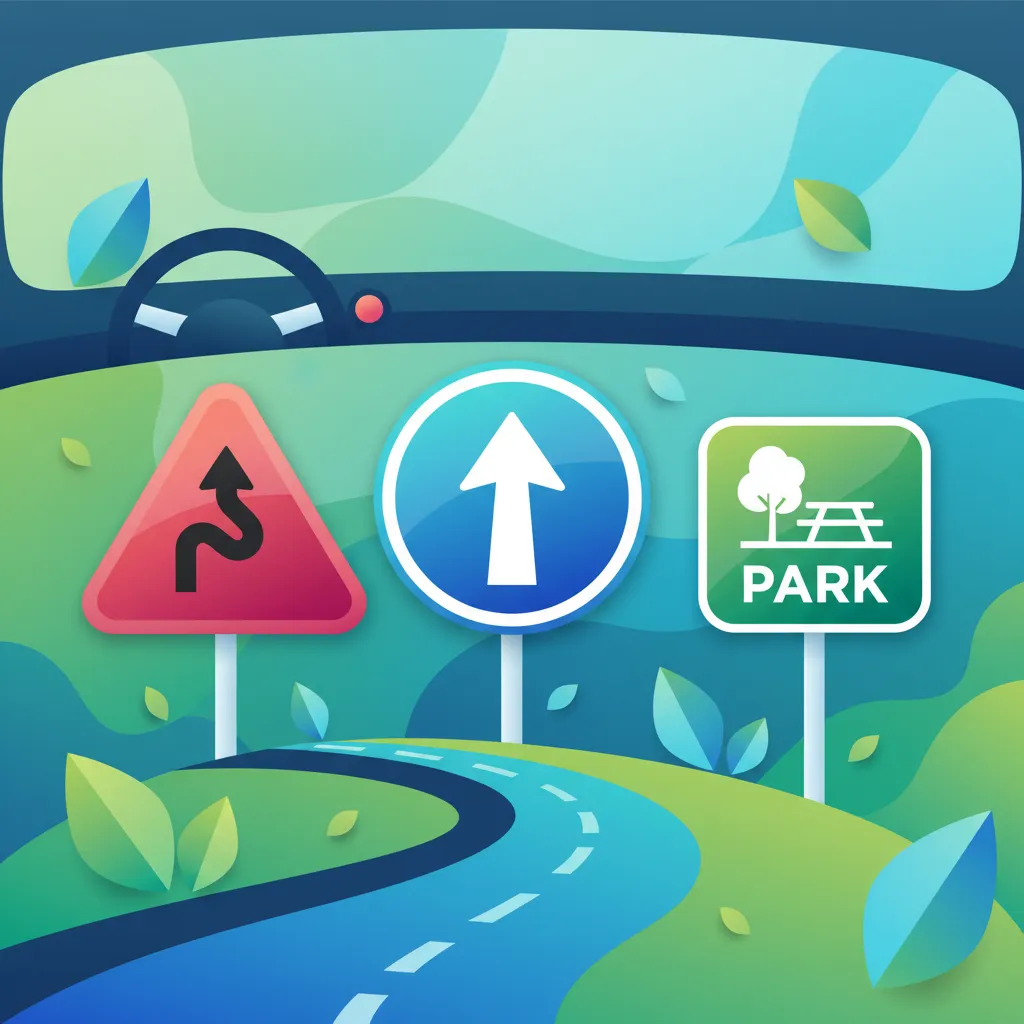
This lesson categorizes Icelandic road signs into regulatory signs that dictate mandatory actions, warning signs that alert drivers to hazards, and informational signs that provide guidance. It explains the distinctive shapes and colour schemes for each category, such as circles for prohibitions and triangles for warnings. By mastering these conventions, students will be able to interpret sign intent instantly and adapt their driving behaviour accordingly to comply with legal obligations.

This lesson dissects the three-color traffic light system, detailing the meaning of red, amber, and green signals, including flashing lights and directional arrows. It explains how signal timing impacts moped riders and the legal requirement to obey all signals at intersections. Proper interpretation is crucial for navigating signalized junctions safely and avoiding conflicts with other traffic.
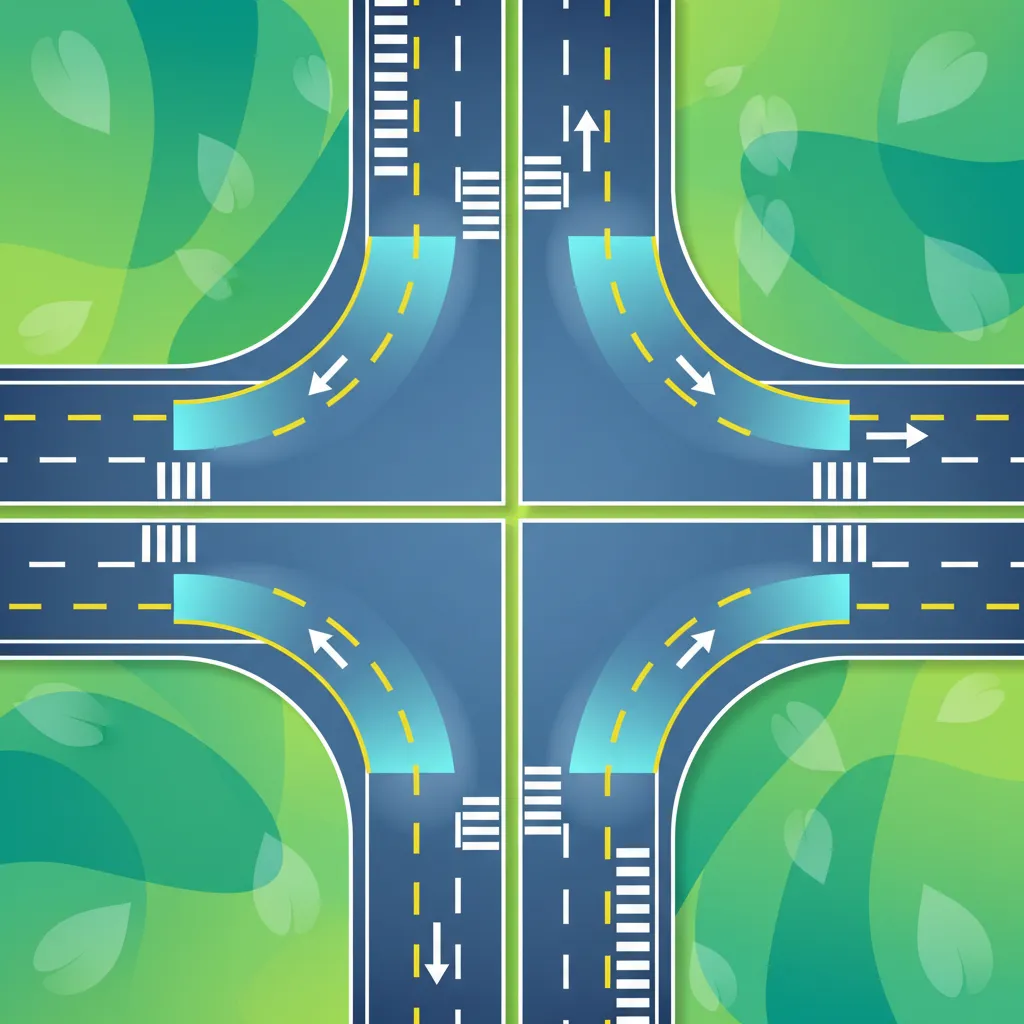
This lesson provides a comprehensive overview of the road markings found on Icelandic roads, from solid and broken lane lines to symbols indicating turning lanes and pedestrian crossings. The content details the visual meanings of each marking, such as solid lines indicating no crossing and broken lines permitting lane changes. Additionally, the lesson addresses the purpose of reflective markers and surface textures used in low-visibility or icy conditions, providing a framework for interpreting pavement cues.
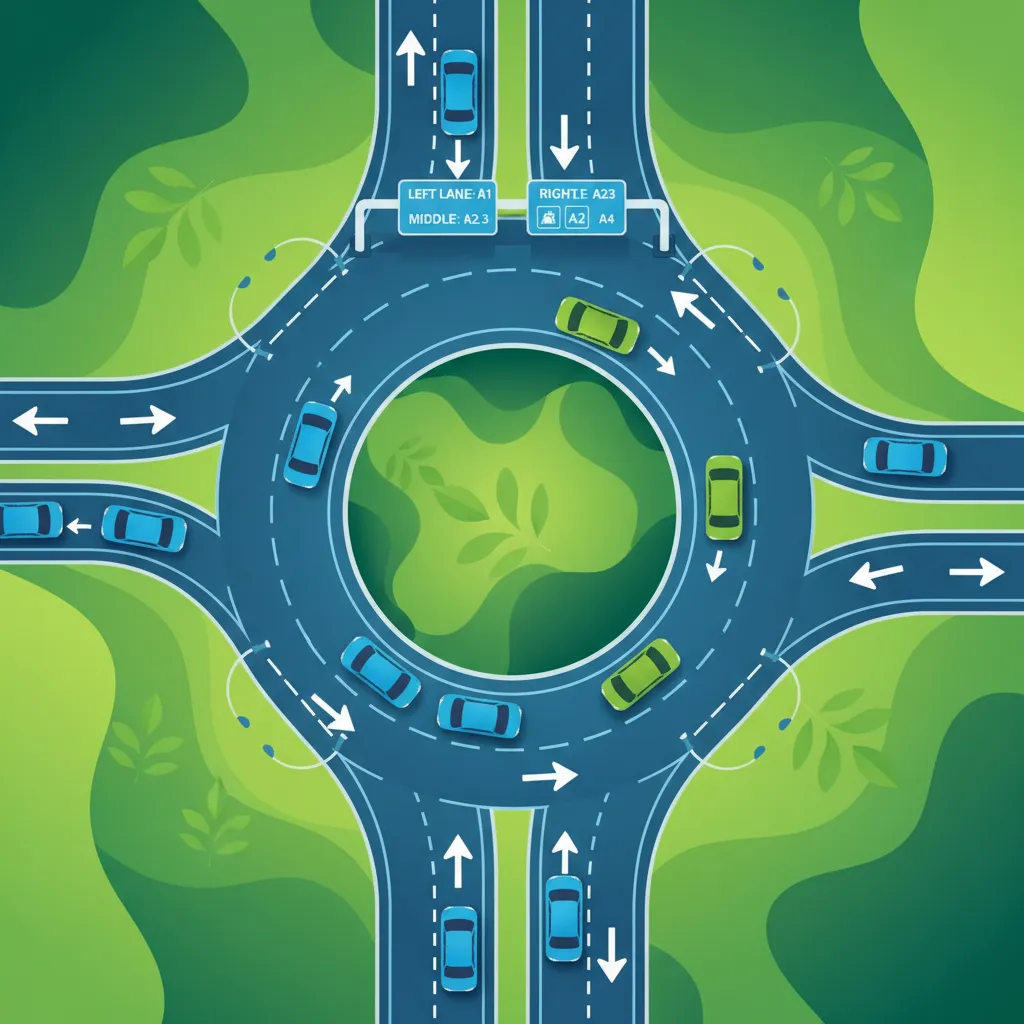
This lesson provides a detailed guide to navigating roundabouts, focusing on the rule to yield to circulating traffic before entering. It covers correct lane positioning for different exits, proper signaling, and maintaining a safe speed within the roundabout. Special guidance is provided for moped riders to enhance their visibility and safety among larger vehicles.
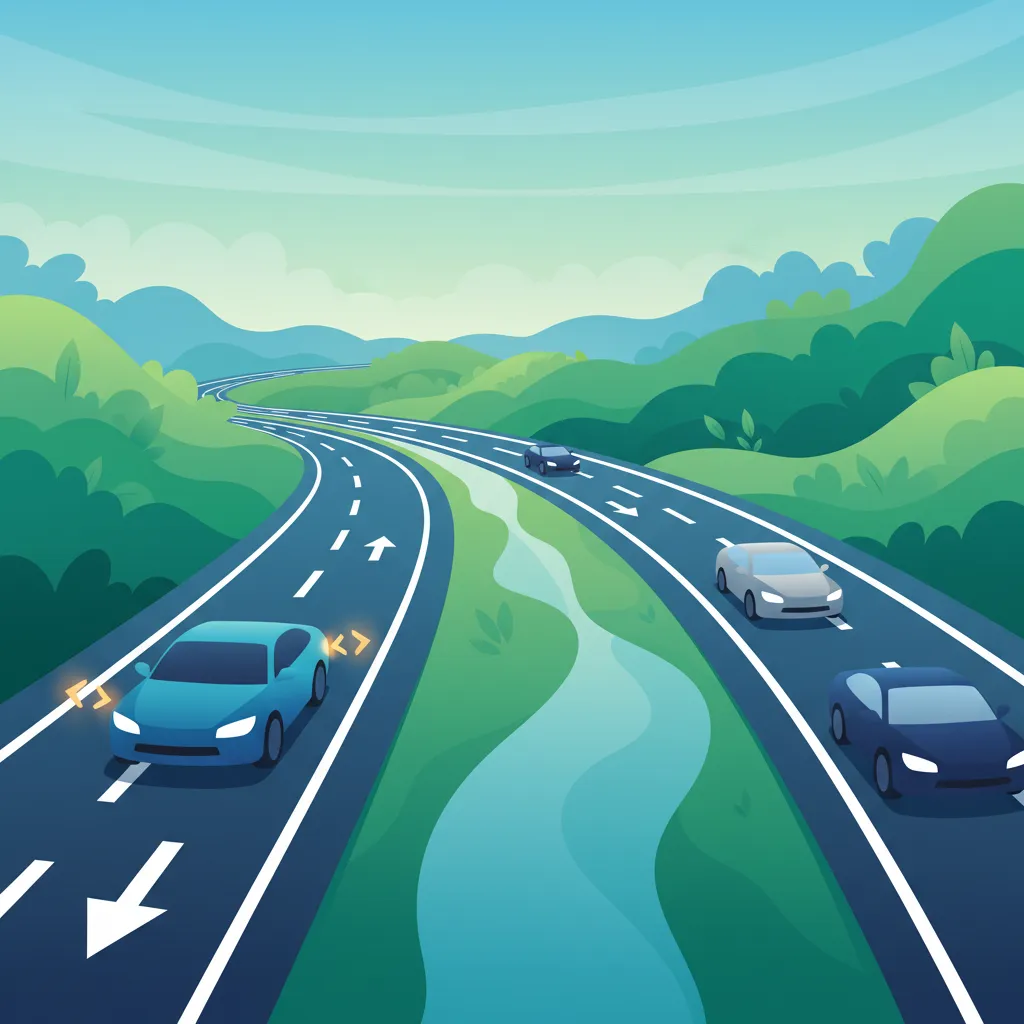
This lesson details the fundamentals of lane discipline and proper turning techniques for moped riders. It covers the correct use of turn signals, judging appropriate cornering speed, and executing safe lane changes. The material provides a step-by-step guide to navigating intersections and curves with control and predictability, ensuring safety for the rider and other road users.
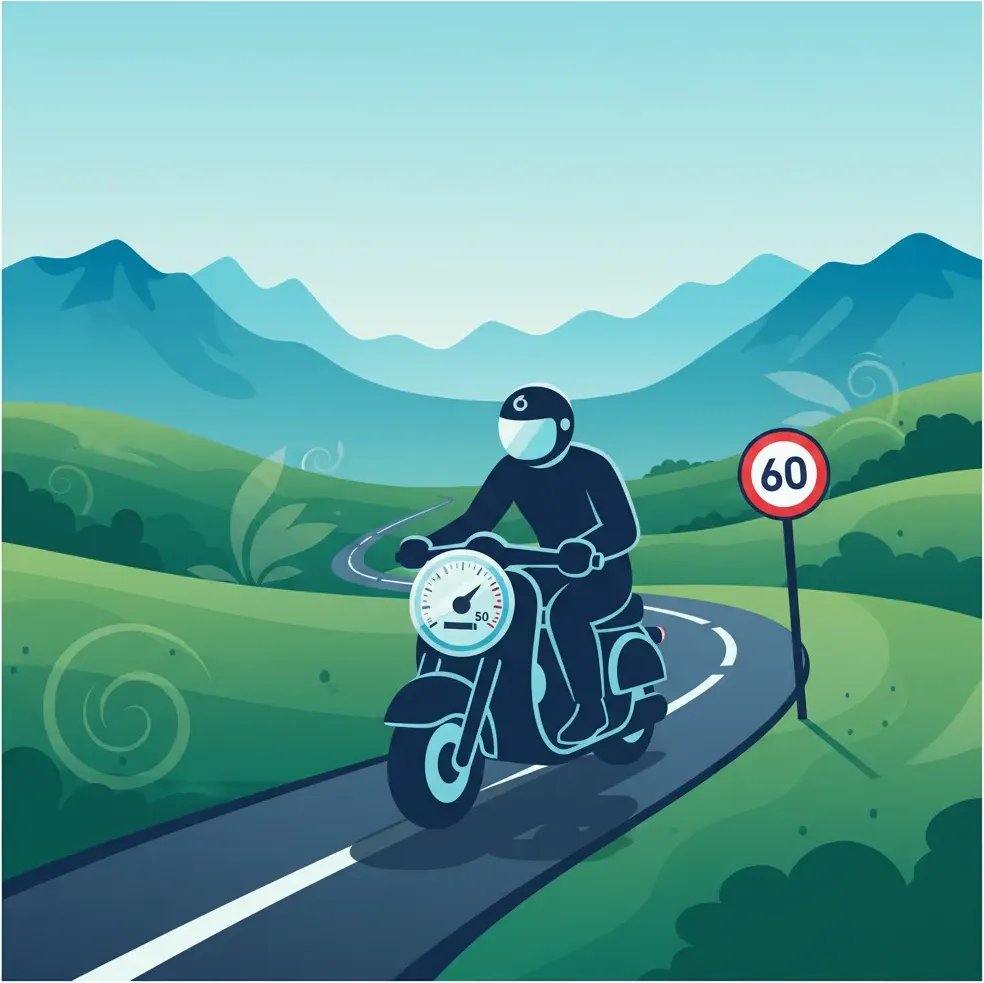
This lesson covers the statutory speed limits applicable to Category AM vehicles in various environments, from urban centers to rural roads. It emphasizes the critical importance of adapting speed to conditions such as rain, wind, or poor visibility. Riders will learn practical techniques for managing acceleration and maintaining a safe, legal speed at all times.

This lesson focuses on methods to enhance a rider's visibility, covering high-visibility clothing, reflective materials, and strategic lighting. Learners will understand how to use daytime running lights and position themselves to minimize time in others' blind spots. These proactive techniques are essential for being seen by other road users, significantly reducing the risk of collisions.

This lesson explores the conduct required at uncontrolled crossings where the right-hand rule typically applies. It emphasizes the need to reduce speed, be prepared to stop, and establish clear communication with other road users. Riders will learn to assess the situation carefully and proceed only when it is confirmed to be safe, a critical skill for rural and residential areas.
Compare and contrast regulatory road signs with warning signs. Learn the distinct shapes, colors, and meanings of each type to understand their role in road safety and legal compliance for mopeds.
This lesson categorizes Icelandic road signs into regulatory signs that dictate mandatory actions, warning signs that alert drivers to hazards, and informational signs that provide guidance. It explains the distinctive shapes and colour schemes for each category, such as circles for prohibitions and triangles for warnings. By mastering these conventions, students will be able to interpret sign intent instantly and adapt their driving behaviour accordingly to comply with legal obligations.
This lesson familiarizes learners with signs that warn of upcoming hazards, such as sharp curves, slippery surfaces, or animal crossings. It emphasizes the importance of early hazard recognition and response, which is especially critical for vulnerable moped riders. Understanding these signs allows riders to anticipate road conditions and adjust their riding strategy accordingly for increased safety.
This lesson provides a comprehensive overview of the road markings found on Icelandic roads, from solid and broken lane lines to symbols indicating turning lanes and pedestrian crossings. The content details the visual meanings of each marking, such as solid lines indicating no crossing and broken lines permitting lane changes. Additionally, the lesson addresses the purpose of reflective markers and surface textures used in low-visibility or icy conditions, providing a framework for interpreting pavement cues.
This lesson focuses on interpreting road surface markings, including solid and broken lines that govern lane changes and positioning. Learners will understand the rules associated with turning arrows, pedestrian crossings, and markings for dedicated lanes. Correctly reading these markings is essential for maintaining proper lane discipline and navigating complex road layouts safely.
This lesson focuses on the regulations governing highland travel and off-road restrictions, including environmental protections that prohibit off-road driving in certain zones. The lesson details how to interpret highland road signage, understand restrictions related to wildlife crossings like reindeer and sheep, and adhere to road width management guidelines. Learners are also instructed on using emergency contact points in sparsely populated regions.
This lesson dissects the three-color traffic light system, detailing the meaning of red, amber, and green signals, including flashing lights and directional arrows. It explains how signal timing impacts moped riders and the legal requirement to obey all signals at intersections. Proper interpretation is crucial for navigating signalized junctions safely and avoiding conflicts with other traffic.
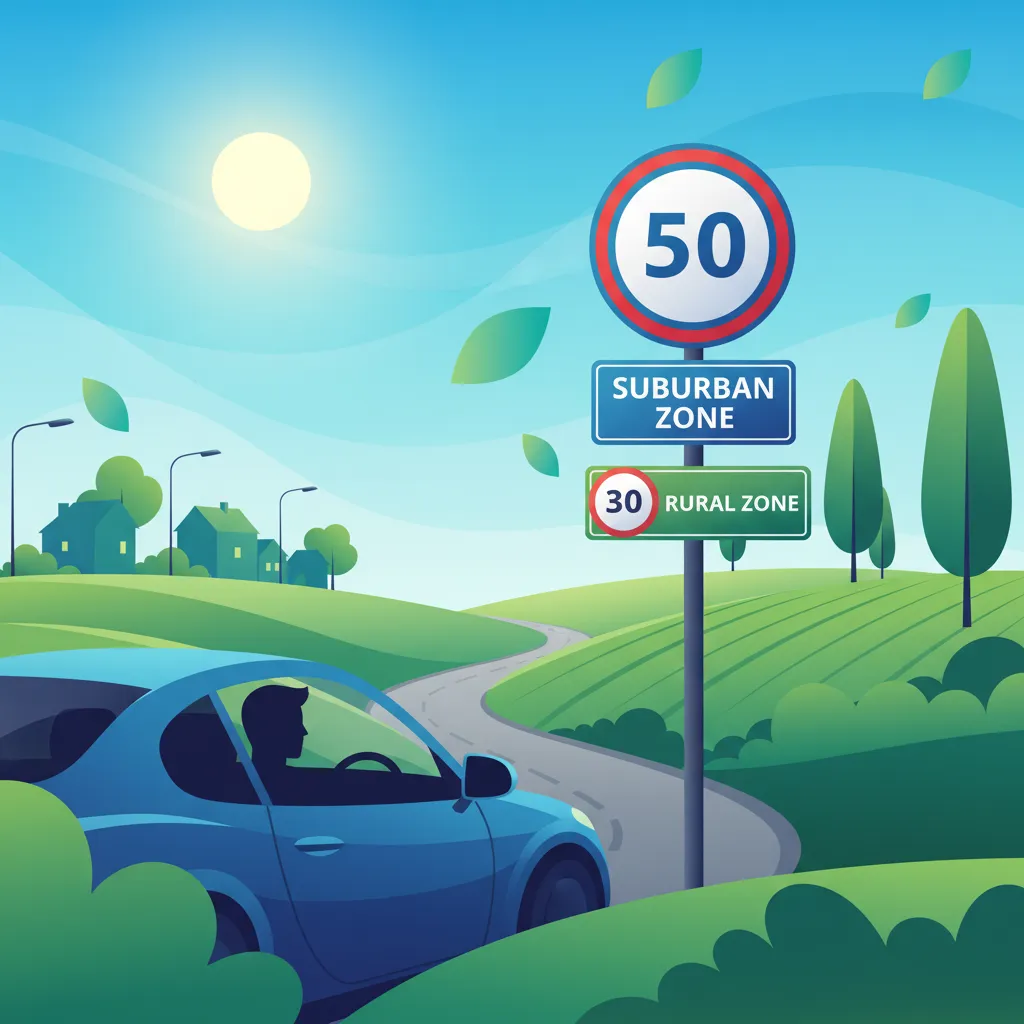
This lesson outlines the speed limits applicable to various road types in Iceland, from urban streets to rural highways and special zones like tunnels. Learners will interpret speed sign markings, understand variable speed limits that adjust for weather, and recognize when temporary speed reductions are enforced. The content also covers speed monitoring devices and the legal consequences of exceeding limits, emphasizing speed awareness in all driving contexts.
This lesson explores the proper use of lane markings to maintain correct vehicle centering and adherence to the prescribed traffic flow direction in Iceland. The content describes how to interpret solid and broken lines, maintain safe following distances within a lane, and avoid unintended lane departures. Learners also examine the legal prohibitions on using the road shoulder for general travel, ensuring compliance with lane discipline rules for overall traffic safety.
This lesson focuses on the operation of traffic lights in Iceland, describing standard three-phase cycles (red, amber, green) and variations such as flashing amber for yielding. Learners will also explore dedicated signals for pedestrians, cyclists, and turning movements, including arrow indications. The lesson explains how signal timing integrates with right-of-way rules at intersections, ensuring drivers can interpret and respond to each light state to maintain safety.

This lesson helps learners develop an understanding of how drivers perceive and assess risks on Icelandic roads, particularly under variable weather and lighting conditions. The content discusses mental models used to anticipate the actions of other road users and the importance of identifying subtle hazards. By analysing environmental cues and applying systematic hazard perception strategies, students learn to enhance their situational awareness and make safer driving decisions.
Find clear answers to common questions learners have about Regulatory Road Signs for Mopeds. Learn how the lesson is structured, which driving theory objectives it supports, and how it fits into the overall learning path of units and curriculum progression in Iceland. These explanations help you understand key concepts, lesson flow, and exam focused study goals.
Regulatory signs impose legal obligations or prohibitions, such as speed limits or mandatory directions, and must be obeyed. Warning signs alert you to potential hazards ahead, like sharp curves or pedestrian crossings, and advise caution. For mopeds, understanding the difference is key to knowing when a rule must be followed versus when extra vigilance is needed.
Generally, speed limit signs indicate the maximum legal speed for all vehicles unless otherwise specified. For Category AM mopeds, the standard speed limits apply, but riders must always adapt their speed to conditions and ensure it is safe for their vehicle. Some signs might indicate specific limits for certain vehicle types, which are crucial for mopeds to observe.
Regulatory signs often have accompanying supplementary plates or are placed in contexts where their applicability to mopeds is clear. For instance, signs prohibiting certain vehicles might show symbols of cars or trucks, implying mopeds are permitted unless a specific moped symbol is shown. Always pay attention to the sign's context and any accompanying text or symbols.
Mandatory direction signs are typically blue and circular or square with white arrows indicating the required direction of travel (e.g., 'compulsory ahead' or 'compulsory turn'). These signs instruct you on which path you must take and are essential for navigating junctions correctly and safely as a moped rider.
Ignoring a regulatory road sign, such as a 'no entry' or a speed limit, constitutes a traffic violation. This can lead to fines, penalty points, or other legal consequences. For mopeds, adhering strictly to these signs is vital for your safety and compliance with Icelandic traffic law.
Utilize our advanced practice set search to pinpoint the exact Icelandic driving theory topics you need to review. Filter by subject, difficulty, or question type to create a highly effective study plan and ensure you are fully prepared for your official driving licence test in Iceland.