This lesson explores the essential warning and information signs found on Icelandic roads, focusing on how they help you predict hazards while riding a moped. As part of our Category AM course, it prepares you to identify road risks in advance, allowing you to adjust your speed and riding style effectively for the theory exam.
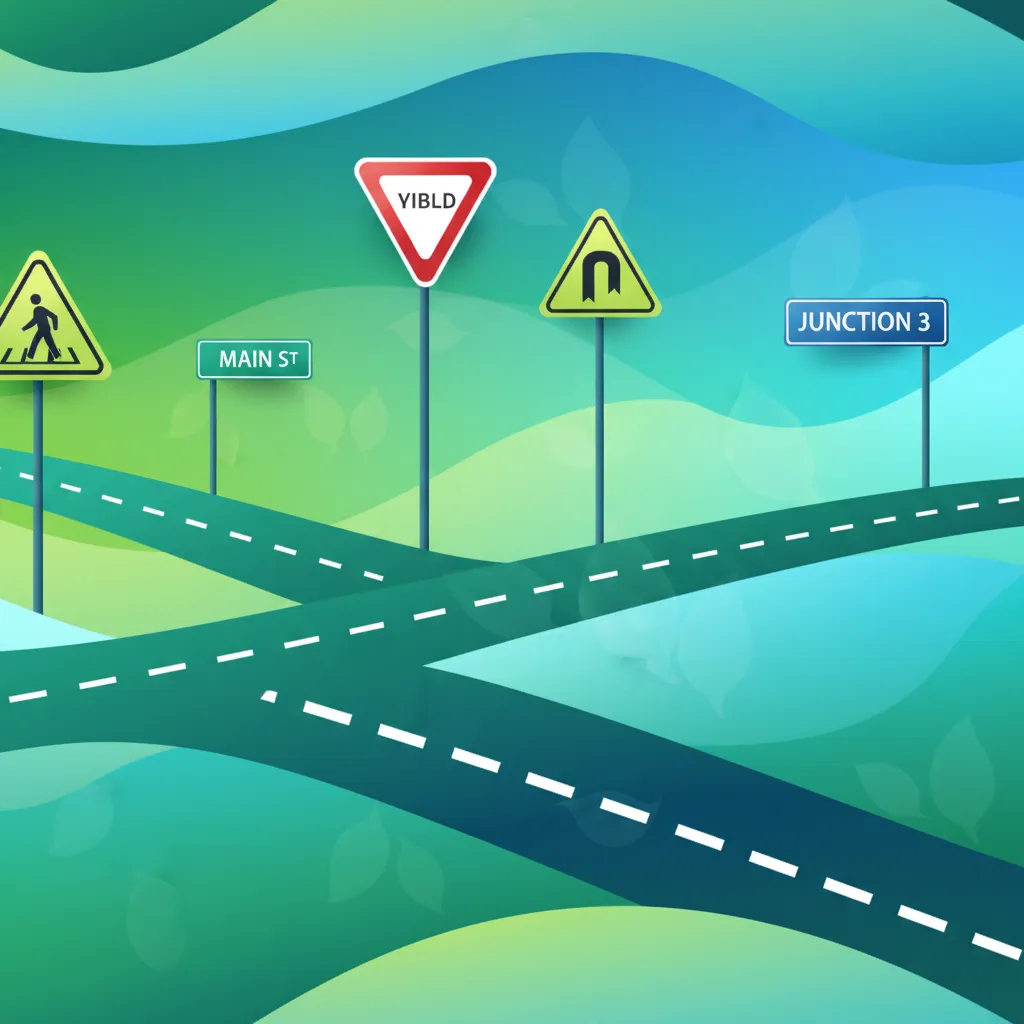
Lesson content overview
Navigating Iceland's diverse road network safely requires a thorough understanding of all traffic signs. For riders of Category AM mopeds, recognizing and correctly interpreting warning and information signs is paramount for safe passage. These signs provide crucial advance notice of hazards and useful data for journey planning, allowing you to anticipate potential dangers and make timely, informed decisions. This lesson will equip you with the knowledge to identify these essential signs and react appropriately, ensuring a safer riding experience on Icelandic roads.
Road signs serve as a universal language for road users, guiding behavior and ensuring safety. While regulatory signs dictate mandatory actions (like stopping or giving way), warning signs alert you to upcoming dangers, and information signs provide helpful guidance for your journey. For moped riders, with their unique vehicle characteristics and vulnerabilities, these proactive cues are vital for maintaining control and avoiding hazardous situations.
A triangular sign with a red border, indicating a potential hazard or unusual road condition ahead, requiring a specific response from the driver.
A rectangular or square sign, typically with a blue or green background, providing guidance, distances, or details about services and road features.
The primary goal of these signs is to reduce cognitive load and reaction time, especially in rapidly changing road environments. By standardizing the visual communication of potential dangers and useful data, Icelandic road authorities aim to promote consistent and safe rider behavior.
Anticipation is Key: Always scan the road ahead for warning and information signs. Early recognition gives you more time to process the information and adjust your riding strategy, which is critical for the limited stability and braking performance of a moped.
Effective sign interpretation is built upon several core principles that enhance safety and compliance.
Anticipation: Riders must constantly look ahead to identify potential hazards indicated by warning signs. This proactive approach allows sufficient time to slow down, adjust lane position, or prepare for evasive action well before encountering the hazard.
Symbol Standardisation: All warning and information signs in Iceland conform to a uniform shape, colour, and pictogram. This standardisation ensures immediate recognition, regardless of language barriers, facilitating quicker decision-making for all road users.
Hierarchy of Significance: When multiple signs appear together, warning signs always take precedence over informational signs. Safety-critical hazards must be addressed first before considering less urgent informational cues.
Contextual Interpretation: The meaning and required response to a sign can vary based on factors like road type, prevailing weather conditions, and crucially, the type of vehicle you are operating. As a moped rider, you must interpret signs with respect to your vehicle's specific limitations in speed, acceleration, and stability.
Legal Obligation: While information signs are advisory, many warning signs impose mandatory actions under Icelandic traffic law. Ignoring these signs can lead to traffic violations, fines, and significantly increase the risk of accidents.
Warning signs are your first line of defense against unexpected road conditions. They are designed to grab your attention quickly, urging you to prepare for potential dangers ahead. These signs are typically triangular with a red border and a black pictogram on a white or yellow background.
Understanding the specific pictograms within these signs is crucial. Each symbol represents a distinct type of hazard, demanding a particular adjustment to your riding.
These signs alert you to changes in the road's alignment, indicating the direction and severity of upcoming bends. Mopeds are particularly susceptible to instability on curves if speed is not appropriately adjusted.
These signs alert you to potential hazards related to the road surface itself, which can drastically affect a moped's traction.
These signs indicate areas where animals are frequently encountered on or near the road. Animal collisions can be extremely dangerous for moped riders.
These signs warn of upcoming junctions or areas where your view of the road ahead is restricted.
Common Misunderstanding: Never assume a warning sign applies only to larger vehicles. Mopeds, due to their lighter weight and reduced stability, often require even greater caution and speed reduction in the face of hazards.
Under Icelandic traffic regulations, failure to react appropriately to a warning sign is considered a traffic violation. Riders must adjust their speed and riding style to safely navigate the indicated hazard.
Information signs are designed to assist you in route planning, provide contextual data, and enhance your overall riding experience. While they don't typically demand immediate mandatory action like warning signs, understanding and using this information responsibly is a part of safe riding. These signs are generally rectangular or square, with blue or green backgrounds and white pictograms or text.
Information signs provide a broad range of data, from practical services to guidance on road features.
These signs are crucial for navigation, indicating distances to upcoming towns, exits, or key destinations.
These signs point you towards essential services and amenities that can be critical for a long ride.
While technically regulatory, some signs provide information that influences how you interpret rules, often indicating specific zones or conditions.
Information vs. Obligation: While information signs don't impose immediate legal obligations, neglecting their advice can still lead to unsafe situations or inconvenience. For instance, ignoring a "Gas station 5 km" sign when your tank is low could leave you stranded.
The design and placement of road signs are not arbitrary; they follow strict standards to maximize effectiveness and ensure rider safety.
Signs are strategically placed to give riders sufficient time to react safely. The distance from a sign to the hazard it describes depends on the expected speed limits and road conditions.
Scan Ahead: Continuously look far down the road to spot signs as early as possible.
Estimate Distance: Mentally estimate the distance to the hazard based on typical sign placement rules (e.g., usually 50-200m before a hazard, depending on speed).
Adjust Early: Begin your speed and position adjustments immediately upon recognizing a warning sign, not when you reach the hazard itself.
Adhering to road signs is a legal requirement and a fundamental aspect of defensive riding in Iceland. Specific rules govern how moped riders must respond to different types of signs.
When a warning sign indicates a hazard such as a sharp curve, a steep descent, or a slippery surface, the moped rider must adjust their speed to a level that allows safe navigation of that hazard. This is a mandatory requirement under Icelandic Traffic Regulations (§28).
Upon encountering an animal crossing sign, riders must be prepared to stop or take evasive action to avoid colliding with animals. This is especially true on rural roads, near forests, or in known wildlife areas.
While information signs are not legally binding in terms of requiring immediate action, riders are expected to consider the information they provide to maintain safety and plan their journey responsibly. Under the general duty of care principle, failing to use this information – for example, running out of fuel despite an earlier sign indicating the distance to a gas station – could be deemed negligence if it leads to an unsafe situation.
Road authorities are legally required to place signs at a distance that ensures a rider traveling at the legal speed limit can see and react to the sign at least 100 meters before the actual hazard. This guideline ensures adequate reaction time for all vehicles, including mopeds.
Moped riders often face unique challenges when interpreting and reacting to road signs. Awareness of common pitfalls can prevent accidents and legal infringements.
The effective interpretation of warning and information signs is highly dependent on surrounding conditions. A prudent moped rider adapts their response based on these variables.
The direct link between following sign instructions and safety is clear and critical for moped riders.
Mopeds, with their lighter mass and often smaller wheels, have inherently less stability compared to cars, especially during sudden maneuvers or on uneven surfaces. This makes the physics of stability particularly relevant when reacting to warning signs. The 1 to 1.5 seconds reaction time for the average driver, combined with the moped's braking distance (which increases significantly with speed, load, and poor road conditions), dictates why early warning and prompt speed reduction are paramount. Standardized warning signs also help counteract risk compensation, where riders might become overconfident and underestimate hazards.
Understanding key terminology ensures clear communication and comprehensive knowledge of road signs.
To solidify your understanding, consider these common scenarios an Icelandic moped rider might encounter:
Mastering the interpretation and appropriate reaction to warning and information signs is a fundamental skill for every Icelandic Moped (Category AM) rider.
By diligently applying these principles, you will enhance your safety, reduce the risk of accidents, and confidently navigate the roads of Iceland on your moped.
Warning signs (red triangles) demand immediate mandatory speed adjustments to mitigate hazards like curves, slippery surfaces, and animal crossings, while information signs (blue rectangles) provide advisory guidance for route planning and services. Moped riders face heightened vulnerability due to limited stability and braking performance compared to larger vehicles, requiring even greater caution than the sign alone might suggest for other road users. Sign placement follows strict visibility requirements of at least 100 meters before the hazard, and riders must adapt responses based on weather, lighting, road type, and vehicle load. Proper sign interpretation and compliance with Icelandic traffic law directly reduce accident risk and ensure safer navigation of Iceland's diverse road conditions.
A short set of high-value points that capture the most important learning from this lesson.
Warning signs are triangular with a red border and black pictogram on a white/yellow background, indicating mandatory hazard responses.
Information signs are rectangular or square with blue/green backgrounds providing non-binding guidance for route planning and services.
Moped riders must reduce speed appropriately for hazards including sharp curves, slippery surfaces, and animal crossings, as mopeds have less stability than larger vehicles.
Under Icelandic traffic law (§28), failure to adjust speed for warning signs is a traffic violation, not just advisory.
Sign visibility distance is legally required to be at least 100 meters before the hazard, calculated for typical vehicle speeds including mopeds.
Explore all units and lessons included in this driving theory course.
Triangle with red border = warning sign requiring mandatory speed adjustment; rectangle with blue/green = information sign that is advisory only.
Mopeds have narrower wheelbase and lighter weight, making them particularly vulnerable on curves and slippery surfaces even when compared to cars.
Reaction time averages 1 to 1.5 seconds, and braking distance increases significantly with speed, load, and poor road conditions.
When multiple signs appear, warning signs always take precedence over information signs in terms of safety-critical response.
Contextual factors like weather, road type, lighting conditions, and vehicle load all affect how you should interpret signs and adjust your riding.
Maintaining high speed through a sharp curve despite the warning sign, leading to loss of traction or running wide, especially on wet surfaces.
Treating a 'Recommended Speed' sign as either a mandatory limit or ignoring it completely, rather than understanding it as advisory guidance for challenging sections.
Failing to reduce speed for animal crossing signs and not scanning road shoulders, leading to sudden collisions with deer, sheep, or reindeer.
Assuming slippery surface warnings apply primarily to cars and not adjusting braking for a moped's lower stability on wet pavement.
Running out of fuel after ignoring distance signs to towns and services because no backup plan was made for refueling.
Lesson content overview
A short set of high-value points that capture the most important learning from this lesson.
Warning signs are triangular with a red border and black pictogram on a white/yellow background, indicating mandatory hazard responses.
Information signs are rectangular or square with blue/green backgrounds providing non-binding guidance for route planning and services.
Moped riders must reduce speed appropriately for hazards including sharp curves, slippery surfaces, and animal crossings, as mopeds have less stability than larger vehicles.
Under Icelandic traffic law (§28), failure to adjust speed for warning signs is a traffic violation, not just advisory.
Sign visibility distance is legally required to be at least 100 meters before the hazard, calculated for typical vehicle speeds including mopeds.
Explore all units and lessons included in this driving theory course.
Triangle with red border = warning sign requiring mandatory speed adjustment; rectangle with blue/green = information sign that is advisory only.
Mopeds have narrower wheelbase and lighter weight, making them particularly vulnerable on curves and slippery surfaces even when compared to cars.
Reaction time averages 1 to 1.5 seconds, and braking distance increases significantly with speed, load, and poor road conditions.
When multiple signs appear, warning signs always take precedence over information signs in terms of safety-critical response.
Contextual factors like weather, road type, lighting conditions, and vehicle load all affect how you should interpret signs and adjust your riding.
Maintaining high speed through a sharp curve despite the warning sign, leading to loss of traction or running wide, especially on wet surfaces.
Treating a 'Recommended Speed' sign as either a mandatory limit or ignoring it completely, rather than understanding it as advisory guidance for challenging sections.
Failing to reduce speed for animal crossing signs and not scanning road shoulders, leading to sudden collisions with deer, sheep, or reindeer.
Assuming slippery surface warnings apply primarily to cars and not adjusting braking for a moped's lower stability on wet pavement.
Running out of fuel after ignoring distance signs to towns and services because no backup plan was made for refueling.
Explore search topics learners often look for when studying Warning and Information Signs. These topics reflect common questions about road rules, driving situations, safety guidance, and lesson level theory preparation for learners in Iceland.
Browse additional driving theory lessons that cover connected traffic rules, road signs, and common driving situations related to this topic. Improve your understanding of how different rules interact across everyday traffic scenarios.
Understand the critical meaning of triangular warning signs and rectangular information signs in Iceland. Learn how to interpret their symbols and pictograms to anticipate hazards and navigate safely on Icelandic roads.
This lesson categorizes Icelandic road signs into regulatory signs that dictate mandatory actions, warning signs that alert drivers to hazards, and informational signs that provide guidance. It explains the distinctive shapes and colour schemes for each category, such as circles for prohibitions and triangles for warnings. By mastering these conventions, students will be able to interpret sign intent instantly and adapt their driving behaviour accordingly to comply with legal obligations.
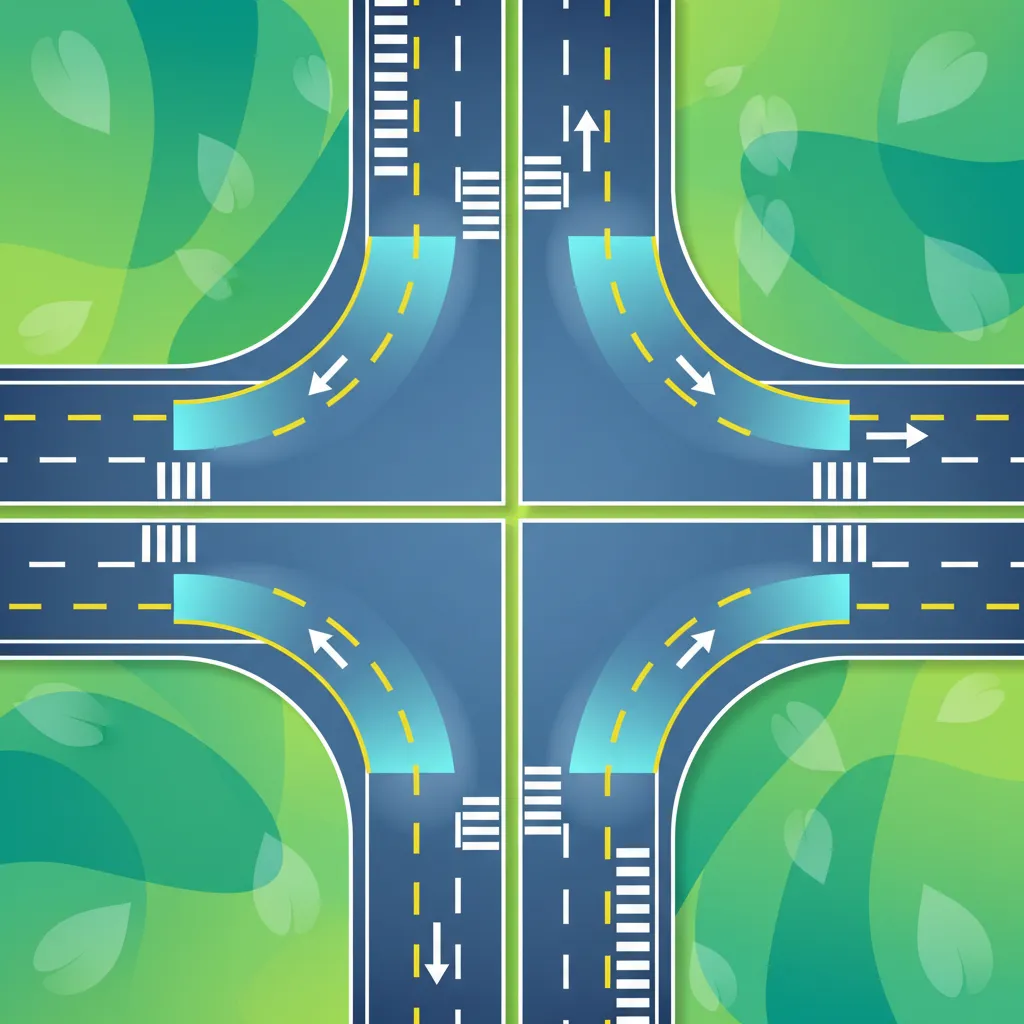
This lesson provides a comprehensive overview of the road markings found on Icelandic roads, from solid and broken lane lines to symbols indicating turning lanes and pedestrian crossings. The content details the visual meanings of each marking, such as solid lines indicating no crossing and broken lines permitting lane changes. Additionally, the lesson addresses the purpose of reflective markers and surface textures used in low-visibility or icy conditions, providing a framework for interpreting pavement cues.
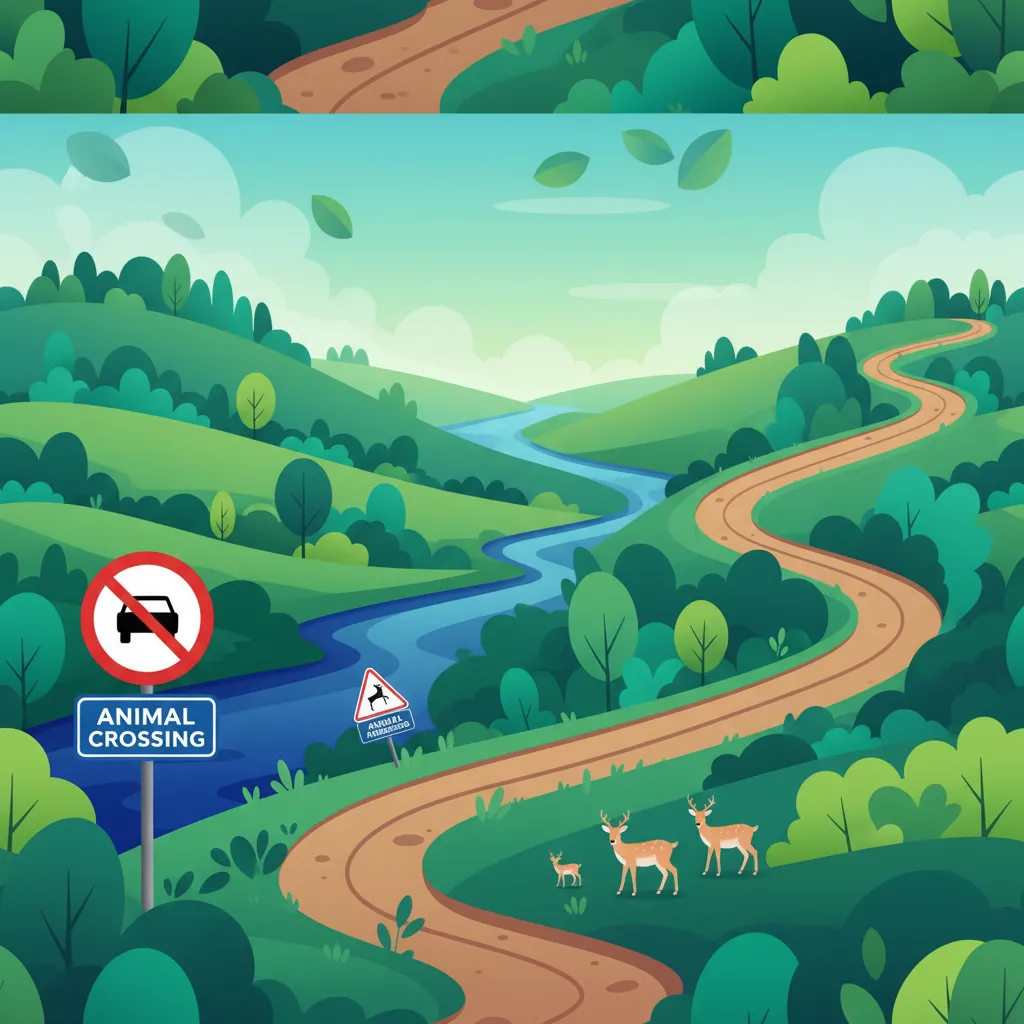
This lesson focuses on the regulations governing highland travel and off-road restrictions, including environmental protections that prohibit off-road driving in certain zones. The lesson details how to interpret highland road signage, understand restrictions related to wildlife crossings like reindeer and sheep, and adhere to road width management guidelines. Learners are also instructed on using emergency contact points in sparsely populated regions.
This lesson focuses on interpreting road surface markings, including solid and broken lines that govern lane changes and positioning. Learners will understand the rules associated with turning arrows, pedestrian crossings, and markings for dedicated lanes. Correctly reading these markings is essential for maintaining proper lane discipline and navigating complex road layouts safely.
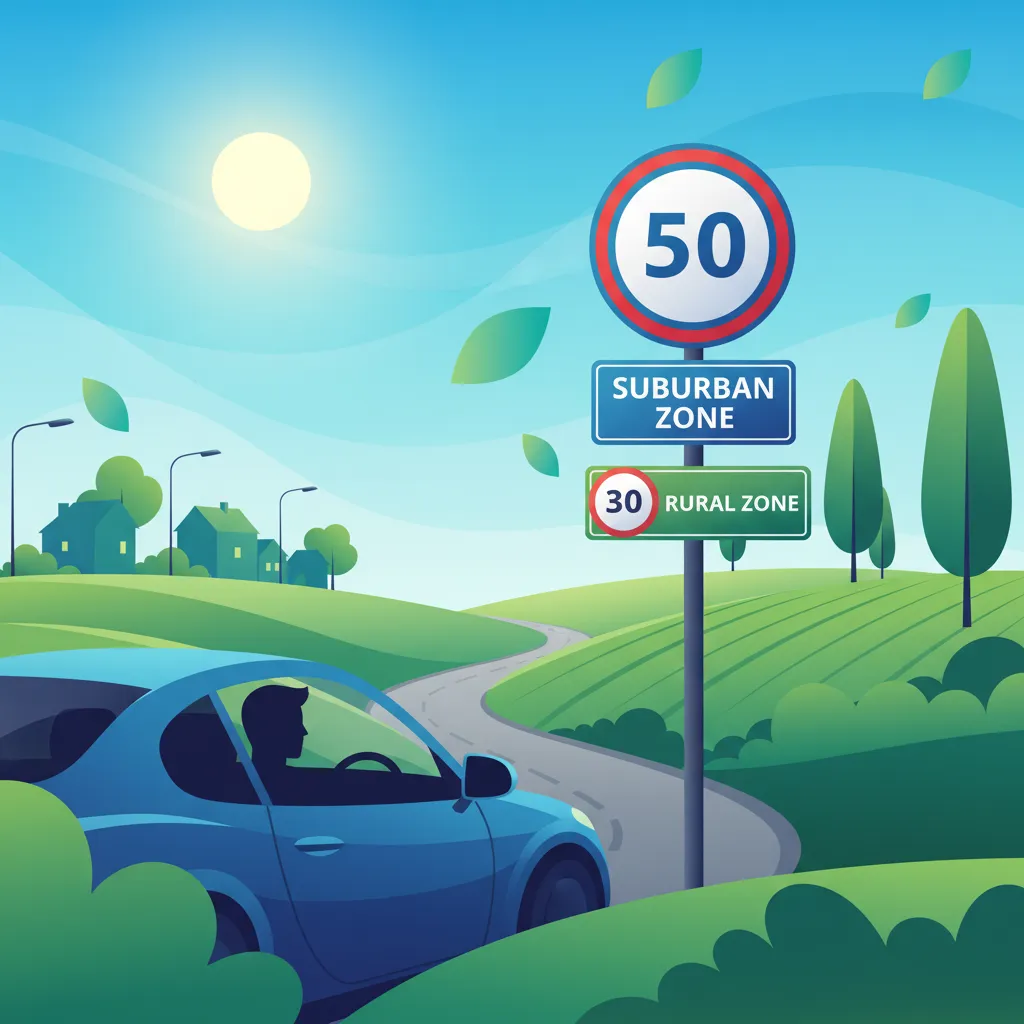
This lesson outlines the speed limits applicable to various road types in Iceland, from urban streets to rural highways and special zones like tunnels. Learners will interpret speed sign markings, understand variable speed limits that adjust for weather, and recognize when temporary speed reductions are enforced. The content also covers speed monitoring devices and the legal consequences of exceeding limits, emphasizing speed awareness in all driving contexts.
This lesson explores the proper use of lane markings to maintain correct vehicle centering and adherence to the prescribed traffic flow direction in Iceland. The content describes how to interpret solid and broken lines, maintain safe following distances within a lane, and avoid unintended lane departures. Learners also examine the legal prohibitions on using the road shoulder for general travel, ensuring compliance with lane discipline rules for overall traffic safety.
This lesson examines the calculation of safe following distances using the two-second rule and formulas that factor in vehicle speed and road conditions. The content explains how reaction time, weather conditions like ice or rain, and vehicle load affect braking zones. Students also learn specific techniques for stopping on hills and how to avoid tailgating, thereby maintaining sufficient safety margins under all Icelandic weather conditions.
This lesson helps learners develop an understanding of how drivers perceive and assess risks on Icelandic roads, particularly under variable weather and lighting conditions. The content discusses mental models used to anticipate the actions of other road users and the importance of identifying subtle hazards. By analysing environmental cues and applying systematic hazard perception strategies, students learn to enhance their situational awareness and make safer driving decisions.

This lesson dissects the three-color traffic light system, detailing the meaning of red, amber, and green signals, including flashing lights and directional arrows. It explains how signal timing impacts moped riders and the legal requirement to obey all signals at intersections. Proper interpretation is crucial for navigating signalized junctions safely and avoiding conflicts with other traffic.
This lesson focuses on the operation of roundabouts, which are common in Icelandic towns and rural areas, and explains how drivers must yield to circulating traffic upon entry. The content covers how to interpret roundabout signage and follow lane markings to maintain correct positioning. Students also learn strategies for safe exit, handling multi-lane roundabouts, and recognizing deceptive entries that require heightened vigilance for smooth navigation.
Learn how weather, road type, and specific hazards like slippery surfaces or animal crossings affect the interpretation and necessary reaction to road signs in Iceland. Essential for safe moped riding.
This lesson categorizes Icelandic road signs into regulatory signs that dictate mandatory actions, warning signs that alert drivers to hazards, and informational signs that provide guidance. It explains the distinctive shapes and colour schemes for each category, such as circles for prohibitions and triangles for warnings. By mastering these conventions, students will be able to interpret sign intent instantly and adapt their driving behaviour accordingly to comply with legal obligations.
This lesson helps learners develop an understanding of how drivers perceive and assess risks on Icelandic roads, particularly under variable weather and lighting conditions. The content discusses mental models used to anticipate the actions of other road users and the importance of identifying subtle hazards. By analysing environmental cues and applying systematic hazard perception strategies, students learn to enhance their situational awareness and make safer driving decisions.
This lesson addresses the challenges of driving in rain and fog, focusing on strategies to maintain visibility and vehicle control. Learners will explore the correct use of windshield wipers, defoggers, and appropriate headlight settings, including when to use fog lights. The content also covers the increased risk of hydroplaning, the importance of adjusting speed in wet conditions, and the need to extend following distances to account for longer stopping distances.
This lesson focuses on interpreting road surface markings, including solid and broken lines that govern lane changes and positioning. Learners will understand the rules associated with turning arrows, pedestrian crossings, and markings for dedicated lanes. Correctly reading these markings is essential for maintaining proper lane discipline and navigating complex road layouts safely.
This lesson dissects the three-color traffic light system, detailing the meaning of red, amber, and green signals, including flashing lights and directional arrows. It explains how signal timing impacts moped riders and the legal requirement to obey all signals at intersections. Proper interpretation is crucial for navigating signalized junctions safely and avoiding conflicts with other traffic.
This lesson focuses on the principles of executing safe turns, highlighting the correct use of turn signals and lane positioning before initiating a turn. Learners examine the timing required for signaling, the rules governing right-turns and left-turn yields, and the importance of checking blind spots and cyclist lanes. The lesson also addresses the concept of turning radius to ensure drivers can complete turns without compromising the safety of others on the road.
This lesson provides a comprehensive overview of the road markings found on Icelandic roads, from solid and broken lane lines to symbols indicating turning lanes and pedestrian crossings. The content details the visual meanings of each marking, such as solid lines indicating no crossing and broken lines permitting lane changes. Additionally, the lesson addresses the purpose of reflective markers and surface textures used in low-visibility or icy conditions, providing a framework for interpreting pavement cues.

This lesson examines how strong winds and varying light conditions affect vehicle handling and safety, including techniques for maintaining stability under cross-winds and assessing gust intensity. The content also explains proper headlight usage during daylight, dusk, and nighttime, addressing glare reduction strategies and when to employ high-beam headlights. By mastering these concepts, drivers can navigate Icelandic weather and lighting challenges confidently and safely.
This lesson focuses on the regulations governing highland travel and off-road restrictions, including environmental protections that prohibit off-road driving in certain zones. The lesson details how to interpret highland road signage, understand restrictions related to wildlife crossings like reindeer and sheep, and adhere to road width management guidelines. Learners are also instructed on using emergency contact points in sparsely populated regions.
This lesson explores the proper use of lane markings to maintain correct vehicle centering and adherence to the prescribed traffic flow direction in Iceland. The content describes how to interpret solid and broken lines, maintain safe following distances within a lane, and avoid unintended lane departures. Learners also examine the legal prohibitions on using the road shoulder for general travel, ensuring compliance with lane discipline rules for overall traffic safety.
Find clear answers to common questions learners have about Warning and Information Signs. Learn how the lesson is structured, which driving theory objectives it supports, and how it fits into the overall learning path of units and curriculum progression in Iceland. These explanations help you understand key concepts, lesson flow, and exam focused study goals.
Mopeds are lightweight and vulnerable to road surface changes. Identifying a 'slippery road' or 'uneven surface' sign early allows you to reduce your speed smoothly before you reach the hazard, preventing loss of control.
While many signs in Iceland follow international standards, local signs often include specific warnings for weather conditions like strong winds or gravel roads that are unique to the Icelandic climate.
Yes, the official Icelandic theory exam often presents images of road signs and asks you to select the correct meaning or the appropriate action to take, making visual recognition a key skill.
You should immediately reduce your speed and increase your scanning distance. In Iceland, livestock often roam freely, and these signs warn you to be prepared for sudden obstacles in your path.
Utilize our advanced practice set search to pinpoint the exact Icelandic driving theory topics you need to review. Filter by subject, difficulty, or question type to create a highly effective study plan and ensure you are fully prepared for your official driving licence test in Iceland.