
Welcome to Lesson 12.2, focusing on Basic First-Aid and Injury Management. As part of the 'Accidents, Emergency Response & First Aid' unit within the Official Icelandic Driving License B Theory Course, this lesson provides crucial skills for handling injuries at accident scenes. Building on general accident awareness, you'll learn practical steps to assist victims and manage emergencies effectively, preparing you for real-world driving challenges and exam scenarios.

Lesson content overview
As a driver, encountering a road accident can be a highly stressful and challenging experience. Beyond your immediate legal obligations to stop and report, you have a crucial role to play in the critical moments following a collision, particularly when injuries are involved. This lesson provides foundational first-aid knowledge specifically tailored for drivers in Iceland, focusing on immediate medical interventions that can preserve life and prevent further harm until professional medical services arrive.
Understanding basic first-aid principles is not just a civic duty; it is a legal requirement under Icelandic traffic law to provide assistance to injured persons when capable and without undue risk to yourself. Prompt and correct actions, from securing the scene to initiating life-saving techniques like bleeding control or basic cardiopulmonary resuscitation (CPR), can significantly improve outcomes for accident victims. This chapter will guide you through the essential steps and considerations for managing injuries effectively and safely at a crash scene.
Before approaching any injured person or vehicle, your absolute first priority must be to ensure the safety of the accident scene. This protects not only yourself and the victims but also other road users. A secondary collision can occur if the scene is not adequately secured, leading to more injuries or fatalities.
To manage the scene effectively, activate your vehicle's hazard warning lights immediately to alert oncoming traffic. If your vehicle is involved and still operable, move it to a safe location away from the flow of traffic, if possible, without risking further injury or compromising evidence. On urban roads, place a warning triangle at least 30 metres behind your stopped vehicle. For rural roads or highways, this distance increases to at least 50 metres to give other drivers ample time to react.
Consider wearing reflective clothing, if available in your emergency kit, especially during low light conditions or at night. Continuously assess the environment for hazards such as leaking fuel, broken glass, downed power lines, or unstable vehicles. Never rush into a dangerous situation where you could become a victim yourself. If the scene is too dangerous, prioritize calling emergency services (112) and wait for professionals to arrive.
Once the scene is safe, your next step is to perform a rapid primary assessment of any injured individuals to identify immediate life-threatening conditions. This is commonly referred to as checking the ABCs: Airway, Breathing, and Circulation. This systematic approach helps you prioritize your actions and relay critical information to emergency services.
First, check if the victim's airway is open and clear. If a person is conscious and speaking, their airway is likely clear. For an unconscious person, gently open their airway by tilting their head back and lifting their chin. Look for any obstructions like vomit, blood, or foreign objects. If you suspect a spinal injury, avoid tilting the head; instead, use a jaw-thrust maneuver to open the airway without moving the neck.
Next, determine if the person is breathing. Look, listen, and feel for breathing for no more than 10 seconds. Look for chest rise and fall, listen for breath sounds, and feel for air movement on your cheek. If the person is not breathing or is only gasping (agonal breathing), assume they are in cardiac arrest and prepare to initiate CPR.
Finally, check for signs of circulation. Look for severe bleeding, which needs immediate attention. For an unconscious person, a quick check for a pulse can be done on the carotid artery in the neck. If there's no pulse and no breathing, assume cardiac arrest and begin CPR. Prioritize stopping any severe, life-threatening bleeding as this is a common and preventable cause of death in accident situations.
Always call 112 immediately if a victim is unconscious, not breathing, or suffering from severe bleeding after your primary assessment. Do not delay.
Severe external bleeding (hemorrhage) is a leading cause of preventable death in trauma. Knowing how to control bleeding can save a life. The most effective initial method is direct pressure.
Apply Direct Pressure: Place a clean cloth, bandage, or even your bare hand directly onto the wound and apply firm, continuous pressure. Do not remove the initial dressing, even if blood soaks through; simply add more material on top and continue pressure.
Elevate the Injured Limb (if no suspected fracture): If the bleeding is from an arm or leg, and you do not suspect a fracture or spinal injury, elevate the limb above the level of the heart to help reduce blood flow.
Apply a Pressure Bandage: Once bleeding is somewhat controlled, secure the dressing with a pressure bandage. Wrap it firmly but not so tightly that it cuts off circulation to the rest of the limb. Check for a pulse or feeling beyond the bandage to ensure it's not too tight.
Consider a Tourniquet (as a last resort): If direct pressure and elevation fail to control severe, life-threatening arterial bleeding (characterized by bright red blood spurting or flowing profusely), a tourniquet may be necessary. Apply the tourniquet 5-10 cm above the wound, between the wound and the heart. Tighten it until the bleeding stops and note the time of application. Tourniquets are for extreme situations as they can cause significant tissue damage if used improperly or for too long.
Always wear gloves from your first-aid kit, if available, to protect yourself from bloodborne pathogens.
Shock is a life-threatening condition that occurs when the body's organs and tissues do not receive an adequate flow of blood. This can happen due to significant blood loss (hypovolemic shock), heart failure (cardiogenic shock), or severe allergic reactions/spinal cord injuries (neurogenic shock). Recognizing and preventing shock is crucial.
Signs of shock include:
To help prevent or manage shock:
Never elevate the legs of a victim if you suspect a spinal or head injury, as this could worsen their condition. If a spinal injury is suspected, keep the victim absolutely still and flat.
If you encounter an unconscious victim who is not breathing and has no pulse, immediate Cardiopulmonary Resuscitation (CPR) is vital. CPR manually circulates blood and oxygen to the brain and other vital organs, buying time until professional medical help arrives.
Ensure Safety: Confirm the scene is safe for you and the victim.
Check Responsiveness: Tap the victim's shoulder and shout, "Are you okay?" If no response, assume unconsciousness.
Call 112: Instruct someone nearby to call 112 and find an AED. If you are alone, call 112 yourself.
Open Airway and Check for Breathing: Gently tilt the head back and lift the chin. Look, listen, and feel for breathing for no more than 10 seconds.
Start Chest Compressions: If not breathing normally, begin chest compressions immediately. Place the heel of one hand in the center of the victim's chest, with the other hand on top. Push hard and fast, at a rate of 100-120 compressions per minute, to a depth of at least 5 cm (about 2 inches). Ensure full chest recoil after each compression.
Provide Rescue Breaths (if trained and willing): After 30 compressions, give 2 rescue breaths. Pinch the victim's nose, seal your mouth over theirs, and breathe until the chest visibly rises. Avoid over-inflation. If you are not trained or unwilling to give breaths, continue with hands-only CPR.
Continue Cycle: Continue cycles of 30 compressions and 2 breaths until the AED arrives, the victim shows signs of life, or professional help takes over.
An Automated External Defibrillator (AED) is a portable device that can deliver an electric shock to restore a normal heart rhythm. Many public places, and increasingly some vehicles, are equipped with AEDs. If an AED becomes available, use it immediately. The device provides clear voice prompts and visual instructions.
Turn on the AED: Follow the voice prompts immediately.
Attach Pads: Expose the victim's bare chest. Place one pad on the upper right side of the chest, and the other on the lower left side, below the armpit. Ensure good skin contact.
Analyze Heart Rhythm: The AED will analyze the heart's rhythm. Ensure no one touches the victim during this analysis.
Deliver Shock (if advised): If a shock is advised, the AED will charge and prompt you to push a button. Shout "Clear!" to ensure no one is touching the victim before delivering the shock.
Continue CPR: Immediately after the shock (or if no shock is advised), continue CPR, starting with chest compressions, as prompted by the AED.
Fractures (broken bones) and spinal injuries are common in vehicle accidents. Improper handling can worsen these injuries, potentially leading to permanent damage, especially with spinal cord involvement.
If you suspect a fracture:
Any significant impact, especially to the head, neck, or back, can cause a spinal injury. Signs include neck or back pain, numbness, tingling, weakness, or paralysis.
The most critical rule for suspected spinal injuries is DO NOT MOVE THE VICTIM unless they are in immediate, life-threatening danger (e.g., vehicle fire, imminent explosion, submerged in water). Any unnecessary movement can cause irreversible damage to the spinal cord.
If movement is absolutely necessary:
Burns can occur from vehicle fires, hot fluids, or contact with superheated surfaces. Proper immediate care can reduce the severity of the burn and prevent infection.
Stop the Burning Process: Safely remove the victim from the source of the burn. If clothing is on fire, have them stop, drop, and roll, or smother the flames with a blanket.
Cool the Burn: Immediately cool the burn with cool (not ice-cold) running water for at least 10-20 minutes. This reduces tissue damage and pain.
Remove Constrictive Items: Gently remove any rings, watches, belts, or tight clothing from the burned area before swelling begins, unless they are stuck to the skin.
Cover the Burn: Cover the cooled burn with a clean, dry, non-fluffy dressing, such as a sterile burn sheet or a clean cloth. This helps prevent infection and reduces pain.
Keep Victim Warm: While cooling the burn, be mindful of the victim's overall body temperature. Cover unburned areas to prevent hypothermia, especially in colder climates like Iceland.
Never apply ice, butter, ointments, or any home remedies to a burn. Do not remove clothing that is stuck to a burn, as this can cause further tissue damage.
A properly stocked and up-to-date first-aid kit is an essential piece of safety equipment for any vehicle. In Iceland, it is a mandatory requirement for motor vehicles to carry a basic first-aid kit.
A typical vehicle first-aid kit should include:
Regularly check your kit's contents. Ensure all items are within their expiration dates and restock any used or depleted supplies. Knowing where your kit is and what it contains will allow for a swift response in an emergency.
After ensuring scene safety and providing immediate first aid, one of your most critical tasks is to contact emergency services by dialing 112. Clear and concise communication can significantly expedite their response and ensure they dispatch appropriate resources.
When you call 112, be prepared to provide the following information:
Remain calm and speak clearly. Do not hang up until the operator tells you to do so, as they may have further questions or instructions. They might also guide you through additional first-aid steps while help is on its way.
Under Icelandic traffic law, drivers have specific legal responsibilities when involved in or witnessing a road accident. These obligations are in place to ensure public safety, aid injured parties, and facilitate accurate reporting.
If you are capable and it does not put you at undue risk, you have a legal and ethical duty to provide assistance to injured persons. This includes offering basic first aid as outlined in this lesson. Failure to do so can result in legal penalties.
It is mandatory to call 112 immediately if there is a serious injury, a fatality, or a risk of fire. Prompt notification ensures that professional medical aid and emergency responders are dispatched without delay.
As discussed, you are legally required to activate hazard lights and place warning triangles to alert other road users and prevent secondary accidents.
While it may seem helpful, you are generally prohibited from moving an injured person, especially if a spinal injury is suspected. The only exceptions are if there is an immediate, life-threatening danger (e.g., fire, flood) that necessitates movement, or if instructed to do so by emergency services. Unnecessary movement can exacerbate injuries.
All accidents causing injury, a fatality, significant property damage (above a certain threshold), or involving a dead animal must be reported to the police within 24 hours. This enables legal documentation and insurance processing.
By adhering to these legal requirements and applying sound first-aid principles, you fulfill your obligations as a responsible driver and contribute significantly to saving lives and minimizing harm in unfortunate accident situations.
First-aid actions at an accident scene are not static; they must adapt to various environmental and situational factors, especially in a country like Iceland with diverse and challenging conditions.
By considering these contextual variations, drivers can make more informed decisions, adapting their first-aid approach to the specific challenges of each accident scenario and ultimately contributing to better outcomes for all involved.
In Iceland's remote areas, mobile phone signal might be unreliable. Always know your exact location using GPS coordinates if possible, as this will be invaluable to emergency services.
Mastering basic first-aid and injury management for drivers is an indispensable part of being a responsible and prepared road user, particularly in the unique driving environment of Iceland. By understanding the principles of scene safety, primary assessment, bleeding control, shock management, CPR, and stabilization techniques, you transform from a bystander into the crucial first link in the emergency care chain.
Your ability to act decisively, provide immediate care, and communicate effectively with emergency services (112) can significantly influence the survival and recovery of accident victims. Remember your legal obligations, maintain a well-stocked first-aid kit, and always prioritize safety—yours and others'. With this knowledge, you are better equipped to face unexpected challenges on the road, contributing to a safer driving community for everyone.
This lesson covers essential first-aid skills for drivers encountering accident scenes in Iceland, emphasizing scene safety through hazard lights and warning triangle placement as the first critical step. You will learn the ABCs primary assessment framework to systematically identify and prioritize life-threatening conditions, along with specific techniques for controlling severe bleeding using direct pressure, elevation, pressure bandages, and tourniquets as a last resort. The lesson includes step-by-step CPR procedures with precise compression ratios and depths, AED usage with clear pad placement, and shock management including leg elevation contraindications for spinal injuries. Critical legal obligations are covered, including the duty to assist when capable without undue risk, mandatory 112 calls for serious injuries, and the prohibition against moving injured persons without justification. Contextual considerations address Iceland's unique challenges such as remote area response times, weather-related hypothermia risks, and reliable location communication for emergency services.
A short set of high-value points that capture the most important learning from this lesson.
Scene safety is your absolute first priority—secure the scene with hazard lights and warning triangles before providing any assistance.
The ABCs framework (Airway, Breathing, Circulation) guides your primary survey to identify life-threatening conditions in order of urgency.
Severe bleeding is controlled by applying firm direct pressure continuously, never removing the initial dressing even if blood soaks through.
CPR for adults requires 30 chest compressions at 100-120 per minute to at least 5 cm depth, followed by 2 rescue breaths.
A tourniquet is a last-resort measure for life-threatening arterial bleeding, applied 5-10 cm above the wound with the time noted.
Explore all units and lessons included in this driving theory course.
Warning triangles must be placed at least 30 metres behind your vehicle on urban roads and at least 50 metres on rural roads or highways.
When a spinal injury is suspected, do not move the victim unless they face immediate life-threatening danger—this is the most critical rule.
If you suspect a spinal injury, never elevate the victim's legs as this could worsen the condition.
In Iceland's remote areas, know your exact GPS location because mobile phone signal may be unreliable when calling 112.
After calling 112, stay on the line until the operator tells you to disconnect—they may have further questions or instructions.
Removing the initial pressure dressing to check bleeding, which disrupts clot formation and worsens hemorrhage.
Moving an injured person with a suspected spinal injury when there is no immediate danger, potentially causing irreversible cord damage.
Failing to check for breathing for the full 10 seconds before assuming cardiac arrest and starting CPR.
Applying a tourniquet too close to the wound or not tightening it enough, which fails to stop arterial bleeding while causing unnecessary tissue damage.
Forgetting to keep the victim warm while managing injuries, especially critical in Iceland's cold conditions where hypothermia risk is elevated.
Lesson content overview
A short set of high-value points that capture the most important learning from this lesson.
Scene safety is your absolute first priority—secure the scene with hazard lights and warning triangles before providing any assistance.
The ABCs framework (Airway, Breathing, Circulation) guides your primary survey to identify life-threatening conditions in order of urgency.
Severe bleeding is controlled by applying firm direct pressure continuously, never removing the initial dressing even if blood soaks through.
CPR for adults requires 30 chest compressions at 100-120 per minute to at least 5 cm depth, followed by 2 rescue breaths.
A tourniquet is a last-resort measure for life-threatening arterial bleeding, applied 5-10 cm above the wound with the time noted.
Explore all units and lessons included in this driving theory course.
Warning triangles must be placed at least 30 metres behind your vehicle on urban roads and at least 50 metres on rural roads or highways.
When a spinal injury is suspected, do not move the victim unless they face immediate life-threatening danger—this is the most critical rule.
If you suspect a spinal injury, never elevate the victim's legs as this could worsen the condition.
In Iceland's remote areas, know your exact GPS location because mobile phone signal may be unreliable when calling 112.
After calling 112, stay on the line until the operator tells you to disconnect—they may have further questions or instructions.
Removing the initial pressure dressing to check bleeding, which disrupts clot formation and worsens hemorrhage.
Moving an injured person with a suspected spinal injury when there is no immediate danger, potentially causing irreversible cord damage.
Failing to check for breathing for the full 10 seconds before assuming cardiac arrest and starting CPR.
Applying a tourniquet too close to the wound or not tightening it enough, which fails to stop arterial bleeding while causing unnecessary tissue damage.
Forgetting to keep the victim warm while managing injuries, especially critical in Iceland's cold conditions where hypothermia risk is elevated.
Explore search topics learners often look for when studying Basic First‑Aid and Injury Management. These topics reflect common questions about road rules, driving situations, safety guidance, and lesson level theory preparation for learners in Iceland.
Browse additional driving theory lessons that cover connected traffic rules, road signs, and common driving situations related to this topic. Improve your understanding of how different rules interact across everyday traffic scenarios.
Learn essential first aid and accident scene management techniques for drivers in Iceland. Understand how to provide immediate care, control bleeding, perform CPR, and stabilize injuries until emergency services arrive, fulfilling your legal duties.
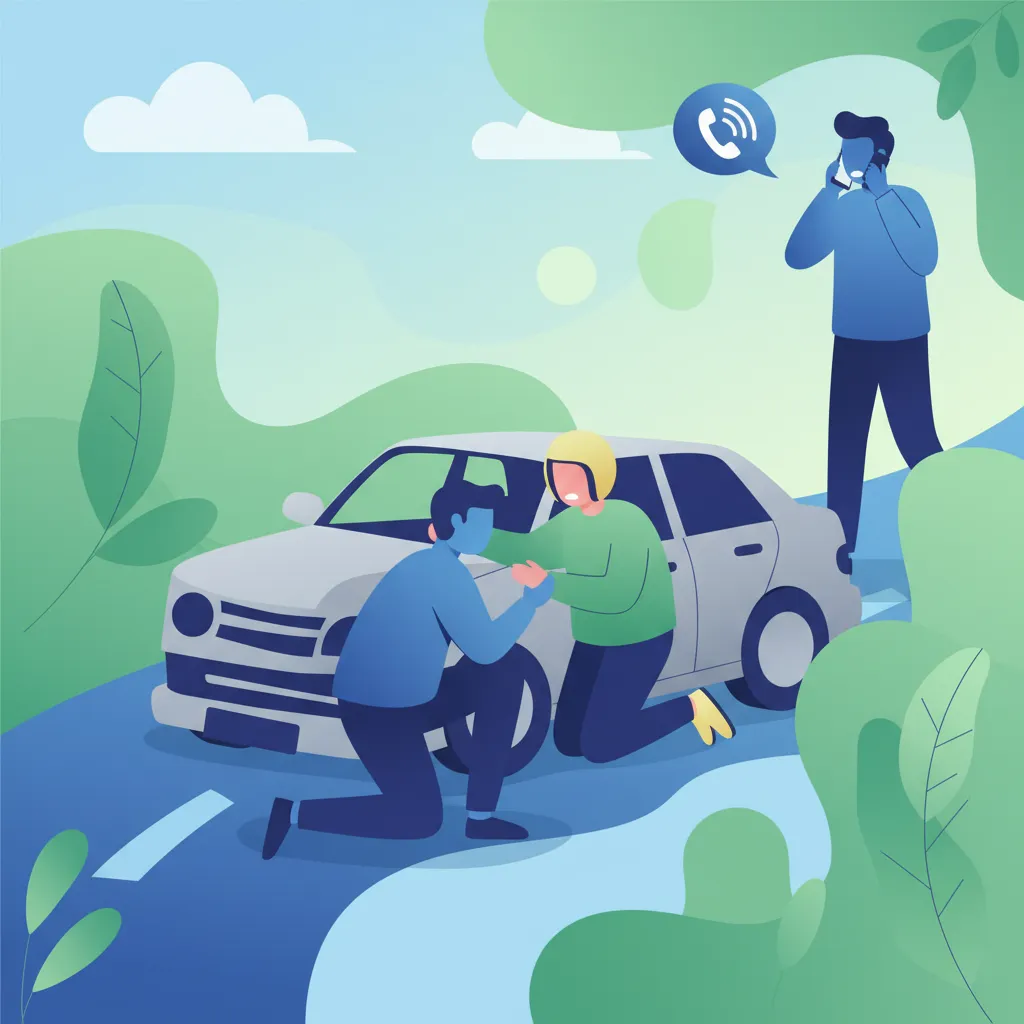
This lesson details the essential actions to take immediately after a collision, focusing on securing the accident scene and contacting emergency services using the universal number 112. The content explains how to use hazard lights, position vehicles to avoid secondary collisions, and assess the situation for immediate dangers. Learners also review their legal duty to report accidents and the appropriate information to provide to the police to ensure the scene remains safe.

This lesson examines the administrative and legal processes that follow a road accident, covering how to file a police report, document the scene with photographs, and gather witness statements. Learners will study the insurance claim process, including submission of documentation, arranging vehicle repairs, and understanding timelines for claim settlement. Additionally, the lesson outlines the legal obligations of drivers post-accident and the potential impact on their driving record.
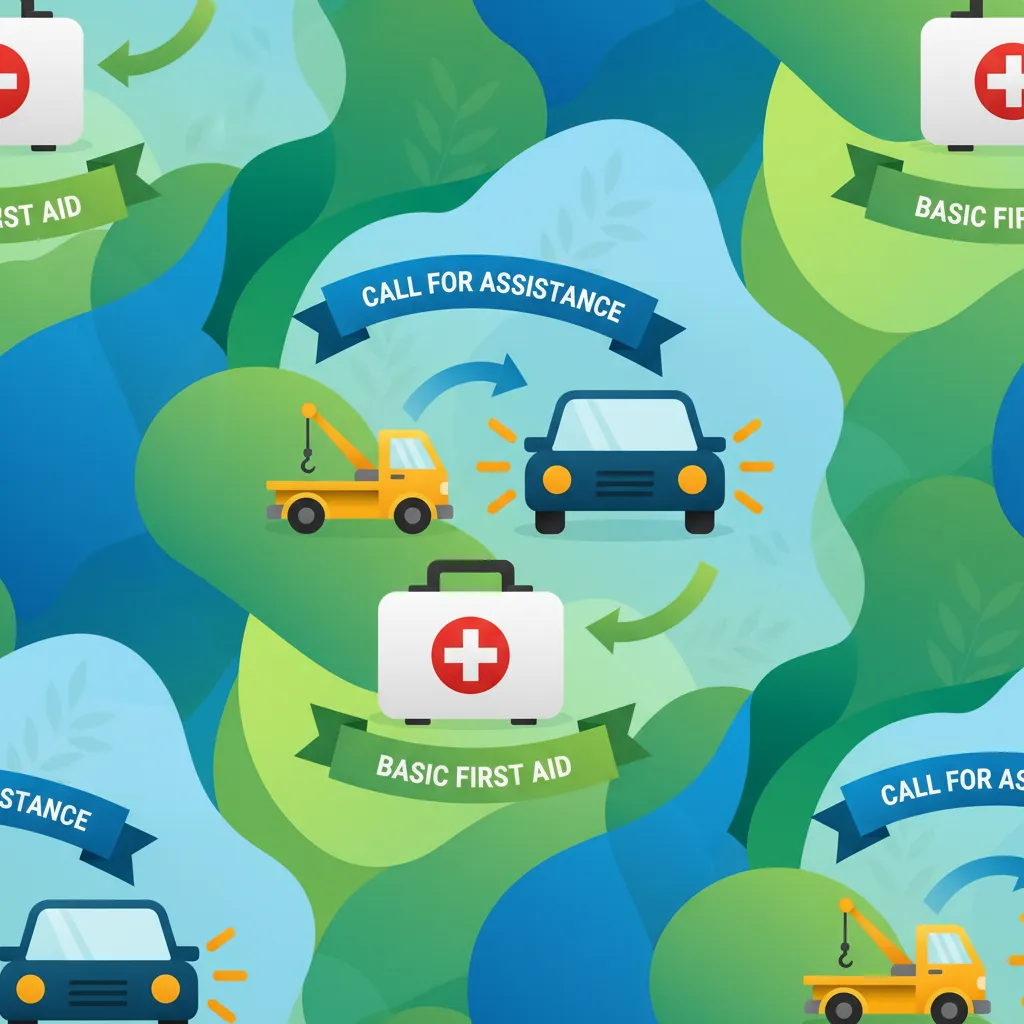
This lesson provides an overview of the legal penalties for traffic violations and outlines the correct procedures to follow after an accident. It covers how to secure an accident scene, contact emergency services using 112, and provide basic first aid. Riders will also learn about their legal obligations for reporting incidents and the initial steps for making an insurance claim.
This lesson examines the set of safety equipment required by Icelandic law to be present in every passenger vehicle, focusing on seat belts, airbags, fire extinguishers, and reflective vests. The content explains the correct placement and usage protocols for each item, including how to operate a fire extinguisher and don a reflective vest. Additionally, learners are introduced to the legal requirement for an emergency triangle and a first-aid kit.

This lesson explores the insurance landscape required for operating a vehicle in Iceland, emphasizing compulsory liability insurance and options for comprehensive coverage. The content explains the distinctions between third-party liability and full coverage policies, the documentation needed for proof of insurance, and the procedural steps for filing an accident claim. Learners also study the legal responsibilities associated with insurance renewal and risk assessment factors.
This lesson helps learners develop an understanding of how drivers perceive and assess risks on Icelandic roads, particularly under variable weather and lighting conditions. The content discusses mental models used to anticipate the actions of other road users and the importance of identifying subtle hazards. By analysing environmental cues and applying systematic hazard perception strategies, students learn to enhance their situational awareness and make safer driving decisions.
This lesson explores the health criteria mandated by Icelandic law for operating a vehicle, focusing on visual and auditory acuity, as well as overall physical capability. Students will study required medical certifications and understand acceptable vision levels and hearing standards necessary for safe driving. The lesson also outlines how chronic illnesses, medication side-effects, and mental health conditions can influence driver fitness and legal compliance.
This lesson addresses the dangers of fatigue and drowsiness while driving, focusing on how these factors impair judgment and reaction times. Learners will understand the physiological basis of fatigue, recommended rest periods, and the legal responsibilities to avoid drowsy driving. The lesson also highlights observable signs of drowsiness, strategies for driver self-assessment, and the legal consequences of causing an accident due to fatigue.

This lesson outlines the regulations governing pedestrian crossings, including zebra crossings, pedestrian traffic lights, and the driver’s obligations to yield. Learners will study how to identify crosswalk markings, interpret pedestrian signal phases, and understand the enhanced caution required in school zones and areas with high foot traffic. The content also emphasizes the need for drivers to anticipate vulnerable pedestrians and provide additional yielding in low-visibility conditions.
Understand how to use your vehicle's first-aid kit, manage shock, burns, and suspected spinal injuries. Learn effective communication strategies with emergency services (112) to ensure the best possible outcome for accident victims.
This lesson details the essential actions to take immediately after a collision, focusing on securing the accident scene and contacting emergency services using the universal number 112. The content explains how to use hazard lights, position vehicles to avoid secondary collisions, and assess the situation for immediate dangers. Learners also review their legal duty to report accidents and the appropriate information to provide to the police to ensure the scene remains safe.
This lesson examines the set of safety equipment required by Icelandic law to be present in every passenger vehicle, focusing on seat belts, airbags, fire extinguishers, and reflective vests. The content explains the correct placement and usage protocols for each item, including how to operate a fire extinguisher and don a reflective vest. Additionally, learners are introduced to the legal requirement for an emergency triangle and a first-aid kit.
This lesson examines the administrative and legal processes that follow a road accident, covering how to file a police report, document the scene with photographs, and gather witness statements. Learners will study the insurance claim process, including submission of documentation, arranging vehicle repairs, and understanding timelines for claim settlement. Additionally, the lesson outlines the legal obligations of drivers post-accident and the potential impact on their driving record.
This lesson provides an overview of the legal penalties for traffic violations and outlines the correct procedures to follow after an accident. It covers how to secure an accident scene, contact emergency services using 112, and provide basic first aid. Riders will also learn about their legal obligations for reporting incidents and the initial steps for making an insurance claim.
This lesson helps learners develop an understanding of how drivers perceive and assess risks on Icelandic roads, particularly under variable weather and lighting conditions. The content discusses mental models used to anticipate the actions of other road users and the importance of identifying subtle hazards. By analysing environmental cues and applying systematic hazard perception strategies, students learn to enhance their situational awareness and make safer driving decisions.
Find clear answers to common questions learners have about Basic First‑Aid and Injury Management. Learn how the lesson is structured, which driving theory objectives it supports, and how it fits into the overall learning path of units and curriculum progression in Iceland. These explanations help you understand key concepts, lesson flow, and exam focused study goals.
The absolute first step is ensuring scene safety for yourself and others. Before attending to any injured persons, check for ongoing dangers like oncoming traffic, fuel leaks, or fire hazards. Only when the scene is safe can you proceed to assess and assist the injured.
Apply direct, firm pressure to the bleeding wound using a clean cloth or sterile dressing from your emergency kit. If possible, elevate the injured limb above the heart. Maintain pressure until professional medical help arrives.
You should consider CPR if an injured person is unresponsive and not breathing normally. Check for responsiveness and breathing. If there are no signs of life, begin chest compressions immediately while waiting for emergency services. Familiarize yourself with the latest CPR guidelines relevant to Iceland.
If you suspect a fracture, try to keep the injured limb as still as possible. Do not attempt to straighten it or move the person unnecessarily. Immobilize the limb using padding and bandages if available in your emergency kit, and wait for medical professionals to handle it.
Calling 112 is paramount. This is the universal emergency number in Iceland. Provide clear and concise information about the location, the number of injured people, their apparent condition, and any ongoing dangers. Your prompt call can save lives.
Utilize our advanced practice set search to pinpoint the exact Icelandic driving theory topics you need to review. Filter by subject, difficulty, or question type to create a highly effective study plan and ensure you are fully prepared for your official driving licence test in Iceland.