
This lesson focuses on the critical dangers of driving while fatigued or drowsy, a key topic for the Icelandic Category B theory exam. We'll explore how tiredness affects your ability to drive safely and what Icelandic law expects from you. Understanding these risks is vital for both passing your test and ensuring your safety and the safety of others on the road.
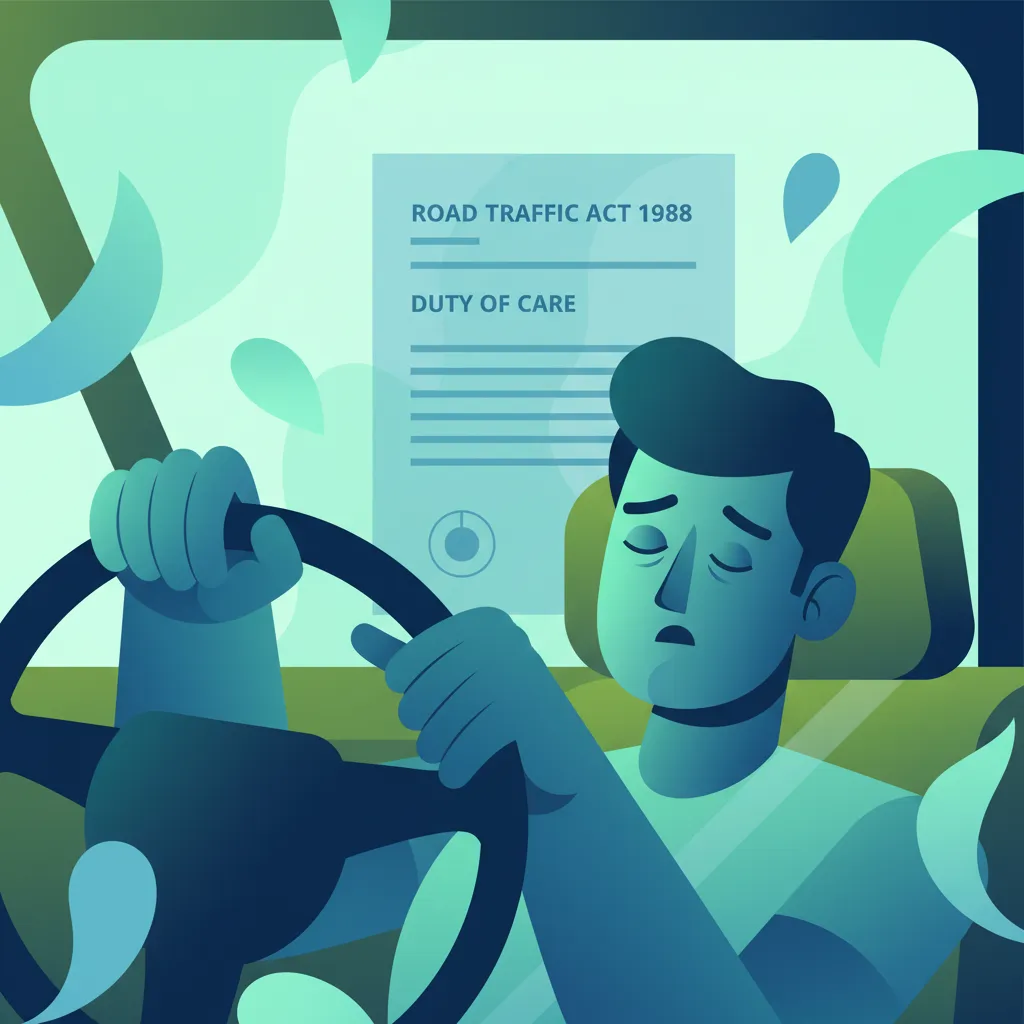
Lesson content overview
Driving is a complex task requiring sustained attention, quick decision-making, and precise physical control. When a driver is fatigued or drowsy, these critical abilities are significantly impaired, increasing the risk of serious accidents. This lesson, part of your Official Icelandic Driving License B Theory Course, delves into the physiological effects of fatigue, its observable symptoms, and the crucial legal responsibilities drivers have under Icelandic traffic law to prevent drowsy driving. Understanding and managing fatigue is not just a matter of personal comfort, but a fundamental aspect of road safety and legal compliance.
Fatigue is a temporary reduction in mental alertness and physical performance caused by insufficient sleep, prolonged wakefulness, or cumulative sleep debt. It is a major contributing factor to road accidents worldwide, and its effects on driving can be as dangerous as, or even more dangerous than, driving under the influence of alcohol. For instance, being awake for 17-19 hours can impair driving performance to a similar extent as having a blood alcohol content of 0.05%, which is close to the legal limit in many places, including Iceland.
Fatigue diminishes your ability to judge distances, react to hazards, maintain lane position, and process complex traffic information. Never underestimate its impact.
In Iceland, fatigue is recognized as a serious threat to road safety and is explicitly addressed in traffic legislation. Drivers have a legal and moral obligation to ensure they are fit to drive. Ignoring the signs of fatigue can lead to severe consequences, including administrative fines, civil liability for damages, and even criminal charges in the event of an accident causing injury or death. This lesson aims to equip you with the knowledge to identify fatigue, implement preventive measures, and understand the legal implications of drowsy driving.
To effectively combat fatigue, it's essential to understand its physiological basis. Fatigue is not just about feeling tired; it involves complex biological processes that directly affect your cognitive and motor functions.
A temporary reduction in mental alertness and/or physical performance caused by insufficient rest, prolonged wakefulness, or atypical sleep cycles. It can manifest as mental fatigue (reduced attention, slower decision-making) or physical fatigue (muscular tiredness, slower reaction times).
Mental fatigue reduces your ability to concentrate on the road, scan for hazards, and make timely decisions. This can lead to missed road signs, delayed braking, or incorrect responses to sudden changes in traffic. Physical fatigue, on the other hand, can result in slower eye movements, reduced peripheral vision, and a general sluggishness in executing driving maneuvers. Both types of fatigue are dangerous and increase accident risk.
Our bodies operate on an internal biological clock known as the circadian rhythm. This roughly 24-hour cycle regulates various bodily functions, including sleep-wake patterns, alertness levels, and hormone secretion. Understanding your circadian rhythm is crucial for safe driving:
Avoid scheduling long journeys during your body's natural circadian low points, especially late at night or in the early afternoon. If you must drive during these times, plan extra breaks and be extra vigilant for signs of drowsiness.
One of the most dangerous manifestations of severe fatigue is the microsleep.
A brief, involuntary episode of sleep lasting from a fraction of a second to a few seconds, during which a person ceases to respond to external stimuli.
During a microsleep, a driver is completely unaware of their surroundings. Even a few seconds of unconsciousness at highway speeds can be catastrophic. At 90 km/h, a vehicle travels approximately 25 meters per second. A 3-second microsleep means you've driven 75 meters with your eyes closed and your mind completely disengaged, equivalent to driving the length of a football field blindfolded. This can lead to lane departure, missed critical signals, or even a direct collision. Microsleeps are involuntary and often occur without warning, highlighting the importance of stopping to rest before reaching this critical stage of fatigue.
Recognizing the signs of drowsiness in yourself is the first step toward preventing a fatigue-related accident. These signs can be categorized into observable physical symptoms and cognitive indicators.
Pay close attention to these physical cues that your body sends when you're becoming fatigued:
Beyond physical signs, your mental processing also deteriorates with fatigue. Watch for these cognitive symptoms:
If you experience any of these symptoms, it's a clear signal that you are too fatigued to drive safely and must pull over immediately to rest.
Icelandic traffic law places clear responsibilities on drivers to ensure they are in a fit condition to operate a vehicle. Driving while fatigued is not just dangerous; it can lead to severe legal consequences.
Icelandic Traffic Regulation §81 (Aðgerðarskylda ökumanna – Driver's Duty of Action): Prohibits operation when physical/mental condition reduces driving ability, including impairment due to fatigue, illness, drugs, or alcohol.
This regulation establishes a fundamental principle: drivers must not operate a vehicle if their physical or mental state impairs their ability to drive safely. Fatigue falls directly under this provision, meaning that a driver who continues to drive despite being significantly drowsy is in violation of the law. The purpose of this rule is to protect public safety by ensuring that all road users are capable of controlling their vehicles effectively and responding appropriately to traffic situations.
Icelandic Traffic Regulation §73 (Skaðabótareglur – Rules on Damages): States that drivers must exercise reasonable care; failure to do so, causing injury or damage, can lead to negligence liability.
Section 73 of the Traffic Regulation reinforces the concept of a "legal duty of care." This means that every driver has an obligation to act with reasonable caution and foresight to avoid harming others. If a driver's fatigue contributes to an accident, they may be found negligent. In Icelandic law, this can lead to both civil liability (financial responsibility for damages and injuries) and, in more severe cases, criminal liability. The law considers driving while severely fatigued to be a form of negligence because a responsible driver should recognize their impairment and take appropriate action, such as stopping to rest.
The consequences of causing an accident due to fatigue in Iceland can be substantial:
In legal proceedings, the prosecution or claimant must demonstrate that the driver's fatigue contributed to the accident. This can be supported by evidence such as witness testimonies about the driver's appearance (e.g., yawning, heavy eyelids), erratic driving patterns observed before the crash, or the driver's own admission of fatigue.
However, a driver can defend against claims of negligence by proving they took reasonable precautions. This might include:
Maintaining records of your rest periods and breaks, especially on long journeys, can be valuable in demonstrating due diligence.
Preventing fatigue is primarily about proactive planning and responsible self-management. Implementing effective rest and sleep strategies is crucial for every driver.
The most effective way to prevent fatigue is to start your journey well-rested. The Icelandic Health Authority recommends:
Even if you start well-rested, prolonged driving will eventually lead to fatigue. Regular breaks are essential for maintaining alertness:
Take a 15-minute break every 2 hours of driving. During this time, get out of the car, stretch, walk around, and rehydrate. Avoid just sitting in the car.
After 4 hours of driving, consider a longer rest. This could be a meal break, or even stopping for an hour or more to fully recharge.
Utilize Power Naps (10-20 minutes) if signs of fatigue appear. If you start feeling drowsy, pull over to a safe, legal spot (like a rest area, not the side of a busy road). Set an alarm for 10-20 minutes. A short nap can significantly restore alertness, but remember it's a temporary measure, not a substitute for a full night's sleep.
Caffeine can mask symptoms of fatigue but does not eliminate sleep debt or restore actual alertness. Do not rely on coffee or energy drinks to keep you awake for extended periods; they are not a substitute for rest.
Actively assessing your own alertness is a crucial skill for safe driving. Develop a habit of checking in with yourself before and during your journey:
The "Three-Question Check": Before you start driving and every hour or so, ask yourself:
If any answer raises concern, consider stopping.
The "20-Second Test": While driving, briefly focus on a distant road sign or license plate. If you find it difficult to read or process the information within about 20 seconds due to mental fogginess or eye strain, your alertness is likely compromised.
Regularly check your driving performance: Are you drifting in your lane? Are your reactions slower than usual? Are you missing things you would normally notice? Be honest with yourself.
If your self-assessment reveals any signs of drowsiness, the only safe action is to stop driving and rest.
Several contextual factors can accelerate the onset of fatigue or amplify its effects, making driving even more challenging and risky.
Fatigue's effects are significantly amplified when combined with other substances that impair the central nervous system:
Many drivers hold beliefs or engage in practices that dangerously underestimate the risks of fatigue.
Let's look at a few scenarios to illustrate how fatigue management principles apply in practice.
Setting: You are driving solo on a two-lane highway in rural Iceland at 02:30 AM. The weather is clear, and you are 200 km into a 300 km journey. You had 6 hours of sleep the previous night.
Rule/Decision Point: You start to experience heavy eyelids and find yourself frequently yawning. You know you're entering a period of natural circadian low alertness.
Correct Behavior: Recognizing these clear signs of drowsiness, you immediately search for the next safe rest area or pull-off. You park your car, set an alarm for 20 minutes, and take a power nap. Upon waking, you step out, stretch, and ensure you feel refreshed before continuing your journey. If still drowsy, you might call a taxi or find a place to stay the night.
Incorrect Behavior: You tell yourself you're almost there and push on. Within 15 minutes, you experience a microsleep, drifting out of your lane and causing your vehicle to swerve violently, narrowly avoiding a head-on collision with an oncoming vehicle. Your reaction time is severely compromised, and you are lucky to avoid a crash.
Setting: A commercial bus driver is on a scheduled route, having been driving for 3 hours on a sunny afternoon. The company policy, in line with transport regulations, mandates a 15-minute break every 2 hours.
Rule/Decision Point: The driver feels a slight dip in concentration and notices the beginnings of eye strain, even though they are only 3 hours into their shift.
Correct Behavior: Despite being an hour away from the mandatory break, the driver proactively decides to pull over at the next safe and designated stop. They inform their dispatcher, take a 20-minute break to walk around, rehydrate, and perform a quick self-assessment. They feel refreshed and competent to continue the journey safely.
Incorrect Behavior: The driver decides to push through to the mandatory break point, feeling they can manage. They start missing small details on the road and feel their mind wandering. Their passengers notice erratic braking and a slight drift in the lane, creating a safety risk for everyone onboard.
Setting: A private driver needs to drive home after work, a 45-minute journey. They have taken an over-the-counter antihistamine earlier in the day for allergies, and the label warns of potential drowsiness.
Rule/Decision Point: Even though they don't feel acutely tired, they recall the medication warning and know fatigue can be insidious.
Correct Behavior: Before getting into the car, the driver evaluates their alertness carefully. They consider the medication's potential effect and decide it's safer to take public transport or ask a colleague for a ride, postponing their driving until the medication's effects have worn off or they've had sufficient rest.
Incorrect Behavior: The driver dismisses the warning, believing they aren't "that drowsy." During their drive, their reaction time is noticeably slower when a child unexpectedly steps onto the pavement, leading to a much closer call than it should have been. The combined effect of medication and mild fatigue creates a dangerous scenario.
Fatigue and drowsiness are critical factors in road safety, posing a significant risk to all road users in Iceland. As a driver, you bear the responsibility to recognize the signs of fatigue, understand its physiological basis, and implement effective prevention strategies. Icelandic traffic law is clear: driving while impaired by fatigue is a form of negligence with serious legal consequences, including fines, civil liability, and potentially criminal charges. By prioritizing adequate rest, taking regular breaks, and honestly assessing your alertness, you contribute not only to your own safety but also to the safety of everyone on Iceland's roads. Stay alert, stay safe.
Fatigue and drowsiness are serious road safety threats in Iceland, with drivers legally obligated under Traffic Regulation §81 to ensure they are fit to drive. Fatigue reduces reaction time, judgment, and lane control while increasing microsleep risk - a 3-second microsleep at 90 km/h means traveling 75 meters blind. Prevention requires 7-8 hours of quality sleep before long journeys, breaks every 2 hours, and avoiding driving during natural circadian low points. Legal consequences for fatigue-related accidents include administrative fines, civil liability for damages, and potentially criminal charges including imprisonment for severe cases. Power naps of 10-20 minutes are useful temporary measures, but only actual rest eliminates fatigue and sleep debt.
A short set of high-value points that capture the most important learning from this lesson.
Fatigue impairs driving performance similarly to alcohol intoxication, with 17-19 hours awake equivalent to ~0.05% BAC
Microsleeps lasting just 3 seconds at highway speeds can cover 75 meters with no driver awareness
Natural circadian low points occur between 02:00-06:00 AM and 01:00-03:00 PM, significantly increasing drowsiness risk
Icelandic §81 Traffic Regulation explicitly prohibits driving when fatigue reduces your ability to operate safely
Caffeine only masks fatigue symptoms temporarily; it does not restore actual alertness or eliminate sleep debt
Explore all units and lessons included in this driving theory course.
§81 prohibits driving when physical or mental condition reduces driving ability, including impairment from fatigue
§73 establishes legal duty of care - driving while fatigued constitutes negligence that can lead to civil and criminal liability
Take 15-20 minute breaks every 2 hours of driving; use 10-20 minute power naps as temporary countermeasures
Observable signs include yawning, heavy eyelids, head nodding, and difficulty focusing
Cognitive indicators include memory lapses, slower reactions, lane drifting, and poor hazard perception
Believing 'I'm almost there' and pushing through final kilometers - the last stretch accounts for disproportionate fatigue accidents
Relying on coffee or energy drinks to cure fatigue instead of stopping to rest
Skipping scheduled breaks to save time, not recognizing this as a dangerous false economy
Assuming daytime driving is inherently safe from fatigue, especially during early afternoon circadian dips
Over-relying on vehicle fatigue detection technology instead of taking personal responsibility for self-assessment
Lesson content overview
A short set of high-value points that capture the most important learning from this lesson.
Fatigue impairs driving performance similarly to alcohol intoxication, with 17-19 hours awake equivalent to ~0.05% BAC
Microsleeps lasting just 3 seconds at highway speeds can cover 75 meters with no driver awareness
Natural circadian low points occur between 02:00-06:00 AM and 01:00-03:00 PM, significantly increasing drowsiness risk
Icelandic §81 Traffic Regulation explicitly prohibits driving when fatigue reduces your ability to operate safely
Caffeine only masks fatigue symptoms temporarily; it does not restore actual alertness or eliminate sleep debt
Explore all units and lessons included in this driving theory course.
§81 prohibits driving when physical or mental condition reduces driving ability, including impairment from fatigue
§73 establishes legal duty of care - driving while fatigued constitutes negligence that can lead to civil and criminal liability
Take 15-20 minute breaks every 2 hours of driving; use 10-20 minute power naps as temporary countermeasures
Observable signs include yawning, heavy eyelids, head nodding, and difficulty focusing
Cognitive indicators include memory lapses, slower reactions, lane drifting, and poor hazard perception
Believing 'I'm almost there' and pushing through final kilometers - the last stretch accounts for disproportionate fatigue accidents
Relying on coffee or energy drinks to cure fatigue instead of stopping to rest
Skipping scheduled breaks to save time, not recognizing this as a dangerous false economy
Assuming daytime driving is inherently safe from fatigue, especially during early afternoon circadian dips
Over-relying on vehicle fatigue detection technology instead of taking personal responsibility for self-assessment
Explore search topics learners often look for when studying Fatigue, Drowsiness, and Related Legal Responsibilities. These topics reflect common questions about road rules, driving situations, safety guidance, and lesson level theory preparation for learners in Iceland.
Browse additional driving theory lessons that cover connected traffic rules, road signs, and common driving situations related to this topic. Improve your understanding of how different rules interact across everyday traffic scenarios.
Understand Icelandic laws on drowsy driving, including your legal duty of care and the consequences of fatigue-related accidents. Learn effective strategies for self-assessment and prevention to ensure road safety.

This lesson explores the health criteria mandated by Icelandic law for operating a vehicle, focusing on visual and auditory acuity, as well as overall physical capability. Students will study required medical certifications and understand acceptable vision levels and hearing standards necessary for safe driving. The lesson also outlines how chronic illnesses, medication side-effects, and mental health conditions can influence driver fitness and legal compliance.

This lesson outlines the specific duties and limitations placed on learner drivers in Iceland, from the mandatory display of L-plates to the requirement for a qualified supervisor. Learners will study night-driving prohibitions, passenger rules for newly licensed drivers, and the legal limits on alcohol consumption during the learning phase. The content also covers the necessity of maintaining a training log and ensuring appropriate insurance coverage for the vehicle.
This lesson explores the regulations surrounding drug use and its impact on driver capability, examining prohibited substances, testing methods, and specific detection thresholds. Learners also study how prescription medications may affect driving and the legal penalties for drug-impaired driving, including licence revocation. The content emphasizes the importance of medical certification when using legally prescribed drugs that may impair performance.

This lesson details the legal blood alcohol concentration (BAC) limits applicable to drivers in Iceland and outlines the procedures used by police to enforce these limits. Learners will understand the specific BAC threshold, the operation of breathalyzer devices during roadside checks, and the signs of intoxication. The lesson also covers the penalties associated with exceeding limits, including fines, licence suspension, and the legal implications of refusing a test.
This lesson examines the set of safety equipment required by Icelandic law to be present in every passenger vehicle, focusing on seat belts, airbags, fire extinguishers, and reflective vests. The content explains the correct placement and usage protocols for each item, including how to operate a fire extinguisher and don a reflective vest. Additionally, learners are introduced to the legal requirement for an emergency triangle and a first-aid kit.
This lesson helps learners develop an understanding of how drivers perceive and assess risks on Icelandic roads, particularly under variable weather and lighting conditions. The content discusses mental models used to anticipate the actions of other road users and the importance of identifying subtle hazards. By analysing environmental cues and applying systematic hazard perception strategies, students learn to enhance their situational awareness and make safer driving decisions.

This lesson examines the critical role of attention in safe driving, focusing on how drivers allocate visual and auditory resources while maintaining situational awareness. Learners study common internal and external distractions, such as mobile phone usage and passenger conversations, and how these can lead to attentional blind spots. The content introduces strategies for managing cognitive load, prioritising primary driving tasks, and applying effective scanning techniques to reduce risks.
This lesson examines the calculation of safe following distances using the two-second rule and formulas that factor in vehicle speed and road conditions. The content explains how reaction time, weather conditions like ice or rain, and vehicle load affect braking zones. Students also learn specific techniques for stopping on hills and how to avoid tailgating, thereby maintaining sufficient safety margins under all Icelandic weather conditions.
This lesson addresses the challenges of driving in rain and fog, focusing on strategies to maintain visibility and vehicle control. Learners will explore the correct use of windshield wipers, defoggers, and appropriate headlight settings, including when to use fog lights. The content also covers the increased risk of hydroplaning, the importance of adjusting speed in wet conditions, and the need to extend following distances to account for longer stopping distances.

This lesson explores the insurance landscape required for operating a vehicle in Iceland, emphasizing compulsory liability insurance and options for comprehensive coverage. The content explains the distinctions between third-party liability and full coverage policies, the documentation needed for proof of insurance, and the procedural steps for filing an accident claim. Learners also study the legal responsibilities associated with insurance renewal and risk assessment factors.
Explore how weather, road monotony, medication, and time of day affect driver fatigue. Discover essential self-assessment techniques and proactive management strategies to maintain alertness on Icelandic roads.
This lesson examines the critical role of attention in safe driving, focusing on how drivers allocate visual and auditory resources while maintaining situational awareness. Learners study common internal and external distractions, such as mobile phone usage and passenger conversations, and how these can lead to attentional blind spots. The content introduces strategies for managing cognitive load, prioritising primary driving tasks, and applying effective scanning techniques to reduce risks.
This lesson explores the health criteria mandated by Icelandic law for operating a vehicle, focusing on visual and auditory acuity, as well as overall physical capability. Students will study required medical certifications and understand acceptable vision levels and hearing standards necessary for safe driving. The lesson also outlines how chronic illnesses, medication side-effects, and mental health conditions can influence driver fitness and legal compliance.
This lesson helps learners develop an understanding of how drivers perceive and assess risks on Icelandic roads, particularly under variable weather and lighting conditions. The content discusses mental models used to anticipate the actions of other road users and the importance of identifying subtle hazards. By analysing environmental cues and applying systematic hazard perception strategies, students learn to enhance their situational awareness and make safer driving decisions.
This lesson addresses the challenges of driving in rain and fog, focusing on strategies to maintain visibility and vehicle control. Learners will explore the correct use of windshield wipers, defoggers, and appropriate headlight settings, including when to use fog lights. The content also covers the increased risk of hydroplaning, the importance of adjusting speed in wet conditions, and the need to extend following distances to account for longer stopping distances.
This lesson examines the calculation of safe following distances using the two-second rule and formulas that factor in vehicle speed and road conditions. The content explains how reaction time, weather conditions like ice or rain, and vehicle load affect braking zones. Students also learn specific techniques for stopping on hills and how to avoid tailgating, thereby maintaining sufficient safety margins under all Icelandic weather conditions.
This lesson explores the regulations surrounding drug use and its impact on driver capability, examining prohibited substances, testing methods, and specific detection thresholds. Learners also study how prescription medications may affect driving and the legal penalties for drug-impaired driving, including licence revocation. The content emphasizes the importance of medical certification when using legally prescribed drugs that may impair performance.

This lesson examines how strong winds and varying light conditions affect vehicle handling and safety, including techniques for maintaining stability under cross-winds and assessing gust intensity. The content also explains proper headlight usage during daylight, dusk, and nighttime, addressing glare reduction strategies and when to employ high-beam headlights. By mastering these concepts, drivers can navigate Icelandic weather and lighting challenges confidently and safely.
This lesson details the legal blood alcohol concentration (BAC) limits applicable to drivers in Iceland and outlines the procedures used by police to enforce these limits. Learners will understand the specific BAC threshold, the operation of breathalyzer devices during roadside checks, and the signs of intoxication. The lesson also covers the penalties associated with exceeding limits, including fines, licence suspension, and the legal implications of refusing a test.
This lesson outlines the specific duties and limitations placed on learner drivers in Iceland, from the mandatory display of L-plates to the requirement for a qualified supervisor. Learners will study night-driving prohibitions, passenger rules for newly licensed drivers, and the legal limits on alcohol consumption during the learning phase. The content also covers the necessity of maintaining a training log and ensuring appropriate insurance coverage for the vehicle.
This lesson examines the set of safety equipment required by Icelandic law to be present in every passenger vehicle, focusing on seat belts, airbags, fire extinguishers, and reflective vests. The content explains the correct placement and usage protocols for each item, including how to operate a fire extinguisher and don a reflective vest. Additionally, learners are introduced to the legal requirement for an emergency triangle and a first-aid kit.
Find clear answers to common questions learners have about Fatigue, Drowsiness, and Related Legal Responsibilities. Learn how the lesson is structured, which driving theory objectives it supports, and how it fits into the overall learning path of units and curriculum progression in Iceland. These explanations help you understand key concepts, lesson flow, and exam focused study goals.
While there's no single rule for everyone, most adults need 7-9 hours of quality sleep per night. If you've had less than this, or feel tired, it's best to postpone your journey or take frequent, substantial breaks. Your ability to drive safely is paramount, and this applies to the Icelandic road network.
Common signs include frequent yawning, heavy eyelids, difficulty focusing, drifting from your lane, missing exits or signs, and having trouble remembering the last few kilometres driven. You might also experience irritability or restlessness. If you notice any of these, pull over safely as soon as possible.
Yes, Icelandic law requires drivers to be fit to drive. While there isn't a specific BAC-equivalent for fatigue, driving while excessively tired can lead to charges of negligence or endangerment if an accident occurs. You have a legal responsibility to ensure you are not impaired by fatigue.
The best immediate action is to stop driving. Find a safe place to pull over, such as a designated rest area or a well-lit parking spot. A short nap (15-20 minutes) can help, but a longer rest or switching drivers is often more effective. Avoid relying on caffeine alone, as its effects are temporary.
Yes, many medications, including some over-the-counter drugs for colds or allergies, can cause drowsiness. Always read the medication's warnings and consult your doctor or pharmacist if you are unsure whether a medication will impair your driving ability in Iceland.
Utilize our advanced practice set search to pinpoint the exact Icelandic driving theory topics you need to review. Filter by subject, difficulty, or question type to create a highly effective study plan and ensure you are fully prepared for your official driving licence test in Iceland.