
Welcome to the "Risk Perception and Hazard Awareness" lesson, a key part of the 'The Driver: Health, Attention, Distraction & Risk' unit in your Icelandic Category B Driving License Theory Course. This lesson focuses on your ability to identify and assess potential dangers on the road, a critical skill for passing your theory exam and driving safely in Iceland.
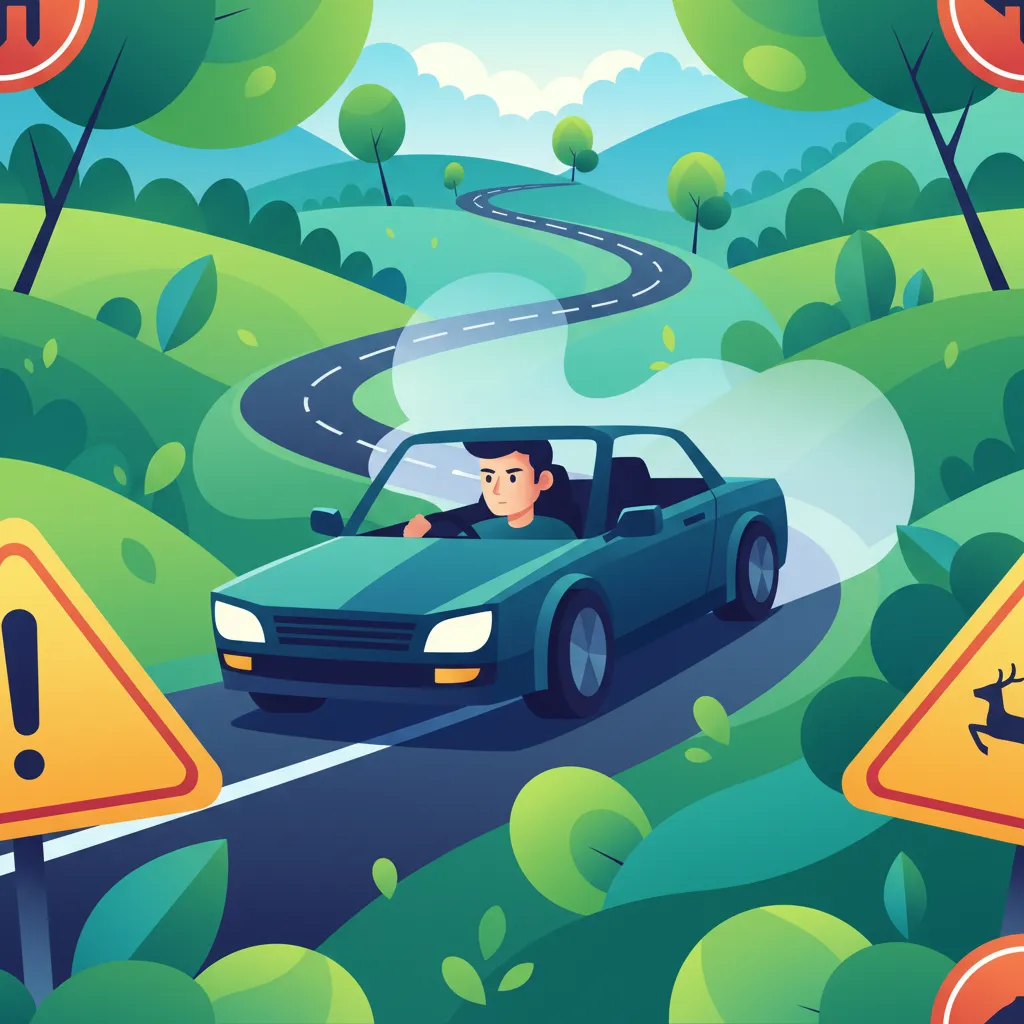
Lesson content overview
Developing a keen sense of risk perception and hazard awareness is fundamental for safe driving, especially when navigating the diverse and often challenging conditions unique to Icelandic roads. This lesson, part of the Official Icelandic Driving License B Theory Course, explores the cognitive processes that enable drivers to identify, evaluate, and respond to potential dangers effectively. By understanding how mental models are formed and updated, how attention is managed, and how systematic strategies can enhance situational awareness, you will be better equipped to make proactive and safer driving decisions.
The ability to perceive hazards early, assess their risk, and predict the actions of other road users is not merely an innate skill; it can be learned and refined. This chapter will delve into the core principles and practical applications that will prepare you for Iceland’s variable weather, low-light conditions, and unique road environments.
Risk perception is a driver's mental evaluation of the probability and potential severity of a hazard. It involves more than just seeing a danger; it requires processing that information to anticipate consequences and decide on an appropriate response. On Icelandic roads, where weather can change rapidly and conditions vary from paved highways to challenging gravel passes, accurate risk perception becomes paramount.
Selective attention is the neurological process by which your brain filters sensory input, allowing you to focus on relevant stimuli while tuning out distractions. While essential for preventing information overload, it can also lead to missed hazards if not managed consciously.
For drivers, this means concentrating on the road ahead, traffic signs, and other road users. However, this focused attention must be balanced with a broader scanning technique to include peripheral zones. For instance, in heavy city traffic, a driver might inadvertently overlook a pedestrian stepping onto a crosswalk if their primary focus is solely on the vehicle directly in front. A conscious effort to scan the entire driving environment, including mirrors and peripheral vision, is crucial to counteract the limitations of selective attention and ensure no potential hazards are missed.
Situational awareness (SA) is a continuous and dynamic process that enables proactive driving. It's not just about what you see, but what you understand and can predict about the driving environment. It is typically broken down into three levels:
By developing strong situational awareness, drivers move beyond simply reacting to events and instead begin to anticipate and prepare for them. This proactive approach significantly reduces collision risk by providing more time for decision-making and executing safe maneuvers. For example, after spotting black ice patches (Level 1), a driver with high SA will not only understand the danger (Level 2) but will immediately reduce speed and increase following distance (Level 3 response).
The hazard perception process provides a structured approach to managing potential dangers on the road. It guides drivers through a sequence of steps to identify and respond to hazards before they escalate into critical situations.
Detection: The initial stage where a visual or auditory cue from the environment triggers your awareness. This could be spotting a brake light, hearing a siren, or noticing movement at the roadside.
Recognition: You identify the detected cue as a potential hazard. For example, seeing a parked car (detection) might lead you to recognize that a door could open suddenly or a pedestrian might emerge.
Prediction: You anticipate possible outcomes or actions related to the recognized hazard. If you recognize a parked car as a hazard, you predict a door might open, or a person might step out.
Response: You execute an appropriate maneuver or adjust your driving behavior. This could involve decelerating, changing lanes, adjusting your steering, or preparing to brake.
Consider a scenario where you are driving in dense fog on an Icelandic rural road. You spot a faint taillight ahead (Detection). You recognize this as a motorcycle, potentially partially obscured by the fog or a curve (Recognition). You predict that visibility will remain limited, and the motorcycle might slow down suddenly (Prediction). Your response is to reduce speed, increase following distance, and prepare to brake gently (Response). Skipping the prediction step often leads to sudden, reactive braking, which can be dangerous, especially on slippery surfaces.
A crucial tool for prioritizing driver response is the risk assessment matrix. This framework evaluates hazards based on two dimensions: the likelihood of occurrence and the severity of potential consequences. By systematically evaluating these two factors, drivers can allocate their attention and adjust their actions to address the most significant threats.
Imagine driving on a gravel road in Iceland, where loose stones are a common occurrence (moderate likelihood). If a stone were to hit your windshield, the severity could range from a minor chip to a shattered screen (moderate severity). This combination suggests a moderate risk, prompting you to reduce speed and increase your following distance. Conversely, driving at high speed on an icy urban street during a blizzard presents a high likelihood of losing control and a high severity of collision, placing it in the critical-risk category.
It is a common misunderstanding to ignore low-severity hazards, but these can compound into higher risks when combined with other factors like poor visibility or driver distraction. For example, a sudden gust of wind (high likelihood in coastal areas) might only cause a minor sway in a compact car (low severity). However, for a high-centered vehicle like an SUV or a vehicle towing a trailer, the same gust could lead to a significant sway (moderate severity), creating a critical risk that demands immediate speed reduction and smooth steering input.
Driving is a dynamic activity that requires continuous adjustment of our internal expectations and effective management of our mental resources.
Our driving decisions are heavily influenced by our mental models – internal representations of how traffic participants behave and how the traffic environment functions. These models guide our predictions and responses. However, it's critical that these models are not static but are continuously updated based on observed actions and contextual cues.
For instance, you might initially assume a cyclist will always ride strictly on the right side of the road. If you observe a cyclist moving onto the shoulder to avoid a pothole or debris, your mental model should adapt to anticipate unexpected positioning, particularly on Icelandic roads where shoulders can be narrow or absent. Relying solely on the belief that "road users will always follow the rules" is a dangerous misunderstanding, as reality includes varied driving skills, occasional erratic behavior, and human error. Drivers must remain flexible, constantly scanning for cues that might indicate another road user is about to do something unexpected, such as a parked car whose driver begins to signal an exit, prompting you to adjust your speed.
Cognitive load refers to the total amount of mental effort being used in your working memory. While driving, your brain is constantly processing vast amounts of information. Excessive cognitive load can impair perception, degrade attention, and slow down reaction times, making it harder to detect and respond to hazards.
Cognitive load can arise from intrinsic factors (the complexity of the driving task, e.g., navigating a complex intersection), extraneous factors (distractions like using a mobile phone or adjusting the radio), and germane factors (the mental effort involved in learning or adapting to new situations). To maintain optimal processing capacity for hazard detection, drivers must consciously manage their cognitive load. This means minimizing secondary tasks, especially in challenging conditions, and recognizing when fatigue or stress begins to reduce mental capacity. For example, attempting to eat a meal or engaging in a complex conversation while navigating an icy mountain pass significantly increases cognitive load and can delay crucial responses to sudden changes in road conditions or traffic. The Icelandic Road Traffic Act explicitly prohibits the use of handheld devices while driving to reduce this extraneous load.
Adhering to specific traffic regulations is not just a legal obligation; it forms the backbone of safe driving, directly impacting risk perception and hazard awareness.
Rule: Drivers must give way to pedestrians at marked crossings. Applicability: All road types, anytime pedestrians are present within a marked crossing. Rationale: To protect vulnerable road users and prevent accidents.
Even with a green light in your favor, a driver must continuously scan for pedestrians. An incorrect assumption that a green light automatically clears the crossing of all pedestrians can lead to dangerous situations. Always be prepared to stop if a pedestrian steps onto a marked crossing, regardless of the traffic signal.
Rule: Reduce speed to a level that allows safe stopping under current conditions. Applicability: Fog, rain, snow, wind, ice; applies to both urban and rural roads. Rationale: Adverse weather increases stopping distance and reduces vehicle control on slick surfaces.
On Icelandic roads, conditions can change dramatically within short distances. Maintaining 90 km/h on a snowy highway is a severe violation of this rule. Proactive drivers adjust their speed downwards well before entering a potentially hazardous zone, considering visibility, road surface, and surrounding traffic.
Rule: Vehicles used between November 1 and April 30 must be equipped with winter tires or chains where required. Applicability: Nationwide, regardless of road type. Rationale: Improves traction and safety on snow and ice.
This regulation is critical for safety in Iceland's winter. Driving with summer tires during a snowstorm dramatically increases stopping distances and the risk of skidding, demonstrating a fundamental failure in risk assessment.
Rule: Maintain a minimum time gap of 2 seconds under good conditions; increase proportionally in adverse conditions. Applicability: All traffic conditions. Rationale: Allows sufficient time to react to sudden stops or hazards ahead.
The 2-second rule provides a tangible measure for safe following. In adverse weather (rain, snow, ice), this gap should be increased to 3, 4, or even more seconds, depending on the severity of conditions. Following at a 1-second interval during heavy rain is extremely dangerous, as it severely limits reaction time and required stopping distance.
Rule: Low-beam headlights must be used from sunset to sunrise and during poor visibility; high-beams prohibited when approaching another vehicle within 150 m. Applicability: All lighting conditions; especially fog, rain, night. Rationale: Prevents glare for oncoming drivers while maintaining adequate road visibility.
Incorrect use of lighting, such as using high beams in fog or on a well-lit urban road, can impair the vision of other drivers and compromise overall road safety. Proper lighting enhances your ability to detect hazards and ensures you are visible to others.
Risk perception and hazard awareness strategies must adapt to the specific context of the driving environment. Iceland presents a unique array of conditions that demand flexibility and vigilance.
Let's consider a few real-world Icelandic driving scenarios to illustrate these concepts.
To excel in the Official Icelandic Driving License B Theory Course and become a safe driver on Icelandic roads, it is essential to internalize the following principles:
This lesson builds upon your foundational knowledge of driver health, attention, and responsibility, preparing you for more specific challenges covered in subsequent modules, such as speed management, interacting with vulnerable road users, and driving in Iceland's unique weather conditions. By mastering these concepts, you will enhance your ability to navigate Iceland's roads safely and confidently.
This lesson teaches systematic hazard perception and risk assessment skills essential for Icelandic driving, covering the four-step process of detection, recognition, prediction, and response, along with the three-level situational awareness model. Key Icelandic-specific regulations include mandatory winter tires from November through April, the 2-second following distance rule, and pedestrian priority at all marked crossings. The content addresses variable conditions including fog, winter roads, gravel surfaces, and night driving with wildlife, providing practical scenarios and technical details like reaction time (~1.5 seconds) and friction coefficients that explain why speed adjustment is critical.
A short set of high-value points that capture the most important learning from this lesson.
Hazard perception follows a four-step process: Detection, Recognition, Prediction, and Response—each building on the previous to enable proactive safety.
Situational awareness operates at three levels—perceiving elements, comprehending their meaning, and projecting future status—enabling drivers to anticipate rather than merely react.
The risk assessment matrix evaluates hazards by combining likelihood of occurrence with potential severity, helping prioritize attention and responses.
Selective attention filters information but must be balanced with systematic environmental scanning to avoid missing peripheral hazards.
Mental models of road user behavior must be continuously updated; assuming others will always follow rules is dangerous.
Explore all units and lessons included in this driving theory course.
Winter tires or chains are required from November 1 through April 30 on all Icelandic roads regardless of surface conditions.
Maintain a minimum 2-second following distance in good conditions, extending to 3+ seconds in rain, snow, ice, or fog.
Low-beam headlights are mandatory from sunset to sunrise and during poor visibility; high beams scatter light in fog and blind other drivers within 150m.
Black ice can reduce tire friction to near zero (µ as low as 0.1), increasing stopping distances by a factor of 7 or more compared to dry asphalt.
The hazard perception process requires all four steps—skipping prediction often leads to sudden, dangerous reactions, especially on slippery surfaces.
Assuming a green light or right-of-way means pedestrians have cleared the crossing—always scan for pedestrians regardless of signals.
Using high beams in fog, rain, or snow, which creates glare that reduces visibility for both the driver and oncoming traffic.
Believing that low-severity hazards can be ignored—these can compound into critical risks when combined with other factors like poor visibility or distraction.
Failing to update mental models when observing unexpected behavior, such as cyclists moving to avoid debris or vehicles making unannounced lane changes.
Underestimating cognitive load from secondary tasks like conversations or eating, which diminishes working memory available for hazard detection.
Lesson content overview
A short set of high-value points that capture the most important learning from this lesson.
Hazard perception follows a four-step process: Detection, Recognition, Prediction, and Response—each building on the previous to enable proactive safety.
Situational awareness operates at three levels—perceiving elements, comprehending their meaning, and projecting future status—enabling drivers to anticipate rather than merely react.
The risk assessment matrix evaluates hazards by combining likelihood of occurrence with potential severity, helping prioritize attention and responses.
Selective attention filters information but must be balanced with systematic environmental scanning to avoid missing peripheral hazards.
Mental models of road user behavior must be continuously updated; assuming others will always follow rules is dangerous.
Explore all units and lessons included in this driving theory course.
Winter tires or chains are required from November 1 through April 30 on all Icelandic roads regardless of surface conditions.
Maintain a minimum 2-second following distance in good conditions, extending to 3+ seconds in rain, snow, ice, or fog.
Low-beam headlights are mandatory from sunset to sunrise and during poor visibility; high beams scatter light in fog and blind other drivers within 150m.
Black ice can reduce tire friction to near zero (µ as low as 0.1), increasing stopping distances by a factor of 7 or more compared to dry asphalt.
The hazard perception process requires all four steps—skipping prediction often leads to sudden, dangerous reactions, especially on slippery surfaces.
Assuming a green light or right-of-way means pedestrians have cleared the crossing—always scan for pedestrians regardless of signals.
Using high beams in fog, rain, or snow, which creates glare that reduces visibility for both the driver and oncoming traffic.
Believing that low-severity hazards can be ignored—these can compound into critical risks when combined with other factors like poor visibility or distraction.
Failing to update mental models when observing unexpected behavior, such as cyclists moving to avoid debris or vehicles making unannounced lane changes.
Underestimating cognitive load from secondary tasks like conversations or eating, which diminishes working memory available for hazard detection.
Explore search topics learners often look for when studying Risk Perception and Hazard Awareness. These topics reflect common questions about road rules, driving situations, safety guidance, and lesson level theory preparation for learners in Iceland.
Browse additional driving theory lessons that cover connected traffic rules, road signs, and common driving situations related to this topic. Improve your understanding of how different rules interact across everyday traffic scenarios.
Explore complex driving situations unique to Iceland, focusing on advanced hazard perception and risk assessment techniques. Understand how to anticipate unpredictable events and make critical decisions in challenging conditions for safe driving theory.
This lesson addresses the challenges of driving in rain and fog, focusing on strategies to maintain visibility and vehicle control. Learners will explore the correct use of windshield wipers, defoggers, and appropriate headlight settings, including when to use fog lights. The content also covers the increased risk of hydroplaning, the importance of adjusting speed in wet conditions, and the need to extend following distances to account for longer stopping distances.

This lesson details the essential actions to take immediately after a collision, focusing on securing the accident scene and contacting emergency services using the universal number 112. The content explains how to use hazard lights, position vehicles to avoid secondary collisions, and assess the situation for immediate dangers. Learners also review their legal duty to report accidents and the appropriate information to provide to the police to ensure the scene remains safe.
This lesson focuses on the regulations governing highland travel and off-road restrictions, including environmental protections that prohibit off-road driving in certain zones. The lesson details how to interpret highland road signage, understand restrictions related to wildlife crossings like reindeer and sheep, and adhere to road width management guidelines. Learners are also instructed on using emergency contact points in sparsely populated regions.

This lesson explores the health criteria mandated by Icelandic law for operating a vehicle, focusing on visual and auditory acuity, as well as overall physical capability. Students will study required medical certifications and understand acceptable vision levels and hearing standards necessary for safe driving. The lesson also outlines how chronic illnesses, medication side-effects, and mental health conditions can influence driver fitness and legal compliance.
This lesson focuses on the operation of traffic lights in Iceland, describing standard three-phase cycles (red, amber, green) and variations such as flashing amber for yielding. Learners will also explore dedicated signals for pedestrians, cyclists, and turning movements, including arrow indications. The lesson explains how signal timing integrates with right-of-way rules at intersections, ensuring drivers can interpret and respond to each light state to maintain safety.
This lesson familiarizes learners with signs that warn of upcoming hazards, such as sharp curves, slippery surfaces, or animal crossings. It emphasizes the importance of early hazard recognition and response, which is especially critical for vulnerable moped riders. Understanding these signs allows riders to anticipate road conditions and adjust their riding strategy accordingly for increased safety.
This lesson examines the critical role of attention in safe driving, focusing on how drivers allocate visual and auditory resources while maintaining situational awareness. Learners study common internal and external distractions, such as mobile phone usage and passenger conversations, and how these can lead to attentional blind spots. The content introduces strategies for managing cognitive load, prioritising primary driving tasks, and applying effective scanning techniques to reduce risks.
This lesson examines the specific techniques required for safe driving on snow-covered or icy roads in Iceland, covering the mandatory use of winter tires and the operation of anti-lock braking systems. Learners will study optimal low-speed cornering, proper braking distances on ice, and how to recover from a skid safely. By mastering these techniques, drivers can maintain control in challenging winter conditions and significantly reduce the risk of accidents on slippery surfaces.
This lesson examines the calculation of safe following distances using the two-second rule and formulas that factor in vehicle speed and road conditions. The content explains how reaction time, weather conditions like ice or rain, and vehicle load affect braking zones. Students also learn specific techniques for stopping on hills and how to avoid tailgating, thereby maintaining sufficient safety margins under all Icelandic weather conditions.

This lesson examines how strong winds and varying light conditions affect vehicle handling and safety, including techniques for maintaining stability under cross-winds and assessing gust intensity. The content also explains proper headlight usage during daylight, dusk, and nighttime, addressing glare reduction strategies and when to employ high-beam headlights. By mastering these concepts, drivers can navigate Icelandic weather and lighting challenges confidently and safely.
Learn the principles of situational awareness in driving theory, covering perception, comprehension, and prediction. Understand how to manage cognitive load and update mental models for effective decision-making on Icelandic roads.
This lesson addresses the challenges of driving in rain and fog, focusing on strategies to maintain visibility and vehicle control. Learners will explore the correct use of windshield wipers, defoggers, and appropriate headlight settings, including when to use fog lights. The content also covers the increased risk of hydroplaning, the importance of adjusting speed in wet conditions, and the need to extend following distances to account for longer stopping distances.
This lesson examines the calculation of safe following distances using the two-second rule and formulas that factor in vehicle speed and road conditions. The content explains how reaction time, weather conditions like ice or rain, and vehicle load affect braking zones. Students also learn specific techniques for stopping on hills and how to avoid tailgating, thereby maintaining sufficient safety margins under all Icelandic weather conditions.
This lesson examines how strong winds and varying light conditions affect vehicle handling and safety, including techniques for maintaining stability under cross-winds and assessing gust intensity. The content also explains proper headlight usage during daylight, dusk, and nighttime, addressing glare reduction strategies and when to employ high-beam headlights. By mastering these concepts, drivers can navigate Icelandic weather and lighting challenges confidently and safely.
This lesson focuses on the regulations governing highland travel and off-road restrictions, including environmental protections that prohibit off-road driving in certain zones. The lesson details how to interpret highland road signage, understand restrictions related to wildlife crossings like reindeer and sheep, and adhere to road width management guidelines. Learners are also instructed on using emergency contact points in sparsely populated regions.
This lesson details the essential actions to take immediately after a collision, focusing on securing the accident scene and contacting emergency services using the universal number 112. The content explains how to use hazard lights, position vehicles to avoid secondary collisions, and assess the situation for immediate dangers. Learners also review their legal duty to report accidents and the appropriate information to provide to the police to ensure the scene remains safe.
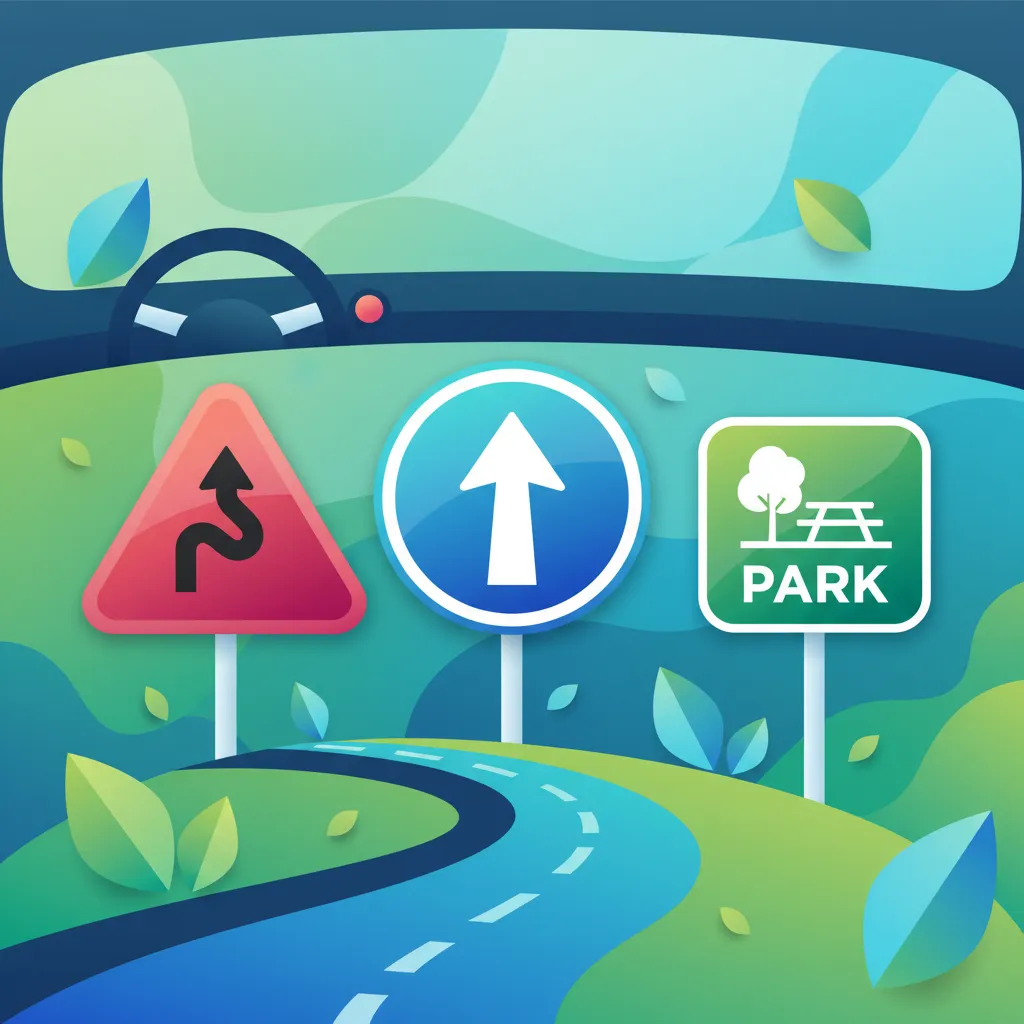
This lesson categorizes Icelandic road signs into regulatory signs that dictate mandatory actions, warning signs that alert drivers to hazards, and informational signs that provide guidance. It explains the distinctive shapes and colour schemes for each category, such as circles for prohibitions and triangles for warnings. By mastering these conventions, students will be able to interpret sign intent instantly and adapt their driving behaviour accordingly to comply with legal obligations.
This lesson examines the set of safety equipment required by Icelandic law to be present in every passenger vehicle, focusing on seat belts, airbags, fire extinguishers, and reflective vests. The content explains the correct placement and usage protocols for each item, including how to operate a fire extinguisher and don a reflective vest. Additionally, learners are introduced to the legal requirement for an emergency triangle and a first-aid kit.
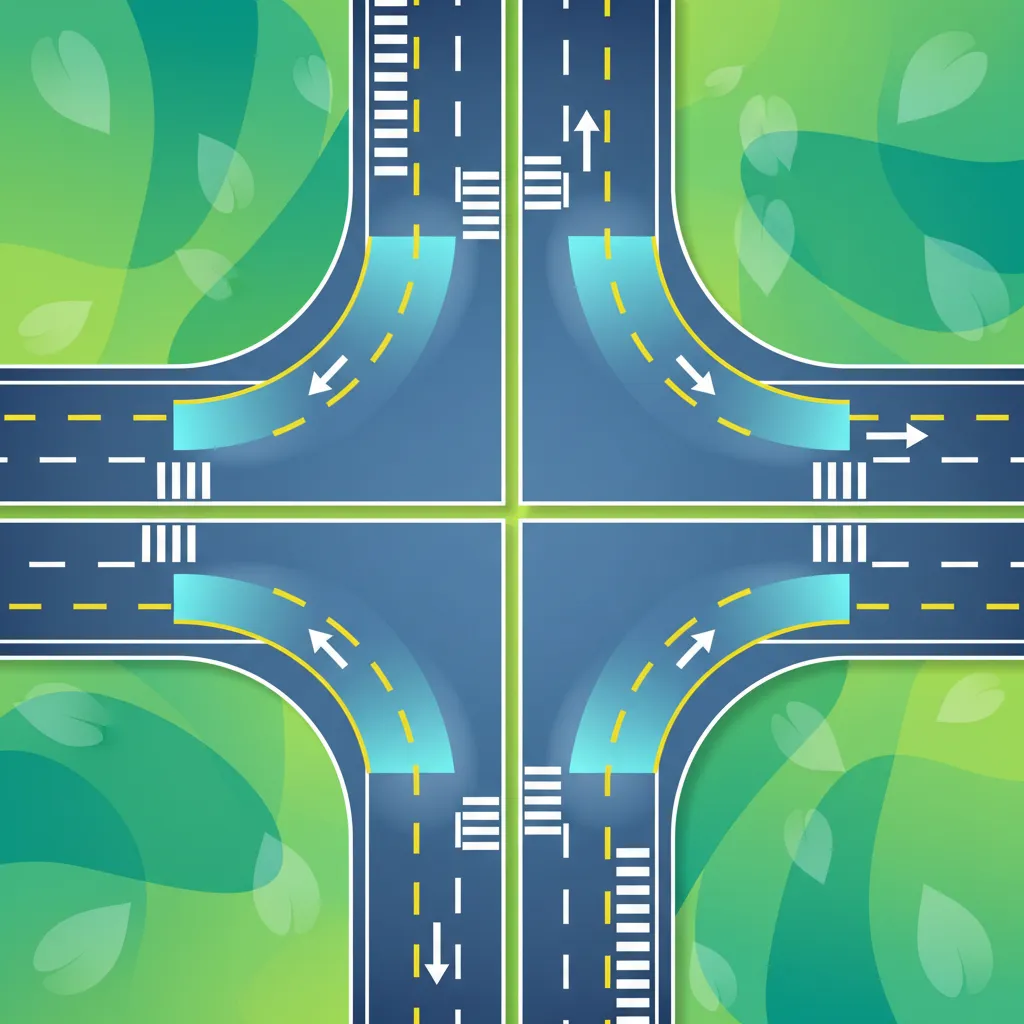
This lesson provides a comprehensive overview of the road markings found on Icelandic roads, from solid and broken lane lines to symbols indicating turning lanes and pedestrian crossings. The content details the visual meanings of each marking, such as solid lines indicating no crossing and broken lines permitting lane changes. Additionally, the lesson addresses the purpose of reflective markers and surface textures used in low-visibility or icy conditions, providing a framework for interpreting pavement cues.
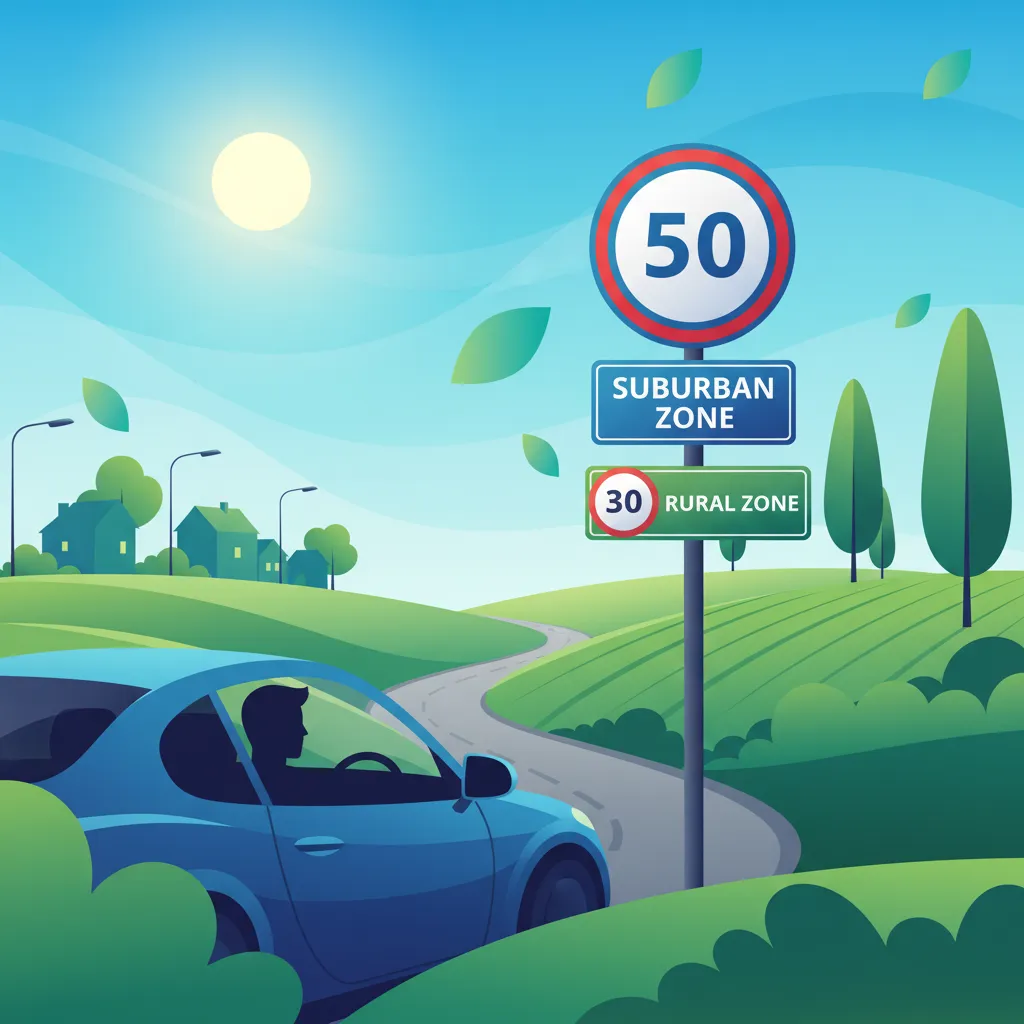
This lesson outlines the speed limits applicable to various road types in Iceland, from urban streets to rural highways and special zones like tunnels. Learners will interpret speed sign markings, understand variable speed limits that adjust for weather, and recognize when temporary speed reductions are enforced. The content also covers speed monitoring devices and the legal consequences of exceeding limits, emphasizing speed awareness in all driving contexts.
This lesson explores the health criteria mandated by Icelandic law for operating a vehicle, focusing on visual and auditory acuity, as well as overall physical capability. Students will study required medical certifications and understand acceptable vision levels and hearing standards necessary for safe driving. The lesson also outlines how chronic illnesses, medication side-effects, and mental health conditions can influence driver fitness and legal compliance.
Find clear answers to common questions learners have about Risk Perception and Hazard Awareness. Learn how the lesson is structured, which driving theory objectives it supports, and how it fits into the overall learning path of units and curriculum progression in Iceland. These explanations help you understand key concepts, lesson flow, and exam focused study goals.
Risk perception is your personal assessment of the danger in a situation, while hazard awareness is the proactive process of scanning for, identifying, and understanding potential dangers. This lesson focuses on developing both: recognizing potential hazards and understanding the level of risk they present in Icelandic driving conditions.
Iceland's weather, including snow, ice, heavy rain, fog, and strong winds, significantly impacts visibility and road grip, making hazards harder to spot and increasing the risk. This lesson teaches you to adjust your perception and scanning patterns to account for these challenging conditions, such as looking for subtle changes in road surface or anticipating reduced visibility.
The Icelandic theory exam includes questions that assess your ability to identify hazards in various scenarios, often presented through images or descriptions of traffic situations. You'll need to demonstrate an understanding of what constitutes a hazard, the potential risk it poses, and the appropriate action to take, all of which are covered in this lesson.
Yes, rural roads in Iceland present unique challenges like gravel surfaces, blind corners, single-lane bridges, and potential animal crossings. This lesson covers how to adapt your scanning techniques, anticipate slower vehicles, and be vigilant for unexpected obstacles or conditions specific to rural environments.
Anticipating others involves observing their vehicle's position, speed, direction signals, and body language (if visible). This lesson teaches you to look for early indicators of intent, such as a slight drift in lane or a driver's head turning, and to assume others might make mistakes, prompting you to maintain a safe buffer.
Utilize our advanced practice set search to pinpoint the exact Icelandic driving theory topics you need to review. Filter by subject, difficulty, or question type to create a highly effective study plan and ensure you are fully prepared for your official driving licence test in Iceland.