
This lesson is vital for aspiring Polish Category D bus drivers, exploring the critical aspects of driver fatigue, maintaining concentration, and effective schedule planning. You'll learn about the physiological and psychological impacts of long shifts, understanding legal work-time limits, and utilizing tachograph data to ensure compliance and safety on Polish roads. It builds upon foundational knowledge of EU regulations to prepare you for both the theory exam and real-world demands.
Lesson content overview
Operating a bus safely and efficiently requires sustained alertness, sharp concentration, and careful adherence to legal working-time regulations. For professional drivers undertaking the Polish Category D Driving Licence Theory Course for Bus Drivers, understanding and actively managing fatigue is not just a recommendation—it is a fundamental safety imperative and a legal obligation. This lesson explores the physiological and psychological aspects of driver fatigue, the legal framework governing driving and rest periods in Poland and the EU, and practical strategies to maintain peak performance and concentration throughout your shifts.
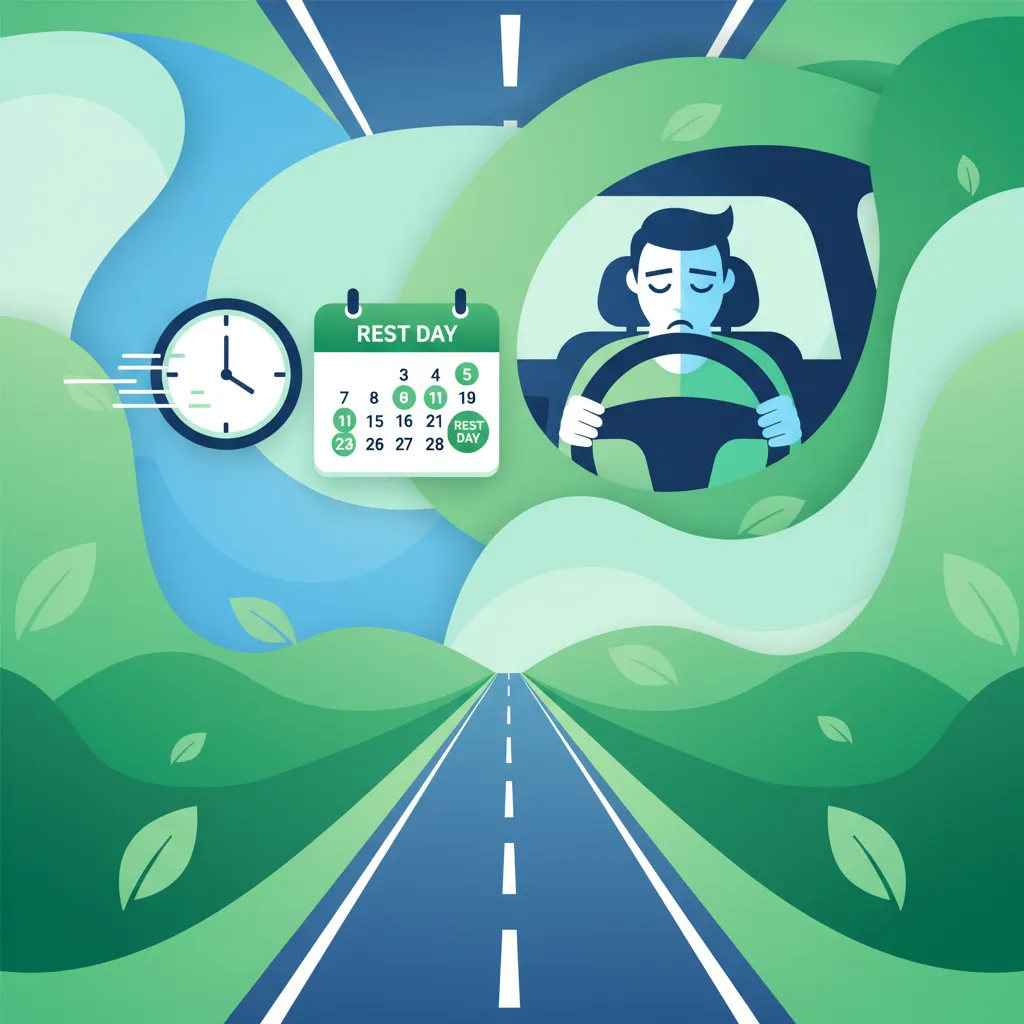
Driver fatigue is a complex state that significantly impairs driving ability, making it a leading cause of traffic accidents, particularly in demanding environments like passenger transport. It is more than just feeling tired; it is a profound reduction in mental and physical performance stemming from prolonged wakefulness, insufficient sleep, or the cumulative effects of arduous tasks.
Fatigue can manifest in several ways:
When a driver is fatigued, their abilities degrade in ways comparable to, or even worse than, driving under the influence of alcohol. The potential consequences are severe:
Ignoring fatigue signs, such as heavy eyelids, frequent yawning, difficulty focusing, or drifting lanes, can have catastrophic outcomes. It is a common misconception that coffee or energy drinks can fully counteract fatigue; while they may provide a temporary boost, they do not address the underlying need for rest and can mask severe tiredness.
To combat driver fatigue and enhance road safety, the European Union has established stringent rules for professional drivers' working times, which are directly applicable in Poland through the Polish Road Traffic Act and related regulations. The primary legislation is EU Regulation No. 561/2006, complemented by Regulation (EC) No. 165/2014 concerning tachographs. These rules define maximum driving times, mandatory breaks, and rest periods to protect both drivers' health and public safety.
Professional bus drivers must adhere to the following daily limits:
The regulations also set limits for driving and rest over a weekly period:
Breaks are crucial for maintaining alertness during continuous driving.
Strict adherence to these regulations is legally mandatory. Non-compliance can result in significant fines, penalty points on your licence, and even suspension, in addition to greatly increasing accident risk. Fleet operators also face severe penalties for failing to ensure driver compliance.
The tachograph is a vital piece of equipment installed in buses and other heavy vehicles, designed to automatically record driving time, other work, periods of availability, and rest. For professional Category D drivers in Poland, continuous and correct use of a digital tachograph is mandatory.
Modern buses are equipped with digital tachographs, which operate in conjunction with a personal driver card.
Understanding how to operate the tachograph correctly is critical for compliance:
Common Tachograph Errors to Avoid:
Beyond legal compliance, proactive strategies are essential for maintaining optimal alertness and concentration. These strategies encompass careful schedule planning, integrating micro-breaks, optimizing your cabin environment, and focusing on nutrition and hydration.
Good schedule planning is the cornerstone of fatigue management. It involves more than just fitting within legal limits; it's about anticipating challenges and building in flexibility.
Review your previous shift's tachograph data to confirm available driving and rest hours.
Map out your route, noting potential high-traffic areas, rest stops, and designated lay-over points.
Calculate required driving time and overlay mandatory break requirements (45 minutes after 4.5 hours driving).
Add buffer time for unexpected delays and additional short micro-breaks.
Ensure your planned schedule fully complies with daily and weekly driving and rest regulations.
While mandatory breaks are legally required, micro-breaks are short, frequent pauses (typically 1-5 minutes) that you can take during continuous driving to alleviate mental strain and refresh your attention without significantly impacting your schedule.
Physical strain contributes significantly to overall fatigue. An ergonomically optimized cabin setup minimizes discomfort and allows you to focus solely on the road.
What you eat and drink directly impacts your energy levels and cognitive performance.
Professional drivers frequently encounter situations that tempt them to deviate from best practices or legal requirements. Awareness of these common pitfalls is the first step to avoiding them.
Common Violations and Risks:
Fatigue management is not a one-size-fits-all approach; it must be adapted to varying external conditions that can amplify driver workload and stress.
The regulations and recommendations for fatigue management are not arbitrary; they are based on extensive scientific research into human physiology, psychology, and accident causation.
This lesson on fatigue management, concentration, and schedule planning is foundational for several other critical aspects of professional bus driving. It builds upon your understanding of:
The principles discussed here are essential not only for passing your Polish Category D driving theory exam but for a long, safe, and successful career as a professional bus driver. Prioritizing rest, adhering to regulations, and implementing effective strategies for maintaining concentration are the hallmarks of a responsible and competent driver.
This lesson covers the critical importance of managing driver fatigue for professional Polish Category D bus drivers, emphasizing that fatigue is a leading cause of accidents comparable to alcohol impairment. Key legal requirements under EU Regulation 561/2006 include maximum 9 hours daily driving with a mandatory 45-minute break after 4.5 hours, plus minimum 11-hour daily rest periods enforced via digital tachographs. The content provides practical strategies including micro-breaks every 2 hours, ergonomic cabin optimization, proper nutrition and hydration, and effective schedule planning to maintain concentration throughout shifts. Understanding these regulations and implementing proactive fatigue management is essential for both passing the Polish Category D theory exam and ensuring the safety of passengers and other road users.
A short set of high-value points that capture the most important learning from this lesson.
Driver fatigue impairs driving ability comparable to or worse than alcohol intoxication, including dangerous microsleeps lasting seconds while appearing awake
EU Regulation 561/2006 requires maximum 9 hours daily driving (extendable to 10 hours twice weekly), a mandatory 45-minute break after 4.5 hours of continuous driving, and minimum 11 hours daily rest
Digital tachograph operation is mandatory: insert driver card at shift start, manually record activities before driving, and select correct activity modes throughout the duty period
Effective fatigue management combines micro-breaks every 2 hours, ergonomic cabin setup, balanced nutrition, and adequate hydration rather than relying on caffeine
Weekly limits include maximum 56 hours driving and 90 hours over two weeks, with minimum 45-hour weekly rest to prevent cumulative fatigue
Explore all units and lessons included in this driving theory course.
Warning signs of fatigue include heavy eyelids, frequent yawning, difficulty focusing, lane drifting, and tunnel vision—stop immediately if these appear
Split daily rest requires at least 3 hours first part plus 8 hours second part; reduced daily rest of 9 hours is permitted up to three times between weekly rests with compensatory rest required
Tachograph errors such as forgetting to insert the driver card or failing to make manual entries for pre-driving activities can result in significant penalties
Microsleeps are involuntary episodes of sleep lasting fractions of seconds to several seconds during which the driver is completely unaware and unresponsive
A proper ergonomic setup with correct seat height, backrest angle of 100-110 degrees, and well-positioned mirrors reduces physical strain and delays fatigue onset
Believing coffee or energy drinks can fully counteract fatigue when they only mask tiredness without addressing the underlying need for rest
Assuming a quick stop or coffee counts as a full mandatory break—breaks must be at least 45 uninterrupted minutes or properly structured as 15 + 30 minutes
Forgetting to insert the driver card into the tachograph at the beginning of each shift, which creates compliance gaps in recorded data
Driving beyond daily or weekly limits, especially during night shifts when circadian rhythm causes natural drowsiness peaks between 2 a.m. and 6 a.m.
Continuing to drive after heavy meals that induce post-prandial drowsiness, which significantly impairs concentration and reaction time
Lesson content overview
A short set of high-value points that capture the most important learning from this lesson.
Driver fatigue impairs driving ability comparable to or worse than alcohol intoxication, including dangerous microsleeps lasting seconds while appearing awake
EU Regulation 561/2006 requires maximum 9 hours daily driving (extendable to 10 hours twice weekly), a mandatory 45-minute break after 4.5 hours of continuous driving, and minimum 11 hours daily rest
Digital tachograph operation is mandatory: insert driver card at shift start, manually record activities before driving, and select correct activity modes throughout the duty period
Effective fatigue management combines micro-breaks every 2 hours, ergonomic cabin setup, balanced nutrition, and adequate hydration rather than relying on caffeine
Weekly limits include maximum 56 hours driving and 90 hours over two weeks, with minimum 45-hour weekly rest to prevent cumulative fatigue
Explore all units and lessons included in this driving theory course.
Warning signs of fatigue include heavy eyelids, frequent yawning, difficulty focusing, lane drifting, and tunnel vision—stop immediately if these appear
Split daily rest requires at least 3 hours first part plus 8 hours second part; reduced daily rest of 9 hours is permitted up to three times between weekly rests with compensatory rest required
Tachograph errors such as forgetting to insert the driver card or failing to make manual entries for pre-driving activities can result in significant penalties
Microsleeps are involuntary episodes of sleep lasting fractions of seconds to several seconds during which the driver is completely unaware and unresponsive
A proper ergonomic setup with correct seat height, backrest angle of 100-110 degrees, and well-positioned mirrors reduces physical strain and delays fatigue onset
Believing coffee or energy drinks can fully counteract fatigue when they only mask tiredness without addressing the underlying need for rest
Assuming a quick stop or coffee counts as a full mandatory break—breaks must be at least 45 uninterrupted minutes or properly structured as 15 + 30 minutes
Forgetting to insert the driver card into the tachograph at the beginning of each shift, which creates compliance gaps in recorded data
Driving beyond daily or weekly limits, especially during night shifts when circadian rhythm causes natural drowsiness peaks between 2 a.m. and 6 a.m.
Continuing to drive after heavy meals that induce post-prandial drowsiness, which significantly impairs concentration and reaction time
Explore search topics learners often look for when studying Fatigue Management, Concentration, and Schedule Planning. These topics reflect common questions about road rules, driving situations, safety guidance, and lesson level theory preparation for learners in Poland.
Browse additional driving theory lessons that cover connected traffic rules, road signs, and common driving situations related to this topic. Improve your understanding of how different rules interact across everyday traffic scenarios.
Understand the legal framework for driver working hours, mandatory breaks, and rest periods applicable in Poland. Covers EU Regulation 561/2006 and tachograph requirements for Category D license holders. Essential theory for compliant professional driving.
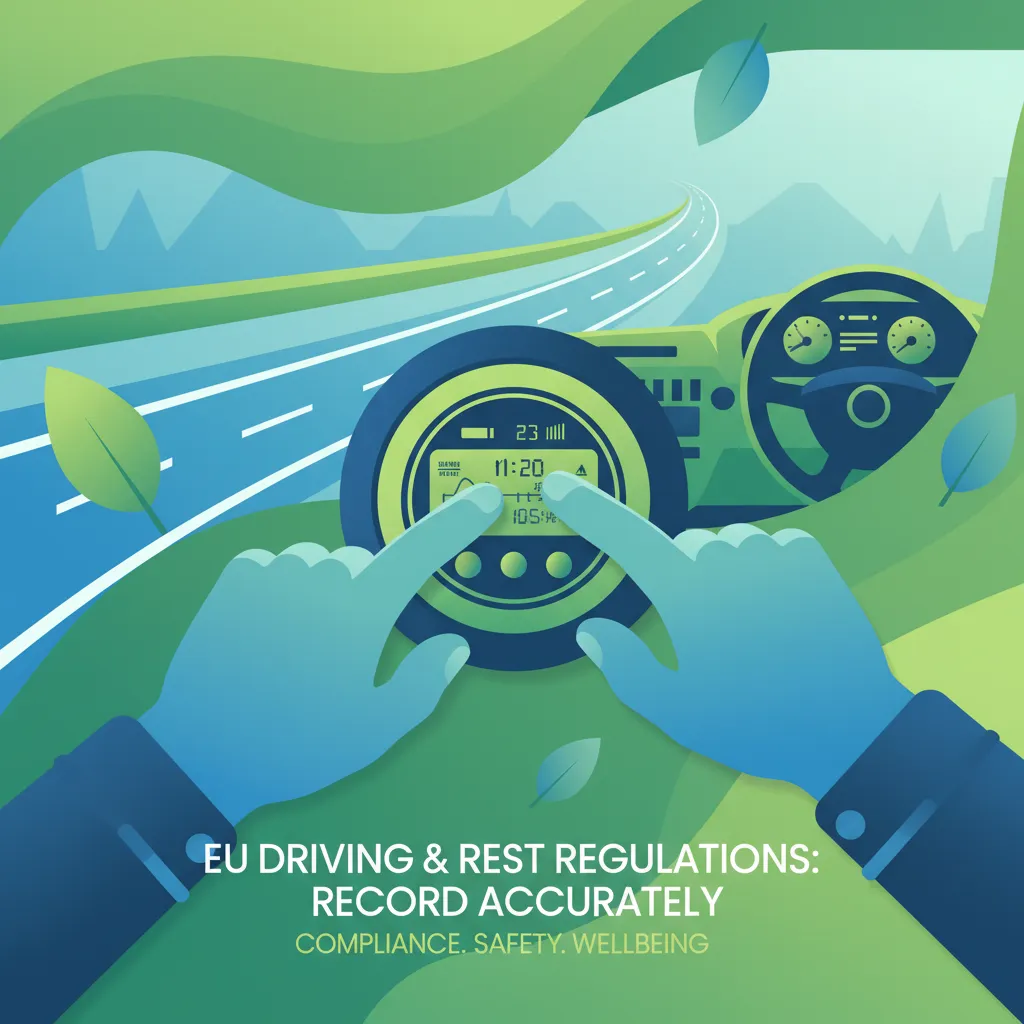
This lesson provides a comprehensive overview of EU working-time regulations for professional bus drivers. It covers maximum daily driving hours, mandatory breaks, and weekly rest periods to prevent fatigue. You will learn the function of the tachograph for recording driving times and the legal responsibility to maintain accurate records for compliance.

This lesson offers a detailed guide to the use of the tachograph, an essential tool for ensuring compliance with drivers' hours regulations. It explains how to operate both analogue and digital tachographs, correctly use the driver card, and accurately record all periods of work, availability, breaks, and rest. Learners will understand the specific legal limits on driving time and the minimum required rest periods, as well as the procedures followed during roadside inspections by transport authorities.

This lesson provides an overview of the key EU regulations that harmonize the road transport industry across member states. It focuses on the standardized rules for drivers' hours and rest periods, which are designed to combat fatigue and enhance safety. The content also explains the principles of cabotage—the transport of goods within one member state by a haulier from another—and the necessary documentation for smooth and legal cross-border operations.

This lesson details the speed limits applicable to buses in Poland across urban, rural, and motorway settings. It emphasizes how vehicle size and passenger load influence safe operating speeds and required stopping distances. The content also covers speed-control device usage and practical techniques for maintaining consistent speed while ensuring passenger comfort.

This lesson addresses the critical safety issue of driver fatigue. It explains the physiological causes of fatigue, including disruption to circadian rhythms, and teaches drivers to recognize its early warning signs. The content reviews the legal requirements for breaks and rest periods in detail and provides practical strategies for managing sleep hygiene and using alertness techniques to ensure they remain focused and responsive while on duty, thereby preventing fatigue-related incidents.

This lesson focuses on the key provisions of the Polish road traffic act relevant to public transport. It explains the legal classification of buses, mandatory safety equipment, and the hierarchy of road users. Learners will understand the specific obligations of bus drivers, potential penalties for non-compliance, and the required operational documentation.

This lesson introduces the various classes of passenger vehicles under Category D, detailing differences between standard, articulated, and minibuses. It covers key dimensional parameters like length, wheelbase, and turning circle that affect urban navigation. Learners will also understand passenger capacity calculations and weight distribution for safe, compliant operation.
Learn practical strategies to manage driver fatigue, enhance concentration, and improve hazard perception. This lesson provides insights into physiological and psychological factors affecting alertness, and techniques for safe driving in diverse conditions. Key theory for Category D drivers.

This lesson introduces defensive driving strategies tailored for bus operation, emphasizing hazard perception and risk management. Learners will study techniques for continuous situational awareness and maintaining safe following distances for adequate reaction time. The content covers emergency maneuvers and interaction with vulnerable road users to reduce accident likelihood.
This lesson addresses the critical safety issue of driver fatigue. It explains the physiological causes of fatigue, including disruption to circadian rhythms, and teaches drivers to recognize its early warning signs. The content reviews the legal requirements for breaks and rest periods in detail and provides practical strategies for managing sleep hygiene and using alertness techniques to ensure they remain focused and responsive while on duty, thereby preventing fatigue-related incidents.

This lesson addresses the critical importance of the driver's physical and mental state. It details the dangers of driving under the influence of alcohol or drugs, explaining the legal blood alcohol concentration limit in Poland. The content also covers the subtle but significant risks of fatigue and distractions, advocating for full attentiveness behind the wheel.

This lesson explains the ideal seating position for operating a bus, focusing on adjustable features that ensure proper reach to pedals and the steering wheel. It covers ergonomic principles such as lumbar support and control layout to minimize distraction. The goal is to establish a comfortable and safe posture that reduces physical strain during extended driving periods.

This lesson examines the internal factors that can impact a driver's performance. It explains how fatigue, distractions (like mobile phones), and the influence of alcohol or drugs significantly increase reaction time and impair judgment. Understanding these risks is fundamental to making responsible decisions before and during every journey.
This lesson provides a comprehensive overview of EU working-time regulations for professional bus drivers. It covers maximum daily driving hours, mandatory breaks, and weekly rest periods to prevent fatigue. You will learn the function of the tachograph for recording driving times and the legal responsibility to maintain accurate records for compliance.

This lesson details the specific driving adjustments needed for adverse weather. It focuses on how rain, snow, and ice affect vehicle dynamics and driver perception. Learners will study techniques to prevent hydroplaning, use winter tires effectively, and increase following distances on slippery surfaces while using safety systems like fog lights.

This lesson teaches the fundamentals of safely reversing a bus using mirrors, cameras, and alarms. It covers low-speed control essential for depot navigation, where precise steering is required to avoid collisions. Specific techniques for handling articulated buses and coordinating with ground staff are also discussed to ensure safe maneuvers.
Find clear answers to common questions learners have about Fatigue Management, Concentration, and Schedule Planning. Learn how the lesson is structured, which driving theory objectives it supports, and how it fits into the overall learning path of units and curriculum progression in Poland. These explanations help you understand key concepts, lesson flow, and exam focused study goals.
In Poland, Category D drivers must comply with EU regulations. Generally, this means a maximum of 9 hours driving per day, extendable to 10 hours twice a week. There are strict rules on breaks and daily/weekly rest periods that must be observed to ensure safety and legal compliance.
The tachograph is a mandatory device in buses that records driving time, rest periods, and other activities. It helps drivers and employers monitor adherence to work-time regulations, ensuring drivers take required breaks and rest, which is crucial for preventing fatigue and promoting road safety in Poland.
Common signs of fatigue include yawning, heavy eyelids, difficulty focusing, missing exits or road signs, drifting out of your lane, and increased irritability. If you experience these, it's a strong indicator you need to take a break or rest immediately, even if it's not a scheduled stop.
Absolutely. Poor nutrition and dehydration can significantly contribute to fatigue and reduced concentration. Regular, balanced meals and adequate hydration are essential for maintaining stable energy levels and mental alertness throughout your shift, directly impacting your ability to drive safely in Poland and beyond.
If you experience unexpected fatigue, safety must be your top priority. Pull over at the first safe opportunity, even if it's not a scheduled break point. Take a short nap (15-20 minutes), get some fresh air, or walk around. It's crucial not to push through fatigue, as it significantly increases accident risk.
Build custom practice sessions tailored precisely to your needs. Focus on areas requiring improvement, review specific Polish road signs, or master complex traffic rules to ensure full preparation for your official driving license exam.