
This lesson is the final module in Unit 11, focusing on crucial aspects of driver fitness and responsible behaviour. It delves into the significant risks associated with fatigue, alcohol, drug consumption, and distractions while driving, providing essential knowledge for safe operation of a vehicle on Polish roads and for your Category B theory exam.

Lesson content overview
Operating a vehicle safely requires more than just knowing traffic laws and how to control your car. Your physical and mental state as a driver is paramount. This comprehensive lesson, part of your Polish Driving Theory – Comprehensive Category B License Preparation, delves into critical factors that impair driving ability: fatigue, the influence of alcohol and drugs, and various forms of distraction. Understanding these elements is essential for all drivers, especially those preparing for a Category B license in Poland, to ensure personal safety and the safety of all road users.
Impaired perception, slowed reaction times, and compromised decision-making are major contributors to road accidents worldwide. By thoroughly understanding the physiological effects, legal limits, and effective mitigation strategies discussed here, you will build a strong foundation for responsible and attentive driving, both for your exam and for your future on the road.
Safe driving is a complex task demanding continuous attention, swift decision-making, and precise motor control. Any factor that diminishes these capabilities can drastically increase the risk of an accident. Polish traffic law, like that of many nations, places a significant responsibility on the driver to ensure they are in a suitable condition to operate a vehicle safely. This means being fully alert, sober, and free from any impairments that could compromise your ability to react to changing road conditions or unforeseen events.
Understanding the why behind these regulations—from a safety, legal, and physiological perspective—is crucial. Human performance deteriorates under the influence of alcohol, drugs, fatigue, or distraction, elevating the crash risk exponentially. Polish road legislation (Ustawa o ruchu drogowym) sets explicit limits and penalties to deter impaired driving, reflecting the severe consequences associated with neglecting driver condition.
Fatigue is a state of reduced mental and/or physical performance caused by prolonged wakefulness, inadequate sleep, or monotonic driving conditions. It is a subtle but dangerous impairment, often underestimated by drivers.
Driver fatigue can manifest in different forms:
The practical meaning for a driver is a significant decline in ability. Fatigue leads to slower reaction times, a narrowed field of attention (sometimes called "tunnel vision"), and critically, microsleeps. These are very brief, involuntary sleep episodes lasting from half a second to a few seconds, during which a driver can lose complete awareness of the road. Even a momentary lapse can lead to a lane departure, missed traffic signs, or delayed braking, often with catastrophic consequences.
Very brief (0.5-2 seconds) involuntary sleep episodes that occur during wakefulness, often caused by severe fatigue, which can lead to a momentary loss of control while driving.
Drowsy driving is a serious traffic violation in Poland, interpreted by law as "driving under the influence of fatigue" and can lead to penalty points and fines, especially if it contributes to an accident. The dangers include:
A common misunderstanding is the belief that caffeine can fully compensate for sleepiness. While coffee or energy drinks might provide a temporary boost, they only mask the symptoms of fatigue; they do not restore full alertness or reverse the physiological effects of sleep deprivation. The underlying impairment remains, and the effects of caffeine can wear off abruptly, leaving the driver even more exhausted.
Preventive planning is key to avoiding fatigued driving. If you are planning a long journey, consider these strategies:
Recognize the early signs of fatigue: frequent yawning, heavy eyelids, difficulty focusing, missing exits, or drifting lanes. These are clear signals to stop driving immediately.
Alcohol consumption significantly impairs a driver's abilities, making it one of the leading causes of road accidents. Poland enforces strict laws regarding driving under the influence of alcohol to protect all road users.
The amount of alcohol present in a person's bloodstream, typically measured in per mille (‰) in Poland, representing grams of alcohol per 1000 millilitres of blood.
The legal limit for Blood Alcohol Concentration (BAC) for most drivers in Poland is 0.2 per mille (0.2‰). This is equivalent to 0.02%. However, there is zero-tolerance for specific categories of drivers:
For these drivers, any detectable amount of alcohol in the bloodstream constitutes a violation.
Even at BAC levels below the legal limit, alcohol can begin to impair driving functions. As BAC increases, the negative effects become more pronounced:
A common misunderstanding is "one beer is safe." The rate at which alcohol is metabolized varies greatly among individuals, influenced by factors such as body weight, gender, food intake, and liver function. What might be safe for one person could put another over the legal limit. Alcohol impairment is not merely additive; its effects are synergistic, especially when combined with other factors like fatigue.
Police officers in Poland can conduct breathalyzer tests (Alco-test) at roadside checkpoints or during traffic stops. If the breathalyzer indicates alcohol, a more precise blood analysis may be requested. Drivers can also be subject to field sobriety tests to assess physical coordination and cognitive function.
Driving with a BAC between 0.2‰ and 0.5‰ is considered a misdemeanor ( wykroczenie ) and carries significant penalties:
Driving with a BAC above 0.5‰ is considered a crime ( przestępstwo ) and carries much more severe penalties:
The most effective strategy is to separate drinking from driving completely.
Driving under the influence of drugs, whether illicit, prescribed, or even some over-the-counter medications, is illegal and extremely dangerous. Any substance that alters central nervous system function can impair your ability to drive safely.
Psychoactive substances are chemicals that affect brain function, altering perception, mood, or behavior. They include:
Polish law strictly prohibits driving under the influence of drugs. For illicit substances like THC (from cannabis), any detectable level in the body is generally considered a violation. Unlike alcohol, where a specific BAC limit is set, for many drugs, the mere presence of an impairing substance that could affect driving is sufficient for prosecution.
For prescription medication, the situation is more nuanced. If a medication is prescribed by a doctor and does not impair your driving ability, it may be exempt. However, you must carry documentation (e.g., prescription) and be aware of any warnings. It is your responsibility to know the side effects of any medication you take and to assess if it's safe to drive.
The effects vary depending on the drug type, dosage, and individual physiology, but common impairments include:
A common misunderstanding is, "I feel normal after taking my medication, so it’s safe." Many drugs cause subtle cognitive deficits that are not immediately apparent to the driver. You might feel alert, but your reaction time, depth perception, or ability to focus could be compromised.
Police officers can request saliva, blood, or urine tests if they suspect drug impairment. Roadside drug tests for substances like THC are also used.
Driving under the influence of drugs carries severe penalties in Poland, often comparable to or even stricter than those for alcohol impairment. These can include:
Distracted driving is any activity that diverts a driver's attention from the primary task of operating a vehicle safely. In today's interconnected world, distractions have become a pervasive and dangerous issue.
Distractions can be categorized into three main types:
Often, distractions involve a combination of these categories, such as texting, which is visual (looking at the phone), manual (holding and typing), and cognitive (composing the message).
While there isn't a single "distraction limit" in the same way as a BAC limit, Polish law requires drivers to maintain full control of their vehicle and to be fully attentive. Failure to do so can be treated as negligent driving, leading to fines and demerit points, especially if it results in a dangerous situation or an accident.
Specific laws target mobile phone use:
Using a handheld mobile phone at a red light or in a traffic jam is still a violation in Poland. Your vehicle is considered to be "in motion" whenever it is on the road, even if temporarily stationary.
The simultaneous presence of multiple impairing factors, such as alcohol and fatigue, or drugs and distraction, does not merely add to the risk; it creates a synergistic risk. This means that the combined effect is much greater than the sum of the individual impairments. For example, driving with a low level of alcohol when you are also severely fatigued can be as dangerous, or even more dangerous, than driving with a higher BAC when rested.
Each impairing factor attacks different aspects of your driving ability (e.g., alcohol affects coordination, fatigue affects vigilance, distraction affects focus). When combined, these impairments compound, overwhelming your cognitive and physical capacities. This dramatically increases the likelihood of a crash and often leads to more severe outcomes.
Legally, if any single factor exceeds its legal limit, the driver is liable for the full infraction. However, in an accident investigation, the presence of multiple impairing factors will be considered an aggravating circumstance, potentially leading to harsher penalties.
Proactive measures are the cornerstone of safe driving. Developing good habits and making responsible choices before you even get behind the wheel can dramatically reduce your risk of accidents.
Modern vehicles often come equipped with Advanced Driver Assistance Systems (ADAS) such as:
While these systems can be valuable aids, it is crucial to understand that they are supplemental, not replacements for an alert and attentive driver. Over-reliance on ADAS can lead to complacency. The driver always retains ultimate responsibility for vehicle control and maintaining a safe driving condition. These systems are designed to assist, not to take over the primary task of driving.
Polish traffic law (Ustawa o ruchu drogowym) explicitly outlines rules and penalties related to driver condition. These regulations are designed to minimize risks associated with impaired driving.
| Regulation | Rule Statement | Legal Status | Rationale |
|---|---|---|---|
| BAC Limit (Poland) | Maximum BAC of 0.2‰ for drivers over 18; zero-tolerance for novice drivers (less than 2 years license) and professional drivers. | Mandatory | Prevents alcohol-induced impairment, protects vulnerable road users. |
| Drug Driving | Prohibited to drive with any detectable psychoactive substance that can impair driving ability; particularly strict for illicit drugs like THC. Prescription medication may be exempt if it does not impair driving and is medically documented. | Mandatory | Eliminates driving under the influence of drugs, which severely compromises safety. |
| Fatigue-Related Driving | Drivers must not operate a vehicle if they are drowsy, excessively tired, or otherwise unfit for safe driving. This is often enforced after accidents caused by microsleeps or general reduced vigilance. | Mandatory | Addresses accident risk from reduced vigilance and reaction time. |
| Distraction (Mobile Phone) | While the vehicle is moving, drivers shall not hold a mobile phone for calls, texting, or app operation without a hands-free system. This applies even when temporarily stopped (e.g., at traffic lights). | Mandatory | Reduces visual and manual distraction, promoting focus on the road. |
| Use of Driver Assistance Systems | Such systems may assist but do not replace the driver's full responsibility for attentiveness, vigilance, and maintaining control of the vehicle. Drivers must remain engaged and ready to intervene at all times. | Mandatory | Prevents over-reliance on technology and ensures driver remains in command. |
The dangers associated with impaired driver condition are not static; they are significantly amplified by various environmental and situational factors.
The relationship between your condition as a driver and the outcome on the road is a direct cause-and-effect chain.
Distraction, even momentary, can lead to a loss of vehicle control, resulting in lane departure, missed traffic signs, or delayed braking. Alcohol and drugs, by slowing cognitive processes and impairing motor control, can cause a driver to weave, adopt inappropriate speeds, or fail to obey critical traffic signals.
Always remember: Your state behind the wheel is a choice. Make the choice to be fully present, alert, and sober.
The state of a driver is a fundamental aspect of road safety and a legal imperative in Poland. This lesson has covered the critical forms of impairment:
Key takeaways:
Learners must internalize the clear cause-and-effect chain: Impaired driver condition → reduced driving performance → higher accident risk → severe legal and personal repercussions. Prioritizing your fitness to drive is the most crucial decision you make every time you get behind the wheel.
This lesson covers the critical driver condition factors that impair driving ability under Polish law: fatigue (causing microsleeps and slowed reactions), alcohol (with a 0.2‰ legal limit and zero-tolerance for novice/professional drivers), drugs (any detectable impairing substance prohibited), and distractions (especially mobile phone use, which is illegal even when hands-free). Each factor degrades reaction time, perception, and decision-making, but their combined effect creates exponentially greater risk than any single factor alone. Polish law enforces strict penalties including fines, demerit points, license suspension, and imprisonment depending on the severity of impairment. Prevention through adequate rest, designated drivers, medication awareness, and eliminating distractions before driving are essential strategies for legal compliance and road safety.
A short set of high-value points that capture the most important learning from this lesson.
Polish legal BAC limit is 0.2‰ for standard drivers, with zero-tolerance (any detectable amount) applying to novice drivers (under 2 years) and professional drivers
Fatigue causes microsleeps (0.5-2 second involuntary sleep episodes) and significantly slows reaction times, similar to alcohol impairment
Drug driving in Poland prohibits any detectable psychoactive substance that impairs driving ability, with special strictness for illicit drugs like THC
Distracted driving combines visual, manual, and cognitive elements; hands-free phone use removes manual but not cognitive distraction
Multiple impairing factors create synergistic risks where combined effects far exceed the sum of individual impairments
Explore all units and lessons included in this driving theory course.
The legal BAC limit in Poland is 0.2‰ (0.02%), and zero-tolerance applies to novice and professional drivers
Microsleeps are brief (0.5-2 seconds) involuntary sleep episodes caused by severe fatigue that can cause complete loss of road awareness
Alcohol leaves the system at approximately 0.015‰ per hour, but this varies individually based on weight, gender, food intake, and liver function
Using a handheld mobile phone in Poland is prohibited even when stopped at traffic lights, as the vehicle is considered 'in motion'
ADAS features like lane-keeping assist and drowsiness detection are supplemental aids only; the driver retains full responsibility for vehicle control
Assuming caffeine fully counteracts fatigue; it only masks symptoms temporarily without restoring full alertness or reversing sleep deprivation
Believing 'one beer is safe'; alcohol metabolism varies greatly by individual factors, making any generalization dangerous
Thinking hands-free phone use is completely safe; while it eliminates manual distraction, it still creates significant cognitive load affecting reaction time
Assuming feeling normal after taking medication means safe to drive; many drugs cause subtle cognitive deficits not immediately apparent to the user
Underestimating combined impairment risks; driving mildly fatigued with even low alcohol levels can be as dangerous as higher alcohol alone when rested
Lesson content overview
A short set of high-value points that capture the most important learning from this lesson.
Polish legal BAC limit is 0.2‰ for standard drivers, with zero-tolerance (any detectable amount) applying to novice drivers (under 2 years) and professional drivers
Fatigue causes microsleeps (0.5-2 second involuntary sleep episodes) and significantly slows reaction times, similar to alcohol impairment
Drug driving in Poland prohibits any detectable psychoactive substance that impairs driving ability, with special strictness for illicit drugs like THC
Distracted driving combines visual, manual, and cognitive elements; hands-free phone use removes manual but not cognitive distraction
Multiple impairing factors create synergistic risks where combined effects far exceed the sum of individual impairments
Explore all units and lessons included in this driving theory course.
The legal BAC limit in Poland is 0.2‰ (0.02%), and zero-tolerance applies to novice and professional drivers
Microsleeps are brief (0.5-2 seconds) involuntary sleep episodes caused by severe fatigue that can cause complete loss of road awareness
Alcohol leaves the system at approximately 0.015‰ per hour, but this varies individually based on weight, gender, food intake, and liver function
Using a handheld mobile phone in Poland is prohibited even when stopped at traffic lights, as the vehicle is considered 'in motion'
ADAS features like lane-keeping assist and drowsiness detection are supplemental aids only; the driver retains full responsibility for vehicle control
Assuming caffeine fully counteracts fatigue; it only masks symptoms temporarily without restoring full alertness or reversing sleep deprivation
Believing 'one beer is safe'; alcohol metabolism varies greatly by individual factors, making any generalization dangerous
Thinking hands-free phone use is completely safe; while it eliminates manual distraction, it still creates significant cognitive load affecting reaction time
Assuming feeling normal after taking medication means safe to drive; many drugs cause subtle cognitive deficits not immediately apparent to the user
Underestimating combined impairment risks; driving mildly fatigued with even low alcohol levels can be as dangerous as higher alcohol alone when rested
Explore search topics learners often look for when studying Driver Condition: Fatigue, Alcohol, Drugs, and Distractions. These topics reflect common questions about road rules, driving situations, safety guidance, and lesson level theory preparation for learners in Poland.
Browse additional driving theory lessons that cover connected traffic rules, road signs, and common driving situations related to this topic. Improve your understanding of how different rules interact across everyday traffic scenarios.
Understand the legal blood alcohol concentration (BAC) limits and drug impairment rules in Poland. This lesson details the severe consequences of driving under the influence and the specific regulations for different driver categories.
This lesson examines the internal factors that can impact a driver's performance. It explains how fatigue, distractions (like mobile phones), and the influence of alcohol or drugs significantly increase reaction time and impair judgment. Understanding these risks is fundamental to making responsible decisions before and during every journey.
This lesson provides practical methods for maintaining a safe buffer zone behind the vehicle in front. It explains the 'two-second rule' as a minimum following distance in good conditions and how to increase it to three or more seconds in adverse weather. This skill is critical for allowing enough time to react and brake safely to avoid rear-end collisions.
This lesson details the rules and best practices for driving on Poland's fastest roads. It covers the higher speed limits, the strict lane discipline of keeping right except to overtake, and prohibitions on stopping. The aim is to ensure drivers can handle the demands of sustained high-speed travel safely and efficiently.
This lesson explains the function of circular prohibition signs, which impose legal restrictions on drivers. It details common prohibitions such as speed limits, 'no entry' signs, and restrictions on overtaking or parking. Compliance with these signs is mandatory, and this lesson ensures learners can correctly identify and obey them.
This lesson teaches the crucial concept that drivers must always adapt their speed to the current conditions. It explains how factors like rain, fog, ice, heavy traffic, and poor visibility reduce safety margins and require a lower speed than the posted limit. This principle of defensive driving is essential for preventing accidents in challenging situations.

This lesson addresses the challenges of driving after dark. It covers the correct use of high and low beam headlights to see and be seen, and techniques to avoid being dazzled by oncoming traffic. The content also touches on the increased risk of fatigue and reduced ability to judge speed and distance at night.
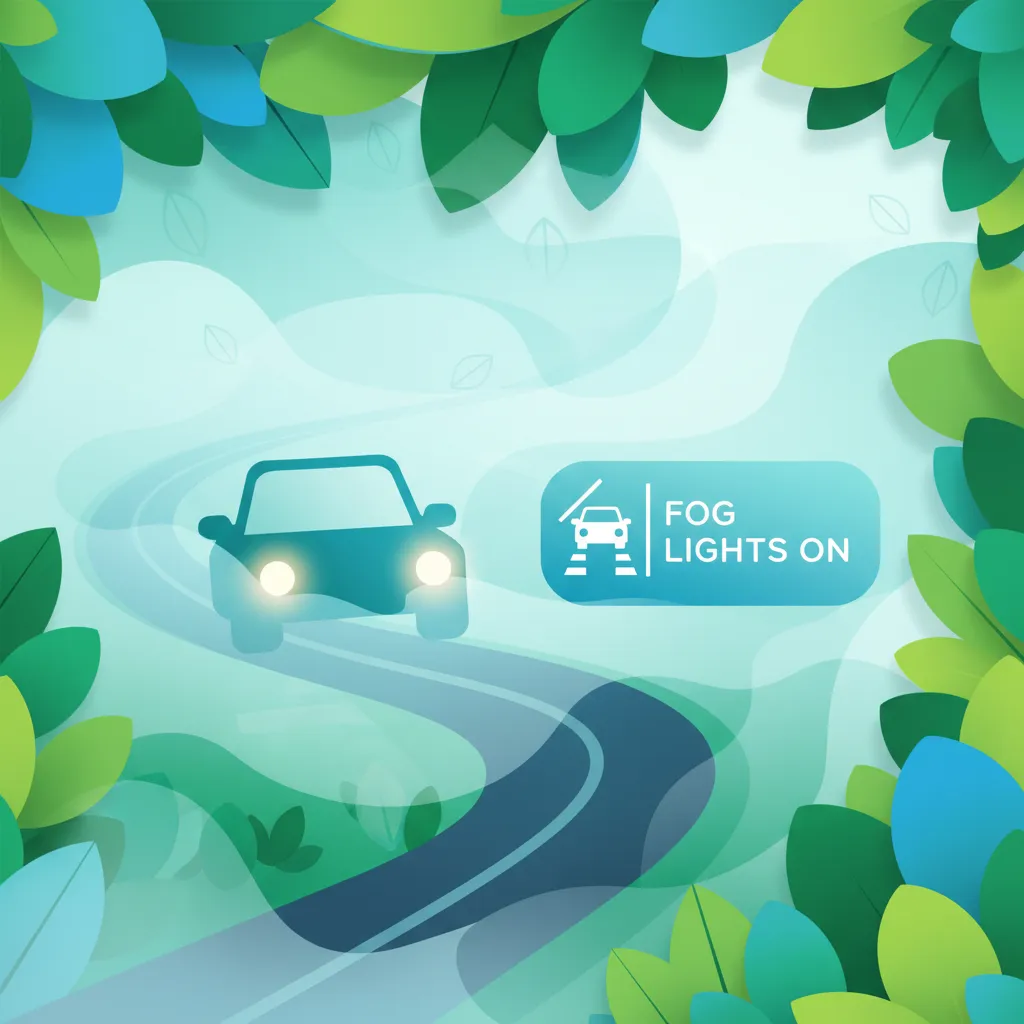
This lesson provides essential guidance for driving in fog, one of the most dangerous conditions. It instructs on the correct use of low-beam headlights and fog lights to maximize visibility without causing glare. The core advice is to significantly reduce speed and use the edge of the road or markings as a guide.
This lesson details the legal framework for overtaking in Poland. It explains how to interpret road markings, such as solid and double solid lines, and prohibition signs that forbid passing. The content emphasizes the critical need for sufficient sight distance and a clear path before initiating an overtaking maneuver to ensure safety.
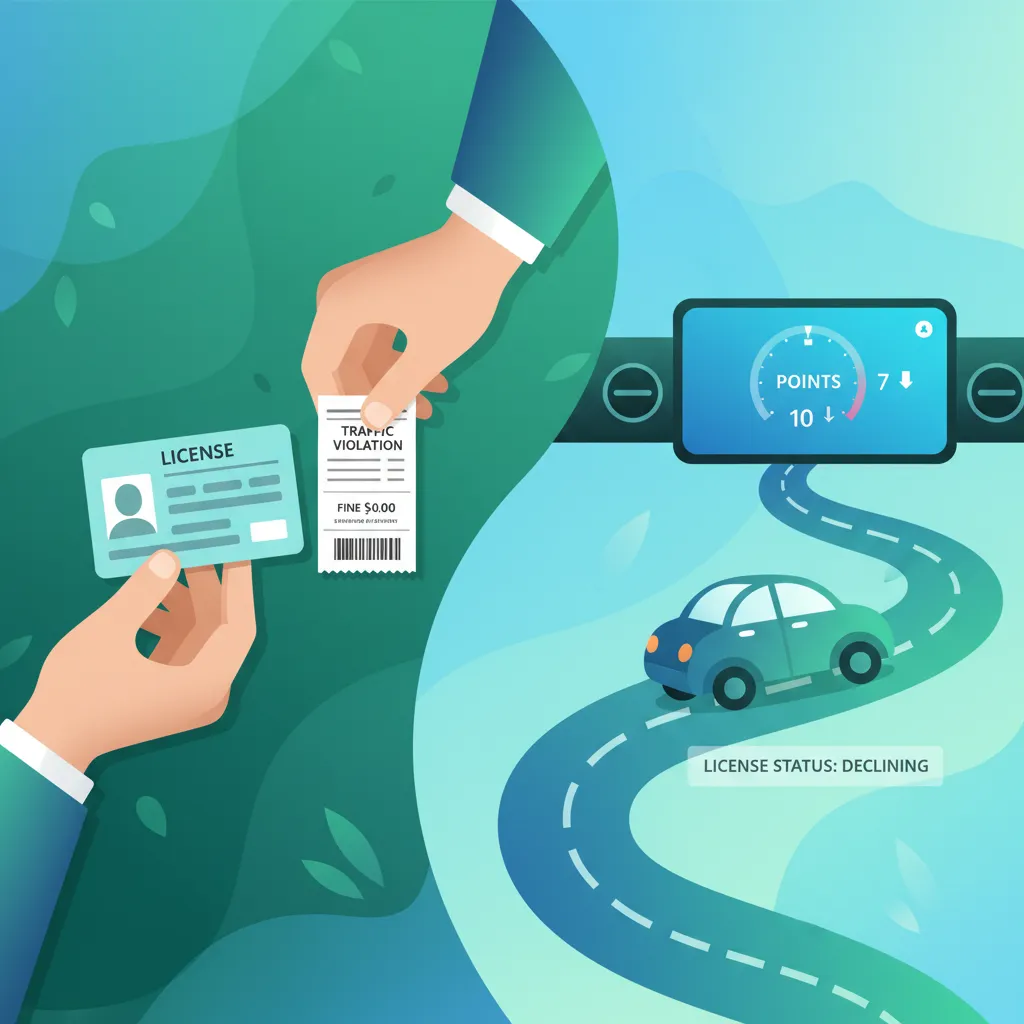
This lesson details the Polish traffic penalty system, explaining how violations result in fines and the accumulation of demerit points (punkty karne). It covers the point thresholds that can lead to licence suspension and the legal responsibilities of a driver involved in a traffic offense. Understanding this system is crucial for maintaining a clean driving record and promoting lawful behavior on the road.
This lesson explores the physiological and psychological aspects of driver fatigue, covering its warning signs and strategies for maintaining concentration. It outlines the legal framework for work-time limits and mandatory rest periods, monitored via tachograph. Practical advice on schedule planning and nutrition is provided to help sustain alertness and reduce accident risk.
Learn about the significant risks of driving while fatigued or distracted. Covers microsleeps, the impact of mobile phones, and strategies to maintain full attention while driving in Poland.
This lesson explores the physiological and psychological aspects of driver fatigue, covering its warning signs and strategies for maintaining concentration. It outlines the legal framework for work-time limits and mandatory rest periods, monitored via tachograph. Practical advice on schedule planning and nutrition is provided to help sustain alertness and reduce accident risk.
This lesson examines the internal factors that can impact a driver's performance. It explains how fatigue, distractions (like mobile phones), and the influence of alcohol or drugs significantly increase reaction time and impair judgment. Understanding these risks is fundamental to making responsible decisions before and during every journey.
This lesson addresses the critical safety issue of driver fatigue. It explains the physiological causes of fatigue, including disruption to circadian rhythms, and teaches drivers to recognize its early warning signs. The content reviews the legal requirements for breaks and rest periods in detail and provides practical strategies for managing sleep hygiene and using alertness techniques to ensure they remain focused and responsive while on duty, thereby preventing fatigue-related incidents.
This lesson provides essential guidance for driving in fog, one of the most dangerous conditions. It instructs on the correct use of low-beam headlights and fog lights to maximize visibility without causing glare. The core advice is to significantly reduce speed and use the edge of the road or markings as a guide.
This lesson addresses the challenges of driving after dark. It covers the correct use of high and low beam headlights to see and be seen, and techniques to avoid being dazzled by oncoming traffic. The content also touches on the increased risk of fatigue and reduced ability to judge speed and distance at night.
This lesson provides practical methods for maintaining a safe buffer zone behind the vehicle in front. It explains the 'two-second rule' as a minimum following distance in good conditions and how to increase it to three or more seconds in adverse weather. This skill is critical for allowing enough time to react and brake safely to avoid rear-end collisions.
This lesson details the rules and best practices for driving on Poland's fastest roads. It covers the higher speed limits, the strict lane discipline of keeping right except to overtake, and prohibitions on stopping. The aim is to ensure drivers can handle the demands of sustained high-speed travel safely and efficiently.
This lesson teaches the crucial concept that drivers must always adapt their speed to the current conditions. It explains how factors like rain, fog, ice, heavy traffic, and poor visibility reduce safety margins and require a lower speed than the posted limit. This principle of defensive driving is essential for preventing accidents in challenging situations.

This lesson explores the unique characteristics of driving on rural roads. It highlights potential hazards such as sharp, unbanked curves, poor road surfaces, and limited visibility due to hills and vegetation. The content teaches drivers to anticipate these conditions and adjust their speed and position to navigate safely.
This lesson introduces defensive driving principles for rural settings, teaching learners how to continually scan the environment and anticipate potential hazards. It discusses the unique challenges posed by slow-moving agricultural traffic, field entrances, and unpredictable farm equipment maneuvers. The lesson emphasizes proactive decision-making and early brake application to avoid collisions in mixed traffic.
Find clear answers to common questions learners have about Driver Condition: Fatigue, Alcohol, Drugs, and Distractions. Learn how the lesson is structured, which driving theory objectives it supports, and how it fits into the overall learning path of units and curriculum progression in Poland. These explanations help you understand key concepts, lesson flow, and exam focused study goals.
In Poland, the legal blood alcohol concentration (BAC) limit for drivers is 0.02% or higher, which is equivalent to 0.1 mg of alcohol per 1 cm³ of blood. Driving with a BAC at or above this level is considered an offence. It's crucial to remember that even small amounts of alcohol can impair judgment and reaction times, so the safest approach is to avoid alcohol entirely if you plan to drive.
Fatigue significantly slows reaction times, impairs judgment, and can lead to 'microsleeps', where you briefly lose consciousness. In the Polish theory test, questions related to fatigue often assess your understanding of these risks and your ability to recognise signs of tiredness. You may be asked about appropriate actions, such as taking breaks or avoiding driving when sleepy.
Distractions are anything that diverts your attention from the primary task of driving. Common examples include using a mobile phone (even hands-free can be distracting), adjusting the radio or navigation system, eating, talking intensely with passengers, or dealing with children or pets. The theory exam will test your awareness of these potential hazards and the importance of maintaining full concentration.
Yes, certain medications can cause drowsiness or impair driving ability. It's essential to read the medication's leaflet and consult your doctor or pharmacist if you are unsure about its effects on driving. If a medication is known to impair driving, you must not drive after taking it, and this is a topic frequently covered in the Polish driving theory exam.
Driving under the influence of drugs is a serious criminal offence in Poland. Similar to alcohol, it severely impairs driving skills such as perception, coordination, and reaction time. Penalties can include heavy fines, licence suspension or revocation, and even imprisonment, alongside the risk of causing a serious accident. The theory test will cover the illegality and dangers of drug-impaired driving.
Build custom practice sessions tailored precisely to your needs. Focus on areas requiring improvement, review specific Polish road signs, or master complex traffic rules to ensure full preparation for your official driving license exam.