
Welcome to the lesson on riding in rain and wet conditions, part of the 'Riding in Adverse Weather and Seasonal Conditions' unit. This crucial topic will equip you with the specific knowledge needed to handle your motorcycle safely when the roads are wet, preparing you for real-world challenges and specific questions on the Polish Category A theory exam.

Lesson content overview
Riding a motorcycle in rain and on wet road surfaces presents unique challenges that demand heightened awareness, specific riding techniques, and thorough preparation. This lesson details the critical safety considerations for navigating adverse wet conditions, covering everything from the physics of reduced grip to essential gear and legal requirements in Poland. Mastery of these concepts is vital not only for ensuring your safety on the road but also for successfully passing the Polish Category A motorcycle theory exam.
The fundamental challenge of riding in wet conditions lies in the altered interaction between your motorcycle's tyres and the road surface. Water acts as a lubricant, significantly reducing the available friction and thereby diminishing grip. This change in friction directly impacts braking distances, cornering stability, and the overall predictability of your motorcycle's handling.
When water is present on the road, it forms a thin film or accumulates into deeper puddles. This moisture creates a barrier between the tyre rubber and the road surface, preventing the direct contact necessary for maximum friction. The result is a reduced coefficient of friction, meaning your tyres have less purchase on the road.
This reduction in grip has immediate and significant implications for safe riding. Braking distances, for instance, can increase substantially. What might take 15 metres to stop on dry asphalt at 50 km/h could easily extend to 22 metres or more on a wet surface. Similarly, the maximum lean angle achievable in a corner is reduced, making high-speed turns perilous. Riders must mentally adjust to this diminished grip and anticipate that all maneuvers will require more distance and gentler inputs.
Perhaps the most dramatic consequence of wet roads is hydroplaning, also known as aquaplaning. This phenomenon occurs when a layer of water builds up between the tyres and the road surface, causing the tyre to lose complete contact with the asphalt and ride on a film of water. When this happens, you lose all steering and braking control, and the motorcycle essentially becomes an uncontrolled sled.
Hydroplaning is more likely to occur at higher speeds, especially when there's standing water (puddles deeper than approximately 2 mm). The tyre's tread is designed to displace water, but if the volume of water is too great or the speed too high, the tread cannot cope. Even at lower speeds, "viscous hydroplaning" can occur on extremely smooth, wet surfaces where a very thin layer of water cannot be penetrated. Understanding your motorcycle's hydroplaning threshold – the speed at which this risk becomes significant given the road and tyre conditions – is crucial for prevention.
Effective preparation is the first line of defence against the hazards of wet weather. This involves critical checks and maintenance of your motorcycle, focusing on components directly involved in maintaining traction and control.
Your motorcycle's tyres are its only contact with the road, and their condition is paramount in wet weather. Tyre tread patterns are specifically designed to channel water away from the contact patch, allowing the rubber to grip the road. If the tread is too shallow, water cannot be effectively dispersed, dramatically increasing the risk of hydroplaning and reducing overall grip.
In Poland, the legal minimum tread depth for motorcycle tyres is 1.6 mm. Riding with tyres worn below this limit is not only illegal but extremely dangerous in wet conditions, significantly compromising your safety. Regularly inspect your tyres for adequate tread depth, ideally maintaining a depth greater than the minimum during the rainy season.
Tyre pressure also plays a vital role. While some riders mistakenly believe that slightly deflated tyres provide more grip in the rain, this is generally false and dangerous. Low tyre pressure can lead to a larger contact patch but also increases tyre deformation and heat, potentially worsening hydroplaning risk and affecting handling. Always adhere to the manufacturer's recommended tyre pressures for your specific motorcycle model.
Before any ride, especially if rain is expected, quickly check your tyre tread depth and pressure. A small investment in a tread depth gauge can be a life-saver.
Just as tyre grip is reduced, so too is the efficiency of your braking system in wet conditions. While modern braking systems, especially those equipped with Anti-lock Braking Systems (ABS), are designed to perform well in various conditions, they cannot defy the laws of physics. Water reduces the friction between brake pads and discs, requiring more pressure and distance to achieve the same stopping power as on dry roads.
A safety system that prevents the wheels from locking up during hard braking, allowing the rider to maintain steering control. While ABS is a huge advantage in wet conditions, it does not shorten stopping distances on slippery surfaces; it merely helps prevent skidding.
Before riding in the rain, ensure your brake pads are not excessively worn and that your brake fluid levels are correct. Be aware that disc brakes can temporarily lose efficiency when first applied after being soaked, a phenomenon known as "brake fade" or "wet brake effect." A light, momentary application of the brakes while moving can sometimes help to "wipe" the discs dry.
Adjusting your riding style is crucial when the roads are wet. The key principle is smoothness: smooth inputs, smooth movements, and a heightened sense of anticipation.
Sudden changes in speed or direction are far more likely to cause a loss of traction on wet surfaces. Therefore, precise and gentle control over the throttle and brakes becomes paramount.
Cornering on a wet road demands a substantial reduction in speed and a refined technique. The reduced coefficient of friction means your tyres have less lateral grip, making lean angles dangerous.
Reduce Speed Before the Turn: Enter corners at a significantly slower speed than you would in dry conditions. Most of your braking should be completed before you lean into the turn.
Maintain a Consistent, Shallow Lean Angle: Avoid aggressive lean angles. Keep the motorcycle as upright as possible while still navigating the curve.
Smooth Throttle Through the Apex: Once committed to the turn, maintain a constant, gentle throttle input to stabilize the chassis, but do not accelerate abruptly.
Avoid Braking Mid-Turn: Braking while leaned over on a wet surface dramatically increases the risk of a front or rear wheel slide, leading to a loss of control. If you must adjust speed mid-turn, do so very gently with the rear brake, minimizing disruption to the motorcycle's balance.
Be extra vigilant for road markings (like white lines, pedestrian crossings, or painted arrows), manhole covers, and metal grates. These surfaces become extremely slippery when wet and should be approached with caution, ridden over as upright as possible, and never braked or accelerated on aggressively.
Rain not only affects grip but also severely compromises visibility for both the rider and other road users. Being seen and being able to see are critical components of wet-weather safety.
In conditions of reduced visibility, such as rain, fog, or twilight, Polish traffic law mandates the use of vehicle headlamps. For motorcycles, this typically means your low-beam (dipped beam) headlamp must be switched on at all times, regardless of the time of day. This significantly improves your motorcycle's conspicuity to other drivers, who may struggle to see you through spray and reduced ambient light.
Polish law, specifically Article 53 of the Ustawa o ruchu drogowym (Road Traffic Act), requires drivers to use headlamps in conditions of reduced visibility. Failing to do so can result in a fine and increased accident risk. While high-beam headlamps can penetrate rain more effectively, their use is prohibited when there is oncoming traffic or when you are following another vehicle, as they can cause dazzling.
Rider visibility is also impacted by a fogged-up helmet visor. Ensure your helmet has good ventilation, and consider anti-fog inserts or sprays. Clear vision is non-negotiable for safe riding.
Being cold and wet on a motorcycle quickly leads to discomfort, fatigue, and reduced concentration, all of which compromise safety. Investing in proper waterproof and protective clothing is essential for any rider planning to encounter rain.
Your gear should include:
Do not assume any raincoat will suffice. Motorcycle-specific waterproof gear is designed to withstand the forces of wind and rain at speed, provide essential protection in a crash, and prevent discomfort that can distract you.
Adhering to Polish traffic regulations is crucial for safety and avoiding legal penalties. Several key provisions directly address riding in adverse weather conditions.
As mentioned, Article 53 of the Ustawa o ruchu drogowym states that when visibility is reduced due to atmospheric conditions (such as rain, fog, or snow), a vehicle's headlamps must be switched on. For motorcycles, this typically means the low-beam headlamp. This rule applies day and night, emphasizing the importance of being seen.
Article 39 of the Ustawa o ruchu drogowym places a general obligation on all drivers to adapt their speed to the prevailing road, traffic, and weather conditions. This means that even if a speed limit sign indicates 70 km/h, if heavy rain or standing water makes that speed unsafe, you are legally required to reduce your speed accordingly. Failure to do so is a common cause of accidents and a legal violation.
When you see a road sign like A-15 "Slippery Road," it serves as an explicit warning to further reduce your speed and exercise extreme caution.
Under Rozporządzenie Ministra Infrastruktury (Minister of Infrastructure Regulation) from 2004, all motor vehicles, including motorcycles, must have tyres with a minimum tread depth of 1.6 mm. This legal requirement directly impacts your safety in wet conditions, as adequate tread is crucial for water dispersion and maintaining grip. Riding with tyres below this legal minimum is subject to fines and can lead to a vehicle being deemed unroadworthy.
While some drivers might instinctively turn on hazard warning lights in heavy rain to increase visibility, Article 96 of the Ustawa o ruchu drogowym explicitly prohibits the use of hazard lights while the vehicle is in motion. Hazard lights are intended for stationary vehicles that pose a danger or obstruction. Using them while moving can confuse other drivers, who might misinterpret your intentions or think you are stopped. Only use hazard lights if you are forced to stop unexpectedly due to extremely poor visibility or a breakdown.
Understanding common mistakes is key to developing safe riding habits in the rain.
The approach to riding in wet conditions isn't static; it must adapt to the specific context of the weather, road type, and traffic environment.
Safe motorcycle riding in rain and on wet roads is about proactive preparation, defensive riding techniques, and strict adherence to traffic laws.
By integrating these principles into your riding practice, you will significantly enhance your safety and confidence when encountering rain and wet conditions on Polish roads, preparing you thoroughly for your Category A licence and a lifetime of safe motorcycling.
Riding in rain presents unique hazards because water reduces the coefficient of friction between tyres and road, increasing braking distances and making all maneuvers more challenging. Hydroplaning, caused by water building between tyre and road, eliminates control and is more likely at higher speeds with standing water. Essential preparations include ensuring tyre tread meets the Polish legal minimum of 1.6 mm and tyre pressure is correct. Riding technique must emphasize smoothness: gradual throttle and brake inputs, reduced cornering lean angles, and braking completed before turns. Polish law mandates low-beam headlamps in reduced visibility (Art. 53) and requires speed adaptation to conditions (Art. 39), with hazard lights prohibited while moving (Art. 96).
A short set of high-value points that capture the most important learning from this lesson.
Water on roads reduces tyre friction, significantly increasing braking distances and reducing cornering stability
Hydroplaning occurs when water pressure lifts the tyre off the road surface, eliminating all steering and braking control
Your tyres are your only contact with the road; adequate tread depth (minimum 1.6 mm in Poland) is critical for water dispersion and grip
Smooth, progressive inputs for throttle, brakes, and steering are essential to maintain traction on wet surfaces
Polish law requires low-beam headlamps in reduced visibility (Art. 53) and speed must be adapted to conditions (Art. 39)
Explore all units and lessons included in this driving theory course.
Legal minimum tyre tread depth in Poland is 1.6 mm for motorcycles; riding below this is illegal and extremely dangerous in rain
Hydroplaning risk increases at higher speeds and with standing water deeper than approximately 2 mm
Brake efficiency is temporarily reduced when wet; light pre-braking while moving can help dry the discs
Hazard lights may NOT be used while moving in Poland (Art. 96); they are for stationary vehicles only
Road markings, manhole covers, and metal grates become extremely slippery when wet and should be approached upright
Assuming ABS shortens stopping distances on wet roads; it only prevents wheel lock-up, not reduced friction
Riding with worn tyres below 1.6 mm tread depth, dramatically increasing hydroplaning risk
Braking mid-corner on wet surfaces, which dramatically increases the risk of front or rear wheel slide
Failing to switch on low-beam headlamps in rain, which is both dangerous and a legal violation in Poland
Trying to ride through deep puddles at speed instead of slowing down or routing around them
Lesson content overview
A short set of high-value points that capture the most important learning from this lesson.
Water on roads reduces tyre friction, significantly increasing braking distances and reducing cornering stability
Hydroplaning occurs when water pressure lifts the tyre off the road surface, eliminating all steering and braking control
Your tyres are your only contact with the road; adequate tread depth (minimum 1.6 mm in Poland) is critical for water dispersion and grip
Smooth, progressive inputs for throttle, brakes, and steering are essential to maintain traction on wet surfaces
Polish law requires low-beam headlamps in reduced visibility (Art. 53) and speed must be adapted to conditions (Art. 39)
Explore all units and lessons included in this driving theory course.
Legal minimum tyre tread depth in Poland is 1.6 mm for motorcycles; riding below this is illegal and extremely dangerous in rain
Hydroplaning risk increases at higher speeds and with standing water deeper than approximately 2 mm
Brake efficiency is temporarily reduced when wet; light pre-braking while moving can help dry the discs
Hazard lights may NOT be used while moving in Poland (Art. 96); they are for stationary vehicles only
Road markings, manhole covers, and metal grates become extremely slippery when wet and should be approached upright
Assuming ABS shortens stopping distances on wet roads; it only prevents wheel lock-up, not reduced friction
Riding with worn tyres below 1.6 mm tread depth, dramatically increasing hydroplaning risk
Braking mid-corner on wet surfaces, which dramatically increases the risk of front or rear wheel slide
Failing to switch on low-beam headlamps in rain, which is both dangerous and a legal violation in Poland
Trying to ride through deep puddles at speed instead of slowing down or routing around them
Explore search topics learners often look for when studying Riding in Rain and Wet Conditions. These topics reflect common questions about road rules, driving situations, safety guidance, and lesson level theory preparation for learners in Poland.
Browse additional driving theory lessons that cover connected traffic rules, road signs, and common driving situations related to this topic. Improve your understanding of how different rules interact across everyday traffic scenarios.
Explore advanced strategies for navigating Polish roads during rain. This lesson focuses on fine-tuning throttle control, braking modulation, and cornering techniques to maintain stability and safety on slippery surfaces, building upon foundational wet weather knowledge.
In this lesson, learners explore the complexities of winter riding, including snow-covered roads, ice patches, and the impact of low temperatures on both the rider and the motorcycle. The content addresses the use of ABS and traction control on slippery surfaces and the need for appropriate tyre pressure. Learners will also learn about appropriate clothing layers, frostbite prevention, and how to adjust riding technique for safe cornering and braking on ice.

This lesson equips learners with a structured approach to risk assessment and decision-making when facing adverse weather or seasonal conditions. The content introduces a hazard perception framework, guiding riders to assess weather forecasts, evaluate road surface conditions, and calculate safety margins. Learners will learn how to make go/no-go decisions, adjust speed dynamically, and plan contingencies for unexpected events to prioritize safety.
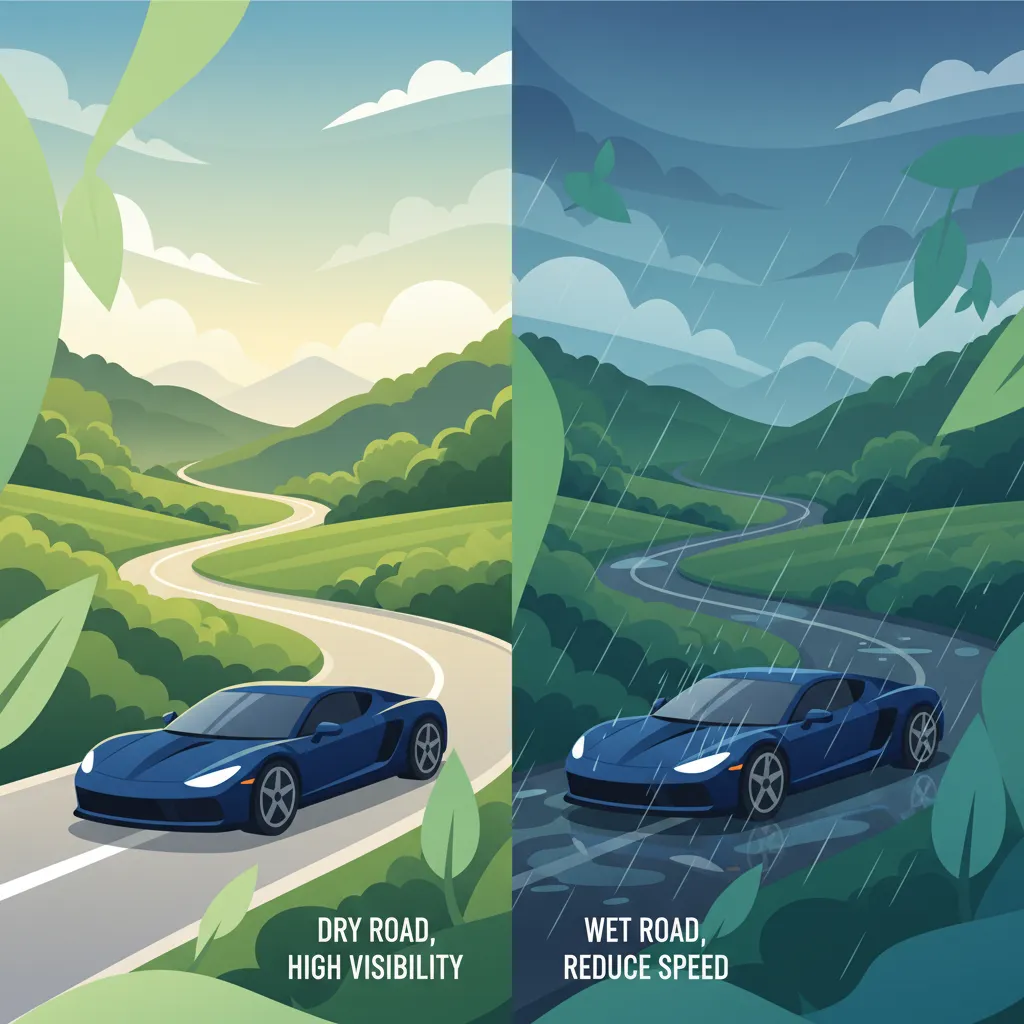
In this lesson, learners examine how environmental conditions such as rain, wind, ice, and reduced visibility necessitate adjustments in riding speed. The content provides guidelines for assessing road surfaces, judging appropriate cornering speeds, and reducing speed proactively in adverse weather. Learners will understand the impact of temperature on tyre performance and the need to increase safety margins, mastering adaptive speed management to maintain control.

In this lesson, learners explore riding on rural and countryside roads, where road markings may be sparse and surface conditions varied. The content covers safe overtaking in single-lane sections, interaction with agricultural vehicles and animals, and the handling of gravel or uneven surfaces. Learners will also study the importance of anticipating curves and adjusting speed to light conditions, equipping them with the skills needed for safe countryside travel.

This lesson addresses environmental factors that impact rider visibility, such as low light, night conditions, fog, and glare from headlights. Learners will explore strategies for riding safely in reduced visibility, including the use of reflective gear, proper headlamp settings, and appropriate eye protection. The content also covers hazard detection techniques in adverse weather and how to adjust speed to maintain safety, enhancing rider safety across all conditions.

This lesson examines how cross-winds affect motorcycle stability and control, providing strategies for compensating wind gusts through rider body positioning and throttle management. Learners will understand the aerodynamic effects of wind on the bike, how to position within the lane to minimize drift, and techniques for maintaining balance during sudden gusts. The content also covers the influence of wind on braking distances and the importance of adjusting speed.
This lesson focuses on the specific challenges of driving in rainy conditions. It explains the phenomenon of hydroplaning, where tires lose contact with the road surface, and how to prevent it by reducing speed. The importance of good tire condition, effective windscreen wipers, and extending following distances is also covered in detail.

This lesson focuses on the unique demands of urban riding within Polish cities, addressing traffic lights, pedestrian zones, one-way streets, and the presence of tram tracks. Learners will study safe lane positioning on narrow roads, blind-spot management, and how to share the road with buses and cyclists. The content also covers strategies for navigating stop-and-go traffic, anticipating signal changes, and maintaining visibility in dense urban environments.
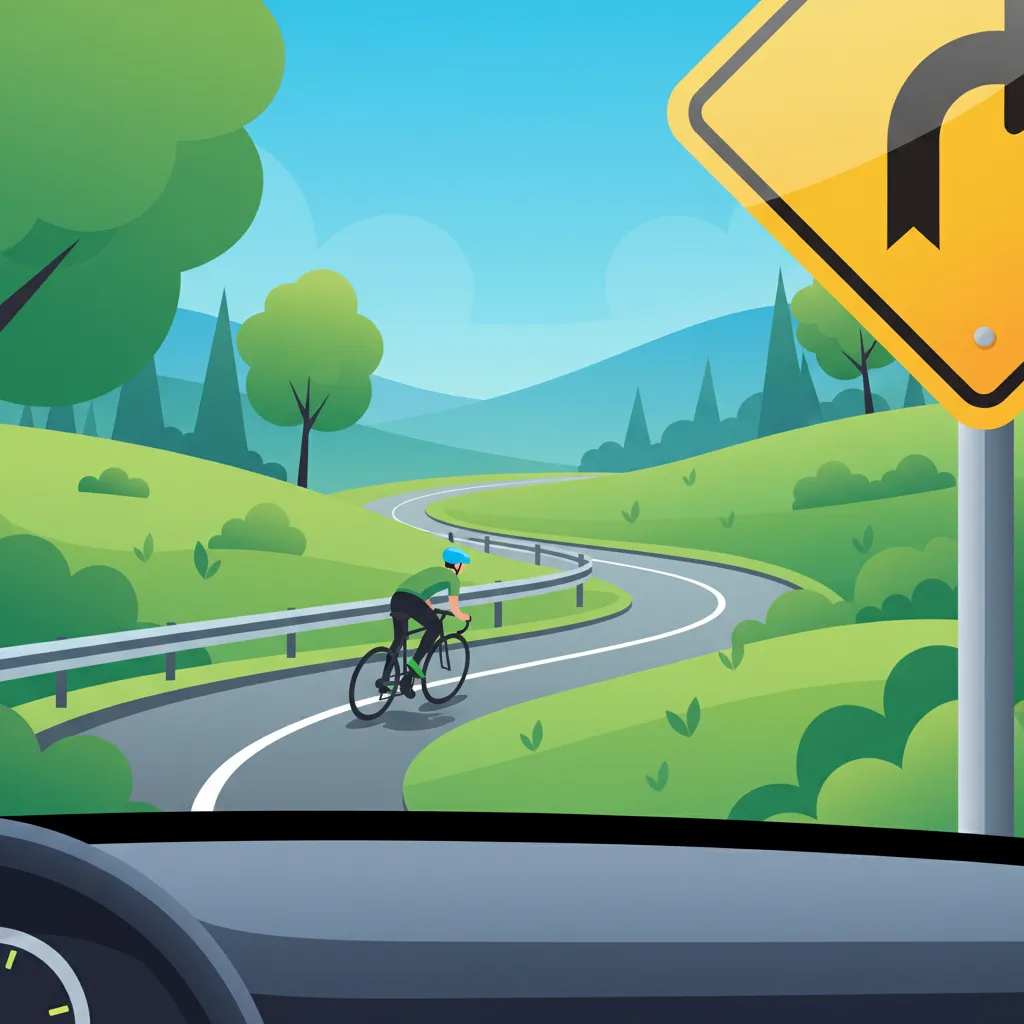
In this lesson, learners study warning signs that alert drivers to potential hazards, focusing on those that are particularly relevant to motorcyclists. The content includes signs indicating curves, slippery surfaces, animal crossings, tram tracks, and construction zones, each requiring specific riding adjustments. The lesson teaches riders how to interpret these signs to anticipate hazards, adjust speed appropriately, and maintain a safe distance from potential dangers.

This lesson outlines strategies for planning escape routes and adopting protective positioning to avoid potential collisions. Learners will study the concept of a defensive riding line that maximizes visibility and provides an optimal safety corridor. The content emphasizes maintaining adequate distance buffers, choosing lanes that reduce exposure to hazards, and preparing for emergency maneuvers such as swift swerves, allowing riders to react quickly in critical situations.
Understand the critical importance of visibility and appropriate gear when riding a motorcycle in rain. This lesson covers legal requirements for headlamp use, selecting waterproof clothing, and high-visibility elements to ensure you are seen and safe on Polish roads.
This lesson addresses environmental factors that impact rider visibility, such as low light, night conditions, fog, and glare from headlights. Learners will explore strategies for riding safely in reduced visibility, including the use of reflective gear, proper headlamp settings, and appropriate eye protection. The content also covers hazard detection techniques in adverse weather and how to adjust speed to maintain safety, enhancing rider safety across all conditions.
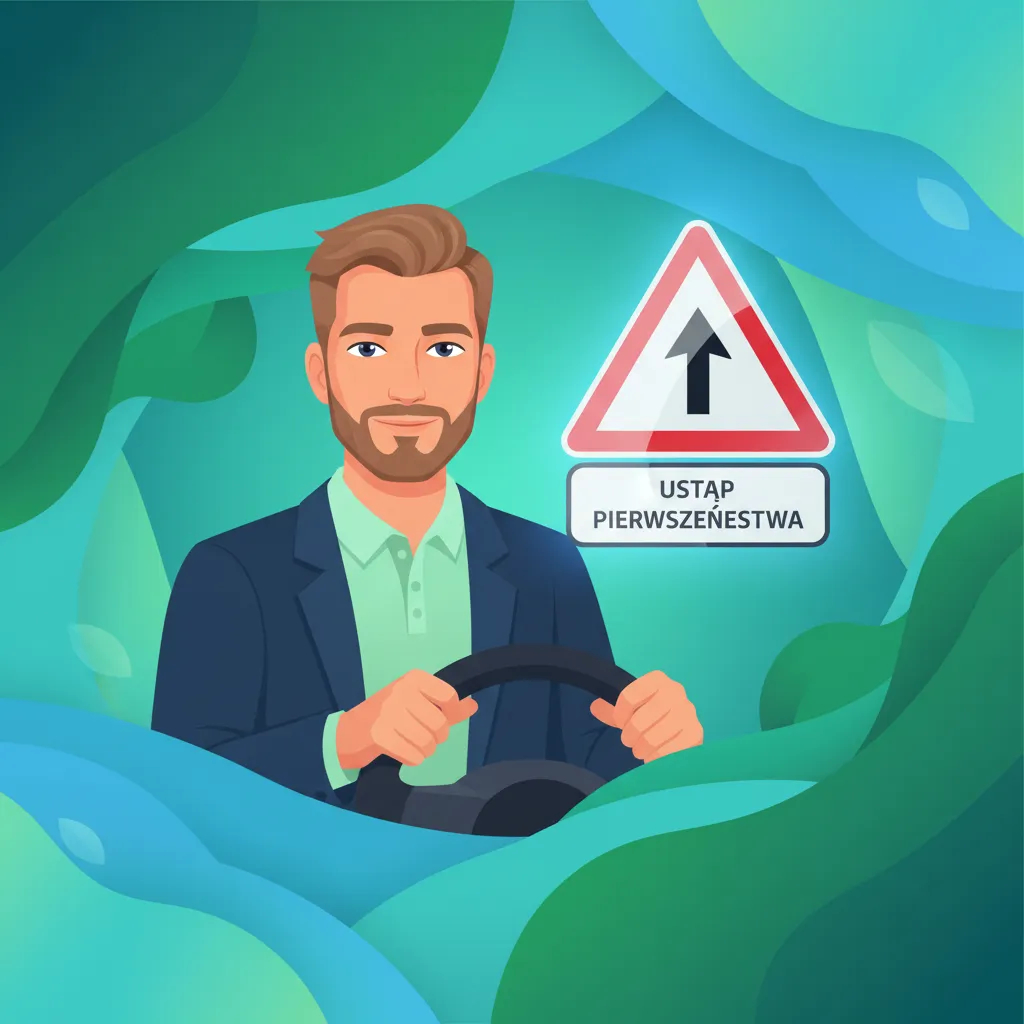
In this lesson, learners examine the core legal obligations that apply to motorcyclists operating on Polish roads, including the mandatory use of helmets, periodic vehicle inspections, and the necessity of valid insurance and registration. The content details the classification of traffic offences and explains the associated penalty system, including fines, demerit points, and potential licence suspension. Additionally, the lesson outlines procedural requirements for accident reporting and interaction with law enforcement, providing a comprehensive view of a rider’s legal responsibilities.
This lesson equips learners with a structured approach to risk assessment and decision-making when facing adverse weather or seasonal conditions. The content introduces a hazard perception framework, guiding riders to assess weather forecasts, evaluate road surface conditions, and calculate safety margins. Learners will learn how to make go/no-go decisions, adjust speed dynamically, and plan contingencies for unexpected events to prioritize safety.
In this lesson, learners examine how environmental conditions such as rain, wind, ice, and reduced visibility necessitate adjustments in riding speed. The content provides guidelines for assessing road surfaces, judging appropriate cornering speeds, and reducing speed proactively in adverse weather. Learners will understand the impact of temperature on tyre performance and the need to increase safety margins, mastering adaptive speed management to maintain control.
In this lesson, learners study warning signs that alert drivers to potential hazards, focusing on those that are particularly relevant to motorcyclists. The content includes signs indicating curves, slippery surfaces, animal crossings, tram tracks, and construction zones, each requiring specific riding adjustments. The lesson teaches riders how to interpret these signs to anticipate hazards, adjust speed appropriately, and maintain a safe distance from potential dangers.
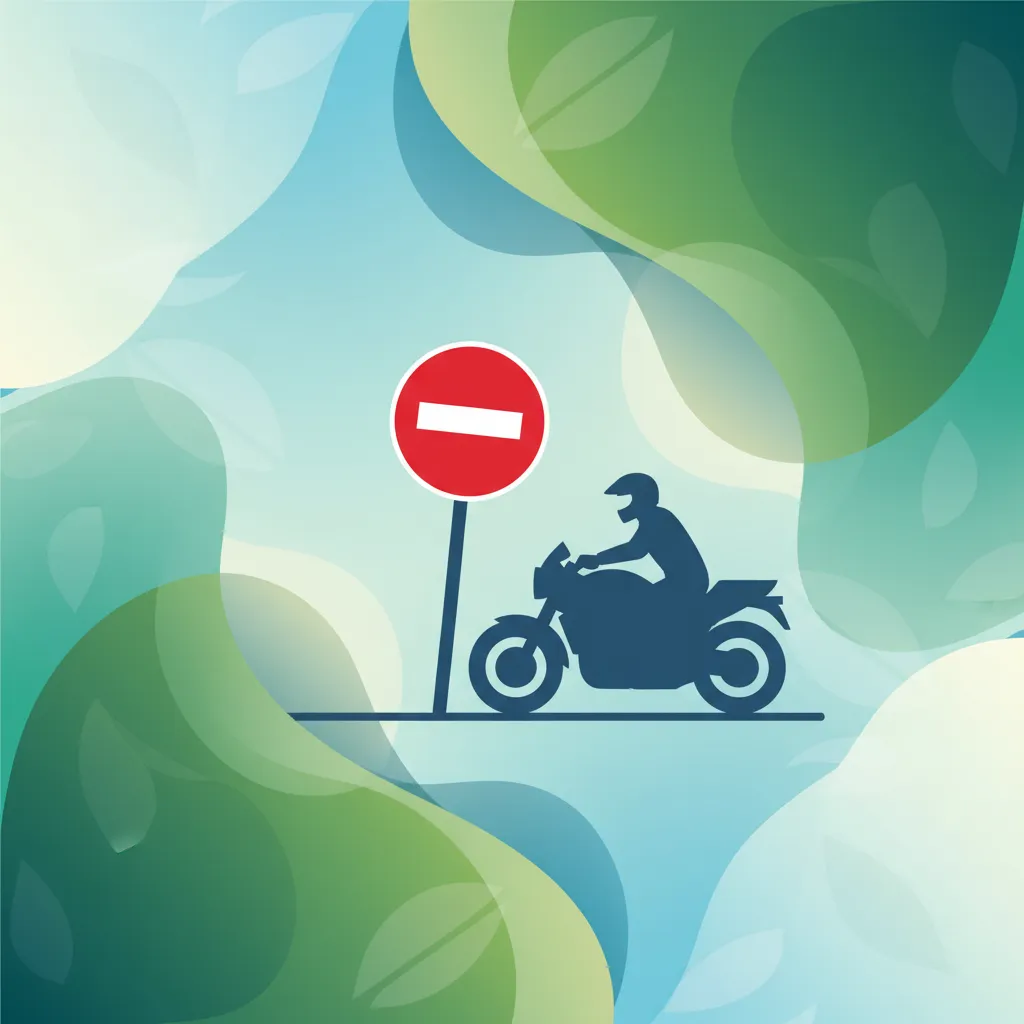
This lesson examines the family of regulatory signs that dictate mandatory actions and prohibitions on Polish roads, emphasizing how each sign influences motorcyclist behaviour. Learners will explore the stop, give way, speed limit, and no overtaking signs, understanding the legal obligations they impose. The lesson also highlights signs that specifically affect motorcycles, such as lane restrictions, ensuring riders recognize and obey regulations unique to two-wheel traffic.
In this lesson, learners explore the complexities of winter riding, including snow-covered roads, ice patches, and the impact of low temperatures on both the rider and the motorcycle. The content addresses the use of ABS and traction control on slippery surfaces and the need for appropriate tyre pressure. Learners will also learn about appropriate clothing layers, frostbite prevention, and how to adjust riding technique for safe cornering and braking on ice.
This lesson focuses on the unique demands of urban riding within Polish cities, addressing traffic lights, pedestrian zones, one-way streets, and the presence of tram tracks. Learners will study safe lane positioning on narrow roads, blind-spot management, and how to share the road with buses and cyclists. The content also covers strategies for navigating stop-and-go traffic, anticipating signal changes, and maintaining visibility in dense urban environments.

This lesson examines the variety of pavement markings that define lane structures, traffic flow, and special zones on Polish roads. Learners will study solid and broken lines, lane division markings, and the distinct symbols for bicycle lanes, bus lanes, and tram tracks, all of which affect motorcyclist positioning. The lesson also addresses surface texture indicators that signal changing road conditions, enabling riders to maintain correct lane discipline.
In this lesson, learners explore riding on rural and countryside roads, where road markings may be sparse and surface conditions varied. The content covers safe overtaking in single-lane sections, interaction with agricultural vehicles and animals, and the handling of gravel or uneven surfaces. Learners will also study the importance of anticipating curves and adjusting speed to light conditions, equipping them with the skills needed for safe countryside travel.
Find clear answers to common questions learners have about Riding in Rain and Wet Conditions. Learn how the lesson is structured, which driving theory objectives it supports, and how it fits into the overall learning path of units and curriculum progression in Poland. These explanations help you understand key concepts, lesson flow, and exam focused study goals.
Braking distances can increase significantly in the rain, often by as much as double or more, due to reduced tyre grip on wet surfaces. Polish theory exams often test your understanding of this, so always anticipate needing more space to stop safely and brake earlier and more gently.
Hydroplaning occurs when a layer of water builds up between your tyres and the road surface, causing a loss of traction. To prevent it, maintain adequate tyre tread depth, avoid standing water where possible, reduce your speed, and avoid sudden acceleration or braking, especially when cornering.
Tyre tread depth is critical for riding in the rain as it helps to channel water away from the contact patch between the tyre and the road, maintaining grip. Polish law mandates minimum tread depths, and insufficient tread severely increases the risk of skidding and hydroplaning, a common focus in theory exam questions.
Ensuring you are seen is vital in rain. Always ride with your headlight on (often mandatory in Poland), even during the day. Consider wearing bright or reflective clothing, and ensure your helmet visor is clear and treated with an anti-fog coating or visor wipe.
In the rain, it's generally advisable to use engine braking more gently. Abrupt engine braking can cause the rear wheel to lose traction, especially on slippery surfaces. Smooth gear changes and gentle deceleration are key.
Build custom practice sessions tailored precisely to your needs. Focus on areas requiring improvement, review specific Polish road signs, or master complex traffic rules to ensure full preparation for your official driving license exam.