
Riding a motorcycle means facing various environmental challenges, and strong winds can be particularly tricky. This lesson focuses on understanding and managing cross-winds, a critical skill for safe motorcycle operation and a common topic on the Polish Category A theory exam. We'll explore how wind affects your bike and teach you practical techniques to maintain control.

Lesson content overview
Riding a motorcycle offers a unique sense of freedom, but it also demands constant vigilance and skill, especially when encountering adverse weather. Wind, and particularly cross-winds, can significantly challenge a motorcyclist's control, stability, and overall safety. This lesson, designed for Polish Category A motorcycle theory preparation, will delve into the physics of wind's interaction with motorcycles and provide essential strategies for effectively managing these forces.
Understanding how wind affects your bike, from subtle pushes to sudden, destabilising gusts, is crucial for maintaining your intended trajectory and preventing accidents. By mastering compensatory techniques such as precise body positioning, sensitive throttle management, and intelligent lane positioning, you can ride safely and confidently, even in challenging wind conditions, while fully complying with Polish traffic law.
Wind is an invisible force that can exert considerable pressure on a motorcycle and rider. While headwind and tailwind primarily affect speed and fuel economy, cross-wind – wind blowing perpendicular to your direction of travel – directly impacts stability and control by attempting to push the motorcycle sideways. This lateral force is the primary cause of unintended lane drift and can significantly increase accident risk.
A cross-wind is defined as wind blowing across your path of travel, creating a lateral aerodynamic force on the exposed surfaces of the motorcycle and the rider. This force acts much like a sail, pushing the motorcycle sideways. The magnitude of this force is proportional to the square of the wind speed and the total exposed surface area of the bike-and-rider system. Even moderate cross-winds can noticeably affect a motorcycle's trajectory and require constant, conscious correction from the rider.
The aerodynamic forces involved can reduce the effective tire contact patch, diminishing available traction, especially when leaning or braking. This means that a motorcycle may not respond as predictably as it would in calm conditions, requiring greater skill and foresight from the rider. Failing to account for these forces can lead to unintended lane departures or even loss of control.
Understanding the nature of the wind is vital for effective compensation.
The transition from a sheltered area to an exposed section of road, such as exiting a tunnel or passing a large truck, can simulate a sudden gust, as the motorcycle abruptly enters an area of strong cross-wind. Anticipating these transitions is a key component of defensive riding in windy conditions.
Effective wind management relies on a combination of techniques that allow the rider to counteract the lateral forces and maintain control. These techniques involve precise body adjustments, careful steering inputs, and strategic throttle use.
One of the most immediate and effective ways a rider can counteract cross-wind is through body position adjustment. By shifting your body mass, you can change the motorcycle's center of gravity and alter the bike's aerodynamic profile, which in turn influences how the wind affects it.
The primary technique is lateral lean into the wind. If the wind is coming from the left, you should lean slightly to the left, while keeping the motorcycle itself more upright. This creates a counteracting force and allows the bike to track straighter. This isn't the same as leaning the bike itself; your body moves more than the bike. Additionally, a slight forward lean can reduce the rider's exposed surface area, especially if you have a jacket that acts like a sail, thereby reducing the overall aerodynamic force. It is crucial to keep both feet firmly on the footpegs and both hands on the handlebars while doing this, as required by Polish law (Art. 59-1 of the Road Traffic Act).
When leaning into the wind, focus on shifting your weight subtly. Exaggerated movements can lead to instability. The goal is a gentle, continuous adjustment to maintain your line.
Counter-steering compensation is a fundamental motorcycle control technique that becomes critical in windy conditions. While it's typically used to initiate a turn by pushing the handlebar in the opposite direction of the desired lean, in cross-winds, it's used to counteract the wind's lateral push without actually turning.
If a cross-wind is pushing you from the right, you would apply slight pressure to the right handlebar. This causes the motorcycle to lean slightly to the left (into the wind), effectively cancelling out the wind's pushing force and allowing you to continue in a straight line within your lane. This can be either pre-emptive steering, where you anticipate a gust and make a subtle correction before it hits, or reactive steering, a quick response to an unexpected gust. The key is to make smooth, minimal corrections to avoid over-steering, which could lead to instability or "fish-tailing."
A technique where steering input is applied opposite to the wind-induced drift to maintain the intended path, resulting in a subtle lean into the wind.
Throttle management plays a vital role in maintaining stability and traction when riding in windy conditions. Abrupt changes in engine torque can destabilize the motorcycle, especially when combined with lateral wind forces. Smoothness is paramount.
When a gust hits, an instinctual reaction might be to chop the throttle, which can cause the front wheel to lighten or the rear wheel to lose traction if combined with sudden braking. Conversely, a sudden throttle increase can cause the rear wheel to slip, particularly on wet or loose surfaces, or if the bike is already leaning due to wind. Maintain a steady, consistent throttle, or use smooth acceleration when necessary. If speed reduction is required, employ engine braking by gradually closing the throttle, which reduces speed more smoothly and maintains better balance than abrupt braking. This careful application of engine torque helps prevent loss of rear-wheel grip and ensures that the power delivery does not exacerbate wind effects.
Sudden throttle changes in windy conditions can easily lead to rear-wheel spin or instability. Always aim for smooth, controlled inputs to maintain traction and balance.
Your lane positioning strategy can significantly reduce your exposure to cross-winds. By consciously choosing your line within the lane, you can utilize available windbreaks or position yourself to mitigate the impact of gusts.
On an open road with a cross-wind, you might consider riding closer to a natural or artificial windbreak such as a hedgerow, a line of trees, or a building on the windward side. This creates a buffer zone that can reduce the effective wind speed hitting your motorcycle. Conversely, when overtaking a large vehicle on a windy day, be prepared for a sudden gust as you clear its wind shadow. On bridges or open plains, where windbreaks are scarce, maintaining a more central lane position can give you more room for lateral adjustment without drifting too close to the lane boundaries or oncoming traffic. Always ensure your chosen position does not obstruct other traffic or violate safe distance regulations (Art. 43-1 of the Road Traffic Act).
Wind doesn't just push your bike; it also impacts how effectively you can slow down and stop. Adjusting your speed and anticipating longer braking distances are critical safety measures in windy conditions.
Speed adaptation means reducing your cruising speed to lessen the impact of wind and provide more time to react to gusts. The aerodynamic force exerted by wind increases exponentially with speed. This means that a slight increase in your speed can lead to a disproportionately larger increase in the lateral force from a cross-wind, making it harder to control the motorcycle.
Proactive speed reduction, based on weather forecasts or observed wind strength, is always recommended. If strong gusts (e.g., above 30 km/h) are reported or felt, reducing your speed from, for instance, 80 km/h to 60 km/h can dramatically improve your stability and reaction time. This practice is not merely a suggestion; Polish traffic law mandates that riders adjust their speed to prevailing weather and road conditions (Art. 17-1 of the Road Traffic Act). Maintaining high speeds in windy conditions significantly increases the risk of losing control and extends the distance required to react to hazards.
When planning a journey, check weather forecasts for wind speeds. If high winds are predicted, factor in extra travel time to allow for a safer, reduced cruising speed.
Cross-winds can affect braking in two primary ways: by reducing tire grip and by causing lateral displacement during deceleration. Therefore, it is essential to understand adjusted braking distance.
Wind can exert lateral pressure on the motorcycle, which can subtly reduce the vertical force on the tires, thereby decreasing available traction. When you apply the brakes, this reduced grip can lead to longer stopping distances. Furthermore, a strong cross-wind can push the motorcycle sideways even as it decelerates, making it harder to maintain a straight line while braking, potentially drifting you into another lane or off the road.
To compensate, always add an extra safety margin when planning stops in windy conditions. This might mean increasing your following distance by 10–15% compared to calm conditions and initiating braking earlier. Polish law (Art. 21-1 of the Road Traffic Act) requires drivers to ensure sufficient space to stop safely, a responsibility that is amplified in adverse weather. Never underestimate the combined effect of wind and braking on your motorcycle's stability.
The increased distance required to bring a motorcycle to a complete stop when cross-winds reduce tire grip and can cause lateral displacement.
Polish road traffic regulations place clear responsibilities on motorcyclists, especially when riding in challenging conditions like strong winds. Adhering to these rules is not just about avoiding fines; it's fundamental to ensuring your safety and the safety of other road users.
Under Article 31 of the Polish Road Traffic Act, every rider has a fundamental duty to maintain full control of their vehicle at all times. This legal obligation is particularly pertinent in adverse weather conditions, such as strong winds. It means that the rider must possess the skills and employ the techniques necessary to keep the motorcycle on its intended path, regardless of external forces like wind. Failure to do so, leading to erratic movement or loss of control, can result in legal consequences.
Correct Example: A rider proactively reduces speed, engages a subtle body lean, and uses smooth throttle inputs to navigate a stretch of road with strong cross-winds, staying perfectly within their lane. Incorrect Example: A rider continues at high speed into a strong cross-wind, is unprepared for a gust, and drifts significantly into the adjacent lane, requiring other drivers to take evasive action.
Article 17-1 of the Road Traffic Act states that drivers must adapt their speed to the prevailing weather and road conditions. This includes wind. If strong winds are present, or forecast, the rider is legally obliged to reduce their speed to a level that allows them to maintain control and react safely to any situation. Ignoring strong wind warnings and maintaining a speed that is safe only in calm conditions is a direct violation of this article.
Correct Example: Noticing wind-blown debris and feeling significant lateral pushes, a motorcyclist on a provincial road reduces their speed from 90 km/h to 70 km/h to better manage the conditions. Incorrect Example: A rider maintains the maximum permissible speed on an exposed highway, despite visible signs of strong cross-winds and feeling their motorcycle being buffeted.
Article 59-1 of Polish law specifically requires motorcyclists to keep both feet on the footpegs and both hands on the handlebars while riding, except when signalling a turn or braking. This rule is crucial for maintaining stability, especially in windy conditions. Removing a foot from a peg to "dab" or counterbalance against wind undermines the stable platform needed for proper control inputs and can actually increase the risk of an ungraceful fall. Similarly, removing a hand from the handlebars compromises the ability to counter-steer effectively.
Correct Example: A rider encountering a sudden cross-wind gust maintains a firm grip on both handlebars and keeps both feet securely on the footpegs while shifting their body weight into the wind. Incorrect Example: Startled by a gust, a rider removes their left foot from the peg and dangles it in an attempt to regain balance, compromising the bike's stability and their ability to react.
The principle of maintaining a minimum safe distance from the vehicle ahead, as stipulated by Article 21-1 of the Road Traffic Act, is amplified in windy conditions. Due to the increased stopping distances and potential for lateral drift caused by cross-winds, the standard "two-second rule" should be extended. A longer following distance provides more time and space to react to unexpected events, account for reduced traction, and make controlled stops, even if the motorcycle is being buffeted by wind.
Correct Example: On a windy highway, a rider actively increases their following distance from the car in front, giving themselves ample room to brake or adjust for sudden gusts. Incorrect Example: A rider maintains their usual following distance in windy conditions, finding themselves having to brake sharply and experiencing lateral instability as a result.
Even experienced riders can make mistakes when confronted with strong winds. Awareness of these pitfalls is the first step toward safer riding.
The impact of wind on your motorcycle isn't uniform; it varies significantly based on several contextual factors. Recognizing these variations allows for more nuanced and effective riding strategies.
The intensity of the wind directly dictates the level of compensatory action required:
The type of road you are on also influences how wind affects you:
The state of your motorcycle can amplify or mitigate wind effects:
Windy conditions increase the complexity of interacting with other traffic:
To solidify your understanding, let's consider a few practical scenarios that demonstrate the application of these wind maneuvering skills.
Setting: You are on a two-lane highway, riding your Category A motorcycle. There's a moderate cross-wind of 20 km/h coming from the right. You need to overtake a slower car.
Decision Point: How do you maintain your lane and control during the overtaking maneuver, especially as you pass the car and move into the clear wind?
Correct Behavior:
Incorrect Behavior: Accelerating aggressively without adjusting body lean or counter-steering. This could cause the wind to push the motorcycle sharply to the left (towards the oncoming lane or the shoulder), leading to a dangerous lane departure or collision.
Setting: You are riding on a narrow country road with intermittent hedgerows and trees. Gusts up to 30 km/h are buffeting from the left. You are approaching a sharp left turn.
Decision Point: How do you manage the sudden gusts and maintain control through the turn?
Correct Behavior:
Incorrect Behavior: Braking abruptly just before or within the corner. If a gust hits during hard braking, the reduced tire grip combined with lateral wind force could cause the rear wheel to slip, leading to a loss of control and a fall.
Setting: You are crossing a long, elevated bridge where strong cross-winds of 35 km/h are consistently blowing from the right. You are in heavy traffic.
Decision Point: How do you maintain your lane and safety while minimizing the impact of the strong, sustained cross-wind?
Correct Behavior:
Incorrect Behavior: Attempting a high-speed overtaking maneuver. The strong, sustained wind could push the motorcycle abruptly into the opposite lane or towards the guardrail, resulting in a severe collision.
Mastering wind and cross-wind maneuvering is a fundamental skill for any Category A motorcyclist. By understanding the forces at play and applying proven compensatory techniques, you can significantly enhance your safety and confidence on the road.
Cross-winds exert lateral aerodynamic forces on motorcycles, requiring specific compensation techniques including body lean into the wind, counter-steering to maintain lane position, and smooth throttle management. Speed reduction is essential because wind force increases exponentially with speed, and braking distances must be extended due to reduced tire grip and potential lateral drift during deceleration. Polish traffic law mandates maintaining full vehicle control, adjusting speed to conditions, keeping both hands on handlebars and feet on pegs, and ensuring sufficient following distance when riding in adverse weather including strong winds. Contextual factors such as road type, weather intensity, and motorcycle load affect wind impact, requiring riders to anticipate transitions between sheltered and exposed sections and adapt their techniques accordingly.
A short set of high-value points that capture the most important learning from this lesson.
Cross-winds create lateral aerodynamic forces proportional to wind speed squared and exposed surface area, pushing the motorcycle sideways
Body lean into the wind combined with counter-steering maintains lane position without actually turning the bike
Smooth throttle modulation is critical in wind; sudden power changes can cause rear-wheel slip and loss of control
Reducing speed exponentially decreases wind's impact, providing more time to react to gusts and better stability
Both feet must remain on footpegs and both hands on handlebars during wind exposure to maintain full control under Polish law
Explore all units and lessons included in this driving theory course.
Distinguish between lateral body lean (shifting rider mass) and actual bike lean; shift your body more than the motorcycle
Steady cross-winds allow consistent corrections; sudden gusts demand immediate, precise reactive adjustments
Wind-adjusted stopping distance is longer because lateral forces reduce effective tire contact patch and traction
Gusts commonly occur when exiting wind shadows of large vehicles, near bridge openings, or transitioning from sheltered to exposed road sections
Article 59-1 of the Polish Road Traffic Act legally requires keeping both feet on pegs and both hands on handlebars while riding
Over-relying on ABS or traction control systems which cannot fully compensate for wind-induced lateral forces
Allowing lane drift without correction, which violates lane-keeping rules and creates hazard for other road users
Applying sudden throttle during a gust, which can cause rear-wheel spin particularly on wet or loose surfaces
Removing a foot from the peg to dab or counterbalance wind, which compromises the stable platform needed for effective control inputs
Initiating braking too late due to underestimating the combined effect of reduced traction and lateral displacement during deceleration
Lesson content overview
A short set of high-value points that capture the most important learning from this lesson.
Cross-winds create lateral aerodynamic forces proportional to wind speed squared and exposed surface area, pushing the motorcycle sideways
Body lean into the wind combined with counter-steering maintains lane position without actually turning the bike
Smooth throttle modulation is critical in wind; sudden power changes can cause rear-wheel slip and loss of control
Reducing speed exponentially decreases wind's impact, providing more time to react to gusts and better stability
Both feet must remain on footpegs and both hands on handlebars during wind exposure to maintain full control under Polish law
Explore all units and lessons included in this driving theory course.
Distinguish between lateral body lean (shifting rider mass) and actual bike lean; shift your body more than the motorcycle
Steady cross-winds allow consistent corrections; sudden gusts demand immediate, precise reactive adjustments
Wind-adjusted stopping distance is longer because lateral forces reduce effective tire contact patch and traction
Gusts commonly occur when exiting wind shadows of large vehicles, near bridge openings, or transitioning from sheltered to exposed road sections
Article 59-1 of the Polish Road Traffic Act legally requires keeping both feet on pegs and both hands on handlebars while riding
Over-relying on ABS or traction control systems which cannot fully compensate for wind-induced lateral forces
Allowing lane drift without correction, which violates lane-keeping rules and creates hazard for other road users
Applying sudden throttle during a gust, which can cause rear-wheel spin particularly on wet or loose surfaces
Removing a foot from the peg to dab or counterbalance wind, which compromises the stable platform needed for effective control inputs
Initiating braking too late due to underestimating the combined effect of reduced traction and lateral displacement during deceleration
Explore search topics learners often look for when studying Wind and Cross-Wind Maneuvering. These topics reflect common questions about road rules, driving situations, safety guidance, and lesson level theory preparation for learners in Poland.
Browse additional driving theory lessons that cover connected traffic rules, road signs, and common driving situations related to this topic. Improve your understanding of how different rules interact across everyday traffic scenarios.
Understand how to manage motorcycle stability and control when riding in windy conditions. Learn essential rider techniques for counteracting wind forces, including body positioning and throttle management, as required by Polish traffic law.

This lesson focuses on the specific challenges of riding in rain, detailing how wet road surfaces reduce tyre grip and increase braking distances. Learners will learn about hydroplaning risk, the importance of deep tyre tread, and the need for smooth throttle and brake modulation to maintain stability. The content also covers visibility concerns, such as proper headlamp use and the selection of waterproof clothing, so riders can safely navigate wet conditions.
In this lesson, learners examine how environmental conditions such as rain, wind, ice, and reduced visibility necessitate adjustments in riding speed. The content provides guidelines for assessing road surfaces, judging appropriate cornering speeds, and reducing speed proactively in adverse weather. Learners will understand the impact of temperature on tyre performance and the need to increase safety margins, mastering adaptive speed management to maintain control.

In this lesson, learners explore riding on rural and countryside roads, where road markings may be sparse and surface conditions varied. The content covers safe overtaking in single-lane sections, interaction with agricultural vehicles and animals, and the handling of gravel or uneven surfaces. Learners will also study the importance of anticipating curves and adjusting speed to light conditions, equipping them with the skills needed for safe countryside travel.

This lesson examines the specific rules and etiquette for riding on Polish motorways and high-speed highways, focusing on proper lane positioning, entry via acceleration lanes, and maintaining appropriate following distances. Learners will study overtaking protocols at high speeds, proper use of deceleration lanes for exits, and techniques for aerodynamic positioning. The content also covers safe lane changes and emergency lane usage to ensure efficient travel.

This lesson introduces the core operations of the throttle, clutch, and gearbox, explaining how throttle input modulates engine power and how clutch engagement allows seamless gear changes. Learners will study the gear ratio system, the sequential shifting pattern, and the importance of locating the neutral position correctly. The content also covers techniques for smooth acceleration, proper timing for upshifts and downshifts, and the concept of rev matching to maintain vehicle stability during transitions.

This lesson equips learners with a structured approach to risk assessment and decision-making when facing adverse weather or seasonal conditions. The content introduces a hazard perception framework, guiding riders to assess weather forecasts, evaluate road surface conditions, and calculate safety margins. Learners will learn how to make go/no-go decisions, adjust speed dynamically, and plan contingencies for unexpected events to prioritize safety.

This lesson addresses environmental factors that impact rider visibility, such as low light, night conditions, fog, and glare from headlights. Learners will explore strategies for riding safely in reduced visibility, including the use of reflective gear, proper headlamp settings, and appropriate eye protection. The content also covers hazard detection techniques in adverse weather and how to adjust speed to maintain safety, enhancing rider safety across all conditions.

In this lesson, learners explore the complexities of winter riding, including snow-covered roads, ice patches, and the impact of low temperatures on both the rider and the motorcycle. The content addresses the use of ABS and traction control on slippery surfaces and the need for appropriate tyre pressure. Learners will also learn about appropriate clothing layers, frostbite prevention, and how to adjust riding technique for safe cornering and braking on ice.
In this lesson, learners study warning signs that alert drivers to potential hazards, focusing on those that are particularly relevant to motorcyclists. The content includes signs indicating curves, slippery surfaces, animal crossings, tram tracks, and construction zones, each requiring specific riding adjustments. The lesson teaches riders how to interpret these signs to anticipate hazards, adjust speed appropriately, and maintain a safe distance from potential dangers.

This lesson focuses on the unique demands of urban riding within Polish cities, addressing traffic lights, pedestrian zones, one-way streets, and the presence of tram tracks. Learners will study safe lane positioning on narrow roads, blind-spot management, and how to share the road with buses and cyclists. The content also covers strategies for navigating stop-and-go traffic, anticipating signal changes, and maintaining visibility in dense urban environments.
Learn about the critical impact of wind on motorcycle speed and braking distances. This lesson covers essential adjustments for maintaining safety and control in windy conditions according to Polish traffic regulations.

This lesson explores how increasing speed amplifies kinetic energy, thereby affecting braking efficiency and required stopping distances. Learners will learn about brake fade due to heat, the differing contributions of front and rear brakes, and how ABS assists in maintaining stability on slippery surfaces. The lesson covers techniques for proper brake modulation, especially when decelerating from high speeds, to help riders apply appropriate braking techniques for safety.
In this lesson, learners examine how environmental conditions such as rain, wind, ice, and reduced visibility necessitate adjustments in riding speed. The content provides guidelines for assessing road surfaces, judging appropriate cornering speeds, and reducing speed proactively in adverse weather. Learners will understand the impact of temperature on tyre performance and the need to increase safety margins, mastering adaptive speed management to maintain control.
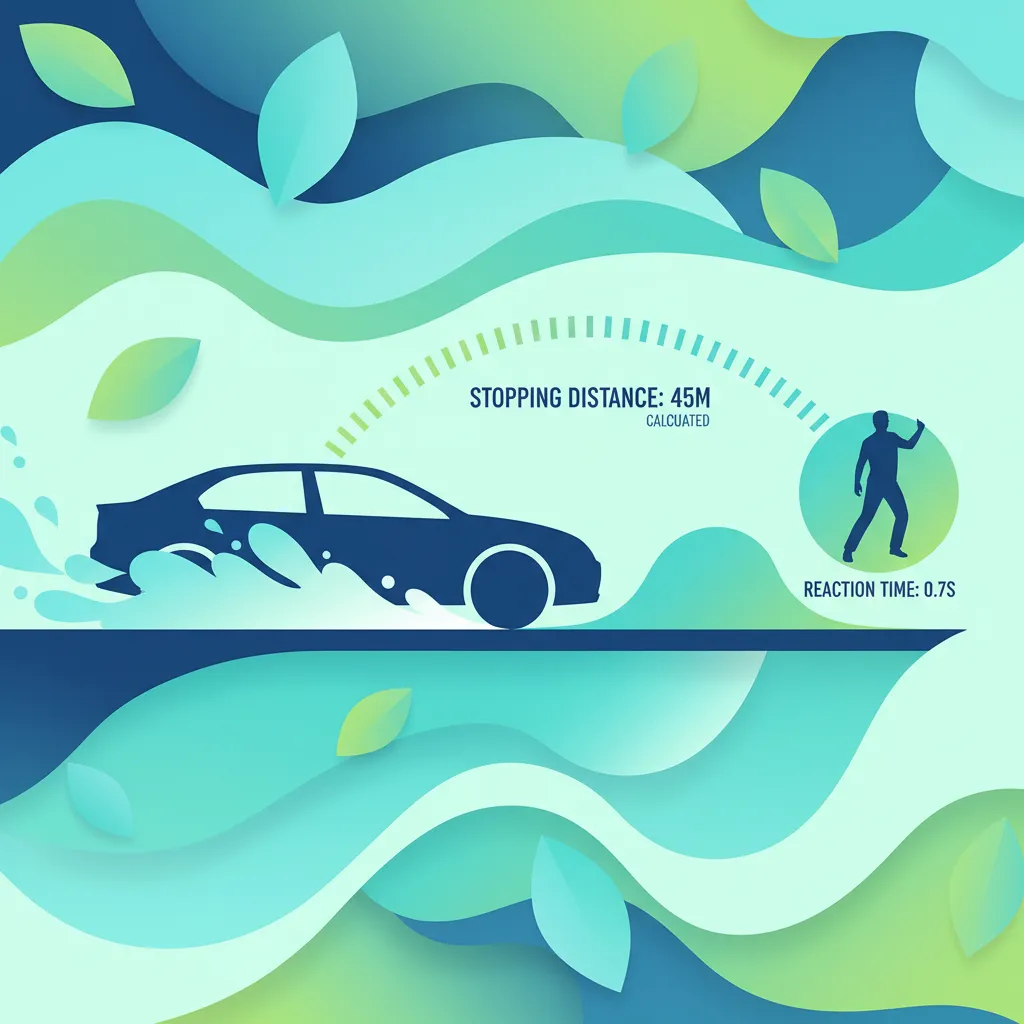
In this lesson, learners study the physics behind stopping distances, breaking it down into perception-reaction time and braking distance components. The content explains how speed, vehicle mass, and road surface friction influence the total stopping distance. Learners will practice calculating stopping distances under different conditions and understand the importance of maintaining a safety margin by improving hazard perception and rider response.

This lesson provides a comprehensive overview of the statutory speed limits applicable to different categories of Polish roads, including urban areas, residential zones, rural roads, highways, and motorways. Learners will examine the visual cues of speed limit signs and learn how speed limit transitions affect rider behavior. The content also covers how enforcement mechanisms impact compliance and the importance of real-time speed adaptation to remain within legal thresholds.

This lesson explores how riders can use engine braking to manage speed without over-relying on the mechanical brakes, especially during downhill scenarios. It teaches the proper use of downshifts combined with clutch modulation to achieve controlled deceleration while maintaining stability. The lesson also covers optimal gear selection for hill climbing and fuel efficiency, explaining how rpm management affects engine load and overall power delivery for enhanced safety.
This lesson focuses on the specific challenges of riding in rain, detailing how wet road surfaces reduce tyre grip and increase braking distances. Learners will learn about hydroplaning risk, the importance of deep tyre tread, and the need for smooth throttle and brake modulation to maintain stability. The content also covers visibility concerns, such as proper headlamp use and the selection of waterproof clothing, so riders can safely navigate wet conditions.

This lesson covers the principles of motorcycle braking, differentiating between the front and rear brake systems and their respective contributions to stopping power. It explains how anti-lock braking system (ABS) works to prevent wheel lock-up and improve control on slippery surfaces. Learners will explore the optimal brake balance, techniques for progressive deceleration, and the factors influencing stopping distances under various road conditions, ensuring riders can maintain reliable braking performance.
This lesson examines the specific rules and etiquette for riding on Polish motorways and high-speed highways, focusing on proper lane positioning, entry via acceleration lanes, and maintaining appropriate following distances. Learners will study overtaking protocols at high speeds, proper use of deceleration lanes for exits, and techniques for aerodynamic positioning. The content also covers safe lane changes and emergency lane usage to ensure efficient travel.

In this lesson, learners examine defensive overtaking practices, focusing on when and how to safely pass other road users. The content covers speed differential calculations, appropriate passing distances, and the importance of maintaining clear visibility during overtaking. Learners will also study the impact of road curvature, traffic flow, and lane selection on overtaking safety, allowing them to minimize risks associated with passing maneuvers.
In this lesson, learners explore the complexities of winter riding, including snow-covered roads, ice patches, and the impact of low temperatures on both the rider and the motorcycle. The content addresses the use of ABS and traction control on slippery surfaces and the need for appropriate tyre pressure. Learners will also learn about appropriate clothing layers, frostbite prevention, and how to adjust riding technique for safe cornering and braking on ice.
Find clear answers to common questions learners have about Wind and Cross-Wind Maneuvering. Learn how the lesson is structured, which driving theory objectives it supports, and how it fits into the overall learning path of units and curriculum progression in Poland. These explanations help you understand key concepts, lesson flow, and exam focused study goals.
Strong headwinds can slightly increase your effective stopping distance as they oppose the vehicle's motion, while tailwinds can decrease it. More significantly, side winds can cause instability that makes controlled braking more difficult. You must anticipate these effects and leave a larger safety margin.
In strong cross-winds, it's often safer to position your motorcycle slightly towards the side of the lane that is shielded from the wind, if possible and safe. For example, if the wind is coming from the right, you might position slightly to the left side of your lane to use the lane markers or other vehicles as a buffer. Always maintain a safe distance from other vehicles and be ready to correct.
Sudden gusts can push your motorcycle sideways. Gentle, precise throttle adjustments can help you counteract this drift. Applying a slight increase in throttle can sometimes help maintain stability and forward momentum, allowing you to make necessary steering corrections more effectively. Avoid abrupt throttle changes.
While there isn't a specific sign for 'windy conditions,' drivers should be aware of signs indicating exposed areas like bridges (A-18 'Bridge'), open areas, or mountain passes. Additionally, signs warning of crosswinds (A-16 'Strong Side Wind') are crucial. Always be extra vigilant and prepared for wind effects in such locations.
When passing or being passed by large vehicles like trucks or buses, you will experience turbulent air. This turbulence can be exacerbated by natural wind. Be prepared for sudden buffeting or shifts in stability. Maintain a firm grip, keep your speed steady, and be ready to correct your course immediately.
Build custom practice sessions tailored precisely to your needs. Focus on areas requiring improvement, review specific Polish road signs, or master complex traffic rules to ensure full preparation for your official driving license exam.