
Welcome to the 'Winter Riding: Snow, Ice, and Cold Temperatures' lesson, part of the 'Polish Motorcycle Theory – Comprehensive Licence Preparation for Category A' course. This vital lesson focuses on the unique challenges of riding in Poland during winter, building upon your understanding of general riding safety and preparing you for specific exam questions and real-world conditions.
Lesson content overview
Riding a motorcycle during winter in countries like Poland presents a unique set of challenges that demand a significant adjustment in riding technique, vehicle preparation, and rider awareness. Unlike riding in dry, warm conditions, winter introduces elements such as snow, ice, and extremely low temperatures that drastically alter vehicle dynamics and rider physiology. This comprehensive lesson is designed to equip Category A motorcycle theory learners with the knowledge necessary to safely navigate these conditions, understand legal obligations, and mitigate risks, ensuring readiness for both the exam and real-world scenarios.
Motorcycling in winter is fundamentally different from other seasons. The primary challenge stems from the reduced friction between tyres and the road surface, leading to significantly longer stopping distances and a higher risk of losing control. Low ambient temperatures also impact the motorcycle's components and the rider's physical capabilities, demanding careful preparation and execution.
Cold weather affects every aspect of motorcycle operation. Engine warm-up times increase, batteries are less efficient, and vital fluids like engine oil and brake fluid can become thicker, slightly altering their performance. More critically, the road surface itself becomes a dynamic and unpredictable element, transitioning between dry, wet, snowy, slushy, and icy patches, sometimes within meters. This variability requires constant vigilance and adaptable riding strategies.
Mastery of winter riding techniques is not merely a recommendation; it is an essential part of comprehensive licence preparation for the Polish Category A theory exam. The Prawo o ruchu drogowym (Polish Road Traffic Act) contains provisions that implicitly and explicitly cover safe conduct in adverse conditions. Understanding these principles prevents accidents caused by reduced traction, impaired visibility, and diminished rider control. It cultivates the responsible, defensive riding mindset expected of all motorcyclists on Polish roads.
At the core of winter riding challenges lies the dramatic reduction in traction, which is the frictional grip between the motorcycle tyre and the road surface. This grip, crucial for braking, accelerating, and steering, is quantified by the coefficient of friction (µ). While a dry asphalt road might have a µ of around 0.5 to 0.7, this value can plummet to below 0.15 on ice, explaining why winter conditions are so perilous.
When a road is covered in snow, ice, or slush, the coefficient of friction drops significantly. This means that for a given amount of force applied (e.g., braking or accelerating), the tyres will lose grip much more easily. Understanding this fundamental physical principle is key to comprehending why every riding input—throttle, brake, and steering—must be gentler and more progressive in winter. A sudden input that would be safe on dry pavement can instantly cause a skid on a slippery surface.
Different winter surfaces present varying levels of risk and demand specific responses:
Always assume low traction on bridges, shaded sections, and areas near water during freezing temperatures, even if the road appears clear. Black ice is an invisible killer.
Tyres are the only contact point between your motorcycle and the road. Their condition and proper inflation are critical for safety, especially in winter. Cold temperatures have a direct impact on tyre pressure, and the wrong pressure can severely compromise handling and grip.
Air contracts in colder temperatures, causing tyre pressure to drop. As a general rule, tyre pressure decreases by approximately 1 PSI (pounds per square inch) or 0.07 bar for every 10°C (18°F) drop in ambient temperature. This means that a tyre inflated to the correct pressure on a warm autumn day will be under-inflated when winter arrives. Under-inflated tyres can lead to:
It is crucial to check and adjust tyre pressure before every ride in cold weather, preferably when the tyres are cold (cold-inflated pressure). Refer to your motorcycle's owner's manual for manufacturer-specified pressure limits, typically a range like ±0.2 bar.
Beyond pressure, the physical condition of your tyres is paramount:
"If the tyre looks fine, pressure is fine" is a dangerous misconception. Visual inspection cannot replace an accurate pressure gauge measurement. Always check with a reliable gauge.
Modern motorcycles are often equipped with advanced electronic rider aids like Anti-Lock Braking System (ABS) and Traction Control (TC). While these systems offer significant safety benefits in all conditions, their role becomes even more critical on slippery winter surfaces. However, it's vital to understand their functions and, crucially, their limitations.
ABS is designed to prevent the wheels from locking up during hard braking. On surfaces with very low friction, such as ice or packed snow, a locked wheel means a complete loss of steering control and a high likelihood of a fall. ABS works by rapidly modulating the brake pressure to individual wheels, allowing them to continue rotating at a speed just below the point of locking.
Traction Control (TC) systems monitor the rotational speed of the front and rear wheels. If the rear wheel is detected to be spinning significantly faster than the front (indicating a loss of traction during acceleration), TC will momentarily reduce engine torque. This is usually achieved by retarding ignition timing, cutting fuel, or closing the throttle butterflies.
While ABS and TC are powerful safety aids, they are not magic. They cannot defy the laws of physics.
The human body is not designed for prolonged exposure to cold temperatures, especially at speed. For motorcyclists, cold can quickly lead to reduced dexterity, slower reaction times, and impaired judgment—all critical factors in accident prevention. Proper clothing is therefore a vital safety component in winter riding.
As ambient temperatures drop, the body instinctively tries to protect its core temperature through peripheral vasoconstriction. This process narrows blood vessels in the extremities (hands, feet, fingers, toes), reducing blood flow to conserve heat.
Effective cold-weather protection relies on a layering system, which allows you to trap warm air and manage moisture.
These areas are most susceptible to cold and frostbite:
For prolonged exposure, consider chemical heat packs for pockets, gloves, or boots, and make frequent stops to warm up.
Standard riding techniques are unsuitable for winter conditions. Every input must be re-evaluated and adjusted to maintain the delicate balance of traction. This requires practice, patience, and a deep understanding of how your motorcycle behaves on slippery surfaces.
Braking is one of the most critical and challenging aspects of winter riding.
Cornering on snow or ice demands maximum caution.
Due to reduced traction, your stopping distance will increase dramatically. This necessitates a proactive approach to hazard perception:
§ 8-1 of the Polish Road Traffic Act requires riders to adapt speed to road conditions. Failure to do so can be deemed reckless driving, with severe legal consequences.
Reduced visibility is a common characteristic of winter, brought about by snowfall, fog, low sun angles, and shorter daylight hours. Ensuring you are seen by other road users and can see the road clearly is paramount.
Under Polish law, headlights must be switched on not only from sunset to sunrise but also during reduced visibility conditions, which explicitly includes snow, fog, and heavy rain (Prawo o ruchu drogowym, Article 45).
Beyond your motorcycle's lights, take steps to make yourself more visible:
Riding a motorcycle in winter on Polish roads means adhering to specific legal requirements and general safety principles enshrined in the Prawo o ruchu drogowym. Compliance is not just about avoiding fines; it’s about preventing accidents and demonstrating responsible conduct.
Drivers must adjust their speed to suit road, traffic, and weather conditions, ensuring they can safely control their vehicle.
This article is particularly relevant in winter. It mandates that your speed must be appropriate for conditions, which often means significantly below the posted speed limit on snowy or icy roads. Failure to do so can lead to citations for reckless driving or contributing to an accident.
While the Prawo o ruchu drogowym does not specify winter tyre requirements for motorcycles, the general vehicle inspection code (Badanie Techniczne) requires tyres to be in good condition, with adequate tread depth, and inflated to manufacturer specifications. Riding with visibly under-inflated or excessively worn tyres, especially in winter, could lead to a failed inspection, a fine, or even an impoundment if deemed unsafe.
Motorcycles equipped with ABS must have the system functional when riding on public roads.
If your motorcycle has ABS, it must be in working order and should not be disabled for public road use. This regulation ensures that the safety benefits of ABS are maintained, especially crucial on slippery surfaces where its intervention can prevent serious accidents.
Motorcyclists must be vigilant for road signs indicating hazardous winter conditions.
Upon seeing such a sign, you must reduce your speed immediately and prepare for extremely low-traction conditions. Ignoring these warnings is a direct violation of traffic law and a severe safety risk.
Even experienced riders can make mistakes in winter conditions. Being aware of common pitfalls is the first step toward avoiding them.
Riding in winter is as much about understanding the 'why' as the 'how'. Deeper insights into physics, physiology, and psychology reinforce safe practices.
Snowfall and a snow-covered landscape can significantly reduce visual contrast, making it harder to distinguish between road surface changes, potholes, or other obstacles. White-line markings indicating lane boundaries or pedestrian crossings can be completely obscured. This reduction in visual cues means riders must actively scan for subtle changes in texture or colour that might indicate ice or packed snow. Headlights and reflective gear don't just help others see you; they also help you perceive the road better by increasing illumination.
Statistics consistently show that accidents dramatically increase during winter months, particularly those involving loss of control. Studies on motorcycle safety technologies highlight:
A critical skill for winter riding is proactive risk assessment. This involves:
Winter riding is often best avoided entirely if conditions are extreme. If in doubt, don't ride. The safest option is often to leave the motorcycle at home.
Mastering winter motorcycle riding is a testament to a rider's dedication to safety and proficiency. For success in the Polish Motorcycle Theory – Comprehensive Licence Preparation for Category A, and more importantly, for safe real-world riding, a thorough understanding of these principles is non-negotiable.
To summarise:
By integrating these concepts, Category A riders will develop the critical skills and awareness necessary to navigate the unique challenges of winter motorcycling safely and confidently, ensuring full compliance with national standards.
This lesson covers the critical skills needed to ride a motorcycle safely during Polish winter conditions. It explains how reduced traction on snow, slush, and especially black ice fundamentally changes vehicle dynamics, requiring gentler inputs across all controls. Key topics include tyre pressure management (which drops with temperature), the proper use and limitations of ABS and traction control systems, physiological effects of cold on rider performance, and the mandatory three-layer clothing system. The lesson also covers specific Polish legal requirements regarding headlight use in reduced visibility, speed adaptation to conditions, and mandatory ABS functionality. Understanding these principles prepares Category A learners for both the theory exam and real-world winter riding challenges.
A short set of high-value points that capture the most important learning from this lesson.
Traction drops dramatically on slippery surfaces — coefficient of friction can fall below 0.15 on ice versus 0.5–0.7 on dry asphalt, requiring much gentler inputs for braking, acceleration, and steering.
Tyre pressure decreases approximately 1 PSI (0.07 bar) for every 10°C drop in temperature, so always check pressure before winter rides when tyres are cold.
ABS prevents wheel lock-up on slippery surfaces but cannot create more friction than exists between tyres and road — understanding this limit is essential for safe winter riding.
A three-layer clothing system (moisture-wicking base, insulating mid-layer, waterproof outer shell) is critical for maintaining body warmth, dexterity, and decision-making in cold conditions.
Polish law (Article 5-1) requires riders to adapt speed to actual road conditions — posted limits do not apply when snow or ice significantly reduce traction.
Explore all units and lessons included in this driving theory course.
Bridges, shaded road sections, and overpasses cool faster than surrounding pavement and are most prone to black ice, even when the road appears merely wet.
Peripheral vasoconstriction narrows blood vessels in extremities during cold exposure, reducing grip strength by up to 30% and slowing reaction times — making proper gear essential.
Fog lights may only be used legally when visibility drops below 100 metres; using them otherwise causes glare and is an offense under Polish traffic law.
Start in second gear from standstill on slippery surfaces to deliver less torque to the rear wheel and prevent wheelspin.
Braking must be completed before entering a corner on ice or snow — mid-corner braking or acceleration almost guarantees a loss of control.
Assuming a clear, wet-looking road surface is safe — black ice is invisible and provides extremely low friction, making it a primary cause of unexpected crashes.
Over-relying on electronic aids and believing ABS or traction control make the motorcycle invincible on ice — these systems are safety nets, not performance enhancers.
Neglecting to check tyre pressure after cold nights, leading to under-inflated tyres with compromised handling, reduced contact patch efficiency, and uneven wear.
Wearing insufficient or inappropriate clothing (including cotton, which retains moisture), resulting in numb hands, reduced dexterity, and impaired control of throttle and brakes.
Braking too late or too abruptly on slippery surfaces — sudden brake pressure almost certainly causes wheel lock-up and a skid, even with ABS engaged.
Lesson content overview
A short set of high-value points that capture the most important learning from this lesson.
Traction drops dramatically on slippery surfaces — coefficient of friction can fall below 0.15 on ice versus 0.5–0.7 on dry asphalt, requiring much gentler inputs for braking, acceleration, and steering.
Tyre pressure decreases approximately 1 PSI (0.07 bar) for every 10°C drop in temperature, so always check pressure before winter rides when tyres are cold.
ABS prevents wheel lock-up on slippery surfaces but cannot create more friction than exists between tyres and road — understanding this limit is essential for safe winter riding.
A three-layer clothing system (moisture-wicking base, insulating mid-layer, waterproof outer shell) is critical for maintaining body warmth, dexterity, and decision-making in cold conditions.
Polish law (Article 5-1) requires riders to adapt speed to actual road conditions — posted limits do not apply when snow or ice significantly reduce traction.
Explore all units and lessons included in this driving theory course.
Bridges, shaded road sections, and overpasses cool faster than surrounding pavement and are most prone to black ice, even when the road appears merely wet.
Peripheral vasoconstriction narrows blood vessels in extremities during cold exposure, reducing grip strength by up to 30% and slowing reaction times — making proper gear essential.
Fog lights may only be used legally when visibility drops below 100 metres; using them otherwise causes glare and is an offense under Polish traffic law.
Start in second gear from standstill on slippery surfaces to deliver less torque to the rear wheel and prevent wheelspin.
Braking must be completed before entering a corner on ice or snow — mid-corner braking or acceleration almost guarantees a loss of control.
Assuming a clear, wet-looking road surface is safe — black ice is invisible and provides extremely low friction, making it a primary cause of unexpected crashes.
Over-relying on electronic aids and believing ABS or traction control make the motorcycle invincible on ice — these systems are safety nets, not performance enhancers.
Neglecting to check tyre pressure after cold nights, leading to under-inflated tyres with compromised handling, reduced contact patch efficiency, and uneven wear.
Wearing insufficient or inappropriate clothing (including cotton, which retains moisture), resulting in numb hands, reduced dexterity, and impaired control of throttle and brakes.
Braking too late or too abruptly on slippery surfaces — sudden brake pressure almost certainly causes wheel lock-up and a skid, even with ABS engaged.
Explore search topics learners often look for when studying Winter Riding: Snow, Ice, and Cold Temperatures. These topics reflect common questions about road rules, driving situations, safety guidance, and lesson level theory preparation for learners in Poland.
Browse additional driving theory lessons that cover connected traffic rules, road signs, and common driving situations related to this topic. Improve your understanding of how different rules interact across everyday traffic scenarios.
Explore the physical principles behind reduced traction on winter roads. Understand the coefficient of friction on ice and snow, the dangers of black ice and slush, and how these factors impact motorcycle control during Polish Category A theory preparation.

This lesson focuses on the specific challenges of riding in rain, detailing how wet road surfaces reduce tyre grip and increase braking distances. Learners will learn about hydroplaning risk, the importance of deep tyre tread, and the need for smooth throttle and brake modulation to maintain stability. The content also covers visibility concerns, such as proper headlamp use and the selection of waterproof clothing, so riders can safely navigate wet conditions.
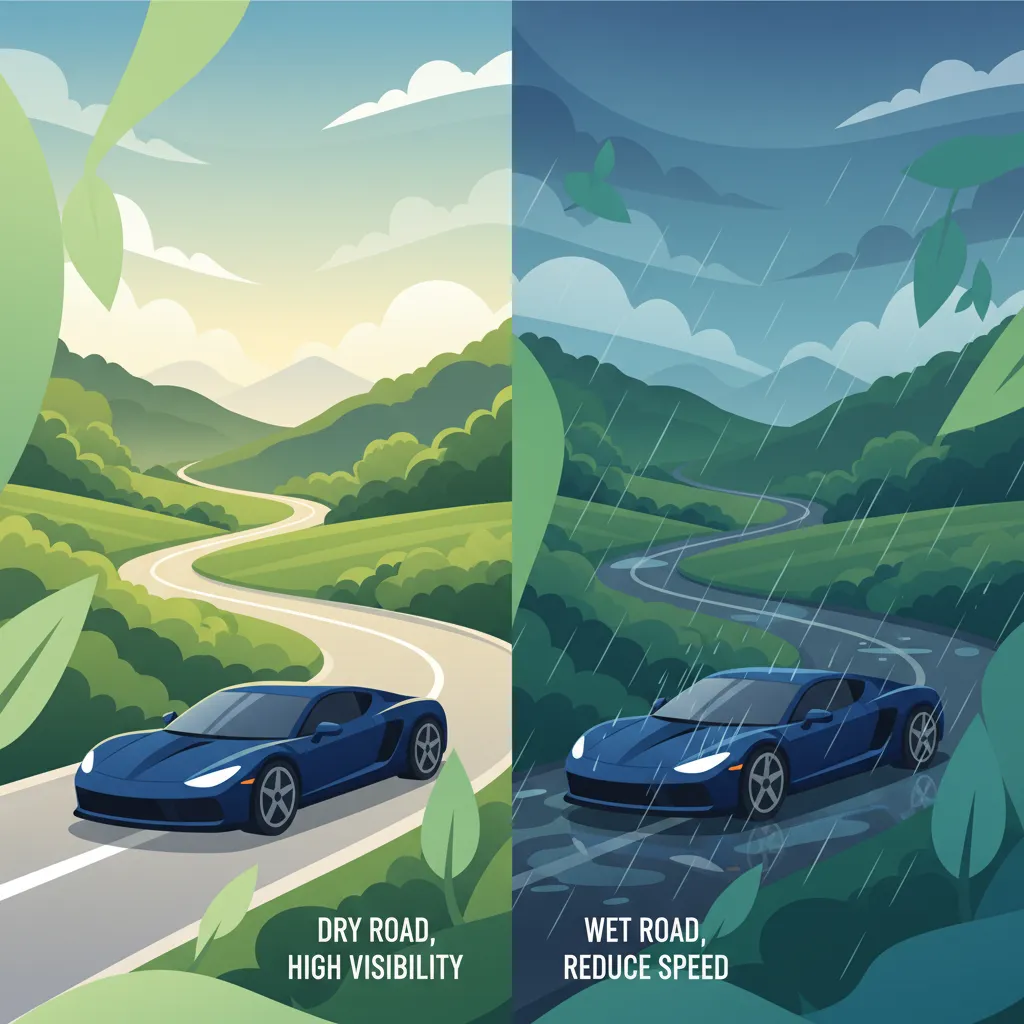
In this lesson, learners examine how environmental conditions such as rain, wind, ice, and reduced visibility necessitate adjustments in riding speed. The content provides guidelines for assessing road surfaces, judging appropriate cornering speeds, and reducing speed proactively in adverse weather. Learners will understand the impact of temperature on tyre performance and the need to increase safety margins, mastering adaptive speed management to maintain control.
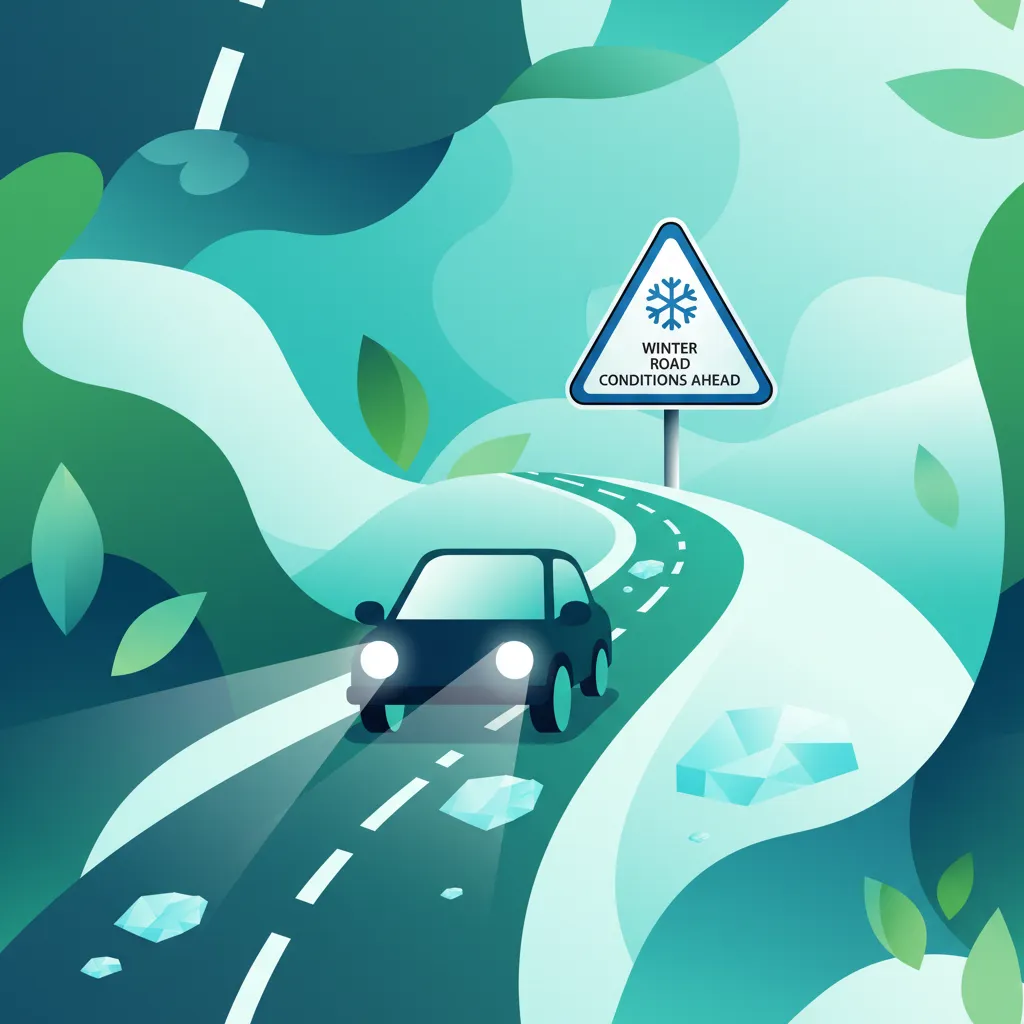
This lesson focuses on the skills needed for safe winter driving. It explains how to use gentle acceleration, steering, and braking to avoid losing traction on snow and ice. The lesson also discusses how to recognize and handle a skid, and the critical role that appropriate winter tires play in maintaining vehicle control.

This lesson equips learners with a structured approach to risk assessment and decision-making when facing adverse weather or seasonal conditions. The content introduces a hazard perception framework, guiding riders to assess weather forecasts, evaluate road surface conditions, and calculate safety margins. Learners will learn how to make go/no-go decisions, adjust speed dynamically, and plan contingencies for unexpected events to prioritize safety.
This lesson addresses environmental factors that impact rider visibility, such as low light, night conditions, fog, and glare from headlights. Learners will explore strategies for riding safely in reduced visibility, including the use of reflective gear, proper headlamp settings, and appropriate eye protection. The content also covers hazard detection techniques in adverse weather and how to adjust speed to maintain safety, enhancing rider safety across all conditions.
This lesson explores how increasing speed amplifies kinetic energy, thereby affecting braking efficiency and required stopping distances. Learners will learn about brake fade due to heat, the differing contributions of front and rear brakes, and how ABS assists in maintaining stability on slippery surfaces. The lesson covers techniques for proper brake modulation, especially when decelerating from high speeds, to help riders apply appropriate braking techniques for safety.
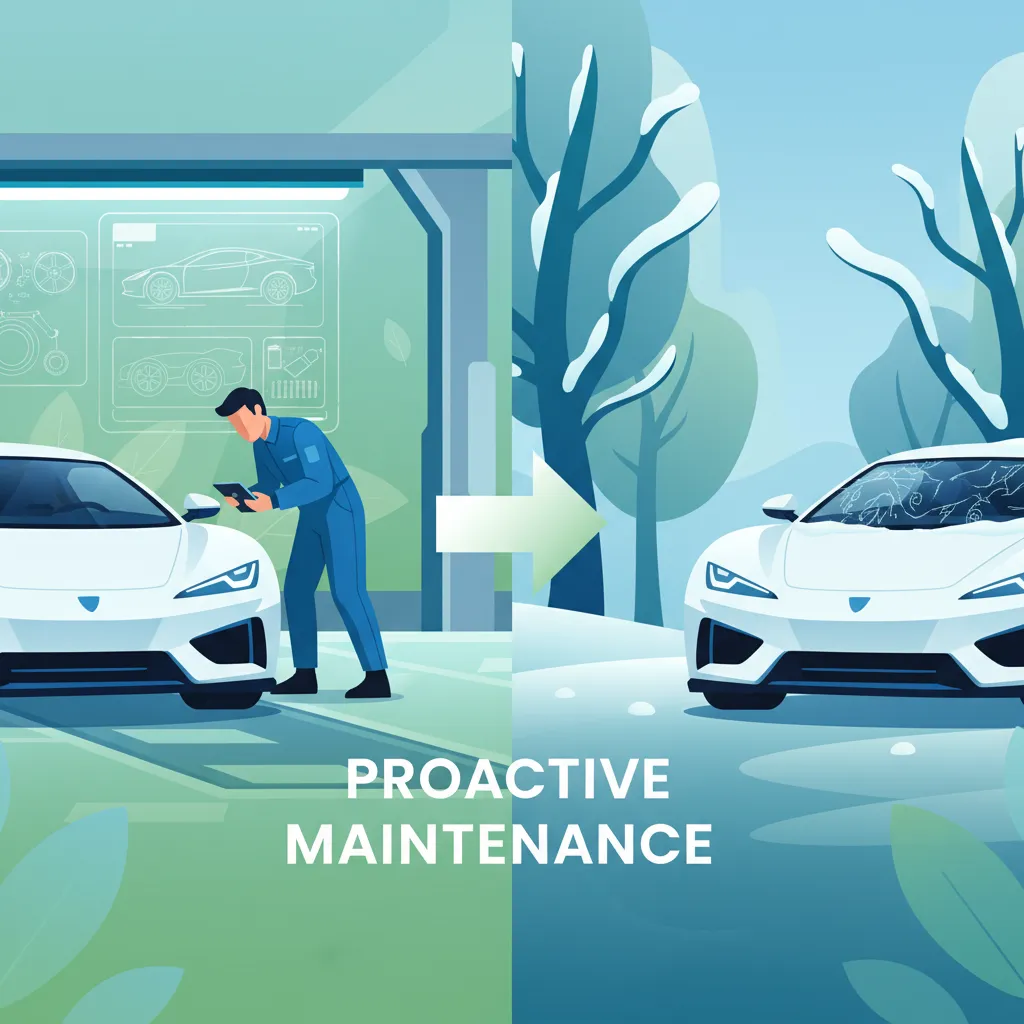
In this lesson, learners focus on the essential maintenance tasks required to keep a motorcycle in optimal condition across seasonal changes. The content outlines a comprehensive pre-ride checklist that includes tyre pressure verification, brake fluid inspection, battery performance checks, and chain lubrication. Learners will also study the selection of appropriate seasonal tyres and oil viscosity adjustments, helping prevent mechanical failures and enhance rider safety.

This lesson covers the principles of motorcycle braking, differentiating between the front and rear brake systems and their respective contributions to stopping power. It explains how anti-lock braking system (ABS) works to prevent wheel lock-up and improve control on slippery surfaces. Learners will explore the optimal brake balance, techniques for progressive deceleration, and the factors influencing stopping distances under various road conditions, ensuring riders can maintain reliable braking performance.
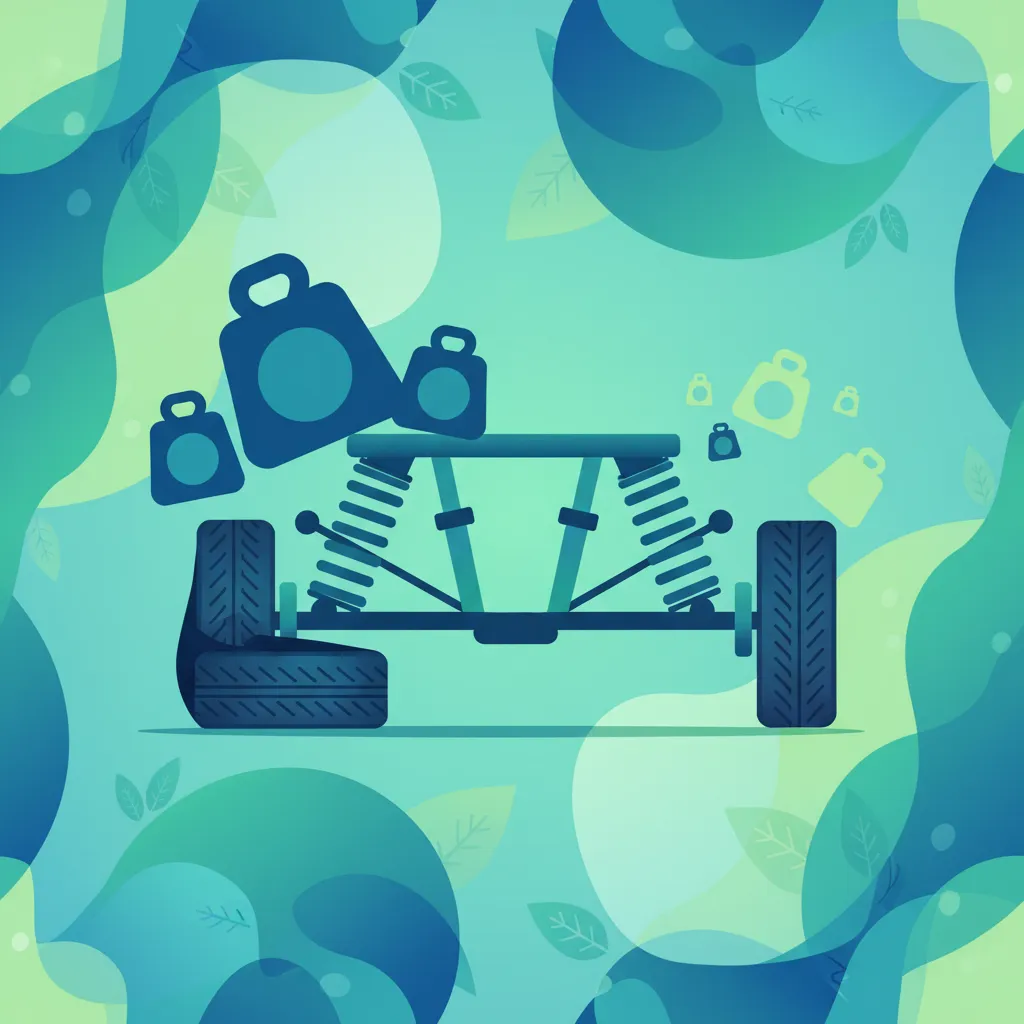
This lesson provides insight into the suspension system of a motorcycle, describing how front forks and rear swingarms absorb road irregularities and influence handling. It discusses the importance of correct tire pressure for grip and stability, and outlines procedures for monitoring and adjusting pressure according to load. Learners will learn how passenger weight and cargo distribution affect the motorcycle’s center of gravity and how to compensate through suspension preload adjustments.
This lesson examines how cross-winds affect motorcycle stability and control, providing strategies for compensating wind gusts through rider body positioning and throttle management. Learners will understand the aerodynamic effects of wind on the bike, how to position within the lane to minimize drift, and techniques for maintaining balance during sudden gusts. The content also covers the influence of wind on braking distances and the importance of adjusting speed.
Learn essential techniques for safe winter motorcycle riding in Poland. This intent focuses on adjusting speed, braking, cornering, and rider protection for snow, ice, and cold temperatures, crucial for Category A theory understanding.
This lesson focuses on the skills needed for safe winter driving. It explains how to use gentle acceleration, steering, and braking to avoid losing traction on snow and ice. The lesson also discusses how to recognize and handle a skid, and the critical role that appropriate winter tires play in maintaining vehicle control.
In this lesson, learners examine how environmental conditions such as rain, wind, ice, and reduced visibility necessitate adjustments in riding speed. The content provides guidelines for assessing road surfaces, judging appropriate cornering speeds, and reducing speed proactively in adverse weather. Learners will understand the impact of temperature on tyre performance and the need to increase safety margins, mastering adaptive speed management to maintain control.
This lesson focuses on the specific challenges of riding in rain, detailing how wet road surfaces reduce tyre grip and increase braking distances. Learners will learn about hydroplaning risk, the importance of deep tyre tread, and the need for smooth throttle and brake modulation to maintain stability. The content also covers visibility concerns, such as proper headlamp use and the selection of waterproof clothing, so riders can safely navigate wet conditions.
This lesson equips learners with a structured approach to risk assessment and decision-making when facing adverse weather or seasonal conditions. The content introduces a hazard perception framework, guiding riders to assess weather forecasts, evaluate road surface conditions, and calculate safety margins. Learners will learn how to make go/no-go decisions, adjust speed dynamically, and plan contingencies for unexpected events to prioritize safety.
In this lesson, learners focus on the essential maintenance tasks required to keep a motorcycle in optimal condition across seasonal changes. The content outlines a comprehensive pre-ride checklist that includes tyre pressure verification, brake fluid inspection, battery performance checks, and chain lubrication. Learners will also study the selection of appropriate seasonal tyres and oil viscosity adjustments, helping prevent mechanical failures and enhance rider safety.
This lesson addresses environmental factors that impact rider visibility, such as low light, night conditions, fog, and glare from headlights. Learners will explore strategies for riding safely in reduced visibility, including the use of reflective gear, proper headlamp settings, and appropriate eye protection. The content also covers hazard detection techniques in adverse weather and how to adjust speed to maintain safety, enhancing rider safety across all conditions.
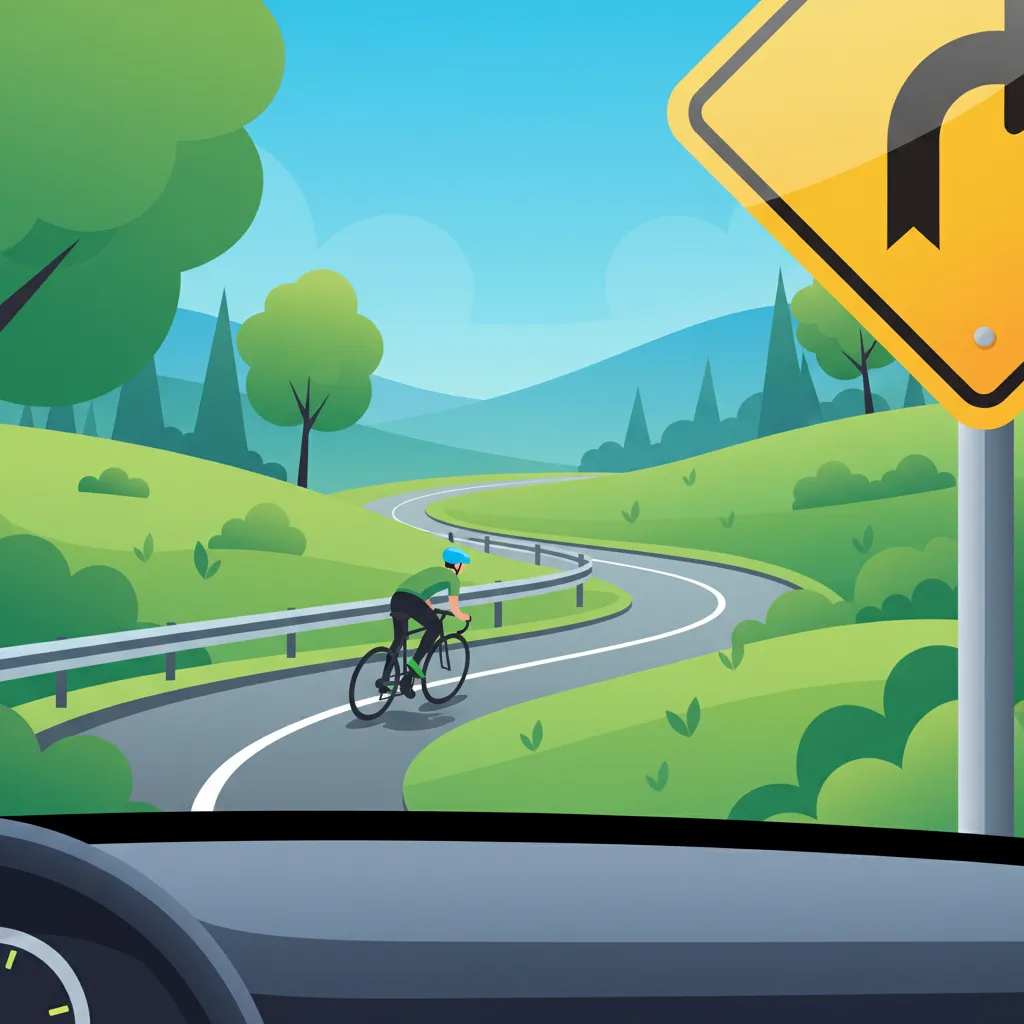
In this lesson, learners study warning signs that alert drivers to potential hazards, focusing on those that are particularly relevant to motorcyclists. The content includes signs indicating curves, slippery surfaces, animal crossings, tram tracks, and construction zones, each requiring specific riding adjustments. The lesson teaches riders how to interpret these signs to anticipate hazards, adjust speed appropriately, and maintain a safe distance from potential dangers.
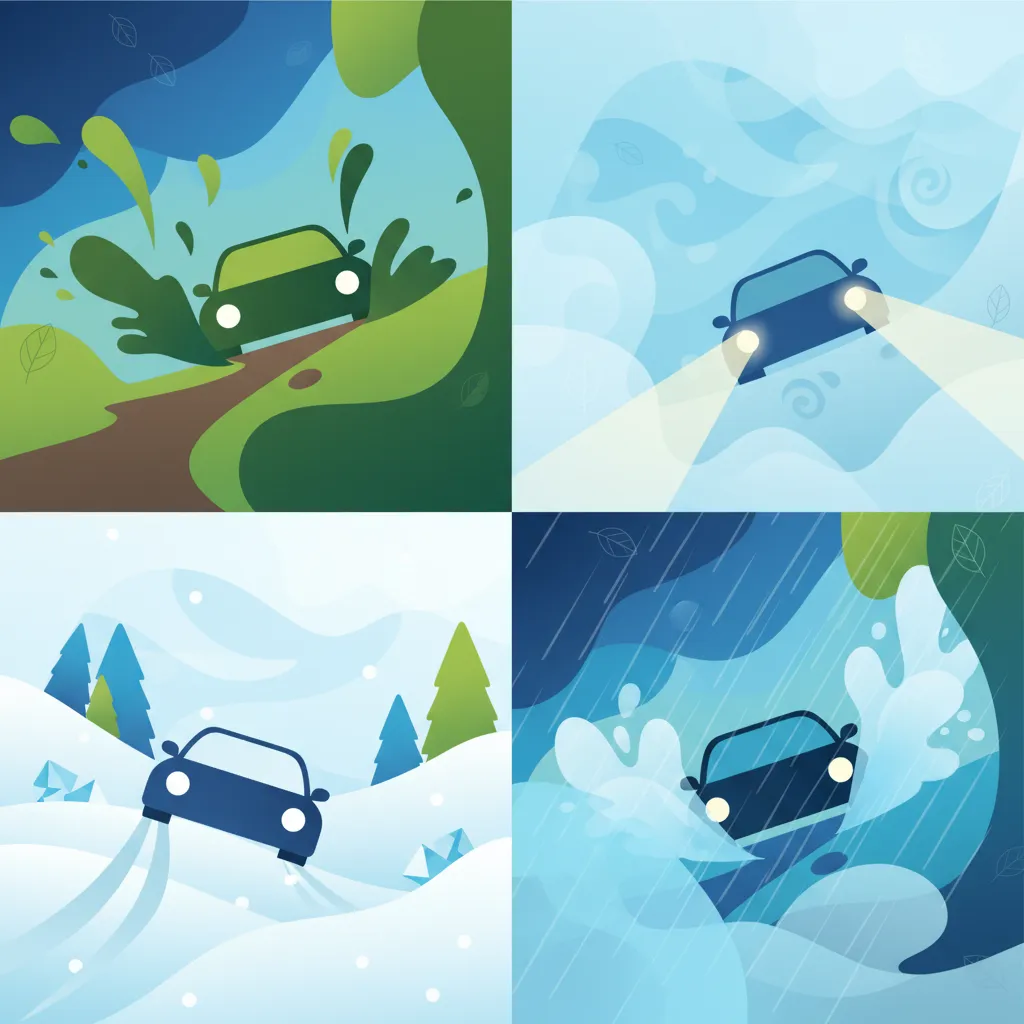
This lesson focuses on the specific hazards introduced by seasonal weather, such as mud, snow, ice, fog, and heavy rain. It explains how these conditions affect traction, braking, and driver visibility, and provides guidance on adjusting speed and using appropriate tires. The lesson also covers the proper use of lights and reflectors to improve visibility in low-light conditions.

This lesson outlines strategies for planning escape routes and adopting protective positioning to avoid potential collisions. Learners will study the concept of a defensive riding line that maximizes visibility and provides an optimal safety corridor. The content emphasizes maintaining adequate distance buffers, choosing lanes that reduce exposure to hazards, and preparing for emergency maneuvers such as swift swerves, allowing riders to react quickly in critical situations.
This lesson covers the principles of motorcycle braking, differentiating between the front and rear brake systems and their respective contributions to stopping power. It explains how anti-lock braking system (ABS) works to prevent wheel lock-up and improve control on slippery surfaces. Learners will explore the optimal brake balance, techniques for progressive deceleration, and the factors influencing stopping distances under various road conditions, ensuring riders can maintain reliable braking performance.
Find clear answers to common questions learners have about Winter Riding: Snow, Ice, and Cold Temperatures. Learn how the lesson is structured, which driving theory objectives it supports, and how it fits into the overall learning path of units and curriculum progression in Poland. These explanations help you understand key concepts, lesson flow, and exam focused study goals.
Ice dramatically reduces tyre grip, meaning your braking distance will increase significantly and cornering stability will be severely compromised. You need to brake much earlier, apply brakes very gently, and lean the motorcycle far less, if at all, when riding on ice. Always anticipate potential ice patches, especially in shaded areas or near water.
Generally, slightly lower tyre pressures can increase the contact patch with the road, offering a bit more grip on snow or ice. However, always consult your motorcycle's manual and consider the specific conditions. Extremely low pressures can affect stability. It's crucial to check pressure regularly as temperature fluctuations affect it.
ABS and traction control are very important safety aids in winter. ABS prevents wheel lock-up under braking, while traction control prevents the drive wheel from spinning under acceleration. While they significantly improve safety, they are not infallible on extreme surfaces like solid ice and still require cautious riding.
Layering is key. Start with a moisture-wicking base layer, add an insulating middle layer (like fleece), and finish with a waterproof and windproof outer layer. Heated grips, a balaclava, and insulated, waterproof gloves and boots are also essential to prevent heat loss and maintain comfort and control.
On packed snow, aim for smooth, controlled movements, similar to riding on wet tarmac but with less grip. Avoid sudden acceleration or braking. Loose snow requires even greater caution; reduce speed significantly, keep the bike upright as much as possible, and be prepared for reduced visibility and steering effectiveness.
Build custom practice sessions tailored precisely to your needs. Focus on areas requiring improvement, review specific Polish road signs, or master complex traffic rules to ensure full preparation for your official driving license exam.